
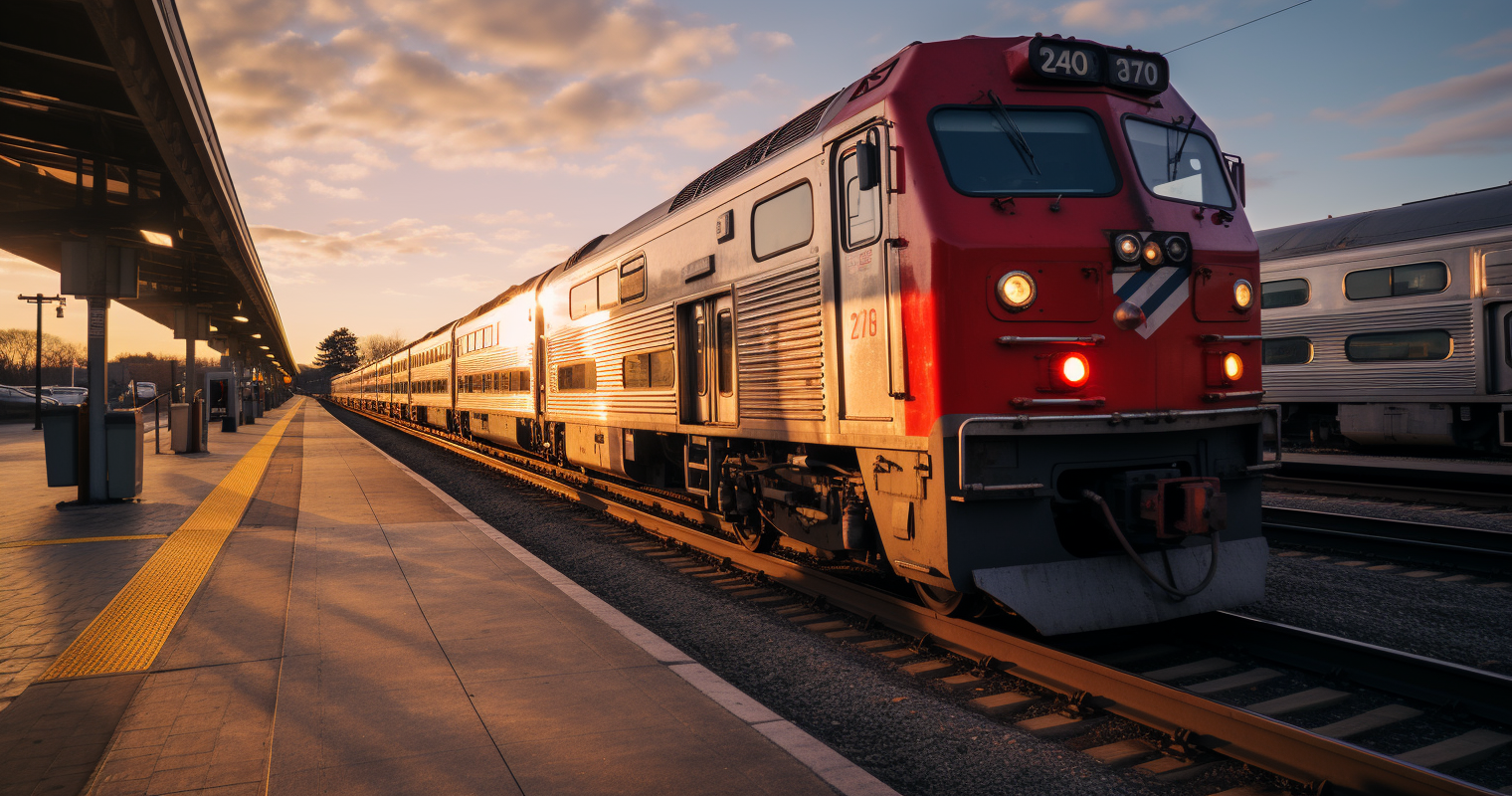
The UAE is in the midst of a sweeping transformation of its rail landscape. Dubai’s Metro stands as a globally recognised urban transit system, carrying vast numbers of passengers every day, while Etihad Rail — the country’s national rail network — currently moves freight across all seven emirates and is on the verge of introducing passenger services in 2026. For the time being, travelling between cities by passenger train is not yet possible, but that is set to change very soon.
| Item | Details |
|---|---|
| National rail operator | Etihad Rail (etihadrail.ae) |
| Passenger services launch (Etihad Rail) | Expected 2026 (as of early 2026); freight only currently |
| Etihad Rail network length | ~900 km covering all seven emirates |
| Dubai Metro coverage | ~89.6 km, 55 stations, Red and Green lines (as of 2025) |
| Dubai Metro urban transit authority | Roads and Transport Authority (RTA) — rta.ae |
| Dubai Metro maximum fare | AED 15 per trip (as of 2025); zone-based pricing |
| Etihad Rail inter-city travel time (Abu Dhabi–Dubai) | ~57 minutes at up to 200 km/h (when operational) |
| High-speed Abu Dhabi–Dubai link | Announced 2025; 350 km/h, 30-minute journey; target 2030 |
What is the overall standard of rail travel in the UAE?
The UAE’s rail journey can be understood through two distinct narratives. The first centres on the Dubai Metro — a fully automated, cutting-edge urban transit system that enjoys a reputation as one of the finest in the world. The second concerns Etihad Rail, the national inter-city network, which at present carries only freight but is poised to welcome passengers in the very near future.
As of 2025, Etihad Rail’s freight operations run across the country, while the infrastructure needed for passenger travel — stations, facilities, and related systems — remains under active construction, with services anticipated to begin in 2026.
In 2023, Etihad Rail completed a major network expansion totalling roughly 900 km, linking all seven emirates from Ghuwaifat in the west to Fujairah on the eastern coast, and commenced freight train operations nationwide. While this represented a landmark moment for UAE infrastructure, it also means that residents currently have no option to board a passenger train for inter-city travel.
Measured against long-established national rail systems such as Germany’s Deutsche Bahn or Japan’s Shinkansen — both of which run extensive passenger services daily — the UAE’s current offering for rail passengers is more modest in scope. However, the country is channelling substantial investment into closing this gap at pace. The planned passenger service will connect 11 cities from Al Sila to Fujairah, running at speeds of up to 200 km/h and cutting the journey from Abu Dhabi to Dubai to around 50 minutes, with Abu Dhabi to Fujairah taking approximately 100 minutes.
Adding further ambition to the country’s rail vision, Etihad Rail announced in 2025 a new 150-km high-speed line between Abu Dhabi and Dubai capable of reaching 350 km/h and covering the route in just 30 minutes. This line is targeted for completion by 2030. In the interim, the Dubai Metro remains the principal passenger rail option, with Etihad Rail set to serve medium and long-distance inter-city corridors once its passenger operations begin.
What classes of rail travel are available in the UAE, and what are the differences between them?
Travel class options differ considerably between the Dubai Metro and the upcoming Etihad Rail passenger service. Familiarising yourself with what each system provides will help you make the right choice from the moment you travel.
Etihad Rail (inter-city, from 2026)
Passenger operations will utilise two distinct train models: Chinese-built CRC coaches with a capacity of around 365 passengers, and Spanish-manufactured CAF coaches accommodating approximately 369 passengers. While the two models differ in design, both share the same three-class configuration.
- Economy Class features face-to-face seating finished in dark grey, suited to short and medium-distance travel.
- Family Class provides opposing seats around larger shared tables, ideal for groups and families travelling together.
- First Class offers broader, reclining seats prioritising passenger comfort.
- All cabins include overhead luggage storage, fold-down tables mounted behind seats, and designated areas for larger items of baggage.
Each Etihad Rail passenger train will carry up to 400 passengers and will be equipped with contemporary onboard amenities including Wi-Fi, entertainment screens, charging points, and food and beverage options. Ticket prices across all classes had not been publicly disclosed as of early 2026 — consult the official Etihad Rail website for fare information when it becomes available.
Dubai Metro
Dubai Metro trains are divided into several distinct cabin types: a Gold Class carriage for those seeking a premium experience with spacious leather seating, a dedicated Women and Children’s carriage providing additional privacy, and standard cabins for all general passengers.
Gold Class arranges seats in a 2+1 layout, giving each traveller considerably more room, with well-maintained high-quality leather upholstery throughout. The fare is roughly twice that of a standard journey. To board the Gold Class carriage, passengers must carry a Gold Nol Card or a premium single-trip ticket — travelling in Gold Class on a standard Red or Silver card triggers an automatic penalty fare.
Where can you find rail timetables and ticket prices in the UAE?
To obtain reliable and current timetable and fare information, you will need to consult the appropriate official sources — especially for Etihad Rail, where details relating to passenger services are still being finalised ahead of the 2026 launch.
Etihad Rail (national inter-city)
The authoritative source for Etihad Rail information is the Etihad Rail website (etihadrail.ae). Passenger fare details had not been released as of early 2026. That said, Dubai’s RTA was confirmed as the ticketing and payment partner for Etihad Rail in February 2024, suggesting that the nol card may feature among the payment solutions available to travellers.
In October 2024, Hitachi Rail was awarded a contract to deliver its advanced Mobility-as-a-Service (MaaS) platform to Etihad Rail. This unified digital system will give passengers a single interface through which to access Etihad Rail services once operational, covering everything from ticket booking and journey planning to fare payments. The UAE Government’s official transport portal (u.ae) also carries regular updates on the national railway programme.
Dubai Metro (urban transit)
Timetables, route maps, and fare calculators for the Dubai Metro are published by the Roads and Transport Authority (RTA) at rta.ae. The official RTA Dubai app lets you plan journeys across Dubai’s metro, bus, and tram network, access real-time schedules, top up your Nol card, check your balance and transaction history, and calculate trip costs based on current fare structures. Always refer to the official RTA website or app for the latest fares, as these are subject to periodic revision.
How do you buy rail tickets in the UAE, and can you book in advance?
The process for purchasing tickets differs between the Dubai Metro and Etihad Rail. Understanding how each system works before you travel will help you avoid delays or unexpected fines.
Step-by-step: How to use the Dubai Metro
- Get a Nol card. Dubai Metro tickets must be purchased in the form of a Nol card. No other payment form — cash or credit card — is possible for riding the Metro. Cards are available at all Metro stations from ticket offices and vending machines.
- Choose your card type. Four kinds of Nol Cards are available: Silver, Gold, Blue (personalised), and Red. See the ticket types section below for details on each.
- Top up your balance. Nol cards are initially purchased with a set value and are rechargeable. Fares are deducted from the card’s stored credit, offering a convenient way to pay while allowing users to top up as needed. You can top up at station kiosks, ticket machines, or via the RTA app.
- Tap in at the station gate. Once you reach a station, you must first check in by scanning your card on the e-reader.
- Tap out when you arrive. You must also check out once you have reached your destination so that the exact fare is taken from your card; otherwise, you will be charged the amount of a complete trip (start to end).
- Transfer if needed. If your metro journey only takes you so far, you can use the same card to take a bus or tram within 30 minutes of leaving the Metro and it will count as the same trip. Your final fare will depend on the number of zones you pass through in total. A maximum of three transfers is allowed for a trip to be considered a single journey.
Etihad Rail (from 2026)
Travellers will enter Etihad Rail stations via smart electronic gates by presenting their tickets for scanning. Booking is expected to be predominantly online, supplemented by ticket vending machines at stations. Given that the system is newly launched, it is recommended to keep an eye on the official Etihad Rail website for announcements regarding the booking platform. Advance reservations will almost certainly be possible and are likely to be advisable, especially for busy routes and peak travel periods.
What types of rail tickets are available in the UAE, and are there discount schemes?
The Nol card system underpinning the Dubai Metro is designed to accommodate a wide range of travel patterns, from occasional visitors to daily commuters. Several categories of passenger benefit from reduced fares or free travel.
Nol Card Types (Dubai Metro, as of 2025)
| Card Type | Cost | Best For | Key Benefit |
|---|---|---|---|
| Red Card | AED 2 | Occasional users | Up to 10 trips, 90-day validity |
| Silver Card | Standard fare | Regular commuters | 15% cheaper than Red Card fares |
| Gold Card | AED 25 (incl. AED 19 credit) | Premium travellers | Access to Gold Class cabin at double fare |
| Blue (Personal) Card | AED 70 (incl. AED 20 credit) | Registered users, concession holders | Balance recovery if lost; concession fares |
| Student Card | AED 70 (incl. AED 20 credit) | Students | 50% off metro, tram, and bus fares |
Students, social affairs recipients, senior Emiratis and citizens receive a 50% reduction on journeys when using a Blue Card, while people of determination and young children are entitled to travel on public transport at no cost. All eligible passengers must hold a Nol Blue Card (personal card) to access discounted or free travel.
For those who travel frequently, weekly, monthly, or annual passes deliver meaningful savings over individual journey fares. Visit the RTA website for up-to-date pass pricing, which is reviewed periodically.
The highest possible fare on the Dubai Metro is AED 15, applicable to a journey spanning the full length of the network from the first to the last station (as of 2025). Dubai’s public transport network is divided into seven zones, and your fare is calculated according to how many zones your trip crosses rather than which individual stations you use.
For Etihad Rail passenger services, no fare structure had been made public as of early 2026. Readers are encouraged to monitor the Etihad Rail website for confirmed pricing once it is released, and to verify all figures with official sources prior to travelling.
How accessible is the rail network in the UAE for disabled passengers?
Accessibility has been central to the design of the UAE’s rail infrastructure, and the Dubai Metro in particular meets a high international benchmark — broadly comparable to the standards seen on newer metro systems in cities such as Singapore or Hong Kong.
Every Dubai Metro station and train is fully wheelchair accessible, incorporating ramps, lifts, and dedicated spaces within carriages for wheelchair users. Tactile paving guides visually impaired passengers through stations, and audio announcements are delivered in both English and Arabic. All levels of every metro station are served by lifts.
Tactile guidance paths, audible announcements, lift access, and wheelchair spaces are standard features across the entire network. Children under five and disabled passengers with qualifying Nol cards travel free of charge, while students and senior citizens are entitled to reduced fares. To access these concessions, passengers must obtain a Blue (Personal) Nol card registered in their name, which can be arranged at any RTA customer service centre or through the RTA website.
The Dubai Metro also operates a dedicated Women and Children’s carriage, offering greater privacy for those passengers. This feature sets Dubai’s Metro apart from many European equivalents and represents an important cultural norm that newcomers to the UAE should bear in mind.
Full accessibility details for the forthcoming Etihad Rail passenger service had not been published as of early 2026. Since the infrastructure is being constructed to international standards, a comprehensive range of accessibility provisions is anticipated. Monitor the Etihad Rail website and the UAE Government portal for relevant updates as the launch date approaches.
Are there metro or urban rail systems in UAE cities?
Dubai is presently the only city in the UAE with a functioning metro system, and it is also served by a tram network covering part of the city. Abu Dhabi and the other emirates do not yet have their own metro systems, although Etihad Rail’s forthcoming passenger service will provide inter-city connections as part of a wider integrated transport strategy.
Dubai Metro
The Dubai Metro is an 89.6-km mass rapid transit system comprising 55 stations across two lines — the Red and the Green. A Blue line is in development and will add 14 stations, including three interchange points, across a total distance of 30 km. It is due to enter service in 2029.
The Dubai Metro officially opened on 9 September 2009, starting with the Red Line, with the Green Line following in 2011. Operated by the Roads and Transport Authority (RTA), it holds the distinction of being the world’s longest fully automated metro network. Between 2009 and 2016, it was also recognised as the world’s longest driverless metro, a record confirmed by Guinness World Records in 2012.
The Dubai Metro runs from Saturday to Thursday between 7 am and 11 pm, and on Fridays from 10 am to 11 pm. During peak periods, trains arrive every 3.45 minutes, while off-peak intervals are approximately 7 minutes, keeping waiting times short throughout the day.
Free Wi-Fi is available throughout all Dubai Metro cabins across the network. Fares are paid using Nol cards — functioning similarly to London’s Oyster card or New York’s MetroCard — which store a balance that can be replenished at kiosks or machines inside any metro station.
Dubai’s principal Etihad Rail passenger station is currently being built near Jumeirah Golf Estates Metro Station, with a second planned in the vicinity of Al Jaddaf and Al Maktoum International Airport. Sharjah’s station will be located near University City, while Fujairah’s first passenger station is being developed in Sakamkam. Etihad Rail stations are being designed with integrated connections to metro lines, bus services, and shared mobility options including e-scooters and bicycles.
For complete route maps, service alerts, and timetable information, visit the RTA official website (rta.ae) or download the official RTA Dubai app, available on both iOS and Android.
Dubai Tram
The Dubai Tram operates along Al Sufouh Road, linking Dubai Marina and JBR with the wider Metro network. The system is fully integrated, enabling smooth transfers between the Metro, Tram, and public buses. Tram fares follow the same zone-based structure as the Metro, and the same Nol card used for metro journeys works seamlessly on the Tram, eliminating the need for separate ticketing.
What should expats know about using the rail network day-to-day in the UAE?
Using the Dubai Metro on a daily basis is a straightforward experience once you have absorbed the relevant rules and cultural expectations. Regular users consistently highlight the system’s cleanliness, reliability, and ease of navigation — but there are several important points every new resident should know.
Language and signage
Announcements on the Dubai Metro are made in multiple languages including English and Arabic, making the system readily accessible to the UAE’s large and diverse international community. Station signage is displayed in both Arabic and English throughout the network, so navigation is intuitive for anyone familiar with either language.
Fines and conduct rules
The Dubai Metro enforces a firm code of conduct, and penalties are applied without exception. Consuming food or drink inside metro cabins is prohibited. Boarding the wrong class of carriage — for example, entering the Gold Class cabin without the appropriate Nol card — will automatically attract a penalty fare. Always confirm you are in the correct carriage before the doors close.
Dedicated carriages
A carriage reserved exclusively for women and children is featured on all Dubai Metro trains, positioned at a designated section of the platform. Respecting this arrangement is a culturally significant norm in the UAE and is strictly observed. Male passengers must not enter this carriage under any circumstances. Boarding areas are clearly signposted at every station.
Luggage
Luggage areas are available on trains, which is particularly convenient for passengers heading to or from the airport. On the forthcoming Etihad Rail service, all cabins will be fitted with overhead storage, fold-down tables behind seats, and dedicated zones for larger pieces of luggage.
Peak hours and planning
Trains and stations become noticeably busy during rush hours — generally 6 am to 8:30 am and 5 pm to 7 pm — so travelling outside these windows is advisable where possible. Linking your Nol card with the RTA app allows you to monitor your balance and avoid the inconvenience of being held up at the turnstiles.
Integration with other transport
A single Nol card covers seamless transfers between the Metro, Tram, and public buses. The card is also accepted on Water Buses, and Silver, Gold, or Blue Nol Cards can be used to pay for RTA-managed public parking. This makes the Nol card a genuinely versatile all-in-one travel and payment solution for everyday life in Dubai.
Etihad Rail: preparing for the 2026 launch
If you are relocating to the UAE ahead of the Etihad Rail passenger launch, it is worth bookmarking the Etihad Rail website and checking it regularly for service updates. According to the UAE Ministry of Economy and the rail operator, services are expected to roll out in phases throughout 2026. Journey times between emirates are projected to fall by 30 to 40 percent compared with existing modes of transport.
Frequently asked questions about rail travel in the UAE
Can I take a passenger train between Dubai and Abu Dhabi right now?
As of 2025, Etihad Rail freight services are operational, but passenger services have not yet commenced. The Etihad Rail passenger service is planned to launch in 2026, connecting 11 cities including Abu Dhabi, Dubai, Sharjah, Fujairah, Al Sila, Al Dhaid, Ruwais, and Al Mirfa. Until then, inter-city travel relies on road transport or short-haul flights.
What is a Nol card and do I need one to use the Dubai Metro?
The Nol card is the only accepted form of payment for travel on the Dubai Metro — cash and credit cards are not accepted at the fare gates. The card holds either a stored cash balance or a season ticket, and is valid across Dubai’s wider public transport network including the Metro, buses, and tram.
How much does it cost to use the Dubai Metro?
Dubai’s public transport network operates on a 7-zone system, with your fare determined by the number of zones you travel through, not specific stations. The maximum fare is AED 15 from the first to the last station (as of 2025). Always check the RTA website for current fares, as these can change.
Is there a women-only carriage on the Dubai Metro?
Yes. The Dubai Metro offers a dedicated Women and Children’s carriage for added privacy. This carriage is clearly marked on the platform and on the train. Men are not permitted to travel in this carriage, and this rule is enforced.
What classes will Etihad Rail passenger trains offer?
Both Etihad Rail train models follow the same three-class layout: Economy Class features face-to-face seating designed for short and medium-distance journeys; Family Class offers opposing seats with larger shared tables for group travel; and First Class provides wider, adjustable seats with a focus on enhanced comfort.
Will Etihad Rail connect to the Dubai Metro?
Dubai’s main Etihad Rail station is under construction near Jumeirah Golf Estates Metro Station. Etihad Rail stations are being integrated with metro and bus networks, along with shared mobility options such as e-scooters and bikes, with the aim of reducing friction at the start and end of journeys — one of the common weaknesses of intercity rail elsewhere.
Is the Dubai Metro accessible for wheelchair users?
All Dubai Metro stations and trains are wheelchair accessible, with ramps, elevators, and dedicated spaces inside the train. Tactile paving is provided for visually impaired passengers, and all metro station levels have access to lifts. Disabled passengers with special Nol cards travel free. Visit the RTA website to register for a concessionary Blue Nol card.
Are there plans to expand the Dubai Metro and UAE rail network further?
A new Blue Line is being added to the Dubai Metro with 14 stations stretching over 30 km, with operations expected to commence in 2029. A new 150-km high-speed rail line between Abu Dhabi and Dubai was announced in 2025, aiming to link the two cities in 30 minutes at speeds of up to 350 km/h, with the line targeted for completion by 2030. The UAE’s rail network is expanding at considerable speed and will look markedly different within the next decade.