
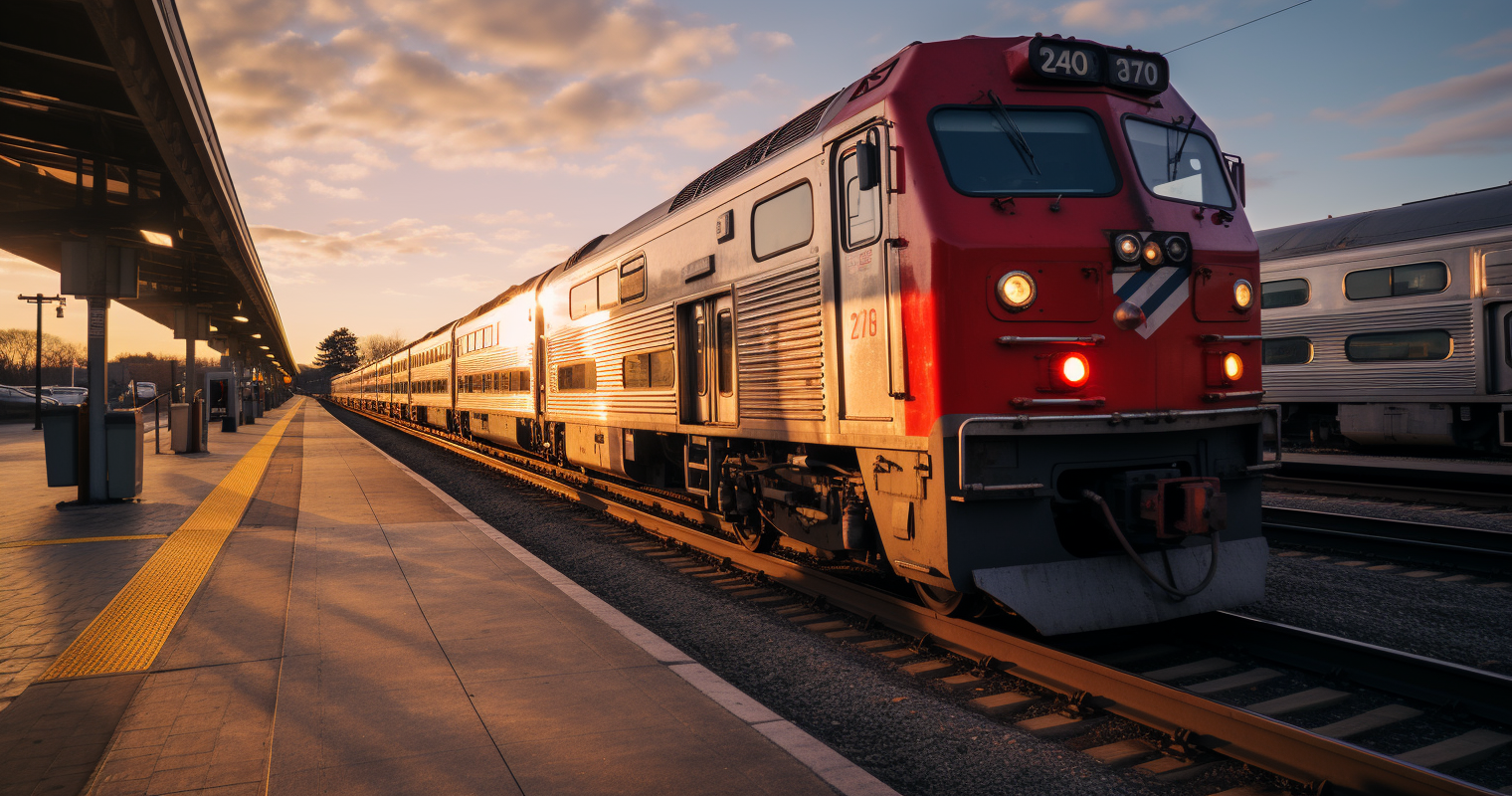
The United Kingdom operates one of the world’s oldest and most expansive rail networks, stretching across more than 15,700 kilometres of track and linking cities, towns, and rural communities throughout England, Scotland, and Wales. While the network serves both everyday commuters and long-distance travellers, consistent performance has proved elusive, with punctuality and cancellation figures regularly attracting scrutiny from industry regulators. For anyone newly arrived in the country, getting to grips with how the system functions — from the range of ticket types to available discount schemes — is key to travelling both economically and with confidence.
| Item | Details |
|---|---|
| Total route length (as of 2025) | 15,747 km (9,785 miles); 39% electrified |
| Punctuality (as of 2024–25) | 84% of services arrived within 3 minutes of schedule; 4.1% cancellation rate |
| Annual passenger journeys (as of 2024–25) | 1.7 billion |
| Railcard cost (as of 2025) | Most standard Railcards cost £35/year; Disabled Persons Railcard £20/year or £54 for three years |
| Advance ticket availability | Typically released up to 12 weeks before travel |
| Main timetable/ticketing portal | nationalrail.co.uk |
What is the overall standard of rail travel in the UK?
The UK rail network ranks among the busiest in Europe. Passengers across Great Britain completed 1.7 billion rail journeys in the year ending March 2025, representing a 7% rise on the previous year. The network operates through multiple private train companies running services on infrastructure owned and managed by Network Rail — an arrangement that differs markedly from fully integrated state-run systems such as Japan’s Shinkansen or Germany’s Deutsche Bahn, where a single organisation controls both the tracks and the trains that run on them.
Great Britain’s total route length stands at 15,747 km (9,785 miles), with 39% (6,200 km) electrified and the remaining 61% (9,547 km) reliant on diesel traction. This ongoing dependence on diesel across rural and regional routes can limit journey speeds when compared with electrified high-speed intercity corridors.
Performance has been a persistent source of concern. In the year to March 2025, 4.1% of passenger services were cancelled — the highest figure recorded since monitoring began in 2014 — while 84% of services reached their stations within three minutes of their timetabled arrival. Scotland was the sole region in Great Britain to meet its cancellations target during this period. By international comparison, the UK lags behind the Swiss and Japanese networks on punctuality, though the network’s age, scale, and density of use all contribute to the complexity of the challenge.
For daily commuting, the network remains heavily patronised and broadly functional, especially on the principal corridors serving London, Manchester, Edinburgh, and Birmingham. Long-distance travel between major urban centres — for instance, London to Edinburgh or London to Manchester — is well catered for by frequent, rapid intercity services. Rural connections, by contrast, tend to be less frequent and more susceptible to disruption.
Network Rail achieved £325 million in efficiency savings in 2024–25, yet a substantial funding shortfall of £488 million persists in England and Wales, which the Office of Rail and Road (ORR) has called upon it to resolve. The sector is also in the midst of far-reaching structural change, with plans underway to bring track and train operations together under a new public body to be known as Great British Railways.
What classes of rail travel are available in the UK, and what are the differences between them?
The large majority of UK trains operate two classes of travel: Standard and First. Standard class is what most passengers use as the default option, while First class is offered across many intercity and longer-distance routes. The practical distinction between the two varies considerably depending on the operator and the specific service.
Standard class carriages typically feature 2+2 seating across the width of the car, whereas First class generally provides a 1+2 configuration, yielding more personal space, additional legroom, and a mix of solo seats and two-person table arrangements. On shorter or regional services, the physical gap between the two classes can be quite modest — sometimes amounting to little more than a headrest cover.
On longer intercity routes, the difference becomes more pronounced. First class fares on services operated by Avanti West Coast, LNER, and East Midlands Trains include light meals and drinks on weekdays, while GWR and Cross-Country offer complimentary tea and coffee to First class passengers on their intercity routes. First class on these services may also feature extra-wide seats with extended legroom, complimentary refreshments, power sockets, and on select services hot meals, free Wi-Fi, and access to dedicated lounges at certain stations.
Avanti West Coast stands apart by offering an intermediate tier called Standard Premium — positioned between Standard and First class, using the same seating as First class but without any complimentary food or drink. This kind of intermediate product is unusual elsewhere on the UK network.
First class accommodation exists on some or all routes operated by most train companies, though certain routes are standard class only. If you hold a standard class ticket, it is possible to upgrade to First class before departure at any staffed ticket office, and on some services at weekends and bank holidays a fixed-price Weekend First supplement is available for upgrading on the day.
Whether First class represents good value for regular commuters depends heavily on the route in question. On busy services into major cities, the quieter environment and additional space can make a meaningful difference during peak hours — but the premium over a standard season ticket is considerable.
Where can you find rail timetables and ticket prices in the UK?
The primary resource for timetable and fare information is National Rail (nationalrail.co.uk). The National Rail website does not directly sell tickets, but after processing a journey enquiry it presents a selection of approved ticket retailers, with the most relevant operator for your journey listed at the top. This makes it the most dependable starting point for checking departure and arrival times across all operators in one place.
Individual train operators maintain their own websites and frequently offer the keenest prices for travel on their own services, often without additional booking fees. Major operators include Avanti West Coast, LNER, GWR, ScotRail, and Transport for Wales. A complete list of operators with links to their websites appears at the bottom of the National Rail site.
Third-party booking platforms such as Trainline and Rail Europe pull together fares and timetables from multiple operators and are widely used for their convenience and app functionality. Some of these platforms charge a booking fee, so it is worth cross-checking with the relevant operator’s own website before confirming a purchase. Regulators secured increased transparency on fees charged by some retailers when rail tickets are purchased through websites and apps, and all eight retailers engaged made changes that addressed concerns.
For real-time journey tracking, the National Rail live departures board is a useful tool, and the Network Rail website provides details of planned engineering works and expected disruptions. Timetables and fares are subject to periodic change with seasonal updates, so always confirm current prices through official channels before travelling.
How do you buy rail tickets in the UK, and can you book in advance?
Purchasing train tickets in the UK is a flexible process, with a range of options to suit different travel habits. For longer journeys, booking ahead is strongly advisable, as it can unlock significant savings over walk-up prices. The process typically works as follows:
- Online via operator websites: Visit the website of the relevant train operator (e.g. LNER, Avanti West Coast, GWR) or the National Rail journey planner to search for times and fares. Booking direct with the operator often avoids additional fees. You can typically book up to 12 weeks before travel.
- Via third-party apps and websites: Platforms such as Trainline, Omio, and Rail Europe allow you to search, compare, and purchase tickets across multiple operators. Some charge a booking fee; check the terms before purchasing.
- At station ticket offices: Staffed ticket offices allow you to buy tickets in person, ask for advice on the cheapest fares, and collect pre-booked tickets. However, a number of ticket offices have been reduced in hours or closed in recent years as part of industry cost-cutting measures.
- At self-service ticket machines: Found at most stations, these allow you to buy or collect pre-booked tickets. They accept both card and cash payments, though some older machines are card-only.
- By phone: You can buy train tickets by calling any train operator telesales line — they all sell the same tickets at the same prices.
- Collect or use digitally: When booking online, you can usually choose to collect a physical ticket at a station machine, have tickets posted to you, or use an e-ticket (barcode) displayed directly on your phone. E-tickets are now widely accepted across the network.
Advance tickets are sold as single fares for both Standard and First Class, and are typically made available 12 weeks ahead of departure. They are non-flexible — once booked, you are committed to the specific trains and dates on the ticket. Travellers who prefer greater freedom can opt for Anytime or Off-Peak tickets, which carry fewer restrictions but come at a noticeably higher cost.
What types of rail tickets are available in the UK, and are there discount schemes?
The UK’s ticketing structure can appear bewildering at first glance. In practice, there are several principal fare categories, each designed for a different type of traveller:
| Ticket type | Best for | Flexibility |
|---|---|---|
| Advance | Pre-planned long-distance journeys | Fixed train and date |
| Off-Peak / Super Off-Peak | Travelling outside rush hours | Moderate — restricted time windows |
| Anytime | Flexible travel on any service | High — valid on most trains |
| Season (weekly/monthly/annual) | Regular commuters between fixed stations | Unlimited travel on the chosen route |
| Flexi Season | Part-time commuters (8 days’ travel in 28) | Flexible within a 28-day window |
| Return / Day Return | Occasional return journeys | Varies by fare type |
Season tickets provide unlimited travel between two specified stations on a weekly, monthly, or annual basis, and can deliver savings of more than a third compared with purchasing peak-time daily return tickets five days a week. For those who commute just twice a week, a Flexi Season ticket is frequently the more economical choice.
Railcards represent the most accessible and widely used discount mechanism for residents. Each Railcard entitles the holder to save up to a third off most rail fares, including Advance tickets, and seven different types are currently available in the UK. The key options are as follows:
- 16–25 Railcard: For travellers aged 16–25. Costs £35/year (as of 2025) and saves a third off most fares.
- Senior Railcard: For those aged 60 and over. Also costs £35/year (as of 2025) and saves a third off most fares.
- Two Together Railcard: For two named adults travelling together. Costs £35/year (as of 2025).
- Family & Friends Railcard: For up to 4 adults and 4 children travelling together. Costs £35/year (as of 2025).
- Disabled Persons Railcard: Costs £20 for one year or £54 for three years, and offers a third off rail fares for the named cardholder and a third off for one accompanying adult aged 16+.
- 16–17 Saver: Offers a significant discount on Season Tickets and Flexi Season tickets for those aged 16 and 17, providing 50% off standard fares.
- HM Forces Railcard: For serving and veteran members of the armed forces. Costs £35/year (as of 2025).
Railcard discounts extend beyond the national rail network to TfL services in London. Any National Railcard can be used to obtain discounted travel on TfL services; the discount does not apply during peak hours, but during off-peak periods a 34% reduction is applied to your Oyster card balance. Always verify current Railcard prices and eligibility conditions through nationalrail.co.uk/railcards, as these are reviewed annually.
Rail Rovers grant unlimited travel across all or a defined portion of the British rail network and are available to anyone, including UK residents. The All-Line Rail Rover permits unrestricted travel across the entire national rail network and is particularly suited to those planning extended exploration of the country. Current prices can be found at nationalrail.co.uk.
How accessible is the rail network for disabled passengers?
Accessibility across the UK rail network has improved substantially in recent years, yet considerable variation persists between newer and older stations, and between urban and rural lines. The network’s age means that step-free access, lifts, and level boarding remain far from universal — a stark contrast to more recently built systems such as Singapore’s MRT or sections of the Paris Métro, which were designed with comprehensive accessibility built in from the outset.
The network saw a 17% increase in the number of bookings for passenger assistance in 2024–25. Passenger research indicates that satisfaction with assistance when it is successfully delivered is high, but that overall service reliability has remained broadly static at industry level and requires improvement.
The primary support mechanism is Passenger Assist, which enables passengers with disabilities or reduced mobility to arrange help for their entire journey in advance — including assistance boarding and alighting trains and navigating stations. Bookings can be made through individual train operator websites or via nationalrail.co.uk/passenger-assist. Most operators accept bookings up to two hours before travel, though arranging support further in advance is always preferable.
Expanded eligibility for the Disabled Persons Railcard was announced in November 2025 following a review by the Rail Delivery Group, the Department for Transport, and the Disabled Persons Transport Advisory Committee, forming part of the government’s Accessible Railways Roadmap. From March 2026, eligibility extends to holders of a Blue Badge, a Disabled Persons Bus Pass in England, Scotland or Wales, a London Disabled Persons Freedom Pass, those currently unable to drive on medical grounds, and several other qualifying criteria. From September 2026, eligibility criteria will be broadened further to encompass conditions requiring clinical or professional evidence, including certain long-term or degenerative medical conditions and some forms of neurodiversity.
Stations in London and other major cities tend to offer the most comprehensive accessibility provisions, including step-free routes, tactile paving, audio announcements, and accessible toilet facilities. At rural and smaller stations, lifts may be absent and platform-to-train step heights can be significant. It is advisable to check station-specific accessibility information before travelling, which is available at nationalrail.co.uk/stations.
Most modern rolling stock includes designated wheelchair spaces, accessible toilets, and audio-visual passenger information systems. There were 9,587 lift faults recorded at Network Rail-managed stations in the year to March 2025, a 9.3% increase on the previous year — a clear signal that lift reliability remains an area in need of attention, and passengers with mobility requirements should check for known disruptions before setting out.
Are there metro or urban rail systems in UK cities?
Several UK cities operate their own metro, light rail, or urban commuter rail systems alongside the national network. These range enormously in scale and coverage but play a central role in the daily lives of residents in each city.
London boasts by far the most comprehensive urban transit system in the country. Transport for London (TfL) operates the London Underground (the “Tube”), the Elizabeth line, the Overground, the Docklands Light Railway (DLR), Tramlink in Croydon, and an extensive bus network. The Oyster card and contactless payment are accepted across all these services, enabling seamless travel without the need for separate tickets for each mode. The Tube alone spans 11 lines and more than 270 stations. Timetable and service information is available at tfl.gov.uk.
Manchester is served by the Metrolink tram network, operated by Transport for Greater Manchester (TfGM). It is the largest tram network in the UK, connecting the city centre with surrounding boroughs. The Bee Network contactless card also integrates bus and rail travel across Greater Manchester.
Newcastle and Tyne and Wear are served by the Tyne and Wear Metro, operated by Nexus. A new 555 fleet was successfully brought into service on the Tyne and Wear Metro in 2024–25, fully replacing rolling stock that had been in operation since the 1970s. The Metro links Newcastle city centre, Gateshead, Sunderland, and Newcastle Airport, and accepts contactless payment.
Glasgow is home to the Glasgow Subway — one of the oldest underground railway systems anywhere in the world, running as a circular line around the city centre. In 2024–25, a fleet of new trains was successfully placed in service on the Glasgow Subway, completely replacing stock ordered in the 1970s. Further information is available at spt.co.uk/subway.
Edinburgh has its own Edinburgh Trams network, which runs from Edinburgh Airport through the city centre to Newhaven. Contactless payment is accepted on board. Details are available at edinburghtrams.com.
Sheffield, Nottingham, and Birmingham each operate Supertram or Midland Metro light rail services connecting their city centres with surrounding neighbourhoods. Ticketing arrangements and app availability differ by system; local transport authority websites carry up-to-date information.
Most UK urban rail systems rely on contactless bank cards or dedicated travel cards (such as the Oyster card in London) rather than pre-purchased paper tickets, making them straightforward for new arrivals to use. The degree of integration with national rail services varies: in London, the Elizabeth line and Overground connect seamlessly with the Underground, while in other cities, moving between urban metro and national rail typically requires separate ticketing arrangements.
What should expats know about using the rail network day-to-day?
Once you have familiarised yourself with a few key conventions, using the UK rail network on a daily basis becomes second nature. Stations are clearly signed in English throughout, and all public announcements are delivered in English. The larger stations in London and other major cities often feature multilingual information displays, and both the National Rail and TfL apps offer journey planning tools in multiple languages.
Platform information is shown on departure boards throughout the station, with platform numbers typically posted 10 to 20 minutes before a train is due to leave. At busy London terminal stations such as King’s Cross or Waterloo, platforms are sometimes not confirmed until shortly before departure, so it is worth remaining close to the boards and being ready to move at short notice.
Seat reservations are available on most intercity services and are generally free when booking in advance online. On certain operators such as LNER, a seat reservation is included automatically with your ticket; on others, it must be requested separately. Reservations are not typically available on regional or commuter trains — passengers simply board and choose a free seat. Reserved seats are usually identified by a slip of paper inserted into the headrest showing which portion of the journey the seat is reserved for.
Luggage is subject to no weight or size restrictions on national rail services — unlike many continental European high-speed trains — though passengers are expected to handle their own bags. Overhead racks and dedicated luggage areas at the ends of carriages are provided on most trains. On TfL services such as the Tube, travelling with very large bags during peak hours can be uncomfortable given the level of crowding.
Unwritten social conventions worth being aware of include: the strong expectation of quiet in designated Quiet Coaches (typically Coach A on many intercity services); orderly queuing on platforms; refraining from eating hot or strong-smelling food in enclosed carriages, particularly on commuter services; and vacating priority seats for those who need them. Taking phone calls in Quiet Coaches is widely regarded as inconsiderate.
Engineering works are a regular occurrence, particularly at weekends, when services are frequently replaced by road coaches (referred to as “rail replacement buses”) during scheduled maintenance. Always check for planned works before travelling, using the National Rail engineering works planner or individual operator apps.
For travel within London, the TfL Journey Planner is the most reliable tool for navigating the city’s intricate urban rail network. For journeys across the national network, the National Rail app or the Trainline app are widely used and provide real-time alerts for disruptions.
Frequently asked questions
Do I need to book train tickets in advance in the UK?
For long-distance and intercity travel, advance booking is strongly recommended. Advance tickets — typically released up to 12 weeks before departure — can be dramatically cheaper than walk-up fares. For shorter commuter journeys or urban rail travel, pre-booking is generally not necessary; you can simply pay as you go using contactless or an Oyster card (in London).
What is the cheapest way to commute by train in the UK?
For regular commuters, a Season ticket (weekly, monthly, or annual) between two fixed stations offers the best value, saving over a third compared to buying peak daily return tickets. Adding a Railcard where eligible (for example, the 16–25, Senior, or Two Together Railcard) can reduce season ticket costs further. Flexi Season tickets are a cost-effective option for those commuting two or three days a week.
What is a Railcard, and who can get one?
A Railcard is a discount card that saves up to a third off most rail fares. There are seven types available, including for those aged 16–25, seniors aged 60+, disabled persons, families, two adults travelling together, and armed forces personnel. Most standard Railcards cost £35 per year (as of 2025). The Disabled Persons Railcard costs £20 per year or £54 for three years (as of 2025). Always check current prices and eligibility at nationalrail.co.uk/railcards.
Can I use contactless payment on UK trains?
Contactless bank card and mobile payment (Apple Pay, Google Pay) is widely accepted on urban rail services in London (TfL), Manchester (Metrolink), Tyne and Wear Metro, and various other urban transit systems. On the national rail network outside London, contactless payment at ticket barriers is available at many stations, but for most journeys you will still need to have a purchased ticket. E-tickets displayed on your phone are accepted by most national rail operators.
Are UK trains safe?
Yes. The UK railway has a strong overall safety record. The Office of Rail and Road (ORR) independently regulates and monitors safety across the network. Train accidents are rare, and the network is subject to rigorous safety standards and inspections. Passengers should of course follow standard personal safety awareness at stations and on trains, as they would anywhere.
What happens if my train is delayed or cancelled?
If your train is delayed or cancelled, you are generally entitled to compensation under the Delay Repay scheme, which most operators participate in. Compensation is typically paid for delays of 15 minutes or more, up to the full ticket price for longer delays. Claims can usually be submitted online via the train operator’s website within 28 days of travel. If you cannot resolve a complaint with an operator, you can escalate to the Rail Ombudsman.
How do I get assistance as a disabled passenger?
The Passenger Assist scheme allows passengers with disabilities or reduced mobility to pre-book support for their entire journey, including help boarding, alighting, and navigating stations. Book through your train operator or at nationalrail.co.uk/passenger-assist. Many operators allow bookings up to two hours before travel, though advance notice is preferred. Eligibility for the Disabled Persons Railcard was expanded from March 2026 to cover a wider range of conditions.
Is the UK rail network connected across England, Scotland, and Wales?
Yes. The national rail network covers England, Scotland, and Wales as a single integrated system — you can travel by train from London to Edinburgh, Cardiff, or Penzance using tickets purchased through the same platforms. Northern Ireland operates separately under Translink (translink.co.uk), and there is no direct rail link between Great Britain and Northern Ireland. Eurostar services run from London St Pancras to Paris, Brussels, and Amsterdam via the Channel Tunnel.