
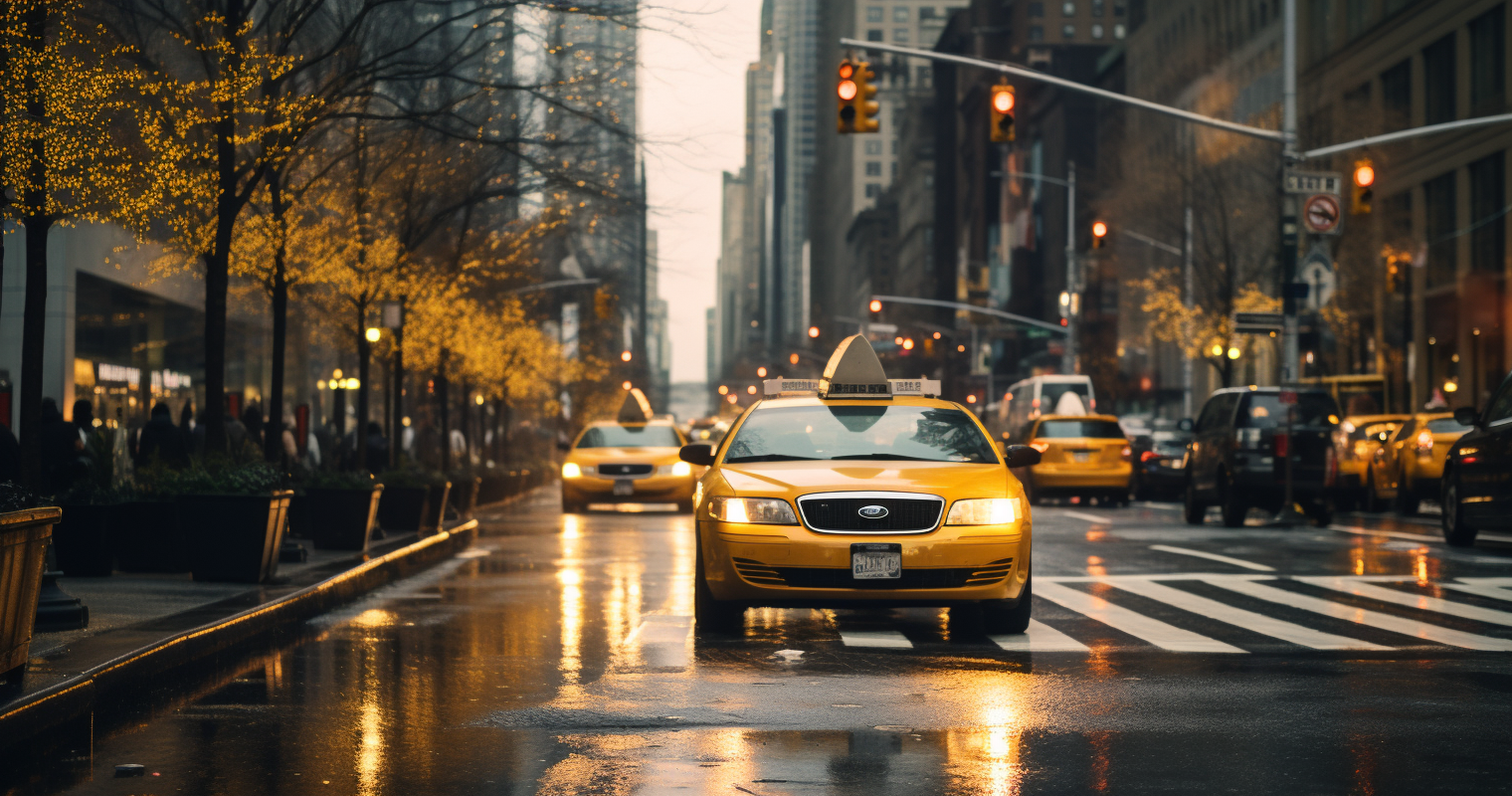
Panama offers an extensive and budget-friendly taxi network, with officially licensed yellow cabs operating across Panama City and other sizeable urban centres. Because fares follow a zone-based structure rather than a meter, agreeing on the price before you set off is a must. Uber, inDrive, and DiDi all function in the capital, making smartphone-based travel a straightforward and predictable option — one that many expats quickly come to rely on.
| Item | Details |
|---|---|
| Taxi identification | All licensed taxis in Panama City are yellow, with T or RI licence plates (as of 2025) |
| Fare system | Zone-based, not metered — negotiate or confirm price before travel |
| Typical city-centre fare | $2–$5 USD for most downtown journeys (as of 2025) |
| Airport taxi to city centre (Tocumen) | Official fixed rate approx. $25–$30 USD; Uber/app typically $15–$25 USD (as of 2025) |
| Main ride-hailing apps | Uber, inDrive, DiDi, Cabify — primarily in Panama City; Uber also in David |
| Cash in taxis | Cash only for traditional taxis; app-based services accept card/in-app payment |
How do taxis work in Panama, and are they safe and reliable for expats?
Every licensed taxi in Panama City is painted yellow — a regulation introduced by the transport authority to make authorised vehicles instantly distinguishable from unofficial ones. These cabs display a T or RI licence plate at the rear alongside a standard licence plate at the front, so confirming you are entering a legitimate vehicle is simple, unlike in cities where unlicensed cars frequently pose as taxis.
A defining feature of Panama City taxis is the complete absence of meters. Instead, fares are determined using an official Taxi Zone Chart that divides the city into zones and sub-zones, with the price corresponding to how many zones your journey covers. This stands in sharp contrast to cities such as London, where licensed black cabs are legally obligated to run a taximeter, or Sydney, where metered fares are standard practice.
Flagging down a cab in Panama City is easy — simply raise your hand at the roadside, and you will rarely wait long. Taxi ranks can also be found near major tourist sites, and hotels will typically summon one on your behalf. While drivers will generally take you anywhere in the city, it is worth knowing that some may decline trips to particular areas or pick up additional passengers along the way. Shared rides are entirely normal here and should not cause concern, though it is good to be prepared for the possibility.
You may also encounter vehicles displaying SET plates — these are tourism taxis that hold special transport licences, primarily used by tour operators and often positioned outside larger downtown hotels. They are not yellow and operate under a distinct pricing structure. White, unmarked vehicles described as “tourism taxis” also operate out of airports, generally charging a premium for private transfers.
Travelling by taxi in Panama City is generally considered safe, though the quality of the experience can differ noticeably between drivers. Sticking to registered cabs and confirming the fare before you board are the two most effective habits for a hassle-free journey.
Which ride-hailing apps work in Panama, and how do I use them?
Uber has a solid presence in Panama and is particularly well established in Panama City and select surrounding areas. The app functions just as it does elsewhere in the world: you request a ride, track your driver in real time, and settle the fare through the platform. If you already have an Uber account from your home country, it will work in Panama from the moment you land — no local phone number or separate sign-up is required.
Outside Panama City and David, finding an Uber driver becomes increasingly difficult. For most of the country beyond those two cities, conventional taxis remain your primary option. Within Panama City, Uber offers several service tiers — including Uber X, Uber XL, and Uber Comfort — to suit different budgets and group sizes.
inDrive is another popular platform in Panama, with a particularly strong following among local residents. Its key distinction is a fare negotiation model: passengers propose a price and drivers either accept or counter-offer, rather than having the fare set automatically by the app. This often results in lower fares than Uber, particularly when surge pricing is active during busy periods — though some users find the back-and-forth process slower and less convenient than simply accepting a set price.
DiDi and Cabify also operate in Panama and frequently undercut official airport taxi rates under normal traffic conditions. Cabify offers the added convenience of scheduling pickups in advance, which is particularly handy for early flights. Uber remains the app of choice for most expats in Panama City, functioning in a similar role to Grab in Southeast Asia, with inDrive and DiDi providing competitive local alternatives.
Getting started is straightforward: download your preferred app from the Google Play Store or Apple App Store, create an account with an email address and a payment method, and enter your pickup location. Bear in mind that none of these apps function without a data connection, and public Wi-Fi across Panama is inconsistent at best — activating a local SIM card or international roaming plan on arrival is strongly recommended.
Where can I find taxis and book rides in the capital city and major expat areas of Panama?
Panama City offers the broadest selection of transport choices. Yellow cabs are ubiquitous throughout the capital, and hailing one from the pavement is rarely difficult. Taxi ranks sit adjacent to the main tourist landmarks, and hotel staff can arrange one without much effort. Well-established expat neighbourhoods — El Cangrejo, Marbella, Obarrio, Punta Pacifica, and Casco Viejo among them — enjoy solid taxi coverage around the clock. Uber is also widely available across the city and has become the default choice for many expats and visitors who value upfront pricing.
At Tocumen International Airport, Panama’s principal international gateway, official taxis provide round-the-clock service from a dedicated stand or counter in the arrivals hall, with no advance booking necessary. Ride-hailing vehicles, however, are barred from collecting passengers directly at the arrivals kerb. To use an app, you must leave the terminal building, cross over to the car park, and make your way to the designated pickup zone. At Terminal 2, this meeting point is most commonly between columns P17 and P18 of the parking structure. Airport transfers and official taxis can also be pre-arranged through the airport’s own website at www.tocumenpanama.aero.
David, Panama’s second city and a focal point for expats settling in Chiriquí province, is one of the few urban centres outside the capital where Uber operates with reasonable reliability. Street taxis here are plentiful, and fares tend to be noticeably lower than those in Panama City.
Boquete, the highland coffee town that draws a large contingent of retirees and long-term expats, has traditional taxis but in smaller numbers than you would find in the capital. Arranging transport via your hotel or establishing a rapport with a dependable local driver is the standard approach. Ride-hailing apps have minimal reach beyond David in the Chiriquí region, making a direct contact for a trusted taxi driver a practical necessity.
Bocas del Toro operates on an entirely different transport logic. The scattered island geography means that water taxis and bicycles form the backbone of daily movement across the archipelago. Neither Uber nor other ride-hailing platforms function here as they do on the mainland, and water taxis are the indispensable alternative.
Away from Panama City and David, taxi availability drops off sharply and app-based services are essentially non-existent. In rural communities and smaller towns, the most reliable approach is to seek recommendations from locals or organise transport through wherever you are staying.
How much does a taxi or ride-hailing trip cost in Panama?
Most journeys within central Panama City cost somewhere between $2 and $5 USD in a standard cab. Trips to areas further from the centre can push that figure higher. Even so, Panama City taxis rank among the most affordable in Latin America — and the contrast with metered cabs in Western Europe or North America is striking.
Airport transfers carry different price expectations depending on your chosen transport method. The drive from Tocumen International Airport to the city centre takes roughly 20 to 30 minutes in normal traffic and costs $25 to $30 USD in an official taxi (as of 2025). App-based alternatives such as Uber typically come in at $15 to $25 USD for the same route (as of 2025), though surge pricing during peak hours can close — or occasionally eliminate — that gap.
The official Taxi Zone Chart assigns a maximum fare for same-zone journeys of $1 to $1.50 USD (as of 2025). In reality, however, these precise rate-card figures are not consistently applied, and visitors unfamiliar with local pricing norms are more likely to be quoted higher amounts.
Uber fares in Panama City are shaped by distance, time of day, vehicle category, and current demand levels. In most circumstances they work out cheaper than conventional taxis, and the important advantage is that the fare is presented in full before you confirm the booking, leaving no room for post-trip disputes. Always check current pricing within the app itself, as rates are subject to periodic adjustments.
For longer journeys departing from Tocumen — such as transfers to beach resorts in Coronado or San Carlos — official taxi rates can reach $120 USD for parties of up to four people (as of 2025). The taxi stand inside the airport posts a rate card for the most common destinations, though these figures are reviewed from time to time and may change.
Are there any common scams or safety issues with taxis in Panama that expats should know about?
Overcharging is by far the most frequently reported problem with Panama City taxis. The zone-based fare system is supposed to govern pricing, but in practice drivers often quote inflated sums to passengers who appear unfamiliar with local rates. This “tourist pricing” is the single most consistent grievance raised by expats and visitors alike.
A scam frequently encountered at the airport involves drivers asserting that buses are out of service or that Uber is prohibited in Panama — neither of which is true — in an effort to funnel passengers into their vehicle at $50 or more per trip. Uber is entirely legal and functions across Panama City; do not let anyone persuade you otherwise.
Shared rides, where the driver stops en route to collect additional passengers heading in the same direction, are an established feature of Panama City taxi culture. For newcomers, this can feel unexpected — but it is routine rather than a cause for alarm.
To keep yourself protected, stick to official yellow cabs bearing T or RI plates, settle the fare before the journey begins, and consider photographing the vehicle’s licence number before getting in. Asking your hotel to connect you with a trusted driver is another reliable safeguard.
Ride-hailing platforms such as Uber and inDrive offer meaningful security advantages — your route is recorded digitally and the price is agreed before departure, making disputes far less likely. Be cautious of individuals posing as taxi drivers with no official identification; always verify credentials and never hand over your passport or cash under pressure.
Travelling alone at night warrants extra care — using a ride-hailing app rather than flagging down a street cab is the safer approach after dark. Whether you are entering a taxi or waiting for an app driver, taking a moment to confirm that the details match — licence plate, driver photo, vehicle model — is a habit worth cultivating.
How do I pay for taxis and ride-hailing services in Panama — cash, card, or app?
Traditional taxis in Panama operate on a cash-only basis — card readers are not a feature of street cabs. Panama uses the US dollar as its official currency (known locally as the Balboa), so there is no need to convert money or deal with exchange rates. Drivers can usually provide change, but arriving with a supply of $1 bills makes transactions smoother and reduces the potential for disagreements over smaller amounts.
The absence of card payment in conventional taxis is a particular inconvenience for travellers arriving directly from abroad. The practical solution is to withdraw cash before you depart — or from one of the ATMs available inside the airport terminal — so you are not caught short on arrival.
Uber settles fares entirely within the app, accepting most major international credit and debit cards. This removes both the need to carry cash and the hassle of fare negotiation entirely. inDrive accepts payment either in cash or via Yappy, Panama’s widely used local mobile payment platform, which is tied to a Panamanian bank account. Since newly arrived expats will not yet have a local account, Uber or Cabify — both of which take international cards — tend to be the more accessible starting point.
DiDi and Cabify similarly process card payments through their respective apps. Payment policies can evolve, so it is always worth checking the help or payment section of whichever app you use to confirm the current options before you travel.
Are there alternatives to taxis and ride-hailing for getting around Panama as an expat?
Panama City’s primary public transport backbone is the Metrobus network — a fleet of modern, air-conditioned buses that cover the city comprehensively. The system operates on a contactless card model: passengers must obtain a Tarjeta Metro (Metro card), load it with credit, and tap in and out at each journey. The setup is comparable in concept to London’s Oyster card or Sydney’s Opal card.
Panama City also benefits from a metro rail system, which offers a fast and economical way to move through the urban core. The Metro is well maintained, clean, and considered safe for everyday use. During the morning rush (approximately 7:00 AM to 9:00 AM) and the evening peak (4:00 PM to 6:00 PM), trains arrive every three to six minutes. For expats whose daily routes align with the existing metro lines, it is an excellent option.
The Metrobus replaced the chaotic but iconic “Diablos Rojos” — the wildly decorated old buses that once defined Panamanian street life. While both the bus and metro networks are inexpensive and practical, crowded carriages during peak hours do create conditions in which pickpocketing is more likely.
For those living outside the capital, inter-city coaches connect the main towns and are used regularly by both local residents and expats. Domestic aviation is a sensible option for covering greater distances, with Air Panama flying routes linking the capital with David, Bocas del Toro, and other destinations across the country’s varied geography.
In Bocas del Toro, water taxis and bicycles are the essential means of getting between the islands; land-based transport simply does not apply in the same way. In highland destinations like Boquete and El Valle de Antón, chartering a taxi for the day or hiring a private vehicle are the most workable solutions, given the limited reach of local bus services.
Car hire is a reasonable option for expats who want flexibility to explore beyond the city or who live in suburban locations. Panama’s main roads are generally in good condition, though rural tracks can be rough. Drivers in Panama City — much like in many Latin American capitals — can be aggressive, so be prepared for assertive road manners.
What do expats say about using taxis and ride-hailing services day-to-day in Panama?
Among the expat community, Uber is widely regarded as the more dependable and modern alternative to conventional cabs. Its appeal lies in the combination of transparent pricing and the ability to enter your destination digitally — a significant advantage for new arrivals whose Spanish is still developing, as it removes the challenge of communicating directions to a driver who may not use GPS.
Expats regularly describe Uber as safer and more comfortable than hailing a random cab off the street. That said, driver availability outside Panama City can be patchy, and surge pricing during rush hours can occasionally push app fares above what a street taxi would charge. For many, the convenience of a cashless, no-negotiation transaction is worth any marginal extra cost.
Street taxis remain valuable in areas where app coverage is thin or where drivers are simply quicker to respond. Most expats who have spent significant time in Panama recommend keeping both Uber and inDrive installed, toggling between the two based on current availability and pricing conditions.
It is not unheard of for app drivers to cancel a booking if the ride is too short or if traffic conditions are particularly bad. During high-demand periods, a few failed requests before a confirmed match is not unusual — patience helps. When demand is high, trying both platforms in parallel can speed up the process.
Long-term residents often develop a working relationship with a dependable local taxi driver, saving their number for situations where apps are slow — particularly for early airport departures. This kind of informal arrangement is commonplace among settled expats and is considered one of the more practical aspects of daily life in Panama.
Tipping is not an expectation in Panama’s taxi culture. If you have come from a country where the meter clicks to $3.50 the moment the door closes, paying $1.50 for a short city hop can feel almost implausible — but it is genuine. Rounding up by a dollar if the service was good is a courteous gesture, though entirely optional.
Frequently Asked Questions
Does Uber operate in Panama?
Yes, Uber is active in Panama and operates legally, offering a reliable and affordable way to travel within the capital and some surrounding areas. Its coverage is strongest in Panama City and David — beyond those two cities, conventional taxis are the primary option for most journeys.
How do I get from Tocumen Airport into the city by taxi or app?
Official taxis run around the clock from a dedicated stand in the arrivals hall and require no prior reservation. App-based vehicles are prohibited from collecting passengers at the arrivals kerb — you must leave the terminal, cross to the car park, and proceed to the designated pickup area. At Terminal 2, the standard meeting point is between columns P17 and P18 of the parking structure. A taxi to the city centre typically costs $25–$30 USD, while Uber fares for the same route currently range from $15 to $25 USD (as of 2025).
Is it safe to take a taxi alone at night in Panama City?
Travelling solo after dark is best done via a ride-hailing app rather than flagging down a cab on the street. If you must use a street taxi, choose only registered yellow cabs and fix the fare before departing. It is also a sensible precaution to share your journey details with someone you trust before setting off.
How do I avoid being overcharged by a taxi driver in Panama?
The most effective approach is to establish the price before you get in the car. Speaking to hotel staff or locals beforehand gives you a useful benchmark for what a fair fare should be. Alternatively, using a ride-hailing app removes the negotiation entirely, as the fare is confirmed in advance. The Top Taxi app can also help you calculate a reasonable fare for a specific route within Panama City.
What should I do if a driver refuses to use the meter?
Panama City taxis do not use meters at all — this is entirely standard and legal. Pricing is based on the official zone chart rather than a meter. If you believe a driver is overcharging you, you can ask to see their zone chart as a reference. Should you be unable to agree on a fair price, it is perfectly acceptable to decline the ride and either hail a different cab or request one through an app.
Do I need a local phone number or bank account to use ride-hailing apps in Panama?
Your existing Uber account from your home country will function in Panama without modification, and international credit or debit cards are accepted for payment. No local phone number is required for Uber. inDrive, by contrast, accepts payment in cash or through Yappy, Panama’s local mobile payment platform, which is linked to a Panamanian bank account — meaning new arrivals without a local account will find Uber or Cabify more immediately accessible.
Are taxis available in smaller expat towns like Boquete or Bocas del Toro?
Local taxis do operate in Boquete and other highland towns, though the supply is considerably thinner than in the capital. Arranging transport through your hotel or identifying a trusted driver for regular use is the norm in these areas. In Bocas del Toro, water taxis and bicycles are the essential modes of transport across the archipelago — road-based taxis and ride-hailing apps do not function there in the way they do in Panama City.
Can I pay for a taxi in Panama by card?
Card payments are not accepted in traditional taxis — cash is the only option. Panama uses the US dollar, so there is no currency conversion to worry about. Drivers can generally provide change, but carrying small-denomination bills — particularly $1 notes — makes the whole process easier. For cashless payments, Uber, DiDi, and Cabify all accept international cards through their apps.