
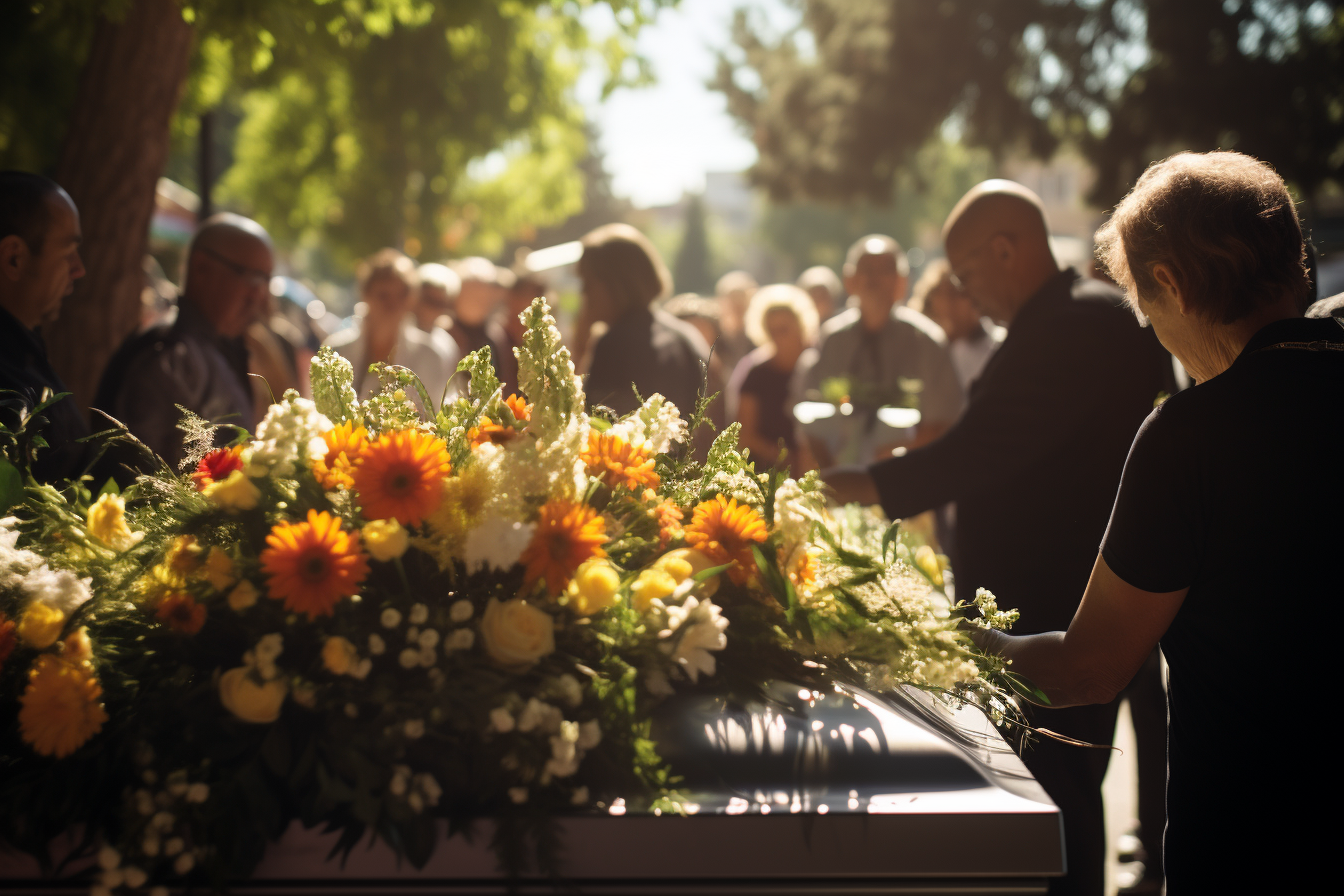
Cyprus has a developing end-of-life care landscape, with palliative services and hospice facilities run largely by charitable organisations and primarily serving cancer patients. The national health system, known as GeSY, includes palliative care within its scope in principle, yet practical access continues to be constrained. Following a death, official registration must be completed within 15 days, and foreign nationals’ families should alert their home country’s embassy without delay. Cyprus levies no inheritance tax, though probate proceedings are necessary to settle an estate.
| Item | Details |
|---|---|
| Death registration deadline | Within 15 days of the death (as of 2024) |
| Death certificate fee | €5 per certificate; €30 if registered after 1 year (as of 2024) |
| Palliative care via GeSY | Covered in principle; in practice currently mainly available to cancer patients (as of 2024) |
| Cremation facilities in Cyprus | No cremation facilities currently available in the Republic of Cyprus (as of 2024) |
| Inheritance tax | No inheritance, gift, or estate tax in Cyprus |
| Embalming for repatriation | Legally required before remains can be repatriated |
What end of life care options are available in Cyprus, and how does the system work?
Cyprus operates a well-established healthcare network that encompasses several end-of-life care pathways, ranging from inpatient hospice care to palliative support delivered at home. Services are provided by a combination of public institutions and private organisations, mirroring the island’s broader two-tier healthcare model.
The comprehensive General Healthcare System — known as GeSY — was launched in June 2019 and extends coverage across the entire population. GeSY is structured as a hybrid between a national health service and a social health insurance scheme, drawing its funding from contributions made by employees, employers, and the state. Patients are able to choose from both public and private providers enrolled within the system.
Within GeSY, a registered personal doctor serves as each patient’s primary point of contact and acts as a gatekeeper to specialist services, meaning referrals are required before accessing higher-level care. For individuals nearing the end of their lives, the first step is always a discussion with that personal doctor, who can direct them toward appropriate specialist or palliative services.
Where the range of GeSY-contracted palliative providers falls short of what a patient requires, the private healthcare sector offers broader alternatives. Despite GeSY’s extensive reach, a robust private health insurance market continues to thrive on the island, and many residents — expatriates in particular — choose to complement or replace their public coverage with private plans.
What is palliative care in Cyprus, and who is eligible for it?
Palliative care in Cyprus is designed to ease suffering and enhance the quality of life for those living with serious or terminal conditions, addressing physical discomfort alongside emotional and spiritual dimensions. The World Health Organization describes palliative care as an approach that enhances the quality of life of patients and their families who face problems associated with life-threatening illness, by preventing and relieving suffering through early identification, assessment, and treatment of pain and other difficulties — whether physical, psychosocial, or spiritual.
In early 2023, Cyprus’s General Health System broadened its coverage to include rehabilitative and palliative care services, though the roll-out of these services has since encountered delays and has been subject to significant constraints. As of 2024, access to palliative care within GeSY is largely confined to cancer patients, leaving those with other terminal or chronically debilitating conditions with limited options.
The restriction of services predominantly to oncology patients means that people living with severe chronic illness, advanced disability, or non-cancer terminal diagnoses often find themselves excluded from formal palliative pathways. The small number of providers contracted under GeSY further compounds the difficulty of gaining timely access. Home-based care, physiotherapy, and speech therapy are insufficiently developed, leaving many patients without adequate support in these areas.
The Cyprus Association of Cancer Patients and Friends (PASYKAF) and the Cyprus Anticancer Society (CACS) are the only two organisations currently delivering palliative home care — both are not-for-profit NGOs providing free services to adult cancer patients. Those with terminal conditions unrelated to cancer are largely left to rely on general community nursing. Expats facing such circumstances are advised to consult their GeSY personal doctor and explore private specialist care options.
Are there hospices in Cyprus, and how do you access them?
A modest number of hospice facilities exist in Cyprus, operated principally by charitable bodies and non-governmental organisations. These facilities are concentrated in specific urban centres, meaning that geographic location plays a significant role in determining accessibility.
The principal hospice facilities operating within the Republic of Cyprus are:
- The Cyprus Anti-Cancer Society Hospice, situated in Nicosia, which delivers palliative care specifically to cancer patients.
- PASYKAF Hospice, based in Limassol, which provides palliative services to patients with a range of conditions.
- St. Michael Hospice, located in Paphos, which offers both residential and home-based care to those with terminal illnesses.
These facilities provide a variety of services covering pain and symptom control, emotional and spiritual support, and comprehensive end-of-life care. Support for family members and caregivers is also offered alongside direct patient care.
Although palliative care bed numbers have recently increased, provision remains limited to just two of the Republic’s five districts, leaving other parts of the island without inpatient hospice infrastructure. Residents outside Nicosia, Limassol, and Paphos may face significant travel requirements or need to make private arrangements to access such care. Referral to a hospice is made through your GeSY personal doctor or oncologist based on clinical assessment.
Is palliative or hospice care covered by public health insurance or the national health system in Cyprus, or does it need to be funded privately?
GeSY’s benefits package encompasses visits to general practitioners, specialist consultations, hospital-based treatment, medication, laboratory testing, dental services, and palliative and rehabilitation care. In this sense, palliative care formally falls within the remit of Cyprus’s public health system — consistent with approaches adopted by many other EU member states.
The practical reality, however, is considerably more complicated. Although rehabilitative and palliative care services are legally included within GeSY, access in practice remains a notable challenge. The relatively small number of providers contracted to deliver these services under the national system restricts what patients can realistically obtain.
As part of its planned five-year expansion, GeSY incorporated new homecare and palliative care providers. Nonetheless, patients whose needs cannot be accommodated within the existing GeSY network may need to seek private care. Services such as physiotherapy, speech therapy, and home-based nursing care can be difficult to access, as the number of sessions included within the benefits package often proves insufficient for patients with complex or chronic conditions. In such circumstances, individuals bear the costs of private provision themselves.
It is strongly advisable to verify with the Health Insurance Organisation (HIO) and your personal GeSY doctor which palliative services are presently contracted and accessible in your specific district. Those holding private health insurance should carefully review their policy for end-of-life and hospice care provisions, as coverage terms differ considerably between products.
What legal documents should expats have in place before the end of life in Cyprus — such as a living will, advance directive, power of attorney, or healthcare proxy — and how do these work?
Taking care of legal preparation in advance is essential for anyone living in Cyprus, and doubly so for expats whose affairs may involve multiple jurisdictions. The primary documents to consider are:
- Will: The principal legislation governing wills is the Wills and Succession Law, Cap 195. A will constitutes the formal legal declaration by which a person — the testator — sets out their intentions for the disposal of their assets, property, and possessions following their death. The testator may designate an executor to oversee administration of the estate and ensure that their wishes are carried out.
- Power of Attorney: A Cypriot Power of Attorney (PoA) enables you to authorise a trusted individual to manage your financial and legal affairs should you lose capacity to do so. It must be drawn up with a Cypriot lawyer and, where immovable property is involved, registered with the Land Registry. Unlike some other jurisdictions, Cyprus does not have a clearly codified framework for an “enduring” or “lasting” power of attorney specifically directed at healthcare decisions — obtaining legal advice on how to structure this appropriately is essential.
- Advance Directive / Living Will: Cyprus does not yet have comprehensive dedicated legislation governing advance directives or living wills in the manner of several other European countries. Nonetheless, medical professionals in Cyprus are generally expected to give weight to a patient’s clearly documented wishes. Any such document should be prepared in Greek or accompanied by a certified translation, signed in the presence of a lawyer, and provided to your treating doctor and any hospice or care facility involved in your care.
- Healthcare Proxy: You may designate a trusted individual to take medical decisions on your behalf through a written declaration that has been formally witnessed. Consulting a Cypriot lawyer is indispensable to ensure that such a document is formulated in a way that local hospitals and care facilities will recognise and act upon.
All key documents should be stored in an accessible location, shared with relevant family members or your nominated representative, and ideally held by your Cypriot lawyer. Given that both GeSY-registered and private healthcare providers operate in Cyprus, ensure that applicable facilities hold copies of your documented preferences.
Are documents such as advance directives or powers of attorney made in another country legally recognised in Cyprus?
Whether a foreign legal document will be recognised in Cyprus depends on its nature and the country in which it was created. As an EU member state, Cyprus generally adheres to EU regulations governing cross-border recognition of legal instruments.
Powers of attorney executed abroad ordinarily need to be apostilled — that is, certified under the Hague Apostille Convention — if they originate from a signatory country, which encompasses the majority of significant nations. They will also typically require a certified translation into Greek before Cypriot authorities or institutions will act upon them.
Letters of administration or grants of probate issued by a Commonwealth country may be recognised in Cyprus by being resealed by a Cypriot court, provided the deceased held assets in Cyprus at the time of death. This illustrates Cyprus’s approach of recognising foreign legal instruments through a formal judicial process, rather than applying automatic mutual recognition across the board.
For healthcare-specific documents such as advance directives drafted in another country, there is no statutory guarantee of automatic recognition in Cyprus. In practice, medical personnel may give effect to clearly expressed and documented wishes, but there is no legally binding obligation to do so in all situations. The most prudent course is to have any foreign advance directive translated into Greek, apostilled where required, formally reviewed by a Cypriot lawyer, and proactively shared with your treating doctor and any care facility. Always confirm the current legal position with a qualified Cypriot lawyer, as this area continues to evolve.
What are the laws around euthanasia or assisted dying in Cyprus?
Both euthanasia and assisted dying are unlawful in Cyprus. There is no legislation in force that permits voluntary or non-voluntary euthanasia, nor any form of assisted suicide. This sets Cyprus apart from a small but growing number of European jurisdictions — such as the Netherlands, Belgium, and Switzerland — where assisted dying is permitted under tightly regulated conditions.
Any deliberate act that ends a person’s life, even at their own request, constitutes a criminal offence under Cypriot law. Medical professionals are bound by both their ethical codes and domestic law to concentrate on palliative symptom relief and comfort-focused care rather than any life-ending intervention.
Palliative sedation — the administration of medication to reduce a patient’s level of consciousness and alleviate unbearable suffering in the final stages of life, without the primary aim of hastening death — is practised within the bounds of Cypriot medical ethics and is legally and ethically distinct from euthanasia. Families with concerns about pain control and comfort at the end of life are encouraged to raise these openly with the treating medical team.
What are the local customs, traditions, and religious practices around death and dying in Cyprus?
Cyprus carries a deep cultural heritage, and the ways in which death and dying are approached reflect longstanding religious influences. The great majority of Greek Cypriots belong to the Greek Orthodox Church, and it is Orthodox Christian tradition that shapes the rituals and conventions of mourning observed across most of the island.
In cultural terms, funerals are typically held as swiftly as possible after death, usually within 24 to 48 hours — a practice consistent with Orthodox custom, which favours prompt burial. It is customary to hold a wake, in which family and community members view the body, and this is often conducted at the family home or at the church on the evening before the funeral service.
Traditional Cypriot mourning observances extend over a 40-day period following a death. During this time, bereaved family members may dress in black or subdued clothing, and religious memorial services are customarily held at 9 days, 40 days, and on the anniversary of the death. The wider community plays a prominent role in supporting grieving families through visits, shared meals, and collective prayer.
Burial is the established practice within the Greek Cypriot community, and while the Orthodox Church has historically discouraged cremation, institutional attitudes have shifted to some degree in recent years. Expats of other faiths — including Muslim, Catholic, Anglican, and other Christian denominations — will find that many cemeteries maintain dedicated sections for non-Orthodox burials, and services in accordance with other traditions can be arranged through the relevant religious communities or a licensed secular celebrant.
Cypriot customs place great emphasis on family and communal solidarity during both the dying process and the period of bereavement. Expatriates may find that the degree of communal involvement in mourning differs from customs in more secular or individualistic societies, but they will generally encounter considerable warmth and generosity from local people, irrespective of nationality or religious background.
What must you do when someone dies in Cyprus? Who do you notify, how quickly, and in what order?
When a death occurs in Cyprus, family members or caregivers face a series of medical, administrative, and — where foreign nationals are involved — consular obligations. The recommended sequence of steps is as follows:
- Contact a doctor or the emergency services. If someone dies at home, the family should call the local police or ambulance service. When death occurs in a hospital or hospice, staff will normally notify the relevant authorities directly. A doctor is required to certify the cause of death. Where death is sudden, unexpected, or occurs under unclear circumstances, police will become involved and a post-mortem examination may be ordered.
- Obtain a medical death certificate. A medical death certificate is a prerequisite for registering the death and making funeral arrangements. It should be obtained from the attending doctor or the hospital in which the person died. This document underpins every subsequent step in the process.
- Inform close family members. The family should notify relatives, friends, and other contacts of the death. For foreign nationals, this is also the moment to make prompt contact with your home country’s embassy or consulate in Cyprus.
- Engage a funeral director. A licensed Cypriot funeral director can guide the family through local requirements, assist with organising the funeral or repatriation of remains, and liaise with the relevant authorities on your behalf. Given that burial within 24 to 48 hours is the cultural norm, appointing a funeral director quickly is important.
- Notify your insurance provider. If the deceased held travel, life, or repatriation insurance, the insurer should be contacted as soon as possible, since they may coordinate and contribute to the costs of either repatriation or local burial.
- Contact your home country’s embassy or consulate. For foreign nationals, this is a critical step (covered in greater detail in a dedicated section below). The consulate can issue documentation needed for repatriation, inform next of kin who remain in the home country, and supply a list of trusted local legal and funeral professionals.
- Register the death. Registration must be completed with the local authorities within 15 days. This takes place at the District Administration office in the district where the death occurred.
- Obtain certified copies of the death certificate. Once the death has been formally registered, it is advisable to request several certified copies of the official death certificate at the same time, as multiple copies will be required for estate administration, insurance claims, consular purposes, and any repatriation arrangements.
How is a death officially registered in Cyprus, and what documents are needed?
Deaths in Cyprus are recorded by the Registrar of the district in which they occur. Registration is administered through the District Administration offices, which operate under the Ministry of Interior.
A death certificate is issued on the day the death is entered in the Register of Deaths. Certificates may be obtained from any District Administration office across the Republic, irrespective of which district the death took place in, by completing the required form and submitting the original medical death certificate.
As of 2024, a fee of €5 applies to each death certificate issued. Where registration takes place more than one year after the date of death, the statutory fee rises to €30.
Presentation of the original medical death certificate is mandatory in order to obtain an officially registered death certificate. Identification documents for the deceased will also typically need to be provided. It is advisable to request several certified copies of the official certificate at the point of registration, as these will be needed when notifying banks, insurers, pension providers, and overseas authorities.
Official Cypriot death certificates intended for use abroad must carry an apostille. Apostilles for Cypriot public documents are obtainable from the Ministry of Justice and Public Order. Where the receiving country requires a translation, a certified translation from Greek into the appropriate language will also be necessary.
What happens if a foreign national dies in Cyprus — what are the specific steps for notifying their home country’s embassy or consulate, and what role does the consulate play?
When a foreign national dies in Cyprus, contacting their home country’s embassy or consulate is among the most urgent priorities for the family. Most embassies and consulates in Cyprus maintain offices in Nicosia and can be reached by telephone or email. The US Embassy in Cyprus and the UK Government both publish dedicated bereavement guidance for their nationals, and the embassies of most other countries provide equivalent consular assistance.
The consulate’s role typically encompasses:
- Informing next of kin who are located in the home country.
- Issuing a consular death report or equivalent document that is recognised by the home country’s civil registration system.
- Furnishing a list of reputable local funeral directors, lawyers, and translators.
- Assisting with documentation required for repatriation, including coordination with Cypriot authorities.
- Helping families navigate local legal procedures and requirements.
Where a family lacks the financial means to cover funeral costs, consular staff can request that the police apply to the Cyprus Ministry of Foreign Affairs for funds to support a pauper’s burial. This process may take up to a year to conclude, during which time the deceased will remain in the state mortuary. This avenue is a last resort — families are strongly encouraged to ensure that adequate travel or life insurance is in place before relocating to or visiting Cyprus.
Personal belongings found at the time of death are either handed directly to the family, if they are present, or taken into police custody. If next of kin opt for repatriation, instructing the local funeral director to recover the belongings from the police on their behalf is advisable.
How are funerals typically arranged in Cyprus, and what are the usual options for burial or cremation?
Funeral arrangements in Cyprus are made through licensed funeral directors, who manage the practicalities of preparing the body, handling documentation, and coordinating burial. Families choosing local burial will need to appoint a Cypriot funeral director, who can then make the necessary arrangements with a privately or publicly owned cemetery. Ceremonies may be conducted by the funeral director or a registered celebrant, and specific arrangements can be made to reflect the family’s cultural and religious preferences.
An important consideration for those planning ahead: the Republic of Cyprus currently has no cremation facilities. Families wishing to have a body cremated must communicate this wish to the funeral home, which will advise on transferring the remains to another country where cremation can be carried out. This makes cremation contingent on repatriation — an additional cost and logistical burden that families should anticipate and plan for accordingly.
While embalming is not a statutory requirement and is not routinely performed for local burials, it is recommended when the funeral and burial will take place more than a week after the remains are released to next of kin. Embalming may be performed at state hospitals but is most frequently carried out by private funeral homes.
Cypriot law requires all licensed funeral homes to have their own private mortuary. Mortuary standards in Cyprus are generally of a good quality, and facilities are commonly located within or adjacent to local state hospitals.
What are the approximate costs of a funeral in Cyprus, and are there any state or insurance-based funds that can help cover them?
The cost of a funeral in Cyprus varies according to the type of service chosen, the funeral home engaged, and whether remains will be buried locally or repatriated. Overall, costs are generally considered moderate relative to Western European standards. A basic local burial — encompassing the funeral director’s professional fees, a coffin, cemetery charges, and the necessary documentation — typically falls in the range of approximately €1,500 to €4,000, though elaborate services will exceed this. Always request an itemised quotation from your chosen funeral director before committing.
Repatriation of remains to another country adds considerably to the overall expense. Costs associated with embalming, a sealed casket, export permits, air freight charges, and the services of a receiving funeral home at the destination can readily bring the total to €5,000–€10,000 or higher, depending on the destination country. Obtain current figures directly from your chosen funeral director.
The main sources of financial assistance include:
- Travel and repatriation insurance: This is the most critical financial safeguard. Next of kin or a formally appointed representative must engage a local funeral director whether the person is to be repatriated or buried in Cyprus. If the deceased held insurance coverage, contacting the insurer immediately to establish whether burial or repatriation costs are covered is essential.
- Life insurance: Life insurance policies, whether held in Cyprus or elsewhere, may include a death benefit that can be applied toward funeral expenses. Policy terms should be examined carefully.
- State assistance (last resort): In cases where a family cannot meet funeral costs, consular staff may request that the police apply to the Cyprus Ministry of Foreign Affairs for funds supporting a pauper’s burial. This process can take up to a year to complete.
There is no universal state funeral payment scheme in Cyprus analogous to, for example, the Social Fund Funeral Payment available in certain other countries. Securing adequate insurance coverage in advance is therefore strongly recommended.
What is the process for repatriating the remains of a foreign national from Cyprus to another country?
Repatriation of remains is a multi-stage process that draws in Cypriot authorities, the deceased’s home country consulate, a funeral director, and typically an airline cargo service. In uncomplicated cases, the process takes a minimum of several days to a week, and considerably longer where a post-mortem examination or criminal investigation is involved.
Where repatriation is sought, the funeral home undertakes to embalm the remains, seal the casket and outer container appropriately, liaise with the Ministry of Health to secure required export permits, coordinate with air cargo handlers, and arrange transport of the container to the international airport.
Embalming is a legal requirement for the shipment of remains out of the country. In most cases, the insurance company will have an established arrangement with an international funeral director specialising in repatriation, who will in turn work with a local Cypriot funeral director. Embalming must be completed before remains can be released for transport.
The key documents ordinarily required for repatriation include:
- The official Cypriot death certificate (apostilled for recognition abroad)
- A certificate confirming embalming has been performed
- An export permit from the Cyprus Ministry of Health
- A sealed coffin certificate
- Consular documentation issued by the home country’s embassy
- Any transit permits required if the remains will pass through a third country
In certain cases, the receiving country may require a further post-mortem, and where repatriation is to England or Wales, it is likely that the UK Coroner will wish to hold an inquest. Families repatriating to other countries should establish whether analogous requirements apply under the laws of the destination country. Engaging an experienced and reputable funeral director in Cyprus is the most effective way to navigate this process smoothly.
What happens to the estate of someone who dies in Cyprus — how does probate or estate administration work, and are there inheritance taxes?
The governing legislative framework for the execution of wills and the administration of deceased persons’ estates in Cyprus is the Administration of Estates Law, Cap 189.
Where the deceased left a valid will, the estate is dealt with in accordance with its terms — subject to the provisions of law — through a process known as “Probate”. In the absence of a valid will, the estate is administered under the relevant statutory rules through a process called “Administration”. In both cases, the court must appoint a suitable person to oversee the process.
An application for the grant of probate or letters of administration must be lodged at the Registry of the District Court for the district in which the deceased was permanently resident at the time of death. A Cypriot lawyer will be required to assist with this application.
The executor or administrator will deduct their professional fees and the funeral expenses from the estate before distribution. Under Cypriot law, debts are not inherited by beneficiaries. The remainder of the estate is then distributed among those entitled.
Regarding inheritance tax: Cyprus does not impose any inheritance, gift, or estate tax. Transfer fees and stamp duty may, however, be payable when immovable property is transferred. For properties valued at up to €85,000, the applicable transfer fee rate is three per cent; for values between €85,001 and €170,000, the rate is five per cent; and for values exceeding €170,000, the rate is eight per cent of the property value. Always confirm current rates with a qualified Cypriot lawyer or the Ministry of Finance, as these figures are subject to change.
If an expat dies without a will in Cyprus, what happens to their assets under local intestacy laws?
Succession and matters connected to inheritance are regulated by the Wills and Succession Law. Succession to an estate may arise either under a valid will or by operation of law. Where no will exists — or where the deceased has not addressed the governing law in their will — the domicile of the deceased at the time of death is the decisive factor in determining which rules apply to the estate.
Under Cypriot intestacy law, once the estate’s debts and liabilities have been settled, the surviving spouse is entitled to a share of the statutory portion and of any part of the disposable estate that has not been otherwise disposed of. If the deceased is survived by a spouse and a child — or by the descendants of a child — all receive equal shares among them.
Cypriot law recognises four categories of kinship, arranged in descending order of priority. Members of a superior category exclude those in any lower category from inheritance. The first category comprises children of the deceased who are living at the date of death, each of whom receives an equal share.
It is also important to note that Cyprus applies forced heirship rules, whereby a defined portion of the estate — the “statutory portion” — must pass to close family members regardless of any express wishes to the contrary. The operation of these rules is involved, as specific prescribed formulas govern how portions of the estate are to be divided among surviving family members. Expats who hold assets in Cyprus — real estate in particular — are strongly urged to execute a valid Cypriot will, so that their intentions are given effect within the framework established by local law. Consulting a registered Cypriot lawyer at the earliest opportunity is advisable.
Frequently asked questions
Will my foreign health insurance be accepted by Cypriot hospitals and hospices for end-of-life care?
Private health insurance arranged abroad may be accepted by certain private hospitals and clinics in Cyprus, but this is not guaranteed and practices differ across providers. You should contact both your insurer and the specific facility ahead of time to establish whether direct billing arrangements are in place, or whether you will be expected to pay upfront and seek reimbursement later. GeSY-contracted public facilities operate within the national contributions framework; privately held international insurance does not serve as a substitute for GeSY registration. Expats intending to live in Cyprus on a long-term basis should register with GeSY if eligible and consider taking out supplementary private insurance to cover services not fully provided under the public system.
Are documents in languages other than Greek legally valid in Cyprus?
Official processes in Cyprus are conducted in Greek, and documents produced in other languages will generally need to be accompanied by a certified translation into Greek before courts, registries, hospitals, and government offices will accept them. Documents originating from abroad — such as powers of attorney, advance directives, or foreign wills — will typically require both an apostille under the Hague Convention and a certified translation. A qualified Cypriot lawyer can advise on ensuring that foreign documents are properly prepared for use before local authorities.
How long does the process of repatriating remains from Cyprus typically take?
Where circumstances are straightforward — the cause of death is established, no post-mortem is required, and insurance or other funding is confirmed — repatriation can generally be arranged within approximately five to ten days. When a post-mortem is necessary, particularly in cases of sudden or unexplained death, the process may extend to several weeks, as remains cannot be released before investigations have concluded. Holding adequate travel or repatriation insurance significantly accelerates matters, as insurers frequently have pre-existing relationships with local and international funeral directors that facilitate efficient coordination.
What support is available to bereaved family members in Cyprus?
Bereaved families can turn to several sources of support in Cyprus. Hospices and NGOs including PASYKAF and the Cyprus Anti-Cancer Society extend bereavement care to the families of patients they have supported. The Greek Orthodox Church provides pastoral care and community-based support, accessible regardless of the nationality of those who are grieving. Private counsellors and psychologists can be reached through a GeSY referral or engaged privately. Expat community networks — which are particularly active in Limassol, Paphos, and Larnaca — can serve as a valuable informal resource, offering practical guidance and human connection for those unfamiliar with local customs and procedures.
Can a will made in another country be used to administer assets in Cyprus?
Letters of administration or grants of probate issued by a Commonwealth country may be recognised in Cyprus by being resealed by a Cypriot court, provided the deceased held assets in Cyprus at the time of death. For wills and grants from non-Commonwealth countries, recognition procedures may differ and will generally require a Cypriot court application. A foreign will that extends to assets in Cyprus can create complications, particularly in light of Cyprus’s forced heirship provisions. Best practice is to hold a separate Cypriot will specifically covering assets situated in Cyprus, drafted in conjunction with a locally qualified lawyer.
Is there a time limit for registering a death in Cyprus?
Registration of a death with the local authorities must be completed within 15 days. Where registration occurs more than one year after the date of death, the statutory late registration fee is €30 (as of 2024). Prompt registration is important, as probate and inheritance proceedings cannot commence until the death is formally recorded. Anyone facing delays in registration due to exceptional circumstances should seek guidance from a Cypriot lawyer.
Does Cyprus have any facilities or services specifically for non-Orthodox or non-Christian end-of-life care?
Yes. While Greek Orthodox traditions dominate the cultural landscape of death and mourning in Cyprus, the island accommodates a diverse population and makes provision for multiple faiths. Many cemeteries contain dedicated sections for non-Orthodox Christians, Muslims, and those without religious affiliation. Catholic, Anglican, and other Christian communities maintain active congregations capable of providing pastoral support. Muslim residents, particularly in areas with larger Middle Eastern populations, have access to Islamic burial rites and associated practices. Secular funerals can be arranged through licensed funeral directors working with registered celebrants. Hospital and hospice staff are generally attentive to diverse religious and cultural needs — families are encouraged to discuss their requirements with the care team or a social worker well in advance.
Can an expat access GeSY palliative care if they are not a Cypriot citizen?
GeSY eligibility is extended to all permanent residents of areas under the control of the Republic of Cyprus, encompassing EU citizens who are employed or hold permanent residence status, third-country nationals holding permanent residence or equivalent rights, and the family members of these groups. The determining criterion is therefore residency, not citizenship. Expats who hold legal permanent residence in Cyprus — whether EU or non-EU nationals — are entitled to register with GeSY and, in principle, to access palliative care through the system. In practice, the availability of specific palliative services via GeSY remains constrained and varies considerably by location. It is advisable to check directly with the HIO (tel: 17000) or your GeSY personal doctor about what is currently available in your area.