
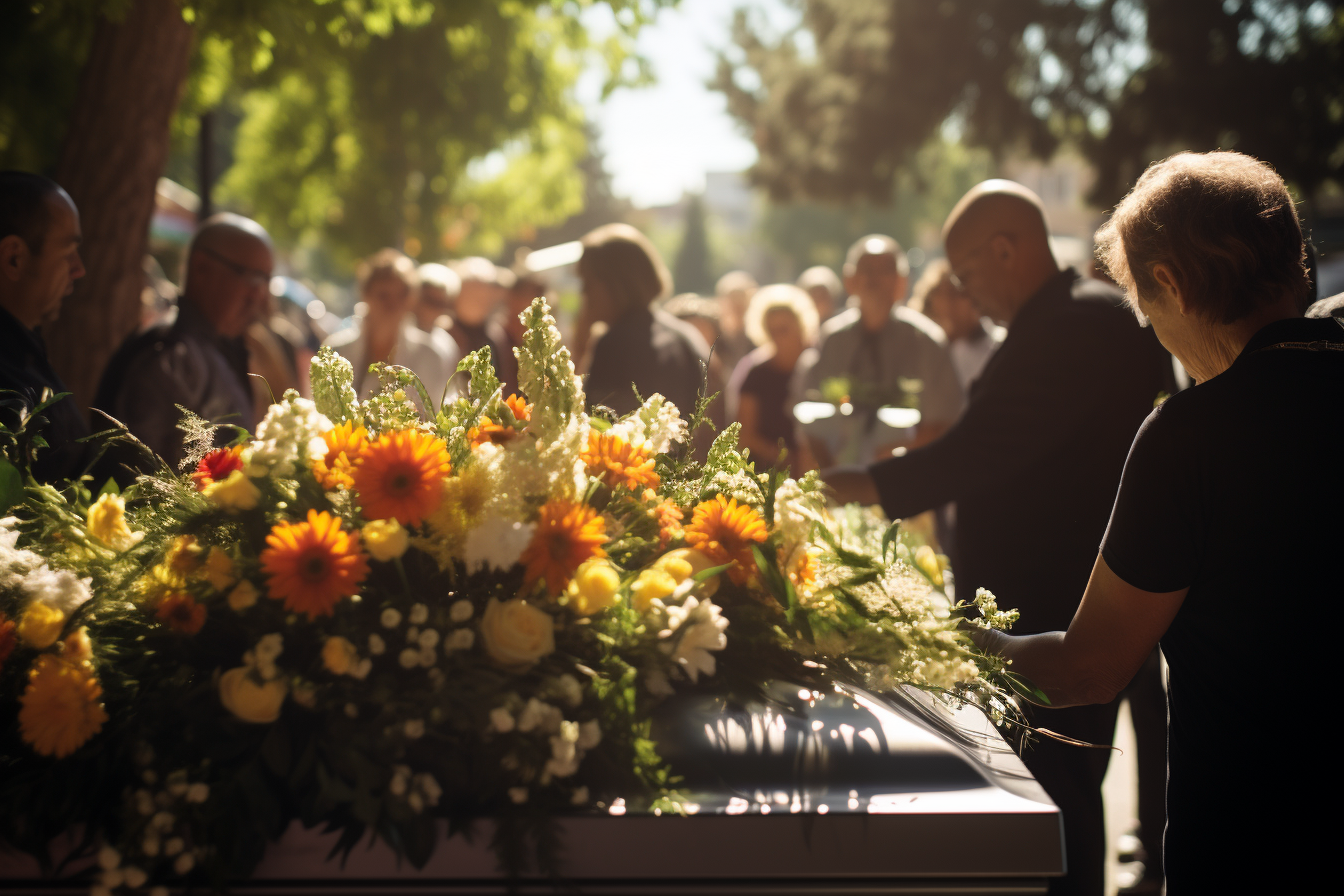
Germany operates a comprehensive end of life care framework anchored by the Hospice and Palliative Care Act of 2015, under which both palliative and hospice care are included as standard entitlements within statutory health insurance. Following a death, the event must be reported without delay to the local civil registry office (Standesamt) and, where the deceased was a foreign national, to their home country’s consular mission. All expatriates are strongly urged to put appropriate legal arrangements in place well in advance.
| Item | Details |
|---|---|
| Hospice and Palliative Care Act | In force since December 2015; palliative care is a standard statutory health insurance benefit |
| Inpatient hospices (as of 2024) | Around 270 nationwide; statutory insurance covers up to 95% of eligible costs |
| Advance directive (Patientenverfügung) | Must be in writing and signed; no notarisation required; binding on doctors and carers |
| Death registration deadline | Must be reported to the local Standesamt within one working day of death |
| Inheritance tax (Erbschaftsteuer) | Applies in Germany; exemptions vary by relationship (spouses: €500,000; children: €400,000 each, as of 2024) |
| Repatriation of remains | Requires a German death certificate, medical certificate, and embalming or sealing; consulate assistance recommended |
What end of life care options exist in Germany, and how is the system structured?
Germany provides a layered end of life care framework encompassing home-based support, hospital palliative units, inpatient hospices, and nursing home provision. The Hospice and Palliative Care Act of 2015 established and regulated the delivery of palliative services across the country, with the stated aim of allowing people with incurable conditions to live out their final phase of life in accordance with their own preferences.
Specialist palliative care (SPC) is delivered across three settings in Germany: palliative care units (PCUs) offer specialist inpatient treatment, generally as a dedicated ward within a hospital; specialist palliative home care (SPHC) teams bring SPC directly to patients in their own homes and provide support to their families; and palliative care advisory (PCA) teams offer guidance to healthcare professionals working on general hospital wards without palliative specialisation.
Outpatient palliative care in Germany encompasses both generalist and specialist provision. Generalist outpatient palliative care has been available since 2013 and is delivered primarily by general practitioners (GPs) for patients whose symptom burden is relatively manageable. Specialist outpatient palliative care has been accessible since 2007 and can be initiated by physicians working in either outpatient or inpatient settings. Most patients enter the system via their GP, who refers them to the appropriate level of specialist support.
As of 2024, approximately 100,000 volunteers are engaged in hospice care across Germany, forming the backbone of a nationwide network that spans palliative care units, outpatient hospice services, and inpatient hospice facilities. This culture of voluntary engagement is a defining characteristic of the German model and allows care to reach people in communities and homes throughout the country.
What does palliative care in Germany involve, and who qualifies for it?
Palliative care in Germany encompasses integrated medical, nursing, psychological, and social support for people facing serious, life-limiting illness, as well as for their loved ones. Its primary purpose is to reduce suffering as effectively as possible and to enhance quality of life, with the particular goal of enabling individuals to remain in familiar surroundings for as long as this can be achieved.
Those who have a serious, incurable, and advanced illness with a limited life expectancy may, under defined conditions, access outpatient or inpatient hospice services funded through statutory health insurance. Eligibility is determined by the treating physician, who must formally certify the nature and prognosis of the condition.
German legislation makes clear that the treatment of sick individuals encompasses palliative care, and that nursing provision includes care for those who are terminally ill. Consequently, both palliative and end of life care fall within the standard services offered by statutory health insurance funds and are part of the social long-term care insurance mandate.
As of 2024, only around 15% of German hospitals have one of the approximately 330 palliative care units in existence nationwide. Although coverage has improved considerably since 2015, patients in rural regions may still face longer journeys to reach specialist services, making early planning particularly important.
Do hospices exist in Germany, and how can someone gain access to them?
Inpatient hospices are standalone residential facilities serving people with advanced life-limiting illness. Comprehensive care and support is provided by both employed and voluntary staff working alongside practitioners with expertise in palliative medicine, with the aim of meeting the needs of patients and their families alike. There are approximately 270 inpatient hospices operating across Germany as of 2024.
Outpatient hospice services help seriously ill individuals spend the final phase of their lives at home. The predominantly volunteer workforce of approximately 1,500 outpatient hospice services offers guidance on care matters, cooperates with doctors and care providers, supports families throughout the dying process, and continues to accompany relatives following bereavement.
Access to inpatient hospice care generally requires a referral from a GP or hospital physician. Since 2007, individuals have had a statutory entitlement to specialised outpatient palliative care (SAPV), with SAPV teams available around the clock, seven days a week — a provision essential to supporting seriously ill patients in dying with dignity at home, in residential care facilities, or in hospices. Facilities can be found via the Guide to Hospice and Palliative Care in Germany (Wegweiser), maintained by the German Association for Palliative Medicine (DGP).
Hospice and palliative care networks coordinate facilities and services for the counselling, support, treatment, and care of children, adolescents, and adults living with life-limiting conditions, as well as for their families. Since 2022, these networks have been increasingly established, expanded, and given a legal funding basis.
Is palliative or hospice care funded through public health insurance in Germany, or must it be paid for privately?
German statutory health insurance meets the full cost of necessary medical care for terminally ill patients. This means that for individuals enrolled in the statutory system (gesetzliche Krankenversicherung, or GKV), the core expenses associated with palliative and hospice care are covered as a matter of entitlement — an approach that is notably broad in its scope compared with many other European systems, even those with publicly funded healthcare.
Statutory health insurance funds contribute 95% of the eligible costs for inpatient hospices for both adults and children. Hospices typically bridge the remaining portion through charitable funding and donations, meaning most patients in inpatient hospice settings will face little or no out-of-pocket expenditure for their care.
German law explicitly establishes palliative care as an integral element of the medical services provided by statutory health insurance, and additional outpatient medical services have been introduced to support the delivery of especially qualified and coordinated palliative treatment.
Expats who hold private health insurance (private Krankenversicherung, or PKV) should examine their policy thoroughly to confirm the extent of palliative and hospice care coverage. Those without German statutory or private insurance should discuss funding arrangements directly with their intended care provider and, where applicable, with their home country insurer. Insured individuals are entitled to receive advice from their statutory health insurance fund about the range of hospice and palliative care options available to them.
Which legal documents should expats prepare before the end of life in Germany — such as a living will, advance directive, power of attorney, or healthcare proxy — and how do these work?
There are three principal mechanisms through which you can record your wishes for situations in which you are no longer able to communicate them yourself: an advance healthcare directive (Patientenverfügung), which sets out the treatment you wish to receive or decline should you lose the capacity to express your will; a lasting power of attorney (Vorsorgevollmacht), which authorises a trusted person to act on your behalf in health, legal, and financial matters; and a guardianship directive (Betreuungsverfügung), which covers similar ground but involves supervision by the courts.
An advance healthcare directive (Patientenverfügung) allows you to specify in writing whether and how you wish to be treated in defined circumstances if you are unable to express yourself at the relevant time. You may indicate which examinations, treatments, or life-prolonging interventions you consent to, which you refuse, and what your broader wishes are. Physicians, caregivers, and therapists are legally obliged to respect your stated wishes where the directive is clearly expressed and binding.
A last will and testament (Testament) must either be written entirely by hand and signed by the person making it, or executed before a German notary. Both an enduring power of attorney and a living will, by contrast, need only be in writing — they do not have to be handwritten. Notarisation is not a legal requirement for a Patientenverfügung to be valid, although it provides additional legal certainty, particularly for powers of attorney that relate to financial affairs.
In Germany, the age of majority is 18, and individuals below this age cannot draw up a legally binding directive. A healthcare proxy empowers a designated person to take decisions on medical interventions or personal matters. Even close family members — including spouses or children — require such a formal power of attorney to be able to make decisions on behalf of the person requiring care.
On request, a power of attorney can be entered into the Central Register of Powers of Attorney maintained by the Federal Chamber of Notaries. All guardianship judges in Germany have access to this register, helping to ensure that your authorised representative can be reached in an emergency. Guidance on advance directives is available through the German Federal Ministry of Health’s health information portal at gesund.bund.de.
Are advance directives or powers of attorney drawn up in another country legally recognised in Germany?
This is among the most pressing questions for expats, and the answer demands careful consideration. Foreign advance directives and powers of attorney are not automatically treated with the same legal standing in Germany as documents prepared under German law. In practice, hospitals and courts may be unfamiliar with documents presented in foreign formats or languages, which can result in delays or disputes precisely when prompt action is most needed.
It is strongly advisable to have all documents notarised and registered for legal certainty, and to provide bilingual versions to facilitate international recognition. A German-language version of any advance directive or power of attorney will greatly assist healthcare providers, financial institutions, and courts in responding promptly and appropriately.
Without advance planning, German courts — rather than your family — will determine who manages your assets, your care, and associated matters. Even a valid document from your home country may not be acted upon swiftly by German medical staff without a German-law equivalent in place. The safest course of action is to prepare documents governed by German law in parallel with any instruments from your home country, working with a bilingual lawyer with experience in international matters.
An advance directive must be respected in any decision concerning medical treatment, regardless of the stage of illness — but this principle applies to documents that satisfy German legal requirements. Expats should seek specific guidance from a qualified German attorney to confirm that their documents will be enforceable in Germany.
What does German law say about euthanasia and assisted dying?
The legal landscape surrounding assisted dying in Germany is intricate and has shifted considerably in recent years. Active euthanasia — whereby a third party directly brings about a person’s death — remains unlawful under German law. However, passive measures such as withdrawing or withholding life-sustaining treatment at the patient’s request, as expressed through a valid advance directive, are legally permissible and supported within the healthcare framework.
If a healthcare professional proceeds with treatment that the patient has explicitly refused, this is regarded as a criminal offence under German law. In this sense, a doctor’s duty to preserve life ends at the point at which the patient no longer wishes for it to be preserved.
On the matter of assisted suicide, Germany’s Federal Constitutional Court ruled in February 2020 that a blanket prohibition on assisted suicide organisations was unconstitutional, affirming the existence of a right to a self-determined death. However, as of 2024–2025, the German parliament (Bundestag) has not yet enacted comprehensive replacement legislation, leaving this area of law in a state of ongoing development. Expats are advised to seek current legal guidance on this subject, as the position may change. The website of the Federal Ministry of Health (Bundesgesundheitsministerium) provides the most up-to-date information on the legislative situation.
The availability of effective pain relief therapies for terminally ill patients is also a significant dimension of the broader debate around euthanasia in Germany. Pain management and palliative sedation are accessible through the healthcare system and do not constitute euthanasia under German law.
What customs, traditions, and religious practices surround death and dying in Germany?
Germany is a religiously and culturally diverse society, with large populations of Catholics, Protestants, Muslims, and those who identify with no religion. Funeral customs therefore differ considerably across communities. Christian funerals — whether Catholic or Protestant — generally include a church service, prayers, and a burial or cremation. Muslim burials follow Islamic tradition, with interment of the body ideally taking place as soon as possible after death. Jewish communities observe Halachic law, including rituals for preparation of the body (tahara) and prompt burial.
For those without religious affiliation — an increasingly large section of the population — secular funeral ceremonies led by a humanist or civil celebrant are growing in popularity. Such ceremonies are tailored to the individual and concentrate on the life lived rather than on religious observance.
German funeral culture is traditionally characterised by formality and respect. Dark clothing is customary at funerals, and offering condolences (Beileid) is taken seriously. It is conventional to send a card or flowers — typically white or in muted tones — to the bereaved. Attending the funeral of a colleague or neighbour is considered a mark of respect even when the connection is not particularly close.
The mourning period (Trauerzeit) is culturally recognised, and employees in Germany are entitled to paid compassionate leave (Sonderurlaub) following bereavement. The precise duration may vary according to the employer or applicable collective agreement, but it generally covers at least the day of the funeral for an immediate family member.
What steps must be taken when someone dies in Germany? Who should be notified, how quickly, and in what sequence?
The process following a death in Germany is governed by law and must be carried out in a defined order. Failure to do so can lead to legal complications and practical difficulties. The steps below apply regardless of the nationality of the deceased.
- Summon a doctor without delay. A medical death certificate (Todesbescheinigung) is issued by a physician once death has been confirmed. If the death takes place at home, contact the deceased’s GP or an out-of-hours medical service. Deaths occurring in hospital or a residential care facility will be handled by staff on site. The physician must examine the body and establish the cause of death.
- Engage a licensed funeral home (Bestattungsunternehmen). German law requires that the body of the deceased be managed by a licensed funeral home. The funeral home will collect the body, arrange appropriate storage, and guide you through all relevant legal obligations. They can generally be reached within a few hours of death. A directory of German funeral homes is available at bestatter.de.
- Register the death at the local civil registry office (Standesamt). This must be completed within one working day of the death. The Standesamt is the civil registration authority responsible for recording deaths. The funeral home can frequently handle or assist with this registration on your behalf.
- Assemble the documentation required by the Standesamt. This includes the deceased’s birth certificate, marriage certificate, and — where applicable — divorce decree or the death certificate of a previous spouse. Documents in languages other than German may need to be translated by a certified translator.
- Obtain the official death certificate (Sterbeurkunde). Issued by the local Standesamt, German death certificates are also available in international multilingual versions. Request several certified copies, as these will be required by banks, insurers, pension authorities, and those administering the estate.
- Notify the embassy or consulate of the deceased’s home country (where applicable). If the deceased was a foreign national, the relevant consulate should be contacted as soon as possible — ideally within 24 to 48 hours. The consulate can provide consular death documentation and support with repatriation if this is required (see the dedicated section below).
- Inform relevant authorities and institutions. This includes the deceased’s health insurer, employer, pension provider, bank, landlord, and any subscription services. The Einwohnermeldeamt (residents’ registration office) should also be notified so that the individual’s registration can be updated accordingly.
- Begin to address the estate. If the deceased left a will, contact a German notary or probate lawyer (Nachlasspfleger or Erbschaftsanwalt) to commence estate administration. Where no will exists, intestacy rules will determine the distribution of the estate (see the section below).
How is a death formally registered in Germany, and what paperwork is required?
Births, marriages, and deaths in Germany are officially recorded at the local vital records office (Standesamt) in the jurisdiction where the event occurred. Registration of a death is a legal requirement and must be completed before a burial or cremation can proceed.
The medical death certificate (Todesbescheinigung) is produced by a physician once death has been established. This document has a confidential section and a non-confidential section. The confidential portion, which contains information about the cause of death, is sent directly to the German health authority and is not accessible to the next of kin — except in circumstances where the remains are to be transferred to another country.
To complete the formal registration, the next of kin or the funeral home must present the following to the local Standesamt: the medical death certificate (Todesbescheinigung), the deceased’s passport or identity document, their birth certificate, and, where relevant, their marriage certificate or civil partnership document. For foreign nationals, these documents may require translation into German by a certified translator. Funeral homes can typically help with finding appropriate translation services.
Once registration is complete, the Standesamt issues the official death certificate (Sterbeurkunde). An international version, recognised in multiple languages, can be requested if you expect to need the document acknowledged abroad. Further certified copies are available for a modest administrative fee per copy.
What procedures apply when a foreign national dies in Germany — how should their home country’s embassy or consulate be notified, and what role do they play?
When a foreign national dies in Germany, their home country’s embassy or consulate takes on a central role in ensuring that the death is properly documented and that the family’s wishes regarding the body are respected. The consulate should be contacted at the earliest opportunity — within 24 to 48 hours of death is strongly recommended.
The consulate’s typical responsibilities include: verifying the identity of the deceased; issuing a consular death certificate or report of death for the home country’s official records; liaising with local authorities and the German Standesamt; assisting the family in understanding local procedures and the options available to them; and, where repatriation is sought, helping to coordinate the required documentation and engaging with funeral homes and airlines.
To notify the consulate, telephone them directly — using the emergency consular number if contact is required outside business hours — and provide the deceased’s full name, date of birth, nationality, passport number if known, the location and approximate time of death, and your own contact details as the person making the notification. The consulate will then explain the specific steps applicable to your home country’s requirements.
It should be noted that consulates are not in a position to pay funeral or repatriation costs, nor can they override German law. They serve as facilitators and advocates for the family, rather than as decision-making authorities within the German legal system. Expats who registered with their consulate or embassy upon arriving in Germany — a step that is strongly encouraged — will find the process considerably more straightforward.
How are funerals organised in Germany, and what burial or cremation options are available?
Funerals in Germany are arranged through licensed funeral homes (Bestattungsunternehmen), who take responsibility for all logistical and legal aspects. Unlike in some other countries where families may make arrangements independently, German law mandates the involvement of a licensed undertaker. In larger cities, funeral directors will generally have a working knowledge of English.
Both burial (Erdbestattung) and cremation (Feuerbestattung) are lawful and widely practised in Germany. Cremation is legally permitted, and crematories operate across the country — all are state-run, as there are no privately owned crematories in Germany. The law requires a written indication by the deceased of their wish to be cremated. Where no such written record exists, the spouse, children, parents, grandparents, grandchildren, or siblings may give consent to cremation if they are aware of an oral statement by the deceased expressing this preference.
One important feature of German funeral law is the Friedhofszwang (cemetery requirement). Unlike in some other countries where ashes may be scattered freely or retained at home, in most German federal states both interments and cremated remains must be placed in a recognised cemetery or designated site. A small number of states, including Bremen, have introduced more flexible provisions, but expats should not assume that wishes to scatter ashes at will can be fulfilled. Funeral homes can advise on the specific regulations in each federal state.
Funeral ceremonies may take place in a church, a cemetery chapel, a secular hall, or at the graveside itself. The funeral home will coordinate as required with clergy, civil celebrants, crematoria, and cemeteries. Environmentally oriented or natural burial sites have become increasingly available for those seeking a greener farewell.
What does a funeral typically cost in Germany, and is any financial assistance available?
Funeral costs in Germany vary widely depending on the type of service chosen, the federal state, whether burial or cremation is selected, and the individual funeral home. As of 2024, a straightforward cremation with a simple ceremony typically costs between approximately €2,000 and €4,000, while a full traditional burial including a coffin, a church service, and a cemetery plot can amount to €6,000 to €12,000 or more — particularly once ongoing grave maintenance fees are included. These figures are indicative only; always request itemised quotations from local funeral homes.
Germany does not provide a universal state funeral payment equivalent to those available in some other welfare systems. Funeral expenses are generally the responsibility of the deceased’s estate. If the estate is insufficient to cover them, the obligation passes to close relatives in a prescribed order. In cases of genuine financial hardship, local social welfare offices (Sozialamt) may meet the cost of a basic and dignified funeral under §74 of the Social Code (SGB XII), but only where neither the estate nor any relatives are in a position to do so.
Several forms of insurance can provide assistance. Life insurance policies (Lebensversicherung) and certain occupational death benefits may be available to cover funeral expenses. Funeral cost insurance (Sterbegeldversicherung) is a product specifically designed for this purpose and is worth considering as part of broader expatriate financial planning. Some occupational pension schemes and employer death-in-service benefits also pay lump-sum amounts to dependants. It should be noted that statutory health insurers no longer provide a funeral grant (Sterbegeld) — this benefit was removed for most insured persons in 2004.
What is involved in repatriating the remains of a foreign national from Germany?
The repatriation of remains (Überführung ins Ausland) from Germany is a legally regulated process requiring coordination between the family, a licensed German funeral home, German authorities, and the deceased’s home country. Depending on the destination and the completeness of the documentation, the process can take anywhere from several days to several weeks.
The core documentation required for repatriation typically includes: the official German death certificate (Sterbeurkunde) — generally in both the standard German version and an international multilingual format; the medical death certificate (Todesbescheinigung) including the cause of death section, which is ordinarily restricted but may be released for repatriation purposes; a non-contagious disease certificate or health clearance; documents establishing the identity of the deceased; and, where required by the destination country, an embalming certificate. There is no fixed time after which embalming becomes mandatory under German law, and embalming facilities are available in all major cities.
International transportation of remains is available through all major German airports on a daily basis, with most major airlines accepting such shipments. The destination country may impose additional requirements — for instance, some countries specify that coffins must meet particular sealing or lining standards. The German funeral home managing the repatriation will be familiar with these requirements and will prepare the requisite documentation.
The home country’s consulate in Germany plays an important facilitating role, and certain consulates require their formal involvement before the repatriation process may proceed. Costs for international repatriation vary considerably but can range from approximately €3,000 to €10,000 or more depending on the destination. Travel insurance that includes repatriation cover can substantially reduce these expenses — expats are strongly advised to ensure their policy provides for this.
What happens to a person’s estate when they die in Germany, and how do probate and inheritance tax work?
When a person dies in Germany, their estate is administered through the German probate framework, overseen by the local probate court (Nachlassgericht), which forms part of the district court (Amtsgericht). Unlike systems such as probate in England and Wales — where an executor must formally apply to the court for a grant — German law operates on the principle of universal succession (Gesamtrechtsnachfolge): heirs inherit automatically at the moment of death, without the need for a formal court grant. However, heirs must actively decide whether to accept or renounce the inheritance, since accepting it also means taking on any debts.
Where the deceased left a will (Testament), it must be submitted to the probate court, which will open and record it. The court will issue a certificate of inheritance (Erbschein) upon request, confirming who the heirs are. This document is required by banks, land registries, and other bodies. Under German law, a will must either be written entirely by hand and signed by the person making it, or executed before a notary — typed wills that have not been notarised are not legally valid.
Germany imposes inheritance tax (Erbschaftsteuer) on assets inherited from a person who was resident in Germany at the time of death, irrespective of where the heirs are based. As of 2024, the tax-free allowances are: €500,000 for a spouse or registered civil partner; €400,000 for each child; and €20,000 for more distant relatives or unrelated beneficiaries. Tax rates range from 7% to 50% depending on both the value of the inheritance and the relationship between the heir and the deceased. Double taxation agreements exist between Germany and a number of other countries — a tax adviser can confirm whether one is relevant to your circumstances.
Where the deceased held assets in more than one country, the EU Succession Regulation (Brussels IV) may govern which country’s law applies to the estate. Expats with property or financial interests both in Germany and abroad should seek specialist legal advice well before it is needed.
What happens to an expat’s assets in Germany if they die without leaving a will?
If a person dies intestate (without a will) in Germany, their estate is distributed in accordance with the German rules of intestate succession (gesetzliche Erbfolge) set out in the German Civil Code (Bürgerliches Gesetzbuch, BGB). These rules are structured around a hierarchy of inheritance classes (Erbklassen), with closer relatives taking precedence over more distant ones.
In practice, the surviving spouse or registered civil partner and any children are the primary beneficiaries. If the deceased was married and had children, the spouse typically receives one quarter of the estate outright together with certain use rights over a further share, while the children divide the remainder equally between them. If there are no children, the spouse’s entitlement increases. The deceased’s parents and siblings inherit only if no surviving spouse or children exist. Unmarried partners — including those in long-standing cohabiting relationships — receive nothing under German intestacy law, which can have significant consequences for expat couples who are neither married nor in a registered civil partnership.
For foreign nationals dying in Germany, the EU Succession Regulation (EU No 650/2012, Brussels IV) generally means that German law will govern the estate of a person who was habitually resident in Germany at the time of death — unless they had formally elected, in a will, for the law of their nationality to apply instead. This reinforces the importance of making a valid German will, or at the very least of seeking legal advice on your estate situation while living in Germany.
Frequently asked questions
Does foreign health insurance cover palliative or hospice care in Germany?
The answer depends on your specific policy. Some international health insurance plans will meet palliative care costs in Germany, but many do not offer the same breadth of coverage as German statutory insurance. If you are enrolled in the statutory system (GKV), palliative and hospice care are covered as standard entitlements. If you hold private insurance — whether a German PKV policy or an international plan — examine your policy documentation carefully and contact your insurer directly. Expats relying solely on travel or short-term international health cover are unlikely to have sufficient palliative care protection in place.
Are advance directives or powers of attorney written in English legally valid in Germany?
Documents drawn up in a language other than German are not automatically invalid, but in practice, German hospitals, physicians, and courts need to be able to read and verify documents quickly. An advance directive written in English is unlikely to be acted upon promptly in an emergency situation. It is strongly recommended that you prepare a German-language version — ideally with the assistance of a bilingual lawyer — and register it where possible. Bilingual documents presenting German and another language side by side offer the most practical solution for expats.
How long does it typically take to repatriate remains from Germany to another country?
Repatriation ordinarily takes between one and three weeks, depending on how complete the documentation is, what the destination country requires, and the availability of flights and funeral logistics. Countries with demanding import requirements — including some in Asia, the Middle East, or South America — may call for additional certifications, which can extend the timeline. Engaging a German funeral home with international experience and notifying the home country’s consulate immediately after death will help keep delays to a minimum.
What support is available to bereaved family members in Germany?
Outpatient hospice services extend their support not only to seriously ill individuals but also to family members after a death has occurred. Beyond hospice provision, bereaved persons can access grief counselling through social welfare organisations including Caritas, Diakonie, and the German Red Cross (Deutsches Rotes Kreuz). Dedicated grief support groups and counselling centres are available in many cities. Employers are required to grant paid compassionate leave (Sonderurlaub) following a bereavement, with the precise duration depending on the applicable collective agreement and employer policy.
Do I need a German will if I already have a valid will from my home country?
Not necessarily, but seeking legal advice on how your home country will interacts with German law is strongly recommended. Under the EU Succession Regulation (Brussels IV), a will valid in the country in which it was made may be recognised in Germany, but the law governing the distribution of the estate depends on where you were habitually resident at the time of death and whether you made a formal choice of law. A German notary or an internationally experienced lawyer can advise you on whether preparing a German will or adding a codicil would be beneficial.
Can I choose to be buried in Germany if I am a foreign national?
Yes. There is no legal requirement for a foreign national to be repatriated. If the family’s wishes — and, where documented, those of the deceased — favour burial or cremation in Germany, this is entirely permissible. The same German funeral law applies irrespective of nationality. Bear in mind, however, that Germany’s Friedhofszwang (cemetery obligation) means that in most federal states, both interments and cremated remains must be placed in a recognised cemetery or designated site, rather than kept at home or freely scattered.
Who is responsible for paying funeral costs if the deceased left no estate?
Under German law, responsibility for meeting funeral costs falls to the immediate relatives of the deceased in a defined order: first the spouse or civil partner, then children, then parents, and then siblings. If none of these individuals can bear the costs and the estate is likewise insufficient, the local social welfare office (Sozialamt) may fund a basic but dignified funeral under §74 of the Social Code (SGB XII). This is a means-tested provision applicable only in cases of genuine financial hardship.
What happens to a German rental or employment contract when an expat dies?
A tenancy agreement in Germany does not come to an end automatically upon the tenant’s death. Under German law (§563 BGB), a spouse, civil partner, or household members who shared the home with the deceased are entitled to take over the tenancy. If no one steps into this role, the heirs must serve notice to terminate the agreement — the standard notice period for residential tenancies is three months. Employment contracts end automatically on death; the employer is required to pay out any outstanding wages, accrued holiday entitlement, and, in certain cases, a death benefit under the employment contract or applicable collective agreement.