
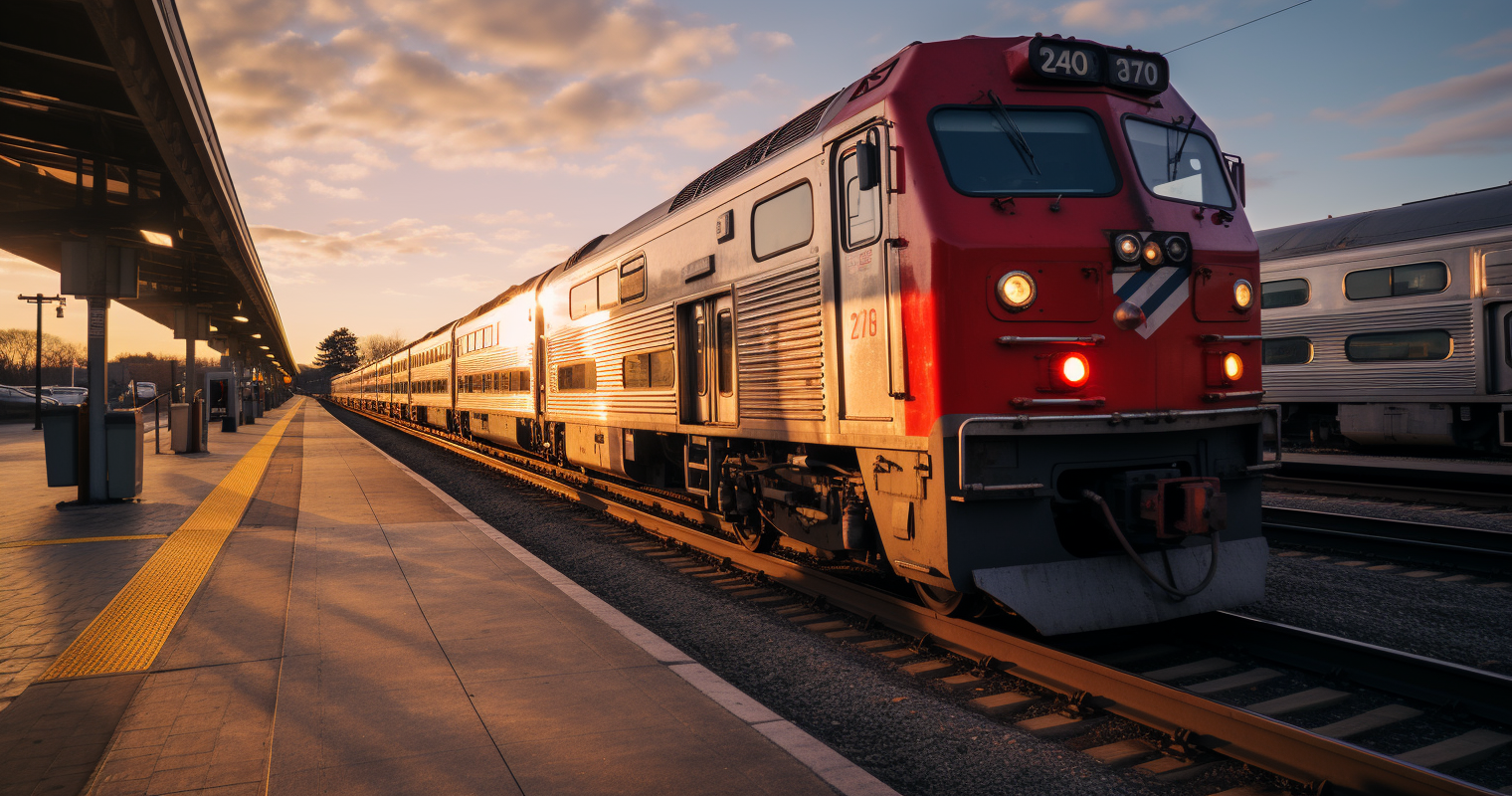
Andorra has never possessed a railway network of any kind. The Principality’s compact size and challenging mountainous terrain mean that all internal public transport moves exclusively by road. For day-to-day travel, residents rely on a well-structured bus system that reaches all seven parishes. Anyone wishing to arrive in Andorra by rail must first travel to a station on the French or Spanish side of the border, then cover the remaining distance by bus or taxi.
| Item | Details |
|---|---|
| Rail network within Andorra | None — Andorra has never had a railway |
| Nearest train station (France) | Andorre-l’Hospitalet, approx. 11 km by road from the border (SNCF) |
| Nearest high-speed rail (Spain) | Lleida-Pirineus (AVE), served by trains from Madrid and Barcelona |
| Internal public transport | Bus only — six national lines covering all seven parishes |
| Bus fares (as of 2024) | Single tickets from €1.90; free for residents with a season pass (as of July 2022) |
| Metro / urban rail | None — no metro, tram, or light rail exists in Andorra |
What is the overall standard of rail travel in Andorra?
Andorra has never had a railway of any description, and this is unlikely to change. The line running between Latour-de-Carol and Toulouse — which connects with France’s TGV network at Toulouse — passes within roughly 2 kilometres of the Andorran border, yet this proximity has never translated into any rail link with the Principality itself. This is not a short-term infrastructure gap but rather a fixed feature of the country’s transport landscape.
Situated in the heart of the Pyrenees and bordered by France to the north and Spain to the south, Andorra is a landlocked microstate whose transport provision is built almost entirely around roads. The steep mountain terrain, combined with the country’s very limited geographic footprint, has long made railway construction both technically difficult and economically unjustifiable.
To appreciate the scale of this difference: travellers arriving from countries such as Germany, France, or Spain — where high-speed trains connect major cities within a couple of hours — will need to fundamentally recalibrate their expectations when settling in Andorra. There is no equivalent rail-based intercity travel here.
Andorra’s transport network is road-centred and provides a variety of ways to get around conveniently. From taxis and app-based ride services to a structured bus network, the options available cover most travel needs within the Principality. For everyday journeys, residents typically choose between the bus network, private vehicles, taxis, or digital ride-hailing platforms.
In 2004, the government put forward a proposal for a system called “Metro Aeri” — an elevated cable metro intended to float above the country’s river corridor — but it was never constructed. As of 2026, this project remains unbuilt. A study into a potential tramway running between Sant Julià de Lòria and the capital was announced in 2021, though this too has not materialised. Those considering moving to Andorra should have no expectation of any rail infrastructure becoming available in the foreseeable future.
What classes of rail travel are available in Andorra, and what are the differences between them?
Given that no passenger rail services exist within Andorra, the question of travel classes is entirely irrelevant inside the country’s borders. Concepts such as first class, standard class, or business class have no application to travel within the Principality.
Travel classes do, however, exist on the French and Spanish rail services that residents use to reach Andorra from further afield. Both networks distinguish between first and second class, with first class typically offering wider seats, additional space, and enhanced onboard amenities. For anyone planning a longer journey — say, travelling by train from Paris before completing the final stretch into Andorra by bus — the class structure of those national operators will determine the experience for the rail portion of the trip.
On France’s overnight Intercités de Nuit service, passengers can choose between first class four-berth couchettes, second class six-berth couchettes, and standard seated accommodation. On Spain’s high-speed AVE network, Renfe operates several fare categories including Básico, Elige, and Premium, each differing in price, flexibility, and included services. For up-to-date details on class options and pricing, consult SNCF Connect for French services and Renfe for Spanish services, since both operators revise their offerings periodically.
Within Andorra, the national bus network operates on a single-class basis. Every passenger travels under identical conditions, and there is no premium tier, reserved seating, or differentiated pricing within the internal service.
Where can you find rail timetables and ticket prices for travel to and from Andorra?
Since no rail services operate within Andorra, all timetable and fare information relevant to train travel refers to the French and Spanish networks serving border stations. The following sources are the most useful for residents planning onward journeys:
- SNCF Connect (sncf-connect.com) — France’s national rail operator runs the station closest to Andorra’s border. SNCF Connect is the primary source for timetables and pricing covering services to Andorre-l’Hospitalet, the nearest French station.
- Renfe (renfe.com) — Spain’s national rail company serves both Lleida-Pirineus and La Tour de Carol stations. Its website carries full timetable and fare information for services connecting to these stops.
- Trainline (thetrainline.com) — A third-party aggregator that consolidates routes and fares from both French and Spanish operators into a single search interface, useful for comparing options across the border in one place.
- Andorra official transport portal (transportpublic.ad) — The Andorran government’s dedicated public transport website, providing schedules, route maps, and pass information for the internal national bus network. This is the essential reference for day-to-day travel within the Principality.
- Visit Andorra (visitandorra.com) — The national bus routes link the country’s main destinations with reliable daily services, offering a comfortable and accessible way to travel throughout Andorra.
Both French and Spanish rail fares shift regularly, particularly around seasonal timetable changes and promotional pricing windows. Always check current figures through official operator websites before making any booking.
How do you buy rail tickets, and can you book in advance?
Since getting anywhere by train from Andorra means crossing into France or Spain first, the process of buying rail tickets follows the systems of those national operators rather than any Andorran equivalent. The following steps outline how residents typically organise train travel from the Principality:
- Reach the border by bus or taxi. Options include the station of L’Hospitalet-près-l’Andorre in France, situated approximately 11 kilometres by road from the border, and the Lleida-Pirineus station in Spain. Both can be reached from Andorra by bus, taxi, or private hire vehicle before boarding a train.
- Book your train ticket online ahead of travel. Purchasing online is generally advisable — it eliminates telephone booking surcharges and allows you to compare departure times and fares at your convenience. Telephone booking lines typically operate only on weekdays during office hours, whereas online platforms are available around the clock. Both SNCF Connect and Renfe issue e-tickets and downloadable PDFs that can be stored on a smartphone.
- Consider a third-party booking platform if it suits your needs. Services such as Trainline and Omio let you book combined and cross-border journeys in a single transaction, which can be convenient when pairing a Spanish or French train with a connecting bus into Andorra.
- Buy your ticket for the internal Andorran bus leg on the day. The national bus network’s main stops are located along the busiest streets and in the town centres of each parish. Tickets are sold directly on the bus, and no advance reservation is possible or necessary for travel within the Principality.
- Apply for a resident season pass if you are settling in Andorra. Since July 2022, permanent residents have been able to travel on national bus lines largely free of charge, provided they hold a valid season pass. The pass is also available in digital form as a mobile app, removing the need to carry a physical card.
For long-distance international coach services — including those run by Andbus, ALSA, and Directbus connecting Andorra la Vella with Barcelona and Toulouse — advance booking is possible and often advisable during busy travel periods. Visit Andbus.net and individual operator websites for current timetables and fares, which can vary seasonally.
What types of rail tickets are available, and are there discount schemes?
No rail tickets exist within Andorra. All relevant ticket categories and discount schemes apply either to the French and Spanish national rail networks used by residents for travel beyond the border, or to Andorra’s own internal bus services.
For the Andorran bus network: The bus service offers a range of fare options including single tickets starting from €1.90, return tickets, and weekly or monthly passes suited to different patterns of use (as of 2024 — verify current pricing at transportpublic.ad). Ten-journey passes and discounted fares for residents are also available. Permanent residents registered with a season pass benefit from the largely free travel scheme introduced in July 2022.
For French rail (SNCF): SNCF offers various fare types, including non-exchangeable Prem’s tickets at the lowest prices when booked well in advance, standard Flex fares that allow changes and refunds, and first class options. Discount cards such as the Carte Avantage — available to travellers aged 27 and under, as well as regular users — provide percentage reductions on eligible journeys. Visit SNCF Connect for current card prices and eligibility, as these are subject to periodic revision.
For Spanish rail (Renfe): Renfe’s ticket range includes Básico, Elige, and Premium categories, varying in flexibility and included services. Discount cards such as the Renfe Gold Card and the +Renfe Youth Card 50 offer savings for qualifying passengers, including seniors, young travellers, and frequent users. Check renfe.com for current schemes and eligibility criteria, which are updated regularly.
Residents of Andorra who regularly commute to Barcelona or Toulouse for work or leisure should investigate multi-journey options on both operators. All prices and discount thresholds should be confirmed directly with the relevant operator, as they are subject to change.
How accessible is the rail network for disabled passengers?
Accessibility for passengers with disabilities or reduced mobility involves two separate areas: the French and Spanish rail networks used to cross into or out of Andorra, and Andorra’s own road-based public transport within the country’s borders.
French rail accessibility: SNCF provides a dedicated assistance programme called Accès Plus for passengers with disabilities or mobility limitations. The service covers help with boarding, alighting, and moving through stations, and can be arranged in advance via the SNCF Connect website or by telephone. However, Andorre-l’Hospitalet — the station nearest to Andorra — is a small rural stop in the Pyrenees and is likely to offer considerably more limited accessibility facilities than major urban terminals. Passengers with specific mobility requirements are strongly encouraged to contact SNCF before travelling to establish exactly what support is available at this particular station.
Spanish rail accessibility: Renfe runs an assistance service called Atendo, supporting passengers with disabilities at staffed stations. Lleida-Pirineus, as a medium-sized regional hub, is generally better equipped for accessibility than small rural stops, but passengers should confirm specific arrangements directly with Renfe’s Atendo service prior to their journey.
Within Andorra: For passengers with particular requirements, CityXerpa — Andorra’s leading ride-hailing application — allows users to specify accessibility needs before requesting a journey. Whether travelling with a guide dog or requiring transport adapted for reduced mobility, CityXerpa aims to accommodate a broad range of needs. For many residents with significant mobility challenges, this app-based private hire service may prove the most practical transport option within the Principality.
Accessibility standards on the internal bus network vary depending on the vehicles in service. Passengers with substantial mobility requirements are advised to contact the relevant operator or the Andorran government transport service directly through transportpublic.ad to discuss their circumstances before depending on the bus for regular travel.
Are there metro or urban rail systems in Andorra’s cities?
Andorra possesses no metro, subway, tram, light rail, or urban commuter rail system of any kind. Even Andorra la Vella, the capital and most densely populated part of the country, relies solely on road-based public transport to move residents and visitors around.
Within this small Pyrenean state, all public transport is delivered through bus services. Alongside a handful of intercity connections to neighbouring France and Spain, a set of urban lines operates in and around Andorra la Vella, linking the capital’s districts with the surrounding parishes throughout the country.
Following the most recent restructuring of the network, the lines currently in operation are L1, L2, L4, L5, L6, LC (the ring line), and the é line. Coopalsa is responsible for operating lines L2, L4, L5, L6, and LC, while Autocars Nadal runs the L1 and Express Bus services.
Service frequency differs between lines: the é line runs every 10 minutes throughout the day, lines L1 and L2 every 10 to 20 minutes, and the remaining lines every 30 to 60 minutes. On weekends and the evenings before public holidays, a night bus service continues until 05:00. While this level of provision is reasonable for a country of Andorra’s scale, it is naturally far less intensive than the high-frequency metro networks found in cities such as Madrid, Paris, or Zurich.
Additional services are laid on during the ski season. The lines are designed so that passengers can reach the foot of the slopes or the cable car stations at Encamp, Canillo, La Massana, and Arcalís from anywhere in the country.
The Estació Nacional de Autobusos in Andorra la Vella serves as the central interchange for both domestic and international bus services. For journey planning, the Moovit app covers Andorra la Vella’s bus routes and provides live data to help new residents navigate the network.
The authoritative source for routes, timetables, and passes is transportpublic.ad, the Andorran government’s official public transport portal.
What should expats know about using public transport day-to-day in Andorra?
Catalan is Andorra’s official language, though the diverse nature of the resident population means that Spanish, French, and Portuguese are all widely spoken. Bus signage and announcements are conducted primarily in Catalan and Spanish. Newcomers unfamiliar with either language may find navigation slightly challenging in the early weeks, though the network’s modest size means routes soon become second nature. Apps such as Moovit present route information in multiple languages and provide useful support during the settling-in period.
Public transport within Andorra consists entirely of scheduled bus services linking the seven parishes through six national lines. Stops are positioned along the main thoroughfares and in the urban cores of each parish. Services generally run from 6 a.m. to 10 p.m., giving passengers a broad window for travel throughout the day. A night bus operates on Fridays, Saturdays, the evenings before public holidays, major parish festivals, and other designated special days.
Casual travellers can purchase tickets directly on the bus as they board. Registered residents with a season pass can use it in digital form on a smartphone, meaning there is no requirement to carry a physical card once the account is set up. In practical terms, this functions similarly to transit card systems such as London’s Oyster or Paris’s Navigo, except that in Andorra’s case the pass grants residents essentially free access to national bus lines.
Bus services extend across all urban areas and a significant number of rural communities, with many major routes running at half-hourly intervals or better during peak hours. Some routes serving less populated parishes operate less frequently, so it is worth downloading the timetable for your specific line from transportpublic.ad before planning time-critical journeys.
For travel beyond Andorra’s borders to Spain or France, the Estació Nacional de Autobusos in Andorra la Vella is the main departure point for long-distance international coaches. Regular services run to Barcelona and Barcelona Airport, and to Toulouse and Toulouse Airport, with both journeys taking around three hours. Routes also serve Girona Airport and destinations in Portugal via Lleida. These long-distance bus connections form the backbone of travel further afield for Andorra’s residents, fulfilling the role that intercity trains play in the surrounding countries.
The national bus network does not impose formal luggage restrictions equivalent to those found on intercity rail services, though bulky bags are best placed in the luggage compartment where one is available. On international coach services, operators such as ALSA and Directbus apply their own luggage policies, which should be reviewed at the time of booking. Seat reservations are not required on internal national bus routes — simply board, purchase or validate your ticket, and take any free seat.
Frequently asked questions about rail travel in Andorra
Does Andorra have any trains at all?
Andorra has no railways and has never had any. No trains, trams, metro lines, or light rail services exist anywhere within the country. All public transport inside Andorra operates by road, with the national bus network forming the backbone of the system.
What is the nearest train station to Andorra?
The closest railway station to Andorra is Andorre-l’Hospitalet, a small French station on the scenic Pyrenean line linking Toulouse with Latour-de-Carol near the Spanish border. It sits roughly 11 kilometres by road from the Andorran border. On the Spanish side, the Lleida-Pirineus station receives high-speed AVE services from Madrid Puerta de Atocha and Barcelona Sants.
How do I get from a train station to Andorra?
From Andorre-l’Hospitalet in France, minibus connections run to Pas de la Casa, from where regular bus services continue to Andorra la Vella. From Spain’s Lleida-Pirineus station, buses and taxis provide onward connections to the border. Current timetables and details are available at Andbus.net and transportpublic.ad.
Is public transport in Andorra free for residents?
Since July 2022, Andorran permanent residents have been able to travel on national bus services largely free of charge. The only requirement is holding a valid season pass, which is also available as a digital app on a mobile phone. Visitors and tourists pay standard fares, with single tickets starting from €1.90 as of 2024. Confirm the current scheme at transportpublic.ad.
Can I use a Eurail or Interrail pass to travel to Andorra?
Eurail and Interrail passes are valid for rail travel in France and Spain and can be used on trains to stations such as Andorre-l’Hospitalet or Lleida-Pirineus. They do not, however, cover the onward bus journey from those stations into Andorra, nor any transport within the Principality itself, since Andorra has no rail network. Current pass conditions can be found at eurail.com and interrail.eu.
Are there plans to build a railway in Andorra?
A government proposal for a “Metro Aeri” elevated cable metro system was put forward in 2004 but was never built. A study into a potential tramway between Sant Julià de Lòria and the capital was announced in 2021, but as of 2026 no rail infrastructure project has been approved or received funding. Residents should plan their transport arrangements on the assumption that no railway will be available in the near future.
How often do buses run within Andorra?
Frequency varies depending on the line. The é line runs every 10 minutes during the day, lines L1 and L2 run every 10 to 20 minutes, and other lines operate every 30 to 60 minutes. Services generally run from 6 a.m. to 10 p.m., with a night bus on Fridays, Saturdays, and the evenings before public holidays. Always check the latest timetables at transportpublic.ad, as schedules are subject to change.
What app should I use for public transport in Andorra?
The official source for routes, timetables, and resident pass registration is transportpublic.ad, which also supports digital access to the season pass. Moovit displays all bus routes and stops across Andorra la Vella on an interactive map and is supported by several transit operators including Camino Bus, Bus Comunal d’Andorra la Vella, and Transports Govern d’Andorra. For private hire journeys with accessibility options, CityXerpa is Andorra’s leading ride-hailing app, operating 24 hours a day, 365 days a year.