
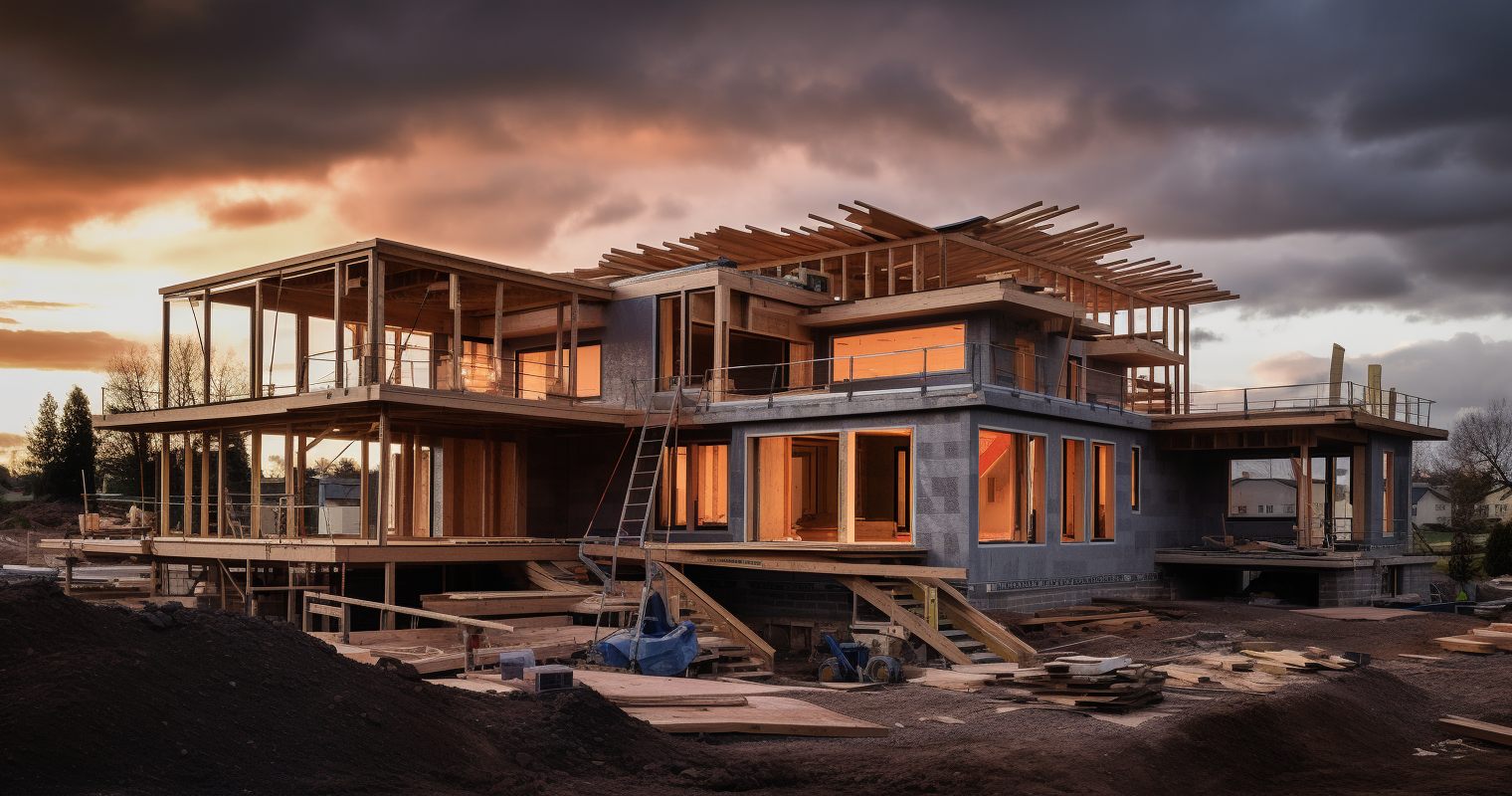
Anyone wishing to build or renovate in Antigua and Barbuda must secure planning permission from the Development Control Authority (DCA) for almost all construction and significant renovation work. Although the process is clearly defined, it extends well beyond planning approval and involves a sequence of additional permits. Foreign nationals are entitled to own property but must first obtain a Non-Citizens Landholding Licence. Bringing a local architect, a qualified contractor, and a solicitor on board at the very beginning is critical to completing the process successfully.
| Item | Details |
|---|---|
| Planning permission authority | Development Control Authority (DCA), Physical Planning Division |
| Planning permission timescale | Approximately 6–8 weeks (as of 2024) — verify with DCA |
| Non-Citizens Landholding Licence fee | Approximately 7% of property market value (as of 2026) — verify with official authorities |
| Stamp duty (buyer) | 2.5% of property value; seller pays 7.5% (as of 2024) |
| Key regulatory bodies | DCA, CHAPA, National Parks Authority, Antigua & Barbuda Investment Authority (ABIA) |
| Barbuda land note | Separate land laws apply on Barbuda — seek specific legal advice before purchasing there |
Do you need planning permission to build or renovate a property in Antigua and Barbuda?
Anyone intending to build a new structure or undertake substantial renovation work on a property in Antigua and Barbuda will need to obtain planning permission. This obligation covers new builds and most meaningful alteration or extension projects. In contrast to some jurisdictions where minor internal works or small outbuildings may fall under permitted development rights and proceed without formal consent, the Antiguan and Barbudan system requires official approval for the overwhelming majority of projects. Before proceeding, always confirm directly with the relevant planning authority whether your particular scope of work is exempt.
The Development Control Authority (DCA), which began operating on 8th August 1974, is a statutory body governed by the Antigua and Barbuda Physical Planning Act of 2003. Its mandate is to implement physical and land use planning across the islands. Among its core responsibilities are ensuring the orderly and progressive development of both urban and rural land, granting permission for land subdivision and development, and carrying out related statutory functions.
Building in Antigua operates on the broad premise that all land effectively carries outline permission, with applicants simply required to seek detailed consent. However, certain areas — particularly lands falling under National Parks oversight — may be subject to conservation or preservation designations. This framework broadly resembles a system where land is presumed developable unless specifically constrained, which differs from more granular regimes such as that in the UK, where householder permitted development rights allow many small-scale projects without formal consent.
Most residential buildings are limited to two storeys, reflecting the informal principle that no structure should stand taller than a palm tree. Enforced setback distances also apply: no part of a building should be positioned less than 20 feet from a road (subject to certain exceptions), and no part should come within 10 feet of a neighbouring boundary. These requirements should be confirmed with the DCA before design work begins, as they may differ depending on the zoning of the area in question.
The planning application process follows these steps:
- Obtain architectural or engineering drawings from a qualified architect or engineer.
- Submit the project to the Physical Planning Department at the Development Control Authority (DCA) in St. John’s for approval.
- Planning permission usually takes about 6 to 8 weeks. Confirm current timescales directly with the DCA, as processing times can vary depending on workload and the complexity of your application.
- Once approved, submit an application for a building permit from the Building Code Department.
- You can also fill out a Land and Housing application form from the Central Housing and Planning Authority (CHAPA), which is located on Friars Hill Road, St. John’s. Forms are available at visitchapa.com.
Specific planning application fees are not publicly listed in standardised schedules — the DCA should be contacted directly to confirm current fee structures before submission, as fees are subject to change. Check the official authorities for up-to-date figures.
What are the rules around listed buildings, conservation areas, and heritage protection in Antigua and Barbuda?
Where a property is designated as a listed building or sits within a conservation or preservation area, owners are subject to a further layer of rules and requirements. Work affecting such properties requires approval from the Antigua and Barbuda National Parks Authority, and conservation or preservation designations may impose significant restrictions on what changes can be made to the exterior of a building.
Antigua and Barbuda possesses an impressive concentration of colonial-era structures, sugar mill ruins, forts, and Georgian architecture, especially around St. John’s and English Harbour. While the country does not employ the term “listed building” in precisely the same way as, for example, the UK’s Historic England register or the US National Register of Historic Places, the Antigua and Barbuda National Parks Authority exercises statutory oversight over heritage sites and designated conservation zones. Properties situated within these areas are subject to controls that go considerably further than standard planning requirements.
Under the Physical Planning Act (No. 6 of 2003), the orderly development of land must take into account the protection and conservation of cultural heritage, along with the maintenance and improvement of environmental quality in human settlements. This legislative foundation underpins heritage conservation responsibilities throughout the islands.
Conservation areas and preservation orders may impose restrictions on the types of alterations permissible to a property’s exterior. The National Parks Authority’s official website can be found at nationalparksantigua.com.
Anyone considering the purchase of property near English Harbour, Nelson’s Dockyard, or St. John’s should contact the National Parks Authority before proceeding in order to establish whether the site falls within a heritage zone. Carrying out unauthorised works on a protected structure or within a conservation area can lead to enforcement proceedings, financial penalties, and compulsory reinstatement of the original building fabric at the owner’s expense. Always obtain written confirmation of any heritage status before exchanging contracts or commencing work.
What permits and licences are required when building or renovating in Antigua and Barbuda?
A construction or renovation project in Antigua and Barbuda will typically require several permits and licences, among them a building permit (mandatory for any new construction or substantial renovation work), an occupancy permit (which must be obtained before the property can lawfully be occupied), and an electrical permit (required for all electrical installation work).
A building permit must be secured from the relevant local authority before any construction activity commences. Its purpose is to confirm that the proposed works comply with applicable zoning requirements, safety standards, and environmental regulations. This permit is issued by the Building Code Department and is a distinct requirement that follows — and is separate from — the planning approval granted by the DCA.
Construction and land use are also required to comply with environmental regulations aimed at safeguarding Antigua and Barbuda’s natural environment. Coastal development, for example, is subject to environmental impact assessments, and compliance is actively monitored by the government. If your project is situated near the coastline, a wetland, or any ecologically sensitive location, anticipate a more rigorous environmental review and the potential imposition of significant conditions on any permit that is granted.
In summary, the typical sequence of permits and approvals for a new build or major renovation project is:
- Planning permission — applied for via the Physical Planning Department of the DCA, based on architect-prepared drawings.
- Building permit — applied for from the Building Code Department once planning permission is granted.
- Environmental permit (where applicable) — required for coastal or environmentally sensitive sites; involves an environmental impact assessment.
- Electrical permit — required for all electrical installation work; issued separately before electrical works commence.
- Utility connection approvals — applications to the Antigua Public Utilities Authority (APUA) for water and electricity connections should be made well in advance of practical completion.
- Occupancy permit — obtained after construction is complete and inspections are passed; required before the property can legally be occupied.
Fees for individual permits are set by the relevant authorities and are subject to change. Contact the DCA and Building Code Department directly to confirm current fee schedules before budgeting for your project. The CAB-I certificate and shopping list are issued 10–15 business days after submission of a complete application package for qualifying residents and citizens enrolled in the government’s homeownership incentive scheme, though this programme does not currently extend to foreign nationals who are not residents.
How do you find a reliable, trustworthy builder in Antigua and Barbuda?
A useful starting point when searching for a reputable builder is to look for those affiliated with a recognised professional body. The Antigua and Barbuda Building Contractors Association (ABBCA) is the professional organisation that represents builders and contractors operating in Antigua and Barbuda.
The ABBCA is the principal trade association for the island’s construction sector, and membership implies a degree of professional accountability. The Antigua and Barbuda Building Contractors Association (ABBCA) can be contacted at [email protected] or by phone at +1 268-562-0342. As of the time of writing, no specific postal address is publicly listed — contact them directly to request further information.
When assessing potential contractors, take the following practical steps:
- Request references from completed projects — ask to visit at least two finished builds and speak directly with the clients.
- Verify insurance — any contractor working on your site should carry public liability insurance and, where applicable, employer’s liability cover for workers on site. Ask to see current certificates.
- Get written contracts — a formal written contract should specify the full scope of works, materials, programme, payment schedule, and dispute resolution procedure. Oral agreements carry significant risk.
- Use staged payments tied to verified progress — avoid paying large sums upfront. Structure payments to milestone completions verified by your architect or a project manager.
- Consider an escrow arrangement — for larger projects, holding funds in a third-party escrow account until stages are signed off reduces exposure to non-completion.
Foreign property owners are occasionally targeted by individuals presenting themselves as qualified builders without proper credentials, who request large upfront deposits for materials that are never delivered. Those most at risk are typically buyers who are emotionally invested in a property, who are rushing the process, or who are placing trust in a seller or agent without seeking independent verification. A prominent warning sign is pressure from any party to pay a deposit before your own independent lawyer has verified ownership or credentials, or resistance to your using your own legal adviser. Always allow sufficient time to verify before committing any funds.
How do you find a qualified local architect in Antigua and Barbuda?
For those who require a professionally designed project, the Antigua and Barbuda Institute of Architects is the appropriate starting point. This is the professional body responsible for representing qualified architects across the islands, and membership or formal affiliation indicates that a practitioner meets the professional standards required for design and planning work.
The Antigua and Barbuda Institute of Architects can be contacted at [email protected] or by telephone at +1 268-462-2097. Contact the Institute to request their current member directory, which will allow you to search for registered practitioners. As of the time of writing, a public online register is not available via a dedicated website — the Institute should be contacted directly for referrals.
Architects in Antigua and Barbuda are expected to hold relevant professional qualifications, typically a recognised degree in architecture combined with practical experience. Because the DCA’s planning system requires professionally prepared drawings as part of every planning application, engaging a locally experienced architect is not simply recommended — it is a practical necessity. A practitioner familiar with local requirements will understand DCA submission standards, regional building conventions, hurricane-resistant design principles, boundary setback rules, and the conditions typically attached to planning approvals.
The language of business and planning in Antigua and Barbuda is English, so communication is unlikely to present difficulties. However, if you are overseeing a project from overseas, it is worth discussing communication arrangements, reporting frequency, and how decisions will be made before settling on a fee structure. Ask specifically whether the architect has experience working with clients based abroad and whether project management services are available alongside design work, as this can considerably simplify the coordination of larger builds.
What are the common pitfalls when buying land to build on in Antigua and Barbuda?
Prior to purchasing any land, it is essential to confirm that planning permission for your intended use is achievable, to verify that the boundaries of the land correspond to the land registry records, and to investigate whether any environmental or conservation restrictions affect the parcel. These three issues account for the majority of problems encountered by buyers who proceed without thorough due diligence.
All property transactions in Antigua and Barbuda must be registered with the Land Registry, which records ownership and other dealings in land. The registry maintains an authoritative record of real estate transactions to ensure that titles are clear and legally binding. The Landfolio system — the public-access portal for the Antigua Land Registry — enables prospective buyers to check the registered owner, any charges such as mortgages, encumbrances, and the full transfer history of any parcel under consideration.
One of the most frequent errors made by foreign purchasers is assuming that a deposit payment or signed agreement alone secures ownership, when in reality only registration at the Antigua Land Registry provides genuine legal protection. Do not transfer funds until your lawyer has conducted a thorough Land Registry search and confirmed clean title.
The key document to examine is the Land Registry record, accessible via Landfolio, which displays the registered proprietor, parcel identification number, any recorded charges, and the history of transfers. A common tactic used by fraudulent sellers involves presenting photocopied deeds or digital screenshots of registry records, none of which should be accepted without independent verification by your solicitor against the actual registry.
Antigua and Barbuda operates a zoning system that regulates how land may be used for residential, commercial, industrial, and agricultural purposes. Land-use classifications are administered by the Physical Planning Division, which oversees zoning and building codes. Always verify the zoning status of any plot before purchase — land zoned for agricultural use, for instance, may carry conditions preventing residential development.
Property owners should also be aware of the obligation to commence construction on purchased land within two years to avoid liability for the Undeveloped Land Tax. Foreign buyers intending to build at a later stage should factor this requirement into their planning timeline.
The government holds 55 percent of the country’s land, with the remaining 45 percent in private ownership. The Lands Division within the Ministry of Agriculture, Lands, Fisheries and Barbuda Affairs manages Crown lands on behalf of the state. Establish clearly whether any plot you are purchasing is freehold private land or involves a Crown land lease, as this distinction has material implications for financing, inheritance, and future sale.
The position on Barbuda warrants particular attention. By longstanding custom, Barbuda’s residents held all land on the island communally. In 2018, the government amended the Barbuda Land Act to allow individual Barbudans to hold private ownership of land on the island. The government subsequently announced plans to repeal the Barbuda Land Act and replace it with a Crown Land Regulation Act that would open private land ownership in Barbuda to non-Barbudans. Given the ongoing legislative developments affecting land in Barbuda, specialist legal advice should be sought before entering into any purchase there.
Always engage a qualified local solicitor or conveyancer with demonstrable experience in Antiguan property transactions. Information about any given property is available from the Land Registry and the Survey and Mapping Department on payment of a modest fee — this step should never be omitted regardless of how small the cost may appear.
What are the rules around foreign ownership and financing for construction projects in Antigua and Barbuda?
Foreign nationals have the right to hold both freehold and leasehold property in Antigua and Barbuda, but must first obtain a Non-Citizens Landholding Licence authorising the acquisition and ownership of real estate. This requirement applies regardless of the nature of the property involved — whether residential, commercial, or undeveloped land.
The Alien Landholding Act requires non-citizens to obtain government approval before acquiring land. The law applies to both individual buyers and corporate entities. Applications must be submitted to the Landholding License Committee, which reviews each case before granting or refusing consent.
As of early 2026, the most significant additional cost for foreign buyers is the 7% licence fee calculated on the market value of the property — an expense that local purchasers are not required to meet. As a result, total closing costs for foreign buyers typically fall in the range of 10.5% to 13.5% of the property value. The current licence fee percentage should always be confirmed with official sources, as the figure is set by regulation and may be amended.
Antigua’s updated 2020 regulations examine corporate structures and trusts to identify beneficial owners, meaning that attempts to circumvent the licence requirement by purchasing through a company generally do not succeed. If you are considering acquiring property through a corporate vehicle, obtain independent legal advice before proceeding.
While foreigners are generally free to purchase property for personal or commercial purposes, land designated for agricultural use cannot be acquired by foreign nationals unless specific conditions are satisfied. Antigua and Barbuda actively encourages tourism-related investment and offers incentives to developers in the hospitality sector. Investors may acquire land or property for the purpose of building resorts, hotels, or vacation properties, but all such projects must comply with applicable planning and environmental regulations.
For those seeking construction finance, local banks and financial institutions do offer mortgage and construction loan products to qualifying buyers, including foreign nationals. However, lending criteria, maximum loan-to-value ratios, and interest rates vary considerably between institutions. As a member of the Eastern Caribbean Currency Union (ECCU), lending institutions in Antigua and Barbuda generally operate in accordance with the guidelines issued by the Eastern Caribbean Central Bank (ECCB). Prospective borrowers should approach local commercial banks directly and be prepared to present income documentation, asset evidence, and a credible construction plan. The Antigua and Barbuda Investment Authority (ABIA) is located at P.O. Box 80, Sagicor Financial Center, #9 Factory Road, St John’s, Antigua, W.I.; phone: +1 (268) 481-1000; email: [email protected].
Foreign nationals are eligible to apply for citizenship through the Citizenship by Investment Program. Under this scheme, investors can obtain citizenship through the purchase of property worth at least USD 400,000 in government-approved real estate developments. It is important to note that qualifying purchases must be within approved developments; standard open-market transactions do not qualify for this pathway. Always verify the current minimum investment threshold with the Antigua and Barbuda Citizenship by Investment Unit, as the figures may be updated.
What official sources should you consult when planning to build or renovate in Antigua and Barbuda?
Requirements, fees, and procedures in Antigua and Barbuda’s construction and property sector are subject to regular change. The official bodies listed below should be consulted before committing to any purchase or construction project:
- Development Control Authority (DCA) — Planning Permission and Zoning
The DCA is a statutory corporation established under the Antigua and Barbuda Physical Planning Act of 2003, charged with implementing physical and land use planning and development across the islands. Facebook: facebook.com/dcaantiguabarbuda. Contact the DCA directly for current application forms, fee schedules, and processing times. - Central Housing and Planning Authority (CHAPA) — Housing and Land Applications
CHAPA’s mission is to promote access to housing and the distribution of land and related services. Located on Friars Hill Road, St. John’s. Website: visitchapa.com. - Antigua and Barbuda National Parks Authority — Heritage and Conservation
Responsible for oversight of listed and heritage properties, national park areas, and conservation zones. Website: nationalparksantigua.com. - Land Registry / Landfolio — Title and Ownership Verification
The Land Registry record, accessible through Landfolio, shows the registered proprietor, parcel ID, any recorded charges or encumbrances, and transfer history. Access via the Ministry of Legal Affairs: laws.gov.ag. - Antigua and Barbuda Investment Authority (ABIA) — Investment and Construction Incentives
The Construct Antigua and Barbuda Initiative (CAB-I) is a domestic economic stimulus programme designed to encourage homeownership and property improvement. ABIA, P.O. Box 80, Sagicor Financial Center, #9 Factory Road, St John’s. Phone: +1 (268) 481-1000. Email: [email protected]. Website: investantiguabarbuda.org. - Ministry of Agriculture, Lands, Fisheries and Barbuda Affairs — Crown Land
The Lands Division within this Ministry is responsible for the general administration of state-owned properties, with an emphasis on sustainable land use and food security. - Antigua and Barbuda Institute of Architects — Architect Directory
Contact: [email protected] | +1 268-462-2097. - Antigua and Barbuda Building Contractors Association (ABBCA) — Contractor Verification
Contact: [email protected] | +1 268-562-0342.
Always confirm current requirements with the relevant authority before committing to any transaction or project. Published guidance — including this article — should be treated as a starting point, not a substitute for current, official advice from the competent authorities.
Frequently asked questions
How much does it typically cost to build a house in Antigua and Barbuda?
Construction costs vary widely according to specification, location, and the materials used. As a broad indication, mid-range residential building on Antigua has been reported at somewhere in the region of USD 150–300 per square foot, though premium or coastal developments can exceed this figure considerably. Import duties on building materials push costs higher, although qualifying residents and citizens may access zero Antigua and Barbuda Sales Tax (ABST) on approved building materials through the government’s CAB-I initiative. Obtain itemised quotes from at least three licensed contractors and set aside a separate budget for professional fees, permit costs, and utility connections.
How long does a typical building project take in Antigua and Barbuda?
Timescales are determined by the size and complexity of the project. Planning permission generally takes around 6 to 8 weeks from the point of submission. Building permit processing and contractor mobilisation introduce further lead time before site works can begin. For a modest residential build, a realistic minimum timeline from initial design through to occupation is 12–18 months, with larger projects taking considerably longer. Delays caused by materials importation schedules, contractor availability, or permit processing are not uncommon — it is wise to incorporate meaningful contingency time into your programme from the outset.
Are there language barriers when dealing with contractors or authorities in Antigua and Barbuda?
No. English is the official language of Antigua and Barbuda, and all government departments, legal procedures, planning submissions, and contracts operate in English. This means that those comfortable working in English will encounter no significant language barriers. That said, local permitting procedures and building terminology may be unfamiliar to newcomers — engaging a local architect or project manager from the outset will help you move through the system with confidence.
Are UK or US building qualifications and standards recognised in Antigua and Barbuda?
Property law in Antigua and Barbuda is rooted in a combination of common law derived from English law, domestic statutes, and locally specific regulations. The country sits within the Eastern Caribbean Supreme Court system. While this legal heritage reflects British common law traditions, it does not mean that UK or US building qualifications are automatically accepted. Architects and engineers should hold locally recognised qualifications or be in good professional standing with the Antigua and Barbuda Institute of Architects. Building standards are determined locally, incorporating Caribbean hurricane-resistance requirements, and do not replicate either UK Building Regulations or the US International Residential Code (IRC). Always verify qualification recognition with the appropriate professional body before retaining any practitioner.
What happens if I carry out building work without planning permission?
Proceeding with construction or significant renovation without planning permission constitutes a breach of the Physical Planning Act 2003 and may trigger enforcement action by the DCA. This can include the issuing of a stop-work notice, financial penalties, and — in serious cases — a mandatory order to demolish the unauthorised works at the owner’s cost. Structures built without the necessary permits can also cause significant complications at the point of sale, since buyers’ solicitors will routinely check that valid permits are in place. All required approvals must be obtained before any work on site begins.
Can I get a local mortgage or construction loan as a foreign national?
Banks and financial institutions in Antigua and Barbuda do extend mortgage and construction loan facilities to foreign nationals, although the terms and eligibility requirements differ from one lender to another. Applicants will generally need to demonstrate a reliable income, provide comprehensive financial documentation, and present a credible construction plan or independent valuation. Loan-to-value ratios available to foreign purchasers may be lower than those offered to permanent residents. It is advisable to approach several local banks to compare available products and to consider seeking guidance from a local financial adviser. Lending institutions in Antigua and Barbuda generally operate within the framework established by the Eastern Caribbean Central Bank (ECCB).
What should I do if I have a dispute with my contractor?
The starting point in any contractor dispute is your written contract, which should contain an agreed dispute resolution procedure. Where direct negotiation between the parties proves unsuccessful, Antigua and Barbuda’s legal system provides recourse through the courts. The country’s record on contract enforcement is considered reasonably reliable by Caribbean standards, with the World Justice Project ranking Antigua 38th out of 143 countries globally for rule of law in 2025. Nevertheless, court proceedings can be protracted, and matters become considerably more complicated — and costly — where documentation is sparse or where agreements were reached informally without written records. Insist on a comprehensive written contract and maintain thorough records of all payments made, instructions given, and correspondence exchanged throughout the project.
Do I need to be in Antigua and Barbuda in person to manage a building project?
Personal presence at every stage is not a legal requirement. Many purchasers execute documents via courier or appoint their lawyer under a power of attorney, though certain banking processes and licence applications may require notarised or apostilled documentation. For an active construction project, while you are not obliged to be present throughout, attending key milestones in person is strongly recommended — particularly at the start of site works, during structural inspections, and at practical completion. If you are managing the project from abroad, appoint a reputable local architect or project manager under a formal contract to act as your on-site representative, and agree on a clear schedule for progress reports, including photographic updates, before work commences.