
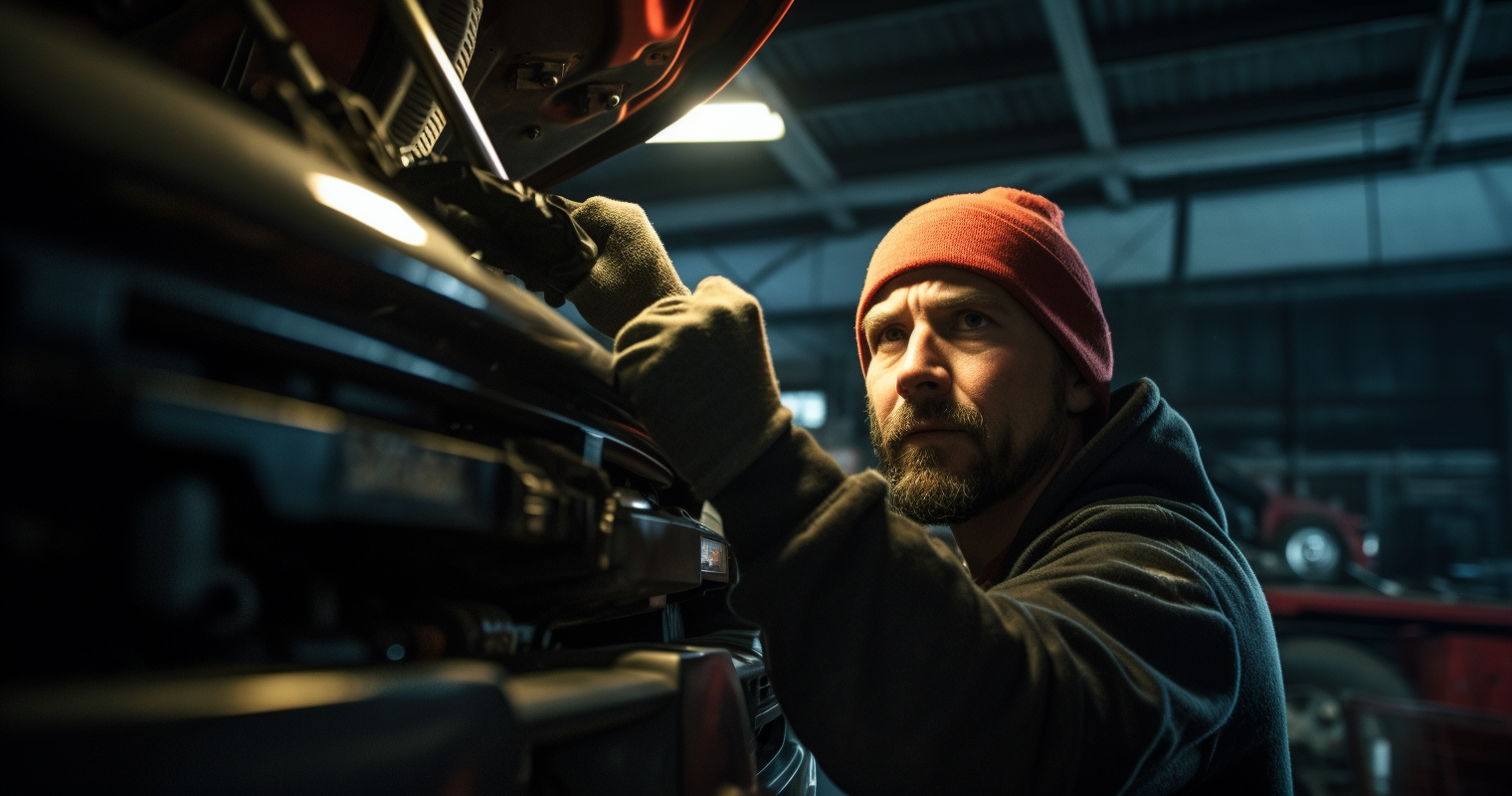
All vehicles in Bahrain are subject to a compulsory annual inspection programme administered by the General Directorate of Traffic (GDT). From 2024 onwards, these checks are increasingly being conducted at authorised private testing facilities. Roadside recovery is provided by a combination of commercial operators and brand-affiliated programmes, though no single national motoring organisation — comparable to the AA or RAC — exists. The relentless heat and pervasive sand of the Gulf environment make staying on top of vehicle maintenance a necessity rather than a luxury.
| Item | Details |
|---|---|
| Inspection authority | General Directorate of Traffic (GDT), Ministry of Interior |
| Inspection frequency | Annual, required for all vehicles (as of 2024) |
| Inspection fee (private centre) | BHD 11 per vehicle (as of 2024) |
| Inspection fee (GDT centre) | BHD 5 per vehicle (as of 2024) |
| Private centre rollout | Began August 2024; full transition targeted for mid-2025 |
| Official GDT portal | bahrain.bh |
Does Bahrain have a mandatory vehicle inspection scheme?
Yes. Bahrain enforces a compulsory periodic vehicle testing programme, known colloquially as “Car Passing.” Legislation requires every vehicle to be assessed at regular intervals to confirm compliance with applicable safety and emissions requirements, with an annual inspection forming the core obligation. Private cars, commercial vehicles, and motorcycles are all covered by this requirement.
Responsibility for the scheme sits with the General Directorate of Traffic (GDT) under the Ministry of Interior. Historically, inspections took place at GDT-operated centres, but a significant structural change is now in progress. Unlike the UK’s MOT system — which has long been delivered through a decentralised network of government-authorised private garages — Bahrain is only now making its transition toward a predominantly private-centre model.
The handover to private testing facilities began on 1 August 2024, with full implementation across all vehicle categories — including light vehicles, motorcycles, heavy vehicles, and public transport — targeted for completion by July 2025.
The rollout is structured in two phases: Phase 1 (from 1 August 2024) brought private centres online for light vehicles and motorcycles no older than ten years; Phase 2 (commencing early 2025) extended this to all light vehicles and motorcycles irrespective of age.
The programme encompasses all private cars, motorcycles, and passenger-carrying vehicles up to 3,000 kg. Both new and second-hand vehicles are eligible for inspection at approved facilities. As of 2024, the fee charged at private centres stands at BHD 11 per vehicle — BHD 6 above the BHD 5 charged at GDT centres. Fees may be revised, so always verify the current schedule through the official Bahrain government portal (bahrain.bh).
Inspectors assess a range of critical systems, including brakes, tyres, suspension, lighting, and exhaust emissions. Where deficiencies are identified, the owner receives a written report detailing the remedial work required; once that work has been completed, the vehicle may be brought back for re-testing. Passing the inspection is a prerequisite for renewing vehicle registration — failure to do so can result in fines, penalties, and the inability to legalise the vehicle’s status on the road.
Motorists can download the eTraffic app from bahrain.bh/apps to access a Traffic and Inspection Centres Locator, which helps owners of vehicles over five years old locate their nearest approved centre ahead of registration renewal. As of 2024, roughly eight private inspection centres are operating across the kingdom, with further openings anticipated.
What is the standard of vehicle maintenance and repair in Bahrain?
Vehicle maintenance and repair services in Bahrain are broadly of a good standard. The country has a well-established network of garages and workshops providing everything from routine servicing to substantial mechanical work, staffed by technicians experienced across a wide variety of makes and models.
Beyond independent workshops, authorised dealerships for most major manufacturers operate throughout Bahrain. These outlets carry brand-specific tooling and equipment, which can prove advantageous when dealing with more involved or technically specialised repairs. Marques including BMW, Mercedes-Benz, Toyota, Ford, and many others are represented by official dealer networks with factory-trained staff.
There is no universal national accreditation body for independent garages in Bahrain comparable to, for instance, the Motor Ombudsman’s Approved Garage scheme in the UK. That said, workshops operating as authorised service partners of major brands are subject to the standards and training criteria those manufacturers impose. For independent garages, the most reliable guides are online customer reviews and word-of-mouth recommendations from fellow residents.
As in any country, service quality across independent workshops varies. It pays to research your options before committing to any work. Personal recommendations from colleagues, neighbours, or expat community groups can be invaluable in identifying trustworthy mechanics and avoiding establishments with a poor track record.
A particular consideration for anyone bringing a vehicle from outside the GCC is parts availability. GCC-specification cars are purpose-built to cope with the region’s extreme temperatures, abrasive sand, and harsh operating conditions — incorporating design features and materials that enhance durability and performance in ways that standard European, North American, or Japanese domestic-market vehicles do not. Sourcing components for a non-GCC-spec car can require international procurement, adding both time and expense to any repair job. This is worth weighing carefully before deciding to ship a vehicle from abroad.
Road signage throughout Bahrain is presented in both Arabic and English, which makes navigation more accessible for those unfamiliar with Arabic script. At most larger garages and franchised dealerships, English is widely spoken, reflecting the country’s substantial international workforce. Smaller independent workshops in older trading districts may operate primarily in Arabic, so it can be helpful to have a description of the problem written in Arabic, or to bring along a contact who can assist with communication.
Who are the main breakdown recovery and roadside assistance providers in Bahrain?
Bahrain lacks a single dominant, membership-based national motoring organisation of the kind found in many other countries — such as the AA or RAC in the UK, or the AAA in the United States. Instead, the breakdown and recovery landscape is served by a combination of commercial operators, manufacturer-affiliated programmes, and technology-driven platform services.
Nation Assist (nassistbh.com) is among the closest local equivalents to a subscription motoring club. Its membership packages are designed to support both members and their families, offering roadside assistance and vehicle replacement services among its benefits. Membership can be arranged directly through their website at nassistbh.com.
Gulf Assist is a regional recovery and breakdown operator used by a number of automotive brands in Bahrain. Gulf Assist delivers roadside assistance including towing and recovery following mechanical failure, and has been appointed as the official service provider for certain dealer networks operating within the kingdom.
The Best Road Assist (thebestassiste.com) is a commercially operated breakdown and towing service based in Bahrain. The company provides rapid towing and roadside assistance, with the capacity to transport vehicles safely and efficiently following a breakdown or accident. It also offers sand-recovery services using specialist extraction equipment — a highly relevant capability given the prevalence of desert terrain across Bahrain. They operate around the clock and can be reached via thebestassiste.com.
Oreem (oreem.com) is an app-based platform connecting drivers with roadside assistance and towing services across Bahrain. The Oreem application links users with available tow truck operators and provides real-time assistance at any hour, every day of the week. Services extend to fuel delivery, jump-starts, and on-the-spot battery replacement. The platform is accessible at oreem.com.
Manufacturer-linked breakdown programmes form a significant part of the support available to those driving newer vehicles. As an example, Mercedes-Benz operates its Service24h assistance scheme for technical breakdowns and accidents, reachable via a dedicated hotline (+973 36840032) at any time of day or night throughout the year. Land Rover’s MENA Roadside Assistance Care similarly covers flat tyres, mechanical failures, accidents, and flat batteries — providing 24/7 support for five years or 150,000 km from new, whichever occurs first. If you are buying a new vehicle in Bahrain, ask the dealer whether any manufacturer recovery programme comes as standard.
At present, there is no widely available short-term or visitor-specific breakdown membership product in Bahrain equivalent to, for example, the day cover options offered by the AA in the UK. Those who have recently relocated should arrange local recovery cover as quickly as possible — through an app service such as Oreem, a Nation Assist subscription, or by confirming whether their comprehensive motor insurance policy already includes a recovery benefit as a standard feature.
Can expats use international breakdown cover in Bahrain?
Bahrain does not participate in the Fédération Internationale de l’Automobile (FIA) network of reciprocal motoring club arrangements in the way that European organisations maintain cross-border cover through schemes such as ARC Europe. As a result, membership of a motoring club in your home country — whether the AA, RAC, ADAC, NRMA, or any other — does not automatically provide breakdown protection once you are resident and driving in Bahrain.
Some comprehensive travel insurance products or globally scoped motor insurance policies do incorporate roadside assistance or vehicle recovery as a feature, and these may extend to Bahrain for a defined period. If you have arrived in Bahrain and are driving your existing overseas-registered vehicle ahead of local re-registration, it is worth reviewing the territorial scope and maximum duration of any international insurance or breakdown policy you hold to determine whether Bahrain falls within its coverage.
For the majority of people moving to Bahrain, the most practical course of action is to arrange local breakdown cover soon after arrival. Nation Assist, for instance, offers membership designed to address both automotive and household needs, including roadside assistance and vehicle replacement services. Alternatively, Oreem provides a technology-driven solution with an extensive network of towing operators, enabling users to track their assigned driver’s name, estimated arrival time, and service ratings directly within the app.
What should expats know about driving a foreign-registered vehicle in Bahrain?
Anyone intending to remain in Bahrain for more than 12 months is legally required to hold a Bahraini driving licence. A broadly similar principle governs vehicle registration — a car brought to Bahrain for long-term use will generally need to be re-registered locally within a defined period. The precise deadline for transitioning from a foreign registration to a local one should be confirmed with the GDT, as requirements are subject to revision. Refer to the official Bahrain government portal for current guidance.
Bringing a vehicle into Bahrain and registering it locally requires the vehicle to satisfy Bahraini technical standards. Importing from another GCC member state — Saudi Arabia, Kuwait, the UAE, Qatar, or Oman — is comparatively straightforward, although you should still verify that the vehicle meets Bahraini emissions and safety requirements before proceeding.
Importing from outside the GCC is a more involved process. A roadworthiness certificate must be obtained from an authorised inspection facility in the country of origin, confirming the vehicle is in good condition and complies with Bahraini technical, emissions, and safety standards. In addition, a vehicle import licence must be obtained from the Bahraini Ministry of Industry, Commerce, and Tourism, which formally authorises the import and sets out conditions relating to vehicle type, age, and regulatory compliance.
A critical consideration for anyone considering shipping a vehicle from outside the Gulf is GCC specification. GCC-spec vehicles are purpose-engineered for the region’s extreme heat and sandy conditions, incorporating more capable cooling systems — including enlarged radiators designed to prevent engine overheating even when ambient temperatures exceed 50°C. Vehicles manufactured to European or North American market specifications may not include these adaptations, which can lead to reliability problems and potentially complicate or increase the cost of passing a local roadworthiness inspection. Consulting the GDT or an established local automotive specialist before committing to shipping a non-GCC-spec vehicle is strongly advisable.
Comprehensive motor insurance is a legal requirement in Bahrain. Every vehicle on Bahraini roads must carry at minimum third-party liability cover. When re-registering your vehicle locally, you will be required to produce a Bahraini insurance policy, as policies issued in overseas markets are generally not accepted for local registration purposes.
How do Bahrain’s road conditions and climate affect vehicle maintenance?
The physical environment in Bahrain imposes a distinct set of maintenance demands that differ considerably from those experienced in temperate regions. There are no mountains and winters are mild, but intense heat, elevated coastal humidity, windblown sand, and salt-laden air together subject vehicles to continuous stress throughout the year.
Bahrain’s road infrastructure is extensive and generally well maintained. Major highways link the principal urban centres, while secondary routes serve smaller towns and rural areas. City roads are typically broad and well surfaced, though lanes in older residential neighbourhoods and villages tend to be narrower and less regular. Unlike many other countries where potholed rural roads or mountain gradients are the primary mechanical threat, in Bahrain the main challenge is environmental rather than infrastructural.
During the summer months, temperatures routinely exceed 40°C and can approach 50°C, placing severe demands on engine cooling systems. Overheating becomes a genuine risk, making it essential to ensure air conditioning is fully operational and to check coolant levels, radiator condition, and the integrity of rubber hoses and seals more frequently than would be necessary in a cooler climate — ideally ahead of the peak summer season running from June through September.
Sandstorms occur regularly in Bahrain and can reduce visibility to near zero. The recommended response is to pull safely off the road and remain stationary until conditions improve. Beyond the immediate hazard, sand and fine dust penetrate air filters, cabin filters, and internal engine components. Shortening the interval between air filter replacements — and ensuring that door and window seals remain intact and effective — is a practical step that pays dividends over time.
The salt content in Bahrain’s coastal air accelerates corrosion on exposed metalwork and braking components. Periodic underseal inspections and regularly hosing down the vehicle’s underside can meaningfully extend its service life. Tyres also degrade more rapidly under extreme heat; pressure, tread depth, and sidewall condition should be inspected more regularly than standard manufacturer schedules suggest, with care taken not to over-inflate — heat naturally causes tyre pressure to rise, compounding any over-inflation.
When purchasing a vehicle in Bahrain, choosing one built to GCC specification ensures it has been designed with the Gulf’s demanding climate in mind. Fuel costs in Bahrain are comparatively modest — as of early 2024, petrol is priced at approximately BHD 0.30 (around USD 0.79) per litre — making vehicle ownership economically viable for most residents.
Some recovery operators in Bahrain also provide inbound and outbound vehicle transport to and from other GCC countries, which is a useful resource to be aware of if you drive to Saudi Arabia via the King Fahd Causeway and encounter a mechanical problem on the other side of the border.
How do I get my vehicle inspected in Bahrain? Step-by-step guide
- Check your vehicle’s registration expiry date. The annual inspection must be passed before you are permitted to renew your vehicle registration. Identifying your expiry date early and scheduling the inspection in good time helps you sidestep late fees and any legal difficulties that may arise from lapsed registration.
- Locate your nearest inspection centre. Open the eTraffic app (downloadable from bahrain.bh/apps) and use the Traffic and Inspection Centres Locator to find the approved centre nearest to you. The app displays opening hours, contact details, and directions.
- Prepare your vehicle. Inspectors will check critical systems including brakes, tyres, suspension, lighting, and emissions. Before attending, confirm that all lights are functioning, tyres are correctly inflated and have adequate tread depth, and that no dashboard warning lights are active.
- Assemble your documentation. Bring your current vehicle registration certificate, your Bahraini national ID or residency card, and evidence of valid insurance. Confirm the exact documents required with the inspection centre beforehand, as requirements may vary.
- Present your vehicle for inspection. Vehicles up to ten years of age must be tested at licensed private inspection facilities. Hand over your vehicle and documents to the inspector. The fee charged at private centres is BHD 11 (as of 2024).
- Review the outcome. Should the inspector identify any deficiency, a report will be issued itemising the repairs needed. Once those repairs have been completed, return to the centre for a re-test. A vehicle that meets all requirements will receive a pass certificate.
- Renew your vehicle registration. Armed with a valid pass certificate, you can complete your vehicle registration renewal online at bahrain.bh or through the eTraffic app.
Frequently asked questions
How often does a vehicle need to be inspected in Bahrain?
All vehicles are required by law to be inspected on an annual basis to confirm they continue to meet applicable safety and emissions standards. Because the inspection is directly linked to registration renewal, it must be completed every year before a fresh registration certificate can be issued. Always verify the current requirements through the GDT via bahrain.bh, as the framework may be subject to revision.
What happens if my vehicle fails the inspection?
A failed inspection results in the issue of a written report identifying all deficiencies that must be rectified. After the necessary repairs have been carried out, the vehicle can be returned to the inspection centre for a re-test. Registration renewal is not possible until the vehicle achieves a passing result, and continuing to drive an unregistered or uninspected vehicle may attract fines and other penalties.
Is there a membership-based breakdown service in Bahrain similar to the AA or RAC?
No single national motoring club holds the dominant position that organisations such as the AA or RAC occupy in the UK. Nation Assist (nassistbh.com) offers membership-based cover encompassing roadside assistance and vehicle replacement services. Manufacturer-affiliated breakdown programmes and on-demand commercial platforms such as Oreem provide additional options. It is also worth checking whether your comprehensive motor insurance policy already includes recovery as a bundled feature.
Can I drive my home-country vehicle in Bahrain after I move there?
New arrivals may use a foreign-registered vehicle for a limited initial period, but anyone planning to stay in Bahrain for more than 12 months is legally obliged to obtain a Bahraini driving licence. Comparable obligations regarding local vehicle registration apply to long-term residents. The specific deadlines and procedures should be confirmed directly with the GDT through the official portal at bahrain.bh.
Are parts readily available for non-GCC-specification vehicles?
GCC-specification vehicles are purpose-built to handle the extreme temperatures and sandy conditions characteristic of the Gulf, incorporating features not found on cars engineered for other markets. Components for vehicles built to European or other non-GCC specifications may need to be sourced from overseas, which can extend repair timelines and increase costs considerably. This practical factor deserves careful consideration before deciding to ship a non-GCC-spec vehicle to Bahrain.
Do I need to do anything special to maintain my car in Bahrain’s heat?
The summer heat places exceptional strain on engine cooling systems, raising the risk of overheating significantly. Ensuring your air conditioning is in full working order is essential. Beyond that, coolant levels should be monitored closely, air and cabin filters replaced more frequently than in temperate climates, and tyres checked regularly for pressure, tread wear, and sidewall condition. Drivers in coastal areas should also be vigilant about the corrosive effects of salt air on metalwork and braking components.
What should I do if my car breaks down in Bahrain?
Switch on your hazard lights immediately and, where it is safe to do so, move your vehicle clear of the carriageway. Position a warning triangle at least 5 metres behind the vehicle to alert approaching traffic. Contact your chosen recovery provider — whether Nation Assist, Oreem, Gulf Assist, or a manufacturer helpline — and call the emergency services (dial 999 for police in Bahrain) if anyone has been injured or if the situation poses an immediate danger.
Where can I find the official vehicle inspection and traffic services in Bahrain?
The General Directorate of Traffic (GDT), operating under the Ministry of Interior, is the central authority overseeing vehicle inspections, registrations, and driving licences in Bahrain. All official resources — including online registration renewal, the inspection centre locator, and the eTraffic app — are available through the national eGovernment portal at bahrain.bh. This is the definitive source for verifying current fees, procedural requirements, and the list of approved inspection centres.