

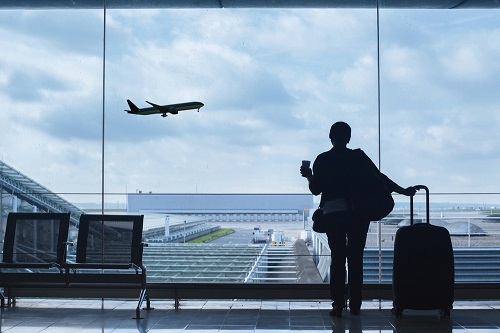
Brazil operates one of the world’s largest and most dynamic domestic aviation markets, with three principal carriers — LATAM, GOL, and Azul — linking hundreds of cities across a country the size of a continent. For expats, flying is frequently a necessity rather than a convenience: distances between major centres are enormous, rail infrastructure is sparse, and air travel is often the only realistic way to move between regions. International connectivity continues to expand, with São Paulo and Rio de Janeiro functioning as the country’s principal global gateways.
| Item | Details |
|---|---|
| Domestic seat capacity (2025) | 125.8 million departure seats (as of 2025) |
| Main domestic carriers | LATAM Airlines, GOL Linhas Aéreas, Azul Linhas Aéreas |
| Airports with scheduled services | 137 airports serving scheduled flights |
| Primary international gateways | São Paulo Guarulhos (GRU) and Rio de Janeiro Galeão (GIG) |
| Passenger rights regulation | ANAC Resolution Nº 400 (applies to all flights to/from/within Brazil) |
| Denied boarding compensation | 250 SDRs (domestic) / 500 SDRs (international), payable immediately (as of 2025) |
What is the standard of domestic air travel in Brazil like, and which routes and destinations are served?
Brazil’s internal aviation network ranks among the most expansive on the planet. The country’s 139 airports provide broad geographic coverage, with 137 handling domestic services and 118 dedicated exclusively to internal routes. In terms of scale, this is broadly comparable to the US domestic system in route density and dwarfs most European domestic networks — a reflection of Brazil’s vast continental territory.
Total departure seats from Brazil reached 143.4 million in 2025, climbing from 134.5 million in 2024 and significantly exceeding pandemic-era figures. Domestic capacity grew to 125.8 million seats, while international capacity has more than quadrupled since 2021, reaching 17.6 million departure seats. These figures point to a market in strong and sustained growth, with rising frequencies across many key corridors.
The single busiest domestic route is between São Paulo’s Congonhas Airport (CGH) and Rio de Janeiro’s Santos Dumont Airport (SDU), averaging 51 departing flights per day. This places it among the most intensively operated city-pair routes anywhere in the world. The air bridge between Brazil’s two largest cities is truly one of aviation’s most heavily trafficked connections.
Brazil encompasses an extraordinary range of geographies — from the Amazon rainforest to coastal cities, highland plateaus, and remote inland centres. Domestic air travel is the most efficient means of crossing between these distinct regions. Major cities including São Paulo, Rio de Janeiro, Brasília, Recife, Salvador, Manaus, Fortaleza, Belém, Curitiba, Porto Alegre, and Florianópolis are all served by frequent flights. In the Amazon basin and other isolated areas, flying is not simply the most convenient option but often the only one.
Brazil’s aviation sector is on an upward trajectory, driven by a growing middle class with increasing appetite for travel and sustained investment in airport facilities. Service quality on busy trunk routes is generally high, with modern aircraft and competitive fares. On thinner regional routes, older turboprop or small regional jet aircraft may be deployed, and on-time performance can be less consistent.
Which airlines operate domestic routes in Brazil, and are any low-cost carriers available?
The three carriers that shape Brazil’s domestic aviation landscape are LATAM Airlines Brasil, GOL Linhas Aéreas, and Azul Linhas Aéreas. LATAM emerged from the merger of LAN Chile and TAM Linhas Aéreas and is the country’s largest airline, operating extensive domestic and international services.
In terms of seat share, LATAM leads the domestic market with 38%, followed by GOL at 32% and Azul at 30%. This three-way structure closely resembles the deregulated models seen in the United States and European Union, where a small number of major carriers divide most of the market between them — generally producing more competitive fares than markets dominated by a single operator.
GOL is a São Paulo-based airline that has grown into one of Brazil’s largest domestic operators, running an extensive network of scheduled services across the country. Azul, headquartered at Viracopos International Airport in Campinas, focuses primarily on domestic scheduled routes and has built the broadest destination network of the three carriers, serving a total of 149 destinations throughout Brazil.
Looking at Q1 2026 data, LATAM and GOL remain the two largest carriers by departure seats, with both growing year-on-year. LATAM expanded its seat capacity to 13.6 million from 12.2 million in Q1 2025, while GOL increased to 10.9 million from 9.7 million over the same period.
As of February 2026, Brazil is connected to 200 airports across 35 countries, with services operated by 38 different airlines — among them 6 low-cost carriers — offering a wide variety of options across budgets and travel preferences. Major international carriers such as Air France, TAP Portugal, American Airlines, British Airways, Iberia, Lufthansa, and Emirates serve Brazil’s principal international airports, though these carriers do not typically offer domestic Brazilian segments.
How do you book domestic flights in Brazil — what are the options and which booking platforms are available?
Securing a domestic flight in Brazil is a straightforward process with several convenient options. Booking directly through an airline’s own website is often the most cost-effective approach: LATAM, GOL, and Azul all offer full online booking primarily in Portuguese, with varying degrees of support in other languages. Direct booking may unlock exclusive fares not available on third-party sites, and it simplifies the process of modifying or cancelling your reservation if needed.
Aggregator platforms such as Google Flights, Skyscanner, Kayak, and Expedia compile Brazilian domestic fares across multiple carriers, making it easy to compare prices quickly. These tools are especially useful when a given route could be served by more than one airline. International booking platforms generally function well with Brazilian carriers, though foreign-issued credit cards may occasionally trigger additional identity verification steps during payment.
Brazilian residents frequently complete purchases using PIX — the country’s real-time instant payment system — and many airlines and booking platforms accept it for flight purchases. Most airline apps also support local debit cards, credit cards (including instalments, which are widely used in Brazil’s retail market), and boleto bancário, a printed or digital payment slip that is a staple of Brazilian e-commerce.
On heavily trafficked routes such as São Paulo–Rio de Janeiro or São Paulo–Brasília, last-minute availability tends to be reasonable during off-peak periods. During Carnival (February/March), Semana Santa (Holy Week), July school holidays, and the Christmas–New Year summer period, however, fares surge and popular routes fill up quickly — booking several weeks ahead is strongly advisable. For lightly served regional routes, advance booking is recommended throughout the year.
Travel agencies continue to operate in Brazil and can be useful for complicated multi-leg itineraries. Some expats may also benefit from the Brazil Airpass, a multi-flight product offered by certain carriers that can represent good value for those planning extensive domestic travel. This product is primarily aimed at tourists, so verify current availability and conditions directly with LATAM or your preferred airline, as terms change regularly.
What do domestic flights typically cost in Brazil, and what should expats budget for?
Domestic airfares across Brazil vary widely based on route, carrier, booking lead time, and season. As a general guide (as of 2025), short-haul flights on competitive corridors — such as São Paulo to Rio de Janeiro or São Paulo to Belo Horizonte — can be found for as little as BRL 150–400 (approximately USD 30–80) on promotional fares when purchased well in advance. Medium-distance routes such as São Paulo to Recife or Rio to Manaus typically fall in the BRL 400–900 range (approximately USD 80–180), though these figures fluctuate considerably. Always check airline websites directly for the most current pricing, as fares shift frequently.
The competitive three-carrier structure of Brazil’s domestic market helps keep base fares accessible on the busiest routes by regional standards. On thinner routes where only one airline operates — more common in the Amazon and remote northern states — prices are often considerably higher and seat availability more restricted.
Peak travel periods exert a strong influence on pricing. Carnival, school holiday windows, and the December–January summer holiday season (Brazil falls in the southern hemisphere) can push fares two to three times above off-peak levels. Travelling mid-week and booking several weeks in advance consistently produces the most competitive fares across all three carriers.
Baggage fees deserve careful attention. All three major airlines offer base economy fares that include only carry-on baggage, with hold luggage treated as a paid add-on at booking — a model closely mirroring that of low-cost carriers in Europe and Australia. GOL and Azul’s entry-level fares do not include checked baggage, and LATAM similarly tiers baggage entitlements across its fare classes. Always verify what is included in your fare when booking to avoid unexpected fees at the airport; checked bag charges can add BRL 100–200 or more per flight. For accurate, current fare and baggage information, visit the official websites of LATAM, GOL, and Azul.
What are the main international airports in Brazil, and which ones are most relevant for expats?
Brazil’s two primary international airports connecting the country to the wider world are São Paulo/Guarulhos International Airport (GRU) and Galeão International Airport (GIG) in Rio de Janeiro.
São Paulo Guarulhos (GRU) is Brazil’s busiest airport, recording 7.1 million departure seats in Q1 2026. A total of 42 airlines operate through Guarulhos, serving 92 destinations worldwide. Situated roughly 25 km from central São Paulo, the airport is connected to the city by the CPTM urban rail service (Expresso Aeroporto), taxis, app-based ride services including Uber, and executive bus lines serving key districts. For the majority of expats entering or leaving Brazil, Guarulhos will be their main international point of transit.
Rio de Janeiro Galeão (GIG) recorded one of the most significant capacity increases among Brazil’s major airports in early 2026, growing to 3.14 million seats from 2.63 million a year earlier. Galeão sits on Ilha do Governador, approximately 20 km from central Rio. Ground transport options include app-based taxis and ride services, along with a dedicated bus service connecting the airport to the city centre and the metro network.
Brasília’s President Juscelino Kubitschek International Airport is Brazil’s third busiest and lies around 12.8 kilometres from the capital. It is especially significant for expats engaged in government work, diplomacy, or international organisations headquartered in the capital. Fortaleza (Pinto Martins International Airport), Recife (Guararapes–Gilberto Freyre International Airport), Salvador (Luís Eduardo Magalhães International Airport), Manaus (Eduardo Gomes International Airport), and Belém (Val-de-Cans International Airport) serve as key regional international gateways and are highly relevant for expats residing in the Northeast, the Amazon region, and Brazil’s northern states.
Internationally, Argentina is Brazil’s largest source market by seats in Q1 2026, followed by the US, Chile, Portugal, and Spain. Long-haul connections to Europe, North America, Africa, and the Middle East operate chiefly through Guarulhos and Galeão. Airlines including Air France, TAP Portugal, Iberia, Lufthansa, British Airways, United, American, Delta, Turkish Airlines, and Emirates all offer direct intercontinental services.
Santos Dumont Airport (SDU) in Rio de Janeiro lies just 4 km from the city centre and operates mainly domestic flights, making it a far more convenient option for those travelling into central Rio without the longer transfer from Galeão. Similarly, Congonhas Airport (CGH) in São Paulo serves primarily as a domestic hub in the city’s south zone. For expats living in the centre of either city, these airports can be considerably more practical for domestic journeys than the international terminals.
Are there any rules, restrictions, or practicalities at Brazil’s airports that expats should be aware of?
For domestic travel within Brazil, passengers must present valid photo identification at check-in and at the boarding gate. Brazilian citizens and residents typically use their CPF card (taxpayer identification document) or RG (national identity card). Expats should carry their passport or, once registered, their Brazilian residence card (Carteira de Registro Nacional Migratório — CRNM). A foreign driving licence alone is not considered sufficient for domestic air travel. Always confirm the accepted document list with your carrier before flying, as requirements are subject to change.
Check-in timing for domestic flights follows broadly standard practice: most carriers recommend arriving at least 1.5 to 2 hours before departure. For international departures from Brazil, allow a minimum of 2.5 to 3 hours, particularly during busy periods at Guarulhos. Online check-in, available from 48 hours before departure, is highly recommended to avoid queues — especially at São Paulo Congonhas, which experiences extremely high passenger volumes during peak hours.
All passengers arriving in Brazil from overseas must clear federal customs and border control. Biosecurity regulations are strictly enforced, particularly regarding the importation of fresh produce, plant material, and animal products. Brazil’s agricultural biosecurity authority (MAPA) applies rigorous controls to protect the country’s agricultural sector, and undeclared items can attract significant fines. Travellers from certain regions may also encounter additional health or customs screening. Always check the current customs allowances and duty-free thresholds through the Receita Federal (Brazilian Federal Revenue Service) before your trip, as rules are periodically revised.
Carry-on baggage dimensions and weight limits are actively enforced at Brazilian airports, particularly on base economy fares. Most carriers permit one carry-on item of up to 10 kg on standard economy tickets. Oversized or overweight items may be charged at the gate. Liquids rules at security conform to international standards (containers of 100ml or less carried in a transparent resealable bag). Major airports such as Guarulhos and Galeão feature multiple security lanes, including dedicated fast-track access for business class passengers and frequent flyers.
Unlike many major international destinations, Brazil does not have metro or rail links directly serving the majority of its airports, leaving travellers dependent on road transport — whether bus, van, taxi, or app-based car services — and therefore exposed to the vagaries of city traffic. Journey planning should account for this, particularly in São Paulo, where road congestion during rush hours can be severe. Build in generous travel time when heading to any airport in a major Brazilian city.
How does air travel connectivity in Brazil affect day-to-day expat life?
Expats based in Brazil’s principal urban centres — São Paulo, Rio de Janeiro, Brasília, Curitiba, or Belo Horizonte — benefit from excellent domestic air connectivity that makes the country’s vast geography genuinely manageable. Brazil’s aviation market is gathering considerable momentum in early 2026, supported by rising passenger demand, expanding international capacity, and continued recovery in domestic flying. For expats in these main cities, frequent and affordable flights are available for both professional travel and personal exploration within the country.
The picture is more varied for expats based in smaller cities or rural areas — particularly in the Amazon, the Centre-West, or the more remote parts of the Northeast. Azul has made significant efforts to serve smaller communities that the other two carriers do not reach, yet some areas remain thinly connected or reliant on small regional aircraft. In parts of the Amazon, air travel is not merely convenient but structurally indispensable, as road networks are limited or seasonally impassable and river travel is time-consuming. Expats considering positions or long-term relocations to cities such as Belém, Manaus, Porto Velho, or Boa Vista should thoroughly research flight frequencies before making any commitment.
Brazil’s national tourism authority recorded 9.3 million international arrivals in 2025, a 37% increase year-on-year, driven by sharp growth from Argentina and solid gains from Chile and the United States. This expansion in international connectivity benefits expats seeking to travel home or explore neighbouring countries. Brazil’s aviation industry is undergoing swift transformation in 2025, with new routes, improved connections, and upgraded infrastructure being rolled out as part of a broader government push to strengthen Brazil’s position as Latin America’s leading aviation hub.
Central to these efforts is the International Tourism Acceleration Program (PATI), a government initiative launched in 2024 that aims to increase the volume of international flights serving Brazil. By offering financial incentives to airlines launching new routes, the programme stimulates demand for tourism, business travel, and trade alike. For expats, the practical effect is a gradual broadening of direct international route options from Brazilian cities — reducing the necessity of always routing through Guarulhos or Galeão to reach international destinations.
Regular international travel home — whether for work commitments, family visits, or holidays — is generally straightforward from São Paulo or Rio de Janeiro, given the extensive range of carriers and destinations available. Expats based in regional cities should factor in a domestic connecting flight to one of the two main hubs before their international departure. Budget accordingly for this additional leg, both in terms of cost and the time required for the connection.
What should expats know about travel insurance and passenger rights when flying in Brazil?
Brazil has a well-established framework for protecting air passengers. ANAC Resolution Nº 400 — commonly referred to as ANAC 400 — is a regulation issued by Brazil’s National Civil Aviation Agency (ANAC) that safeguards travellers’ rights. It defines what passengers are entitled to when flights are delayed, cancelled, or overbooked, and ensures fair treatment regardless of the airline or nationality of the traveller, provided the flight falls within its scope.
ANAC 400 applies to any passenger regardless of nationality or airline, as long as the journey involves a domestic flight within Brazil, an international flight departing from or arriving at a Brazilian airport, a connecting flight transiting through a Brazilian airport, or a ticket issued in Brazil — even if the actual flight operates outside the country.
Passenger entitlements escalate in line with the length of the delay. A delay exceeding one hour requires the airline to provide access to communication. After two hours, the airline must supply food and beverages or provide vouchers to that effect. Beyond four hours, passengers may choose between a full refund, rebooking on an alternative flight, or a hotel stay where an overnight becomes necessary. Airlines are also required to update passengers on estimated departure times at 30-minute intervals during any delay.
When compared with the European Union’s well-known Regulation 261/2004 — which mandates fixed monetary compensation ranging from €250 to €600 for delays beyond certain thresholds — Brazil’s ANAC 400 operates on a different basis. Financial compensation under ANAC 400 is reserved specifically for involuntary denied boarding, set at 250 SDR for domestic flights and 500 SDR for international flights. For delays and cancellations, the entitlement is material assistance — communication, meals, and accommodation — scaled according to waiting time. That said, Brazil’s Consumer Code provides passengers with an additional avenue to claim compensation for quantifiable material losses and moral damages arising from flight disruptions.
Where a passenger is involuntarily denied boarding and insufficient volunteers come forward, the airline must immediately pay financial compensation of 250 SDRs for domestic flights or 500 SDRs for international flights. The SDR’s value fluctuates daily and can be verified through the Central Bank of Brazil’s website. For the full and official rules, the ANAC passenger rights page is available in English.
Travel insurance is strongly recommended for expats flying in Brazil, particularly on international routes. A comprehensive policy covering trip interruption, medical emergencies, and lost or delayed baggage addresses gaps that ANAC 400 does not fill. If you are based in or travelling to remote areas such as the Amazon, ensure your policy includes medical evacuation cover, as hospital facilities in isolated regions can be extremely limited. Read the policy’s small print carefully, paying particular attention to clauses relating to pre-existing medical conditions, and confirm the policy covers your entire period of residence in Brazil.
If you experience a problem with an airline and feel your rights have not been respected, ANAC accepts formal complaints and all airlines operating in Brazil are required to respond through its platform. ANAC monitors complaint data and uses it to assess airline performance on an ongoing basis. ANAC’s consumer helpline is reachable by dialling 163, free of charge from anywhere in Brazil, every day between 8am and 8pm.
Frequently asked questions about air travel in Brazil
Do I need a passport for domestic flights within Brazil?
Expats should carry their passport or their Brazilian residence card (CRNM) for domestic flights. Brazilian nationals typically use their RG (national identity card) or CPF document. Check your airline’s specific requirements before travel, as accepted documents can vary. A foreign driving licence alone is not reliably accepted for domestic air travel in Brazil.
Which is the best airline for domestic travel in Brazil?
Brazil’s three main carriers — LATAM, GOL, and Azul — each have distinct advantages. LATAM offers the widest range of fare classes and international codeshare options, making it convenient for passengers connecting from or to overseas flights. Azul covers the most destinations, including a large number of smaller cities beyond the reach of the other two airlines — a key benefit for expats living outside the main urban centres. GOL is a strong low-cost choice on busy trunk routes. Searching across all three carriers for your specific route will consistently give you the best picture of available fares.
How early should I arrive at São Paulo Guarulhos airport for an international flight?
Aim to arrive at least two and a half to three hours before your scheduled departure, and allow even more time during public holidays or peak travel seasons. Guarulhos is a large and heavily trafficked airport, and security queues, immigration processing, and inter-terminal transit can consume more time than anticipated. Be sure to account for São Paulo’s notoriously heavy road traffic when planning your journey to the airport, particularly during morning or evening rush hours.
Is flying the best way to travel between Brazilian cities?
For virtually any journey exceeding 500–600 km, flying is by far the most practical choice. Intercity rail is extremely limited in Brazil, and while long-distance bus travel is reasonably comfortable and popular among budget-conscious travellers, journey times are prohibitively long given the scale of the country. A bus from São Paulo to Recife, for example, takes more than 40 hours; the equivalent flight is around three hours. For expats with time constraints, domestic air travel is essentially indispensable for moving between Brazil’s different regions.
Can I fly directly to Fernando de Noronha or other islands from the mainland?
Yes. Fernando de Noronha (FEN) is served by direct flights from Recife and Natal, operated mainly by LATAM and Azul. Access to the island is managed for environmental protection purposes, and visitor numbers are controlled — on arrival you will need to register and pay a daily environmental preservation fee (Taxa de Preservação Ambiental). Check current flight schedules and entry requirements carefully before planning your visit, as services can vary seasonally.
What happens if my domestic flight in Brazil is cancelled?
Under ANAC Resolution Nº 400, if your flight is cancelled you are entitled to choose between: rebooking on the next available flight regardless of airline, a full refund including all fees and taxes, or alternative transport to your destination. The airline is also obliged to provide material assistance free of charge — including food, communication access, and hotel accommodation if an overnight stay becomes necessary — while you wait for a resolution. If the airline fails to honour these obligations, you can lodge a formal complaint with ANAC, Brazil’s civil aviation regulator.
Are there budget flights from Brazil to other South American countries?
Yes. Low-cost carriers including GOL and Chilean ultra-low-cost airline JetSmart operate routes connecting Brazil with neighbouring countries such as Argentina, Chile, Colombia, and Paraguay. Competition on Brazil–Argentina routes in particular has intensified sharply in recent years. For regional South American travel, it is worth comparing fares across GOL, Azul, LATAM, JetSmart, and Aerolíneas Argentinas. Booking well ahead is advisable during peak holiday periods, when seats on popular cross-border routes are quickly snapped up.
Does Brazil have passenger rights protection equivalent to EU261?
Brazil has its own robust protection framework under ANAC Resolution Nº 400, which applies to all flights departing from or arriving in Brazil, regardless of passenger nationality or the airline’s country of registration. The structure differs from EU261/2004: rather than fixed cash compensation for delays, Brazil’s system centres on material assistance — food, accommodation, and communication — scaled to the length of the disruption, with fixed financial compensation applying specifically to involuntary denied boarding. Passengers may also pursue claims for quantifiable losses and moral damages through Brazil’s Consumer Code. Overall, the protections are considered strong relative to most aviation markets outside the EU.