

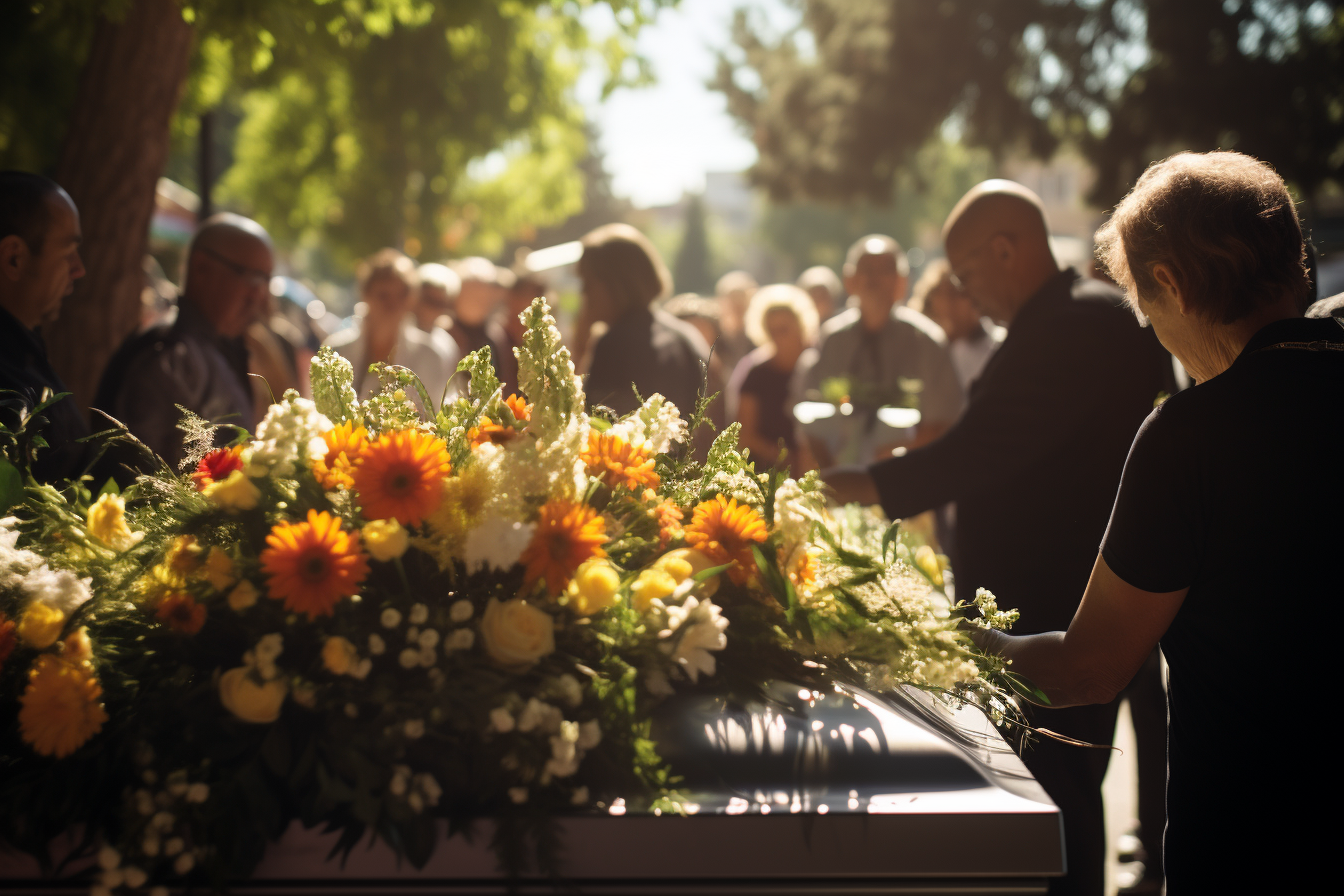
End of life care in Brazil is delivered predominantly through hospitals, with palliative services accessible via the public Sistema Único de Saúde (SUS), though coverage is far from uniform across the country. Foreign nationals living in Brazil should prepare essential legal documents — including advance directives and powers of attorney — well ahead of any need, be aware that deaths must be officially recorded within 24 hours, and understand that their home country’s consular mission will be a critical point of contact should a foreign national pass away on Brazilian soil.
| Item | Details |
|---|---|
| Death registration deadline | Within 24 hours of death (as of 2025); register at the local Cartório de Registro Civil |
| Death registration fee | No fee for registering a death at the civil registry office (as of 2025) |
| Autopsy requirement | Mandatory for violent, sudden, or out-of-hospital deaths under Brazilian law |
| Burial/cremation timeline | Often within 24 hours; cremation requires a judge’s approval |
| Advance directive (Diretiva Antecipada de Vontade) | Legally recognised in Brazil; must be registered by notary for maximum effect |
| Inheritance tax (ITCMD) | State-level tax, typically 4–8% depending on the state (as of 2025); verify current rates with the relevant state authority |
What end of life care options exist in Brazil, and how does the system function?
Brazil’s healthcare system operates on two levels. The public arm, the Sistema Único de Saúde (SUS), delivers universal free care to every resident regardless of their nationality or legal status, drawing funding from federal, state, and municipal government sources. Running alongside it is a substantial private sector, accessed through health insurance plans known as planos de saúde, which typically offers quicker access and a broader service range.
Brazil is a nation of profound diversity and sharply contrasting regional conditions. An ageing population and the growing burden of chronic non-communicable diseases are placing increasing pressure on the country’s end of life care infrastructure. In principle, available options include hospital-based care, home care programmes, outpatient support, and dedicated palliative units — but the reality is that these resources are distributed very unevenly between large urban centres and rural communities.
End of life care in Brazil remains heavily concentrated in hospitals, and even within that setting, only around 10% of institutions have a dedicated specialist team. For expats, this means hospital admission is usually the most readily accessible route to care, while community-based and home-based end of life services remain largely underdeveloped. Private health insurance can improve access to better-equipped specialist teams in cities such as São Paulo, Rio de Janeiro, and Brasília.
What does palliative care mean in Brazil, and who can access it?
The World Health Organization defines palliative care as assistance provided by a multidisciplinary team aimed at improving the quality of life of patients and their families when facing a life-threatening illness — through the prevention and relief of suffering, early identification, thorough assessment, and treatment of pain and other physical, psychological, social, and spiritual symptoms. Brazil has formally incorporated this definition into its national health policy.
The earliest specific legal instrument establishing palliative care within the SUS was Portaria No. 19, issued on 3 January 2002, which created the National Pain and Palliative Care Programme. Through this legislation, the Ministry of Health set out to promote debate on the subject and define what palliative care should encompass within the Brazilian context.
Cancer treatment centres accredited within the public health system — known as CACONs — are obliged to offer palliative care. However, because no formal regulation governs the operation of hospices, the majority of publicly funded palliative services are tied to oncology. This has created a widespread but inaccurate impression that palliative care is only for people with cancer. In practice, individuals living with any life-limiting condition — including heart failure, chronic obstructive pulmonary disease, or dementia — are entitled to palliative care under the SUS, though practical access may be more difficult for those with non-oncological diagnoses.
Current estimates suggest that only 14% of Brazilians who require palliative care actually receive it. Expats should raise their palliative care needs with their treating doctor as early as possible, and should seriously consider supplementary private health coverage to maximise access to specialist teams.
Do hospices exist in Brazil, and how can you gain access to them?
Brazil currently has only around 123 physicians with specialist palliative care qualifications, and approximately 340 palliative care services in operation — none of which follows a fully dedicated hospice model. This stands in marked contrast to countries such as the United Kingdom, where an extensive network of independent hospices operates alongside the NHS. In Brazil, the concept of a self-contained residential facility focused exclusively on comfort care in a person’s final weeks or months has not yet been formally established as a recognised model within the national health framework.
Research conducted by the National Academy of Palliative Care (NAPC) found that 74% of palliative care services were delivered within hospitals, while only 5% functioned in settings resembling a hospice. The main professional body advocating for the development and expansion of palliative and hospice-style care across the country is the Academia Nacional de Cuidados Paliativos (ANCP).
To access palliative care in Brazil, the usual route is through your treating specialist or general practitioner (clínico geral) within the SUS or via your private health insurer, who can arrange a referral to a equipe de cuidados paliativos (palliative care team) based at a hospital or oncology centre. The ANCP website (www.ancp.org.br) lists member services throughout the country and is a useful starting point for finding out what is available in your region.
Is palliative or hospice care funded through the national health system or private insurance, or must it be paid for out of pocket?
Despite meaningful progress in legislation and executive policy relating to palliative care, Brazil’s Unified Health System (SUS) has faced significant structural setbacks that continue to affect the design and delivery of palliative public policy. In theory, palliative care sits within the universal entitlement offered by the SUS, meaning any resident — including registered foreign nationals — can receive it free of charge. In practice, both capacity and geographic reach remain severely constrained.
Adequate funding, systematic professional training, and consistent access to essential medications are still areas where public policy has yet to deliver fully on its promises. A first national palliative care policy framework has been proposed, providing guidance on how care should be organised and stressing the importance of integrating services across all levels of the Brazilian health system.
Within the private insurance sector, coverage for palliative care depends on the precise terms of your plano de saúde. The national health insurance regulator, ANS (Agência Nacional de Saúde Suplementar), requires most plans to cover a baseline level of care, but specialist palliative services — particularly home-based care or dedicated palliative teams — are not always explicitly included in the coverage schedule. Read your policy carefully and contact the ANS (www.gov.br/ans/pt-br) if you believe you are being unfairly refused coverage.
Expats who do not hold Brazilian private insurance but have international health coverage should speak directly with their insurer: direct billing or reimbursement arrangements with Brazilian providers are possible but far from guaranteed. Establishing the position before a crisis arises is strongly recommended.
Which legal documents should expats put in place before the end of life in Brazil?
Brazilian law recognises several key instruments through which individuals can record their healthcare preferences and delegate decision-making authority to others. Every expat with long-term residence in Brazil should consider putting these documents in place at the earliest opportunity.
Advance Directive (Diretiva Antecipada de Vontade — DAV)
Brazil’s palliative care framework affirms the right of terminally ill patients to choose independently whether to undergo procedures that serve only to prolong dying rather than to achieve recovery. The DAV — Brazil’s equivalent of a living will — allows you to state your wishes concerning life-sustaining treatment, resuscitation, and other end of life interventions. Resolution CFM 1.995/2012 issued by the Federal Council of Medicine (Conselho Federal de Medicina) formally recognised advance directives as binding on medical teams. To give the document the strongest possible legal standing, have it prepared or registered at a notary office (cartório).
Power of Attorney (Procuração)
A general or specific power of attorney authorises another individual to take legal and financial decisions on your behalf. In Brazil, a power of attorney must be signed in the presence of a notary (tabelião) at a cartório to be legally valid. For healthcare-related decisions, consider naming a trusted person as your designated representative within your advance directive itself, as Brazil does not have a separate statutory healthcare proxy document comparable to those found in certain other legal systems.
Last Will and Testament (Testamento)
A valid will in Brazil may take one of three forms: a public will (testamento público), prepared in the presence of a notary; a closed will (testamento cerrado), sealed and formally presented to a notary; or a holographic will (testamento particular), handwritten in full and signed by the testator and witnesses. For expats, the public notarial will offers the greatest security, as it is centrally registered and cannot be misplaced. If you already hold a will from your home country, consult a Brazilian lawyer to determine whether it is sufficient or whether a complementary Brazilian will is advisable for assets held in Brazil.
Declaration of Final Wishes (Declaração de Último Vontade)
Where the deceased has no entitlement to a family plot or tomb, they may have left an official statement recording their preferences for the disposal of their remains — whether by burial, cremation, or another arrangement. This document is known as a Declaração de Último Vontade. The person making the declaration should have had their signature officially recognised at a Registry Office, where the document is then filed. A family member or acquaintance of the deceased may subsequently retrieve it from the Registry Office.
Are advance directives or powers of attorney drawn up abroad legally valid in Brazil?
Foreign legal documents — including advance directives, powers of attorney, and wills — can potentially be given effect in Brazil, but doing so involves several important steps and is not automatic.
Original foreign documents and any copies must be provided. All such documents must be apostilled in their country of origin, and once they arrive in Brazil, they must be rendered into Portuguese by a certified public translator (tradutor juramentado) and then registered at a notary office.
Brazil is a party to the Hague Apostille Convention, which means documents originating in another Convention signatory can be apostilled in that country and will generally be accepted in Brazil without any further legalisation. If your country has not signed the Hague Convention, consular legalisation may instead be required — contact your home country’s consulate in Brazil for specific guidance.
Critically, even a correctly apostilled and properly translated foreign advance directive may not automatically be followed by Brazilian medical staff during an emergency. The most reliable approach is to also prepare a Brazilian-format DAV through a local cartório, carry a copy at all times, and provide copies to your treating physician. A Brazilian lawyer specialising in health or estate matters can advise on how best to make your existing foreign documents as effective as possible within the Brazilian legal system.
What does Brazilian law say about euthanasia and assisted dying?
Euthanasia and assisted dying are both illegal in Brazil. Active euthanasia — where a doctor or any other person directly causes a patient’s death — is categorised as homicide under the Brazilian Penal Code and carries significant criminal penalties. This position has not changed as of 2025, and no legislation proposing to decriminalise or legalise either euthanasia or physician-assisted dying is actively progressing through the Brazilian Congress.
The overarching goal of palliative care in Brazil is to ensure a measure of dignity for those with terminal illness, avoiding treatments that serve only to extend suffering. The Brazilian Constitution enshrines as a fundamental human right the right to be free from degrading or inhuman treatment. Within this framework, Brazilian medical ethics endorses the concept of ortotanásia — permitting a natural death by withdrawing disproportionate or futile life-sustaining treatment — which is regarded as legally and ethically separate from euthanasia.
Brazilian law provides a clear framework for the practice of medicine in supporting patients in palliative care through the terminal phase of life. In practical terms, this means a patient’s advance directive requesting the discontinuation of futile treatment will be respected by medical teams. However, any active measure taken to end a patient’s life remains entirely outside the law.
What customs, traditions, and religious practices surround death and dying in Brazil?
Brazil ranks among the most religiously diverse nations on earth, and attitudes towards death reflect this plurality of belief. Roman Catholicism remains the most widely practised religion and underpins many of the most prevalent customs. Evangelical Protestantism is expanding rapidly, and significant communities practise Spiritism, Candomblé, Umbanda, and other Afro-Brazilian traditions. Each of these faith traditions brings its own distinctive approach to death, mourning, and remembrance.
Within Catholic and broader Brazilian cultural tradition, the period immediately after death is marked by a velório (wake), usually held at a funeral home (funerária) or, particularly in rural communities, at the family home. The velório is a communal gathering in which relatives and friends come together to pray, share memories of the deceased, and offer one another support. It typically continues overnight or for several hours, with mourners received by the family throughout. Religious prayers, most commonly the rosary, are frequently recited around the coffin.
While there is no legal deadline governing how quickly a body must be buried, cremated, or otherwise disposed of, it is a long-standing tradition in Brazil for burials to take place within 12 hours of death — a pace considerably faster than in many other countries, where funerals may not occur until five to seven days after the death. Expat families should therefore be prepared to make significant decisions very quickly.
It is common in Brazil for families to own a tomb or plot in a cemetery where multiple generations of the family are interred. To place a body in a family plot or tomb, the family must present evidence to the relevant authorities — including the federal police and cemetery administration — of the deceased’s family relationship. Spiritist and Afro-Brazilian faith traditions may involve specific ritual practices, including prayers, offerings, and ceremonies connected to beliefs about the journey of the soul after death. Practitioners of these faiths will typically wish such rituals to be incorporated into the mourning process. Expats should approach these traditions with respect and communicate openly with local family members or carers about their own preferences and wishes.
What steps must be taken when someone dies in Brazil?
The procedures that follow a death in Brazil can be highly bureaucratic. Acting promptly and in the correct sequence is essential. The recommended steps are set out below.
- Obtain the Declaration of Death (Declaração de Óbito)
This document is normally issued by the attending physician. If a natural death took place outside a hospital, it becomes the funeral director’s responsibility to arrange transport of the body to the nearest hospital or Death Verification Service (Serviço de Verificação de Óbito — SVO) so that the declaration can be formally issued by a doctor. - Contact the Forensic Institute if required
When a death occurs outside a hospital and results from violence, an accident, or an unknown cause, the body must be transported by ambulance to the Forensic Institute (Instituto Médico Legal). In such cases, a forensic report will be produced following the completion of a post mortem examination. - Engage a licensed funeral director (agência funerária)
Contact a licensed funeral director as soon as possible. The death must be registered at the local Civil Registry Office (Cartório de Registro Civil), and in most cases the funeral director can carry out this registration on the family’s behalf. The funeral director will also oversee transport of the body and manage much of the necessary paperwork. - Register the death at the Civil Registry Office
Brazilian law requires every death occurring in Brazil to be registered within 24 hours of its occurrence. Once the Declaração de Óbito has been obtained, a family member or acquaintance of the deceased should bring this document to the Civil Registry Office (Cartório de Registro Civil) for the district in which the death took place. If the death occurs over a weekend when the Registry Office is closed, registration should be completed the following Monday morning. - Notify the deceased’s home country consulate (where applicable)
If the deceased was a foreign national, contact the relevant embassy or consulate as soon as possible. Should no family members or friends be present to manage the registration process, the federal police will automatically notify the consulate, which will then contact the next of kin to coordinate repatriation arrangements. - Notify any insurance providers
If the deceased held insurance, contact the insurer promptly. The insurer may appoint a funeral director in Brazil and, where relevant, in the destination country. They may also be able to cover repatriation costs and assist with medical, legal, interpretation, and translation expenses. - Obtain additional certified copies of the death certificate (Certidão de Óbito)
It is advisable to request several certified copies of the death certificate, as multiple copies will be required for estate administration, insurance claims, pension authorities, banks, and any repatriation processes. - Consult a Brazilian lawyer regarding estate matters
If the deceased held assets in Brazil, engage a local lawyer (advogado) to initiate the estate administration (inventário) process without delay, as Brazilian law sets time limits on opening probate proceedings.
How is a death formally registered in Brazil, and what paperwork is required?
When a person dies of natural causes in Brazil, the official death certificate (Certidão de Óbito) is generally issued promptly once the death is registered at the local civil registry office (Cartório de Registro Civil). When an autopsy is required, the death certificate will only be issued after the initial forensic report has been completed.
Registration must take place at the Cartório de Registro Civil for the district in which the death occurred, and the funeral director can usually handle this process on the family’s behalf. The essential document required is the declaração de óbito, issued by a doctor or medical facility in Portuguese. Further documentation typically includes the deceased’s identity papers — such as a passport, Registro Nacional Migratório (RNM), or the former Registro Nacional de Estrangeiros (RNE) for foreign nationals — along with any available proof of residence or personal status.
There is no charge for registering a death at the civil registry office. A small administrative fee, which varies between states, applies when obtaining certified copies of the Certidão de Óbito.
A post mortem (autopsy) is a medical examination of a deceased person’s body. Under Brazilian law, an autopsy is compulsory whenever death results from violence or a sudden incident, or when it occurs outside a hospital. Judicial police pathologists are responsible for conducting these examinations. When a person dies in a hospital or from an illness lasting more than 24 hours, an autopsy is not obligatory. Autopsies in Brazil are a public service, and no fee should be charged to the family.
Death records in Brazil are held at the local municipal level. To obtain certified copies, you will need to contact the specific cartório in the district where the death occurred, as there is no single centralised national registry.
What happens when a foreign national dies in Brazil, and what role does their consulate play?
Brazilian law requires that all procedures relating to the death of a foreign national comply with applicable federal, state, and municipal regulations. When a foreigner dies in Brazil, the death must first be formally recorded at the local Civil Registry Office (Cartório de Registro Civil).
The deceased’s home country embassy or consulate should be notified as promptly as possible — ideally on the day of death or the following morning. Most major embassies in Brazil maintain emergency consular telephone lines for exactly this purpose. The consulate’s role encompasses providing the family with practical guidance, issuing relevant travel documents for relatives travelling to Brazil, and helping to coordinate the repatriation of remains if that is what the family wishes.
While repatriation procedures vary depending on the deceased’s country of origin, the consulate will generally send a representative to accompany the family and federal police through the registration process. The consular representative will also need to be present at the sealing of the coffin if the body is to be returned abroad.
Certain countries require the death certificate to be translated by an official translator and then legalised at the consulate before repatriation arrangements can proceed. It is important to note, however, that the consulate cannot meet funeral costs, repatriation expenses, or legal fees on behalf of the family — those remain the responsibility of the family or the deceased’s estate and insurer. Similarly, the embassy or consulate is unable to provide or fund translation services.
How are funerals usually organised in Brazil, and what options are available?
Arranging a burial or cremation in Brazil requires the involvement of a licensed local funeral director. The precise rules governing burials and cremations differ according to location. Where a death was violent, accidental, or the cause has not been established, legal authorisation for cremation will be required, and a funeral director can assist in initiating that process.
Cremation requires the approval of a judge. While this can occasionally be granted quickly — sometimes within 24 hours — it will be delayed when a post mortem is necessary due to a suspicious or violent death. Families who prefer cremation should be aware of this and plan for the possibility of delays of several days in non-natural death circumstances.
Burials and cremations in Brazil generally take place very rapidly — sometimes within 24 hours of death — meaning next of kin may be called upon to make significant decisions under considerable time pressure. Burial remains the predominant practice across the country, with most cities served by large municipal or private cemeteries. Cremation has become progressively more available in major urban centres such as São Paulo, Rio de Janeiro, Belo Horizonte, and Curitiba, but it remains far less common and accessible in smaller towns and rural communities.
The funeral director (agência funerária) coordinates all practical arrangements — from collecting and transporting the body to organising the velório, completing the death registration paperwork, and liaising with cemetery or cremation facility management. Selecting a licensed, well-established provider is strongly advisable, as both the quality and the pricing of services vary considerably.
What do funerals typically cost in Brazil, and is financial assistance available?
Funeral costs in Brazil differ widely depending on the region, the standard of service chosen, and whether burial or cremation is selected. As of 2025, some cities offer a basic municipal funeral at low or no cost for families who cannot afford private services. A standard private funeral incorporating a wake and burial typically ranges from approximately BRL 5,000 to BRL 20,000 or more, depending on the city and provider. Cremation packages in major urban centres tend to fall within a similar or slightly lower price range. Costs change frequently, and current pricing should be confirmed directly with funeral providers. International repatriation adds substantially to these figures — see the section below for more detail.
Brazil’s public social security system (INSS) does not currently provide a universal lump sum funeral payment in the manner of bereavement support payments available in some European countries. However, eligible dependants of workers registered with the INSS may qualify for a pensão por morte (death pension), which is a monthly survivor’s benefit rather than a one-off funeral grant. Eligibility can be checked with the INSS (www.gov.br/inss/pt-br).
Certain Brazilian private health insurance plans and life insurance policies include a funeral assistance benefit (auxílio funeral). If the deceased held such a policy, contact the insurer without delay. Many international expat insurance plans also include repatriation of remains as a standard feature — always review the policy schedule before a crisis occurs. Municipal governments in some cities provide free or subsidised funeral services for low-income residents; contact the local prefeitura (city hall) to find out what support is available in your area.
How does repatriation of a foreign national’s remains from Brazil work?
Repatriating remains from Brazil is a multi-stage process involving Brazilian authorities, the deceased’s home country consulate, specialist funeral professionals, and airline carriers. In most cases, completing all the required formalities takes a minimum of several days to two weeks, and can take considerably longer when an autopsy or judicial review is involved.
Once Brazilian authorities have certified the cause of death, a special authorisation for the international transport of human remains — known as the Guia de Traslado — must be obtained. This document confirms that the repatriation meets both public health requirements and international transport regulations.
The documents typically required include an embalming certificate confirming that the body has been prepared to international health standards, and an air transport coffin certificate verifying that the casket meets international aviation requirements. Additional documents normally include a certified copy of the Certidão de Óbito, a translated and apostilled copy if required by the destination country, and the deceased’s passport.
Where documents are to be used in the destination country, they must be legalised through the Apostille process under the Hague Convention, to which Brazil is a signatory. This ensures that the relevant authorities in other Convention countries will accept the documents without requiring further authentication.
The body must be embalmed to international standards before international transport can take place. Engaging a funeral director with demonstrable experience in international repatriation is essential — your consulate will typically be able to provide a list of recommended providers. Repatriation costs vary considerably but can range from several thousand to tens of thousands of reais depending on the destination country. These costs are often covered by travel insurance or international health insurance policies — confirm coverage with your insurer before any arrangements are committed to.
What happens to an estate when someone dies in Brazil — how does probate work and are inheritance taxes applied?
In Brazil, the formal process of administering and distributing a deceased person’s estate is called inventário (literally, inventory or probate). Brazilian law requires the inventário to be opened within 60 days of the date of death, although this deadline is not always strictly enforced. Failure to initiate the process in good time can result in financial penalties and create complications when transferring assets to beneficiaries.
There are two possible routes for the inventário. Where all heirs are adults, are in agreement with one another, and there is either a valid will or no dispute about succession, an inventário extrajudicial can be completed before a notary at a cartório — a route that is faster and considerably less expensive than going through the courts. If minor children are involved, if there are disputes among heirs, or if no will exists, a judicial inventário through the courts is required. Judicial probate in Brazil can take anywhere from one to several years, particularly in the court systems of busy urban centres.
Brazil levies an inheritance and gift tax known as ITCMD (Imposto de Transmissão Causa Mortis e Doação) on the transfer of assets upon death. As of 2025, this is a state-level tax, with rates varying by state and typically ranging from 4% to 8% of the net estate value. Some states apply progressive rates that may result in higher charges on large estates. A constitutional amendment approved in 2023 permits states to raise maximum rates above the 8% ceiling, so it is essential to verify current rates with the relevant state tax authority (Secretaria da Fazenda or SEFAZ) in the state where the assets are located.
Assets held abroad are generally not subject to Brazilian ITCMD unless they are declared as part of the Brazilian estate. Expats with assets in more than one country should obtain advice from a lawyer experienced in both Brazilian law and the law of any other jurisdiction involved, in order to ensure efficient and legally sound estate planning.
What happens to an expat’s assets in Brazil if they die without a will?
When a person dies intestate — that is, without a valid will — in Brazil, their assets are distributed according to the intestacy rules set out in the Brazilian Civil Code (Código Civil). The order of succession places descendants (children and grandchildren) first, followed by ascendants (parents and grandparents), and then the surviving spouse or civil partner. Collateral relatives such as siblings, aunts, and uncles inherit only in the absence of any closer heirs.
A central feature of Brazilian succession law is the concept of herança necessária (forced heirship). At least 50% of the estate must pass to herdeiros necessários — a category that encompasses descendants, ascendants, and the surviving spouse. Even where a valid will exists, no more than 50% of the estate can be freely disposed of if the deceased has forced heirs. Expats wishing to leave assets to people who fall outside this protected category — such as an unmarried partner, a close friend, or a charitable organisation — must plan carefully with the assistance of a Brazilian lawyer.
In the case of foreign nationals dying intestate while holding assets in Brazil, Brazilian courts will generally apply Brazilian succession law to those assets, regardless of the deceased’s nationality. Brazil has not ratified the Hague Convention on the Law Applicable to Succession to the Estates of Deceased Persons, meaning there is no automatic application of the deceased’s home country succession law to Brazilian assets. This underscores the importance of drawing up a valid Brazilian will for any expat who holds property or significant assets in Brazil.
Frequently Asked Questions
Will my international or foreign health insurance be accepted by Brazilian hospitals for end of life care?
Brazilian hospitals generally require one of three things: proof of SUS coverage, a recognised Brazilian plano de saúde, or upfront payment. Some large private hospitals in major cities have departments experienced in working with international insurers and may offer direct billing arrangements, but this is by no means universal. Where possible, contact your insurer before admission to arrange a letter of guarantee (carta de garantia), and ensure your insurer’s emergency contact number is always readily accessible.
Do I need my advance directive or power of attorney to be translated into Portuguese to be valid in Brazil?
All foreign documents must be apostilled in their country of origin, and once in Brazil they must be translated into Portuguese by a certified public translator (tradutor juramentado) and registered with a notary office. Without completing these steps, a document in a foreign language is unlikely to be followed by Brazilian medical staff in an emergency. For the greatest degree of certainty, also prepare a Brazilian-format advance directive (Diretiva Antecipada de Vontade) through a local cartório.
How long does the repatriation of remains from Brazil typically take?
In uncomplicated cases where the cause of death is clear and all documentation is in order, repatriation can generally be completed within approximately five to ten working days. If an autopsy is required, or if there are judicial proceedings connected to the death, the process may take considerably longer — potentially several weeks. Engaging an experienced international funeral director and your consulate from the outset will help the process move forward as efficiently as possible.
Is there any grief or bereavement support available to foreign families in Brazil?
Formally structured, state-funded bereavement support services are not widely available in Brazil in the same way as in some other countries. Support tends to be provided informally through family networks, religious communities, and faith-based organisations. Some private hospitals and larger palliative care teams offer psychological or social worker support for bereaved families. International and expat community groups in major cities may also provide both practical and emotional support — your consulate may be able to provide referrals to appropriate local services.
Can a family member who is not a Brazilian resident enter Brazil quickly to deal with a death?
Nationals of many countries may enter Brazil visa-free for short stays of up to 90 days. Some nationalities, however, are required to obtain a visa in advance. Your home country’s consulate in Brazil can issue an emergency letter to support travel arrangements, and in urgent situations may be able to liaise directly with Brazilian immigration authorities. Check the Brazilian Federal Police (Polícia Federal) website and your country’s foreign ministry for up-to-date entry requirements, as visa policy is subject to change.
What happens to a deceased expat’s belongings in Brazil?
If the deceased was a resident in Brazil, their belongings may form part of the estate and cannot necessarily be removed immediately. Personal possessions are typically held at the deceased’s home, and collection can be arranged directly between the family and the landlord. Local authorities are not in a position to store private belongings or compile an inventory on behalf of the family. Consult a Brazilian lawyer before removing or disposing of any items that may have estate value.
Does Brazil recognise same-sex partnerships for inheritance and next-of-kin purposes?
Yes. Brazil’s Supreme Court recognised same-sex marriage in 2013, and same-sex couples enjoy the same legal rights as opposite-sex married couples in matters of inheritance, next-of-kin decision-making, and survivor benefits. Unmarried same-sex partners in a união estável (stable union) should ensure that their relationship is formally registered to avoid potential complications in estate administration and medical decision-making. A Brazilian notary or lawyer can provide advice on registration.
Are there time limits on challenging a Brazilian will or inheritance decision?
Yes. Brazilian law subjects claims contesting a will or challenging inheritance decisions to limitation periods. The inventário should be opened within 60 days of death, and heirs generally have a defined window in which to identify themselves and assert their claims. The precise time limits depend on the nature of the dispute and the legal provisions that apply. A Brazilian lawyer should be consulted promptly if you believe you have grounds to contest an inheritance decision or are concerned about your rights as an heir.