
End of life care in Bulgaria is delivered primarily through hospitals, specialist palliative units, and a limited number of hospice facilities, with home-based provision that, while modest, is gradually expanding. Euthanasia and assisted dying are both unlawful. A death must be registered with the local municipality within 48 hours, and when a foreign national dies in Bulgaria, specific steps involving consular notification are required before remains can be repatriated.
| Item | Details |
|---|---|
| Death registration deadline | Death certificate must be drawn up within 48 hours of death (as of 2024, per Bulgaria’s Civil Registration Act) |
| Palliative care NHIF coverage | Up to 20 days of inpatient palliative care per 6-month period covered by the National Health Insurance Fund for eligible oncology patients (as of 2024) |
| Euthanasia / assisted dying | Illegal in Bulgaria |
| Cremation availability | Currently available in Sofia only; burial is the norm elsewhere |
| Burial plot (initial period) | Free of charge for the first eight years; thereafter rented in 10-year intervals from the local municipality |
| Death benefit (state) | Insured persons’ eligible relatives may claim a lump-sum death benefit equivalent to two months’ wages from the National Social Security Institute — verify current figures at nssi.bg |
What end of life care options are available in Bulgaria, and how does the system work?
End of life care in Bulgaria is principally provided through hospitals and dedicated hospice facilities, supplemented by a limited range of home-based services. The national healthcare system is financed through the National Health Insurance Fund (NHIF — Национална здравноосигурителна каса, НЗОК), to which all legally resident and insured individuals are required to contribute. Specialist end of life care is organised across hospital oncology departments, dedicated palliative units, and a comparatively small number of independent hospices.
In recent years, efforts have been made to strengthen end of life provision in Bulgaria, including the creation of palliative programmes within certain hospitals and the gradual growth of home care for those living with life-limiting conditions. Nonetheless, the availability of these services remains inconsistent across the country. Those residing outside major urban centres — particularly Sofia, Plovdiv, and Varna — may encounter difficulties accessing specialist care. Home-based provision exists in certain areas but has not yet been uniformly rolled out nationally. Families frequently bear a large part of the practical caregiving burden, a role that is deeply rooted in Bulgarian cultural values.
What is palliative care in Bulgaria, and who is eligible for it?
Palliative care in Bulgaria falls within the main oncological activities package and is tied to NHIF contracts — only centres employing trained specialists are authorised to deliver it. As a result, access to publicly funded palliative care is most firmly established for patients with cancer who are treated within accredited oncology centres, rather than being broadly available across all terminal diagnoses.
The established pathway guarantees patients the right to hospitalisation for palliative care for 20 days in every six-month period. People living with other life-limiting illnesses — such as advanced cardiac failure, progressive neurological conditions, or end-stage respiratory disease — may face greater barriers to accessing formally structured palliative care within the public system and may need to turn to private providers or general hospital wards. Expats who are registered with the Bulgarian health system and making NHIF contributions are entitled to the same publicly funded healthcare as Bulgarian nationals. Those without local insurance coverage will be required to meet care costs privately.
The Bulgarian Long-Term and Palliative Care Society is the principal professional body working to advance palliative medicine throughout Bulgaria. It is a non-governmental organisation for public benefit whose aim is to establish and develop long-term care and palliative medicine in the interests of patients, their families, their relatives, and society as a whole. The Society can serve as a valuable point of contact for information about specialist services and available resources.
Are there hospices in Bulgaria, and how do you access them?
Hospice care in Bulgaria remains at an early stage of development, with only a handful of dedicated facilities currently in operation. These centres offer comprehensive support to people with life-limiting illnesses, encompassing symptom management, pain relief, and psychological and emotional care. The number of functioning inpatient hospices is considerably smaller than in many western European countries.
Hospice care is generally recommended for patients who have an incurable illness with an anticipated survival of six months or fewer if the condition follows its natural course. It is important for patients and their families to raise the possibility of hospice care with their treating physician in good time, so that its full benefits can be realised. This conversation is ideally initiated by the attending doctor or oncologist, who can refer the patient to a suitable facility or home-care team.
Among the hospices currently operating in Bulgaria, St. Ekaterina Hospice offers specialist medical care for patients with a range of conditions, providing comprehensive support to those with disabilities and elderly patients, along with palliative care for individuals with terminal illnesses. The Serdika Hospice delivers round-the-clock medical care for patients requiring long-term treatment and support. Hospice care may also be provided in the patient’s own home, although care delivered in a purpose-built environment with appropriate medical equipment is often considered more effective for both patients and care teams.
Access to hospice care typically begins with a referral from a hospital consultant or a general practitioner (GP — личен лекар). Expats should ensure they are registered with a GP, as this is the standard gateway to the Bulgarian health system and the most common route to specialist referrals. The Bulgarian Ministry of Health website (mh.government.bg) contains regulatory information on licensed healthcare providers.
Is palliative or hospice care covered by public health insurance or the national health system in Bulgaria, or does it need to be funded privately?
A total of 25 hospitals in Bulgaria have entered into contracts with the National Health Insurance Fund (NHIF) to deliver palliative care to patients with oncological conditions. For individuals insured through the NHIF — whether Bulgarian nationals or foreign residents making contributions — a defined level of inpatient palliative care is provided without direct charge, subject to the 20-day per six-month limit described above.
Care at private hospices and most home-care services, however, falls outside the NHIF’s standard coverage. These must be self-funded, and costs differ considerably according to the facility, the level of care required, and the location. Unlike systems such as the NHS in the United Kingdom, where palliative and hospice care is largely financed through public bodies, Bulgaria’s framework places a more substantial financial responsibility on patients and their families for care beyond the basic NHIF entitlement.
Private health insurance — whether an international policy arranged before relocating to Bulgaria or a locally obtained plan — may help offset the cost of private palliative or hospice care. Expats should scrutinise their policy terms carefully, since coverage for long-term and palliative care varies widely between providers. Always confirm in writing precisely what is and is not covered before agreeing to a care placement.
What legal documents should expats have in place before the end of life in Bulgaria — such as a living will, advance directive, power of attorney, or healthcare proxy — and how do these work?
Bulgaria’s legal framework governing end of life decision-making is less formalised than that of some other EU countries. There is no single, widely recognised “advance directive” equivalent to those mandated by legislation in countries such as France or Germany. Nevertheless, several important legal tools are available to expats residing in Bulgaria who wish to plan ahead.
A power of attorney (пълномощно) — executed before a notary — can authorise a trusted individual to handle financial affairs and, in certain circumstances, healthcare-related decisions on your behalf should you become incapacitated. For healthcare matters specifically, the power of attorney must be worded clearly to reflect medical decision-making authority, and it is strongly recommended to engage a Bulgarian-qualified lawyer to ensure the document is appropriately drafted and enforceable under Bulgarian law.
While Bulgaria does not have a standardised living will or advance directive regime equivalent to countries with dedicated legislation, patients’ rights under Bulgarian health law do allow individuals to decline treatment and to express their preferences regarding care. The Law on Health (Закон за здравето) enshrines patients’ rights, including the right to informed consent and to refuse medical interventions. A written statement of wishes, prepared with legal guidance and ideally lodged with your GP and any treating hospital, can help medical professionals act in accordance with your preferences within the framework of Bulgarian law.
Expats are strongly advised to: (1) appoint a general power of attorney covering both financial and healthcare matters; (2) prepare a Bulgarian will dealing with assets held in Bulgaria; and (3) leave a clearly expressed written statement of medical wishes with their GP, next of kin, and any relevant medical providers. A Bulgarian notary (нотариус) or a lawyer with expertise in healthcare or estate matters can provide the necessary assistance.
Are documents such as advance directives or powers of attorney made in another country legally recognised in Bulgaria?
Foreign legal documents — including powers of attorney and advance directives — can be recognised in Bulgaria, but they generally require legalisation or apostille certification before Bulgarian authorities and institutions will accept them. Bulgaria is a signatory to the Hague Apostille Convention, which streamlines the authentication of documents between member states.
Where a document has been issued in a state with which Bulgaria has not concluded a legal assistance treaty that waives legalisation requirements, the document must be apostilled in accordance with the Hague Convention, or certified through a stamp from the relevant state’s Ministry of Foreign Affairs, which must then be authenticated by the Bulgarian diplomatic or consular mission in that country.
In practice, this means that a power of attorney issued in, for example, France, Spain, or Germany must carry an apostille stamp and be accompanied by a certified Bulgarian translation. Notaries in Bulgaria are empowered to certify the signature of the translator on translations of foreign documents into Bulgarian that are intended for use in Bulgaria. It is advisable to have any foreign legal document reviewed by a Bulgarian lawyer before it is required in an emergency, to confirm its validity and practical enforceability in the Bulgarian context.
What are the laws around euthanasia or assisted dying in Bulgaria?
Both euthanasia and assisted dying are unlawful in Bulgaria. No legal framework exists that would permit a physician or any other person to deliberately bring about a patient’s death, even where the patient has expressly requested this. Under Bulgarian criminal law, the intentional ending of a life — regardless of the compassionate circumstances — constitutes homicide, and assisted suicide is equally prohibited.
Bulgaria’s position aligns it with the majority of EU member states, which have not legislated for euthanasia or assisted dying. This contrasts with countries such as the Netherlands, Belgium, and Spain, which have enacted laws permitting assisted dying under prescribed conditions. Bulgaria has not engaged in any legislative process that has resulted in such provisions being enacted. Palliative sedation and the withdrawal of life-sustaining treatment in clinically appropriate circumstances are distinct medical practices that may be discussed with the treating physician and are not equivalent to euthanasia.
Expats who hold strong views on end of life decision-making should discuss their wishes with their medical team and ensure they have a clearly worded written statement of their preferences regarding treatment and resuscitation, which will guide clinical decisions within the boundaries of Bulgarian law.
What are the local customs, traditions, and religious practices around death and dying in Bulgaria?
Bulgarian culture has been profoundly shaped by Orthodox Christianity, and religious customs and practices play a central role in how death and dying are approached throughout the country. Death is regarded as a natural dimension of human life, and people customarily mark the passing of the deceased through established funeral traditions. When a death occurs, it is typical for family members and friends to gather to offer condolences and comfort to the bereaved family.
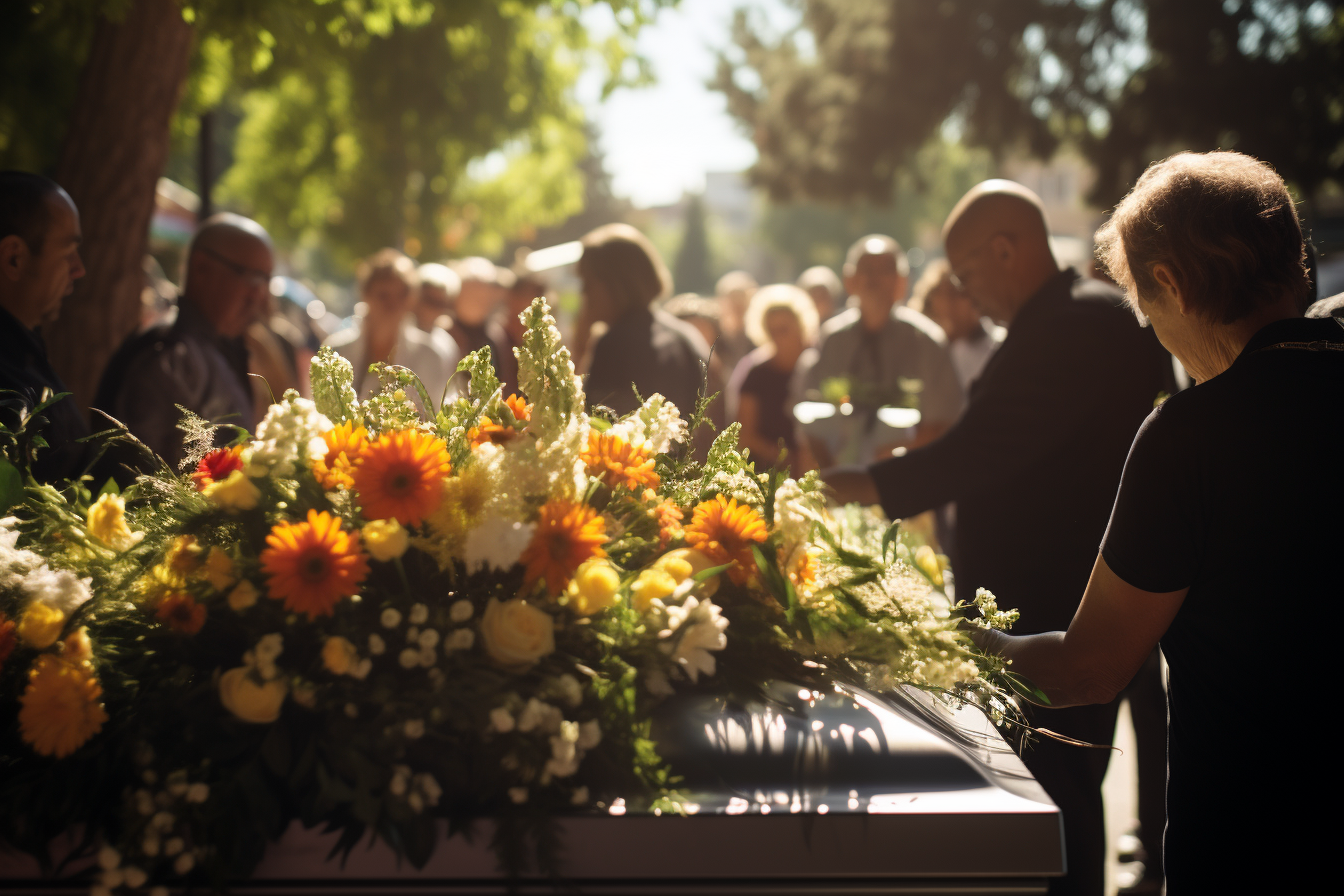
Bulgarian Orthodox funeral customs generally involve an open-casket viewing (опело) held at the family home or a church, usually within two to three days of death. A funeral liturgy (панихида) is conducted by an Orthodox priest. Burial rather than cremation is the traditional norm, in keeping with Orthodox religious teaching. Those attending typically wear dark clothing, and it is customary to serve food and drink — known as помен (pomen) — at gatherings held both on the day of the funeral and again on the 40th day after death, which carries particular spiritual significance.
Bulgaria is also home to Muslim communities, especially in the Rhodope Mountains and parts of northeastern Bulgaria. Islamic funeral traditions require burial to take place as soon as possible after death — ideally within 24 hours — and without embalming. If a Muslim family member dies in Bulgaria, it is essential to inform the hospital or care facility of this requirement immediately, as it may significantly affect practical arrangements and timing.
Expats of other faiths should be aware that non-Orthodox and non-Muslim funerals are entirely achievable, particularly in larger cities where international funeral directors operate. Secular civil funerals are also a recognised option and are increasingly common among urban and younger populations.
What must you do when someone dies in Bulgaria? Who do you notify, how quickly, and in what order?
When a death occurs in Bulgaria, a defined sequence of notifications and administrative procedures must be followed. The process differs slightly depending on whether the death takes place at home, in hospital, or in a care facility, but the core requirements are consistent. The following steps apply in the most common scenarios:
- Contact emergency services or a doctor without delay. If the death occurs at home, call the emergency services (112) or the deceased’s GP. A doctor must attend to certify the death and produce a medical death notification (съобщение за смърт). If the death takes place in a hospital or hospice, the attending medical team will manage the initial certification.
- Obtain the medical death notification. A death notice is issued by the GP or the hospital, depending on where the death occurred. It is provided free of charge, and the GP is legally obliged to issue it; the identity card of the deceased must be provided for this purpose.
- Register the death at the local municipality (общинска администрация). Under the Civil Registration Act, the death certificate must be drawn up no later than 48 hours after the death, based on the notification issued by a qualified medical professional. Registration must take place at the municipality where the death occurred, not where the deceased was permanently resident. For instance, if a person was registered in Sofia but died while staying in Varna, the death certificate must be issued in Varna.
- Submit the required documentation to the municipality. You will need: the medical death notification; the deceased’s identity document (identity card or passport); your own identity document as the person registering the death; and a completed application form available at the municipal office.
- Collect the official death certificate (акт за смърт). The excerpt of the death certificate serves as the authorisation for burial of the deceased. Without this document, neither burial nor cremation may legally proceed.
- If the deceased is a foreign national, notify their embassy or consulate. This should be done as promptly as possible — ideally on the day of death or the following day. The consulate can offer guidance on repatriation procedures and will need to be involved in issuing travel documentation for the remains. See the dedicated section on foreign nationals below.
- Engage a licensed funeral director (погребална агенция). A funeral director can oversee all practical arrangements and assist with the remaining documentation, including embalming certificates where repatriation is required.
- Notify the National Social Security Institute (НОИ) if a death benefit claim is to be pursued. Following the death of an insured person, the surviving spouse, children, and parents are entitled to a lump-sum death benefit equivalent to two months’ wages. Claims must be submitted to the local office of the National Social Security Institute (nssi.bg).
How is a death officially registered in Bulgaria, and what documents are needed?
Death registration in Bulgaria is governed by the Civil Registration Act (Закон за гражданската регистрация) and is administered by the municipality in which the death took place. There is no single national repository for civil registration records — these are maintained at the local registrar’s office, and enquiries about death records should be directed to the registrar’s office in the locality where the event occurred.
The documentation required to register a death and obtain an official death certificate includes: the medical death notification issued by the attending physician or hospital; the identity document of the deceased (identity card or passport); the identity document of the person registering the death; and a completed application form. The death certificate will record the name and surname of the deceased, place and date of birth, identity card number, age, gender, nationality, marital status, and permanent address.
Once the death certificate has been issued, the personal documents of the deceased are submitted to the municipality together with the death notice and are retained there. If the deceased is a foreign national who is to be buried in Bulgaria, the person processing the certificate will confiscate all identification documents of the deceased and forward them to the nearest police station. If the deceased is a foreign national whose remains are to be repatriated abroad, only any Bulgarian identification document (if the deceased held one) is confiscated and sent to the nearest police station. All other identification documents are returned to those accompanying the remains, along with a certified copy of the death certificate.
What happens if a foreign national dies in Bulgaria — what are the specific steps for notifying their home country’s embassy or consulate, and what role does the consulate play?
When a foreign national dies in Bulgaria, the embassy or consulate of their home country in Sofia should be notified as quickly as possible. Most embassies maintain emergency consular telephone lines outside standard business hours for precisely this type of situation. The consulate plays a supportive and coordinating role, though it is important to have a clear understanding of both what it can do and what falls outside its remit.
The consulate can: formally notify the authorities in the deceased’s home country of the death; assist the family in navigating local procedures; supply a list of local funeral directors and international repatriation specialists; and issue a consular death registration certificate if required under the home country’s legal framework. It is not always necessary to re-register the death in the home country — the Bulgarian death certificate is generally accepted for most legal purposes, including probate, in many jurisdictions.
Embassies and consulates can offer guidance and practical information, but they are not in a position to provide financial assistance with the repatriation of a citizen’s remains. Bulgarian diplomatic and consular missions abroad do not provide funding or undertake activities relating to the transportation of deceased citizens. Financial arrangements for repatriation must therefore be made by the family, and will ideally be covered by the deceased’s travel or life insurance policy.
Post-mortem examinations in Bulgaria are ordinarily carried out when the cause of death is unknown, unnatural, sudden, or violent. They are performed by forensic doctors appointed by the court. Cultural or religious sensitivities may not be taken into consideration, and the consulate has no authority to halt or intervene in this process. Families with concerns about this should raise them directly with the treating hospital or local authorities at the earliest opportunity.
How are funerals typically arranged in Bulgaria, and what are the usual options for burial or cremation?
Funerals in Bulgaria are organised through licensed funeral directors (погребални агенции), which operate in all cities and most larger towns. The funeral director liaises with the municipality, the cemetery administration, and — where relevant — the church or other religious institution. It is advisable to contact a funeral director as soon as the death certificate has been obtained, as they are well placed to guide families through each practical step of the process.
Burial is by far the most common form of interment in Bulgaria, reflecting both Orthodox Christian tradition and the fact that cremation facilities are scarce. Burial plots in Bulgaria are provided free of charge for the first eight years, after which the right to the plot must be renewed by the next of kin in ten-year intervals. The full cost of a ten-year renewal must be paid before the preceding period expires, and the applicable fee is set by the local Town Hall.
Cremation is currently only possible in Sofia. Families wishing to have the deceased cremated must therefore arrange for the body to be transported to Sofia if death occurred elsewhere. A declaration by the next of kin consenting to cremation is required, and this declaration must be signed before a public notary or lawyer. As cremation is not part of the Orthodox tradition, it is relatively uncommon among the local population, though it is available and may be the preferred option for some expat families.
To arrange a local burial or cremation, a relative or formally appointed representative must appoint a local funeral director. The FCDO provides a list of funeral directors in Bulgaria with experience of working with international families. The funeral director will be able to explain the local procedures and can typically manage all arrangements on the family’s behalf.
What are the approximate costs of a funeral in Bulgaria, and are there any state or insurance-based funds that can help cover them?
Funeral costs in Bulgaria are generally lower than those in western Europe, though they vary according to location, the type of service selected, and whether burial or cremation is chosen. As of 2024, a straightforward funeral including a coffin, transport, and burial in a municipal cemetery can cost in the region of BGN 500–2,000 (approximately €250–€1,000), with more elaborate arrangements — incorporating a church liturgy, catering for mourners, and higher-quality coffins — potentially costing considerably more. These figures are approximate and should be verified with local funeral directors, as prices fluctuate and differ between cities and rural areas.
Cremation, where available in Sofia, may involve additional costs for transporting the body from another location, crematorium fees, and documentation. Repatriating remains abroad adds significantly to the overall expense (see the repatriation section below).
With regard to financial assistance: following the death of an insured person, the surviving spouse, children, and parents are entitled to a lump-sum death benefit equivalent to two months’ wages, claimable from the local office of the National Social Security Institute. This benefit applies only where the deceased was insured under the Bulgarian social security system. Expats who have been contributing to Bulgarian social insurance should investigate this entitlement.
Repatriation may be covered by travel or life insurance. Where this is the case, the insurance company will take charge of the arrangements. It is strongly recommended that all expats living abroad hold a travel or international life insurance policy that explicitly includes repatriation of remains, as this can represent one of the most substantial unforeseen costs a family may face. Policy terms should always be read carefully before purchase.
What is the process for repatriating the remains of a foreign national from Bulgaria to another country?
Repatriating the remains of a foreign national from Bulgaria is a multi-stage process involving both Bulgarian authorities and the authorities of the deceased’s home country. The following documents are typically required by Bulgarian authorities before remains can be released for international transport:
- The official Bulgarian death certificate (акт за смърт)
- A certificate of embalming (required for the international transport of a body)
- A certificate from the local authorities granting permission to transfer the remains abroad
- The deceased’s passport (and any Bulgarian residence permit)
- If ashes are being repatriated: a copy of the cremation certificate
Local funeral directors will work to supply documents such as the civil registry death certificate, an embalming certificate, and permission to transfer the remains. These documents may need to be apostilled and accompanied by certified translations if the destination country requires it.
If the deceased held insurance, families should establish whether the insurer can contribute to the cost of repatriation. Where the insurer is involved, they will typically coordinate all necessary arrangements. If the deceased was uninsured, the family will need to appoint an international funeral director independently. Local funeral directors collaborate with international counterparts to ensure that all requirements are met in both Bulgaria and the destination country, including the provision of the death certificate, embalming certificate, and transfer authorisation.
Permission for the remains to be repatriated must be granted by the local authorities. The deceased’s passport and the death certificate must be presented before this permission is issued. If ashes are to be repatriated, a copy of the cremation certificate is also required. The overall timeline for completing repatriation can range from several days to several weeks, depending on the availability of insurance, the pace of document processing, and whether a post-mortem has been ordered. Families should allow for a minimum of one to two weeks in uncomplicated cases.
What happens to the estate of someone who dies in Bulgaria — how does probate or estate administration work, and are there inheritance taxes?
When a person dies in Bulgaria, their estate — encompassing property, bank accounts, vehicles, and other assets situated in Bulgaria — is subject to Bulgarian law. Estate administration does not follow a court-based “probate” system identical to that used in the United Kingdom or many common-law jurisdictions. Instead, heirs typically establish their entitlement through a combination of notarial inheritance declarations and municipal registration processes.
In order to access and transfer assets in Bulgaria, heirs generally need to present: the official death certificate; documentation proving their relationship to the deceased (such as a birth or marriage certificate, translated and apostilled if issued abroad); a notarised declaration of inheritance (удостоверение за наследници), obtained from the municipality; and, where applicable, a Bulgarian will or a foreign will that has been recognised and legalised in Bulgaria.
Regarding inheritance tax: Bulgaria applies relatively modest succession taxes compared with many EU states. Direct heirs — spouses, children, and parents — are generally exempt from inheritance tax on assets inherited from a close family member. More distant relatives and non-relatives may be liable for inheritance tax on the value of the estate above certain thresholds. As of 2024, rates and thresholds are established under the Local Taxes and Fees Act (Закон за местните данъци и такси) and administered at the municipal level. Current rates should be verified directly with the relevant municipality or a Bulgarian tax adviser, as these figures are subject to change.
For expats with assets spread across multiple countries, EU Succession Regulation No. 650/2012 — applicable to EU member states including Bulgaria — allows individuals to elect the law of their nationality to govern their entire estate across EU countries, provided this choice is expressly stated in a valid will. This is a particularly useful planning instrument for expats with cross-border estates.
If an expat dies without a will in Bulgaria, what happens to their assets under local intestacy laws?
Where a person dies intestate (without a valid will) in Bulgaria, their Bulgarian assets pass according to the rules set out in the Bulgarian Inheritance Act (Закон за наследството). The legislation establishes a clear hierarchy of heirs, broadly comparable to the intestacy rules found in most European countries.
The order of succession under Bulgarian intestacy law operates as follows: children (and their descendants) inherit in the first instance and receive equal shares of the estate. If there are no children, the estate passes to the parents. A surviving spouse inherits alongside children or parents, with the precise share determined by which other heirs are living at the time of death. Where both children and a surviving spouse are present, the spouse receives a share equal to that of one child. Siblings and more distant relatives inherit only in the absence of closer heirs. Where no heirs exist at all, the estate passes to the Bulgarian state.
For expats, the intestacy rules of the country where assets are located generally govern immovable property (real estate), while the law of the deceased’s habitual residence may govern movable assets. This can give rise to a complex situation where differing rules apply to different components of the estate. EU Succession Regulation No. 650/2012 provides a degree of harmonisation for EU residents, but it is strongly advisable to have a properly drafted will — one that specifically addresses Bulgarian assets and is valid under Bulgarian law — in order to avoid unnecessary complications, delays, and costs for surviving family members. Consulting a Bulgarian notary or inheritance lawyer as soon as possible after taking up residence in Bulgaria is strongly recommended.
Frequently asked questions
Is foreign travel or health insurance accepted by Bulgarian hospitals and hospices for end of life care?
This depends on both the insurer and the facility in question. Most Bulgarian public hospitals function within the NHIF framework and do not directly invoice foreign insurers. Expats holding private international health insurance should contact their insurer to clarify the reimbursement process, as they may need to pay costs upfront and subsequently claim reimbursement. Some private clinics and hospices may have direct billing arrangements with major international insurers — this should always be confirmed before any care placement is agreed upon.
Do advance directives or medical documents written in a language other than Bulgarian need to be translated?
Yes. Any foreign legal document — whether a power of attorney, advance directive, or will — that is intended for use in Bulgaria must be accompanied by a certified Bulgarian translation. Bulgarian notaries are empowered to certify the signature of the translator on translations of foreign documents destined for use in Bulgaria. Documents originating in countries that are parties to the Hague Convention must also carry an apostille stamp. Translations should always be certified before they are required in an emergency situation.
How long does the process of repatriating remains from Bulgaria typically take?
In uncomplicated cases, the repatriation of remains from Bulgaria typically takes between one and two weeks from the date of death, provided all documentation is in order and no post-mortem examination has been required. Where a post-mortem is ordered — in cases of sudden, unknown, or suspicious death — the process can be considerably prolonged. Cases in which insurance is in place tend to progress more quickly, as the insurer takes charge of the logistical coordination. Families should plan for potential delays and refrain from making fixed travel plans until documents have been confirmed as complete.
What support is available to bereaved family members in Bulgaria?
Immediate practical support is generally available through the funeral director, who can help families navigate all administrative requirements. Hospital social workers and palliative care teams may also be able to offer emotional support and referrals to further services. The Bulgarian Long-Term and Palliative Care Society undertakes activities aimed at supporting patients, their families, and their relatives, offering recommendations, guidance, and information on health, ethical, legal, and other aspects of long-term and palliative care. Expats may also seek support through their home country’s consulate, local community organisations, or international expat networks operating in Bulgaria.
Can a Bulgarian death certificate be used for legal purposes in another country?
A Bulgarian death certificate is accepted in many countries for most legal purposes, including probate proceedings. However, it will generally need to be apostilled and accompanied by a certified translation into the language of the country in which it is to be used. For EU member states, the process is facilitated under EU regulations on public documents. The specific requirements of the receiving country should be confirmed with that country’s authorities or a local lawyer.
Is it possible to arrange a non-Orthodox or secular funeral in Bulgaria?
Yes. While Orthodox Christian funerals represent the cultural norm for most of the Bulgarian population, there is no legal obligation to observe any particular religious rite. Civil and secular funeral services can be organised through any licensed funeral director. In larger cities such as Sofia, Plovdiv, and Varna, a number of funeral directors have extensive experience arranging services for people of various faiths or of no religious affiliation. Muslim burials are also accommodated in areas with established Muslim communities.
What happens if a post-mortem is required — can the family object?
Post-mortem examinations in Bulgaria are typically carried out when the cause of death is unknown, unnatural, sudden, or violent. They are conducted by forensic doctors appointed by the court. Cultural or religious sensitivities may not be taken into account during this process, and the consulate has no power to stop or interfere with it. Families who have concerns should raise them with the hospital or the local prosecutor’s office at the earliest possible opportunity, but should be aware that a court-ordered post-mortem generally cannot be declined.
Are there any time limits on applying for a Bulgarian inheritance or estate after a death?
Under Bulgarian inheritance law, heirs are required to actively accept or renounce the inheritance — there is no automatic vesting of assets. An heir who fails to act within the prescribed period may forfeit their right to inherit, or may inadvertently accept an inheritance that includes liabilities. The general limitation period for inheritance claims in Bulgaria is five years from the date of death, but the practical steps of obtaining inheritance certificates and effecting the transfer of property should be completed as promptly as possible. A Bulgarian notary or inheritance lawyer should be consulted without delay following a death.