
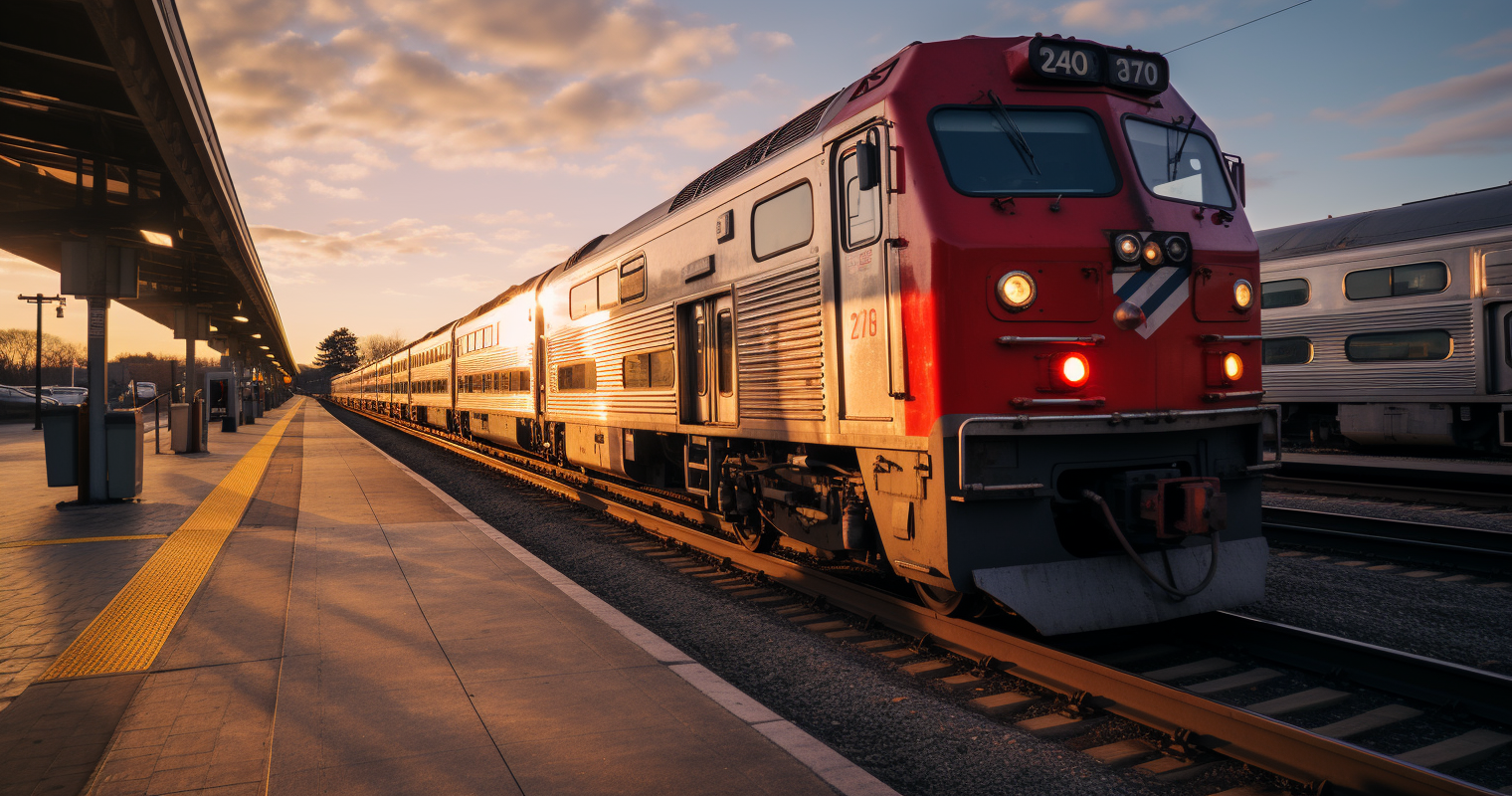
Bulgaria’s national rail network, run by Bulgarian State Railways (BDZ), stretches across roughly 6,500 kilometres of track, linking most major cities and a wide range of rural communities. Fares sit among the lowest in Europe, though the network is marked by dated infrastructure and inconsistent punctuality — even as an ambitious modernisation drive gathers pace. Whether you’re a daily commuter or an occasional long-distance traveller, the train remains a viable choice, provided your expectations reflect the current reality.
| Item | Details |
|---|---|
| National rail operator | Bulgarian State Railways (BDZ) — bdz.bg |
| Network size | Approximately 6,454 km of track; ~400 stations and stops (as of 2024) |
| Travel classes | First class and second class, available on most intercity and express services |
| Sofia Metro single ticket | 1.60 BGN (approx. €0.80) as of 2025 — verify current fares at metropolitan.bg |
| Key discount groups | Students (30–50% off), seniors (50% off with railcard), children, families, groups — check bdz.bg for current figures |
| Online timetable | razpisanie.bdz.bg/en |
What is the overall standard of rail travel in Bulgaria?
By Balkan standards, Bulgaria’s rail network is extensive — yet the system as a whole is best understood as one caught between its past and a modernised future. The total track length stands at 6,454 km, with roughly 80% electrified and the greatest concentration of routes found in the South-West region. Close to 400 stations and stops are spread across the country, complemented by hundreds of level crossings and railway bridges.
For many years, the Bulgarian rail network has grappled with an ageing and insufficient fleet of rolling stock, resulting in overcrowded carriages, persistent delays, and eroding passenger confidence. This stands in sharp contrast to heavily funded western European systems — Germany’s Deutsche Bahn or Switzerland’s SBB, for instance, regularly achieve punctuality rates above 90%. A fairer comparison is with Bulgaria’s Balkan neighbours: a network that functions, is genuinely affordable, and reaches most parts of the country, but that demands a degree of patience on certain routes.
The shortage of serviceable passenger coaches has been a defining challenge, directly undermining service quality. Overcrowding and delays remain familiar frustrations. However, the situation is changing. BDZ has embarked on a comprehensive fleet renewal programme aimed at improving the quality, dependability, and environmental performance of rail travel across the country.
Contracts have been signed with both Alstom and Škoda for new passenger trains. Alstom is supplying 35 Coradia Stream electric intercity trains under a €600 million agreement. In 2024, Škoda announced a contract to deliver 25 RegioPanter electric multiple units. That same year, Bulgaria also took delivery of 19 refurbished DB railcars under a separate arrangement. The gradual introduction of these newer vehicles is already becoming visible on the busiest corridors.
For everyday travel, the network performs most consistently on routes linking Sofia with major centres such as Plovdiv, Varna, and Burgas. Services on rural and branch lines tend to be slower and less frequent. Long-distance overnight trains are available and represent a cost-conscious option for journeys across the country.
What classes of rail travel are available in Bulgaria, and what are the differences between them?
Rail travel in Bulgaria is divided into two classes: first and second. This distinction is most relevant on intercity, express, and fast services; slower local trains generally offer second class only.
First-class seating provides greater legroom and additional comforts including power outlets, reading lights, and air conditioning. Second-class seats are also reasonably comfortable, but offer somewhat less space and fewer onboard features. On the newer carriages recently acquired from Deutsche Bahn, all modern comfort standards are met — including air conditioning and an onboard information system that announces upcoming stations and stops throughout the journey.
BDZ also runs sleeping car services on overnight routes, with couchette compartments available as an additional category beyond standard seating. These prove especially popular on routes such as Sofia to Varna or Sofia to the coast during the summer months. Bistro cars offering refreshments are also provided on a selection of fast and express services.
The price gap between first and second class is relatively small, reflecting Bulgaria’s low overall fare structure. That said, the comfort advantage of first class can make a meaningful difference on longer journeys — especially on older stock where second-class compartments may become crowded. When booking, it is worth checking the specific train composition, since facilities vary considerably between older and newer rolling stock.
Where can you find rail timetables and ticket prices in Bulgaria?
The BDZ official website is the primary resource for both timetable and fare information. By entering your departure and destination points, the digital timetable displays all available trains for your chosen route and date. Prices are dynamic, varying according to journey length, travel date, and time of day. Full fare details are also available at station ticket offices.
The English-language timetable portal is at razpisanie.bdz.bg/en. The main BDZ passenger site at bdz.bg/en covers ticket types, railcards, special offers, and international services. Fares are periodically revised — BDZ implemented a significant price adjustment averaging 20% in response to rising operational costs — so it is important to consult the official website rather than relying on figures from third-party sources, which may no longer be accurate.
For international travel, the Rila ticket agency, accessible through the BDZ website, handles bookings and enquiries. Third-party platforms such as Omio and Trainline list some Bulgarian routes, though their coverage of domestic services can be patchy. For the most dependable domestic fares and schedules, the official BDZ portal is the most authoritative source.
How do you buy rail tickets in Bulgaria, and can you book in advance?
Tickets may be purchased online, at railway stations, or through authorised travel agencies. Each channel has its own advantages and quirks, and it is worth being familiar with all of them as a new resident.
- Online via the BDZ website: The BDZ online ticketing platform at bdz.bg/en supports advance purchases for both domestic and international routes. Account registration is required. The reservation interface can be somewhat unintuitive and may require persistence, particularly for sleeper tickets. Switching to a different web browser sometimes resolves display problems.
- At station ticket offices: The ticket counter (кaса / kasa) at major stations is staffed and can handle purchases, seat reservations, and general enquiries. Railway stations are generally close to city centres with good onward public transport connections. The most fully equipped stations are found in Sofia, Plovdiv, Varna, and Burgas.
- At travel agencies: Authorised agents, including the Rila international rail agency, sell tickets for both domestic and international services — a practical choice for more complex itineraries.
- Via the BDZ 24/7 Call Centre: BDZ operates a round-the-clock call centre (contact details available at bdz.bg/en) for timetable queries and ticketing assistance.
Advance booking is available and advisable for express and fast trains, especially on popular routes during summer weekends and public holidays. Fast trains with mandatory reservation (БВЗР) require a seat booking, which can be made either at the departing station or online. On ordinary passenger trains serving local routes, tickets can usually be bought on the day. Tickets purchased online or through agencies can be used directly; always keep your ticket available for inspection during the journey.
What types of rail tickets are available in Bulgaria, and are there discount schemes?
BDZ offers a variety of ticket types to accommodate different travel patterns. Single and return tickets are available on all services, with return tickets offering a 10% saving over two individual singles. For residents, rail passes represent a particularly worthwhile option.
Rail passes grant the holder a discounted rate and can be issued either for travel anywhere across the national network or for a specific route selected by the passenger. These are especially cost-effective for regular commuters. Always check current pass prices and validity conditions at the official BDZ tickets and cards page at bdz.bg/en/c/tickets-and-cards, as these are subject to periodic revision.
Bulgaria’s discount structure is extensive and well-defined. The categories below attract reduced fares (as of 2024 — verify current thresholds via BDZ’s official website):
| Passenger type | Discount |
|---|---|
| Children (7–10 years, with railway card) | 50% off |
| Students (with student card) | 30% off standard fares |
| ISIC and DSK ISIC cardholders | 50% off regular prices and passes |
| Senior citizens (with railway card) | 50% off |
| Small groups (3–6 people) | 15% off one-way fare tickets |
| Groups of 10 or more | 20% off return tickets |
| Youth, Classic and Railcard ‘O’ holders | 25% off passes; 50% off train tickets |
Students benefit from a 30% reduction on rail travel, while ISIC and DSK ISIC cardholders receive 50% off standard prices and passes. Senior citizens with a railway card also receive a 50% discount. Ticket prices for Child, Student, Family, TPL, and Adult rail passes, valued at a nominal sum of BGN 1, remain in place as a heavily subsidised option — meaning that eligible railcard holders can obtain network-wide passes for a token fee, representing outstanding value for frequent travellers. Always confirm the current terms directly with BDZ, as subsidised pass conditions are reviewed from time to time.
How accessible is the rail network in Bulgaria for disabled passengers?
BDZ offers assistance to passengers with disabilities, including wheelchair ramps, accessible toilet facilities, and designated seating areas. Passengers who require support are encouraged to notify BDZ at the time of booking so that appropriate arrangements can be confirmed in advance.
Stations in Sofia, Plovdiv, Stara Zagora, Burgas, and Varna include toilet facilities and equipment suited to passengers with disabilities. Reservations for passengers with reduced mobility should be made at least one day before travel. A door-to-door transfer arrangement known as the “car–train–car” service is available for passengers with reduced mobility, and this must be booked at least three days in advance. For assistance enquiries, BDZ can be contacted on +359 2 920 0547 or +359 2 920 0269.
In practice, the level of accessibility varies considerably across the network. Stations on the main intercity corridors have been progressively upgraded, but many smaller and rural stops offer limited or no step-free access. BDZ’s recent rolling stock procurement includes 6 specialised railcars designed to accommodate passengers with reduced mobility and cyclists, intended for deployment on the busiest routes. While this marks genuine progress compared to older stock, it still falls short of the consistently high accessibility standards seen on networks such as the Netherlands’ NS or the UK’s National Rail, where step-free access and assistance booking are more uniformly enforced.
Passengers who need assistance for a specific journey are strongly advised to contact BDZ in advance via the BDZ website and to confirm all arrangements before departure, especially on routes served by older rolling stock.
Are there metro or urban rail systems in Bulgaria’s cities?
The Sofia Metro is the rapid transit system serving the Bulgarian capital and is the only metro in the country. It is worth clarifying that earlier references to a Plovdiv metro were inaccurate — Plovdiv has no underground rail network. Sofia is the sole city with a metro system.
As of 2024, the Sofia Metro operates four interconnected lines with a combined route length of 52.0 kilometres, serving 47 stations. In continuous operation since 1998, the network links the densely populated districts of Lyulin–Mladost (M1 line) and Nadezhda–Lozenets (M2 line), and provides a direct connection to Vasil Levski Sofia Airport, carrying more than 200,000 passengers on a typical day.
During morning and evening peak periods (07:00–09:00 and 16:00–18:00 on working days), trains run every 2–3 minutes, offering swift connections between the business district, universities, shopping centres, cultural venues, and residential neighbourhoods. During quieter periods, services run every 5–7 minutes, reducing to every 10 minutes in the evenings and at weekends.
A single metro ticket costs 1.60 BGN (approximately €0.80) as of 2025. The Sofia Metro has integrated its ticketing with other urban public transport services — including buses and trams — so a single ticket covers transfers between modes within the specified validity window. Tickets are available from vending machines (accepting both cash and card) or from staffed windows at any station. Full information about the Sofia Metro is available at metropolitan.bg.
Accessibility standards on the metro continue to improve. The more recently built stations — particularly on Line M3 and the airport extension M4 — are fully wheelchair-friendly, with lifts and wide gatelines. Older stations present a less consistent picture: some lack lifts entirely, others have them tucked away with little or no signage, and on occasion they may be out of service.
In other Bulgarian cities, Plovdiv, Varna, and Burgas rely on surface buses and trams for urban transport rather than any underground system. Sofia’s overall transit network encompasses five modes: bus, train, metro, light rail, and trolleybus, operated by multiple agencies. The metro and the national BDZ rail network use separate ticketing systems, so passengers will need individual tickets for each. That said, Sofia Central Railway Station has direct metro access, making onward connections between the two systems simple and convenient.
What should expats know about using the rail network day-to-day in Bulgaria?
At major hubs such as Sofia Central Station, signage is displayed in both Cyrillic and Roman (Latin) script, and departure boards typically list destinations in both alphabets. At smaller regional stations, however, signs may appear exclusively in Cyrillic. Learning to recognise the Cyrillic characters used for key destination names — or at least the alphabet as a whole — is a practical step for anyone planning to travel independently beyond the main cities.
Onboard and platform announcements are generally made in Bulgarian only, though newer rolling stock and the Sofia Metro feature information displays that show station names in both scripts. Bringing a map or using a navigation app such as Moovit or Google Maps is a sensible precaution when navigating unfamiliar routes.
Fast trains with mandatory booking (БВЗР) require a seat reservation. On ordinary and slow local trains, reservations are not compulsory, though popular summer weekend services can fill up quickly. Reserving a seat in advance on any long-distance journey is strongly recommended to guarantee your place. Reservations can be made online or at the ticket office at the time of purchase.
Pets may travel as hand luggage in second-class carriages, provided they do not inconvenience other passengers and are carried in a waterproof cage, on the owner’s lap, or on the floor. Each passenger is permitted one small dog, one cat, or three rabbits. Smoking is prohibited throughout the Bulgarian rail network.
Standard luggage can be brought on board at no extra charge, though oversized items such as bicycles may require a separate ticket on certain services. Bicycles are permitted on the Sofia Metro but only outside peak hours (09:00–16:00 and after 18:00 on workdays, and throughout the day at weekends). A separate bicycle ticket of 1 BGN applies.
The atmosphere on Bulgarian trains is generally laid-back and informal. There are no formally designated quiet carriages of the kind found on many western European networks, so noise levels can vary. Eating and drinking on board is perfectly acceptable, and sharing compartments is routine on older coupe-style stock. The BDZ 24/7 call centre (details at bdz.bg/en) handles queries in Bulgarian, while the Rila agency — also accessible via the BDZ website — is the best port of call for complex international bookings.
Frequently asked questions about rail travel in Bulgaria
Is the BDZ rail network reliable enough to use for a daily commute?
On the main intercity corridors — particularly Sofia to Plovdiv, Varna, and Burgas — BDZ trains carry daily commuters, although delays happen more often than on western European rail systems. For shorter urban journeys in Sofia, the metro is a significantly more reliable option. Services on rural and branch lines tend to be both less frequent and more susceptible to disruption.
How do I buy a BDZ train ticket as a new resident?
The most straightforward options for new residents are the BDZ online ticketing system at bdz.bg/en — which requires account registration — or buying in person at the ticket counter (каса) of any staffed railway station. For international routes or more complicated itineraries, the Rila international rail agency is also available. The BDZ 24/7 call centre offers round-the-clock support for queries.
Are train tickets in Bulgaria expensive?
Bulgarian rail fares are very low by EU standards. Even following a recent price adjustment, they remain among the cheapest in Europe. Discount railcards for seniors, students, and families can reduce costs still further. Always check current fares at razpisanie.bdz.bg/en, as pricing is dynamic and subject to revision.
Does Sofia have a metro, and how does it connect to the national rail network?
The Sofia Metro comprises four interconnected lines, 47 stations, and a total route length of 52.0 kilometres as of 2024. Sofia Central Railway Station is directly served by the metro, making it straightforward to transfer between BDZ national services and the urban rail network. The two systems operate separate ticketing arrangements, so a metro ticket is needed for urban travel while a distinct BDZ ticket is required for national rail journeys.
Can I get a discount railcard as a student or senior living in Bulgaria?
Yes. Students receive a 30% reduction on rail fares, and senior citizens receive 50% off when holding a railway card. ISIC cardholders are eligible for up to 50% off. Railcards are issued by BDZ offices and authorised agents; eligibility requirements and the necessary documentation are set out at bdz.bg/en/c/tickets-and-cards. Always confirm current conditions directly with BDZ, as terms are reviewed periodically.
Are the trains in Bulgaria wheelchair accessible?
BDZ provides a range of assistance for passengers with disabilities, including wheelchair ramps, accessible toilets, and designated seating areas. Passengers are encouraged to notify BDZ of their requirements when booking to allow arrangements to be confirmed in advance. A door-to-door “car–train–car” service is also offered for passengers with reduced mobility, but must be booked at least three days before the journey. Accessibility is considerably better at larger urban stations than at rural stops.
Are train announcements and station signs available in languages other than Bulgarian?
At major stations, including Sofia Central, departure boards show destination names in both Cyrillic and Roman script. Onboard displays on newer trains similarly use both alphabets. Spoken announcements are almost entirely in Bulgarian, making it worthwhile to become familiar with the Cyrillic script and the written forms of key destination names before travelling regularly by rail.
Is there a rail pass for unlimited travel in Bulgaria?
BDZ issues passes that entitle holders to discounted travel, available either for the full national network or for a specific route selected by the passenger. For eligible categories such as students and senior citizens, these passes can be obtained for a heavily subsidised nominal fee, making them an exceptional option for frequent travellers. Full details on current prices and validity periods are available at bdz.bg/en/c/tickets-and-cards. Always confirm the terms before purchasing.