
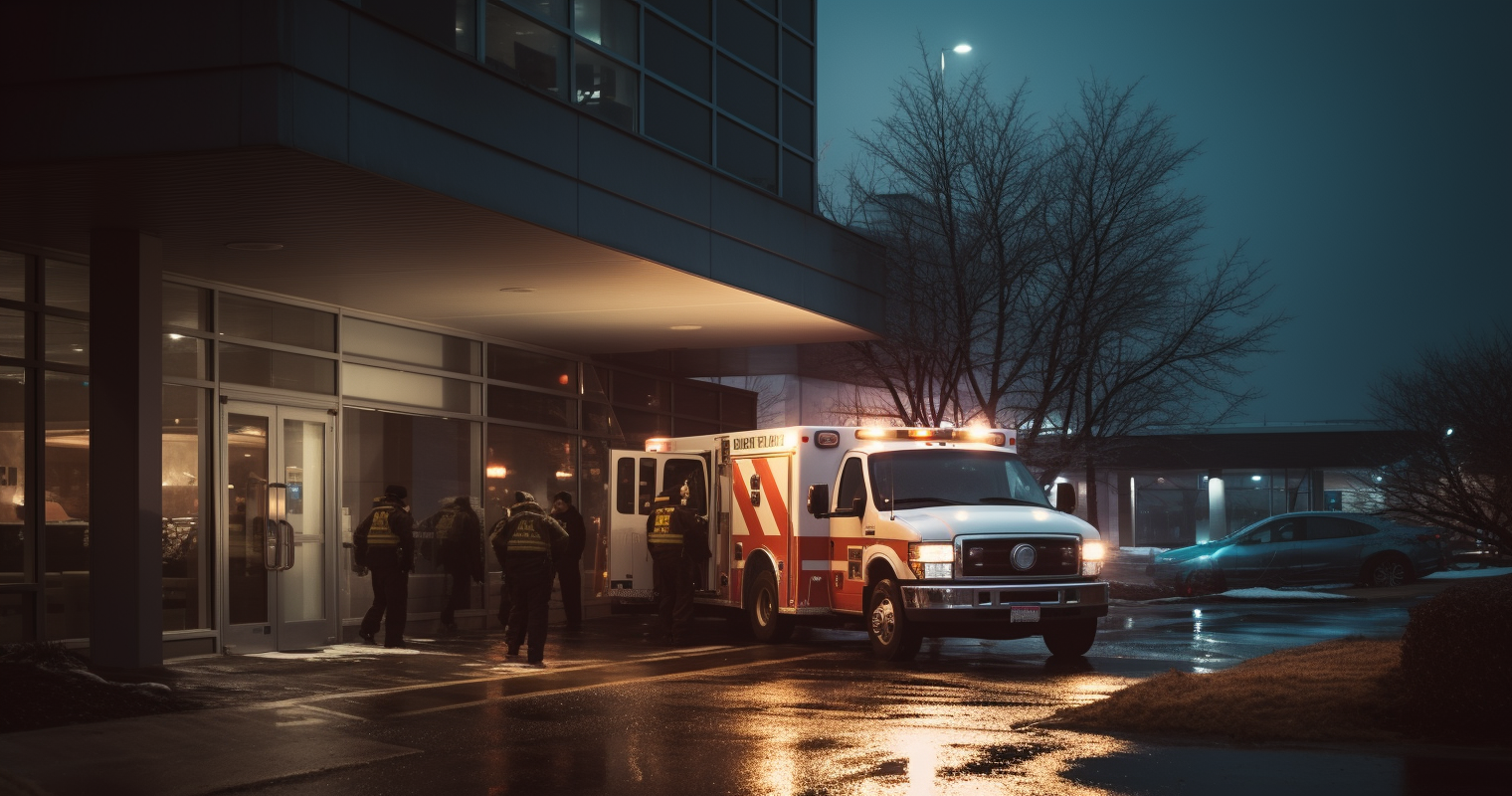
Colombia’s main emergency number is 123, which is free to dial from any mobile or landline and puts you through to police, ambulance, and general emergency services. Dedicated separate lines also exist for fire emergencies (119) and the Red Cross ambulance service (132). Any person in Colombia — regardless of their insurance status or nationality — must by law receive emergency medical stabilisation, but treatment beyond that initial stabilisation carries costs, which makes adequate health insurance an absolute necessity for expats.
| Item | Details |
|---|---|
| Primary emergency number | 123 (police, ambulance, general emergencies) — as of 2025 |
| Fire service number | 119 — as of 2025 |
| Red Cross / ambulance | 132 — as of 2025 |
| Ambulance service | SAMU (Servicio de Atención Médica de Urgencia) — national coverage |
| Emergency stabilisation for uninsured / tourists | Must be provided by law; ongoing costs billed to patient |
| EPS public health insurance contribution (residents) | 12.5% of gross monthly income — as of 2025; verify with official sources |
| Disaster management authority | UNGRD (Unidad Nacional para la Gestión del Riesgo de Desastres) |
What is the single emergency number in Colombia, and does it cover all services?
Anywhere in Colombia, dialling 123 will connect you to ambulance services, the police, or general emergency dispatch — and the call is free from both mobile phones and landlines. This makes 123 the closest equivalent to unified systems such as 911 in the United States or 999 in the United Kingdom. That said, Colombia also operates a range of separate dedicated lines for specific emergency services, so it is well worth saving all of the key numbers in your phone before you ever need them.
Rather than routing every emergency type through a single number automatically, Colombia maintains a network of dedicated lines alongside 123: health and general emergency services are reachable on 125, a 24-hour ambulance line operates on 132, fire services are reached on 119, and an alternative police line is available on 112. This structure reflects a system that has evolved over time. While 123 remains the primary number for all emergencies, knowing the dedicated lines can prove invaluable if the main line experiences high call volumes during a major incident.
All of Colombia’s core emergency contact numbers are just three digits, making them straightforward to recall under pressure. Even so, save the following numbers in your phone before you need them (current as of 2025 — confirm with official sources for any changes):
| Service | Number |
|---|---|
| General emergency / police / ambulance | 123 |
| Police (alternative) | 112 |
| Fire service | 119 |
| Red Cross / ambulance (24 hours) | 132 |
| Secretary of Health ambulances | 125 |
| Traffic accidents | 127 |
| Civil Defence Brigade (24 hours) | 144 |
| Domestic violence / child abuse | 141 |
How do you call for emergency medical assistance in Colombia?
Colombia’s national ambulance service, the Servicio de Atención Médica de Urgencia (SAMU), provides coverage across the entire country and is free of charge to citizens. For visitors and those without insurance, emergency dispatch remains available, though a bill for the service may follow — see the section on costs below. To reach ambulance services, dial either 123 or 132.
When you call for an ambulance, you will need to give the operator your precise location. SAMU deploys a range of vehicles suited to different medical situations. The central regulatory medical emergency coordination centre is located in Valle del Cauca and operates around the clock with radio communications, providing a telephone information service known as SIGCRUE (Sistema Información de Gestión del Centro Regulador de Urgencias y Emergencias).
Spanish is the working language of emergency operators, and it is not widely used as a second language in emergency dispatch centres. Speaking slowly and preparing a few key emergency phrases in Spanish before you arrive is strongly advised. Lines dedicated to tourist police are more likely to have staff capable of communicating in other languages, but this cannot be assumed for other services. If you are not a Spanish speaker, identify a trusted Spanish-speaking contact you could pass the phone to, or keep a translation app on your device as a fallback.
What should you do in a mental health crisis in Colombia?
Colombia does not currently have a single, nationally publicised dedicated mental health crisis line comparable to the 988 Suicide and Crisis Lifeline in the United States or the Samaritans in the United Kingdom. If you or someone nearby is experiencing acute mental health distress, the most reliable immediate course of action is to dial 123 and request medical assistance, or to proceed directly to the emergency department of the nearest hospital.
Hospital emergency departments — known as urgencias — are obligated to provide initial stabilisation to any patient presenting in crisis, including those experiencing mental health emergencies. Several major hospitals in Bogotá, Medellín, and other large cities maintain dedicated psychiatric departments. Colombian national and local health authorities have been expanding their public mental health policies and support strategies, including community health network training focused on mental health promotion, timely intervention, and appropriate referral pathways to healthcare institutions.
Expats who are struggling to communicate in Spanish during a crisis should contact their embassy or consulate as a secondary measure — consular staff can often help identify suitable care options and assist with interpretation. For the most current information on available mental health services, always check directly with the Colombian Ministry of Health (Ministerio de Salud y Protección Social), as this area of provision continues to develop.
Where can you go for emergency medical treatment in Colombia?
Colombia operates a layered healthcare structure. In an emergency, you may present at the urgencias (emergency department) of any public or private hospital. Major private hospitals in cities such as Bogotá, Medellín, Cali, and Barranquilla deliver high-quality care, although smaller public hospitals and facilities in more remote locations may face capacity limitations.
Colombia’s healthcare system is widely regarded as one of the strongest in Latin America and carries international recognition. A number of Colombian clinics and hospitals hold accreditation from Joint Commission International (JCI) — the same body that certifies leading hospitals across the United States and Europe — meaning the standard of care at accredited facilities meets a globally recognised benchmark.
Many expats gravitate towards private hospitals, primarily because medical staff there are more likely to communicate in languages other than Spanish. These facilities are concentrated in larger urban centres, so expats based in rural or remote areas may find themselves relying more heavily on public hospital provision.
To locate the nearest emergency facility, search for “urgencias” or “hospital” on Google Maps from your current position. Your health insurer’s facility directory, your embassy’s list of recommended hospitals, or a local expat community group can all provide guidance. During an emergency, go directly to the urgencias rather than trying to book an appointment.
Is emergency medical treatment free in Colombia?
The answer turns on your particular circumstances in Colombia. Registered residents with active EPS (Entidades Promotoras de Salud — Colombia’s public health insurance scheme) have emergency treatment covered, typically subject to a modest co-payment. The EPS system operates a three-tier co-payment structure applying to laboratory tests, diagnostic imaging, specialist consultations, and medications, with co-pay amounts of approximately $1, $4.25, and $11.15 (USD equivalent) based on income level — as of 2025; verify current figures with official sources.
For uninsured visitors and tourists, the picture is more complicated. Colombia’s Constitution specifies that the healthcare system primarily serves its own citizens, and coverage extended to foreign nationals is limited to genuine emergencies. In practice, this means every hospital — public or private — is obligated to stabilise any patient whose life is at risk, regardless of their capacity to pay, but once the patient is out of immediate danger, all subsequent costs will be charged to them or their insurer. Visitors to Colombia who are not enrolled in the national system must fund their healthcare either out of pocket or through private international insurance coverage.
For those without any health insurance, out-of-pocket expenses can begin at around $50 USD for a standard physician consultation and climb sharply for hospitalisation, surgery, or intensive care. Confirm current pricing directly with the hospital or your insurer before you need to.
Do expats in Colombia need travel or health insurance to access emergency care?
For expats on a long-stay visa in Colombia, health insurance is not merely a sensible precaution — it is ordinarily a legal obligation. All lawful residents are required to register with an EPS provider. Expats have the option to opt out of the EPS system, but must supply evidence of equivalent coverage through a private plan. Those who do enrol are required to contribute 12.5% of their gross monthly income to the EPS — as of 2025; confirm current requirements with Migración Colombia.
All expats, digital nomads, and foreign visitors travelling to Colombia should take out an international health insurance plan or comprehensive Colombia-specific health insurance for themselves and any family members, ensuring the policy includes air evacuation cover to protect against serious illness or injury far from home.
Private health insurance in Colombia, known as Prepagada, costs roughly US$180 to US$325 per month — as of 2025; contact insurers for current premiums. This level of coverage gives access to private hospitals, reduced waiting times, and a broader choice of facilities. Those already residing in Colombia can also utilise the government-subsidised EPS basic plan. Without a Colombian income, EPS costs approximately 12% of the minimum wage — around US$36 per month — providing access to basic public healthcare facilities.
If you arrive at an emergency department without insurance or funds, the law still requires the hospital to provide stabilising treatment. However, a bill will follow. Private hospitals may ask for a deposit or proof of insurance before admitting patients who do not require emergency intervention. Keep your insurance documentation with you at all times.
Are there bilateral health agreements covering emergency treatment in Colombia?
Colombia does not participate in broad multilateral healthcare reciprocity frameworks of the kind that exist within the European Union — such as the EHIC/GHIC card system — or the bilateral health access agreements in place between certain Commonwealth nations. There is no arrangement by which a foreign visitor can present a card or document from their home country and access Colombian public healthcare at the same rate as a Colombian citizen.
Eligibility for care within Colombia’s healthcare system — and the extent of access — is determined by a person’s residency status, employment, and insurance arrangements, not by their nationality. No visiting card or foreign document will substitute for local enrolment or private insurance coverage.
Some countries do have narrow bilateral social security agreements with Colombia that carry limited healthcare provisions for workers temporarily deployed between the two countries, but these arrangements are very specific in scope and will not generally benefit tourists or lifestyle expats. You should check with your home country’s social security authority or foreign ministry, and with the Colombian Ministry of Health, for the latest information on any such agreements. For practical purposes, the guidance is the same for all foreign nationals: carry comprehensive private or travel health insurance that explicitly covers emergency treatment in Colombia.
How does Colombia’s emergency healthcare system compare to systems expats may be familiar with?
Colombia operates a mixed public-private healthcare model — structurally more akin to the systems found across Latin America and much of continental Europe than to a fully state-funded system like the UK’s NHS. Colombia’s 1991 Constitution recognises health as a fundamental right; however, a foreign national’s access to public coverage depends on their place of residence and employment status. Formal employees typically join the contributory EPS system, while low-income residents may qualify for a subsidised alternative.
In contrast to a system like the NHS — which provides emergency treatment free at the point of use to everyone, irrespective of nationality or insurance status — Colombia requires most non-residents to meet the costs of any treatment that goes beyond initial emergency stabilisation. This model more closely resembles the United States, where the depth of your healthcare access is tied to your insurance coverage, or the social insurance frameworks common across continental Europe, where your contribution history determines your entitlements.
Waiting times in emergency departments can be considerable, though life-threatening cases are generally treated as priorities. Compared with private healthcare costs in many wealthier countries, Colombia’s prices are typically far more reasonable — a factor that leads many expats to opt for private care, which also tends to offer shorter waits, superior facilities, and a higher likelihood of multilingual staff.
What emergency services exist beyond medical — how do police and fire work in Colombia?
If you face an immediate threat to your safety, call 123 from any phone in Colombia to reach police and emergency services throughout the country. The Policía Nacional de Colombia is the national police force and maintains a presence nationwide. There is also a dedicated Tourist Police (Policía de Turismo), which specifically supports visitors who have been victims of crime or who need assistance, and is more likely to have officers capable of communicating in languages other than Spanish.
For fires, dialling 119 connects you to the Bomberos (firefighters), who will dispatch a response immediately. Colombia’s fire service is organised at the municipal level, meaning that response capacity and resources can vary considerably between major cities and smaller or more rural locations.
Interacting with police in Colombia involves some important differences from what expats may be accustomed to at home. A police report in Colombia is called a “denuncia.” Colombian police and government offices rarely have staff who work in languages other than Spanish; anyone who does not speak Spanish is advised to attend with a fluent Spanish speaker when dealing with authorities. Never hand money or identity documents to individuals on the street who claim to be police officers or government officials. If stopped and questioned, ask to be taken to a police station to continue any conversation there.
If you are involved in a traffic accident and need assistance from the traffic authorities, dial 127. The Civil Defence Brigade (Defensa Civil) operates a 24-hour line on 144 and plays a vital role in search and rescue operations during natural disaster events.
Are there country-specific emergency risks in Colombia?
Colombia is subject to a distinct set of emergency risks that expats should be well aware of before they arrive. These encompass natural hazards, endemic diseases, and security concerns.
Natural disasters: The number of people affected by disasters in Colombia increased by 417% in 2024 compared to 2023, and by September 2025 more than 815,000 people had been impacted by floods, landslides, and wildfires, with rural and marginalised communities bearing the greatest exposure. Colombia’s highly varied geography — spanning the Andean mountain range, Pacific and Caribbean coastlines, and the Amazon basin — creates vulnerability to earthquakes, volcanic eruptions, tropical storms, and flash floods. The country remains acutely exposed to disasters, environmental degradation, and the mounting effects of climate change.
Alert and warning systems: The National Unit for Disaster Risk Management (UNGRD) oversees disaster risk management and coordinates the national system for disaster prevention and response (SNPAD). For meteorological hazards, the IDEAM Alert System operates in conjunction with the UNGRD’s Crisis Room; area-specific early warning systems have also been established for particularly high-risk locations such as Mocoa. The UNGRD publishes alerts through its website and social media platforms — follow ungrd.gov.co for current updates.
Endemic diseases: Waterborne illnesses including malaria are prevalent in Colombia’s lowland and coastal regions; approximately 85% of Colombia’s total territory is considered at risk, with an estimated 250,000 cases recorded annually. Beyond malaria, both yellow fever and dengue fever represent ongoing public health concerns, and the government periodically runs yellow fever vaccination campaigns. Consult a travel health clinic before you travel and ensure your vaccinations are up to date.
Security: The breakdown of ceasefires and stalled peace negotiations with certain armed groups in 2024 have heightened concerns about escalating violence, particularly in rural and contested regions. Urban areas — especially the tourist districts of Bogotá, Medellín, and Cartagena — are generally more secure, but expats should remain informed about conditions in the specific regions where they live or plan to travel.
What should expats do to prepare for emergencies before they arise?
Taking the time to prepare is the single most effective thing you can do to protect yourself when a crisis occurs. The following steps are strongly recommended:
- Register with your home country’s embassy or consulate. Most governments offer a voluntary registration programme — such as the STEP scheme (Smart Traveler Enrollment Program) run by the US State Department, or the equivalent FCDO registration service for British nationals. Being registered means your government can reach you in the event of a natural disaster, civil emergency, or evacuation. Locate your embassy’s contact details at Colombia’s embassy directory.
- Arrange comprehensive health insurance before you arrive. All expats, digital nomads, and international visitors should obtain international health insurance that includes air evacuation cover. Confirm that your policy encompasses emergency hospitalisation, medical evacuation, and repatriation to your home country.
- Store all emergency numbers in your phone. Programme in 123, 119, 132, and your insurer’s emergency contact line before you ever need them. Travel safety guidance consistently recommends saving local emergency numbers ahead of any trip, removing the need to recall them under the stress of an actual emergency.
- Learn basic emergency phrases in Spanish. Being able to state your address clearly, describe your symptoms, and say “necesito ayuda” (I need help) or “es una emergencia” (it’s an emergency) could make a critical difference when the person on the other end of the line does not speak your language.
- Locate your nearest hospital and urgencias department in advance. Identify this before an emergency, not in the middle of one. Note the address and work out how to get there by taxi or on foot.
- Carry copies of all important documents. Keep digital and physical copies of your passport, visa, health insurance card, and key medical information — including blood type, allergies, and any regular medications — stored separately from the originals.
- Familiarise yourself with local evacuation procedures. If you live near a volcano, in a flood-prone area, or in a region with security concerns, research the relevant evacuation routes and monitor guidance from the UNGRD and local authorities.
- Connect with a local expat network. Expat communities in cities like Bogotá, Medellín, and Cartagena can share timely on-the-ground knowledge when emergencies unfold, and can point you towards trusted doctors, translators, and local services.
Where can expats get official and up-to-date emergency information for Colombia?
For emergency information, always prioritise official government and intergovernmental sources over unofficial channels. The key resources are:
- UNGRD (Unidad Nacional para la Gestión del Riesgo de Desastres) — Colombia’s national authority for disaster risk management: ungrd.gov.co
- Ministerio de Salud y Protección Social — Colombia’s Ministry of Health, for health emergency guidance and information about the EPS system: minsalud.gov.co
- Policía Nacional de Colombia — for security information and the locations of police stations: policia.gov.co
- IDEAM — Colombia’s national meteorological and hydrological institute, for weather alerts and environmental hazard information: ideam.gov.co
- Your home country’s embassy or consulate in Colombia — for citizen-specific alerts, travel advisories, and consular crisis support. Both the US Embassy in Bogotá and the British Embassy Bogotá publish regularly updated travel advisories and emergency contact details.
- PAHO/WHO Colombia — for public health emergency updates: paho.org/en/colombia
Foreign ministry travel advice pages — such as those published by the UK’s FCDO, the US State Department, or their equivalents — are also invaluable. They produce country-specific safety assessments and emergency contacts that are updated on a rolling basis. Bookmark these pages before you travel or relocate.
Frequently asked questions
What is the most important emergency number to know in Colombia?
The main emergency number is 123, which is free to dial from any mobile or landline in Colombia and connects you to police, ambulance, and general emergency dispatch. You should also save 119 (fire), 132 (Red Cross ambulance), and 112 (alternative police line). These numbers are accurate as of 2025 — always confirm with official Colombian sources before travelling.
Will ambulance crews or emergency staff speak languages other than Spanish?
This is not something you can rely on. The overwhelming majority of emergency operators work in Spanish, and the US Embassy in Colombia has noted that Colombian government offices rarely have multilingual staff. Tourist police lines are the most likely point of contact for non-Spanish speakers needing assistance. It is strongly recommended that you learn essential emergency phrases in Spanish before arriving and identify a trusted Spanish-speaking contact who could assist you in a crisis.
Can I be turned away from a Colombian hospital if I have no insurance?
No hospital in Colombia is legally permitted to refuse emergency stabilisation to a patient whose life is in danger, regardless of their insurance status or nationality. Once stabilised, however, the costs of ongoing treatment, surgery, and hospitalisation will be charged to you or your insurer. Private hospitals may request a deposit or insurance guarantee before admitting patients who are not in immediate danger. Always ensure you have adequate health insurance in place before you travel.
Does Colombia have a reciprocal health agreement with my country?
Colombia does not participate in broad multilateral reciprocal healthcare schemes like the EU’s EHIC system. Access to Colombian public healthcare is determined by residency status and EPS enrolment, not by nationality. Limited bilateral social security agreements with specific countries may include narrow healthcare provisions for posted workers — consult your home country’s social security authority and the Colombian Ministry of Health for details. The practical recommendation for all foreign nationals remains the same: carry comprehensive private health insurance.
What natural disaster risks should I be most aware of in Colombia?
Colombia faces exposure to earthquakes, volcanic activity, floods, landslides, and wildfires. Climate-related disasters have increased significantly in recent years. The UNGRD (ungrd.gov.co) is the official source for disaster risk alerts, and IDEAM (ideam.gov.co) provides meteorological warnings. Sign up for travel alerts through your home country’s embassy, and if you live in an at-risk area, map out your evacuation routes before any emergency arises.
Is Colombia safe for expats in terms of security?
Major cities including Bogotá, Medellín, Cartagena, and Cali host substantial expat communities and have functioning emergency services. Certain rural regions, however, continue to experience armed conflict and elevated security risks. Conditions can change, so always consult your home country’s current travel advisory before relocating to or visiting a new part of Colombia. In any police emergency, dial 123.
How do I enrol in Colombia’s public health insurance (EPS) as a resident?
All lawful residents of Colombia are required to enrol in the EPS system or show evidence of alternative coverage. The contribution rate is approximately 12.5% of gross monthly income (as of 2025 — confirm current figures with Migración Colombia and the Ministry of Health). If you are employed by a Colombian company, your employee contribution is typically around 4%, with the employer covering the remainder. You select which EPS-approved administrator to register with.
What should I do if I have a mental health emergency in Colombia?
Dial 123 (the general emergency number) and ask for medical assistance, or go directly to the urgencias (emergency department) of the nearest hospital, which is legally required to provide initial stabilisation. Colombia does not currently operate a single national mental health crisis line comparable to services available in some other countries. If you need help finding a multilingual mental health professional, contact your embassy. Always verify the latest available services with the Colombian Ministry of Health (minsalud.gov.co).