

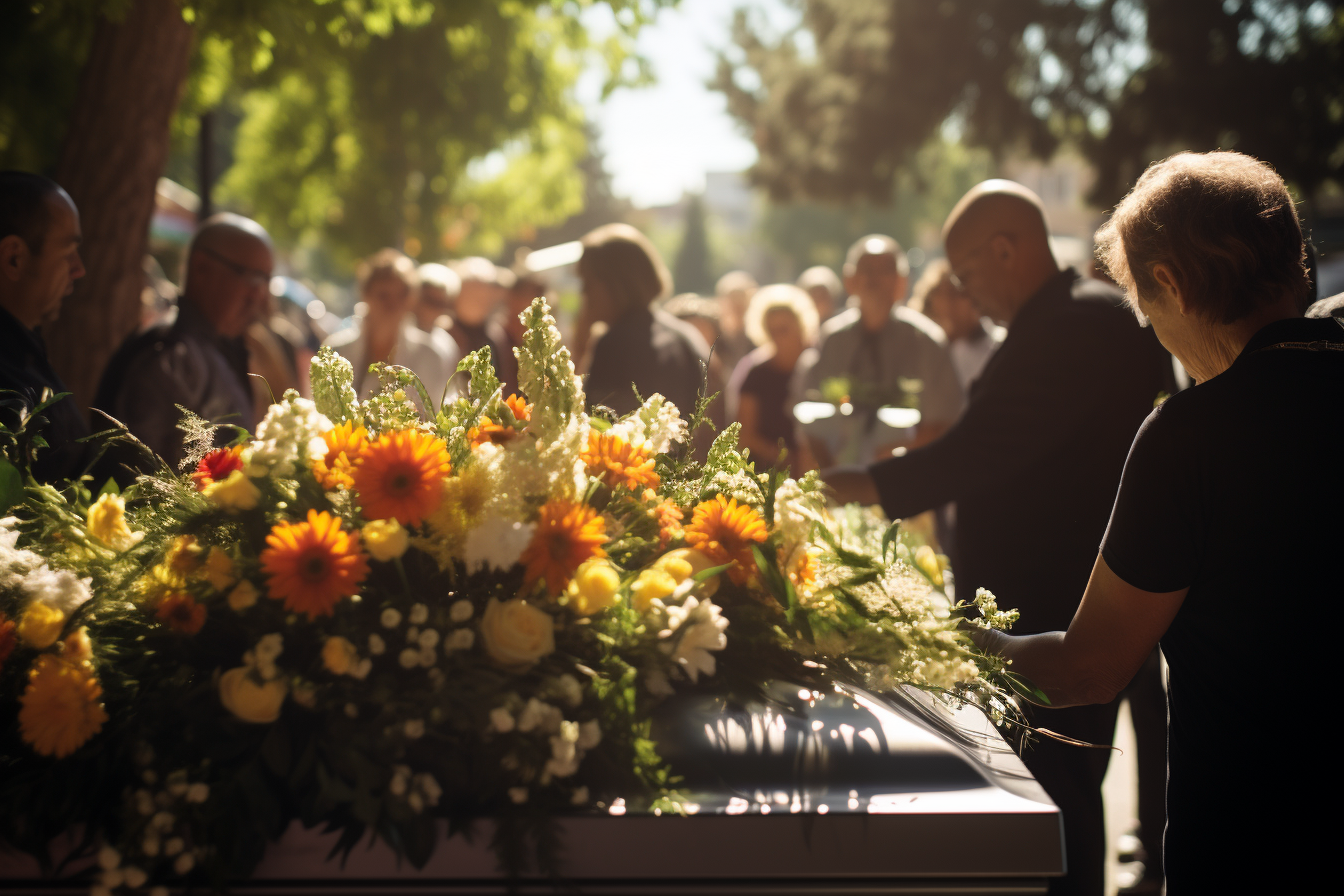
Colombia maintains a dedicated palliative care statute, a groundbreaking legal framework governing assisted dying, and well-defined procedures for registering deaths and returning remains to other countries. Expats need to know how to navigate end of life care through Colombia’s health insurance architecture, which legal documents they should prepare in advance, and the precise steps required when a foreign national passes away on Colombian soil — a process in which many actions must be completed within 48 hours.
| Item | Details |
|---|---|
| Death registration deadline | Within 2 days of death (as of 2024) |
| Palliative care law | Law 1733, enacted September 2014; covers terminal, chronic, degenerative and irreversible conditions |
| Euthanasia / assisted dying | Legal for Colombian nationals and foreign residents with valid residency status; terminal diagnosis no longer required (as of 2021) |
| Death registration authority | Registraduría Nacional del Estado Civil (National Civil Registry) |
| Burial plot lease | Typically 4-year leases in public cemeteries; remains exhumed after lease ends |
| Repatriation documents | Includes Colombian Civil Death Registry, medical death certificate, embalming certificate, undertaker’s certificate, and consular mortuary certificate |
What end of life care options exist in Colombia, and how does the system function?
Colombia’s end of life care provision is structured within a two-tier health system: the contributory regime (Régimen Contributivo), which covers working individuals and their dependants, and the subsidised regime (Régimen Subsidiado), which serves lower-income populations. Both regimes are administered by health insurers known as EPS (Entidades Promotoras de Salud), which in turn contract with care providers called IPS. The Colombian Ministry of Health and Social Protection is responsible for regulating mandatory health insurers (EPS) and care providers (IPS) to ensure their networks deliver comprehensive palliative care in line with the required level of complexity.
End of life care is delivered primarily through hospital-based palliative units, outpatient or ambulatory palliative services, and — to a much more limited degree — home-based care. The overall provision leans heavily toward hospital and ambulatory settings, and services are concentrated in large cities, leaving small towns and rural regions significantly underserved. Expats living outside major centres such as Bogotá, Medellín, Cali, or Barranquilla may find their options considerably more restricted.
Over the past decade in particular, the Colombian government has introduced legislation and regulations aimed at improving access to essential medications and embedding palliative care more firmly within the broader health system. Even so, service delivery remains markedly uneven across different regions of the country.
What is palliative care in Colombia, and who qualifies for it?
Palliative care in Colombia operates under a legal framework that is comparatively advanced within the Latin American region. Colombia was the first country in the region to establish a palliative care service and to recognise palliative medicine as an accredited specialty, the second to found a national palliative care association, and one of only a handful of nations with legislation specifically addressing palliative care.
The Palliative Care Law enshrines the right of patients with terminal, chronic, degenerative, and irreversible conditions to receive palliative care services designed to improve the quality of life of both patients and their families through comprehensive management of pain and other physical, emotional, social, and spiritual symptoms, in accordance with clinical guidelines issued by the Ministry of Health. This statute — Law 1733 — was signed into law on 7 September 2014.
Since 2014, Colombia has had organised legislation aimed at guaranteeing access to palliative care for all patients who may benefit from it, including those with both cancer and non-cancer diagnoses. In practice, any individual enrolled in either regime of Colombia’s health system — including foreign residents holding EPS coverage — should be entitled to palliative services through their insurer, though actual availability differs substantially by location.
Despite this legal foundation, considerable gaps persist. Research suggests that between 69 and 83% of adults with chronic illnesses who died in Colombia required palliative care, and roughly 30% of those who needed it passed away without ever receiving it. Expats should proactively request a palliative care referral from their treating doctor and confirm what is available through their EPS insurer.
Are there hospices in Colombia, and how can you gain access to them?
Unlike countries such as the United Kingdom — where an extensive network of standalone hospices provides dedicated in-patient end of life care — Colombia has no comparable independent hospice infrastructure. Standalone hospices do not exist in Colombia, and home-based palliative care services remain very scarce. This is a significant distinction for expats who are accustomed to hospice-based models of care.
Palliative care is instead delivered chiefly through dedicated units within hospitals and clinics, or via outpatient services attached to larger health institutions. A total of 504 palliative care services have been identified across Colombia, of which 77% are primary health care services. The density of provision stands at 1.8 primary care services per 100,000 inhabitants and 0.4 specialised services per 100,000 inhabitants.
To access palliative care, a patient must generally obtain a referral through their EPS insurer. The national palliative care association, ASOCUPAC (Asociación Cuidados Paliativos de Colombia), can provide guidance on specialist services in major cities. Teaching hospitals in Bogotá, Medellín, and Cali tend to operate the most developed palliative care units. Expats covered by private health insurance should check directly with their insurer to determine which contracted facilities offer palliative services.
Is palliative or hospice care covered under Colombia’s public health insurance, or must it be funded privately?
Colombian law obliges the mandatory health insurance system to cover palliative care for all eligible patients. Both the contributory and subsidised regimes are legally required to include palliative care within their benefits package (Plan de Beneficios en Salud). The Colombian Ministry of Health and Social Protection oversees the regulation of mandatory health insurers (EPS) and care providers (IPS) to ensure their networks deliver comprehensive palliative care according to the required complexity level.
Expats who are formally employed and contributing to the system — or who are enrolled in an EPS through a visa category requiring social security contributions — should in principle have palliative care covered. However, legal entitlement does not guarantee practical availability: approximately 250,000 adults require palliative care each year in Colombia, yet there are only 1.6 services per million inhabitants, reflecting a significant shortfall in capacity relative to need.
Expats who rely on private international health insurance, or who are not enrolled in the Colombian EPS system, will need to access palliative care through private clinics at their own expense. Costs can be substantial. It is essential to review your policy terms before a serious illness develops and to confirm that your insurer has agreements with Colombian healthcare providers.
What legal documents should expats put in place before the end of life in Colombia — such as a living will, advance directive, power of attorney, or healthcare proxy — and how do these work?
Colombian law recognises several important instruments for planning ahead at the end of life. An advance directive (directiva anticipada or documento de voluntad anticipada) enables a person to record their preferences regarding medical treatment, resuscitation, and care in case they later lose the capacity to make decisions. These documents carry particular significance in Colombia given the country’s evolving legal framework around the right to die with dignity.
A power of attorney (poder notarial) can be assigned to a trusted individual — whether a family member or close friend — authorising them to act on your behalf in medical, financial, and legal matters. In Colombia, powers of attorney must ordinarily be executed before a notary (notaría) and, where they involve broad authority or property matters, typically require notarisation. Expats are advised to have both a general power of attorney and a specific healthcare-related one prepared.
A healthcare proxy, which may be incorporated within a power of attorney, designates a named person to take medical decisions on your behalf. In addition, it is prudent to prepare a living will (testamento vital) that sets out your values and treatment preferences clearly. While these documents do not override the judgement of medical professionals, they carry real legal and ethical weight within Colombia’s healthcare system.
A conventional will (testamento) is equally essential if you want your assets distributed in accordance with your wishes. Colombian law recognises open wills (testamento abierto, executed before a notary and witnesses) and closed wills (testamento cerrado). Expats should engage a Colombian notary or lawyer (abogado) to ensure any will is valid under Colombian law. Keep the original document somewhere secure and inform your next of kin where it can be found.
Are advance directives or powers of attorney issued in another country legally recognised in Colombia?
Foreign legal documents — including advance directives, powers of attorney, and wills — can in principle be recognised in Colombia, but they must satisfy specific formal requirements before Colombian authorities, notaries, or healthcare providers will act upon them.
For a foreign document to be legally valid in Colombia, it must generally be authenticated. Colombia is a signatory to the Hague Apostille Convention, meaning documents issued by other member countries must bear an apostille stamp from the appropriate authority in the issuing country. Documents that are in a language other than Spanish must be translated by an official translator and either apostilled or legalised, depending on the circumstances.
Once apostilled and translated, a foreign power of attorney or advance directive should be accepted by Colombian notaries and institutions. In practice, however, medical staff in a hospital emergency setting may insist on clear documentation prepared in a locally recognised format. It is therefore strongly advisable to have any foreign document formally recognised and, ideally, re-executed or supplemented by an equivalent Colombian instrument drawn up with the assistance of a local notary or lawyer.
Expats who hold wills made in other countries should bear in mind that, while a foreign will may be admissible in Colombia, the administration of an estate will be considerably more straightforward if a separate Colombian will is also in place to cover any assets held in the country.
What does Colombian law say about euthanasia and assisted dying?
Colombia has developed one of the most progressive and legally refined frameworks for assisted dying anywhere in the world. It is the only country in Latin America where medical aid in dying is both permitted and regulated. This framework emerged through a sequence of Constitutional Court rulings rather than through legislation enacted by Congress.
The Constitutional Court issued its first ruling on medical aid in dying in 1997, when euthanasia was decriminalised for patients with terminal illnesses. In practice, however, patients were unable to access euthanasia because the implementation and monitoring regulations required to give effect to the ruling were only developed progressively between 2015 and 2021.
Ruling C-233 of 2021 represented a landmark expansion: the Court eliminated the requirement that a patient be terminally ill (with fewer than six months to live), extending access to those suffering from serious, incurable conditions that cause intense suffering, even where death is not imminent. Ruling C-164 of 2022 went further by explicitly decriminalising assisted suicide, confirming it as a valid mechanism alongside physician-administered euthanasia.
Access is restricted to Colombian citizens and foreign residents — tourists are excluded. To be eligible, a person must be a Colombian national or a foreign resident holding a valid visa and residency status with EPS coverage. The process requires a formal application, assessment by a multidisciplinary medical committee, and verified informed consent from the patient. A distinctive feature of Colombia’s regulatory framework is the requirement that a psychiatrist or clinical psychologist assess the applicant’s mental capacity and decision-making competence. Access is governed by protocols established by the Ministry of Health, currently Resolution 971 of 2021.
Euthanasia remains a deeply contested issue in Colombia, attracting significant opposition from religious groups. Expats considering this option should seek independent legal and medical advice well in advance and engage directly with their EPS insurer and treating physician.
What local customs, traditions, and religious practices surround death and dying in Colombia?
Colombia is a predominantly Roman Catholic country, and Catholic traditions exert a powerful influence on how death and dying are approached across much of society. When someone is gravely ill or nearing death, family members typically gather at the bedside, often reciting prayers and arranging for a priest to administer last rites if one can be present. The sacrament of anointing of the sick is considered deeply important for practising Catholics.
Following a death, it is customary to hold a wake (velorio), usually at the family home or a funeral parlour, where friends, neighbours, and extended family assemble to pray, share food, and offer their condolences. The velorio typically continues for one or two nights before burial. The rosary is often recited throughout this period. In many communities, prayer groups or professional mourners may attend as well.
Burial is the traditional and most prevalent form of disposition in Colombia, generally preceded by a funeral mass (misa exequial). Cremation is legal and increasingly accessible, but remains less traditional and was historically resisted by parts of the Catholic community — though this resistance has softened considerably in urban areas. Colombian cemeteries frequently feature elaborate family tombs and mausoleums, particularly among wealthier families, reflecting a deeply held cultural emphasis on honouring those who have died.
Regional customs also shape how death is observed. Along parts of the Caribbean coast and within Afro-Colombian communities, for instance, music may feature prominently at a funeral as a celebration of the life that was lived, alongside expressions of grief. Indigenous communities follow their own distinct rituals and practices. Expats should approach these customs with sensitivity and respect, as the traditions of the family involved may differ considerably from what they are used to at home.
What steps must be taken when someone dies in Colombia?
A death must be registered within two days by presenting a certificate issued by a forensics doctor or the medical doctor who attended the last illness. The following sequence of steps is recommended:
- Obtain a medical death certificate (Certificado de Defunción). This document must be issued by the attending physician or, where the cause of death is unclear or involves violence, by the Instituto Nacional de Medicina Legal y Ciencias Forenses (National Institute of Legal Medicine and Forensic Sciences). Where the manner of death cannot be determined immediately, the Colombian Attorney General’s Office (Fiscalía) will request that coroners establish the cause of death.
- Engage a funeral home. Contact a licensed funeral home as quickly as possible. Funeral homes in Colombia typically coordinate all notarial services and document submissions as part of their standard offering, handling much of the administrative burden on behalf of the family.
- Register the death with the Civil Registry. The person reporting the death must present their identification document and the medical proof of death at a registration office or notary, providing details of where the death occurred or where the body was found. This step must be completed within two days of the death.
- Obtain the official Registro Civil de Defunción (Civil Death Registration). A notary will record the death in the Colombian National Civil Registry (Registraduría Nacional del Estado Civil) and use that record to issue the official Civil Death Registration document.
- Notify the deceased’s home country embassy or consulate. Where the deceased is a foreign national, contact their country’s embassy or consulate in Colombia without delay. The consulate will advise on next steps, issue any necessary consular documents, and assist in coordinating repatriation where required.
- Obtain authorisation for burial or cremation. The Secretary of Health (Secretaría de Salud) must issue official authorisation before cremation or burial can proceed.
- Notify the EPS insurer and any private insurers. Inform the deceased’s health insurer and any life or funeral insurance providers as promptly as possible to initiate relevant claims.
- Secure the estate. Take immediate steps to protect the deceased’s property, bank accounts, and personal belongings while legal processes get under way. Engaging a Colombian abogado at the earliest opportunity is strongly recommended.
How is a death formally registered in Colombia, and what paperwork is required?
Death registration in Colombia is handled through the Registraduría Nacional del Estado Civil (National Civil Registry). Colombian notaries function similarly to vital statistics offices in other countries — they issue and maintain these records, and all certificates produced by notaries constitute original copies of civil documents.
The registration of a natural death must be completed within two days of the death occurring. The notary requires a medical certificate confirming the death (Certificado médico). Additional documentation typically required includes the national identity document of the deceased — a cédula de ciudadanía for Colombian nationals, or a passport for foreign nationals — along with identification of the person reporting the death.
It is worth noting that in Colombia, the official death certificate does not include the cause of death. Where a death is non-natural or occurs in suspicious or unexplained circumstances, the National Institute of Medical and Forensic Sciences (Medicina Legal) performs an autopsy to determine the cause of death following a report from the Fiscalía on the findings of their investigation. Once that process is concluded, a notary can register the death in the Civil Registry.
All Colombian death certificates take the form of certified or notarised copies of the original. The original record is held at the Civil Registry office in the city where the death was registered. A digital copy of the death certificate can be obtained through the National Registry’s website (www.registraduria.gov.co).
What happens when a foreign national dies in Colombia — what are the specific steps for notifying their home country’s embassy or consulate, and what role does the consulate play?
When a foreign national dies in Colombia, the family or next of kin should get in touch with the deceased person’s home country embassy or consulate in Colombia as quickly as possible. Most embassies operate an emergency or consular services line outside normal office hours precisely for situations of this kind.
The consulate’s role is one of support and guidance rather than direct administration within the Colombian legal process. Using the US Embassy in Bogotá as an illustration of typical consular practice, the embassy assists by providing information to families about Colombian requirements for navigating the process, and by issuing a Report of Death of a U.S. Citizen Abroad — a document based on Colombian records that may be used in most legal proceedings as evidence of a death overseas.
The consulate also issues a Consular Mortuary Certificate, which is one of the documents the funeral home will require in order to transport the deceased’s remains back to their country of origin. The funeral home will liaise directly with the embassy to obtain this certificate.
Responsibility for contacting and contracting a local Colombian funeral home to manage funeral arrangements and, where applicable, repatriation of remains, rests with the family. The consulate cannot act as a funeral agent and cannot cover the costs involved. Families should inform the consulate as soon as a death occurs, even before formal administrative processes begin, as early notification allows for timely advice and helps ensure that documentation is prepared without unnecessary delay.
How are funerals typically arranged in Colombia, and what disposition options are available?
There are numerous funeral directors operating across Colombia to guide next of kin through the process and present all available options and associated costs. Funeral homes in Colombia typically provide a comprehensive package covering collection and transportation of the body, preparation, a wake (velorio), religious services, burial or cremation, and assistance with documentation. Major cities have well-established funeral companies; rural areas tend to offer fewer choices.
Burial remains the traditional and most common option. Cemetery plots in Colombia are generally leased on four-year terms. When the lease expires, the remains are exhumed at additional cost. Depending on where in Colombia the death occurs, public burial is typically carried out in plots or crypts leased for four years, after which remains must be exhumed. Families may choose to renew the lease or transfer the remains to an ossuary.
Cremation is both legal and available in Colombia’s major cities. The Secretary of Health (Secretaría de Salud) must issue formal authorisation before either cremation or burial can take place. Bodies may be embalmed and repatriated abroad together with the relevant embalmer’s certificate, even in cases where cremation in Colombia has not been authorised. Expats with a strong preference for cremation should confirm its availability with the funeral home in the specific city where the death has occurred.
What do funerals cost in Colombia, and is any financial assistance available?
Funeral costs in Colombia vary widely depending on the city, the type of service selected, whether burial or cremation is chosen, and the funeral home itself. Basic funeral packages in Colombia can begin at around COP 2,000,000–4,000,000 (approximately USD 500–1,000 as of 2024), while more comprehensive services incorporating embalming, a formal wake, a funeral mass, and burial in a private cemetery can range from COP 8,000,000 to well over COP 20,000,000 (approximately USD 2,000–5,000 or more). These figures should be verified with local funeral homes, as prices shift over time and vary considerably by region.
A number of Colombian EPS insurers and private health insurers include funeral assistance benefits (auxilio funerario) within their coverage packages. Under Colombia’s contributory health regime, contributors and their registered family beneficiaries may be entitled to a funeral cost subsidy from their insurer upon the death of an affiliate — confirm the specifics with your particular EPS.
Many Colombians subscribe to funeral plans (planes exequiales) offered by funeral companies such as Jardines de Paz and similar providers. These involve low-cost monthly contributions that cover funeral expenses when the time comes. Expats intending to remain in Colombia for the long term may wish to consider taking out such a plan. Private life insurance policies may also include a death benefit that can be directed toward funeral expenses.
For foreign nationals, repatriation adds substantially to the total cost. Families should check repatriation coverage within any international health or life insurance policy well before any need arises.
What is involved in repatriating a foreign national’s remains from Colombia?
The following documents are required to export embalmed human remains from Colombia: a mortuary certificate information form; the Colombian Civil Death Registry (Registro Civil de Defunción); the Colombian Medical Death Certificate (Certificado de Defunción Antecedente para Registro Civil); an Embalming Certificate (Certificado de embalsamamiento); an Undertaker’s Certificate (Certificado de la funeraria); a Consular Mortuary Certificate issued by the relevant embassy; and a photocopy of the deceased’s identification document.
This process is managed by the funeral home, which contacts the embassy through the appropriate channel. Bodies may be embalmed and repatriated abroad along with the embalmer’s certificate. Embalmers operate throughout the country, and funeral homes can provide their contact details.
For the transport of cremated remains, the documentation required is simpler — no Consular Mortuary Certificate is needed. The documents suggested are the Colombian Civil Death Registry and a Cremation Certificate issued by the crematorium. Transporting cremated remains is therefore far more straightforward and considerably less expensive than repatriating a body.
The cost of repatriation, and all logistical responsibility, falls to the next of kin. Full repatriation of embalmed remains — covering preparation, a sealed casket, documentation, and international freight — can amount to anywhere between USD 5,000 and USD 15,000 or more, depending on the destination country and the airline involved. Families should engage a reputable international funeral repatriation specialist or work with a funeral home recommended by the relevant embassy. The entire process typically takes between one and three weeks from the date of death, depending on documentation timelines and logistical factors.
What happens to the estate of someone who dies in Colombia — how does probate or estate administration work, and are there inheritance taxes?
In Colombia, the administration of a deceased person’s estate (sucesión) is a formal legal process conducted either through the courts (proceso de sucesión judicial) or before a notary (sucesión notarial), depending on whether all heirs are in agreement and are of legal age. The notarial route is faster and more straightforward where no dispute exists among the parties. A Colombian attorney is strongly advisable for navigating either route.
To initiate a succession, the heirs must produce the death certificate, documentary proof of their family relationship (birth and marriage certificates), identification documents, and an inventory of the deceased’s assets. The estate is assessed, outstanding debts are settled, and the remaining assets are distributed among the heirs in accordance with the will or, where no will exists, under Colombian intestacy rules as set out in the Código Civil.
Colombia does not currently impose a separate inheritance tax (impuesto de herencia) as a standalone levy. However, inherited assets above certain thresholds may attract income tax (impuesto sobre la renta) in the hands of the recipient, as inherited wealth can be classified as taxable income. Tax rules are complex and subject to change — expats should consult a Colombian tax adviser (contador) for current guidance as of 2025 and verify the latest figures with the DIAN (Dirección de Impuestos y Aduanas Nacionales), Colombia’s national tax authority.
Expats with assets in more than one country should be aware that estate administration may need to run concurrently in Colombia and their home country. Some countries have bilateral tax or succession treaties with Colombia, which can affect liability — advice from a cross-border estate lawyer is recommended in these situations.
What are the consequences for an expat’s assets if they die without a will in Colombia?
If a person dies intestate (without a valid will) in Colombia, the estate is divided according to the rules contained in the Colombian Civil Code (Código Civil). These rules establish a clear hierarchy of heirs. In broad terms, the order of inheritance is as follows: children and other descendants rank as first-priority heirs; if there are no children, the estate passes to parents and other ascendants; siblings and their descendants follow; and a surviving spouse or permanent partner also holds inheritance rights that interact with those of the other heirs under a statutory formula.
A surviving spouse or permanent partner — including those in a recognised de facto union (unión marital de hecho) — does not automatically inherit the entire estate. Under Colombian intestacy rules, they typically share the estate with children and other relatives in proportions determined by statute. The position of unregistered partnerships is less clear-cut and may require legal evidence to establish the relationship.
For expats, the situation becomes more complicated by the question of which country’s law governs. Colombian courts generally apply Colombian law to assets physically situated in Colombia, regardless of the nationality of the deceased. Assets held abroad may be subject to different legal regimes. A cross-border estate lawyer can assist heirs in navigating these conflicts of law and in ensuring that succession processes in both Colombia and any other relevant country are properly coordinated.
If no surviving relatives exist and no will has been left, the Colombian state may ultimately inherit the estate. Expats are strongly encouraged to execute a valid Colombian will — before a notary — as soon as they acquire assets in Colombia.
Frequently asked questions
Is private international health insurance accepted by Colombian hospitals and palliative care providers?
This varies by institution. Certain private hospitals in major cities — particularly those in Bogotá, Medellín, and Cali — have established relationships with international insurers and may offer direct billing arrangements. Others will require payment at the time of service, with reimbursement sought from your insurer afterwards. It is essential to verify the arrangements in advance with both your insurer and the specific care provider, and to keep your policy documents and your insurer’s emergency contact number accessible at all times.
Do advance directives or living wills prepared in Colombia need to be in Spanish to be legally valid?
Yes. Any document intended for use within the Colombian health and legal system must be in Spanish or accompanied by a certified Spanish translation. Documents originally prepared in another language should be translated by a sworn translator (traductor oficial) and, if issued in another country, must bear an apostille from the country of origin before they can be used in Colombia.
How long does it typically take to repatriate remains from Colombia?
Repatriating embalmed remains from Colombia generally takes between one and three weeks from the date of death, depending on how quickly the required documents can be gathered, how efficiently the funeral home operates, the workload of the relevant embassy, and the availability of suitable flights. Transporting cremated remains is considerably simpler and faster, and can often be accomplished within a week once the cremation certificate and civil death registration are in hand.
What support is available for bereaved family members in Colombia?
Compared with countries that have well-developed hospice infrastructure, formal bereavement support services in Colombia are limited. Some hospitals and EPS providers make psychologists or social workers available to the families of patients who died in their care. Catholic parishes and other religious communities often offer pastoral support as a matter of course. International expats may find it useful to contact their home country’s embassy for referrals to counsellors with experience working in expatriate communities, and to draw on expat networks and social groups in their city.
Can a foreign national access euthanasia in Colombia?
Access to assisted dying in Colombia is available only to Colombian citizens and foreign residents — visitors on tourist or short-stay visas are excluded. To be eligible, an individual must be a Colombian national or a foreign resident holding a valid visa and residency status with EPS coverage. Foreign residents who satisfy the legal criteria must go through the same formal application process and multidisciplinary medical committee assessment as Colombian nationals.
What happens to a foreign national’s body in Colombia if no next of kin can be located?
Remains may be held for up to six months to allow time for identification, which must be carried out scientifically through DNA analysis or dental records. Colombian authorities will ordinarily notify the embassy of the deceased’s nationality, which will then attempt to trace family members. If no relatives are found, the Colombian state may arrange for disposal of the remains. Embassies should be informed immediately whenever an unidentified or unclaimed foreign national dies in Colombia.
Is an autopsy mandatory when a foreign national dies in Colombia?
Autopsies are required by law in Colombia where a death is connected to crime, violence, an accident, drug use, or where there is no clear medical explanation. Where a death is natural and well documented medically, an autopsy is not a routine requirement. Deaths occurring in unclear or unusual circumstances — including any case where no attending physician can certify the cause — will be referred to the Fiscalía and Medicina Legal for investigation before burial or repatriation can go ahead.
Do Colombian funeral homes typically operate in languages other than Spanish?
The vast majority of Colombian funeral homes work exclusively in Spanish. In larger cities such as Bogotá and Medellín, some funeral directors with regular experience handling deaths involving foreign nationals, or those with close ties to embassies, may have staff with a degree of proficiency in another language — but this should not be taken for granted. Embassies and consulates maintain lists of funeral homes with experience in managing deaths of foreign nationals and can help facilitate communication. Having a Spanish-speaking intermediary — such as a local lawyer, a trusted contact, or a consular officer — is strongly advisable.