
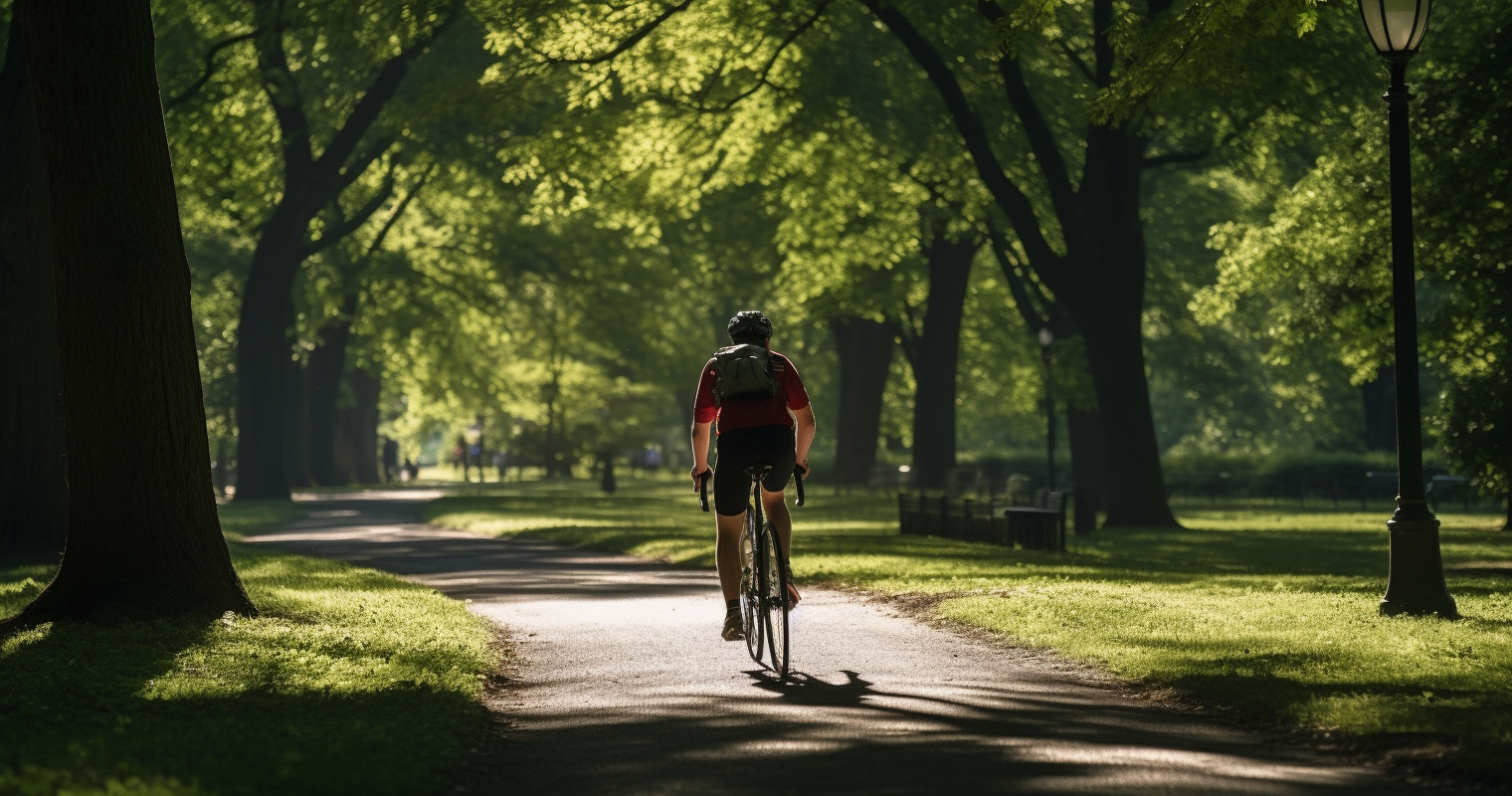
Cuba is a country where the bicycle is genuinely woven into the fabric of everyday life rather than treated as a leisure accessory. Sparse car ownership, unhurried roads, and a warm subtropical climate combine to make two-wheeled travel perfectly suited to both daily errands and longer exploration. Road quality is inconsistent — reasonably solid around urban centres, more unpredictable in the countryside — yet the overall experience of cycling here is calm, colourful, and deeply rewarding for those settling on the island.
| Item | Details |
|---|---|
| Car ownership rate | Very low — approximately 21 passenger cars per 1,000 people (World Bank, as of 2011; more recent data unavailable) |
| Helmet law | No national mandatory helmet law for cyclists; helmets strongly recommended |
| Bike registration | No mandatory registration system for bicycles reported |
| Bike rental pricing | Approx. USD $5–$10/hour or USD $15–$30/day (as of 2025; verify with operators) |
| Public bike-share | Ha’BiCi scheme in Old Havana (launched 2018; check current availability) |
| Importing a bike | Personal-use bicycles generally permitted; commercial quantities not allowed — check Aduana Cuba for current rules |
How popular is cycling in Cuba — is it a common way to get around?
The bicycle holds a distinctive and historically charged place in Cuban society. No image captures the country’s so-called “Special Period” of the 1990s more vividly than crowds of riders navigating city streets during that era of acute fuel scarcity. Following the collapse of the Soviet Union and the devastating shortage of petrol that followed, Cuba launched an ambitious bicycle distribution campaign in the early 1990s, putting more than two million additional bicycles into circulation between 1991 and 1997.
The bicycle remains a cornerstone of daily movement for many Cubans today, particularly in areas where bus services are patchy or unreliable. When public transport ground to a near halt due to shortages of spare parts, fuel, and vehicles, the humble bike became the most sought-after form of transport — regardless of how far people needed to travel. This history means that cycling in Cuba carries a different social weight than it does in countries like the Netherlands or Denmark, where it is embraced as an environmentally conscious lifestyle choice. In Cuba, the bicycle has long been a practical necessity, and this distinction gives the island a refreshing authenticity that resident and visiting cyclists tend to find deeply appealing.
What surprises many newcomers is just how car-free Cuba actually feels. Despite the country’s iconic association with vintage American automobiles from the 1950s, it is one of the least motorised nations in the world. World Bank figures record only 21 passenger cars per 1,000 people in Cuba, against 457 in the UK and 423 in the United States. The result is a network of roads that are genuinely quiet by the standards of most comparable countries, making cycling accessible in a way that even more cycling-renowned nations like Germany or the Netherlands cannot always match on a day-to-day basis.
Riding through Cuba by bicycle is an experience defined by calm, vivid scenery, and the kind of unscripted encounters that motorised travel rarely affords. With minimal traffic to contend with, those arriving from congested urban environments elsewhere in the world will find the adjustment to cycling here a very pleasant one indeed.
What is the cycling infrastructure like in Cuba?
Cuba’s cycling infrastructure is neither comprehensive nor uniform, and its limitations reflect the wider economic pressures the country faces. Dedicated cycle lanes can be found in certain parts of Havana, but their practical usefulness is limited: in practice, these lanes are routinely used by trucks and other motor vehicles, meaning cyclists share them with general traffic much as they would on any other road. This is a far cry from the protected, well-maintained cycling networks of northern European countries.
The Ha’BiCi public bicycle scheme in Havana emerged from a collaborative process involving the Havana City Historian’s Office, the private enterprise Velo Cuba, and representatives of the Basque Government alongside its Tecnalia company. The technical specifications for the associated cycle lanes were established and standardised by transport engineers at the Ministry of Transport. Despite this, the infrastructure remains confined to a relatively small part of the capital and has not expanded significantly since the scheme’s inception.
Elsewhere across the island, purpose-built cycling facilities are largely non-existent. Beyond city limits, roads tend to be quiet but not always in reliable condition — riders should anticipate potholes, deteriorating surfaces, and uneven stretches alongside sections that are perfectly adequate. Heavy traffic is rarely an issue outside towns and cities.
Venture further into rural Cuba and the character of the roads changes considerably. Tarmac gives way in places to gravel, sandy patches, and surfaces that bear more resemblance to agricultural tracks than public roads — yet it is precisely in these areas that cyclists encounter the most authentic side of island life, where horse-drawn carts outnumber cars and routes become inaccessible to motor vehicles. Road signage is another consistent challenge: navigation in towns such as Cienfuegos and across the island generally is unreliable, and this holds true broadly across Cuba. Downloading offline maps before departing is strongly recommended. For details on planned infrastructure and official transport policy, the Cuban Ministry of Transport (MITRANS) is the appropriate reference point.
Is cycling safe in Cuba?
The road environment in Cuba is notably more relaxed for cyclists than in most countries. Drivers here are unhurried and generally considerate, with traffic moving in a way that accommodates all road users rather than competing with them. This atmosphere stands in marked contrast to the more pressured conditions cyclists must navigate in many European or Latin American cities. On Cuban roads, riders and drivers tend to coexist with a degree of mutual respect that is genuinely unusual.
Many experienced cyclists who have ridden extensively in Cuba describe it as among the safest and most welcoming places they have ever cycled. The very low volume of motor traffic is the principal reason: it is perfectly possible to ride two or even three abreast on main roads for extended stretches without issue, though riders should remain alert to the occasional horse and rider emerging from a side track.
That said, Cuba is not without its hazards. Near the main urban centres, road surfaces are generally reasonable, but away from these areas potholes, worn tarmac, and narrow carriageways with no verge become genuine concerns. The near-total absence of street lighting on rural roads makes night riding particularly hazardous, and this should be avoided wherever possible.
There is no legislation in Cuba compelling cyclists to wear helmets — a legal requirement that does exist in countries such as Australia and New Zealand. Nevertheless, helmets are very strongly advised, and making yourself visible to other road users is equally important. Comprehensive road safety statistics for Cuba are not readily accessible in published form; the most current data can be sought from Cuba’s Ministry of Transport or the Dirección General de Tráfico, the national traffic authority.
What are the rules of the road for cyclists in Cuba?
The legal framework governing cyclists in Cuba is contained within the national traffic legislation — the Ley de Tránsito — and its accompanying regulations. Cyclists are classified as road users and are subject to the same fundamental obligations as other vehicle operators: obeying traffic signals, yielding where required, and travelling on the right-hand side of the road.
Key rules for cyclists include:
- Lane positioning: Under Law 60, article 105, paragraph 3, cyclists are required to travel no more than one metre away from the curb when designated cycle lanes are not available or not in use.
- Restricted roads: Certain major roads are off-limits to cyclists, including the Carretera Central near Santa Clara. Signage prohibiting cyclists also appears in the vicinity of major tourist zones such as Varadero. These restrictions are not always clearly marked, so local knowledge is valuable.
- Helmets: No national legislation requires cyclists to wear a helmet, though their use is consistently recommended by cycle operators and road safety advocates.
- Lighting: Riding at night without lights is both dangerous and prohibited under general traffic regulations. Front and rear lights are legally required for night cycling.
- Alcohol: Cuba’s road traffic laws prohibit operating any vehicle — including a bicycle — while under the influence of alcohol. Cyclists should regard drink-cycling as equivalent to drink-driving in terms of legal and personal risk.
Interpretation and enforcement of these rules can vary between municipalities and is not always consistent across the island. For authoritative and up-to-date legal requirements, the Cuban Ministry of Transport (MITRANS) and the Dirección General de Tráfico are the appropriate sources to consult.
Do I need to register my bike or have insurance to cycle in Cuba?
No widely reported mandatory registration system exists for privately owned bicycles in Cuba. Unlike motor vehicles, which are subject to formal registration and licensing, personal bicycles do not appear to require official registration with any government body. That said, regulations can and do change, and it is worth checking with local authorities once you have settled in Cuba to confirm the current position.
On the question of insurance, there is no statutory requirement for cyclists to hold third-party liability cover in Cuba, as exists for motor vehicles in many countries. However, security is a genuine practical concern: bicycle locks are extremely difficult to find on the island, so it is essential to bring one from home. The bicycle became a prized target for theft during periods of scarcity, and this concern has not entirely disappeared — making both a robust lock and appropriate personal insurance sensible precautions.
For expats, the most practical approach is to include bicycle cover as part of a broader personal effects or household contents insurance policy. Many international expat and travel insurance products offer this as standard or as an add-on, covering theft and accidental damage. Always read the policy terms carefully to confirm the level of protection. The relevant domestic insurance authority in Cuba is the Empresa de Seguros ESEN (National Insurance Company), Cuba’s primary state insurer. Check their official website for current product availability and the scope of coverage offered.
Are there public bike-sharing or rental schemes in Cuba?
Cuba’s first public bicycle scheme, Ha’BiCi, was inaugurated in Havana in November 2018. The name is a blend of “Habana” and “Bicicleta”, and the project came about through a partnership between the Havana City Historian’s Office, the private company Velo Cuba, and the Basque Government together with its Tecnalia company, which supplied the 60 bicycles currently in service. The scheme covers sections of Old Havana and represents a landmark development in Cuban urban cycling, though it operates on a much smaller scale than established bike-share programmes in cities like Barcelona or Paris.
Beyond Ha’BiCi, private rental options have become more widely available, particularly in Havana. Reputable rental providers in the capital typically supply helmets and water bottles alongside the bicycle, with pricing running from approximately USD $5 to $10 per hour or USD $15 to $30 per day as of 2025.
Electric bike hire is also beginning to appear through certain tour operators, available at an additional premium. E-bikes can be an excellent choice for those less confident about covering longer distances, though it is worth bearing in mind that Cuba has experienced electricity blackouts for decades and this may complicate the practicalities of recharging a battery.
For the most up-to-date details on Ha’BiCi docking locations and rental availability, contact Velo Cuba directly or reach out to the Havana City Historian’s Office. Visitors arriving independently will find tourist-oriented hire outlets in Havana, Trinidad, and Viñales among the most accessible starting points.
Where can I buy or service a bike in Cuba?
Acquiring a quality new bicycle in Cuba is one of the more significant practical challenges facing anyone planning to cycle regularly as a resident. The local market for new bikes is extremely thin, constrained by import restrictions and the country’s broader economic conditions. Purchasing or even renting a decent bike locally is close to impossible, and those without their own machine often find themselves relying entirely on organised bicycle tours.
Second-hand bicycles do circulate, typically through informal channels such as local markets, personal networks, and word of mouth. However, condition and quality are highly variable, and branded components from manufacturers like Shimano or SRAM are extremely scarce. Proprietary parts for modern drivetrains are virtually unobtainable on the island — a stark contrast to the well-stocked cycle retail markets of Western Europe or North America, where components are readily available both online and in specialist shops.
For repairs and servicing, Cuba’s ingrained culture of improvisation and resourcefulness offers a degree of reassurance. The country’s political and economic history has made its people extraordinarily capable at finding solutions with whatever materials are available — which means that if something goes wrong with your bicycle, there is a good chance someone nearby can fix it. Roadside repair stalls known as poncheras operate in most towns across the island, handling punctures, brake work, and basic mechanical adjustments at very modest cost. Specialist cycle shops of the kind found in European cities are rare and largely confined to Havana.
Visiting a local workshop — including those associated with clubs such as the Trinidad Cycling Club — offers a window into how Cuban cyclists maintain their machines without access to a conventional supply chain. Expats relocating to Cuba are strongly advised to bring a comprehensive toolkit, a supply of spare inner tubes, brake and gear cables, and any components that are specific to their bicycle model.
Can I bring my bike when I move to Cuba, and are there any import rules?
Bringing your own bicycle is not only permitted but highly recommended for anyone who intends to cycle regularly after moving to Cuba. Given the scarcity of quality bikes available locally, planning ahead and arriving with your own machine is by far the most reliable approach. A straightforward, durable second-hand bicycle is entirely adequate for most purposes.
A single bicycle brought in for personal use is generally treated by Cuban customs (Aduana Cuba) as part of the traveller’s personal effects and is not subject to additional duty. The key condition is that the bicycle is for personal use rather than for resale within Cuba. Electric bicycles are treated differently: a 100% import tariff applies to almost all goods imported by foreigners, meaning an e-bike valued at USD $200 would attract an additional USD $200 in customs charges to bring it into the country (as of 2024). These figures are subject to revision, and Cuba’s customs regulations have been updated on a number of occasions in recent years.
For those making a permanent move rather than a temporary visit, it is important to note that the rules covering tourists bringing personal effects into Cuba temporarily may differ from those governing the permanent importation of goods by residents. Cuba’s customs authority — Aduana de la República de Cuba — is the definitive source for current import duties, exemptions, and procedures. Always consult the official Aduana website or contact them directly before arranging to ship a bicycle as part of a household removal.
When travelling by air, individual airline policies on transporting bicycles vary considerably and must be checked at the time of booking. You will need to declare the bike to your airline, as each carrier has its own regulations for sports equipment, and some airlines do not permit bicycles on certain routes to Cuba.
What are the best cycling routes or destinations in Cuba?
Cuba offers a remarkable range of cycling terrain — from level coastal plains to forested mountain roads — suited to riders of very different abilities and ambitions. The island has three principal mountain ranges, but much of the land between them is flat or gently rolling. The mountains themselves are characterised by rounded, tree-covered peaks rather than dramatic rocky summits, making them accessible rather than intimidating for most cyclists.
Among the most celebrated routes and destinations are:
- Valle de Viñales (Pinar del Río): A cycling tour through the Valle de Viñales — recognised by UNESCO as a cultural landscape of outstanding universal value — takes riders past sweeping viewpoints, striking limestone mogotes, tobacco smallholdings, and traditional rural settlements.
- Eastern Cuba (Holguín to Baracoa): The island’s eastern region, reached via Holguín, is widely regarded as Cuba’s most scenically spectacular area. It combines extraordinary natural variety with deep historical significance as the cradle of the Cuban Revolution.
- “La Farola” (Baracoa to Guantánamo): Leaving Baracoa, cyclists face a demanding ascent to Alto de Cotilla — approximately 27 km of climbing and descending along a road Cubans call “La Farola”, passing through small mountain communities with expansive views before reaching around 550 metres above sea level.
- Havana to Varadero (Via Blanca): This route linking the capital with the resort peninsula threads through the Yumuri Valley, combining coastal panoramas with verdant inland scenery over the course of a satisfying multi-day journey.
- Trans-Cuba “La Ruta Mala”: For seasoned bikepacking enthusiasts, this 860-mile crossing of Cuba follows dirt tracks, horse paths, sugarcane farm roads, and steep mountain terrain through some of the island’s most remote and culturally distinctive landscapes.
- Vuelta a Cuba race routes: The established road stages of the Vuelta a Cuba race provide well-documented road cycling across multiple provinces, with varied terrain and excellent cultural context for riders who enjoy following in competitive footsteps.
Long-distance cycle tourists Wally and Barbara Smith completed six months and 8,000 miles of cycling across the island, producing detailed itineraries covering 50 days of riding. Their routes depart Havana in both directions, with additional clusters of rides around Pinar del Río, central Cuba, and the Oriente region, ranging widely in daily distance and combining to form multi-day loops.
For route planning, the Bikemap Cuba route database contains nearly 1,850 community-contributed routes. Cuba’s national tourism body, Cuba Travel, along with specialist operators including Bicycle Breeze and Cubania Travel, offer further route guidance and guided cycling options for those who prefer structured itineraries.
How do I set up for cycling after moving to Cuba? A step-by-step guide
- Source your bicycle before arrival: Since buying a quality bike locally is extremely difficult, bring your own or arrange a reliable rental in advance. Confirm current customs requirements with Aduana de la República de Cuba before shipping.
- Pack essential spare parts and tools: Bring spare inner tubes, brake cables, a multi-tool, patch kits, and any model-specific components — these are very hard to source in Cuba.
- Bring a quality bike lock: Bike locks are almost impossible to find locally and theft is a genuine concern, so pack a sturdy lock before you leave home.
- Arrange personal or expat insurance: Make sure your insurance policy covers your bicycle for theft and accidental damage. Check with Cuba’s national insurer ESEN about what cover is available locally.
- Familiarise yourself with the traffic laws: Review Cuba’s Ley de Tránsito, particularly the one-metre kerb rule and road restrictions, and consult the Ministry of Transport for the latest requirements.
- Plan your local routes: Use offline mapping tools such as Maps.me or download GPX routes from Komoot or Bikemap before you go, as reliable internet access in Cuba is limited.
- Identify your nearest repair stall (ponchera): Find your local roadside mechanic early — these stalls are widely available and very affordable for everyday maintenance needs.
- Register with local cycling clubs: Connect with groups such as the Trinidad Cycling Club or Havana-based clubs for route advice, local knowledge, and the added reassurance of riding with others.
Frequently asked questions about cycling in Cuba
Is it safe to cycle on Cuban roads as an expat?
Drivers in Cuba are generally unhurried and considerate, and traffic moves in a way that accommodates all road users rather than competing with them. Combined with the island’s very low car ownership, this creates a cycling environment that is considerably safer than many other countries. The primary hazards are poor road surfaces, potholes, and the lack of lighting on rural roads after dark. Ride with care, use front and rear lights, and avoid cycling on unlit rural roads at night.
Do I legally have to wear a helmet when cycling in Cuba?
Cuba has no national legislation requiring cyclists to wear a helmet — unlike countries such as Australia, where helmet use is mandatory for all riders. Even so, wearing a helmet is strongly advised by cycling operators and safety advocates alike, particularly on longer journeys and in traffic.
Can I use a bicycle for my daily commute in Cuba?
Absolutely — bicycles serve as the primary mode of daily transport for large numbers of Cubans, especially where public transport is infrequent or unreliable. The island’s very low car ownership means commuting by bike is rarely disrupted by heavy traffic. The main challenges for urban commuters are inconsistent road surfaces and the limited provision of formal cycle lanes.
How easy is it to find someone to repair my bike in Cuba?
Cuba’s long history of economic constraint has produced a population that is extraordinarily resourceful when it comes to repairs and improvisation. If something breaks on your bicycle, the chances are good that someone locally will be able to fix it. Roadside repair stalls known as poncheras operate in most towns and offer inexpensive servicing. That said, specialist components for modern drivetrains are extremely scarce, so it is essential to bring your own spares.
Is there a public bike-share scheme I can use in Havana?
Ha’BiCi, Havana’s first public bicycle scheme, was launched in November 2018 as a collaboration between the Havana City Historian’s Office and the private company Velo Cuba. It covers parts of Old Havana and currently operates 60 bicycles. Check with Velo Cuba for current docking station locations and availability, bearing in mind that the scheme remains modest in scale compared with similar programmes in European capitals.
Can I bring my bicycle with me when I relocate to Cuba?
Cuba raises no objection to individuals bringing a bicycle into the country, provided it is for personal use and not intended for resale. Standard bicycles are generally treated as personal effects under customs rules. Electric bicycles are subject to a 100% import tariff as of 2024. Always check the current position directly with Aduana de la República de Cuba before arranging to ship your bike, as regulations are periodically revised.
Are there cycle lanes in Cuban cities?
Cycle lanes exist in parts of Havana, most notably in Old Havana in connection with the Ha’BiCi scheme. In practice, however, these lanes are regularly used by trucks and other motor vehicles, making them unreliable as a protected cycling space. Dedicated cycling infrastructure is largely absent outside the capital. Cyclists should expect to share road space with general traffic throughout most of Cuba.
What type of bicycle is best for cycling in Cuba?
A hybrid, gravel, or lightweight mountain bike will handle Cuba’s varied and sometimes rough road conditions far better than a road bike. Models fitted with hybrid tyres and flat handlebars are well suited to the terrain, and a robust touring bicycle with appropriately low gearing for hillier stretches is also a solid choice. Avoid bicycles with highly technical drivetrains or proprietary components, as sourcing replacements on the island is next to impossible.
What is the best time of year to cycle in Cuba?
Cuba’s subtropical climate, tempered by trade winds, is generally hospitable to cycling year-round — sea breezes prevent temperatures from becoming oppressive for most of the year. The dry season running from November to April is widely considered the most favourable period for longer cycling trips. During the wet season between May and October, post-storm humidity can climb to around 95%, making riding considerably more arduous.