
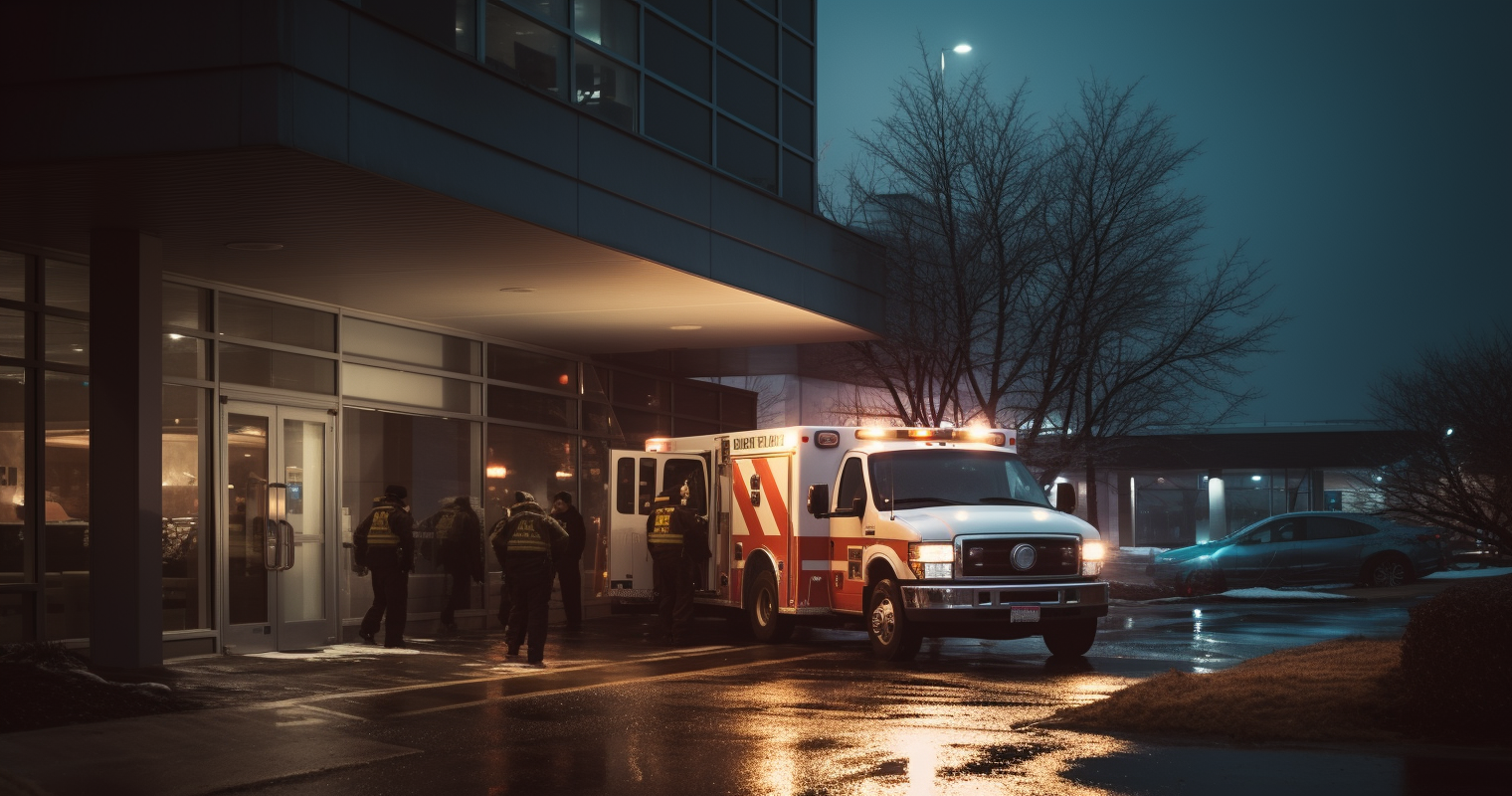
In the Czech Republic, the pan-European emergency number 112 connects callers to all emergency services and offers support in several languages, making it the recommended choice for anyone who is not confident communicating in Czech. Dedicated national lines also exist: 155 for medical emergencies, 150 for fire and rescue, and 158 for police. People covered by Czech health insurance receive urgent treatment at minimal or no direct cost, while uninsured visitors may face substantial medical bills and should therefore carry valid travel or health insurance whenever in the country.
| Item | Details |
|---|---|
| Single European emergency number | 112 (multilingual, 24/7, free of charge — as of 2025) |
| National ambulance number | 155 (Czech language; 24/7, free of charge) |
| National police / fire numbers | 158 (Police), 156 (Municipal Police), 150 (Fire & Rescue) |
| EHIC emergency call-out charge | Ambulance free with EHIC; standard emergency department charge approx. CZK 90 — as of 2024 (verify with official sources) |
| Uninsured ground ambulance cost | Approx. 100–300 EUR depending on region — as of recent figures (verify locally) |
| Minimum private insurance coverage (long-stay visa) | EUR 400,000 per claim — as of 2023 reform |
What is the single emergency number in Czech Republic, and are there separate numbers for each service?
The Czech Republic adheres to the pan-European standard: 112 is the unified emergency number linking callers to police, fire, or ambulance services as required. The Fire & Rescue Service receives calls through both the dedicated national line 150 and the 112 Single European Emergency Call Number. All four emergency lines function around the clock and are free to dial from any telephone, including mobile phones with no SIM credit or active plan.
Anyone who finds themselves in a dangerous situation — one that threatens people, animals, or property — can reach emergency services through 112, 150, 155, or 158. These lines are all available 24 hours a day at no charge. The individual national lines are divided as follows:
- 112 — Single European Emergency Number (all services, multilingual)
- 155 — Ambulance / Emergency Medical Services
- 150 — Fire & Rescue Service
- 158 — Police of the Czech Republic (national)
- 156 — Municipal Police (local/city level)
The Single European Emergency Call Number 112 is intended primarily for foreign nationals and for situations involving large-scale emergencies. If you are not at ease communicating in Czech, 112 is the safest option, as operators handle calls in a range of languages including English, German, Russian, French, Italian, and Spanish. The function is broadly similar to the 999 system in the United Kingdom or the 112 standard applied across the EU, with the added advantage of routing callers directly to the most relevant emergency service.
An SMS emergency line is also available for people who are deaf or hard of hearing: 603 111 158. When sending a text in an emergency, include your name, your location, and a short description of what is happening. The message will be received and, where necessary, a response coordinated — you will not automatically be called back, which preserves confidentiality if that is important.
How do you call for emergency medical assistance, and what should you expect?
In a medical emergency, dial 155 if you are comfortable speaking Czech, or 112 if you require assistance in another language. For communication in English, German, Russian, French, Italian, and Spanish, 112 is the recommended number; the direct national emergency line 155 operates in Czech only. Once connected, remain on the line, keep as calm as possible, and be ready to provide accurate details.
The key information to have ready includes: the common European emergency number, the exact location of the incident, what has occurred, and your name. Do not end the call before the dispatcher instructs you to — the operator will guide you through what to do next and may walk you through first aid steps while responders are on their way.
The Czech emergency medical services system has shifted over time away from physician-led crews toward paramedic-based crews, with doctors now attending fewer than one in three calls — primarily those involving life-threatening conditions. EMS operates on a regional basis, with 14 regional services each running a dedicated dispatch centre alongside multiple ambulance stations. Typical response vehicles include an RLP crew (physician, paramedic or nurse, and driver in a standard ambulance), an RV crew (physician and driver in a rapid-response vehicle), and an RZP crew (paramedic or nurse and driver in a standard ambulance).
Ground-based EMS is complemented by a network of 10 HEMS (Helicopter Emergency Medical Service) helicopters. You can also summon help through the Záchranka mobile app, which automatically transmits your GPS coordinates to emergency services — a highly practical tool to install before you ever need it.
What should you do in a mental health crisis in Czech Republic?
If you or someone nearby is in immediate danger as a result of a mental health crisis, call 112 or 155 without delay. Emergency medical dispatchers are trained to evaluate psychiatric emergencies and can send an appropriate response team. You may also go directly to a hospital emergency department (urgentní příjem), which serves as the standard access point for acute mental health crises in the Czech Republic, fulfilling a similar role to A&E departments elsewhere.
For situations that are urgent but not life-threatening, several crisis helplines operate in the Czech Republic. Linka bezpečí (116 111) is focused on children and young people, while the Linka důvěry network provides general crisis counselling by telephone. Many of these services function in Czech, so expats facing a language barrier may find it easier to call 112 for a multilingual response, or to seek out private clinics and therapists who offer services in other languages.
For ongoing mental health concerns, organisations serving foreign residents — such as Prague Integration or individually practising therapists who work in languages other than Czech — can be approached at the first sign of difficulty, without waiting for a situation to become critical. Always verify current helpline numbers and operating hours directly with the service provider, as these details can change. The Czech Ministry of Health website (mzcr.cz) publishes updated guidance on mental health services.
Where can you go for emergency medical treatment in Czech Republic?
The Czech Republic has developed a modern healthcare system that is widely regarded as among the strongest in the EU. Rather than operating as a wholly state-run structure, it now encompasses a mixture of public facilities, university hospitals, high-quality private clinics, and a broad network of GP and specialist practices. In an emergency, the first port of call outside an ambulance is typically a hospital emergency department.
For those unfamiliar with the system, Czech emergency care can be somewhat unexpected in its organisation: there is no single all-purpose emergency department that handles every type of case. Instead, hospitals operate specialised departments — for traumatology, ENT, paediatric emergencies, and so on — meaning that on arrival you may be directed to a particular specialist ward rather than passing through a single central triage area as is common in some other countries.
Medical services are delivered through hospitals, outpatient clinics run by general practitioners, specialist outpatient surgeries, and various other facilities. Outside standard working hours, emergency care is provided through hospital departments. Most of these facilities are publicly owned and publicly funded, though patients may still be required to contribute supplementary fees for certain procedures, medications, or services. Alongside public facilities, patients may also use private providers where costs are settled directly — including specialist clinics and private GPs.
To identify the nearest emergency facility, the Czech government’s Health Insurance Supervisory Authority and the Ministry of Health website maintain hospital listings by region. The Záchranka app can also direct you to the most suitable nearby facility. For non-urgent out-of-hours needs, pharmacies are widely available — some operate 24 hours a day, seven days a week, including those attached to hospital buildings.
Is emergency medical treatment free or is there a charge?
The answer varies depending on your insurance status. The Czech Republic provides covered medical treatment to Czech citizens, permanent residents, and foreign nationals employed by a Czech-registered employer through a universal healthcare system administered via approved Czech health insurers. In practice, “covered” means funded through the mandatory insurance framework, with modest co-payments required in certain circumstances.
For visitors from EU/EEA countries and Switzerland who hold a valid European Health Insurance Card (EHIC): ambulance call-outs are free provided you present your EHIC at the time of treatment; if you fail to present it, you will be required to pay upfront and claim reimbursement later. Mountain rescue operations are not covered by the EHIC. Air ambulance services are free. A standard charge of CZK 90 applies for emergency medical services, including emergency dental treatment, and patient contributions apply to certain medications. Always verify current fee levels with the European Commission’s EHIC guidance or the Czech Ministry of Health, as these figures are subject to revision.
For uninsured patients — typically non-EU nationals without private cover — the financial implications are more significant. In some regions, uninsured patients, predominantly non-EU foreigners, are charged approximately 100–300 EUR for a ground ambulance call-out, varying by region. The cost of hospital treatment for uninsured self-paying patients can be considerably higher. For instance, one major Prague hospital requires a financial deposit at the emergency department as a precondition of treatment for uninsured self-payers; verify current deposit and fee requirements directly with the facility before you have need of them.
For residents who are integrated into the Czech social insurance system, emergency treatment is covered and you simply supply your insurance details. Residents on Czech public health insurance pay the same minor co-payments as Czech nationals, and in no situation will life-saving emergency care be refused solely on the grounds of insurance status.
Do expats need travel or health insurance to access emergency care?
Holding health insurance in the Czech Republic is a legal requirement, whether arranged through a public or private provider. This is not merely advisory — it has direct consequences for your visa eligibility and residence permit.
Valid health coverage is a statutory obligation for anyone remaining in the country for more than 90 days. Without it, you risk being refused a visa, having a residence permit renewal denied, or — in principle — being unable to access certain non-emergency services. Immigration authorities may reject a residence permit application if the applicant cannot demonstrate adequate insurance cover for the full duration of their intended stay.
Czech citizens, residents, and those employed by Czech companies are automatically enrolled in the country’s public healthcare system and pay monthly contributions accordingly. Other long-term visitors must arrange private insurance, and short-term travellers are expected to carry appropriate travel insurance.
The legal minimum for a Schengen visa is EUR 30,000, but for those residing in the Czech Republic the current requirement — particularly following the 2023 reform — sets a considerably higher minimum coverage threshold of EUR 400,000 per claim. Always confirm the current minimum with the Czech Ministry of the Interior, as requirements are subject to change.
If someone arrives without insurance and is unable to pay, emergency life-saving treatment will generally be provided regardless, but the individual will be held fully liable for the costs afterwards. This can result in significant debt and may create complications for future visa applications.
Are there bilateral health agreements entitling some foreign nationals to reduced-cost treatment?
Yes. The Czech Republic participates in the EU-wide EHIC scheme, which entitles EU, EEA, and Swiss nationals to medically necessary treatment on the same basis as Czech residents. UK citizens can use the Global Health Insurance Card (GHIC), which replaced the EHIC for UK nationals following Brexit and provides equivalent entitlement to emergency medical care in the Czech Republic.
Beyond the EU framework, the Czech Republic has concluded bilateral social security treaties that include health insurance provisions with several non-EU countries. These include the USA, Japan, Turkey, North Macedonia, Serbia, Montenegro, Albania, and Tunisia. Nationals of these countries may be able to access the Czech health insurance system under conditions similar or equivalent to those applying to European citizens.
A comparable principle operates under association agreements with the Maghreb countries — Algeria, Morocco, and Tunisia. Where a person from one of these countries is employed in an EU Member State, including the Czech Republic, they are covered by the health insurance system of that EU country. The Czech Republic also maintains an international treaty with Israel, though this applies specifically to citizens of both countries rather than to all insured persons.
The full and current list of bilateral treaties is published by the Health Insurance Supervisory Authority of the Czech Republic (KZP). It is strongly advisable to verify your country’s specific entitlement before travelling or relocating, as the terms of individual treaties vary considerably and may apply only to employment rather than tourist stays or study.
How does the Czech emergency healthcare system compare to systems expats may be familiar with?
The Czech healthcare system operates through a blend of public and private insurance. The public side functions as a mandatory contribution model, with funding drawn from regular payments by employers, employees, and the state, covering the majority of necessary treatment with near-zero cost at the point of care — though some co-payments or supplementary charges apply for certain medicines or dental procedures outside the standard coverage.
This places the Czech model in broadly the same philosophical category as Germany’s statutory health insurance framework (Gesetzliche Krankenversicherung) or France’s Assurance Maladie — both mandatory contribution systems — rather than a purely tax-funded model such as the UK’s NHS. Unlike the NHS, where registering with a GP grants free access without needing to carry an insurance card, the Czech system requires you to actively hold and present valid insurance documentation at the point of care.
Today the country operates a mixture of public facilities, university hospitals, premium private clinics, and a broad range of GP and specialist practices. This differs from systems in certain other countries where emergency care is entirely free for eligible residents regardless of the circumstances — for example, under Medicare in Australia, where emergency hospital treatment is covered for qualifying residents without upfront payment. In the Czech Republic, uninsured visitors are expected to cover their own costs, and deposits may be requested by major hospitals before or following treatment.
The overall standard of healthcare in the Czech Republic is high, and the country’s system has been recognised as one of the strongest in the EU. While private facilities typically charge more, they tend to be better equipped to serve patients requiring care in languages other than Czech, and waiting times are often shorter than those encountered at public hospitals.
What emergency services exist beyond medical — how do police and fire services work?
The Czech Republic runs a well-coordinated emergency services structure. The national lines are: 150 for the fire brigade, 155 for paramedics, 158 for the State Police, and 156 for the Municipal Police. All lines are free of charge and staffed around the clock. For anyone who does not speak Czech, 112 remains the most reliable option, as it connects to all services with multilingual operator support.
The Police of the Czech Republic (Policie České republiky) is the national force responsible for serious criminal matters, road traffic incidents on major routes, and national security concerns. The Municipal Police (Městská policie) functions at the level of individual cities and towns, handling local order, parking enforcement, and minor infractions — a role broadly comparable to community support officers or local wardens in some other countries. Both forces can be reached through 112 for callers who do not speak Czech.
The 150 line is used to report fires, natural disasters, accidents, and other emergency situations, with calls handled in the operational and communications centres of the Fire & Rescue Service alongside 112 emergency calls. The Czech Fire & Rescue Service also takes a leading coordinating role in civil protection and disaster management, extending well beyond fire-fighting duties alone.
When dealing with Czech police, be aware that officers outside major urban centres may have limited proficiency in languages other than Czech. You are legally required to carry your passport or identity document at all times, as Czech law obliges foreign nationals to be able to identify themselves upon request. If you are involved in a road traffic accident, you must contact the police via 158 or 112 if anyone has been injured or if vehicles cannot be moved to a safe position.
Are there country-specific emergency risks in Czech Republic?
The Czech Republic is generally considered low-risk in terms of natural disasters, though certain hazards merit attention. Flooding is the most significant environmental threat — the country has experienced serious flood events, particularly along the Vltava, Elbe (Labe), and Morava river systems. Flash floods can develop rapidly following heavy summer rainfall, and spring snowmelt can also raise river levels sharply. Harsh winter conditions, including ice and heavy snowfall, can disrupt travel and utilities.
The Czech government maintains a civil emergency preparedness resource through the 72hodin.gov.cz portal, which provides official guidance on preparing for and responding to a wide range of emergencies. The national siren system is tested on the first Wednesday of every month at noon — a continuous two-minute tone. During a genuine emergency, sirens may be accompanied by instructions broadcast on radio and television; in larger cities, public address systems may also relay official guidance.
Health risks in the Czech Republic are broadly consistent with those found across Central Europe. Tick-borne encephalitis (TBE) is prevalent in forested and rural areas, and vaccination is advisable for anyone planning to spend time outdoors in the countryside. Lyme disease is also transmitted by ticks in these areas. Neither condition poses an acute emergency provided appropriate precautions are observed — including suitable clothing, regular tick checks, and vaccination where recommended. For current health advisories, refer to the Czech Ministry of Health or the travel advice service provided by your home country.
Civil unrest is uncommon in the Czech Republic, which is a stable member of both the EU and NATO. Standard common-sense precautions around large public gatherings and demonstrations remain applicable.
What should expats do to prepare for emergencies before they arise?
- Register with your home country’s embassy or consulate. Most countries operate a registration programme — such as the UK’s LOCATE service or the US STEP programme — enabling your government to reach you in the event of a national emergency or crisis. Check your embassy’s website for details; many embassies in Prague maintain current emergency contacts and guidance for their nationals.
- Obtain and carry valid health insurance at all times. Keep your health insurance card on your person. If you hold commercial health insurance, carry documentary proof that the policy is paid up and active. Never leave home without it.
- Store emergency numbers in your phone. Compile a list of essential contacts: 112, 155, your insurer’s assistance line, and the addresses of the nearest hospitals and multilingual private clinics.
- Download the Záchranka app. This official Czech emergency application transmits your GPS location directly to emergency services when you make a call, making it especially valuable in rural or unfamiliar surroundings where describing your position in Czech may be difficult.
- Identify your nearest hospital emergency department in advance. Establish which hospital covers your area, whether it maintains a 24-hour emergency unit, and whether any staff are able to communicate in your language.
- Get to know the siren system. The national test siren sounds on the first Wednesday of each month at noon. Recognising this sound in advance will help you stay calm and respond appropriately if a real alert occurs.
- Keep your insurer’s assistance number to hand. Many private and international health insurers provide a 24/7 helpline. Have this number easily accessible — if you are admitted to hospital, your insurer may need to provide a payment guarantee to the treating facility.
- Learn a few essential Czech emergency phrases. Even a handful of words — “pomoc” (help), “zavolejte záchranku” (call an ambulance) — can prove invaluable in the opening moments of an emergency situation.
Where can expats get official and up-to-date emergency information?
The sources listed below are the most authoritative for current emergency information in the Czech Republic. Consult these directly rather than relying on secondary summaries, as fees, procedures, and contact details are subject to revision over time:
- Ministry of the Interior of the Czech Republic — Emergencies: Official emergency numbers and civil protection guidance.
- 72hodin.gov.cz: The Czech government’s official emergency preparedness portal, covering recommended actions before, during, and after emergencies.
- Fire & Rescue Service of the Czech Republic: Information on the 150 and 112 emergency lines and civil protection procedures.
- Ministry of Health of the Czech Republic: Hospital directories, public health alerts, and healthcare system information.
- Health Insurance Supervisory Authority (KZP): Details on bilateral health insurance treaties and the public insurance system.
- European Commission — EHIC information for Czech Republic: Authoritative guidance on EHIC entitlements and current co-payment levels.
- Your home country’s embassy in Prague: For citizen registration, emergency repatriation assistance, and country-specific travel advisories. A full list of embassies in Prague is available through the Czech Ministry of Foreign Affairs website.
Frequently asked questions
What number should I call in a Czech Republic emergency if I don’t speak Czech?
Dial 112. Operators at 112 call centres are equipped to handle calls in English, German, Russian, French, Italian, and Spanish, and will connect you to the appropriate emergency service. The line is free, operates around the clock, and can be dialled from any mobile phone even without a SIM card or available credit.
Will I be treated in an emergency if I have no insurance?
Life-saving emergency treatment will generally not be refused regardless of insurance status. However, you will be held responsible for the full cost of care, which can be considerable. In certain regions, uninsured patients — primarily non-EU foreign nationals — are charged approximately 100–300 EUR for a ground ambulance call-out, depending on the region. Hospital treatment costs can be substantially higher. Securing valid insurance before an emergency arises is strongly recommended.
Does the EHIC cover all emergency treatment in Czech Republic?
A European Health Insurance Card (EHIC) entitles you to medically necessary treatment during a temporary stay in the Czech Republic — that is, care for conditions that cannot reasonably wait until you return home, such as a sudden illness or accident. Mountain rescue is not covered under the EHIC. The card does not extend to repatriation or elective treatment, and a small co-payment for emergency services may be applicable.
Can I use the UK Global Health Insurance Card (GHIC) in Czech Republic?
Yes. Following Brexit, UK nationals can use the GHIC in place of the EHIC for emergency medical care in the Czech Republic. The GHIC provides broadly equivalent entitlements to the EHIC for necessary treatment during temporary stays. For up-to-date information on what the GHIC covers, consult the official NHS website.
Is health insurance compulsory for expats in Czech Republic?
Yes. Holding health insurance is a legal obligation in the Czech Republic, whether provided through a public or private scheme. Anyone remaining in the country for more than 90 days must maintain valid coverage, and failure to do so risks refusal of a visa or renewal of a residence permit. Short-term visitors staying fewer than 90 days should carry adequate travel insurance that includes medical expenses.
What app can help me in an emergency in Czech Republic?
The Záchranka app is the official Czech emergency application. When you place an emergency call, it automatically transmits your GPS location to the responding services — a particular advantage in rural or unfamiliar areas where you may not know your exact address. The app also provides one-tap access to all emergency lines. It is free to download and is strongly recommended for all expats and visitors.
Are there natural disaster risks I should be aware of in Czech Republic?
The primary natural hazard in the Czech Republic is flooding, especially in river valleys during spring snowmelt and after sustained heavy summer rain. Severe winter weather can also cause significant disruption to transport and infrastructure. The government’s 72hodin.gov.cz portal offers official preparedness guidance. Tick-borne encephalitis (TBE) is present in forested areas, and vaccination is advisable for those spending time outdoors in rural settings.
How do I find the nearest hospital emergency department in Czech Republic?
The Czech Ministry of Health website and regional health authority pages list hospitals by location. The Záchranka app can also identify the nearest suitable facility. In major cities, university hospitals — such as Všeobecná fakultní nemocnice in Prague — maintain 24-hour emergency departments. Bear in mind that Czech emergency departments are typically organised by speciality, so you may be directed to a specific ward such as traumatology, internal medicine, or paediatrics, rather than a single unified emergency reception area.