
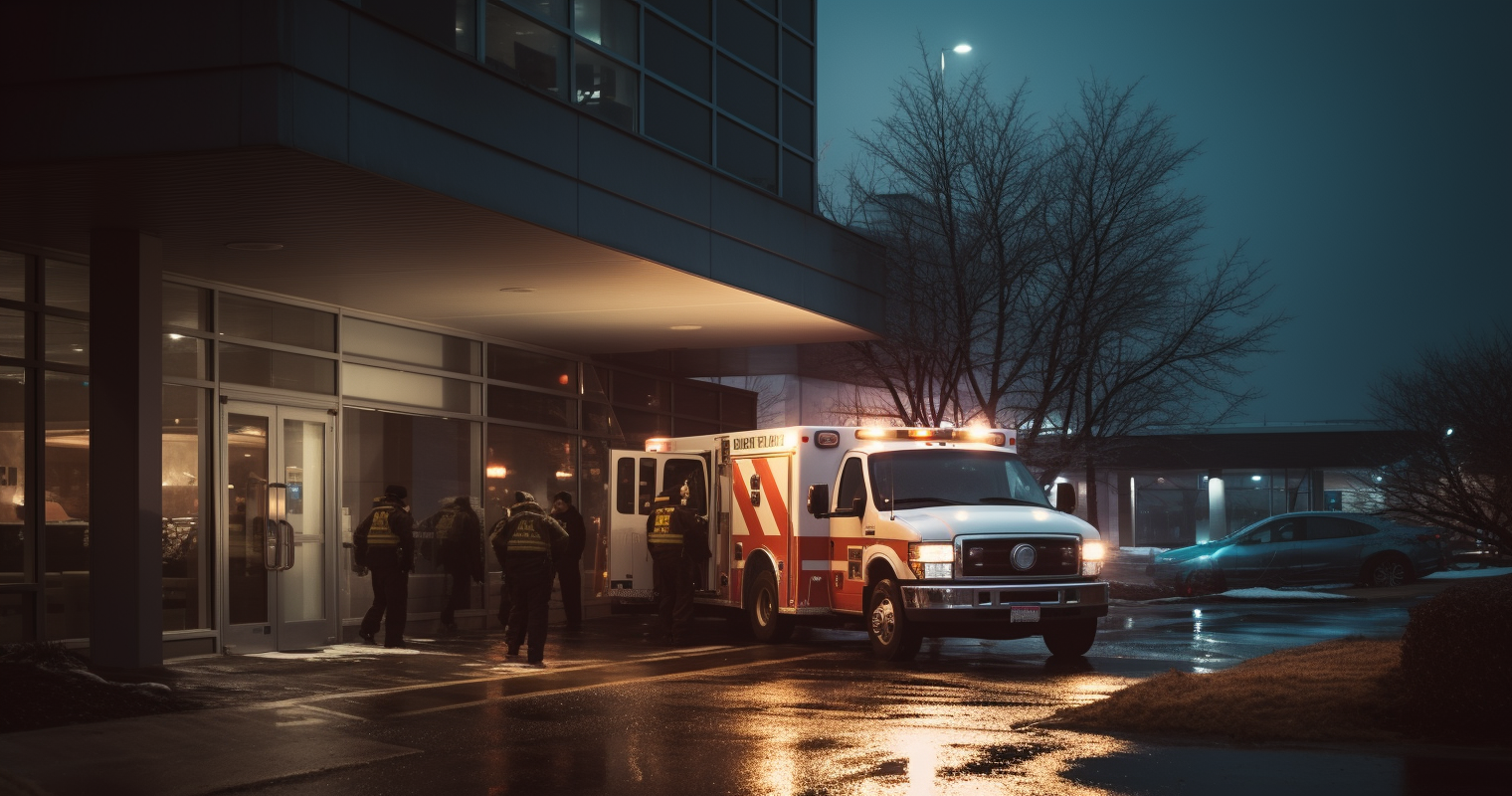
Denmark uses a single emergency number — 112 — for all life-threatening situations, including those requiring police, fire, or ambulance response. Dialling 112 costs nothing. Residents who are formally registered in the country receive emergency medical care at no direct cost under the public health system; EU/EEA visitors holding a valid EHIC are similarly entitled. Non-EU tourists are advised to hold travel insurance, as they may be billed for non-emergency medical treatment.
| Item | Details |
|---|---|
| Single emergency number | 112 (police, fire, ambulance) — free to call, as of 2025 |
| Non-emergency police number | 114 |
| Capital Region urgent medical line | 1813 (non-life-threatening; available 24/7) |
| Emergency treatment for residents | Free at the point of use for registered residents with a CPR number / yellow health card |
| EU/EEA visitors (EHIC holders) | Entitled to necessary treatment free of charge on presentation of valid EHIC, as of 2025 |
| Non-EU tourists | May be charged for treatment; travel insurance strongly recommended |
What is the single emergency number in Denmark, and does it cover police, fire, and ambulance?
In Denmark, 112 is the number to call whenever you require urgent assistance from the emergency services. It is a unified number that connects callers to all three principal emergency services. Whether you need the police, the fire brigade, or an ambulance, 112 is the correct number to dial, and operators can assist in both Danish and English.
The number 112 is the pan-European emergency number and functions identically across all EU member states. Calls are completely free of charge. Its operation in Denmark is analogous to the 999 system in the United Kingdom or equivalent numbers used throughout continental Europe — one number, one point of contact, covering all three services simultaneously.
A separate, non-emergency line exists for the police. When a police matter is not urgent, dial (+45) 114. All calls to this number are recorded. Further details about the police service number 114 are available online. This line is appropriate for reporting minor offences, asking for information, or raising non-urgent concerns — situations that do not require an immediate emergency response.
If you are calling from a foreign mobile phone while in Denmark, or from abroad, include the Danish country code: dial +45 112. When calling from within Denmark on a local SIM card, simply dialling 112 is sufficient to connect you.
How do you call for emergency medical assistance in Denmark, and what should you expect?
For acute, life-threatening illness or serious injury, call 112 without delay. This is the correct number to use when you require an ambulance, when an accident has occurred, or when there is a fire. A qualified healthcare professional will assess the information you provide and determine which response is required.
Upon dialling 112, you will first hear a recorded greeting in Danish indicating that you have reached the emergency services, after which a live operator will take your call. Operators are available in both Danish and English, so language need not be a barrier — do not hesitate to call even if your Danish is limited or non-existent.
When speaking to the emergency operator, take care to speak at a measured pace and pronounce clearly. Give your telephone number and the precise address of the incident. If you are unsure of the exact address, describe nearby landmarks, a street name, or a postcode. Ambulance services dispatched via 112 are provided free of charge in genuine emergency situations.
For urgent but not immediately life-threatening medical issues in the Copenhagen area, a dedicated medical helpline operates around the clock. The number 1813 is the emergency medical guidance line for the Capital Region of Denmark, staffed by physicians and nurses who can direct you to the most appropriate care when your own GP is unavailable. You should call 1813 before attending an emergency room for non-critical concerns, as the staff can advise whether hospital attendance is truly necessary, whether a doctor visit will suffice, or whether the situation can be managed at home. English-speaking operators are available and can also advise on prescriptions. Outside the Capital Region, out-of-hours contact numbers differ — consult the regional health authority website for your area to find the relevant number.
What should you do in a mental health crisis in Denmark?
If a mental health emergency carries an immediate risk to life — such as a serious suicide attempt or a psychiatric episode involving dangerous behaviour — call 112 straight away. An ambulance will be dispatched and, where the situation demands it, police will also respond. Do not delay calling out of uncertainty about whether the situation meets the threshold for a 112 call.
All residents of Denmark have equal and free access to healthcare, mental health services included, delivered through the Danish National Health Service and organised across five administrative regions. Anyone requiring urgent psychiatric assessment can present at a public hospital’s emergency department (Akutmodtagelse), where staff can arrange mental health evaluation and, if necessary, refer the patient for inpatient psychiatric care.
For mental health difficulties that fall short of an immediate threat to life, the out-of-hours medical service (lægevagt) provides an alternative route. This service operates during evenings and weekends, covering the periods when your regular GP surgery is closed. If a health concern — including a mental health concern — arises outside normal GP hours and cannot wait until your own doctor is available, the out-of-hours service can be contacted. In cases of particular urgency, a doctor can attend your home in person.
Residents of the Capital Region can also contact 1813 outside GP hours for mental health triage support. A number of NGOs in Denmark operate dedicated mental health helplines offering additional assistance; the UNHCR Denmark helpline directory lists relevant contacts for individuals experiencing psychological distress. Always verify current helpline numbers through official channels, as these can change over time. If you feel you need support but are not in immediate physical danger, contacting your GP at the earliest available opportunity is strongly advisable.
Where can you go for emergency medical treatment in Denmark?
Denmark maintains a well-established network of public hospitals (sygehuse) providing everything from emergency care to planned procedures. Public hospitals are the primary destination for emergencies and operate dedicated acute care departments known as Akutmodtagelse (acute reception) or Akutklinik (acute clinic), the distinction depending on the level of service offered at a given facility.
When facing a serious acute situation, call 112 immediately. For other emergencies that have occurred within the preceding 24 hours, you may go directly to the Accident and Emergency department (skadestue or Akutmodtagelse/Akutklinik) of a public hospital. However, in some regions it is required to telephone ahead before attending. Whether you need to call the A&E department itself, your family doctor, or another contact varies from one region to another.
The Life in Denmark website lists the addresses of all accident and emergency departments across the country and specifies where a prior call is required before attending. This is the most dependable resource for identifying the nearest appropriate facility for your location.
Denmark’s private healthcare sector is comparatively modest, given the strength of the public system. Private hospitals and clinics exist and may offer faster access for non-emergency procedures, but for genuine life-threatening emergencies, public hospitals are the right place to go. Using private health services without appropriate expat health insurance can result in significant costs.
If a dental accident occurs, emergency dental clinics operate outside standard opening hours and treat both adults and children. It should be noted that emergency dental consultations and treatments are considerably more expensive than dental care received during ordinary practice hours.
Is emergency medical treatment free in Denmark, or is there a charge?
Under the Danish Health Act, all individuals in Denmark — regardless of residency status — are entitled to free emergency hospital care in situations involving an accident, childbirth, acute illness, or a sudden deterioration of a chronic condition. This represents an important baseline guarantee: no one will be refused emergency treatment because of their status or lack of insurance.
That said, the practical position varies considerably depending on your circumstances. The Danish healthcare system operates on a universal coverage model, publicly funded through general taxation, which means that medical services are free at the point of use for all legal residents. Registered residents holding a CPR number and the yellow health card (Sundhedskort) pay nothing for emergency treatment, hospital admission, or GP consultations.
For those visiting Denmark without resident status, the situation is more nuanced. You may be charged for acute and ongoing hospital treatment. However, you will not face charges if, for example, you are covered by public health insurance in another EU country, Norway, Iceland, Liechtenstein, or Switzerland and can present a valid European Health Insurance Card (EHIC). Those who are resident and insured in another Nordic country are similarly exempt.
Tourists do not qualify for free treatment under the Danish National Health Service and must be prepared to cover the costs of any services received. Non-EU visitors without insurance or an entitling document will generally be expected to pay for care. The Danish public health system does not cover transportation back to your home country in the event of illness — an important consideration when deciding whether to purchase travel insurance.
As an expat newly arrived in Denmark, you become eligible to apply for a CPR number — and subsequently the yellow health card — only after residing in the country for more than three months. During those initial three months, any medical treatment you receive will need to be paid for directly, unless you are an EU/EEA citizen covered by an EHIC or otherwise entitled under a bilateral arrangement.
Do expats need health or travel insurance, and what happens without it?
Once you have registered as a resident, obtained a CPR number, and received your yellow health card, you are fully covered under Denmark’s public health system and private insurance is not a requirement for accessing emergency care. That said, many expats living in Denmark who are already covered by the public system choose to take out supplementary private insurance for benefits such as access to specialist doctors of their choice, shorter waiting periods, and private hospital rooms with enhanced facilities.
During the first three months before CPR registration becomes possible, and for short-term visitors from outside the EU/EEA, carrying travel or international health insurance is strongly recommended. Without it, hospital treatment, specialist consultations, and medical repatriation can all generate substantial costs.
No visitor to Denmark will be turned away from emergency treatment; however, you will be liable for the bill after the fact if you are not covered by insurance or an entitling document. Hospitals will provide care first and handle billing subsequently — upfront payment is not typically demanded at the point of emergency treatment. Post-treatment invoices, however, can be considerable, particularly for extended stays.
If you have paid the full cost of treatment out of pocket, you may be able to seek reimbursement from the public health insurance by contacting the municipality (kommune) you were visiting at the time. This route is available if you lacked the necessary documentation to establish your entitlement at the time of treatment. Retain all receipts and records of any care received, as these will be required to pursue a reimbursement claim.
Are there bilateral health agreements entitling some visitors to reduced-cost or free emergency treatment?
Yes. Denmark is party to several reciprocal or multilateral arrangements that give certain foreign nationals access to publicly funded treatment. The most significant is the EU/EEA framework. If you are a citizen of an EU or EEA country, or a Swiss national, and you are staying in Denmark for fewer than three months while covered by statutory health insurance in your home country, you can use your European Health Insurance Card (EHIC) to access any medically necessary healthcare during your stay.
The EHIC functions in Denmark in the same way as it does across other EU member states. It is not a substitute for travel insurance and does not cover repatriation or elective care, but it does entitle the holder to emergency and necessary treatment through the public system without direct charge. Note that EHIC coverage applies only within the public healthcare system or with doctors who hold a contract with the Danish public health insurance scheme.
Denmark also participates in the Nordic Convention on Social Security, which extends additional protections beyond the EHIC framework to residents of the other Nordic countries. If you are resident and insured in another Nordic country, you are entitled to necessary treatment within the Danish public healthcare system during a temporary stay in Denmark. Furthermore, the Nordic countries have concluded a special agreement that, under certain conditions, covers additional costs for the journey home to your country of residence — a benefit not available to most other foreign visitors under the standard EHIC alone. The terms of this arrangement are set out in the Nordic Convention on Social Security.
Regarding UK nationals specifically: following Brexit, treatment is provided free of charge on presentation of a valid EHIC, a British-issued health insurance card, or a Provisional Replacement Certificate. UK nationals should verify the current status of the UK Global Health Insurance Card (GHIC) and confirm coverage details with the UK government prior to travel, as arrangements in this area may continue to evolve.
Non-EU nationals can access EHIC-based entitlements in Denmark only in specific circumstances: if they are co-insured family members of an insured EU national, residents of Finland, Iceland, Norway, or Sweden, stateless persons under the 1954 UN Convention, or refugees under the 1951 UN Convention. Citizens of countries outside these categories — such as those from North America, Asia, Africa, or South America — are generally not covered by any bilateral arrangement and should secure private travel or health insurance before travelling.
How does Denmark’s emergency healthcare system compare to systems expats may know?
Denmark guarantees universal healthcare coverage to all residents. Funding comes primarily from general taxation, ensuring that medical services carry no charge at the point of use. In this fundamental respect, Denmark’s model closely resembles fully public systems such as the NHS in the United Kingdom or those operating across the other Nordic countries — universal coverage, no user fees, and public funding rather than insurance premiums or direct patient charges.
This stands in marked contrast to systems where individuals must purchase and present private insurance before receiving treatment — a situation common in the United States, and in countries where out-of-pocket payment or employer-sponsored insurance is the norm. Residents in Denmark are never billed for emergency hospital care, GP visits, or specialist consultations obtained through a referral. Hospital stays, surgeries, and specialist appointments are all covered by the public system without co-payments.
However, Denmark’s system has one important structural distinction from more centralised models: responsibility for healthcare delivery is shared between regions and municipalities. The regions are responsible for hospitals, general practitioners, and specialist doctors, while municipalities handle services such as child dental care and subsidies for physiotherapy. Because of this division, some services and procedures differ depending on where in Denmark you live — which explains why out-of-hours medical contact numbers and A&E attendance procedures vary between regions.
The GP serves as the system’s gatekeeper, managing approximately 90% of all patient contacts and acting as the primary point of access to healthcare for most residents. A GP referral is required for most office-based specialist appointments and all planned hospital treatment. Emergency care, by contrast, can be accessed directly at hospital emergency departments without any referral. This gatekeeper model is broadly comparable to how the NHS in the UK operates, and differs from countries like France or Germany, where patients enjoy considerably more freedom to self-refer to specialists.
What emergency services exist beyond medical — how do police and fire services work?
For any life-threatening emergency in Denmark — whether it involves the police, ambulance, or fire brigade — 112 is the number to call. Dialling (+45) 112 connects you to a central dispatcher who will alert the appropriate service or services. There is no separate dedicated fire brigade number; 112 handles all three services through a unified dispatch system.
By international standards, Denmark is among the safest countries in the world, with low crime rates and a well-regarded national law enforcement service. Visitors generally have little cause for concern regarding crime or harassment. The Danish police (Politi) are widely considered professional and approachable.
Denmark is divided into 15 police districts in total. Your physical location determines which police district has jurisdiction, but crimes must always be reported to the district in which the offence occurred. If you dial either 112 or 114, your call will automatically be directed to the appropriate police district without any need for you to identify it yourself.
Unlike some countries where fire and ambulance services are governed by entirely separate bodies, fire and rescue services in Denmark are administered at municipal level. The 32 municipal fire and rescue services, each owned by one of Denmark’s 98 municipalities, are required to maintain plans based on their local risk profile. National coordination is provided by the Danish Emergency Management Agency (DEMA / Beredskabsstyrelsen). For expats, the essential practical point is straightforward: 112 is always the correct number to dial, and the operator will route your call to the relevant service.
When dealing with Danish police, officers are generally expected to be composed and professional and will typically be able to communicate in English. If you are involved in a road traffic accident, you are legally required to stop and render assistance where it is safe to do so, and to report the incident to police if there are any injuries. For non-urgent police matters, attending a local police station in person or calling 114 are both appropriate options.
Are there country-specific emergency risks in Denmark, and what alert systems exist?
Denmark is a low-risk country in terms of both natural disasters and civil unrest, but it is not entirely without hazards. The most relevant risks involve severe weather — storms, heavy rainfall, flooding, and coastal storm surges — which occur most frequently during autumn and winter. The Danish Act on Certain Natural Disasters has been invoked in response to storm surges, including during Storm Pia in December 2023. Low-lying and coastal areas are particularly susceptible to flooding during extreme weather events.
Crisis management thinking in Denmark has evolved substantially in recent years, shaped by a changing geopolitical landscape, natural disasters and flooding, and increasing cybersecurity threats. The heightened geopolitical situation has prompted a sharper focus on defence and societal preparedness. In August 2024, the Danish Ministry for Resilience and Preparedness was established with responsibility, alongside relevant sectorial authorities, for preventing, withstanding, and managing major accidents, crises, disasters, and other incidents that threaten core societal functions.
In 2024, the Danish Emergency Management Agency published a booklet entitled “Be prepared for a crisis,” setting out official recommendations for how people should prepare. According to the booklet, everyone in Denmark should be capable of managing independently for three days in the event of a crisis, and should maintain reserves of drinking water, food, and any necessary medicines for that period. This guidance applies equally to expats living in Denmark — keeping a basic emergency supply kit at home is a straightforward and sensible precaution.
Denmark experiences no meaningful seismic activity, tropical storms, or endemic tropical diseases of the kind that affect many other popular expat destinations. The World Health Organization recommends only standard vaccinations for travellers to Denmark. Crime levels are low, and while terrorism is not entirely absent as a risk, it is not considered to be at an elevated level compared to other Western European countries. Always consult current travel advisories from your home country’s foreign ministry before departing.
Official public alerts in Denmark are issued through the national emergency alert system. The Danish Emergency Management Agency (Beredskabsstyrelsen) website is the authoritative source for civil protection guidance. During a major emergency, alerts may be broadcast via radio, television, and directly to mobile phones.
What should expats do to prepare for emergencies before they arise?
The most valuable thing an expat can do in relation to emergencies is to prepare before one occurs. Taking the following steps in advance will help ensure that you can obtain assistance swiftly and effectively when it matters most:
- Register with your home country’s embassy or consulate in Denmark. Many countries operate voluntary registration programmes — the US runs the Smart Traveler Enrollment Program (STEP), and numerous other governments offer equivalent services. Being registered allows your government to reach you during a crisis, provide consular support, and locate you if needed. Check your own government’s foreign ministry website for the relevant registration service.
- Register with the Danish Civil Registration System (Folkeregisteret) as soon as you are eligible. Entitlement to the universal healthcare system is directly linked to legal residency status and the issue of a CPR number. Non-citizens intending to stay in Denmark for more than three consecutive months must register their residence and obtain a CPR number. This number is the essential prerequisite for access to the public health insurance system. Upon registration, the resident is issued the yellow health card (Sundhedskort).
- Register with a GP. Once you have a CPR number, you will be automatically enrolled in the public health insurance system and should register with a specific GP. Your registered GP is your first point of contact for health concerns and the gateway to referrals for specialist and emergency services.
- Save key emergency numbers. Store 112 (emergency), 114 (non-emergency police), 1813 (Capital Region urgent medical advice), and the out-of-hours GP number (lægevagt) for your region in your phone, and write them down somewhere accessible at home.
- Arrange appropriate insurance coverage. If you are in the first three months before CPR registration, or if you are visiting Denmark, ensure you have valid travel or international health insurance that includes emergency care and medical repatriation.
- Find out your regional emergency contact procedures. In some regions, you are required to call ahead before attending an accident and emergency department. The correct contact — whether the A&E itself, your GP, or another number — varies by region. Establish the procedure for your specific region before you are in a situation where you need it.
- Keep a three-day emergency supply at home. In line with the official guidance issued by Danish authorities, maintain a stock of water, food, and essential medicines sufficient to last at least three days.
- Stay informed during periods of elevated risk. Subscribe to updates from the Danish Emergency Management Agency and monitor official sources whenever severe weather is forecast or the risk level is raised.
Where can expats get official and up-to-date emergency information for Denmark?
For reliable emergency preparedness information, always turn to official government and institutional sources rather than community forums or third-party websites. The most important authoritative sources for expats in Denmark are listed below:
- Life in Denmark (lifeindenmark.borger.dk) — the Danish government’s official portal for residents and newcomers, covering emergency numbers, healthcare entitlements, and regional A&E contacts. This should be your first point of reference for emergency information.
- Danish Police (politi.dk) — official guidance on the 112 and 114 numbers, how to report crimes, and police district contact information.
- Danish Patient Safety Authority (stps.dk) — information on healthcare rights in Denmark, how to use an EHIC, and how to access treatment.
- Danish Emergency Management Agency / Beredskabsstyrelsen (brs.dk) — DEMA serves as Denmark’s central contact point for international requests for emergency assistance and for responses to natural hazards or human-caused disasters. Their website offers civil protection guidance and crisis preparedness resources.
- Your home country’s embassy in Copenhagen — for consular emergencies, assistance if you are arrested, or support if you are involved in a serious incident. Save your embassy’s emergency contact number before you need it.
- Nordic Cooperation — Info Norden — for residents of Nordic countries who need information about their healthcare entitlements under the Nordic Convention when staying in Denmark.
- European Commission EHIC guidance for Denmark — authoritative information on how the EHIC operates in Denmark, including the scope of coverage and contact details for the Danish Patient Safety Authority.
Always verify contact numbers and procedures directly from official sources, as phone numbers and regional processes are subject to change. Where this article cites specific numbers or costs, these are accurate as of 2025 according to official sources, but we recommend checking the relevant official website for the most current details before relying on them.
Frequently asked questions
What is the emergency number in Denmark?
Denmark’s emergency number is 112. It is a single unified number covering police, fire, and ambulance services and is free to call from any phone, including mobile phones. For non-emergency police matters, use 114 instead. As of 2025, both numbers are operational around the clock.
Can I call 112 in English in Denmark?
Yes. Operators answering 112 can assist callers in English as well as Danish. Speak at a steady pace and as clearly as possible, and give your phone number and location at the earliest opportunity. In the Capital Region, the 1813 medical helpline also has English-speaking staff available at all hours.
Is ambulance transport free in Denmark?
Yes, in genuine emergencies. As of 2025, emergency ambulance transport dispatched via 112 is provided without charge in Denmark, applying to both residents and, in emergency circumstances, visitors. Non-emergency patient transport may carry a cost — confirm the position with the relevant healthcare provider in advance where possible.
Do I need to show my yellow health card (Sundhedskort) in an emergency?
In a genuine emergency, you will not be refused treatment because you do not have your card — care is given first. That said, you should carry your yellow health card with you whenever practicable, as presenting it confirms your entitlement to free public healthcare. If you are an EU/EEA visitor, carry your valid EHIC for the same purpose.
What number do I call for urgent medical help that isn’t life-threatening?
In the Capital Region — which includes Copenhagen and the surrounding area — call 1813. Physicians and nurses are available 24/7 and will advise you on whether you need to attend an emergency department, see a doctor, or manage the situation at home. Outside the Capital Region, the out-of-hours contact number differs by region — consult the Life in Denmark website (lifeindenmark.borger.dk) to find the correct number for your area.
As a non-EU visitor, will I receive emergency treatment even if I don’t have insurance?
Yes. Danish law guarantees that no one is denied emergency hospital care in situations involving an accident, acute illness, or childbirth, irrespective of residency or insurance status. However, non-EU visitors who do not hold insurance or an entitling document such as an EHIC may receive a significant bill following treatment. Purchasing travel insurance before travelling to Denmark is strongly advised.
What natural disaster risks should expats be aware of in Denmark?
Denmark’s principal environmental hazards are weather-related — severe storms, heavy rain, flooding, and coastal storm surges, most commonly occurring in autumn and winter. Denmark is not affected by significant seismic activity, volcanic events, or tropical storms. The Danish Emergency Management Agency (Beredskabsstyrelsen) officially advises all residents to keep a three-day supply of water, food, and essential medicines at home as a routine precaution.
How do I register with the Danish Civil Registration System to access free healthcare?
Non-EU nationals intending to stay in Denmark for more than three months must first obtain a Danish residence permit and then register with the Civil Registration System (Folkeregisteret) at their local citizens’ service centre (Borgerservice). EU/EEA nationals staying longer than three months must also register their residence. Following registration, you will be issued a CPR number and become eligible for the yellow health card (Sundhedskort), which grants full access to free public healthcare. Always consult the official New to Denmark website (nyidanmark.dk) for current registration procedures, as requirements may be updated over time.