
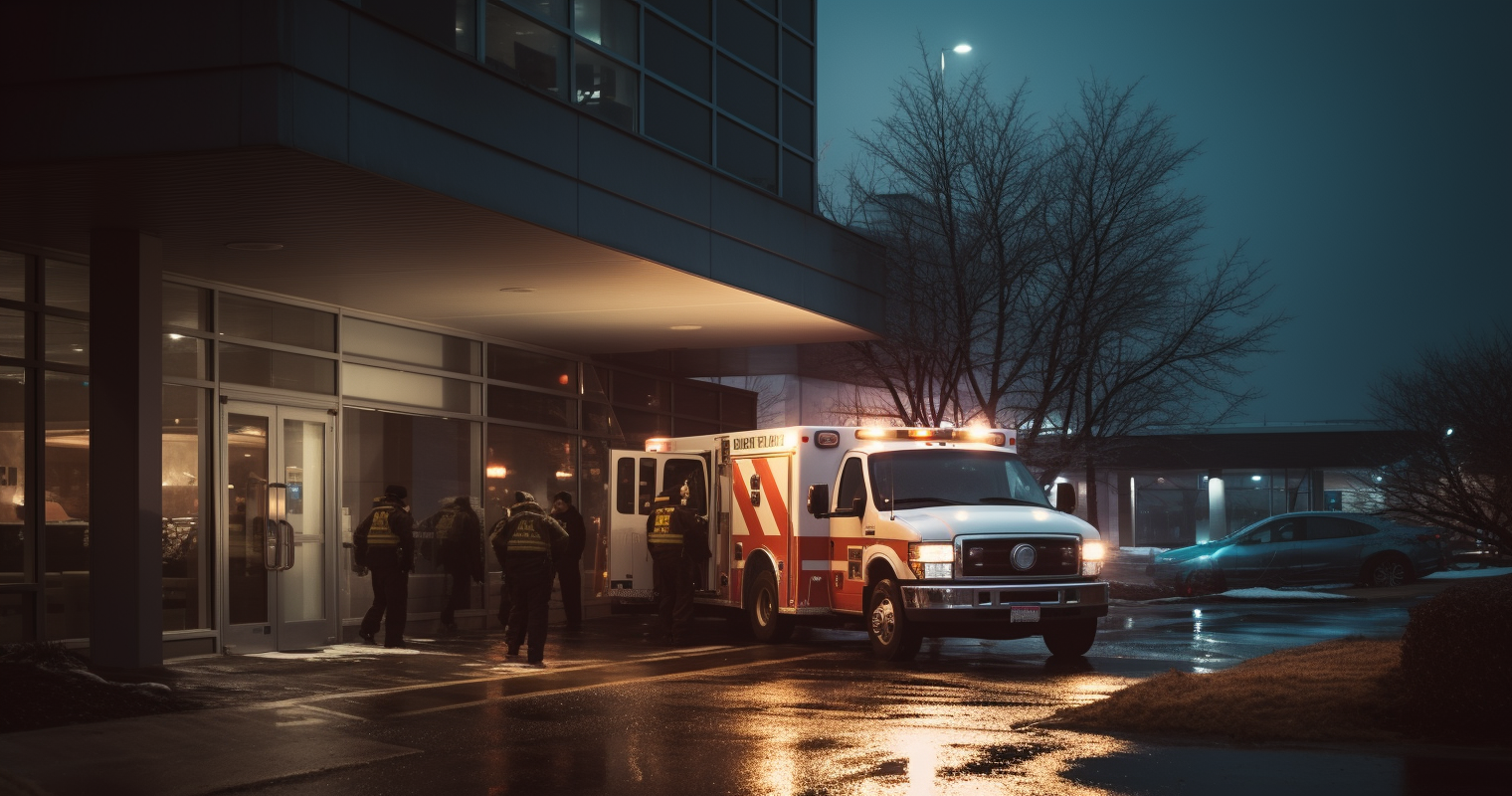
The Dominican Republic operates a unified emergency number — 911 — that covers police, fire, and medical services simultaneously. Calls to this number are free of charge and answered around the clock. Public hospitals can deliver basic emergency care at minimal or no cost, but private facilities, which generally offer superior treatment, typically demand payment upfront or proof of insurance. Expats are therefore strongly encouraged to arrange comprehensive health coverage before setting foot in the country.
| Item | Details |
|---|---|
| Single emergency number | 911 (police, fire, ambulance) — as of 2025 |
| 911 response time (official target) | 1–3 minutes after call is made (in covered areas) — as of 2025 |
| 911 coverage | Santo Domingo, Santiago, Puerto Plata, La Romana, Punta Cana and surrounding areas; rural coverage limited — as of 2025 |
| Public hospital emergency treatment | Generally free for basic care; medications and some procedures may be charged separately |
| Private hospital emergency treatment | Upfront payment or insurance typically required; costs can be significant |
| Medical evacuation cost | Can exceed US$50,000–$150,000+ for international flights — as of 2024 |
| Disaster alert authority | Centro de Operaciones de Emergencias (COE) — coe.gob.do |
What is the single emergency number in the Dominican Republic, and does it cover police, fire, and ambulance?
To reach any emergency service in the Dominican Republic, dial 911 — the national emergency line that has been in operation since May 2014. This mirrors the 911 system used across the United States and Canada, making it immediately recognisable to many arrivals from those countries, and far simpler than certain European frameworks where police, fire, and ambulance each carry a separate number.
Dialling 911 in the Dominican Republic connects callers to the National System of Attention to Emergencies and Security, a single coordinating body that dispatches the relevant first responders. This unified platform was introduced to replace a fragmented arrangement of dozens of independent service numbers that had previously operated in parallel.
Dedicated call centres were established in Santo Domingo in 2014 and in Santiago in 2017, each responsible for coordinating police, fire, and emergency medical services across their respective metropolitan regions. In municipalities not yet integrated into this system, a 911 call will be redirected to the appropriate local department — whether that is the local fire brigade, police station, or a hospital providing ambulance cover. Coverage expansion has been ongoing, so it is worth confirming what applies in your specific area.
The 911 service is available to both residents and visitors wherever system coverage exists. Calls are free of charge, the stated response target is one to three minutes from the moment of the call, and the line operates every hour of every day.
How do you call for emergency medical assistance in the Dominican Republic, and what should you expect when you call?
Dial 911 for any medical emergency. Once connected, give a brief, clear account of what has happened, how many people are involved, and your precise location. Let the dispatcher know the type of incident (medical, fire, crime), whether anyone is injured, the presence of any weapons or flames, and any immediate hazards in the vicinity. Provide your phone number and remain on the line unless told otherwise.
If you do not speak Spanish, say “hablo inglés” as soon as the call connects; in larger centres, dispatchers will attempt to transfer you to a bilingual staff member. Activating location sharing or GPS on your device before calling can also be valuable, as many dispatch systems can draw on mobile location data to pinpoint you more quickly.
For medical calls, it is worth knowing that ambulances in some regions are operated by private providers coordinated through 911 rather than purely public vehicles. Outside major urban centres, ambulance availability can be inconsistent. Beyond Santo Domingo, Santiago, San Cristóbal, La Haina, and parts of Puerto Plata, emergency vehicle response becomes increasingly uncertain.
A private ambulance provider, ProMed, covers Santo Domingo, Santiago, Puerto Plata, and La Romana (telephone: 809-412-5555, as of available information); ProMed expects full payment at the time of transport. If you find yourself in a rural location where ambulance cover is unreliable, the most practical course of action may be to arrange your own transport to the nearest hospital or medical centre. Always confirm current contact details for private ambulance services directly with those providers.
What should you do in a mental health crisis in the Dominican Republic?
At present, the Dominican Republic does not have a widely publicised, standalone national mental health emergency hotline comparable to the 116 123 Samaritans line in Ireland or the 988 Suicide & Crisis Lifeline in the United States. If you believe such a service has been established, confirm its details directly with the Ministry of Public Health (msp.gob.do), as mental health emergency provision in the country continues to develop. Always verify current services through official channels.
During a mental health crisis, dialling 911 remains the most dependable first step, as dispatchers can route your call to appropriate services or send help directly. The larger private hospitals in Santo Domingo and Santiago are equipped to manage serious psychiatric presentations and have psychiatric services on-site. If there is immediate risk of harm to yourself or another person, attending the nearest hospital emergency department without delay is the recommended course of action.
The VIDA Line (*212 or 809-200-7212) provides 24/7 support to survivors of gender-based violence, with a stated response time of one to three minutes (as of 2024). While it is not a general mental health crisis resource, it is a critical contact for anyone in a dangerous domestic situation. Expats planning a longer-term stay are advised to research available mental health services ahead of time and keep contact details for private psychiatric clinics readily accessible.
Where can you go for emergency medical treatment in the Dominican Republic?
Healthcare in the Dominican Republic is structured in tiers. Public hospitals — referred to as Unidades de Atención Primaria, or UNAPs — serve local populations and provide foundational medical services; while consultations are typically free or very low-cost, patients are usually expected to purchase medications and certain other supplies themselves.
Private hospitals deliver a broader range of services and emergency care, though they may not always have access to the specialists or equipment needed for complex critical cases. Modern private medical facilities, concentrated mainly in urban centres such as Santo Domingo and Santiago, offer advanced diagnostics, specialised treatment, and high-quality care — but at considerable cost, and many are primarily oriented towards patients holding international insurance or private cover.
A well-known example is the Hospital General de la Plaza de la Salud (HGPS) in Santo Domingo, considered among the finest hospitals in the country and particularly noted for organ transplantation and major surgical procedures. In Santiago, the Hospital Metropolitano de Santiago (HOMS) provides emergency care around the clock and can be contacted at 829-947-2222 for urgent needs (as of available information — verify current details directly).
High-quality private facilities are also found in major tourist zones; the Zona Colonial in Santo Domingo, Puerto Plata, Punta Cana, and Sosúa all have private clinics that regularly treat expats and international visitors. Urgent care centres in larger towns accept walk-in patients for non-life-threatening conditions and can address minor injuries and illnesses without lengthy waits. The Ministry of Health maintains an online directory of health facilities across the country — consult the Ministry of Public Health website for the most up-to-date listings.
Is emergency medical treatment free in the Dominican Republic, and does this differ for residents versus tourists?
The Dominican Republic’s healthcare system operates on two levels: a government-funded public tier that is nominally available to all but falls well short of first-world standards in terms of facilities, staffing, and medicines; and a private sector providing considerably higher-quality care at direct cost to the patient. Public facilities treat everyone in principle, regardless of nationality or residency, but the practical reality can differ sharply from fully funded public health systems found in parts of Europe.
Every major town has a public hospital, and emergency treatment there is generally provided without charge — however, items such as medications, X-rays, and stitches are often billed separately, though some hospitals do not charge for the latter two. Patients admitted to public hospitals are also typically expected to supply their own personal items such as toiletries, bed linen, pillows, and food — a significant practical difference from many other countries where these are standard provisions.
Private medical facilities in the Dominican Republic generally require upfront payment and may place a hold on a patient’s credit card upon admission. This applies equally to visitors and residents using private care. The meaningful distinction, then, is not between nationals and foreigners, but between which type of facility is being used: public hospitals provide nominally free basic treatment to everyone, while private hospitals charge all patients and expect insurance documentation or advance payment regardless of residency status.
Do expats need travel or health insurance to access emergency care, and what happens without insurance?
Digital nomads, expats, and anyone planning a sustained period of residence in the Dominican Republic should arrange an international health insurance policy that includes overseas medical evacuation cover. This is not merely a sensible precaution — without it, the financial exposure from private emergency care and especially medical evacuation can be ruinous.
Although some insurers may reimburse “customary and reasonable” overseas hospital costs, the majority do not include medical evacuation as standard, and evacuation expenses can reach US$10,000 or more depending on the circumstances. For international medical evacuation flights, total costs can exceed US$150,000; transport to the United States in particular may cost upwards of US$50,000 (as of 2024).
The main private hospitals have direct billing arrangements with major insurance companies, enabling cashless settlement so that patients can receive treatment without paying out of pocket and then seeking reimbursement. Without such coverage, private facilities will typically require cash or card payment upfront, during, or immediately after treatment.
Local insurance options are available through providers including Humano, Mapfre, and Universal, which cover most private hospitals and clinics, with monthly premiums typically ranging from approximately US$40 to US$100 (as of 2025) — though current rates should be confirmed directly with each provider. Some companies will accept foreign applicants without residency, but the range of options is narrower; those who are not yet residents may need to depend on international insurance or self-fund until they qualify for local cover.
Are there bilateral health agreements between the Dominican Republic and other countries?
The Dominican Republic is not party to any widely recognised multilateral reciprocal healthcare scheme — such as the European Health Insurance Card system that operates between EU member states, or certain Commonwealth bilateral arrangements — that would entitle foreign nationals to free or subsidised emergency treatment solely on the basis of their citizenship.
The country’s healthcare financing model is built on three pillars: a contributive scheme funded by workers and employers, a subsidised scheme funded by the state for those in poverty, with disabilities, or who are unemployed, and a hybrid tier combining elements of both. In principle, the subsidised public tier provides emergency care to everyone physically present in the country regardless of nationality, but this does not amount to a formal bilateral treaty with any particular nation.
No verified bilateral health treaties exist between the Dominican Republic and specific foreign countries that would entitle their nationals to free or reduced-cost private treatment. The United States government, for example, does not cover citizens’ medical expenses abroad. Nationals of all countries should proceed on the assumption that they are personally liable for costs at private facilities and should carry suitable insurance. Before travelling or relocating, it is worth confirming the current position with your home country’s embassy in Santo Domingo.
How does the emergency healthcare system compare to systems expats may be familiar with?
The Dominican Republic’s healthcare system is a mixed public-private model, but one in which the public component — unlike a comprehensively funded system such as the National Health Service in the United Kingdom — delivers only basic care under considerable resource constraints, with the private sector shouldering a far greater share of quality emergency treatment.
The standard of care varies substantially between public and private institutions, and between different parts of the country. Private hospitals in major cities can match international expectations, with modern equipment and English-speaking staff, whereas public hospitals are frequently under-resourced and understaffed. This stands in contrast to systems where emergency care is delivered to a consistent national standard across all facilities.
Private care in the Dominican Republic is notably more affordable than in North America — even for self-paying patients, basic consultations and diagnostic tests are often less expensive than comparable co-payments in the United States. However, the requirement for upfront payment at private facilities is a defining practical difference from systems where emergency treatment is delivered first and financial arrangements are handled afterwards, or not at all. In this regard the system resembles those found across much of Latin America, where insurance or personal financial resources are the principal gateway to quality care.
Waiting times are one of the most commonly cited reasons why expats favour the private system: public waiting lists for specialist appointments can stretch to weeks or months, while private care is often available the same day or within 48 hours.
What emergency services exist beyond medical — how do police and fire services work?
The 911 system in the Dominican Republic handles police, fire, civil defence, and general emergency reporting in a single unified channel. All of these services are accessible through the same number — a design that parallels the approach in the United States, Canada, and much of the Americas, and differs from some European models where each emergency service carries its own dedicated number.
The national police (Policía Nacional) and the fire service (Cuerpo de Bomberos) are both dispatched through the 911 system in areas where it is operational. Incidents involving alleged police misconduct — such as demands for money or harassment — can be reported to the Internal Affairs Department of the National Police at 809-688-1777 (as of available information; verify current details before relying on this number).
Visitors and long-term residents may also find the CESTUR tourist police useful; a free CESTUR app is available on Google Play and can be helpful in tourist zones. CESTUR officers are trained specifically to assist foreign visitors and are regularly stationed in major tourist areas. Expats should note that carrying identification at all times is important in the Dominican Republic, and that remaining calm and cooperative during any police interaction is strongly advisable.
The Centro de Operaciones de Emergencias (COE), the government’s emergency operations centre, can be reached at 809-472-0909 and is responsible for coordinating civil defence and disaster response. The Dominican Red Cross is contactable at 809-682-4545 (as of available information — verify current details directly).
Are there country-specific emergency risks in the Dominican Republic?
The Dominican Republic sits within the path of Atlantic hurricanes and tropical storms, exposing it to the full range of hazards those weather systems bring; earthquakes are also a recognised risk. The rainy season runs from May to November, coinciding with the Atlantic hurricane season, and expats should factor these patterns into both their housing choices and their insurance arrangements.
The country straddles the boundary between the Caribbean and North American tectonic plates, resulting in a moderate level of seismic risk; historically, roughly one earthquake per year has been recorded. The heavy rainfall associated with hurricanes and tropical storms also creates a meaningful flood risk, particularly in low-lying areas.
In terms of health risks, dengue fever is endemic and outbreaks are reported every year. Malaria remains more confined to rural areas, but dengue becomes especially prevalent during the rainy months, making reliable access to private healthcare facilities particularly important during that period. Using insect repellent, sleeping under nets where necessary, and wearing appropriate clothing are everyday precautions rather than measures reserved only for emergencies.
The Centre for Emergency Operations (COE) is the government body responsible for coordinating disaster prevention, mitigation, and response across the country’s various institutions. The COE publishes information at coe.gob.do and through its mobile app “alertaCOE”, which delivers real-time warnings and hazard notifications to the general public.
What should expats do to prepare for emergencies before they arise?
- Register with your home country’s embassy or consulate. Most countries run a voluntary registration scheme for citizens living abroad. The US Embassy in Santo Domingo, for example, offers the Smart Traveler Enrollment Program (STEP) at step.state.gov. Registration gives you access to security updates and makes it far easier for the embassy to reach you if an emergency develops. Check your own government’s foreign ministry website for the equivalent programme.
- Arrange comprehensive health insurance before you arrive. Your coverage should explicitly include overseas medical evacuation, as evacuation costs alone can be devastating; in the worst cases they can reach or exceed US$150,000 for international flights.
- Store key emergency numbers in your phone. Save 911, the COE (809-472-0909), the Dominican Red Cross (809-682-4545), your nearest private hospital, and your country’s embassy number before you ever need them.
- Download the alertaCOE app. This application from the COE delivers timely alerts and warnings about imminent threats and hazards directly to your device — an essential tool during hurricane season.
- Identify your nearest private hospital in advance. Knowing where to go before an emergency occurs is especially important if you live or stay outside a major city, where 911 ambulance coverage may be limited or unreliable.
- Make specific preparations for hurricane season. Be aware that after a major hurricane, roads may be washed out or blocked by debris, potentially preventing departure from the affected area for 24 to 48 hours or more and cutting access to airports and land routes. Keep a home supply of water, non-perishable food, essential medications, and important documents stored in a waterproof container.
- Familiarise yourself with evacuation routes. Keep in contact with local authorities and, where applicable, your building management to receive up-to-date evacuation guidance during a weather event. Identify the nearest designated evacuation assembly point before one is ever needed.
Where can expats get official and up-to-date emergency information for Dominican Republic?
The sources listed below are the most authoritative for current emergency information in the Dominican Republic. Contact details, service coverage, and procedures can change, so always consult these directly rather than relying on cached or secondary information.
- Centro de Operaciones de Emergencias (COE): coe.gob.do — the government’s official disaster management and emergency coordination centre. Also accessible through the “alertaCOE” mobile application.
- Sistema Nacional de Atención a Emergencias y Seguridad (911): Dial 911 from any phone within the Dominican Republic to reach all emergency services.
- Ministry of Public Health (Ministerio de Salud Pública): msp.gob.do — for health guidance, hospital directories, and public health advisories.
- Oficina Nacional de Meteorología (ONAMET): The National Meteorological Office can be reached at 809-788-1122 (as of available information) and publishes weather alerts at onamet.gob.do.
- US Embassy in the Dominican Republic: do.usembassy.gov — publishes medical guidance, disaster preparedness advice, and security alerts relevant to the country. Nationals of other countries should consult their own embassy websites.
- UNHCR Dominican Republic: help.unhcr.org/dominicanrepublic — offers guidance on emergency contacts and services, with particular relevance to people in vulnerable circumstances.
To keep track of weather conditions, road closures, and flood or storm alerts, monitor the COE at coe.gob.do or through the “alertaCOE” app, and consult the National Hurricane Center (available in English) at nhc.noaa.gov for Atlantic storm tracking.
Frequently asked questions
What is the emergency number in the Dominican Republic?
The single national emergency number is 911, available to both residents and visitors wherever system coverage exists across the Dominican Republic. It handles police, fire, and medical emergencies through one line. Calls are free of charge and the service operates continuously, 24 hours a day.
Will I be treated at a public hospital in the Dominican Republic if I cannot pay?
A public hospital is available in every large town, and emergency treatment is generally provided without a fee — although medications, X-rays, and certain procedures may be charged separately. Public hospitals will not ordinarily turn away a patient facing a genuine emergency, but the quality of care and availability of resources varies considerably from one facility to another. Verify the current policies of individual hospitals, as practices differ.
Do private hospitals in the Dominican Republic require payment upfront?
Private medical facilities in the Dominican Republic typically require payment before or during treatment and may place a hold on a patient’s credit card upon admission. The most effective way to avoid paying out of pocket is to hold travel or expat health insurance that the hospital accepts for direct, cashless settlement.
Is 911 available everywhere in the Dominican Republic?
Dedicated call centres in Santo Domingo and Santiago coordinate emergency services for their metropolitan areas, but outside those cities and certain neighbouring towns, reliable emergency vehicle response becomes increasingly difficult. In rural areas, arranging your own transport to the nearest hospital is often the most practical immediate course of action rather than waiting for an ambulance.
What are the main natural disaster risks in the Dominican Republic?
The Dominican Republic lies within the track of Atlantic hurricanes and tropical storms, and is therefore exposed to the full range of hazards those events produce. It also sits near the boundary between the Caribbean and North American tectonic plates, giving it a moderate earthquake risk. Flooding — particularly in low-lying areas during the May to November rainy season — is an additional significant concern.
How do I stay informed about weather and disaster alerts in the Dominican Republic?
Follow the Dominican Emergency Operations Centre (COE) at coe.gob.do or through their mobile application “alertaCOE” for real-time information on imminent threats and hazards. The National Meteorological Office (ONAMET) at onamet.gob.do provides weather alerts, and the US National Hurricane Center at nhc.noaa.gov offers Atlantic storm tracking in English.
Are there endemic diseases in the Dominican Republic that expats should know about?
Dengue fever is endemic in the Dominican Republic, with outbreaks recorded every year. Malaria is largely confined to rural areas, but dengue becomes especially prevalent during the monsoon months. Expats should maintain mosquito protection measures throughout the year, keep their vaccinations current, and seek medical attention promptly if a fever develops.
Should I register with my country’s embassy when living in the Dominican Republic?
Yes. Most countries provide voluntary registration schemes for their citizens abroad. Signing up — for example, through the US STEP programme at step.state.gov — gives you access to security updates and makes it easier for your embassy to locate and contact you during an emergency. Check your own government’s foreign ministry website for the equivalent service. Registration is free and takes only a few minutes to complete.