
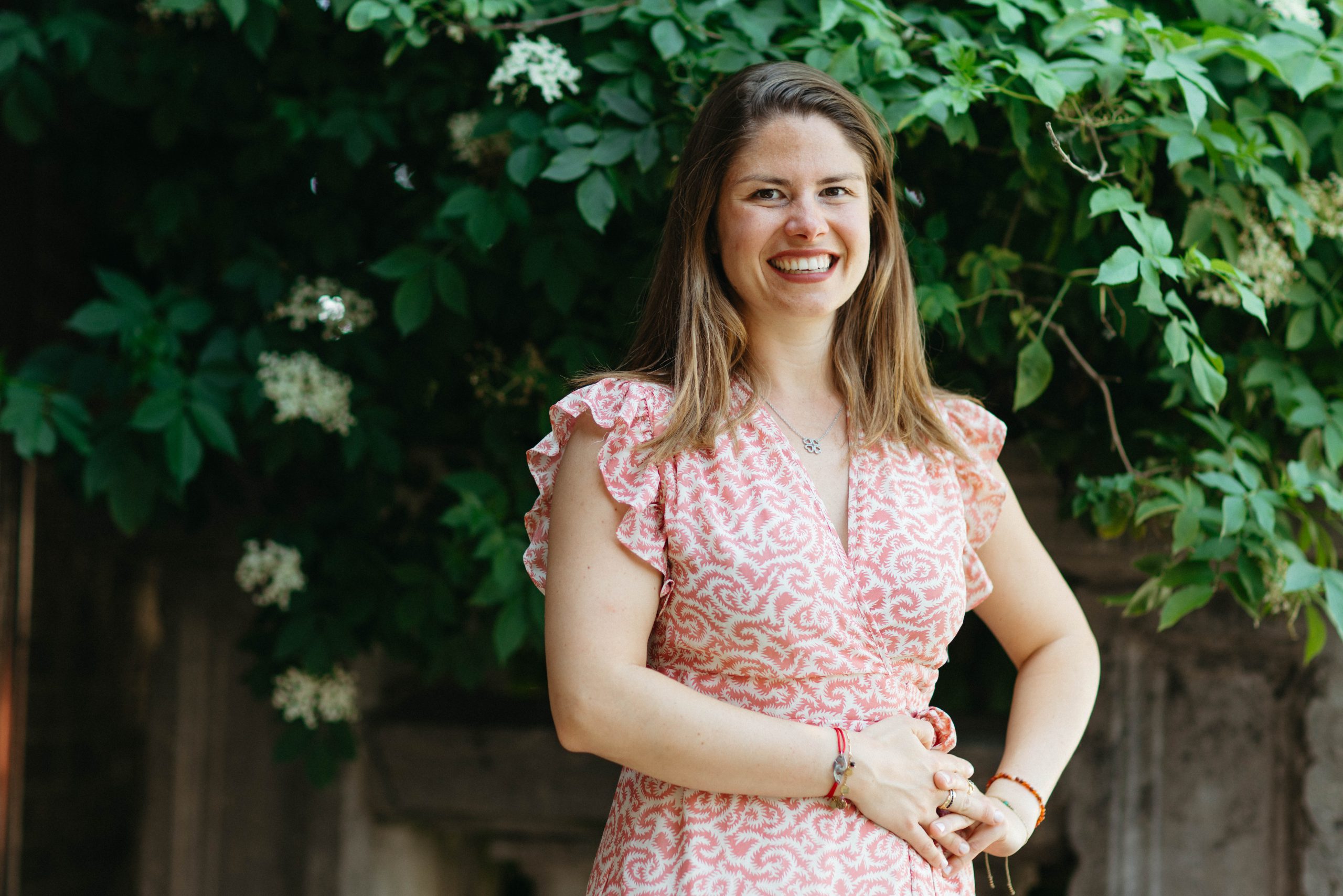
After first moving abroad at 18, Helena spent almost a decade studying and working across Europe, Asia, North America and Africa, with chapters in countries including Japan, Denmark, the United States, the United Kingdom and Morocco. Along the way, she discovered that life abroad was as much about understanding herself as exploring new cultures. She shares the emotional realities of expatriation, from belonging and relationships to reverse culture shock and identity. To learn more, read Living Abroad, Finding Yourself, visit Be YOU – Reconnect, or follow Helena on Instagram.
Where, when and why did you move abroad?
I first moved abroad when I was 18. At the time, I was driven primarily by curiosity. I wanted to discover the world, meet people who had grown up differently from me and experience life beyond what I already knew.
What I did not realise was that this first departure would become the beginning of almost a decade abroad. Over the years, I studied and worked across continents: Belgium, the Netherlands, Japan, Denmark, the United States, the United Kingdom and Morocco, and a little bit in Germany and Mexico. Each move happened for a different reason: studying, entrepreneurship, work, relationships or simply the desire to discover somewhere new.
Initially, I thought moving abroad was mostly about discovering other cultures. Looking back, I realise that it became just as much about discovering myself. Every country challenged some of the assumptions I had about what was “normal”, how life should be lived and, ultimately, who I was.
What challenges did you face during the move?
Interestingly, the practical aspects were rarely the most difficult part. You can usually find an apartment, open a bank account and learn how public transport works. The emotional side of expatriation is much less straightforward.
There is often an exciting honeymoon period when everything feels new. Then, little by little, differences that initially seemed fascinating can become tiring or frustrating. You may struggle with the language, miss familiar relationships or realise that behaviours you took for granted do not necessarily work in your new environment.
One of the biggest lessons for me was understanding that adapting does not mean abandoning who you are. It is about learning to navigate between different ways of seeing the world while gradually creating your own.
Perhaps surprisingly, one of my biggest challenges came when I returned home. I had expected moving abroad to change me. I had not expected coming home to feel foreign.
The places and people I knew were still familiar, but I was no longer exactly the person who had left. That experience of reverse culture shock eventually became an important part of the reflection behind my book, Living Abroad, Finding Yourself.
What do you enjoy most about life in your new country?
What I have loved most about living abroad is the opportunity to continuously rediscover the world through other people’s perspectives.
Living somewhere is completely different from travelling there. You gradually notice the small things: how people communicate, build friendships, approach work, eat, celebrate, disagree or define a good life. Those everyday differences fascinated me and still do.
Living abroad also taught me to become comfortable with being a beginner. Every move requires you to rebuild something: a routine, friendships, professional credibility, sometimes even your ability to communicate. It can be uncomfortable, but it also creates an incredible opportunity for growth.
What is the hardest part of expat life for you?
For me, one of the hardest parts is the feeling of belonging to several places while sometimes feeling that you fully belong to none of them.
The longer you live abroad, the more your identity becomes a collection of different places, relationships and experiences. Home stops being quite as simple as the country written on your passport.
There is also the repeated experience of saying goodbye. International life brings extraordinary people into your world, but people are constantly arriving and leaving. Learning to build meaningful relationships while knowing that circumstances may eventually separate you is both one of the beautiful and difficult parts of expatriation.
This is actually one of the reasons I became so interested in the emotional stages of living abroad. We speak a great deal about visas, accommodation and logistics, but much less about what international mobility does to our identity, relationships and sense of belonging.
What is your relationship like with locals and other expats?
I have always tried to build relationships with different groups of people. In my book, I actually talk about the importance of creating a balance between three types of relationships when living abroad: locals, other internationals, and people with whom you can speak your native language.
Locals are essential because they allow you to truly discover the country beyond the international bubble. Through them, you understand cultural nuances, traditions and ways of thinking that you might otherwise never encounter.
Other internationals offer something different. Even when you come from completely different countries, there can be an immediate sense of understanding because you are navigating similar experiences: adapting, building a new life, missing people back home, or questioning where you belong. Some of my strongest friendships abroad came from this shared experience.
Then there are people with whom you can speak your mother tongue language. I think this group is sometimes underestimated. There are moments when it feels incredibly comforting to express yourself without translating, to share the same cultural references or humour, or simply to speak without having to think about how you are saying something. It can provide a small sense of home when you are far away from it.
For me, the key has never been to choose one group over another. Each fulfils a different need. The richest experience comes from creating a community that includes all three: people who help you discover your host country, people who understand what it means to live abroad, and people who reconnect you with a piece of home.
What advice would you give to someone thinking of making a similar move?
Go, but do not expect every part of it to feel extraordinary.
There will probably be moments when you wonder why you left, moments when you miss home and moments when you feel lonely or completely out of place. Those experiences do not mean that moving abroad was the wrong decision. They are often part of the adaptation process.
I would also encourage people to remain curious, particularly when something frustrates them. Instead of immediately thinking, “Why do they do it this way?”, try asking, “What might explain why they do it this way?” That small shift can completely change how you experience cultural differences.
Most importantly, pay attention not only to the country you are discovering, but also to the person you are becoming.
After almost ten years abroad, that became the central lesson for me. Living abroad changes your perspective, your relationships and often your identity in ways you cannot anticipate when you first pack your suitcase.
That journey eventually inspired me to write Living Abroad, Finding Yourself, in which I combine my own experiences with stories from people around the world and insights from experts, to explore the emotional stages of expatriation, including the often-overlooked experience of returning home.
If there is one thought I would leave future expats with, it is this: you may move abroad to discover another country, but somewhere along the way, you may end up discovering yourself.