
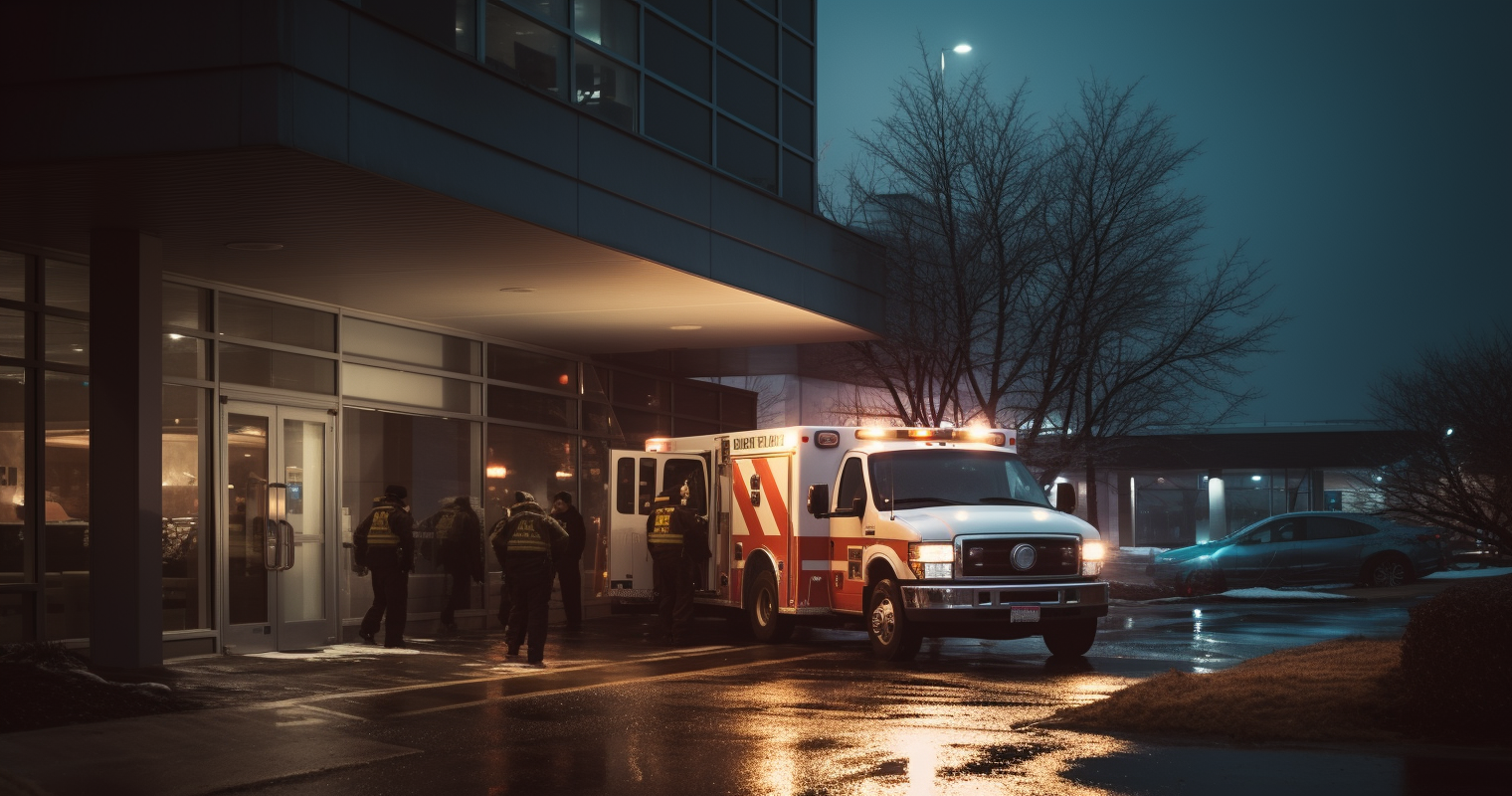
In Ireland, the single emergency number is 999 or 112, and both connect you to all emergency services — police (An Garda Síochána), fire, ambulance, and coastguard — free of charge from any phone. Emergency ambulance call-outs carry no fee, but presenting at a public hospital emergency department without a GP referral results in a charge of €100 (as of 2025). Visitors holding a European Health Insurance Card (EHIC) or Global Health Insurance Card (GHIC) may qualify for reduced-cost treatment.
| Item | Details |
|---|---|
| Emergency number | 999 or 112 (free, any phone, as of 2025) |
| Services reached | Police (Gardaí), fire, ambulance, coastguard |
| Ambulance call-out charge | Free (as of 2025) |
| Public ED charge (no GP referral) | €100 per visit (as of 2025) |
| Injury unit charge | €75 per visit (as of 2025) |
| EHIC/GHIC card | Entitles EU/EEA/UK visitors to public rate treatment |
What is the single emergency number in Ireland, and does it cover all services?
In the Republic of Ireland, dialling either 112 or 999 will connect you to fire, ambulance, and police services. There is no need to remember separate numbers for different services — both numbers route your call through the same Emergency Call Answering Service (ECAS), which then directs you to whichever service you require. This arrangement is conceptually similar to dialling 911 in the United States or 000 in Australia, where a single number provides access to all major emergency services.
The number 112 is a pan-European emergency contact number, introduced in Ireland in 1998 to operate alongside the long-established 999. From any phone and in any EU country, 112 works free of charge. This means that visitors from other EU member states, or anyone using a foreign SIM card, can still reach emergency services without difficulty. Both 999 and 112 are equally effective — the choice between them simply reflects Ireland’s dual heritage of the traditional British-derived number and the EU-wide standard.
For those who cannot make a voice call, the 112 SMS service enables deaf, hard of hearing, and speech-impaired people in the Republic of Ireland to send a text message to the Emergency Call Answering Service (ECAS), which will then forward it to An Garda Síochána, the ambulance service, the fire service, or the Irish Coastguard as appropriate. This accessible alternative is vital for anyone who finds voice communication impossible during an emergency.
How do you call for emergency medical assistance in Ireland?
When someone is seriously ill, badly injured, or in immediate danger of dying, call 112 or 999 without delay. Both numbers are completely free. Once connected, you will be asked which service you need — say “ambulance” clearly and your call will be transferred to the National Ambulance Service or, in Dublin, to Dublin Fire Brigade, which also operates a paramedic response.
Once the ambulance service has your location, they will dispatch help straight away. The call-taker will continue to ask you questions while the ambulance is en route — this questioning does not slow down the response. You will be asked about the patient’s condition and what has happened. Staying on the line is important, as the call-taker may offer guidance on how to assist the patient until help arrives. Follow their instructions carefully and attentively.
Providing an Eircode (Ireland’s postcode system) is extremely useful if you have it. Ireland’s rural geography can make precise address descriptions challenging, so an Eircode or a nearby landmark significantly improves response times. Ambulance attendance is free — neither the National Ambulance Service nor Dublin Fire Brigade will charge you for the call-out.
Reserve ambulance calls for genuine emergencies so that resources remain available for those who need them most urgently. If your situation does not require immediate emergency response, consider alternatives — for instance, travelling to your local emergency department by your own means, since arriving by ambulance does not guarantee faster assessment once you are there.
What should you do in a mental health crisis in Ireland?
Ireland does not have a single dedicated mental health emergency telephone line equivalent to a standalone crisis number in some other countries, but a number of well-established services provide immediate support around the clock. Emergency services are reachable at any time by calling 999 or 112. If you are at immediate risk of harming yourself, you can attend the Emergency Department of your nearest general hospital, where a specialist team will assess your situation and help guide you through the crisis.
In the Republic of Ireland, the Samaritans helpline is available free at any hour on 116 123. This is a confidential 24-hour listening service for anyone experiencing distress, despair, or suicidal thoughts. Pieta provides free counselling to people experiencing suicidal ideation, those engaging in self-harm, and individuals bereaved by suicide. Pieta’s free helpline, staffed by qualified therapists, is available day or night by calling 1800 247 247 or texting HELP to 51444.
Text 50808 is a free text-based service, funded by the HSE, operating every hour of every day. It provides a confidential space in which a trained volunteer will listen and offer support. Simply text HELLO to 50808 at any time to begin a conversation. This text-based option is particularly valuable in circumstances where making or receiving a voice call is not practical.
If you are uncertain whether your situation warrants an emergency response, calling Samaritans (116 123) or Pieta (1800 247 247) first can help you determine the most appropriate level of care. If there is immediate danger to life, do not hesitate to dial 999 or 112 or proceed directly to your nearest emergency department. Always confirm that helpline numbers remain current by consulting the HSE mental health services page.
Where can you go for emergency medical treatment in Ireland?
The majority of public hospitals across Ireland operate emergency departments that are open every day of the year, around the clock. Anyone in Ireland facing a medical emergency has the right to attend these departments. Major facilities with emergency departments include St. James’s Hospital and Beaumont Hospital in Dublin, Cork University Hospital, and University Hospital Galway, along with numerous other hospitals distributed throughout the country.
Certain public hospitals also have injury units designed to handle minor injuries that are unlikely to require hospital admission. Injury units are equipped to treat broken bones, dislocations, sprains, strains, lacerations, scalds, and minor burns. Because they focus on less severe cases, these units generally have shorter waiting times than full emergency departments and represent a practical choice for non-life-threatening conditions. The fee to attend an injury unit is €75 (as of 2025 — always verify the current figure on the HSE website).
Some private hospitals and clinics in Ireland also provide emergency services, where you will be responsible for the full cost of care. While private emergency facilities may offer reduced waiting times, the expense can be considerably higher, making this option most relevant for those holding comprehensive private health insurance. Note that not all private hospitals operate emergency services on a 24-hour basis.
To locate your nearest emergency department or injury unit, use the HSE service finder, which allows searching by location and type of service. In a genuine emergency, always call 999 or 112 first rather than attempting to drive yourself to hospital.
Is emergency medical treatment free in Ireland, or is there a charge?
The answer depends on the nature of the treatment and your status in Ireland. Ambulance call-outs are free — neither the National Ambulance Service nor Dublin Fire Brigade will charge you. Attending a hospital emergency department, however, is not automatically free for everyone.
Presenting at an emergency department without a GP referral incurs a charge of €100 (as of 2025). Should you subsequently be admitted to hospital from the emergency department, this charge does not apply. Public inpatient care and day service care carry no charges — their removal was announced as part of Budget 2023 and took effect on 17 April 2023.
Medical card holders and certain other qualifying groups are exempt from hospital charges. Medical cards are available to people ordinarily resident in Ireland who meet specific income criteria. If you are not ordinarily resident in Ireland and do not fall within any of the categories entitled to free health services, you will be liable for the full cost of care, including bed charges and consultant fees, regardless of whether you occupy a public or private bed.
The HSE has discretion to reduce or waive charges in cases of genuine hardship. No one will be refused emergency treatment for inability to pay at the time, but outstanding charges may be pursued subsequently. Always consult the most recent fee information on the HSE hospital charges page, as figures are subject to change.
Do expats need travel or health insurance to access emergency care?
Ireland does not demand proof of insurance before delivering emergency treatment — hospitals will attend to anyone in a genuine emergency regardless of their insurance status or whether they can pay at the time. That said, the financial consequences of arriving without any form of cover can be substantial, particularly for visitors from outside the EU/EEA, who may face the full economic cost of inpatient treatment rather than the standard €100 ED charge.
Non-EU patients admitted to hospital are liable for the full economic cost of their care, calculated as the average bed-day rate based on the previous year’s financial data. You should contact your insurer to confirm the extent of your cover. As a reference point, Beaumont Hospital in Dublin lists non-EU resident ED fees at €446.82 per visit (based on figures published on their website — always confirm current rates directly with the hospital).
For expats who are ordinarily resident in Ireland, the most effective steps are to register with a GP and, where eligible, apply for a medical card, or alternatively to take out private health insurance through one of Ireland’s main providers (VHI, Laya Healthcare, Irish Life Health). Private health insurance typically covers ED charges and inpatient costs at both public and private hospitals, and is widely held among working expats. Even without a medical card or insurance, emergency care will not be withheld — but a bill is likely to follow.
Are there bilateral health agreements entitling some visitors to reduced-cost treatment?
If you are a citizen of a European Union (EU) member state, the European Economic Area (EEA), Switzerland, or the UK, and you are visiting or staying temporarily in Ireland, you are entitled to medical care should you fall ill or suffer an accident during your stay. The document you need is the European Health Insurance Card (EHIC), issued by your home country’s health authority, or in the case of UK residents, the Global Health Insurance Card (GHIC).
Presenting a valid EHIC or GHIC card at registration means no charges are applied. If you do not have the card with you at the time you arrive at the emergency department, you may be charged the non-EU rate. This is a critical practical point: keep your EHIC or GHIC card on your person at all times. If you were charged the non-EU rate in its absence, it may be possible to seek a retrospective refund through your home country’s health authority. For the most current guidance, refer to the HSE EHIC information page.
Ireland does not maintain an extensive network of bilateral health agreements with countries outside the EU/EEA, unlike Australia, for example, which has reciprocal healthcare arrangements with several nations under its Medicare system. For visitors arriving from countries outside the EU/EEA/UK, no equivalent reciprocal arrangement exists with Ireland. Comprehensive travel insurance that includes medical cover is strongly advised for all such visitors. For longer-term residents, obtaining a PPS number and registering with the public health system is the essential first step toward accessing services at the public rate.
How does Ireland’s emergency healthcare system compare to systems expats may know?
Ireland’s healthcare system operates on a mixed public-private basis, which sets it apart from fully unified public models. The system is divided into two tiers — public and private — an arrangement that will be recognisable to people arriving from countries with similarly structured systems, but which may come as a surprise to those used to a wholly state-funded model offering free treatment at the point of use.
Unlike the UK’s NHS — where attendance at an accident and emergency department is free for all residents with no upfront cost — Ireland imposes a €100 fee for turning up at an ED without a GP referral, even for people who are ordinarily resident and contributing through the tax system. This distinction matters significantly for those relocating from the UK or other countries with comparable universal healthcare. At the same time, Ireland’s system places far less financial burden on the individual than the United States model, where the absence of insurance can expose patients to extremely high out-of-pocket emergency costs.
In terms of how emergency response is structured — a single number dispatching paramedics, with triage-based treatment at the ED — Ireland’s approach is broadly consistent with systems across most of western Europe. At public hospitals, patients are assessed and treated according to clinical need rather than order of arrival. Waiting times in Irish emergency departments have been a recurring subject of public concern and can be prolonged for presentations that are not classed as urgent, particularly at large urban hospitals.
What emergency services exist beyond medical — how do police and fire services work?
To reach any emergency service in Ireland — police, fire brigade, or ambulance — dial 112 or 999. The Irish police force is called An Garda Síochána, more commonly referred to as the Gardaí. This is one of the first things anyone relocating to Ireland should learn, particularly if they are arriving from a country where the police operate under a different name or acronym. An individual officer is a “Garda” or “Guard,” while the organisation as a whole is “An Garda Síochána,” meaning “the Guardian of the Peace” in Irish.
Emergency calls on 999 or 112 receive the highest priority, and trained call-takers handle them immediately. An Garda Síochána aims to answer 80% of 999 calls within 7 seconds and to dispatch resources straight away, providing an estimated time of arrival. Garda stations are distributed throughout the country, serving every town and major residential area. For non-emergency matters — such as reporting a minor theft after the fact or seeking general guidance — you may contact or visit your local Garda station directly rather than calling 999.
Fire services in Ireland are administered by local authorities rather than a single national body, and the country is served by a network of full-time and retained (part-time volunteer) fire brigades. In Dublin, Dublin Fire Brigade also functions as a paramedic ambulance service. In any fire emergency, always dial 999 or 112 — never try to contact a local fire station directly in an emergency. For non-urgent fire safety queries, reach out to your local council.
The 112 SMS service can also be used to contact the Emergency Call Answering Service, with messages forwarded to An Garda Síochána, the ambulance service, the fire service, or the Irish Coastguard as required. The Irish Coastguard handles maritime and coastal emergencies, including sea incidents and cliff rescues. It is reached through the same 999/112 number — specify “Coastguard” when asked which service you need.
Are there country-specific emergency risks in Ireland, and what alert systems exist?
Ireland is broadly considered a low-risk country when it comes to natural disasters, civil unrest, and endemic disease. There is no notable history of significant seismic activity, volcanic events, or dangerous heatwaves. That said, there are specific weather-related hazards that expats should familiarise themselves with, especially those arriving from more continental or temperate climates.
Powerful Atlantic storms represent Ireland’s most significant natural hazard. The country lies directly in the track of Atlantic weather systems, and named storms can deliver severe winds, coastal inundation, and widespread disruption to transport and infrastructure, most acutely in the west and northwest. Ireland’s national meteorological service, Met Éireann, publishes colour-coded weather warnings (Yellow, Orange, Red) through its website and app. A Red warning signals the most dangerous conditions and is usually accompanied by advice to avoid all but essential travel. Checking Met Éireann’s warnings page regularly is a sensible habit for anyone living in Ireland.
Ireland’s civil protection and major emergency management framework operates at both national and local authority levels. The Government’s emergency preparedness guidance is available on gov.ie. Ireland also participates in the EU’s Emergency Alert framework, and the government has been progressively deploying a national public alert system — including testing of the EU-harmonised cell broadcast alert service — that notifies the public of immediate threats directly to their mobile phones. The current status of this rollout should be confirmed through official government sources, as it was still being implemented in early 2025.
In terms of public health hazards, Ireland does not harbour endemic diseases that pose a significant risk to most newcomers. Tick-borne Lyme disease has been recorded, particularly in wooded and rural settings, so sensible precautions during outdoor activities — wearing long sleeves, using insect repellent, and checking for ticks afterwards — are worthwhile. Tap water quality across Ireland is generally very high. For the most current health guidance and travel advisories, consult the HSE website and your own country’s foreign ministry travel advice.
What should expats do to prepare for emergencies before they arise?
- Save key emergency numbers. Programme 999 and 112 into your phone before you ever need them. Also store Samaritans (116 123), Pieta (1800 247 247), and the non-emergency number for your local Garda station. If you have children, note Childline (1800 666 666).
- Register with your country’s embassy or consulate. Many foreign missions based in Dublin operate registration schemes that allow them to reach you during a national emergency, evacuation, or personal crisis overseas. Visit your embassy’s website in Ireland to find details — most maintain a dedicated section for citizens living abroad.
- Register with a GP. Having a General Practitioner (family doctor) gives you a direct point of contact for non-emergency health concerns and connects you to out-of-hours GP services, reducing the likelihood of unnecessary emergency department attendance.
- Obtain a PPS number and, if eligible, apply for a medical card. A Personal Public Service (PPS) number is your key to accessing public services in Ireland. For those who meet the income threshold, a medical card eliminates the €100 ED charge and other healthcare costs. Check eligibility criteria on the Citizens Information website.
- Arrange appropriate insurance. If you do not qualify for a medical card, private health insurance or a comprehensive expat or travel insurance policy provides crucial financial protection against hospital costs. Compare options from providers such as VHI, Laya Healthcare, and Irish Life Health.
- Know your Eircode. Eircode is Ireland’s national postcode system. Having your home address Eircode readily available helps emergency services pinpoint your location quickly, particularly in rural areas where conventional address descriptions can be imprecise.
- Monitor weather warnings. Keep an eye on Met Éireann for weather alerts, especially during autumn and winter when Atlantic storms are at their most frequent. Sign up for alerts where possible, and identify your local authority’s emergency contact for flooding or infrastructure emergencies.
- Familiarise yourself with local evacuation and community alert procedures. Local authorities in many parts of Ireland, particularly rural communities, operate community text alert schemes that share information about local emergencies. Ask your local council or neighbours whether such a scheme covers your area.
Where can expats get official and up-to-date emergency information for Ireland?
For guidance on emergency services and how to reach them, the primary official sources are the Irish Government’s own pages at gov.ie and the Emergency Call Answering Service at 112.ie.
For all matters relating to the health system — including hospital charges, entitlements, and locating services — the Health Service Executive (HSE) is the authoritative reference. The Citizens Information website presents clear, accessible explanations of healthcare rights, charges, and entitlements for both residents and visitors, and is an invaluable starting point for newly arrived expats navigating the system.
For weather warnings and natural hazard alerts, consult Met Éireann, Ireland’s national meteorological service. For civil protection guidance and broader emergency preparedness information, visit the Irish Government’s emergency preparedness pages. For policing matters and non-emergency contact with An Garda Síochána, the official site is garda.ie.
Your own country’s embassy or consulate in Dublin will also publish emergency contact details and registration schemes for nationals living in Ireland. A comprehensive list of embassies accredited to Ireland can be found through the Department of Foreign Affairs.
Frequently asked questions about emergencies in Ireland
What is the emergency number in Ireland?
The official emergency telephone numbers in Ireland are 999 and 112. Both are free of charge from any mobile or landline and connect you to the same Emergency Call Answering Service, from which your call is directed to the police, fire service, ambulance, or coastguard as needed.
Will I be turned away from an Irish hospital emergency department if I can’t pay?
No. Everyone in Ireland facing a medical emergency has the right to attend an emergency department. Treatment will be given regardless of your ability to pay at that moment, though charges may be invoiced afterwards. The HSE has discretion to reduce or waive fees in cases of genuine financial hardship.
Is calling an ambulance in Ireland free?
Yes. Ambulance attendance is free — neither the National Ambulance Service nor Dublin Fire Brigade charges for responding to a call. The €100 emergency department charge, where it applies, relates to attending the hospital itself, not to the ambulance response.
Can I use my European Health Insurance Card (EHIC) in Ireland?
Yes. If you are a citizen of an EU member state, the EEA, Switzerland, or the UK and are visiting or temporarily staying in Ireland, you are entitled to medical care if you fall ill or are injured. Presenting a valid EHIC or GHIC card at the time of registration waives the standard ED charge. Always carry it with you.
What is the Irish police force called, and how do I contact them in a non-emergency?
Ireland’s police force is An Garda Síochána, commonly called the Gardaí. For emergencies, dial 999 or 112. For non-urgent matters, you can contact your nearest Garda station by telephone or in person. A full directory of stations is available at garda.ie.
Is there a mental health emergency line in Ireland?
There is no single dedicated mental health emergency number, but several services operate continuously. The Samaritans helpline is free and available at any time on 116 123. Pieta’s helpline — staffed by qualified therapists — runs day and night and can be reached by calling 1800 247 247 or texting HELP to 51444. In any situation involving immediate risk to life, call 999 or 112, or go directly to your nearest hospital emergency department.
What happens if I am a tourist from outside the EU and need emergency treatment in Ireland?
If you are not ordinarily resident in Ireland and do not fall within any category entitled to free healthcare, you will be liable for the full cost of treatment, including bed charges and consultant fees. Comprehensive travel insurance covering medical expenses is strongly recommended for all visitors arriving from outside the EU/EEA/UK. Always check the current fee schedule with the relevant hospital and your insurer before travelling.
What is the best way to receive weather and emergency alerts in Ireland?
Keep track of Met Éireann’s colour-coded weather warning system at met.ie/warnings. Warnings are also communicated via national radio and television. Ireland has been deploying a cell broadcast-based national public alert system to send notifications directly to people’s mobile phones — check gov.ie for the latest information on this system, as its rollout was still in progress in early 2025.