
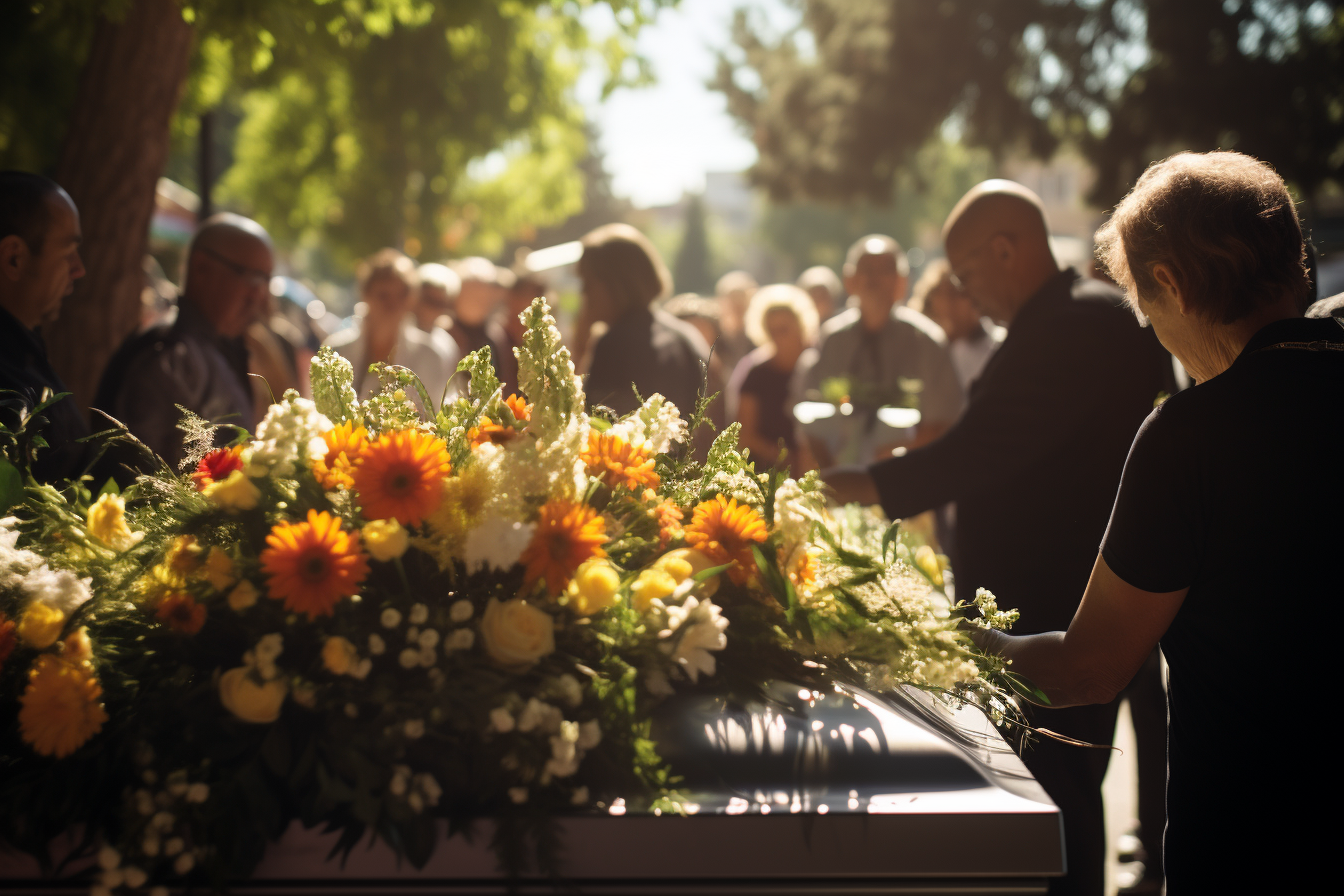
Ireland’s approach to end-of-life care is internationally recognised, placing second globally for palliative care provision. Every person residing in Ireland — regardless of where they were born or what passport they hold — is entitled to publicly funded palliative and hospice care at no cost through the Health Service Executive (HSE). Following a death in Ireland, the law requires registration within three months, and a series of legal, administrative, and consular obligations will arise depending on the individual’s circumstances.
| Item | Details |
|---|---|
| Palliative care cost | Free for all patients; no medical card required (as of 2025) |
| Hospice units in Ireland | 14 nationwide (as of 2025) |
| Death registration deadline | Must be registered within 3 months at a civil registration office |
| CAT (inheritance tax) rate | 33% above applicable threshold; spouses/civil partners exempt (as of 2023) |
| Probate processing time | Typically 6–12 months; Dublin Probate Office approx. 8–16 weeks to issue grant (as of 2025) |
| Assisted dying | Illegal under the Criminal Law (Suicide) Act 1993; legislation under active debate (as of 2026) |
What end of life care options are available in Ireland, and how does the system work?
End-of-life care in Ireland is planned, funded, and delivered through the Health Service Executive (HSE), which coordinates services across a broad range of settings — from private homes to hospital wards and dedicated hospice facilities. The overarching aim is to allow people living with life-limiting conditions to receive care wherever best suits their individual needs and preferences.
Depending on individual circumstances, care may be delivered at home by community nursing staff working alongside your GP and a specialist palliative team; within a dedicated hospice unit; in a general hospital under the supervision of a specialist palliative care team; or in a community hospital or nursing home supported by home-care nurses and visiting palliative specialists.
Home-based care is coordinated primarily through your GP. Where a patient expresses a wish to remain at home, the GP will carry out an assessment of care needs and discuss what practical and clinical support is required. With the patient’s consent, family members or carers can also be included in these conversations. Research consistently shows that around 83% of people would prefer to spend their final period of life at home — yet currently only 22% of deaths in Ireland occur in a home setting, highlighting a gap between preference and available provision.
It is also common for a person’s care to span more than one setting over time. For instance, someone might spend most of their final months at home while having short-term admissions to a hospice or hospital for symptom management. Coordinating these transitions is the responsibility of the HSE, and your GP or hospital consultant serves as your main point of contact for navigating services and referrals.
What is palliative care in Ireland, and who is eligible for it?
Palliative care is a specialist healthcare approach focused on enhancing the quality of life for people confronting serious, life-limiting illness, as well as providing support to those closest to them. Rather than concentrating solely on the disease itself, palliative care addresses the full range of a person’s needs — physical, psychological, social, and spiritual — with the goal of preventing and relieving suffering at every stage.
A widespread misunderstanding is that palliative care only becomes relevant in the final days or hours of life. In reality, palliative care is available to people of all ages and can begin at any point following a diagnosis, including while a patient is still actively receiving curative treatments such as chemotherapy or radiotherapy. This early-integration model, now embraced across health systems including those of Australia and Canada, has been shown to improve symptom control and overall wellbeing throughout the course of illness.
Palliative care is appropriate for anyone whose condition is progressive and cannot be cured — commonly described as a life-limiting illness. It is not time-limited; it may be provided over many months or years, adapting alongside the person’s changing needs.
Referral to palliative care services is typically made following a diagnosis of a life-limiting condition such as cancer, cardiac failure, or motor neuron disease. The National Clinical Programme for Palliative Care is designed to ensure that people with such diagnoses, and their families, can readily access an appropriate level of care regardless of the setting in which they are being treated or the specific nature of their illness.
Palliative care is treated as a responsibility shared across the entire healthcare team, with a collaborative, person-centred approach to planning and delivering support. Three distinct levels of palliative care provision exist within the Irish healthcare system, each involving increasing degrees of specialisation. Crucially, a referral can be made from the moment a diagnosis is confirmed.
Are there hospices in Ireland, and how do you access them?
There are 14 hospice units currently operating across Ireland. While these facilities are distributed around the country, the availability and depth of palliative care services differs between counties. The Irish Association for Palliative Care provides an interactive map allowing people to identify what services exist in their local area.
A hospice unit delivers specialist palliative care and typically offers a cluster of related services, including out-patient clinics and bereavement support. Specialist palliative care day services allow patients who are still living in their own home to visit the hospice for nursing care, medical review, social work support, chaplaincy, occupational therapy, physiotherapy, and complementary therapies. In-patient beds are available for those who require management of complex or difficult-to-control symptoms, intensive psychosocial support, or care at the very end of life.
Accessing hospice care generally requires a referral from a GP or hospital-based physician — though it is possible to contact a hospice directly to enquire about their services and find out what may be available. In areas without a dedicated hospice unit, palliative support beds may be available in community hospitals or nursing homes.
During 2024, specialist palliative care teams in Ireland supported 17,239 patients in hospital settings, 4,395 in hospices, and 15,253 in their own homes or residential facilities. The Irish Hospice Foundation additionally funds a Nurses for Night Care service, which provides expert overnight nursing support in the home for people in their final days of life who are living with conditions other than cancer.
Is palliative or hospice care covered by public health insurance or the national health system in Ireland, or does it need to be funded privately?
This is perhaps the most practically significant point for anyone living in Ireland to understand about end-of-life care. In contrast to many healthcare systems that tie end-of-life services to private insurance or means-tested entitlements, palliative care in Ireland is provided free of charge to all patients and their families. Having a medical card is not a prerequisite.
If you hold private medical insurance, your insurer may be asked to contribute to the cost of care in certain settings — but this has no bearing whatsoever on your right to receive palliative care. The care itself remains available to everyone, at no charge.
This approach is directly aligned with the goals of Sláintecare, Ireland’s long-term health reform programme, which aims to ensure that everyone who needs palliative care can access it at a high standard, and that no individual or family faces financial hardship as a consequence of serious illness.
For those who may require a medical card to access other HSE services, an emergency medical card is available for people with serious, life-limiting conditions — including a specific card for those who are terminally ill with a life expectancy of 12 months or less. This card is not subject to a means test and does not expire. In February 2021, the Irish Government approved an extension of medical card entitlement to people who are terminally ill with a prognosis of up to 24 months.
The scale of the government’s investment in this area is reflected in the palliative care budget, which reached over €155 million in 2024 — an increase of €54 million, or 53%, since 2020.
What legal documents should expats have in place before the end of life in Ireland — such as a living will, advance directive, power of attorney, or healthcare proxy — and how do these work?
Several important legal instruments exist in Ireland to help individuals plan ahead for incapacity and end-of-life care. For expats — particularly those without close family members nearby — understanding these mechanisms and having the right documentation in place can be critically important.
Advance Healthcare Directive (AHD): An AHD enables you to record in writing your wishes regarding medical treatment in circumstances where you are no longer able to communicate them yourself. This is the primary legal mechanism in Ireland for expressing preferences about care at the end of life, and it was formally given legal recognition through the Assisted Decision-Making (Capacity) Act 2015.
Enduring Power of Attorney (EPA): An EPA allows you to designate a trusted person to make decisions on your behalf relating to personal welfare and property matters in the event that you lose mental capacity. It is important to note that EPAs do not extend to decisions about medical treatment — for those, a separate AHD is required. The legal framework governing EPAs was significantly updated by the Assisted Decision-Making (Capacity) Act 2015.
An EPA created on or after 26 April 2023 only becomes operative once it has been registered with the Decision Support Service. An EPA made before that date is only effective if it was registered with the Office of the Wards of Court. A key requirement introduced by the 2015 Act is that EPAs must now be registered with the Decision Support Service within three months of being executed.
The Irish Hospice Foundation‘s Think Ahead programme offers a widely used planning framework. It provides a structured tool for recording your preferences and wishes regarding emergencies, serious illness, and what should happen after your death. For expats who want to document their wishes in an accessible format alongside formal legal instruments, this is a particularly practical resource.
Are documents such as advance directives or powers of attorney made in another country legally recognised in Ireland?
This is a genuinely complicated area of law, and expats are strongly urged to seek tailored advice from a solicitor practising in Ireland. The short answer is that Ireland does not automatically confer full legal effect on foreign advance directives or powers of attorney in the same way as documents prepared under Irish legislation — though the picture is more nuanced than a flat refusal to recognise them.
An Advance Healthcare Directive created in another country is not integrated into Ireland’s registration system, and Irish healthcare professionals are not legally bound to treat it with the same force as a directive made under the Assisted Decision-Making (Capacity) Act 2015. That said, a foreign AHD can carry considerable practical and moral weight in a clinical setting — Irish doctors will generally take such documents seriously as evidence of a patient’s previously expressed wishes and are likely to take them into account when making treatment decisions.
A foreign Power of Attorney faces similar challenges. It may not be automatically treated as legally valid for Irish purposes without additional steps — which could include an apostille, a notarised translation if the document is not in English or Irish, and potentially a fresh assessment of its validity under Irish law. EPAs that were properly executed under the Powers of Attorney Act 1996 retain their validity, but instruments originating from entirely different legal systems may require more extensive verification before they can be relied upon in Ireland.
The most effective course of action for any expat settling in Ireland is to create new, Irish-law-governed documents — both an AHD and an EPA — upon arriving in the country. Consult a solicitor registered with the Law Society of Ireland for current guidance on how any existing foreign documents interact with and may complement the Irish legal framework.
What are the laws around euthanasia or assisted dying in Ireland?
Both medical assisted dying and voluntary assisted dying are illegal in Ireland under the Criminal Law (Suicide) Act 1993. Section 2.2 of that Act makes it a criminal offence to aid, abet, counsel, or procure the suicide of another person, with a maximum penalty of 14 years’ imprisonment.
While the Supreme Court ruled in Fleming v Ireland (2013) that no constitutional right to die exists in Ireland, the Court simultaneously made clear that there is no constitutional barrier preventing the Oireachtas (Parliament) from passing legislation to permit it.
Public debate has advanced considerably in recent years. A cross-party Joint Committee on Assisted Dying spent nine months examining the issue from multiple perspectives, and in March 2024 published its final report, recommending that the government introduce legislation to permit assisted dying for individuals with a prognosis of six months or fewer to live (or up to twelve months for those living with neurodegenerative conditions).
Following the Committee’s recommendations, a Voluntary Assisted Dying Bill 2024 was put forward. However, the legislative process was interrupted by the dissolution of the Dáil ahead of the November 2024 general election. As of 2026, the bill would need to be reinstated or reintroduced by the incoming government before it could progress further.
Expats should be aware that, as matters stand, assisted dying is entirely unlawful in Ireland and no healthcare professional can lawfully help a patient end their life. Comprehensive palliative care, including specialist pain management, remains the recognised and legally permissible approach to end-of-life care.
What are the local customs, traditions, and religious practices around death and dying in Ireland?
Ireland has a deeply rooted culture of mourning, shaped by centuries of Catholic practice and longstanding community traditions. Although the country is increasingly diverse and secular in character, many of these customs remain widely observed and are likely to be encountered by any expat living here.
The wake is one of the most distinctive features of Irish death culture. Traditionally, the body of the deceased is laid out — either at home or in a funeral home — and family, friends, neighbours, and acquaintances gather to pay their respects, sometimes staying through the night. Contrary to what might be expected, a wake is often a warm and convivial occasion, with food, drink, storytelling, and humour woven alongside expressions of sorrow. This communal ritual is seen as an important way of honouring the person who has died and offering solidarity to those who are grieving.
A funeral Mass remains the norm for a large proportion of Irish families, reflecting the country’s predominantly Catholic heritage. The Mass is typically held in a local church before the burial or cremation takes place. However, secular or non-religious ceremonies — including humanist and civil funerals — are now well-established and widely available. Experienced funeral directors can accommodate services for people of all faiths and none.
Death notices are an important social practice in Ireland. It is customary to publish a notice — in a local or national newspaper, or more commonly today on platforms like RIP.ie — when a death has occurred. These notices are read widely and function as a public announcement to the broader community, drawing people who may not otherwise have heard of the death.
For expats from faith traditions including Islam, Hinduism, Judaism, or Buddhism, which may involve specific requirements around the preparation and handling of the body, the timing of burial, or dietary considerations at post-funeral gatherings, it is advisable to engage both a knowledgeable funeral director and a relevant community or religious leader as early as possible following the death.
What must you do when someone dies in Ireland? Who do you notify, how quickly, and in what order?
The steps below apply regardless of whether the death occurs at home, in a hospital, or in a hospice setting. Acting promptly and following the correct sequence will help avoid delays in documentation and funeral planning.
- Contact a doctor without delay. If the death occurs at home, call the deceased’s GP. In a hospital or hospice, medical staff will already be present. The attending doctor must certify the death and issue a Death Notification Form. If the doctor had not seen the patient in the 28 days prior to death, or if the cause of death is not clearly established, the matter must be referred to the Coroner. A post-mortem examination may follow, and an inquest may be opened if the cause of death remains uncertain.
- Contact a funeral director. Arranging the funeral is one of the earliest practical steps following a death. Funeral directors are equipped to manage virtually every aspect of the process. If the death took place in a hospital, the body will remain in the hospital mortuary until funeral arrangements have been confirmed. The Irish Association of Funeral Directors (IAFD) can assist you in locating a reputable director.
- Inform close family members and friends. Breaking the news to others can be an emotionally demanding task. It is entirely appropriate to ask a trusted friend or relative to help with contacting the deceased’s wider circle, including friends, colleagues, and extended family.
- Notify the deceased’s embassy or consulate (if they were a foreign national). The relevant embassy in Dublin should be contacted as early as possible. Embassy staff can advise on the steps required in parallel with Irish procedures, including any documentation needed for potential repatriation. See the dedicated section below for further detail.
- Register the death. Every death in Ireland must be formally recorded at a civil registration office. This should be done as soon as practicable and must take place within three months of the death. The Death Notification Form issued by the attending doctor will be required.
- Obtain death certificates. Following registration, you will be able to obtain a Death Certificate. It is advisable to request multiple certified copies — generally at least five to ten — as banks, probate offices, insurance companies, pension administrators, and foreign embassies will each require an original certified copy.
- Notify relevant institutions. The deceased’s bank, employer, pension provider, insurer, landlord or mortgage lender, and government agencies — including the Department of Social Protection — should all be contacted. Any social welfare payments the deceased was receiving must be stopped immediately.
- Begin the probate or estate administration process. If a will exists, the executor named in it should engage a solicitor to initiate the probate process. Where there is no will, the next of kin should seek legal guidance on applying for a Grant of Administration. See the relevant sections below for further information.
How is a death officially registered in Ireland, and what documents are needed?
All deaths occurring in Ireland must be formally recorded and registered at a civil registration office. Registration should be completed as soon as possible following the death, and the law requires it to take place within three months. Civil registration offices are run jointly by the HSE and the General Register Office; details of local offices are available through the gov.ie website.
The essential document for registration is the Death Notification Form, which is provided by the doctor who attended the deceased. In most cases, a close family member of the deceased will carry out the registration. If no relatives are available or willing to do so, anyone with direct knowledge of the death may register it.
When attending the civil registration office, you will need to present the medical certificate confirming the cause of death, along with key personal details about the deceased — including their full name, date of birth, home address, occupation, and marital or civil partnership status. Once the death has been successfully registered, certified copies of the Death Certificate can be requested. It is advisable to obtain at least five to ten copies, as many institutions — banks, probate offices, insurers, and foreign embassies — will each require their own original certified copy.
Where a Coroner has become involved — typically in cases of sudden, unexplained, or violent death — registration cannot proceed until the Coroner has completed their enquiries and issued the documentation required for the registrar. This process can introduce delays to funeral arrangements, and it is important to keep the funeral director, and any relevant embassy where a foreign national is involved, informed as the investigation progresses.
What happens if a foreign national dies in Ireland — what are the specific steps for notifying their home country’s embassy or consulate, and what role does the consulate play?
The death of a foreign national in Ireland triggers a set of additional obligations alongside the standard Irish registration process. Consular procedures run concurrently with Irish death registration and do not substitute for it.
Contact the embassy or consulate as promptly as possible. The deceased’s home country embassy in Dublin should be notified ideally within 24 to 48 hours of the death. Most embassies operate emergency or out-of-hours consular contact lines specifically for situations of this kind. A directory of embassies accredited to Ireland is available through the Department of Foreign Affairs website.
The consulate typically has a number of key roles to fulfil, including: formally confirming the identity of the deceased; issuing or countersigning a consular death certificate or notification for use in the home country; advising the family on what documentation and procedures the home country’s authorities will require; providing guidance or approval for the paperwork needed to repatriate the remains; and helping the family navigate simultaneous administrative requirements in both Ireland and the home country.
In situations where the deceased had no family present in Ireland, the consulate may assume a more hands-on coordinating role. Some embassies also keep lists of locally based funeral directors who are experienced in handling international repatriation cases.
Where the deceased was a citizen of an EU member state, certain cross-border administrative arrangements may simplify parts of the process — though each country retains its own specific requirements. For citizens of non-EU countries, the applicable procedures will depend entirely on the policies of the deceased’s home country consulate and any bilateral arrangements in place with Ireland.
Throughout the process — and especially if a Coroner’s investigation is underway — it is essential to keep the consulate informed at each stage. A Coroner’s involvement can significantly affect the timeline for releasing the body and issuing the definitive death certificate.
How are funerals typically arranged in Ireland, and what are the usual options for burial or cremation?
In Ireland, funeral directors manage the great majority of practical arrangements following a death, and contacting one promptly after a bereavement is standard practice. The Irish Association of Funeral Directors (IAFD) represents most of the profession and operates a code of practice to which its members are bound. IAFD’s website can help families identify accredited directors in their area.
Burial remains the most prevalent choice across Ireland, a preference rooted in Catholic tradition. Burial plots are available in municipal cemeteries, church graveyards, and private cemeteries. In urban areas — particularly Dublin — plot availability can be limited, so forward planning is advisable where possible.
Cremation has grown significantly in popularity in recent years. Crematorium facilities operate in several locations around the country, including Dublin, Cork, and Limerick. Families may choose to retain ashes, have them interred in a cemetery, place them in a columbarium niche, or scatter them in a meaningful location. Anyone considering scattering ashes should check with the relevant local authority or landowner regarding any restrictions that may apply.
Natural or green burial is an option at a small number of sites in Ireland, catering to those who prefer a low-environmental-impact approach. Interest in this option is growing steadily, though the number of dedicated sites remains limited compared to countries such as the United Kingdom or the Netherlands.
Expats whose religious or cultural background involves specific requirements — such as same-day burial, ritual washing of the body by community members, or particular burial orientations — should contact a specialist funeral director and, where appropriate, a local religious or community leader at the earliest opportunity following the death.
What are the approximate costs of a funeral in Ireland, and are there any state or insurance-based funds that can help cover them?
Funeral costs in Ireland vary considerably depending on the type of service chosen, the geographic location, and the specific arrangements made. As a general guide based on 2024–2025 figures, a basic funeral including a coffin, hearse, and simple service typically starts at around €3,000–€4,000. A full traditional funeral with burial can cost anywhere from €8,000 to €15,000 or more. Cremation services tend to be somewhat less expensive, generally in the range of €3,500–€6,000, though this varies by provider and location. Always ask for a full written and itemised quote from the funeral director before proceeding with any arrangements.
In some cases, funeral costs may be covered in whole or in part through a pre-paid funeral plan or a life insurance policy. Where no such provision exists, the person arranging the funeral is responsible for paying the funeral director, though these costs can later be reclaimed from the deceased’s estate.
It is not necessary to wait for the issuing of a Grant of Probate before settling funeral expenses, provided the deceased had sufficient funds in their bank account. The funeral director’s invoice can be presented to the relevant financial institution together with a certified copy of the Death Certificate. The institution will then release the amount required to cover the funeral bill, while holding the remainder of the account balance pending the formal Grant of Probate.
Families who are experiencing financial difficulty in meeting funeral costs can apply to the Department of Social Protection for an Exceptional Needs Payment through the Supplementary Welfare Allowance scheme, which may provide assistance where the family has limited financial means. Current eligibility criteria and payment amounts are available on the gov.ie website, and these are subject to periodic revision.
What is the process for repatriating the remains of a foreign national from Ireland to another country?
Repatriating remains from Ireland involves coordinating with both Irish authorities and those of the destination country. The paperwork and logistics are considerable, and engaging a funeral director with proven experience in international repatriation is essential.
The typical steps involved in repatriation from Ireland include:
- Obtain a certified Irish Death Certificate from the civil registration office. This is the foundational document without which no repatriation can begin.
- Obtain a Coroner’s non-objection certificate where applicable. If the Coroner has been involved in the case, they must formally authorise the removal of the remains from Ireland before they can be transported out of the jurisdiction.
- Contact the destination country’s embassy in Ireland to establish the precise import requirements for human remains. These requirements differ significantly between countries and may include mandatory embalming, specific standards for the coffin or sealed container, or supplementary documentation.
- Apply for an Authorisation to Remove Remains from the relevant HSE or civil registration authority in Ireland, as required under Irish law when transporting remains across an international border.
- Arrange embalming where this is required by the receiving country or by the operating airline for air transport. International carriers typically require remains to be embalmed and placed within an approved, hermetically sealed container before they will accept them as cargo.
- Arrange air cargo transport in coordination with the funeral director. Human remains are carried as cargo on commercial passenger aircraft. The funeral director will liaise with the airline and manage the associated documentation, including the laissez-passer — the internationally recognised transit document for human remains.
- Make arrangements for receipt of the remains at the destination, including notifying the relevant local authorities and engaging a receiving funeral director in the home country.
The entire process can take from one to several weeks depending on whether Coroner involvement has occurred, the complexity of the receiving country’s requirements, and how quickly documentation is processed. Expats are strongly encouraged to check whether their travel or life insurance policy includes repatriation cover before such a situation arises — this type of cover can substantially reduce both the financial burden and the logistical complexity for the family.
What happens to the estate of someone who dies in Ireland — how does probate or estate administration work, and are there inheritance taxes?
Probate is the legal process through which the assets of a deceased person are identified, collected, used to discharge outstanding debts and tax liabilities, and then distributed — either in accordance with the terms of a valid will or, where no will exists, under the statutory provisions of the Succession Act 1965.
To administer a deceased person’s estate lawfully, the appointed representative must first obtain a Grant of Representation — a court-issued document that confers the legal authority to deal with the estate. Where the deceased left a will, the individual responsible for administering the estate is known as the executor, and the document they obtain is called a Grant of Probate. Once the grant is issued, the executor or administrator has full legal authority to manage the estate, including accessing bank accounts, dealing with property transactions, and distributing assets to beneficiaries.
The time required to complete probate depends heavily on the complexity of the individual estate. The Probate Office in Dublin currently operates on a timeframe of approximately 10 to 16 weeks from the date of lodgement of papers (as of 2025), though the overall administration of an estate — including identifying assets, settling liabilities, and making distributions — typically takes between 6 and 12 months in straightforward cases, and potentially 18 months or more where complications arise.
Inheritance Tax (Capital Acquisitions Tax): Anyone who receives an inheritance following a death in Ireland may be liable to pay Capital Acquisitions Tax (CAT). This tax is the responsibility of the person who receives the inheritance, not the estate itself. The amount payable depends on both the value of the assets received and the closeness of the relationship between the recipient and the deceased. A surviving spouse or civil partner is entirely exempt from CAT on inheritances from their partner.
CAT is charged at a rate of 33% (as of 2023) on the taxable value of an inheritance above the applicable threshold. These thresholds are grouped according to the relationship between the parties — the Group A threshold (for children of the deceased) is substantially higher than the Group B threshold (for siblings, nieces, and nephews) or the Group C threshold (for all other recipients). As of April 2023, the Group C lifetime threshold stands at €16,250. Always verify the current threshold values with the Revenue Commissioners, as these figures are reviewed and may be adjusted annually.
If an expat dies without a will in Ireland, what happens to their assets under local intestacy laws?
When a person dies without having made a valid will, Irish law determines how their assets are divided, following the rules of intestacy set out in the Succession Act 1965. In this situation, the state prescribes the distribution of the estate regardless of whatever personal preferences the deceased may have held, or whatever arrangements might have been customary in their country of origin. For expats whose family situations span multiple countries, dying intestate in Ireland can create significant legal and practical complications.
When an estate is being administered without a will, the deceased’s assets — including money, possessions, and property — pass to a personal representative who distributes them in accordance with the intestacy rules rather than any stated wishes of the deceased.
Under the Irish intestacy framework, the estate is distributed in a defined order of priority. A surviving spouse or civil partner takes precedence, and in the absence of children, they may be entitled to the entirety of the estate. Where there are surviving children, the estate is shared between the spouse and the children. Thereafter, the order of priority moves to parents, then siblings, and then more distant relatives. Cohabiting partners have no automatic inheritance rights under Irish intestacy law — however, a financially dependent cohabitant may be able to apply for relief under the statutory redress scheme for qualified cohabitants.
Where a foreign national dies intestate in Ireland, the question of which country’s intestacy rules govern the distribution of their assets becomes legally complex. As a general principle, Irish law applies to immovable property — such as land and buildings — situated in Ireland, while the law of the country in which the deceased was domiciled may govern the distribution of movable assets such as money and investments. This area of private international law is highly technical, and specialist advice from an Irish solicitor with experience in cross-border estates is essential.
The simplest and most effective protective step any expat can take is to make a valid Irish will shortly after settling in Ireland. Making an Irish will does not automatically revoke a will made in another jurisdiction — but the interaction between wills from different countries requires careful professional management to avoid conflicts or unintended consequences.
Frequently Asked Questions
Can a foreign national access palliative care in Ireland if they do not have an Irish medical card or private insurance?
Yes — palliative care is provided free of charge to all patients and their families in Ireland. Entitlement to HSE palliative care services is not dependent on holding a medical card, having private insurance, or meeting any particular residency or nationality criteria. Any person in Ireland living with a life-limiting illness can be referred to palliative care services through their GP or hospital doctor.
Will a private health insurance policy from another country cover palliative or end-of-life care costs in Ireland?
Foreign private health insurance may be accepted in some private hospitals or for private accommodation within Irish hospitals, but this does not affect a person’s independent entitlement to free HSE palliative care. In certain care settings, an insurer may be asked to contribute to the cost — but this is separate from the underlying entitlement. Contact your insurer directly to establish what is covered and what claims documentation is required for care received in Ireland.
How long does it take to repatriate remains from Ireland to another country?
The timeframe for repatriation varies considerably. In uncomplicated cases where no Coroner is involved and the receiving country’s import requirements are straightforward, the process may be completed in as little as one to two weeks. Where a Coroner’s inquest is necessary, or where the destination country has extensive documentation requirements, the process can extend to several weeks or longer. Expats are strongly advised to ensure their travel or life insurance includes repatriation cover before any such situation arises, as this can ease both the financial and logistical burden significantly.
Is there bereavement support available for families of people who die in Ireland?
Yes — several services are available to those who have been bereaved. The Irish Hospice Foundation operates a free Bereavement Support Line, delivered in partnership with the HSE, which can be reached on freephone 1800 80 70 77, Monday to Friday from 10am to 1pm. An Information and Support Line covering end-of-life care matters is also available on freephone 1800 60 70 66, Monday to Friday from 9am to 1pm. Barnardos provides dedicated bereavement counselling for children who have lost someone close to them.
Does Ireland recognise a will written in another language or under another country’s legal system?
In principle, Irish courts can recognise foreign wills — but certain conditions must be satisfied. A certified translation into English or Irish will be required if the original document is in another language. Under the Succession Act 1965, a will is generally considered valid in Ireland if it was validly executed under the law of the country in which it was made. However, for assets located in Ireland — particularly real property — it is strongly advisable to have a will that specifically addresses those assets and is drafted under Irish law. Seek professional advice from an Irish solicitor before assuming a foreign will adequately covers your Irish estate.
What financial support is available if a family cannot afford a funeral in Ireland?
Families facing financial hardship can apply to the Department of Social Protection for an Exceptional Needs Payment under the Supplementary Welfare Allowance scheme, which may provide assistance with funeral costs. Additionally, where the deceased had sufficient funds held in a bank account, it is possible to pay the funeral director’s invoice without waiting for a Grant of Probate — the bill can be submitted to the bank along with a certified copy of the Death Certificate, and the institution will release the funds needed to settle the account. The remaining balance will then be held until Probate is granted.
What happens to an expat’s Irish pension or social welfare payments when they die?
All State pension and social welfare payments must cease immediately upon the death of the recipient. The Department of Social Protection should be informed as soon as possible, and any payments received after the date of death may be subject to recovery. Depending on the deceased’s PRSI contribution record, a surviving spouse or civil partner may be entitled to a Widow’s, Widower’s, or Surviving Civil Partner’s Contributory Pension. Visit gov.ie or Citizens Information for the current eligibility criteria and payment rates, which are reviewed on an annual basis.
Are there dedicated death notice services in Ireland for notifying the community of a death?
Death notices are an important social custom in Ireland. It is standard practice to publish a notice — traditionally in a local or national newspaper, and today most commonly through online platforms such as RIP.ie — when a death has taken place. Your funeral director can assist with placing a notice. RIP.ie is the most widely consulted platform for this purpose in Ireland and is checked daily by a very large proportion of the population. Publishing a notice there ensures that the broader community — including friends, former colleagues, and more distant acquaintances — is made aware of the death in a timely way.