
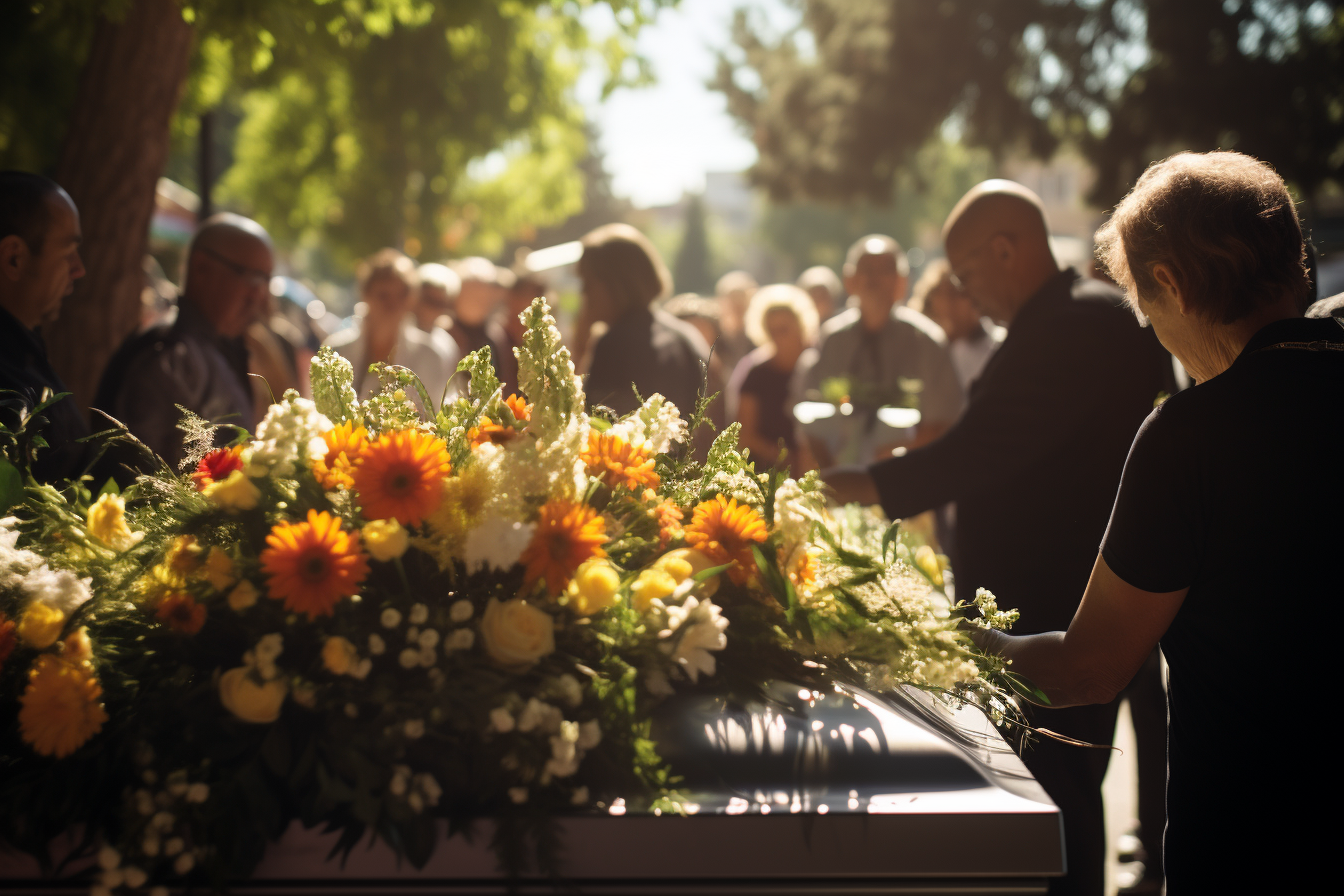
Israel operates a nationally structured end-of-life care system grounded in the 2005 Dying Patient Act, alongside a public health insurance framework — the kupot cholim — that makes palliative and hospice services a compulsory benefit for enrolled members. Jewish religious law shapes burial practices for much of the population, demanding interment within roughly 24 hours of death. Deliberate assistance in dying is unlawful. Foreign nationals who die in Israel must be reported to their home country’s diplomatic mission, and families must navigate death registration, possible repatriation, and cross-border estate matters with care.
| Item | Details |
|---|---|
| Legal framework | Dying Patient Act 2005; Israeli National Palliative Care Policy 2009 |
| Hospice/palliative care funding | Covered as a mandated National Health Insurance (NHI) benefit; no additional payment required via kupat holim |
| Eligibility threshold | Life expectancy of up to 6 months (as of 2024) |
| Active euthanasia | Explicitly prohibited under Israeli law |
| Probate filing fee | NIS 721 (as of 2024) |
| Inheritance tax | None — abolished as of 1 January 2004 |
| Repatriation shipping cost (approx.) | USD 3,000–5,000 (as of 2024, varies by weight and destination) |
| Death registration authority | Population and Immigration Authority (Misrad HaPnim) |
What end of life care options are available in Israel, and how does the system work?
Israel stands among a small number of nations worldwide with formally defined national standards and policies for palliative care. The country’s society is highly diverse and, in many respects, more tradition-oriented than much of the Western world. End-of-life services are embedded within the country’s public health insurance architecture — the kupot cholim (health maintenance organisations, or HMOs) — which are legally obligated to deliver palliative and hospice services as part of their core benefit package.
The 2005 Dying Patient Act governs end-of-life care and represents a carefully negotiated balance between religious conviction, ethical principle, and medical practice. It integrates values of individual liberty and the sanctity of life in a manner unique to the Israeli context. The Act permits the withdrawal of life-prolonging interventions under defined conditions, gives legal force to advance directives, and enshrines a universal entitlement to palliative services — while simultaneously forbidding any form of deliberate life-ending assistance.
Hospice is understood as a care model in which the patient receives treatment aimed at enhancing quality of life through the control of pain and other distressing symptoms, without any intention to hasten or delay death. It is designed for those living with terminal illness or approaching the end of life and integrates medical, nursing, and psychosocial support. This care may be delivered within a hospital, at a dedicated inpatient hospice facility, or — most frequently — in the patient’s own home.
What is palliative care in Israel, and who is eligible for it?
Palliative care can begin from the moment a terminal diagnosis is established and intensifies as the patient’s condition deteriorates. When a patient is approaching the final stage of life, palliative support transitions into the hospice care framework. Crucially, entering palliative care does not mean abandoning curative or disease-modifying treatment: patients may simultaneously receive active interventions such as radiotherapy or chemotherapy alongside their palliative support.
Ministry of Health guidelines establish entitlement to palliative and hospice care when a physician has assessed life expectancy at six months or fewer. The treating doctor will issue a formal referral, which may be incorporated into hospital discharge documentation where relevant. A patient’s primary care physician at their HMO clinic can also refer directly to the Kupat Holim Home Care Unit, which in turn coordinates with home hospice service providers.
Under Israeli law, palliative care must be made available to patients with incurable illnesses who have been formally classified as palliative by appropriately qualified physicians. Eligible conditions include cancer, cardiac failure, pulmonary disease, neurological conditions, hepatic and renal failure, and dementia. This broad scope reflects Israel’s commitment to providing access regardless of specific diagnosis.
Are there hospices in Israel, and how do you access them?
Hospital-based and community palliative and hospice services exist in Israel, though their reach is not yet uniform across the country. Relatively few hospitals maintain dedicated palliative care consultation or inpatient units. Among the most developed are Shaare Zedek Medical Center in Jerusalem, Rambam Medical Center in Haifa, and Belinson Medical Center in Petach Tikva, each offering consultation, ambulatory, and inpatient palliative care together with strong links to community home-care networks.
Hospice care is a mandated National Health Insurance benefit, though in practice the availability of services — particularly residential hospice beds — does not fully meet demand. Home hospice programmes, operated by organisations including Sabar Health and Sharan Medical, are available across Israel. A patient’s family physician can make a referral to the Kupat Holim Home Care Unit, which then connects the patient with an appropriate home hospice provider.
Patients receiving care at home are supported by an interdisciplinary team composed of a nurse, a physician, and a social worker who collectively attend to the needs of both the patient and their family. Although this team is reachable around the clock, they are not stationed continuously at the patient’s bedside, meaning a designated primary caregiver must assume day-to-day responsibility. This is a practical consideration of particular relevance to expats whose family network may not be close at hand.
To obtain a referral to hospice services, speak with your treating specialist or HMO family doctor and ask for a formal referral (hafnaya). Patients who are already at home can approach their family physician directly. It is also possible to access services on a private basis by contacting a hospice provider’s medical helpline.
Is palliative or hospice care covered by public health insurance or the national health system in Israel, or does it need to be funded privately?
In 2009, palliative care was incorporated into the standard “health basket” of services provided through the HMO public insurance system. As a result, all Israeli citizens have a legal entitlement to palliative care at no personal cost when the need arises. This places Israel’s system in notably favourable standing when compared with countries where end-of-life services depend substantially on private insurance or charitable support.
Hospice care is provided as a component of the kupah (health fund) and carries no additional charge for enrollees. Where a patient holds a bituach siudi (long-term nursing care insurance) policy that predates the onset of illness, monthly payments may also be available through that scheme.
Home hospitalisation in Israel is, by law, financed by the HMOs and forms part of the basic entitlements of all citizens — particularly those living with advanced incurable disease — under the Law of National Health Insurance. The Law for Patient Rights further guarantees that home-based hospital care must be professional, comprehensive, and fully accessible, meeting the same standard as treatment provided within a hospital setting.
Expats who are not enrolled in an Israeli HMO — including tourists and those holding short-stay visas — fall outside the NHI-funded hospice entitlement and must rely on private health insurance or self-fund their care. Long-term residents should confirm their enrolment status with their kupat holim without delay. The Israeli Ministry of Health website provides the most current information on eligibility and coverage.
What legal documents should expats have in place before the end of life in Israel — such as a living will, advance directive, power of attorney, or healthcare proxy — and how do these work?
The Terminally Ill Patient Law sets out provisions for advance directives, allowing patients to indicate in advance whether they wish to accept or refuse life-prolonging medical interventions. This legislation seeks to reconcile respect for the sanctity of life with individual autonomy, while also giving weight to considerations of quality of life.
Several key legal instruments are relevant at the end of life in Israel. An advance directive (sometimes called a “living will”) enables you to record your preferences regarding life-sustaining treatment in advance of losing the capacity to communicate them. A healthcare proxy (iyum refui) designates a trusted individual to make medical decisions on your behalf should you become unable to do so. A general power of attorney (yeyfui koach) covers financial and legal matters and is legally distinct from a healthcare-specific proxy. The Israeli Ministry of Health’s older adults portal provides guidance on how to complete these documents in accordance with formal requirements.
In order to avoid administering unwanted treatment, the treating physician requires the patient’s clearly expressed wishes where the patient is capable of consenting, as well as explicit instructions for circumstances in which the patient is no longer able to provide consent due to their medical condition. The patient’s clinical status, personal wishes, and degree of suffering are the sole considerations in determining the appropriate course of end-of-life care.
Expats are strongly advised to execute an Israeli advance directive rather than relying exclusively on a document prepared in another country. These instruments must conform to specific Israeli legal requirements, be appropriately witnessed, and be registered with the Ministry of Health. Seeking advice from an Israeli lawyer with expertise in healthcare law is highly recommended.
Are documents such as advance directives or powers of attorney made in another country legally recognised in Israel?
The recognition of legal documents originating abroad is not automatic in Israel, and the position varies according to the type of document in question. Foreign powers of attorney relating to financial and property matters may be accepted if they have been properly apostilled under the Hague Apostille Convention — to which Israel is a party — and translated into Hebrew by a certified translator, provided the document does not conflict with Israeli law.
For healthcare-specific advance directives, Israel has its own distinct legal regime under the 2005 Dying Patient Act, and a directive prepared in another country may fail to meet the formal requirements that Israeli healthcare institutions expect. While a foreign document may carry some weight in clinical conversations, there is no assurance that it will be treated as legally binding within an Israeli medical context without formal validation.
Section 137 of the Israeli Succession Law provides, as a general principle, that the law governing the distribution of the Israeli assets of a person domiciled abroad is that of the deceased’s country of residence — a position affirmed by the Supreme Court. This complexity across jurisdictions underscores the importance of either preparing legal documents under Israeli law or, at a minimum, having existing documents reviewed and validated by a qualified Israeli lawyer.
For the most up-to-date advice on the formal recognition of foreign legal instruments in Israel, consult the Israeli Ministry of Justice or seek guidance from an Israeli notary or solicitor.
What are the laws around euthanasia or assisted dying in Israel?
Israeli law expressly forbids active euthanasia, regardless of whether the patient has expressed a wish to die. Euthanasia in this context refers to the compassion-motivated ending of a person’s life when they are suffering from a terminal illness — whether through active intervention or deliberate omission — in the knowledge or reasonable assumption that the person would prefer an immediate death over a prolonged and painful one.
The legislation governing the terminally ill is designed to strike a balance between upholding the sanctity of life and respecting individual autonomy, while also acknowledging the importance of quality of life. It draws on moral, ethical, and religious values that underpin the State of Israel and has attracted broad support across most sectors of society.
The Dying Patient Act does allow for the withholding of life-sustaining treatment under specific defined circumstances and grants legal effect to advance directives. However, the deliberate administration of any treatment with the purpose of ending a patient’s life constitutes a criminal offence. Consequently, some Israelis have sought assisted dying abroad, particularly in Switzerland. By the end of 2022, 121 Israeli nationals were registered with Dignitas, and the number of cases involving Israelis travelling overseas to access assisted dying had been increasing.
Palliative sedation — the controlled use of medication to reduce consciousness and relieve suffering that cannot otherwise be managed — is permitted within strict clinical guidelines set out by the Israeli Ministry of Health. This practice is legally and ethically distinct from euthanasia and constitutes a recognised element of end-of-life care.
What are the local customs, traditions, and religious practices around death and dying in Israel?
Israel is a society of considerable cultural and religious plurality. The majority Jewish population observes traditions rooted in Halacha (Jewish law), while there are substantial Muslim, Christian, Druze, and other communities, each with distinct customs surrounding death and mourning. For expats — whether facing their own end of life or the death of a family member in Israel — understanding these practices has real practical significance.
Jewish tradition: Halacha requires that burial take place as swiftly as possible following death — ideally within 24 hours. The deceased is prepared by the Hevra Kadisha (Jewish Burial Society), a community body responsible for performing ritual washing (tahara) and dressing the body in white burial shrouds (tachrichim). Embalming is generally forbidden under Orthodox Jewish practice. Following burial, the immediate period of mourning — known as shiva — lasts seven days, during which the community gathers to comfort the bereaved family.
Muslim tradition: Islamic law similarly calls for prompt burial, typically within 24 hours of death. The body is ritually washed and wrapped in white cloth (kafan), and prayers are conducted at the mosque before interment in a Muslim cemetery. Cremation is not permitted under Islamic religious law.
In Israel, awareness of individual rights in end-of-life decision-making exists, but cultural factors can limit its translation into practical policy. For many Jewish Israelis, kedushat hakhayim — the sanctity of life — is a deeply held value that tends toward a preference for more intensive treatment, even as a patient nears death. Healthcare professionals navigate the resulting tension between this tradition and the principles of patient autonomy and quality care at life’s end.
A significant portion of the public and the medical profession hold different views and favour approaches to end-of-life care more consistent with international norms. As a result, those working in healthcare in Israel must manage the challenge of honouring personal wishes and delivering high-quality end-of-life care while remaining sensitive to deeply rooted cultural and religious values.
For non-Jewish and non-Muslim foreign nationals, Christian churches and international religious organisations active in Israel may be able to assist with culturally appropriate arrangements. Your consulate can offer guidance on relevant local community contacts.
What must you do when someone dies in Israel? Who do you notify, how quickly, and in what order?
The steps below apply whether the death occurs at home, in hospital, or elsewhere. Acting without delay is especially important in Israel given the religious imperative for prompt burial.
- Contact emergency services or a physician without delay. If the death takes place at home, call 101 (Magen David Adom, Israel’s national emergency medical service). A medical professional must formally certify the death and produce a medical death certificate (teudat petirah refu’it).
- Inform the treating hospital or HMO if the deceased was under medical supervision. The relevant institution will initiate the death certificate process and can assist in notifying the appropriate authorities.
- Contact the Hevra Kadisha or the appropriate burial society. For Jewish deceased, this step is urgent and time-sensitive. Each city has its own Hevra Kadisha. For Muslim, Christian, or other communities, contact the relevant religious or community burial authority as promptly as possible.
- Notify the Population and Immigration Authority (Misrad HaPnim). The death must be formally registered with this authority, generally within a few days. The spouse, children, parents, or other interested parties may apply for the official death certificate from this body.
- Inform the deceased’s foreign embassy or consulate if they were a foreign national. This should be done as early as possible — ideally within hours — so that consular staff can begin providing assistance.
- Notify relevant financial and legal institutions. Banks, insurance providers, pension administrators, and any other organisations with which the deceased held accounts or policies should be informed promptly.
- Instruct a lawyer to commence estate and probate proceedings under Israeli law, especially where the deceased held property or significant assets in Israel.
- Arrange repatriation of remains if required. If the body is to be returned to another country, initiate coordination with the funeral home, your consulate, and the Israeli Ministry of Interior immediately, as international transport requires specific documents and preparations that take time to organise.
How is a death officially registered in Israel, and what documents are needed?
Official death registration in Israel falls under the remit of the Population and Immigration Authority (Rashut HaHagirah), which operates within the Ministry of the Interior. The process begins with a medical death certificate issued by the attending physician or hospital, which must then be submitted to the Population Authority in order to produce the official civil death certificate.
Those who are not first-degree relatives of the deceased must attend their local Population and Immigration Authority office in person, accompanied by a letter setting out the reasons for the request or a power of attorney from a qualifying relative. The application form for a death certificate can be completed online and submitted electronically, or printed, filled in by hand, and presented in person.
Documents that are typically required include the medical death certificate, the deceased’s Israeli identity document or passport, and — for foreign nationals — documentation confirming the individual’s details as recorded at the time of death. The death certificate application service is accessible through the Israeli Government Services portal.
It is advisable to obtain several certified copies of the official death certificate, as these will be needed for estate administration, insurance claims, consular processes, and any probate or repatriation proceedings in the deceased’s country of origin.
What happens if a foreign national dies in Israel — what are the specific steps for notifying their home country’s embassy or consulate, and what role does the consulate play?
When a foreign national dies in Israel, the embassy or consulate of their home country takes on a central coordinating function. Notification should be made at the earliest opportunity — ideally within hours of the death — so that consular staff can begin offering their assistance.
The consulate’s role generally encompasses: confirming the identity of the deceased; facilitating the issuance of a formal Report of Death Abroad (the precise form of this document varies by country but is required for resolving estate and legal matters back home); liaising with Israeli authorities and local funeral homes; helping to locate and inform next of kin; and supplying a list of local funeral directors, lawyers, and other relevant service providers.
The American Citizen Services Units at the U.S. Embassy in Jerusalem and the Branch Office in Tel Aviv are equipped to assist following the death of a US citizen in Israel, including acting as intermediaries in arranging the disposition of remains and supporting the forwarding of personal effects. Most other embassies offer comparable consular assistance.
The death of any foreign national — whether a resident or visitor — should be reported to the relevant embassy so that an official Report of Death Abroad can be prepared. This document is necessary to resolve legal and estate matters in the home country and is typically delivered electronically to next of kin.
It is important to note that embassies and consulates cannot meet funeral or repatriation expenses. All funeral home fees and shipping costs associated with the repatriation of remains and personal effects are the responsibility of the family or legal representative. The consulate may, however, be able to assist with accessing emergency financial support or direct families to appropriate resources where relevant.
How are funerals typically arranged in Israel, and what are the usual options for burial or cremation?
Funeral arrangements in Israel are largely organised along religious and community lines. The Hevra Kadisha (Jewish Burial Society) is the principal body responsible for Jewish funerals and operates in every city. Muslim burials are coordinated through the local mosque or Muslim burial authority, while Christian and other faith communities have their own religious burial societies and dedicated cemeteries.
Burial — rather than cremation — is the predominant practice in Israel, reflecting religious norms. Orthodox Judaism forbids cremation, and Islamic law similarly mandates burial. Since 1976, the Israeli National Insurance Organisation has covered the cost of a Jewish funeral burial within Israel regardless of the citizenship of the deceased, encompassing preparation of the body, the burial ceremony, and a local burial plot.
Cremation is available for secular individuals and members of non-Jewish, non-Muslim communities, though the number of cremation facilities in Israel is limited. Ashes may be transported to countries such as the United States provided they are accompanied by a Certificate of Cremation issued by the crematorium. If cremation is your preference as an expat, consult your consulate and local authorities well in advance, as the logistics can be complicated.
Private burial outside the Hevra Kadisha system is possible but considerably more expensive and requires specific arrangements to be made. Civil cemeteries that accept burials regardless of religious affiliation do exist in Israel, though they are not widely available.
What are the approximate costs of a funeral in Israel, and are there any state or insurance-based funds that can help cover them?
Funeral costs in Israel differ substantially depending on religious tradition, the nature of the burial, and whether arrangements are handled through the state-supported Hevra Kadisha or organised privately.
The National Insurance Organisation covers the cost of a Jewish funeral burial within Israel, irrespective of the deceased’s citizenship, including preparation of the body, the burial ceremony, and a local plot. Additional charges — such as the transportation of remains from the place of death to the funeral home or cemetery — may still arise and typically amount to around USD 500 (as of 2024).
Private burial through the Hevra Kadisha, encompassing a plot, grave preparation, and funeral expenses, ranges from approximately USD 5,000 to USD 20,000 depending on the location of the plot (as of 2024). Every city maintains its own Jewish Burial Society.
The National Insurance Organisation also covers funeral costs for Muslim individuals who made regular Israeli National Insurance contributions. Private Muslim burial costs — covering the plot, grave preparation, the shroud, and the officiant — are calculated based on the age of the deceased, with charges of around USD 1,200 for those over ten years of age (as of 2024).
Greek Orthodox burial at a local cemetery — encompassing the plot, grave preparation, casket, funeral services, and a grave marker — costs approximately USD 1,000 (as of 2024).
Travel insurance and international private health insurance policies may include cover for repatriation costs; review your policy carefully prior to travel. The estate of the deceased may also be drawn upon to meet funeral and burial expenses. Funerary and burial costs are ordinarily paid from the estate by the executor, and a will may include specific wishes regarding the funeral and burial arrangements.
What is the process for repatriating the remains of a foreign national from Israel to another country?
Repatriating remains from Israel involves multiple steps and the cooperation of Israeli authorities, the home country’s diplomatic mission, and a licensed funeral home. The overall process may take anywhere from several days to a week or more, depending on the destination country and the documentation involved.
When remains are to be transported internationally, suitable containers that comply with all applicable shipping requirements can generally be sourced locally upon special order, usually within 48 hours. The Ministry of Interior requires that the casket be prepared and sealed in accordance with the Public Health (re-interment) Rules of 1941.
The key documents typically required for repatriation include: the official Israeli death certificate; a certificate of non-infectious disease; an embalming certificate (required by the majority of countries for international transport); a consular mortuary certificate or equivalent from the deceased’s home country’s embassy; and a sealed, approved casket. The embassy of the home country must be notified and actively involved throughout the process.
The cost of shipping remains from Israel to the United States, for example, falls within the range of approximately USD 3,000 to USD 5,000, depending on the weight of the remains and the precise destination (as of 2024). Costs to other destinations will differ. All funeral home charges and shipping expenses related to the repatriation of remains are the responsibility of the family or legal representative.
There is no legal prohibition on the disinterment of remains of persons belonging to faiths other than Judaism at any time, provided the Ministry of Health gives its approval. Exhumation must take place in the presence of a representative of the Israeli Ministry of Health. For Jewish remains, disinterment is generally only sanctioned one year after burial, in accordance with Israeli health regulations.
What happens to the estate of someone who dies in Israel — how does probate or estate administration work, and are there inheritance taxes?
The Inheritance Law of 1965 forms the cornerstone of Israel’s inheritance framework. It sets out the rules governing the distribution of a deceased person’s estate, whether or not a valid will exists, and aims to provide clear guidance on asset allocation that takes into account both the wishes of the deceased and the legal entitlements of heirs.
Israeli courts hold jurisdiction over probate and succession proceedings — both for the validation of a will and in cases of intestacy — where the deceased was domiciled in Israel at the time of death or left assets situated in Israel. Domicile is assessed by reference to where the individual’s “centre of life” was located; citizenship alone does not determine this.
The duration of the probate or estate administration process ranges from four to six months in most cases, and can extend to a year or beyond where matters are complex. The majority of straightforward cases are resolved within four to six months. Where no will exists, a more extensive court process must be followed.
As of 2024, the court filing fee is NIS 721 for both a probate order petition and a succession order petition. The petition must be signed by the applicant and verified by a lawyer, and an original death certificate must accompany the application.
Regarding inheritance tax: Israel abolished this levy with effect from 1 January 2004. Heirs are not required to pay any tax on assets they receive from a deceased person’s estate. Other taxes — such as capital gains tax arising on the subsequent disposal of inherited assets — may, however, still apply.
If an expat dies without a will in Israel, what happens to their assets under local intestacy laws?
Where a person dies without a valid will, their estate is distributed in accordance with Israel’s intestate succession rules. In general terms, the spouse and children inherit the estate, with the proportions determined by statute — for example, the surviving spouse may receive half the estate while the children divide the remaining half equally between them.
More specifically, in the absence of a legally binding will, the surviving spouse receives all movable property owned at the time of death. With respect to the remainder of the estate: where the deceased had children, the spouse receives half and the children or their descendants share the balance equally; where there are no children but there is both a surviving spouse and surviving parents, the spouse takes half the remainder and the parents receive the other half.
Spouses and children occupy the most privileged position in Israel’s hierarchy of heirs under the Succession Law. Spouses typically inherit first — either the entirety or a substantial share of the estate — followed by children who divide the remainder in equal parts. These entitlements are protected by law to ensure the financial security of the deceased’s immediate family.
For foreign nationals — or Israeli citizens — with assets spread across more than one country, inheritance can become considerably more involved due to the interplay of differing legal systems. Expats holding assets in multiple jurisdictions should seek legal advice from practitioners conversant with both Israeli law and the laws of their country of origin. The requirements for valid wills in Israel are detailed, and errors in drafting or execution can render an entire will void and unenforceable. Engaging an experienced Israeli inheritance lawyer is therefore strongly recommended.
Frequently asked questions
Will my private or foreign health insurance cover palliative or hospice care in Israel?
If you are enrolled in an Israeli HMO (kupat holim), palliative and hospice care is included as a standard benefit at no additional cost. If you are not enrolled — for instance, if you are a tourist or short-stay visa holder — you will need to depend on private or travel insurance. The extent of palliative care coverage varies considerably between policies, so it is important to read your policy carefully before you require it. Some international health insurance plans expressly exclude terminal or long-term care, making this a question worth raising directly with your insurer.
Are documents in English legally valid in Israel?
Formal legal documents — including wills, advance directives, powers of attorney, and probate petitions — must generally be in Hebrew to be accepted by Israeli courts and government bodies. Documents in other languages will need to be translated into Hebrew by a certified translator before submission. In a clinical environment, healthcare professionals in Israel are frequently multilingual and may engage informally with English-language documents, but for a document to carry formal legal weight, it must either be in Hebrew or accompanied by a certified Hebrew translation.
How long does it typically take to repatriate remains from Israel to another country?
Repatriation typically takes between five and ten business days from the date of death, depending on the destination country, the documentation involved, and how promptly the consulate and funeral home are able to coordinate. Obtaining a certificate of non-infectious disease, preparing the casket to international standards, and arranging cargo transport by air can all add time to the process. Minimising delays is best achieved by simultaneously notifying the consulate and engaging a licensed funeral home at the earliest possible stage.
What support is available to bereaved family members remaining in Israel?
Bereaved family members can seek psychosocial support through their kupat holim (HMO), which provides access to social work and counselling services. Home hospice providers such as Sabar Health and Sharan also extend bereavement support to families during and following the period of care. The National Insurance Institute (Bituach Leumi) offers survivor benefits, including a widow or widower’s allowance and orphan payments for eligible dependants. Organisations such as ERAN (emotional first aid) and local community groups provide additional support. Your consulate can help connect you with expat community networks and relevant grief resources.
Does Israel have a registry where advance directives can be filed?
Yes. The Israeli Ministry of Health operates a system for the formal registration of advance directives. Although registration is not a legal prerequisite for a directive to be valid, lodging it formally with the Ministry helps ensure that healthcare providers can retrieve your documented wishes at the moment they are needed. This is of particular value to expats whose family members may not be immediately available to present written documents. Full details are available on the Ministry of Health’s end-of-life portal.
Can a foreign national be buried in Israel?
Yes. Since 1976, the National Insurance Organisation has covered the cost of a Jewish funeral burial in Israel regardless of the citizenship of the deceased. Foreign nationals of other faiths may also be buried in Israel within the relevant religious or civil cemetery, though the availability of plots varies by location. Civil burial without religious affiliation is more limited in Israel than in many other countries. Contact the appropriate religious burial society or civil cemetery authority — and your consulate — for practical guidance tailored to your specific circumstances.
Is there inheritance tax in Israel for foreign nationals who own property there?
As of 1 January 2004, Israel no longer levies inheritance tax, and heirs are not required to pay any tax on assets received from a deceased person’s estate. This does not, however, relieve heirs of tax obligations in their own country of residence — some countries impose inheritance or estate duties on their citizens’ worldwide assets regardless of where those assets are located. Always consult a tax adviser familiar with both Israeli law and the tax legislation of your country of residence or citizenship.
What happens if someone dies in Israel without any next of kin or identifiable heirs?
Where a person dies without any identifiable heirs, the Israeli state follows a structured legal process to manage and ultimately acquire the estate. The law sets out a sequence of relatives who are entitled to inherit, reaching to more distant kin where necessary, to ensure the estate remains within the family wherever possible. If no heirs can be identified following a thorough legal process, the estate passes to the Israeli state by way of escheat. In such situations involving foreign nationals, the consulate of the deceased’s home country may become involved in efforts to locate family members or manage the individual’s affairs abroad.