
Where, when and why did you move abroad?
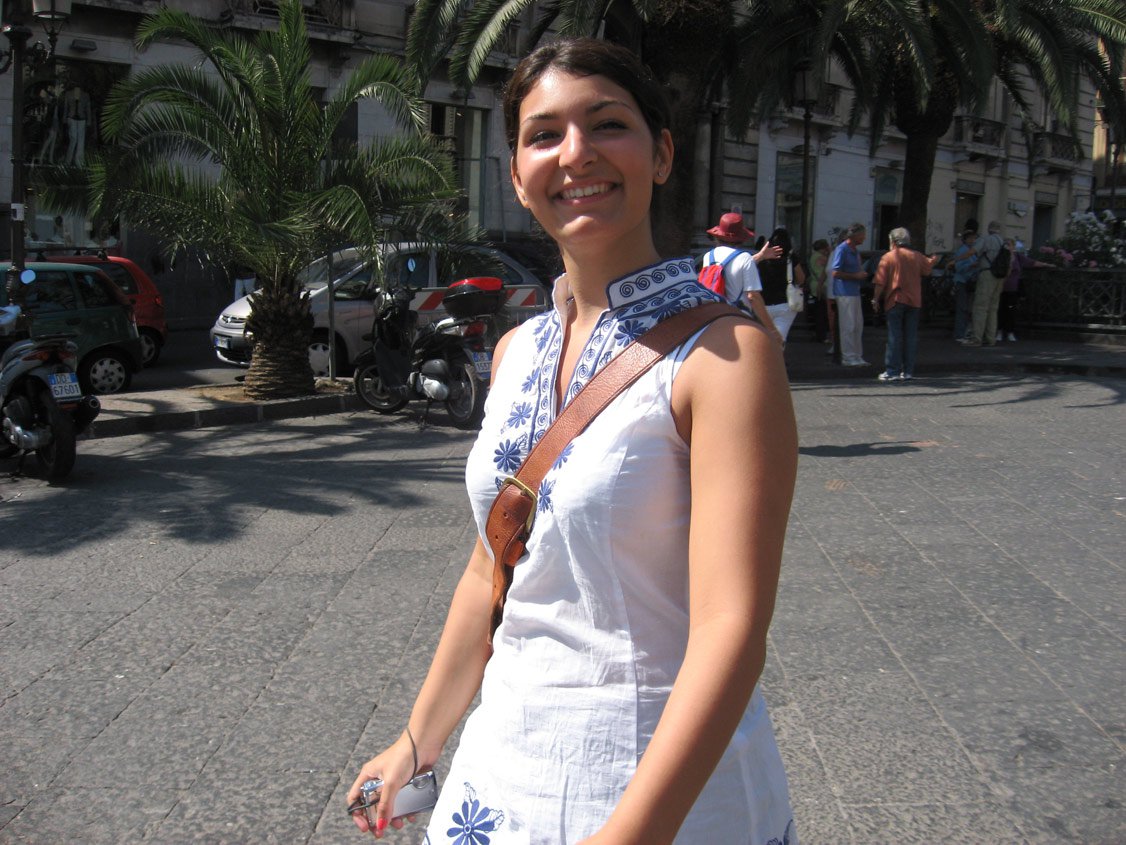
I first moved abroad in 2008-2009, landing in Catania. I was young, dumb, and had dragged along my worldly possessions in two suitcases. It’s a wonder my parents let me go because now, looking back, that was so much responsibility for someone so young! But honestly, I’d wanted to live in Italy for as long as I can remember. My family is from there, I grew up surrounded by Italian traditions, and I was bilingual from the time I was little, so once I was old enough to actually do something about it, I went all in.
I didn’t want to just spend a semester abroad and then go home. I wanted to live in Italy and study at an Italian university, in Italian. The problem was that at the time, American students needed something like 30 or 40 college credits before an Italian university would even consider admitting them to the first year. So before I could start over as an Italian freshman, I had to do an entire year of college in the U.S. first.
That year was brutal. I worked in a Manhattan office until five, then booked it back to Queens for classes from 6:30 to 9:30. I was exhausted constantly. But I did it.
What challenges did you face during the move?
Believe me when I say this: it is one thing to vacation in Italy, but entirely another to actually live in Italy. The bureaucracy is legendary (didn’t the Romans invent bureaucracy?). On any given weekday, you may find yourself having wasted an entire day just to ask for a stamp or a signature on a document, only to find that when you walk up to the window, the person behind it says “Oh, no, you have to go across town.” You may find yourself having read an extremely detailed and specific guide on a particular government office’s website, only to find the people at the office are completely unwilling or unable to help. It is maddening.
At first, it used to make me angry. As an American, I wanted to rail against the system. I mean, I was practically ready to call a congressperson. But now, as a battle-hardened pro–I’ve since gotten a Master’s in Italian Immigration Administration and I am a Certified Investment Migration Professional, so I’ve earned my stripes–it just makes me smile. You have to realize that you cannot change Italy. You can only roll with it. Once you realize that, you start to relax.
What do you enjoy most about life in your new country?
Um, everything?
The food, the architecture, the safety, the pace of living, the Culture with a capital “c” that surrounds you every day. Did I mention the food?
What is the hardest part of expat life for you / your family?
I sometimes miss NYC. I miss my family and friends. I miss good Malaysian/Korean/Latin American food. I miss going to a movie and not having to wonder if it’ll be dubbed into Italian (one thing I will never defend about Italy is the love of dubbing over subtitles! I will die on this hill.).
What is your relationship like with locals and other expats?
This is where Italian is key, because it unlocks your relationship with locals. If you don’t speak Italian, you can never fully integrate into Italian society.
I know that’s not what people want to hear, but Italy is not the Netherlands or Scandinavia. There’s a whole genre of expat content out there that suggests you can move to Tuscany, get by on hand gestures and a few stock phrases, and live your best Under the Tuscan Sun life. You can’t. Or rather, you can, but you’ll be living in a parallel expat bubble, not actually in Italy. You’ll have surface-level chats with the barista and the postman, you’ll eat at the same restaurants where the waiters speak English, and you’ll wonder why, after years, you still feel like a tourist.
Italians are warm, generous, and genuinely curious about foreigners, but the real friendships, the dinner invitations, the village gossip, and the inside jokes all live in Italian. The moment you can banter, complain about the weather, argue about food, and tease people back, you stop being lo straniero and become a person. It changes your relationship with bureaucracy, your doctor, your landlord, your kids’ teachers, and every single interaction that makes up a life.
Speaking English to navigate Italy is like trying to read a book through frosted glass.
As for other expats: I have lovely expat friends, and there’s a real comfort in being around people who get what you’ve left behind. But I’d caution anyone moving here against making the expat circle your whole world. It’s a trap. The people who thrive long-term in Italy are the ones who treat the expat community as a soft landing pad, not a permanent address.
What advice would you give to someone thinking of making a similar move?
Just do it! We only get one life on this little blue marble. Find a way to make it happen–but also approach it logically. First, think of the country or countries you like. Then, comb over all of the visa options available to you. Study? Elective residence? Work? Investor visas? There are dozens and dozens of types of visas for you to choose, all with their own little idiosyncracies and requirements. Make it your job to familiarize yourself with entry requirements and come to your visa appointment(s) prepared.
And don’t overlook citizenship by descent. A lot of Americans (and Canadians, Brits, Australians, and others) are walking around eligible for dual citizenship through a parent, grandparent, great-grandparent, or beyond and have literally no idea. If you’ve got European roots, that’s often the cleanest path of all: no visa renewals, no income thresholds, no expiration date. I run a consultancy called Roots Recovered that helps people reclaim citizenship by descent. There’s nothing quite like watching someone realize the passport they thought they’d have to earn was theirs the whole time.