
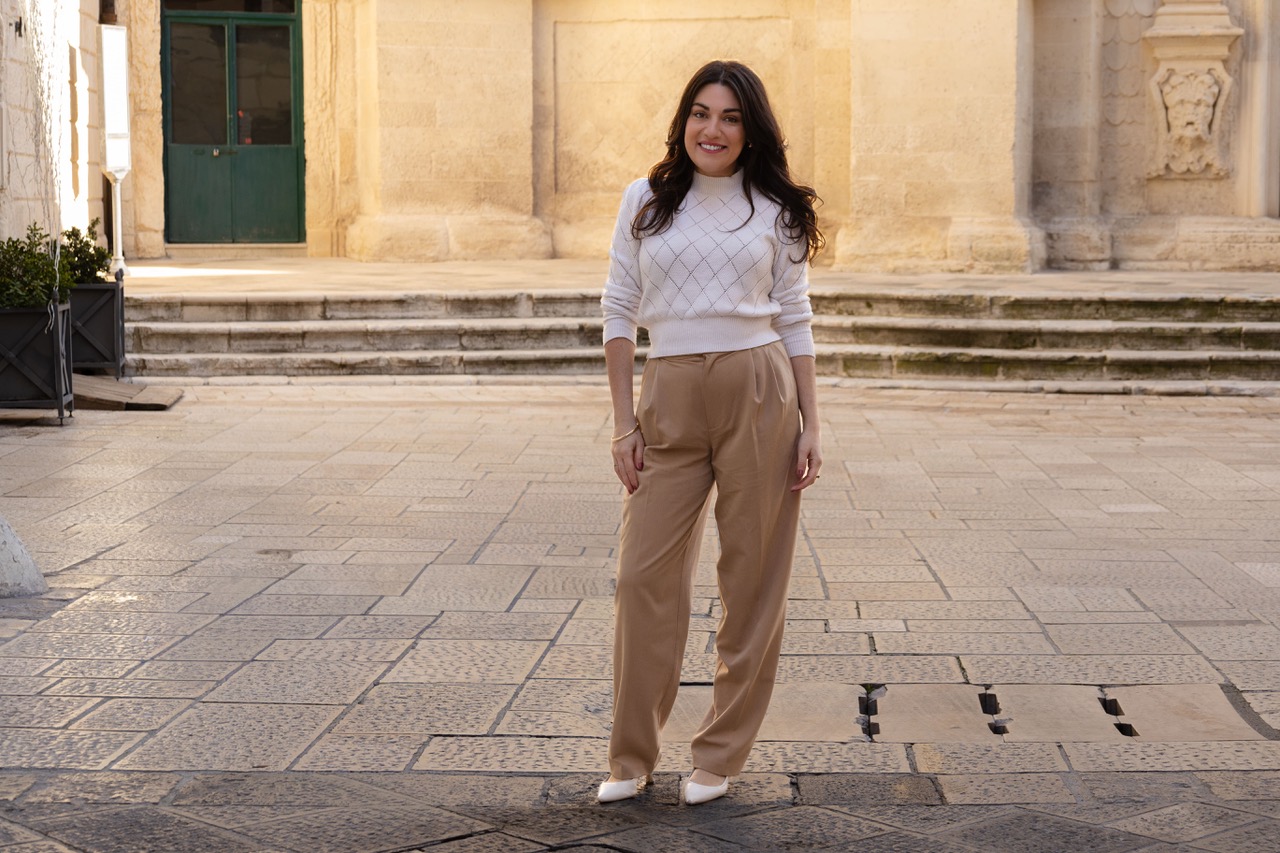
Stefanie Reilly is an Australian-born relocation specialist now based in Salento, Puglia. After relocating to Italy at 40, she now helps others make the move to southern Italy via www.italyandback.com.
Where, when and why did you move abroad?
I moved to Italy from Melbourne, Australia, in February 2025 to pursue my Italian citizenship. I decided to apply in Italy as the process was much quicker, and I knew the laws could change at any moment.
At the same time, I was also ready for something new and exciting. I had just turned 40, and while I had a very good life in Melbourne and strong relationships with family and friends, I felt like everything was the same for me. I didn’t have a relationship or children to keep me there, and I’d always felt a pull to Italy.
For where I am in my life right now, being in Italy feels right for me. Whether it’s something I’ll need forever, I’m not sure. I’m really open to what unfolds, and it’s nice finally being in a place where I’ve made peace with that uncertainty.
What challenges did you face during the move?
The most difficult part of the move was not knowing if I would ever get dual citizenship. The processes are very complex, subject to change, and not always communicated clearly in advance. That makes it hard to plan with confidence, particularly when decisions involve housing, finances, and long-term commitments. Things can shift quickly, and you’re often required to adapt in real time. Thankfully, I found a fantastic lawyer who guided me through the entire process and made the move itself fairly seamless.
Beyond the legal process, adjusting to how things operate day to day in Italy was challenging. Planning is far less rigid, timelines are very flexible, and decisions are often made late in the process. Coming from a culture that values clarity and advance notice, and from a career in PR balancing many deadlines and clients, learning to live with that level of ambiguity took time — and it still does.
What do you enjoy most about life in your new country?
What I value most is the challenge itself. Living in Italy has required me to slow down, observe things more closely, and let go of needing everything to be resolved immediately. There’s less emphasis on efficiency and productivity and more on presence, which changes how you experience daily life. It’s nice eating only seasonal food and prioritising a walk after dinner. I live in Lecce, Puglia, so I love the fact that I can go out and almost always run into someone or see a familiar face.
What is the hardest part of expat life for you?
Being away from family and friends is the most obvious difficulty, and that distance is always in the background — and more present when things are challenging. Time zones, missed events, and the inability to easily show up when it matters can weigh heavily.
Less obvious, but just as challenging, is language. Not being fully understood — and not being able to fully express your personality — can be quiet isolating. I’m still learning Italian, and there are many moments in group settings where you’re surrounded by conversation but unable to properly participate. That kind of loneliness is subtle, but real.
What is your relationship like with locals and other expats?
The language barrier means communication takes effort and patience on both sides, and trust builds over time rather than immediately. My relationships with locals have developed slowly and often through everyday interactions, but I also joined a digital community which has enabled me to mix with a number of locals and expats. Often, conversations are a considered amalgamation of both languages.
What advice would you give to someone thinking of making a similar move?
Don’t overthink it. If you feel like it’s something you want to do and you have the opportunity, then give it a go. You don’t have to have it all worked out, and if you don’t like it, you can always come back. Think about what it is you need right now. If it’s to pause and gather yourself, consider a more relaxed setting.
“Vediamo” — we’ll see — is a common mindset here, and learning to live with that is essential. Italy is not a place that rewards rigid planning, and that can be confronting if certainty is important to you, but it can also challenge you and make you really reflect on things.
Ultimately, you’ve got one life. Go out there and live it!