
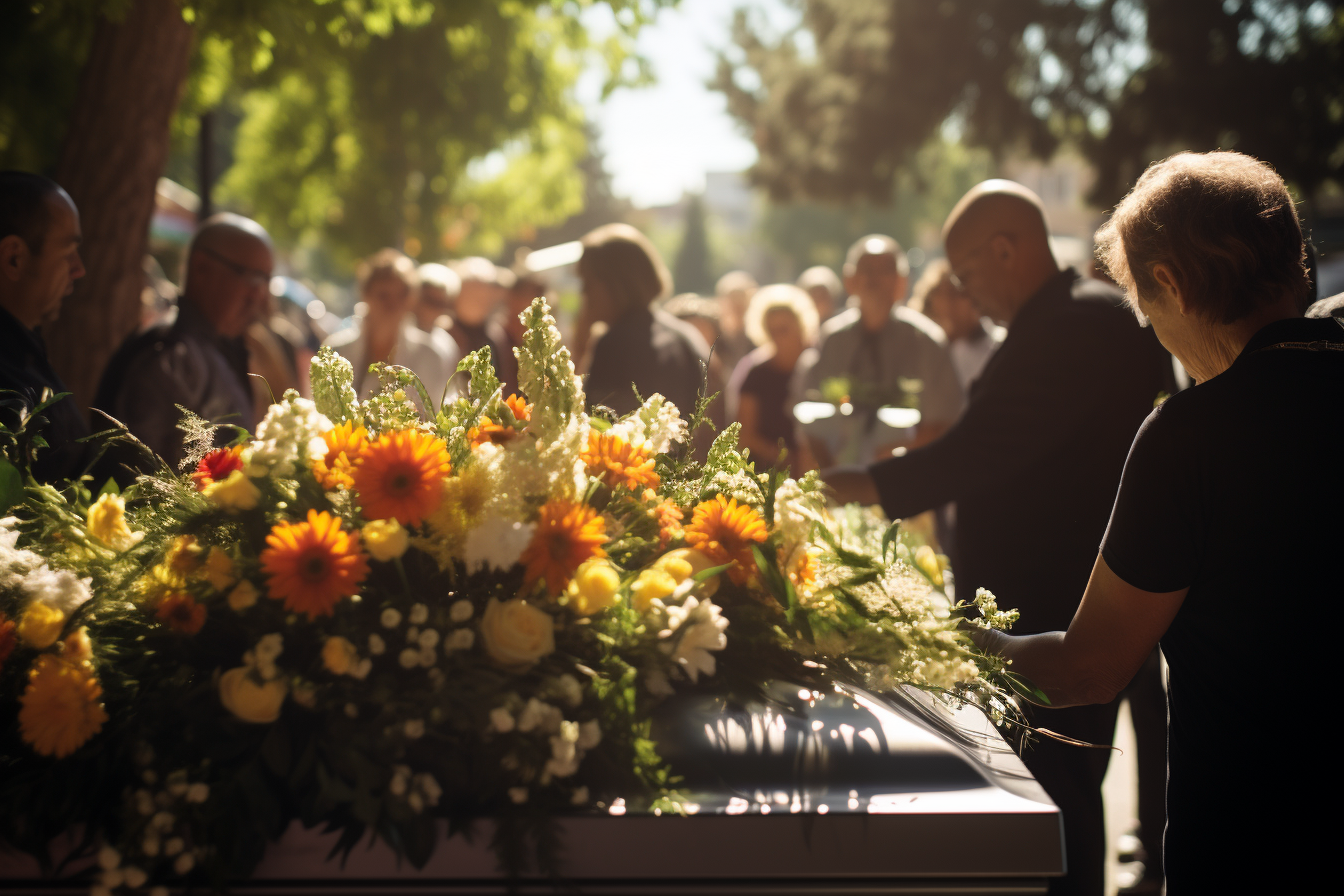
Kuwait offers end of life care through hospital palliative units, NGO-operated hospice services, and home-based programmes, although specialist provision is considerably less developed than in many other nations. When a death takes place, families must move swiftly: Islamic custom requires burial within 24 hours, cremation is not permitted, and both Kuwaiti authorities and the deceased’s home country embassy must be contacted without delay to initiate death registration and, where necessary, repatriation.
| Item | Details |
|---|---|
| Cremation availability | Not available — prohibited under Islamic law |
| Burial timeframe (Muslim custom) | Typically within 24 hours of death |
| Death registration authority | Central Registry Management of Births and Deaths, Ministry of Health |
| Non-Muslim cemetery | Located in Sulaibikhat, Kuwait |
| Inheritance tax | None in Kuwait (as of 2024); administrative costs may apply |
| Remains preparation for repatriation | Al-Sabah Hospital Mortuary (only approved facility in Kuwait) |
What end of life care options are available in Kuwait, and how does the system work?
End of life care in Kuwait is centred on giving patients who are approaching death comfort, dignity, and emotional support. Services are delivered through several channels — palliative care units within hospitals, hospice facilities, and care provided at home — spanning both the public and private healthcare sectors, though overall provision is less comprehensive than in countries with long-established national palliative care frameworks.
Palliative care is still an evolving field across the Gulf Cooperation Council, including in Kuwait. In contrast to systems such as the NHS in the United Kingdom — where palliative care is a fully integrated medical specialty operating across primary, secondary, and community settings — Kuwait’s end of life care infrastructure remains in development, with most specialised services concentrated in larger hospitals or delivered by non-governmental organisations.
The range of palliative services available in Kuwait includes dedicated ward-based units, community care teams, and home-based nursing support provided by multidisciplinary teams comprising doctors, nurses, social workers, and chaplains. Expatriates are advised to discuss their end of life care wishes with their treating physician at an early stage, since access to specialist palliative services typically requires a formal referral.
What is palliative care in Kuwait, and who is eligible for it?
Palliative care is a vital component of end of life support in Kuwait, aimed at relieving pain and managing symptoms to enhance the quality of life for people living with serious conditions such as cancer, heart failure, or advanced kidney disease. Importantly, it is not confined to those who are imminently dying — it can run alongside curative treatment from the point of diagnosis of a serious illness.
Estimates suggest that Kuwait has approximately 0.09 specialist palliative care services per 100,000 people, reflecting the relatively limited capacity of the system. In practical terms, access to a dedicated palliative care specialist may vary considerably depending on which hospital a patient attends and whether their condition has been referred through an oncology pathway.
Both Kuwaiti nationals and expatriate residents may access palliative care services. There is no formal restriction based on nationality or residency, though for expatriates, access is closely linked to health insurance coverage and whether treatment is received at a government or private facility. Referrals to palliative care are most commonly made for patients with life-limiting diagnoses including cancer, advanced cardiovascular disease, renal failure, and progressive neurological conditions. Patients and families should speak directly with their treating doctor or hospital social worker to request a referral.
Are there hospices in Kuwait, and how do you access them?
Hospices are dedicated facilities that provide specialised end of life care to people with terminal illnesses. In Kuwait, hospice services are primarily delivered by non-governmental organisations and are situated in urban areas, offering pain management, palliative support, and emotional care for both patients and their families.
The Kuwait Association for the Care of Children in Hospital (KACCH) operates Bayt Abdullah Children’s Hospice (BACCH), an expansive facility set within generous grounds that provides comprehensive care to those in need across Kuwait. KACCH and BACCH’s central mission is to deliver high-quality paediatric psychosocial and palliative care in close partnership with children and their families, whether in hospital, at home, or within the hospice itself.
The hospice’s interdisciplinary team attends to the physical, spiritual, social, and psychological needs of patients and their families. The team includes onsite doctors, nurses, physiotherapists, clinical dietitians, occupational therapists, pharmacists, child life specialists, and a music therapist. It should be noted that BACCH caters specifically to children and young people living with life-limiting conditions.
True to its commitment to accessibility, all care at the hospice is provided free of charge, and referrals are accepted from both government and private healthcare providers. For adults, hospice-style care may be obtainable through palliative units within hospitals or via community nursing arrangements. Expatriates seeking such care should request a formal referral from their hospital consultant or general practitioner. Further details about KACCH and BACCH are available at kacch.org.
Is palliative or hospice care covered by public health insurance or the national health system in Kuwait, or does it need to be funded privately?
Kuwait’s healthcare system operates on a dual public–private model. Kuwaiti nationals are entitled to free treatment through the Ministry of Health (MOH), while expatriates are generally required to hold employer-sponsored or private health insurance and pay subsidised fees when using government facilities. Unlike universal healthcare models — such as Medicare in Australia or the UK’s National Health Service — the healthcare entitlements available to expatriates in Kuwait are closely tied to residency status and insurance arrangements.
Palliative care delivered within government hospitals is accessible to expatriates at the subsidised MOH rate, provided they hold a valid civil ID (PACI card) and health card. However, dedicated palliative care units in government hospitals are scarce, and patients may find themselves accommodated in a general oncology or medical ward rather than a specialist palliative care environment.
Bayt Abdullah Children’s Hospice is funded principally through donations from the Kuwaiti public, with the government contributing towards supplies and staffing costs. As mentioned above, all care at the hospice is provided free of charge and is open to referrals from both sectors. For adult palliative care in private hospitals, the costs involved will depend on the terms of the patient’s insurance policy. Expatriates are strongly encouraged to review their health insurance documentation in advance to confirm whether palliative, hospice, or end of life care is included — and to seek written confirmation from their insurer if in any doubt.
What legal documents should expats have in place before the end of life in Kuwait — such as a living will, advance directive, power of attorney, or healthcare proxy — and how do these work?
Kuwait does not have a clearly established legal framework for advance directives — sometimes called living wills — equivalent to those found in many Western countries. No specific Kuwaiti legislation sets out a standardised process for formally registering a healthcare directive with the government. While a written document expressing your treatment preferences may be acknowledged by medical staff, its legal enforceability cannot be guaranteed in the way it might be, for example, under the Mental Capacity Act in England and Wales.
Even so, expatriates are strongly encouraged to prepare a written statement of their healthcare wishes and share it with their treating physician, their hospital, and their family. Some private hospitals in Kuwait — particularly those holding international accreditation — may operate their own internal procedures for recording patient preferences regarding resuscitation or end of life intervention. It is worth asking your hospital whether such an advance care planning process exists.
A Power of Attorney (POA) is a document that authorises a trusted individual to act on your behalf in legal, financial, or medical matters should you become incapacitated, and it is highly recommended for all expatriates. For a POA to be valid in dealings with Kuwaiti authorities, it must be notarised and should either be drafted in Arabic or accompanied by a certified Arabic translation. Consulting a lawyer in Kuwait who understands both local civil law and the requirements of your home country’s legal system is advisable. An internationally structured POA may provide coverage across both jurisdictions.
Are documents such as advance directives or powers of attorney made in another country legally recognised in Kuwait?
Kuwait is not a signatory to the Hague Apostille Convention. This means that foreign legal documents cannot be validated through a simple apostille — instead, they must undergo a full chain of authentication and legalisation. This requirement applies to powers of attorney, advance directives, wills, and other documents drafted abroad that are intended for use in Kuwait.
The authentication procedure typically begins with notarisation in the country where the document was created, followed by certification from the relevant national authority (such as a foreign ministry or department of state), and concludes with legalisation carried out by the Kuwaiti embassy or consulate in that country. Kuwaiti authorities impose this requirement to verify the authenticity of foreign documents and to guard against the submission of falsified or altered paperwork.
In practice, even a fully legalised foreign advance directive may not be enforceable by Kuwaiti medical staff, as there is no specific legal mechanism in Kuwait to give effect to such a document. Nevertheless, having a properly authenticated power of attorney is essential for anyone who may need a representative to manage their affairs in the event of incapacity. Families should plan ahead, as the complete authentication process can take several weeks depending on the document type and the workload of the agencies involved.
What are the laws around euthanasia or assisted dying in Kuwait?
Euthanasia and assisted dying are prohibited in Kuwait. No legislation exists that permits physician-assisted death, voluntary euthanasia, or any form of assisted suicide. Kuwait’s legal and medical ethics landscape is deeply shaped by Islamic law (Sharia), which holds the deliberate taking of human life — including one’s own — to be forbidden. This position is broadly aligned with the stance adopted across the other Gulf Cooperation Council states.
Within clinical settings, withdrawing life-sustaining treatment — such as mechanical ventilation — in cases of irreversible brain death may be considered following consultation between the patient’s family and a medical ethics committee. However, any active measure intended to accelerate death is not permitted. Expatriates arriving from countries where assisted dying legislation has been enacted — such as Canada, the Netherlands, or certain Australian states — should understand that no comparable options are available in Kuwait, and that end of life medical decisions will be governed by Kuwaiti law and Islamic medical ethics.
Palliative sedation to relieve severe and uncontrollable distress, as well as the administration of adequate pain relief even where this may incidentally abbreviate life (known as the doctrine of “double effect”), are generally accepted under Islamic medical ethics and are practised within Kuwaiti hospitals. Patients and families are encouraged to discuss their concerns openly with the medical team.
What are the local customs, traditions, and religious practices around death and dying in Kuwait?
In Kuwait, death is regarded as an intrinsic part of life, and a range of customs and observances are followed when a person dies. These vary according to geographic region and the religious convictions of the individual and their family. Islam is the dominant religion in Kuwait and exerts a profound influence on how death, dying, and bereavement are understood and experienced.
Within Islamic tradition — which shapes the majority of Kuwaiti society — a funeral is held to honour the deceased. Mourners customarily gather at the home of the deceased to recite prayers and verses from the Quran. Burial according to Islamic rites should take place at the earliest opportunity, ideally within 24 hours of death. Embalming and cremation are contrary to Islamic custom and law, and neither practice is available in Kuwait.
A mourning period follows a death in Kuwait, which may last from a few days to several weeks depending on regional tradition and the family’s religious beliefs. During this time, family members may wear black clothing and withdraw from social activities. It is customary for relatives and friends to visit the bereaved family to offer their condolences and provide support during this period of grief.
For non-Muslim expatriates, Kuwaiti authorities maintain a non-Muslim cemetery. Christians wishing to arrange a local burial can do so through a local church, and the non-Muslim cemetery is situated in Sulaibikhat. Non-Muslim families should note that burials may not take place after sunset. Expatriates of faiths other than Christianity are advised to contact their home country’s embassy or consulate in Kuwait for guidance on the facilities available to them.
What must you do when someone dies in Kuwait? Who do you notify, how quickly, and in what order?
The steps to follow when a death occurs in Kuwait differ depending on whether the death takes place in a hospital or somewhere else. Acting promptly is essential, both because Islamic tradition calls for rapid burial and because Kuwait’s climate accelerates deterioration of remains. The standard procedure is outlined below:
- If death occurs outside a hospital: When a death occurs outside a hospital, the police should be immediately notified at the Ministry of Interior emergency number 112. Along with police officers, forensic medicine personnel will respond to the scene to transfer the remains to the Forensic Medicine Department in Farwaniya.
- If death occurs inside a hospital: The hospital’s medical team will confirm the death and issue a medical notice. If a physician can make a final determination of the cause of death, the hospital will provide the legal representative with the notice of death (known as a pink sheet) for the Central Registry Management of Births and Deaths in the Ministry of Health to issue the official Kuwaiti death certificate.
- For deaths outside hospital — forensic investigation: In most cases, an autopsy will be completed by forensic examiners to determine the cause of death. At the same time, the Investigation Office at the police station with jurisdiction over the location of the death will open a case file.
- Contact the deceased’s home country embassy or consulate: In order to issue the death certificate, the Kuwaiti Ministry of Health requires an authorisation letter from the embassy. This letter is issued by the embassy to the legal representative. Contact the relevant embassy as soon as possible to begin this process.
- Obtain the official death certificate: After obtaining the necessary burial permit, the Forensic Medicine Department (for deaths outside a hospital) or the Kuwaiti Ministry of Health (for deaths inside a hospital) will issue a notice of death (the pink sheet). Based on this, the Central Registry Management of Births and Deaths at the Ministry of Health will issue the official Kuwaiti death certificate.
- Have the death certificate authenticated: The death certificate issued by the birth and death registration office must be attested by the Ministry of Foreign Affairs, Consular Section, located at Shuwaikh, next to the Kuwait News Agency Building.
- Translate and use the death certificate: Once the official Kuwaiti death certificate is obtained, it must be translated into English (or another required language). The legal representative may select any translation office to complete this service.
- Decide on burial or repatriation and notify relevant parties: Inform the airline (if repatriating), the funeral home, and the embassy. Cancel the deceased’s Civil ID (PACI card) and residency permit with the relevant authorities.
How is a death officially registered in Kuwait, and what documents are needed?
The Public Authority for Civil Information (PACI) oversees civil registration matters in Kuwait, while the official death certificate is issued by the Central Registry Management of Births and Deaths, operating under the Ministry of Health. Registration must be completed without delay, as it is a prerequisite for either burial or repatriation to proceed.
The Central Registry Management of Births and Deaths office in Maidan Hawalli is responsible for the Hawalli Governorate and the Capital Governorate. The Fahaheel office covers the Ahmadi Governorate and Mubarak Al-Kabeer Governorate. The Sabhan office serves the Farwaniya Governorate, and the Qasr office covers the Jahra Governorate.
To register a death, the legal representative will typically be required to present the following: the hospital-issued notice of death (pink sheet) or a forensic medicine notice; the deceased’s passport and Civil ID (PACI card); the embassy authorisation letter (in the case of foreign nationals); and any additional documents requested by the registration office. The person reporting the death must supply the deceased’s full name, the date and location of death, the cause of death where known, and other pertinent details. In certain circumstances, a medical certificate of cause of death from the attending physician may also be required.
The official Arabic death certificate must subsequently be authenticated by the Consular Department of the Ministry of Foreign Affairs. Once authenticated, the document should be translated if it is required for use in another country. Certified copies of every document should be retained throughout, as they will be needed at several stages of the process.
What happens if a foreign national dies in Kuwait — what are the specific steps for notifying their home country’s embassy or consulate, and what role does the consulate play?
When a foreign national dies in Kuwait, contacting the deceased’s home country embassy or consulate is among the most critical and time-sensitive actions to take. The consulate occupies a central administrative role in the death registration process for foreign nationals in Kuwait.
The Kuwaiti Ministry of Health requires an authorisation letter from the embassy before it can issue the death certificate. This means that without consular involvement, the official death certificate cannot be produced. The consulate or embassy should be contacted by telephone as soon as the death is confirmed — this should not be deferred until other documentation is assembled.
The consulate will typically assist with: issuing the authorisation letter required by the Kuwaiti Ministry of Health; recording the death in the home country’s official records; issuing a local death certificate or equivalent document for use in the home country; providing a list of local funeral directors and translation services; and advising on the repatriation process, including the requirement for an embassy representative to countersign the certificate of repatriation.
During Kuwaiti customs clearance, the immigration desk at the airport will cancel the deceased’s valid residency. The consulate can also advise on the cancellation of any other official documents in the deceased’s name, such as the Civil ID, work permit, and driving licence. All correspondence with the consulate should be retained throughout this process.
How are funerals typically arranged in Kuwait, and what are the usual options for burial or cremation?
Funeral practices in Kuwait are shaped by regional customs and the religious beliefs of the deceased and their family. Burial is the standard method of disposition in Kuwait. For Muslim residents — both Kuwaiti nationals and expatriate Muslims — Islamic burial rites apply, with interment expected to take place as promptly as possible, and ideally within 24 hours of death.
Both embalming and cremation run contrary to Islamic custom and law, and neither is available in Kuwait. This is a crucial point for non-Muslim expatriates to understand: irrespective of personal preference or religious background, cremation cannot be performed in Kuwait. Should cremation be the deceased’s or family’s wish, the remains must first be repatriated to a country where this is lawfully permitted.
For non-Muslim expatriates, local burial can be arranged through a church (for Christians), and the non-Muslim cemetery is located in Sulaibikhat. Funeral directors operating in Kuwait — some of whom are experienced in managing international repatriation — can assist families with the practical logistics. Your home country’s embassy in Kuwait can supply a list of recommended funeral service providers. Although steps are taken to preserve the remains, deterioration in Kuwait’s climate should be anticipated, making it important to act quickly.
What are the approximate costs of a funeral in Kuwait, and are there any state or insurance-based funds that can help cover them?
Funeral and death administration costs in Kuwait vary considerably depending on whether the deceased will be buried locally or repatriated. Detailed published fee schedules from Kuwaiti funeral homes are not widely available, and charges are subject to change. Expatriates are encouraged to obtain direct quotes from funeral service providers and to confirm all relevant fees with the appropriate authorities.
For a local burial in Kuwait, typical costs include the funeral director’s fee, transportation of remains, grave plot costs, and charges for any religious officiant. For non-Muslim burials at the Sulaibikhat cemetery, a plot fee may be applicable. Repatriation involves substantially higher costs and will generally include preservation procedures, the zinc-lined coffin or approved air freight container, airfreight charges calculated by weight and distance, and documentation fees.
No state funeral benefit or government grant is available to expatriates in Kuwait to offset these expenses. Expatriates should review their life insurance, international health insurance, or employer-provided policies to determine whether repatriation of remains is covered — sometimes described as “mortal remains repatriation” cover — which is included in some international health and travel insurance policies. Employer end-of-service entitlements (EOSB/gratuity) may provide some financial assistance to the family after the fact, but will not address the immediate costs of the funeral.
What is the process for repatriating the remains of a foreign national from Kuwait to another country?
Repatriating remains from Kuwait is a process involving multiple parties: the Kuwaiti authorities, the home country embassy, a funeral director, and the airline. Prompt action is essential. The legal representative bears responsibility for selecting the appropriate carrier for transporting the remains. To obtain an airway bill, coordination with the funeral home receiving the body at the destination country is required. Kuwait Airways Cargo, Airport Police, and the Health Office must all be notified that human remains are to be shipped.
The day before shipment, the body must be transferred from the General Department of Criminal Evidence to the Al-Sabah Hospital Mortuary (Tel: 2483-2090), which is the sole medical facility in Kuwait authorised to prepare remains for shipment. The legal representative must attend the Preventive Medicine Unit of Al-Sabah Hospital with the necessary documentation, including a letter (Certificate of Repatriation) clearing the body for transport from Kuwait to the receiving country.
Where an inquest is ongoing, the process may extend to several weeks or months, though the Investigation Office will still issue the permit required for funeral arrangements or body transfer to proceed. In such cases, the cause of death on the death certificate may be recorded as unknown. Some funeral homes in other countries decline to accept death certificates listing an unknown cause of death, so it is advisable to verify this with the receiving funeral home before proceeding. The local authorities must also be informed if the deceased suffered from an infectious condition such as hepatitis or HIV, so that appropriate precautions against infection can be taken.
What happens to the estate of someone who dies in Kuwait — how does probate or estate administration work, and are there inheritance taxes?
Inheritance in Kuwait is governed by a combination of Sharia law for Muslims and civil law for non-Muslims. Kuwait follows a civil law system, and the rules of inheritance applicable to Muslims are derived from Islamic principles as set out in the Quran and Hadith.
The estate administration process in Kuwait typically begins with probate. If the deceased left a will, it is submitted to the Kuwaiti court, which verifies the document and confirms that it satisfies the requirements of Kuwaiti law. Before any assets are distributed among heirs, the deceased’s outstanding debts — including funeral costs — must first be settled.
All bank accounts held in the name of the deceased expatriate will be frozen upon their death, and funds cannot be transferred to any other account without authorisation from a Kuwaiti court. This can create serious practical difficulties for the bereaved family and is a compelling reason why all expatriates are strongly advised to have a valid will in place. Armed with a court order from the deceased’s home country, the family or heirs will need to apply to a Kuwaiti court to recover the funds held in the frozen accounts. Engaging a Kuwaiti lawyer to navigate this process is strongly recommended.
Kuwait does not impose inheritance taxes, though administrative costs may arise. Expatriates should also note that the end-of-service gratuity (EOSB) — a statutory payment owed by the employer to an expatriate worker’s estate — constitutes a potentially significant asset that the legal heirs are entitled to claim. Professional legal advice from a Kuwaiti lawyer is highly advisable for all aspects of estate administration.
If an expat dies without a will in Kuwait, what happens to their assets under local intestacy laws?
As noted above, inheritance in Kuwait is governed by Sharia law for Muslims and civil law for non-Muslims. Non-Muslim expatriates are generally subject to civil law principles in respect of their estates and have the option to prepare a will to direct how their assets are distributed.
If a non-Muslim expatriate dies intestate — that is, without leaving a will — their heirs may be able to petition the Kuwaiti court to apply the inheritance law of the deceased’s home country instead of Sharia. The heirs should specifically ask the court to resolve the matter in accordance with the inheritance legislation of the deceased’s own country rather than that of Kuwait. Failing to make this request clearly may result in the deceased’s assets being distributed under Islamic Sharia principles, potentially leading to a complex situation involving multiple heirs.
A letter from the courts of the deceased’s home country, clearly identifying who is entitled to inherit the assets, will be required. Once obtained, this judgement must be attested by the Foreign Ministry of the home country and subsequently by the home country’s embassy in Kuwait. This process can be both time-consuming and expensive. For Muslims dying intestate in Kuwait, the estate is distributed in accordance with Sharia law, which prescribes fixed shares for designated categories of heirs. All expatriates are strongly advised to prepare a valid will before settling in or remaining in Kuwait — ideally one drawn up with legal guidance covering both Kuwaiti requirements and the laws of their home country.
Frequently Asked Questions
Will my foreign health insurance be accepted for palliative care in Kuwait?
The answer depends on your specific insurer and the facility you attend. International health insurance policies are generally recognised at private hospitals in Kuwait, but you should verify in advance whether your policy extends to palliative, hospice, or end of life care specifically. Government hospitals in Kuwait charge expatriates at a subsidised rate regardless of insurance, but dedicated palliative care services within those facilities are limited. Always carry your insurance documents with you and review your policy’s conditions regarding pre-authorisation requirements for palliative or long-term care.
Are documents in a language other than Arabic valid in Kuwait?
The official Arabic death certificate must be authenticated by the Consular Department of the Ministry of Foreign Affairs. Foreign-language documents intended for use with Kuwaiti authorities must be translated into Arabic by an authorised translation centre, and the original foreign documents must complete the full legalisation and authentication chain before they will be recognised. After attestation from the Ministry of Foreign Affairs, the death certificate may be translated into English or another required language by any authorised translation centre in Kuwait if needed for use abroad.
How long does the repatriation of remains from Kuwait typically take?
In uncomplicated cases where the cause of death is clear and all documentation is in order, repatriation may be completed within several days to a week. If, however, a forensic investigation or inquest is required, or if there are delays in securing the embassy authorisation letter or the Ministry of Foreign Affairs attestation, the process may extend to several weeks or longer. Engaging a local funeral director with experience in international repatriation and acting without delay will help reduce the time involved.
What support is available to bereaved family members living in Kuwait?
Bereaved family members can seek emotional and practical support from their home country’s embassy or consulate in Kuwait, from community and religious organisations, and from private counselling practitioners. Some private hospitals in Kuwait provide bereavement support through their social work departments. Expatriate community networks and faith communities — including churches, mosques, and temples — may also offer informal pastoral and practical assistance. Anyone struggling following a bereavement should not hesitate to contact their embassy’s consular welfare service for a referral to appropriate support.
Can I write a will in Kuwait as a foreign national, and will it be valid?
Non-Muslims are able to prepare a will to govern the distribution of their estate, but must take care to ensure it meets the requirements of Kuwaiti law. A will drawn up in Kuwait should be in Arabic — or be accompanied by a certified Arabic translation — notarised before a Kuwaiti public notary, and ideally registered with the relevant Kuwaiti court. It is advisable to maintain separate wills for assets held in Kuwait and assets held in your home country, each prepared with legal advice appropriate to the relevant jurisdiction.
What happens to an expat’s end-of-service gratuity (EOSB) if they die in Kuwait?
End-of-service gratuity (EOSB) is a statutory entitlement owed by a Kuwaiti employer to an expatriate worker upon the termination of employment, including in the event of death. This payment does not lapse — it forms part of the deceased’s estate and may be claimed by the legal heirs. Upon presentation of the appropriate court-issued inheritance documentation, the employer is required to pay the gratuity to the named inheritor or to whoever holds a power of attorney on behalf of the heirs. A Kuwaiti lawyer can provide assistance with this process.
Is there a specific hospital or facility where remains must be prepared for repatriation from Kuwait?
The day before remains are to be shipped abroad, the body must be transferred to the Al-Sabah Hospital Mortuary, which is the only medical facility in Kuwait authorised to prepare remains for international shipment. The legal representative must attend the Preventive Medicine Unit of Al-Sabah Hospital with all required documentation. The home country’s embassy and the local funeral director can assist in organising this transfer.
Does Kuwait recognise the Hague Apostille Convention for foreign documents?
Kuwait is not a party to the Hague Apostille Convention, which means that foreign documents cannot be validated through a straightforward apostille — they must instead undergo a full chain of authentication and legalisation. This requirement applies to wills, powers of attorney, advance directives, and any other legal documents issued overseas that are intended for use in Kuwait. The process involves notarisation in the country of origin, certification by the relevant national authority, and final legalisation by the Kuwaiti embassy or consulate in the issuing country. Several weeks should be allowed for this process to be completed.