
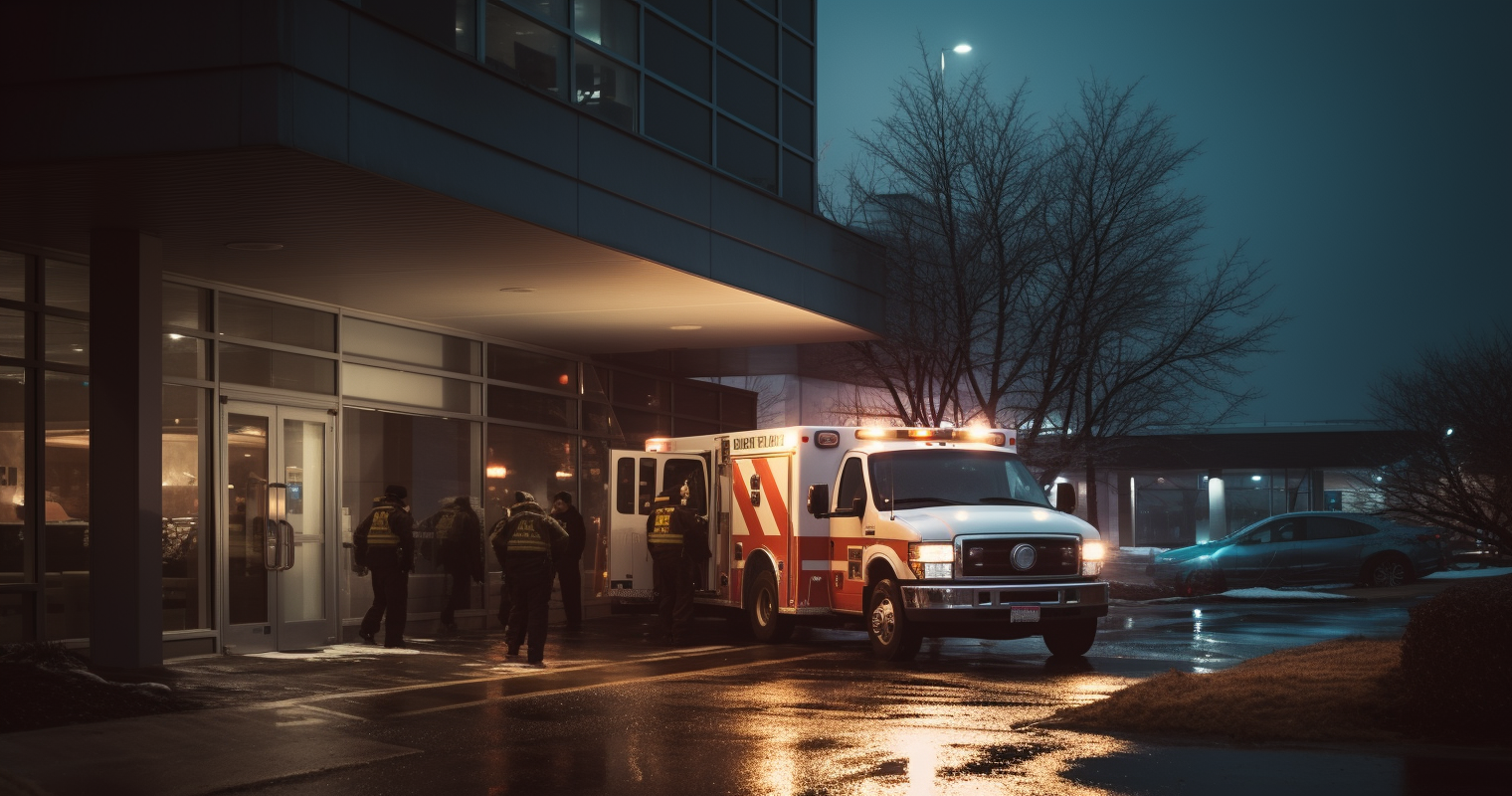
Luxembourg uses a single emergency number — 112 — for fire, ambulance, and civil protection services, while 113 connects callers directly to the police. Both numbers are free of charge from any phone at any hour of the day or night. Anyone presenting at a public hospital emergency department will receive urgent treatment regardless of their insurance status, although residents enrolled in the national health fund (CNS) enjoy the broadest access to follow-up care. Visitors and short-stay arrivals are advised to carry a valid EHIC or comprehensive travel insurance.
| Item | Details |
|---|---|
| Universal emergency number | 112 (fire, ambulance, civil protection) — free, 24/7, as of 2024 |
| Police emergency number | 113 — free, 24/7, as of 2024 |
| Mental health / distress line | SOS Détresse: 454545 — free, 24/7 |
| Emergency ambulance transport cost (EHIC holders) | Free via SAMU, as of 2024 (verify with CNS) |
| Hospital inpatient daily fee | €25.50 non-refundable standard daily fee (not applicable to under-18s), as of 2024 — verify at cns.public.lu |
| National health alert system | LU-Alert (lu-alert.lu) and GouvAlert app |
What is the single emergency number in Luxembourg, and does it cover police, fire, and ambulance?
Whenever a fire brigade response or an ambulance is required in Luxembourg, the number to dial is 112. The call costs nothing, operates around the clock every day of the year, and can be made from both mobile phones and landlines. No country code is required — the number functions identically to the rest of the European Union.
Dialling 112 in Luxembourg connects callers to the Grand Ducal Fire and Rescue Corps (Corps grand-ducal d’incendie et de secours — CGDIS), which takes responsibility for coordinating the response. Once the operator receives the call, they assess the nature of the situation and immediately dispatch the appropriate team — whether that means emergency medical personnel, the fire department, or the police. Luxembourg’s emergency services operate through a closely integrated framework that allows different agencies to work in concert and respond rapidly.
If police assistance is needed specifically, the dedicated number is 113, which connects directly to the Police Grand-Ducale de Luxembourg hotline. Like 112, this service is free of charge and operates continuously, every day of the week. Use this number to report accidents, physical assaults, or theft.
Both 112 and 113 can be reached via SMS, giving people with hearing or speech difficulties a means of reporting emergencies without requiring a voice call. This accessibility feature is especially valuable for those who are unable to speak in a crisis. The moment you arrive in Luxembourg, save both numbers in your mobile phone.
How do you call for emergency medical assistance in Luxembourg, and what should you expect?
For any medical emergency, dial 112. The service runs around the clock and can be reached from any telephone. Most operators are able to communicate in several languages, including English. When the call connects, speak as calmly and clearly as possible, and be prepared to give your name, the nature of the problem, and a precise location — ideally a full street address or a recognisable nearby landmark.
Not all ambulances in Luxembourg carry paramedic-level staff, so in a life-threatening situation it is important to specifically request a SAMU (Le Service d’Aide Médicale Urgente — Emergency Medical Aid Services). Doing so ensures that a vehicle staffed by a doctor is dispatched to the scene. This is a notable difference from countries where all ambulances automatically provide advanced pre-hospital care.
Ambulances are distributed across the country to enable prompt responses wherever an emergency occurs. When necessary, crews work in coordination with hospitals to arrange rapid transfer to the most appropriate facility. Luxembourg Air Rescue (LAR), a non-profit organisation established in 1988, supplements ground-based services with a fleet of rescue helicopters and medical aircraft, saving close to 3,000 lives annually and operating on a worldwide basis.
Calling 112 is also useful when the situation is not life-threatening but requires prompt attention — operators can direct callers to an on-duty doctor, an open pharmacy, a suitable hospital, or an emergency vet. This makes 112 a valuable first port of call whenever you are unsure where to turn for urgent care.
What should you do in a mental health crisis in Luxembourg?
SOS Détresse operates a free telephone support line on 454545, available at any hour and dedicated to helping people experiencing psychological distress, including those in suicidal crisis. When there is an immediate risk to someone’s life, calling 112 is the correct first action — emergency services respond to mental health emergencies in the same way as any other acute medical situation.
Hospital emergency departments throughout Luxembourg are open to anyone regardless of insurance status, and this includes people presenting in mental health crisis. No referral from a GP is required to attend an emergency department (urgences), and staff will not turn patients away on the grounds that they lack cover.
Specialist psychiatric care is available within the wider hospital network. The Centre Hospitalier de Luxembourg (CHL) and other major hospitals have dedicated psychiatric units accessible through the emergency pathway. If language is a concern, raise it immediately when speaking to the 112 operator — many operators speak multiple languages, and clinical staff at larger hospitals are experienced in treating patients from a wide range of cultural backgrounds. For the most current information on mental health services, consult sante.public.lu, the government’s official health information portal.
Where can you go for emergency medical treatment in Luxembourg?
All hospitals in Luxembourg are public institutions. They are well-equipped and staffed by multilingual professionals, making them dependable settings for both emergency and inpatient care. The largest is the Centre Hospitalier de Luxembourg (CHL), situated in Luxembourg City, which offers a broad range of medical specialisms and modern facilities.
Out-of-hours emergency services across the country are arranged across three geographic areas — South, North, and Centre — covering Centre Hospitalier Emile Mayrisch, Centre Hospitalier du Nord, Hôpitaux Robert Schuman, and Centre Hospitalier de Luxembourg. It is worth knowing that emergency care is not universally available at every hospital at all times; during evenings and weekends, only certain designated hospitals are open for emergency treatment.
The on-duty rota rotates, and up-to-date information on which hospital is currently providing emergency cover can be found in local newspapers, at pharmacies, through doctors’ surgeries, or on notices displayed at hospital entrances. The official health portal sante.public.lu also publishes current on-call arrangements. For paediatric emergencies, the Kannerklinik provides round-the-clock care for children up to the age of 15.
For situations that need prompt attention but do not constitute a genuine emergency, Luxembourg operates a network of out-of-hours medical centres (maisons médicales) that function beyond regular surgery hours. You can also dial 112 to be directed to the nearest on-duty doctor or clinic if you are uncertain where to seek care.
Is emergency medical treatment free in Luxembourg, or is there a charge?
Immediate emergency treatment at hospital emergency departments is provided at no charge, regardless of whether the patient holds health insurance. No one will be refused acute care at the point of need. The picture for subsequent and inpatient costs, however, is more complex.
Patients admitted to hospital are subject to a non-refundable standard daily fee, currently set at €25.50 (as of 2024). This charge does not apply to patients under 18 years of age. Choosing to stay in a first-class private room carries additional costs: the treating doctor is permitted to charge a co-payment that is 66% above the standard rate for all services delivered during the stay, and the higher room charge is not covered by Luxembourg’s health insurance system.
Emergency ambulance transport via SAMU is free for individuals presenting a valid European Health Insurance Card or its replacement certificate. Non-emergency transport operated by public services is reimbursed at 70% of the bill; non-emergency transport by any other ambulance provider is also reimbursed at 70%, calculated on the basis of €1.29 per kilometre with a minimum charge of €39.07 per journey (as of 2024 — confirm current figures at cns.public.lu).
For residents registered with the CNS, the fund covers approximately 84% of treatment costs, leaving the patient responsible for the remainder. Visitors who are neither CNS members nor EHIC holders — including tourists from outside the EU — will be expected to settle the full cost of treatment upfront and must then pursue reimbursement through their own insurer or home country health authority.
Do expats need health insurance to access emergency care in Luxembourg, and what happens without it?
Health insurance is a legal requirement for all people residing in Luxembourg, expats included. Anyone who remains in the country for more than 90 days must register with the National Health Insurance Fund (Caisse Nationale de Santé — CNS). Employed expats will typically have their employer complete the registration with the Joint Centre of Social Security (Centre Commun de la Sécurité Sociale — CCSS) on their behalf, automatically triggering CNS enrolment.
One of the most important considerations for newly arrived expats is the gap period between arrival and the receipt of a CNS card. During this window — while social security registration is being processed — you will not have state health cover, leaving you unprotected if an emergency or other medical need arises. Arranging bridging private health insurance before departing for Luxembourg is strongly advisable to close this gap.
Even those without any insurance will be seen and stabilised at an emergency department. However, in the absence of CNS membership or a valid EHIC, the full cost of ambulance transport, inpatient stays, and any follow-up treatment falls to the patient, and these expenses can mount quickly. Having international health insurance in place simplifies the management of costs considerably during any medical incident. Always keep evidence of your cover — whether your CNS card or private policy documents — on your person when in Luxembourg.
The following steps outline how to establish health cover as a newly arrived expat resident:
- Confirm your employment start date and establish with your employer whether they will handle registration with the CCSS on your behalf.
- If you are self-employed or actively seeking work, register directly with the CCSS via ccss.public.lu as soon as you take up residency.
- Take out bridging private health insurance to provide cover during the period before your CNS card is issued.
- Once registration is confirmed, you will receive a social security card that must be produced whenever you seek medical treatment.
- Consider purchasing supplementary private insurance: despite the CNS covering the majority of healthcare costs, approximately 75% of people in Luxembourg hold private top-up insurance to meet the portion the CNS does not pay, and to extend coverage for hospitalisation, dental treatment, optical care, and medical treatment abroad.
- Keep your CNS card, private insurance details, and key emergency numbers within easy reach at all times.
Are there bilateral health agreements entitling foreign nationals to reduced-cost or free emergency treatment?
EU, EEA, and Swiss nationals visiting Luxembourg temporarily are entitled to use the European Health Insurance Card (EHIC) in accordance with the reciprocal arrangements that exist between Luxembourg and other member states. It is important to understand, however, that the EHIC does not provide free treatment — it entitles the holder to receive care on the same terms as Luxembourg residents, meaning co-payments and the standard daily hospital fee still apply.
Luxembourg also maintains bilateral agreements with a number of non-EU states. For nationals of these countries, the EHIC is not applicable; instead, they must present a specific certificate issued by their home country’s health insurance authority in order to demonstrate entitlement to treatment. Turkey and Morocco are among the countries with such agreements, and visitors from these nations must carry the relevant documentation when travelling to Luxembourg.
Anyone who lacks both an EHIC and a valid bilateral form will be required to pay the full cost of any treatment received and may then apply for reimbursement through their home country’s health system, subject to its own rules. Visitors from countries with no agreement in place — including the United States and Australia — should arrange comprehensive travel insurance before travelling. The current list of bilateral agreements can be verified directly with the CNS at cns.public.lu, since these arrangements are subject to change.
How does Luxembourg’s emergency healthcare system compare to systems expats may be familiar with?
Luxembourg operates a highly regarded healthcare system that combines public and private elements, administered by the Caisse Nationale de Santé (CNS). Coverage extends to GP consultations, specialist appointments, and hospital care, creating a framework that residents and expats alike can rely upon. In structural terms, it resembles the systems of France and Belgium more closely than fully nationalised models.
Unlike the UK’s National Health Service, where most treatment is free at the point of use and financed entirely through general taxation, Luxembourg runs a social insurance model built on mandatory contributions. Patients typically pay for medical services at the time they are received and are then reimbursed for a substantial portion of those costs by the CNS. A similar payment-and-reimbursement logic underpins the systems of France, Germany, and the Netherlands. The CNS is currently phasing in a direct payment mechanism (Paiement Immédiat Direct, or PID) designed to reduce financial burden upfront: once in place, the CNS settles its share of a bill directly with the treating doctor in real time, leaving the patient responsible only for their personal contribution — approximately 12% for most consultations (as of 2025, subject to ongoing rollout).
By contrast with the United States, where a medical emergency without insurance can generate extremely large bills, Luxembourg’s public hospital emergency departments deliver acute care without charge regardless of a patient’s insurance position. The system therefore offers strong protection at the moment of acute need while still depending on contributory enrolment to fund comprehensive ongoing coverage. Luxembourg is widely recognised as having one of the most effective state-backed healthcare systems in Europe, with all legal residents entitled to access it free of charge or at subsidised rates.
What emergency services exist beyond medical — how do police and fire services work in Luxembourg?
The Grand Ducal Police is Luxembourg’s principal law enforcement body, with jurisdiction across the entire country and responsibility for handling the full range of criminal matters. In an emergency requiring police assistance, dial 112 or 113. For routine, non-urgent enquiries, the police can be reached on 244 244 244 or through their website at police.public.lu.
The 113 police emergency line operates around the clock. Luxembourg’s rescue and emergency infrastructure is unified under the Grand Ducal Fire and Rescue Corps (CGDIS), which brings together both professional and volunteer firefighters to carry out civil safety missions. This differs from countries where police, fire, and ambulance operate as entirely separate organisations — in Luxembourg, the CGDIS acts as a single integrated civil protection and rescue body.
The fire service is tasked with extinguishing fires and providing assistance across a wide variety of critical situations, including road traffic collisions, flooding, and evacuations. Officers and personnel play an essential part in protecting people and property during major incidents. When dealing with the police in Luxembourg, be aware that officers may communicate in Luxembourgish, French, or German — all three are official administrative languages. English is also widely spoken, particularly in Luxembourg City, though fluency is not guaranteed in every part of the country.
In non-emergency circumstances, Luxembourg City’s fire service can be contacted on 44 22 44. For accidents or breakdowns on the motorway, call 112 or 26000 for emergency rescue, or the Highway Police on 244 17 5200.
Are there country-specific emergency risks in Luxembourg — such as natural disasters, extreme weather, or endemic diseases?
As a small, prosperous, and highly stable nation, Luxembourg presents a low overall risk profile relative to many other destinations worldwide. The country has no meaningful seismic activity, no coastline vulnerable to flooding, and no endemic tropical or infectious diseases of concern. The most relevant natural hazards are weather-related: while Luxembourg enjoys a temperate climate, winters can bring significant snowfall and icy road surfaces that increase accident risk. River flooding, particularly along the Sure and Moselle valleys, can occur during sustained periods of heavy rain.
The LU-Alert system provides the population with warnings during emergencies. Several government agencies — including the police, fire department, foreign affairs ministry, veterinary services, and meteorological authority — use the platform to share information on current and anticipated risks. Updates are published on the lu-alert.lu website and can also be received via a dedicated downloadable smartphone app, where users can customise the level of alert they wish to receive.
The government’s GouvAlert app supplements this by enabling emergency services to push notifications directly to users in the event of major incidents such as extreme weather events, power cuts, or significant fires. Both LU-Alert and GouvAlert are recommended for any expat living in or travelling through Luxembourg. Install them before you need them, not in the middle of an incident. Luxembourg also benefits from very low levels of civil unrest and a stable political environment, making it one of the more secure countries in Europe for residents and visitors.
What should expats do to prepare for emergencies before they arise in Luxembourg?
Taking practical steps before an emergency occurs is by far the most effective way to protect yourself and reduce anxiety if something goes wrong. Expats relocating to Luxembourg are encouraged to take the following actions:
- Register with your home country’s embassy or consulate. Most governments maintain voluntary registration schemes for their nationals abroad — for example, the UK FCDO operates LOCATE, and the US State Department offers the STEP (Smart Traveler Enrollment Program). Comparable schemes exist for nationals of most other countries. Registration allows your government to reach you during a crisis, evacuation, or national emergency affecting citizens overseas.
- Store key numbers in your phone. Save 112, 113, SOS Détresse (454545), and the non-emergency police number (244 244 244) before you need them. Bookmark the on-call pharmacy finder at pharmacie.lu as well.
- Download LU-Alert and GouvAlert. The LU-Alert platform, available at lu-alert.lu and as a smartphone app, provides population-wide warnings co-ordinated across police, fire, meteorological, and other authorities. GouvAlert delivers real-time alerts for major incidents directly to your device.
- Ensure uninterrupted health insurance coverage. The gap period between arrival and receipt of your CNS card leaves you without state health protection. Bridge this period with private health insurance arranged before you depart your home country.
- Familiarise yourself with the hospital rota system. Emergency cover rotates between designated hospitals, and not all facilities provide emergency services outside normal hours. Bookmark sante.public.lu so you can quickly identify the on-call hospital when the need arises.
- Consider first aid training. The Institut National de Formation des Secours offers free first aid courses open to the general public, providing skills that can make a significant difference before professional help arrives.
- Keep copies of essential documents. Your CNS card, passport, and insurance policy details should be accessible at short notice — either in physical form or stored securely in a digital format — so they can be produced quickly if you require medical care.
Where can expats get official and up-to-date emergency information for Luxembourg?
The following official sources provide the most reliable and current information on emergency services and healthcare in Luxembourg:
- guichet.public.lu — Luxembourg’s central portal for residents and citizens, covering emergency contact numbers, healthcare access pathways, and social security registration procedures.
- sante.public.lu — The government’s health information website, featuring details of hospitals and clinics nationwide, the on-call emergency rota, and general health guidance.
- cns.public.lu — The Caisse Nationale de Santé (CNS), Luxembourg’s national health insurance fund, for information on coverage entitlements, reimbursement rates, and bilateral health agreements.
- police.public.lu — The Grand Ducal Police website, covering crime reporting procedures, emergency contact details, and security guidance.
- 112.lu — The official site of the Grand Ducal Fire and Rescue Corps (CGDIS), including information on on-call services.
- lu-alert.lu — The LU-Alert emergency warning platform, where multiple public authorities share information on current and developing risks.
- Your home country’s embassy or consulate in Luxembourg — for registration, consular assistance in emergencies, and country-specific travel advice tailored to your nationality.
Frequently asked questions about emergencies in Luxembourg
What number do I call in any emergency in Luxembourg?
The number to call in any emergency in Luxembourg is 112. It is reachable from any telephone at any time of day or night. The operator who answers will assess the situation and direct your call to the appropriate service — ambulance, fire brigade, or police. If you need to contact the police specifically, dial 113.
Will I be treated at a hospital emergency department if I have no insurance?
Yes. Emergency departments at large hospitals in Luxembourg provide acute treatment free of charge regardless of whether a patient has health insurance. You will not be refused care in an emergency. However, if you do not hold CNS cover or a valid EHIC, you may be responsible for the full cost of any inpatient stay or continuing treatment beyond the initial emergency intervention.
Does the European Health Insurance Card (EHIC) cover me fully in Luxembourg?
The EHIC does not guarantee free treatment. It entitles holders to receive care on the same terms as Luxembourg residents, which means co-payments and the standard daily hospital fee continue to apply. Emergency ambulance transport via SAMU is free of charge for EHIC holders or those carrying a valid replacement certificate. For all other treatment, retain receipts for any amounts paid so that you can claim reimbursement if applicable.
Is there a mental health crisis line in Luxembourg?
SOS Détresse can be reached on 454545 and provides free, round-the-clock telephone support for people in distress, including those experiencing suicidal thoughts. Where there is an immediate risk to life, 112 should be called first. It is also possible to attend any hospital emergency department directly during a mental health crisis — no prior referral is required.
What is SAMU and why does it matter for expats?
SAMU stands for Le Service d’Aide Médicale Urgente. Because ambulances in Luxembourg are not always equipped with paramedic-level staff, in a life-threatening situation you should explicitly request a SAMU vehicle when calling 112. This ensures that an ambulance carrying a doctor is dispatched. Understanding this distinction allows you to ask for the right level of medical response from the outset.
How do I find out which hospital is on call for emergencies outside office hours?
Emergency cover rotates between designated hospitals on a rota basis. Information on which facility is currently on duty can be found at local pharmacies, in newspapers, through GP surgeries, or on notices posted at hospital entrances. The most reliable and up-to-date source is the official health portal at sante.public.lu.
What emergency alert apps should I download when I move to Luxembourg?
LU-Alert is a national warning system through which multiple public authorities — including police, fire services, meteorological services, and foreign affairs — share information about current and emerging risks. It is accessible via lu-alert.lu and as a downloadable smartphone app. The GouvAlert app enables emergency services to send direct notifications to users about significant incidents such as severe weather, power failures, or fires. Download both as soon as you arrive in Luxembourg.
What happens if I arrive in Luxembourg as a short-term visitor from outside the EU with no travel insurance?
Hospital emergency departments will assess and stabilise any patient regardless of insurance status. However, visitors from outside the EU who hold neither an EHIC nor a bilateral health agreement certificate — and who have no travel insurance — will be liable for the full cost of all treatment received, including ambulance transport, inpatient stays, and follow-up care. These costs can be substantial. Comprehensive travel insurance that includes emergency medical cover and medical repatriation is strongly recommended before travelling to Luxembourg.