
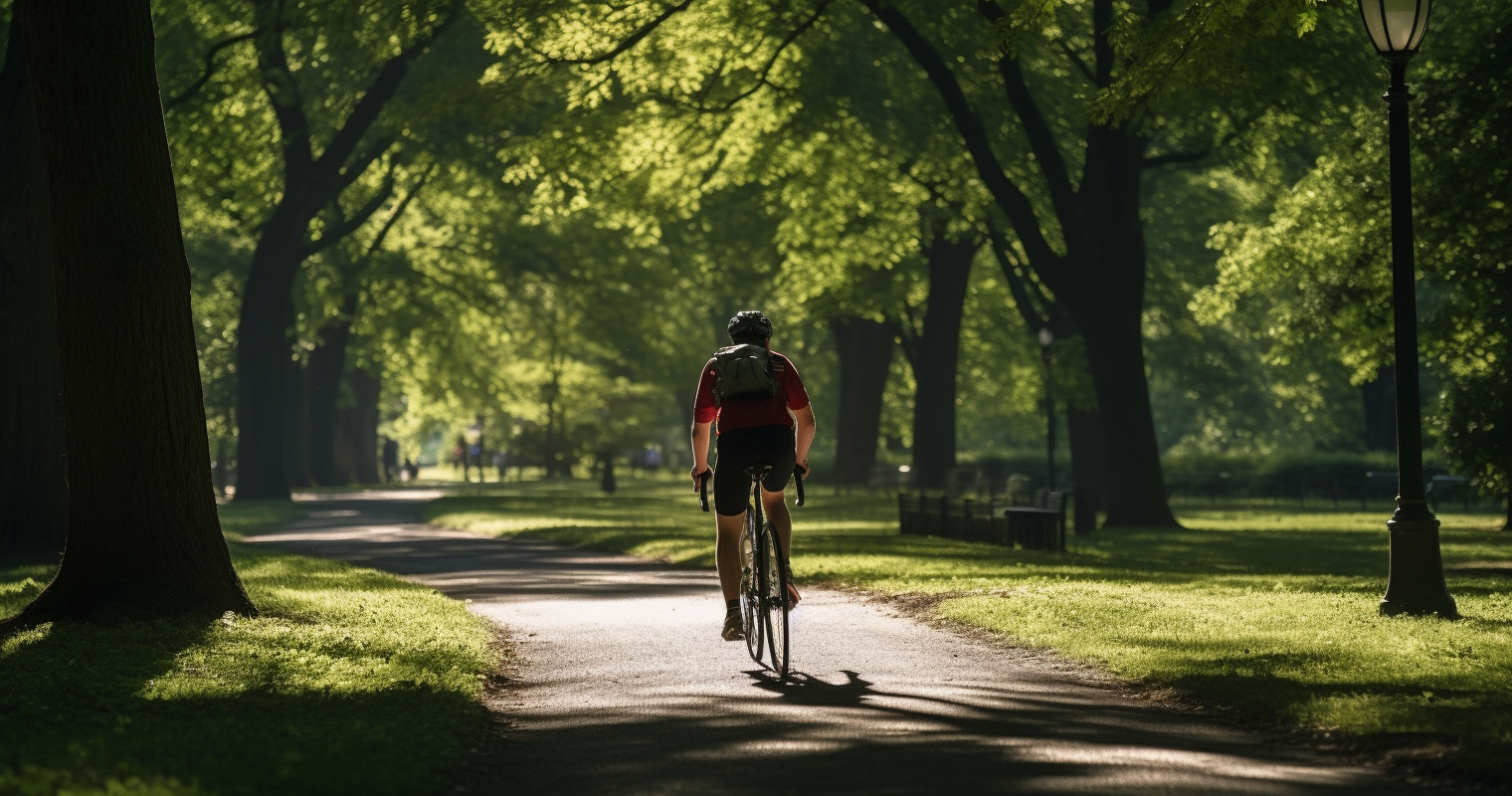
Panama presents a nuanced reality for cyclists: a modest but expanding riding community, a selection of dedicated bike paths in Panama City, and breathtaking recreational terrain spanning rainforests, coastlines, and highland valleys. As a daily mode of urban transport, the bicycle remains unusual outside specific corridors, yet for fitness, sport, and casual outings, it is entirely workable — and its appeal among both expats and locals continues to grow.
| Item | Details |
|---|---|
| Helmet law | Helmets required at all times on cycle paths; on public roads, required between 18:00 and 06:00 (as of 2025) |
| Key cycling law | Ley 74 of 2017 — governs cycle lanes and non-motorised mobility |
| Bike registration | Not required |
| Bike insurance | Not legally required; personal cover recommended |
| Main dedicated infrastructure | Cinta Costera & Amador Causeway — approx. 13+ km of waterfront cycle paths in Panama City |
| Import tax on goods | 7% ITBMS (VAT equivalent) on CIF value; additional import duties may apply (as of 2024) |
| Governing traffic authority | Autoridad de Tránsito y Transporte Terrestre (ATTT) |
How popular is cycling in Panama — is it a common way to get around?
Cycling in Panama has not yet become the everyday transport option it represents in countries like the Netherlands or Denmark, where bike-friendly infrastructure and cultural norms have made it the default choice for millions. In Panama, pedalling a bicycle is largely associated with leisure, exercise, and competitive sport rather than the daily commute or routine errands.
Road cycling has been gaining momentum in Panama in recent years, fuelled in part by the growing popularity of triathlons. Cycling clubs are well established — particularly in Panama City — and weekend group rides draw regular participants. Given the climate and congestion on city roads, most riders head out very early, and road bikes are a familiar sight on Saturday and Sunday mornings before the heat builds.
Organisations such as “Movimiento Ciclistas en las Calles de Panamá” run weekly evening rides aimed at raising the profile of the bicycle as a genuine transport alternative to cars and buses. These rides also serve to highlight the broader social and environmental case for cycling. While this kind of advocacy points to a real cultural shift underway, using a bicycle to commute remains far from standard practice in most Panamanian urban centres.
Outside the capital, cycling for everyday transport is uncommon on busy inter-urban roads. In smaller towns and rural communities, you may spot residents making short trips by bike, but the combination of heavy motor traffic, intense heat, and inconsistent road conditions means cycling culture has not yet taken hold at the level seen in parts of Europe or even neighbouring Colombia, where road cycling carries considerable cultural prestige.
What is the cycling infrastructure like in Panama?
Panama City has invested meaningfully in waterfront cycling infrastructure, though the overall network remains modest by international standards. Over 13 kilometres of dedicated bikeways hug the bay, offering panoramic views of both the Pacific Ocean and the city skyline — stretching from the Cinta Costera all the way to the Amador Causeway, riders can enjoy the open water on one side and the urban horizon on the other.
Dedicated cycle lanes run along both the Cinta Costera and the Amador Causeway. The route extends along Cinta Costera 3 to the Torrijos Carter Viaduct and then out to the Amador Causeway — five kilometres of waterfront riding lined with restaurants, marinas, museums, and rest areas. These well-kept, scenic paths form the heart of recreational cycling in the capital.
To the west of Panama City, Panama Pacifico offers an eight-kilometre (five-mile) bikeway winding through lush natural surroundings with diverse tropical plant and animal life. The City of Knowledge — a hub for culture, science, and innovation located just minutes from the Miraflores Visitor Center — also provides wide, cyclist-friendly roads and pathways.
Beyond these designated corridors, protected cycling infrastructure largely disappears. The majority of Panama City’s urban streets have no separated bike lanes, and riding on suburban arterials or inter-provincial highways demands significant caution. Rural and secondary roads frequently have no shoulders whatsoever. In this respect, Panama’s cycling network resembles many Latin American cities in the early phases of cycling development, rather than the seamlessly integrated systems found in Germany or the Netherlands.
The national authority responsible for roads and traffic is the Autoridad de Tránsito y Transporte Terrestre (ATTT) — www.attt.gob.pa. Panama’s tourism body, Promtur Panama (www.tourismpanama.com), also publishes cycling route information for the capital. Both are useful sources for current maps and details of planned infrastructure upgrades.
Is cycling safe in Panama?
Road safety is a legitimate concern for cyclists in Panama, and newcomers should form a clear-eyed view of the situation before heading out. Driver attitudes towards cyclists are inconsistent at best, and a genuine culture of road-sharing with bikes is still taking shape. On busier urban and inter-urban roads in particular, cyclists should not assume that other road users will give them space or right of way.
Traffic in Panama City tends to move quickly and assertively, with limited regard for cyclists sharing the carriageway. Potholes, uneven surfaces, and stretches of road without shoulders compound the difficulties faced by riders venturing beyond the dedicated waterfront paths. Riding after dark anywhere other than a well-lit, purpose-built path is inadvisable unless you have comprehensive lighting and high-visibility clothing.
Panama’s tropical climate introduces another layer of safety consideration. Temperatures remain elevated throughout the year, and riding during the middle of the day presents a real risk of heat exhaustion. Experienced local cyclists typically ride before 7am or in the late afternoon to sidestep both the worst of the heat and peak traffic.
On certain occasions, dedicated cycling events open up city streets exclusively to riders, and guided tours with knowledgeable local guides offer a safer, more structured introduction to cycling around the city — a worthwhile option for those still finding their feet. The ATTT publishes road safety data on its website, which is worth consulting for the latest accident statistics before committing to regular road rides.
What are the rules of the road for cyclists in Panama?
The primary legal framework governing cycling in Panama is Ley 74 of 2017, which deals with cycle lanes and regulates various forms of non-motorised mobility. Among its provisions, the law requires that bicycles always travel in the rightmost lane of the road. More broadly, cyclists are obliged to follow standard traffic rules: using designated bike lanes where they exist, respecting traffic signals, and travelling in the same direction as other vehicles.
Helmet rules: Wearing a helmet while cycling in Panama is obligatory under certain conditions. On cycle paths and avenues, helmets must be worn between 18:00 and 06:00 for riders of all ages. Regardless of what the law technically requires in a given context, wearing a helmet whenever you ride is strongly advisable given road conditions and traffic behaviour. Panama’s approach differs from Spain’s, for instance, where helmets are mandatory outside urban areas — Panama’s rules hinge on time of day rather than road classification.
Lighting requirements: Cyclists are required to use reflective clothing and lights. A white or yellow front light is mandatory, and a rear red light or reflective strip on the seat is recommended.
Age restrictions: Under Panamanian law, cyclists younger than 16 are not permitted on public roads unless the road in question has a speed limit below 20 km/h (approximately 12.4 mph).
Pavements and cycle lanes: Municipal authorities in Panama may permit cycling on pavements under certain conditions. Where a designated bike lane is present, all cyclists are required to use it. Rules can differ between municipalities, so it is worth familiarising yourself with local regulations wherever you live.
For the full and up-to-date legal requirements, visit the ATTT at www.attt.gob.pa. The complete text of Ley 74 of 2017 is available through Panama’s official legal gazette, the Gaceta Oficial.
Do I need to register my bike or have insurance to cycle in Panama?
Panama does not require cyclists to register their bicycles or obtain a licence. As in the vast majority of countries, bicycles in Panama are not subject to formal registration with the ATTT or any other government body — you can ride on public roads and paths without any such process.
There is equally no legal obligation to hold third-party liability or personal accident insurance in order to cycle in Panama. That said, taking out personal accident cover and ensuring your travel or health insurance policy extends to cycling-related injuries is strongly advisable, particularly in light of road conditions and traffic risks. Many expats hold international health insurance policies that cover cycling accidents, but it is essential to read the policy terms carefully to confirm this.
If you own a high-value bicycle, it is worth checking whether your home contents or renters’ insurance extends to theft of the bike away from the property. For guidance on insurance products available in Panama, the Superintendencia de Seguros y Reaseguros de Panamá (the insurance regulatory authority) can be reached at www.superseguros.gob.pa.
Are there public bike-sharing or rental schemes in Panama?
Panama City does not currently have a large-scale, publicly operated docked bike-share programme on the scale of Paris’s Vélib’ or New York’s Citi Bike. Private bike hire services, however, are available — particularly in areas that attract tourists and active residents.
Cycling groups in Panama City offer introductory rides that cover road safety and practical guidance for riding in city traffic, and bikes can be rented for around $15, including helmet and lights. Prices and availability are subject to change; always contact rental operators directly for current rates.
Several operators around the Amador Causeway and Cinta Costera rent bikes by the hour or by the day, serving both visitors and residents. Electric bikes are also beginning to feature in the rental market. For the latest rental options, the Panama Tourism Authority (ATP) at www.atp.gob.pa is a useful starting point, as are local online listings for cycle hire near your area.
Where can I buy or service a bike in Panama?
Panama City’s bike retail scene is expanding, with options ranging from larger multi-brand shops to smaller independent repair workshops. Retailers like Todo Bike market themselves as one-stop shops for all cycling needs, and this type of general-purpose cycle retailer is becoming increasingly common in the capital. Quality and specialist knowledge vary between shops, so seeking personal recommendations from local cycling clubs and expat cycling networks is well worth the effort before committing to a purchase or repair.
Budget and entry-level bicycles are stocked at major supermarkets and large general retail chains — a familiar situation in many countries. For performance road bikes, mountain bikes, or quality commuter hybrids, a dedicated cycle shop is the right choice, although the range of premium brands may be narrower than in cities where cycling is more deeply embedded in daily life.
Pre-owned bicycles can be found on classified listing platforms such as Encuentra24.com and Facebook Marketplace Panama. These can offer good value for expats who want a practical everyday bike without spending heavily before they have fully settled into their new surroundings.
Consumer protection in Panama falls under the remit of the Autoridad de Protección al Consumidor y Defensa de la Competencia (ACODECO). Statutory warranty rights apply to new goods sold by retailers — consult ACODECO at www.acodeco.gob.pa if you encounter problems with a retail purchase.
Can I bring my bike when I move to Panama, and are there any import rules?
The process for bringing your bicycle to Panama depends on your circumstances — how you are relocating and what residency or visa status you hold. As a general principle, personal belongings shipped as part of a household removal may be imported under a duty exemption available to new residents, but understanding the precise conditions and required documentation before you ship anything is essential.
- Determine your eligibility for a personal effects exemption. Panama allows new residents to import personal household goods duty-free under certain conditions, typically requiring proof of residency status and that the goods are genuinely for personal use and not for commercial sale. Your bicycle would normally qualify as a personal effect.
- Gather your documentation. You will generally need a copy of your passport, proof of residency or visa approval, an itemised packing list, and a commercial or purchase invoice for the bicycle.
- Engage a licensed customs broker. In Panama, using a customs broker is mandatory for most goods passing through customs, including imports and duty suspension regimes. Your removal company may arrange this on your behalf, but confirm in advance.
- Be aware of applicable taxes. Import duties in Panama are calculated based on the product’s CIF value (cost, insurance, and freight). Additionally, all imports are subject to a 7% ITBMS — Panama’s VAT equivalent — calculated on the CIF value of goods. If your bicycle does not qualify for a personal effects exemption, import duty will also be payable. Check current tariff rates with the customs authority.
- Check the current rules before shipping. Regulations and exemption thresholds can change. Always verify the latest requirements with the Autoridad Nacional de Aduanas (ANA) — www.ana.gob.pa — before sending your bike to Panama.
Those holding a Pensionado visa should note that specific duty exemptions exist for pensionado residents on certain categories of goods. Your customs broker or immigration lawyer can advise on whether sporting equipment such as bicycles falls within the scope of these exemptions.
What are the best cycling routes or destinations in Panama?
Despite the constraints of urban road infrastructure, Panama rewards cyclists with some truly remarkable riding environments for recreation and adventure. The country’s compact size means you can transition from coastal sea-level riding to highland mountain trails within a single day.
Cinta Costera and Amador Causeway, Panama City: Setting off from Paitilla, cyclists can follow the dedicated lane along the Cinta Costera, passing the Panama sign, the seafood market, and the underpass beneath the bridge, before continuing along Cinta Costera 3 to the Torrijos Carter Viaduct and the Amador Causeway — five kilometres of waterfront riding with unobstructed views, restaurants, and marinas along the way. This is the most accessible and practical route for everyday riders based in the capital.
Casco Antiguo: Discovering Panama City’s historic colonial quarter by bicycle — navigating its ornate architecture, open plazas, and museums — is a richly rewarding experience. Guided bike tours are available to help ensure nothing of note is missed.
El Valle de Antón: Roughly two hours from Panama City (127 km), El Valle de Antón is ideally suited to exploration by bicycle — ringed by mountains and lush vegetation, dotted with craft stalls, and blessed with a noticeably cooler climate than the capital. The highland valley is a firm favourite with both road cyclists and nature-oriented riders.
Mountain biking: Panama offers over 40 rated trails for mountain bikers, with concentrations around Panama City’s urban edges and further afield in the Chiriquí highlands near Boquete. The Boquete region in particular has earned a strong reputation among mountain bikers for its cloud-forest trails and refreshingly cooler temperatures.
Road cycling routes: Well-used road cycling routes include stretches of the Pan-American Highway and roads towards Chilibre and Gamboa, which feature regularly in the training schedules of local cycling clubs and triathlon groups. The Bikemap community has catalogued over 1,100 cycling routes across Panama, making it a valuable resource for route planning.
For structured route planning, the Federación Panameña de Ciclismo — Panama’s national cycling federation — is a useful source of information on sanctioned routes and upcoming events. The tourism authority, ATP, publishes cycling tourism content at www.atp.gob.pa.
Frequently asked questions about cycling in Panama
Is it realistic to cycle to work every day in Panama City?
For the majority of Panama City commuters, riding to work every day is challenging — traffic congestion, intense heat, and the limited reach of protected cycling infrastructure beyond the Cinta Costera and Amador Causeway all present genuine obstacles. That said, daily cycling is entirely feasible if your home and workplace are both close to the waterfront corridors, you set off early enough to avoid the heat and rush-hour traffic, and you are comfortable riding alongside motor vehicles. Many expat cyclists combine early-morning rides with public transport for longer stretches of their journey.
Do I legally have to wear a helmet when cycling in Panama?
Under Panamanian regulations, helmets are compulsory on cycle paths and avenues between 18:00 and 06:00. Whatever the legal threshold may be in a specific context, wearing a helmet on every ride is strongly recommended given the state of roads and driver behaviour. Always confirm the latest requirements with the ATTT, as rules are subject to revision.
Is my bicycle considered a vehicle under Panamanian law, and do I need a licence?
Bicycles are not classified as motor vehicles under Panamanian law, and no driver’s licence is required to ride one. There is no registration requirement and no need for a licence plate. Cyclists must nonetheless comply with road traffic rules — including obeying signals, riding in the same direction as other traffic, and using designated bike lanes wherever they exist.
Can children cycle on public roads in Panama?
Panamanian law bars cyclists under the age of 16 from using public roads unless the road in question carries a speed limit of less than 20 km/h. Children should always be accompanied by an adult, and helmets are strongly recommended for all ages regardless of legal requirements.
Are e-bikes allowed on cycle paths in Panama?
Regulations governing e-bikes in Panama continue to develop. Lower-powered electric bikes are generally treated much the same as conventional bicycles for the purposes of cycle path access, but higher-powered or faster models may fall into a different category. Before buying an e-bike for use in Panama, consult the ATTT for current classifications and any applicable restrictions.
What is the best time of year to cycle in Panama?
The dry season (roughly December through April) offers the most comfortable cycling conditions, with lower humidity and significantly less rainfall. The wet season (May to November) brings heavy afternoon downpours, although morning rides can still be enjoyable. Throughout the year, setting off before 7am is advisable to make the most of cooler temperatures and lighter traffic, whatever the season.
Is it safe to cycle at night in Panama?
Riding at night on general roads is not widely recommended due to fast-moving traffic, variable street lighting, and road surface hazards that are difficult to spot in the dark. Should you ride after dark, Panamanian regulations require a white or yellow front light and recommend a rear red light or reflective strip on the seat. Confining evening rides to well-lit dedicated infrastructure such as the Cinta Costera is the sensible approach.
Where can I find other cyclists and cycling clubs in Panama?
Panama City has a lively cycling community. Groups such as “Movimiento Ciclistas en las Calles de Panamá” run regular organised rides, and triathlon clubs typically incorporate active road cycling programmes into their training. Facebook groups and WhatsApp communities are practical channels for connecting with local riders. The Federación Panameña de Ciclismo serves as the national federation for both competitive cyclists and club members.