
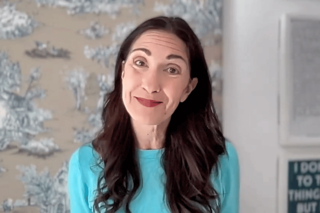
After an unsuccessful first attempt at moving to Italy in 2007, Vivian eventually built a life abroad that took her from Vietnam to housesitting across the UK and Europe, before settling in Portugal in 2020. She shares the unexpected turns, practical challenges and personal lessons of creating a life in a new country. To learn more, visit FTB Home or subscribe to The Expat Diaries newsletter.
Where, when and why did you move abroad?
My first move abroad was in 2007. Italy. It lasted 90 days because I couldn’t get a visa without a job and I couldn’t get a job without a visa. Oof.
My second move abroad was in June 2016. I didn’t have a specific destination in mind, but I’d researched Cambodia. (I know…weird, but true.) I ended up in Vietnam after Cambodia tried to kill me and I had to escape. The travel agent in town was offering $5 flights to Saigon, including all of my luggage, so … Vietnam it was.
All told, I lived in Hoi An, Vietnam, for two years. Then I spent a little over a year housesitting around the UK and Europe before moving to Portugal in 2020. I’ve been here ever since.
Mostly, I moved because I wanted to know what it would be like to live a different life in a different place.
I wanted to know what I would like in a different life in a different place.
What challenges did you face during the move?
The first challenge was figuring out where I wanted to go. And where I would actually be allowed to go and stay. I did not want a repeat of Italy. If I was going to do this, I wanted to do it as right as I could.
And then there was the question of what to do with all of my stuff.
Once I’d decided I was going to Southeast Asia, I also decided that almost none of my stuff was coming with me. It didn’t make sense for the climate or the kind of housing I’d be living in. And the idea of paying gobs of money to ship my grandfather’s clock across the world just so it could melt in my Cambodian living room was not something I was willing to do.
But what do you do with the grandfather clock that your actual grandfather made with his own hands?
The sofas and dressers and beds needed to go, too, but those decisions were relatively easy. The harder part was the personal things, the things with stories and people attached to them.
Deciding what to put into a giant suitcase, a carry on, and a personal item, and deciding what might go into a storage unit to be shipped to me when I found a place to settle? That was challenging.
What do you enjoy most about life in your new country?
I feel like I should say the sunshine or the lifestyle or the fact that I live ten minutes from the self-proclaimed “Queen of Beaches.” But the truest thing I enjoy most about living in Portugal might be the pasteis de natas and the vinho verde.
And also I love the fact that living in Portugal has allowed me to build a life where I work for myself, set my own schedule, and have much more control over how I spend my days.
So I’ll say I enjoy the freedom to keep finding out what I want my life to look like. And then to try and build it that way. With a generous side of custard tarts and vinho verde.
What is the hardest part of expat life for you / your family?
First of all, every time my residency permit comes up for renewal? It is stressful.
Because you really just don’t know if you’re going to be granted permission to stay. People get rejected all the time. And so there is this sense of impermanence running underneath all of your day-to-day efforts to actually build a life here. A life that could, theoretically, just disappear one day.
The closer I get to renewal time, the more I start thinking: Should I buy a new frying pan? Or is it just going to be another thing I’ll have to try to sell if I have to leave the country?
The other thing that’s been hard for me has been trying to build real friendships through a language barrier.
I speak more than just survival Portuguese, but I’m about as fluent as a small child. Which means that I can hold a conversation, but my vocabulary and my understanding of verb tenses, slang, and words that don’t directly translate is really limited. It’s hard to talk about deep things with a 5 year old.
And so, while I do have a small group of women who I count as friends, I would say that we don’t really know each other well.
And not having people who really know you is hard.
What is your relationship like with locals and other expats?
We have a pretty robust expat community here in my town, with more and more Americans moving here all the time. Most of them are retirees, and since I’m still working, our social windows are a bit different.
But I have a couple of dear friends I connected with in the early days, when there were just a few of us here, and they have been a lifeline when I just need someone to talk to about … anything.
I was also very fortunate in my early days here to meet a woman who runs a local charity organization. I was invited to join one of the volunteer teams, and that has been one of the best things I have ever done in terms of building relationships, learning and using the language, and feeling like I belong.
Friday nights might be my favorite night of the week because I get to be with my team.
When I’m in the US with a client for a couple of weeks, they miss me. And I miss them.
It’s a remarkable thing to have people miss you when you’re gone.
What advice would you give to someone thinking of making a similar move?
Don’t assume you have to know exactly how your new life is going to work before you go.
Do your research. Figure out where you’re legally allowed to stay. Understand the financial realities. Make a plan for your stuff. Please do not accidentally move to Italy for 90 days with your fingers crossed that the visa situation will all work out.
But after you’ve done the practical things, I think you have to leave some room for the life you can’t picture yet.
I never planned to live in Vietnam. I knew almost nothing about Hoi An when I arrived. And it became one of the best chapters of my life.
Everyone thinks I’m brave for moving to different countries. I’m not sure it’s bravery.
I think I’m just willing to find out what happens if we go that way instead of this way.
So my advice would be: Do enough research that you’re not being reckless. Make the best plan you can with the information you have. And then be willing to find out what happens.
Because sometimes you turn down an unfamiliar road and find an entire life waiting for you.