
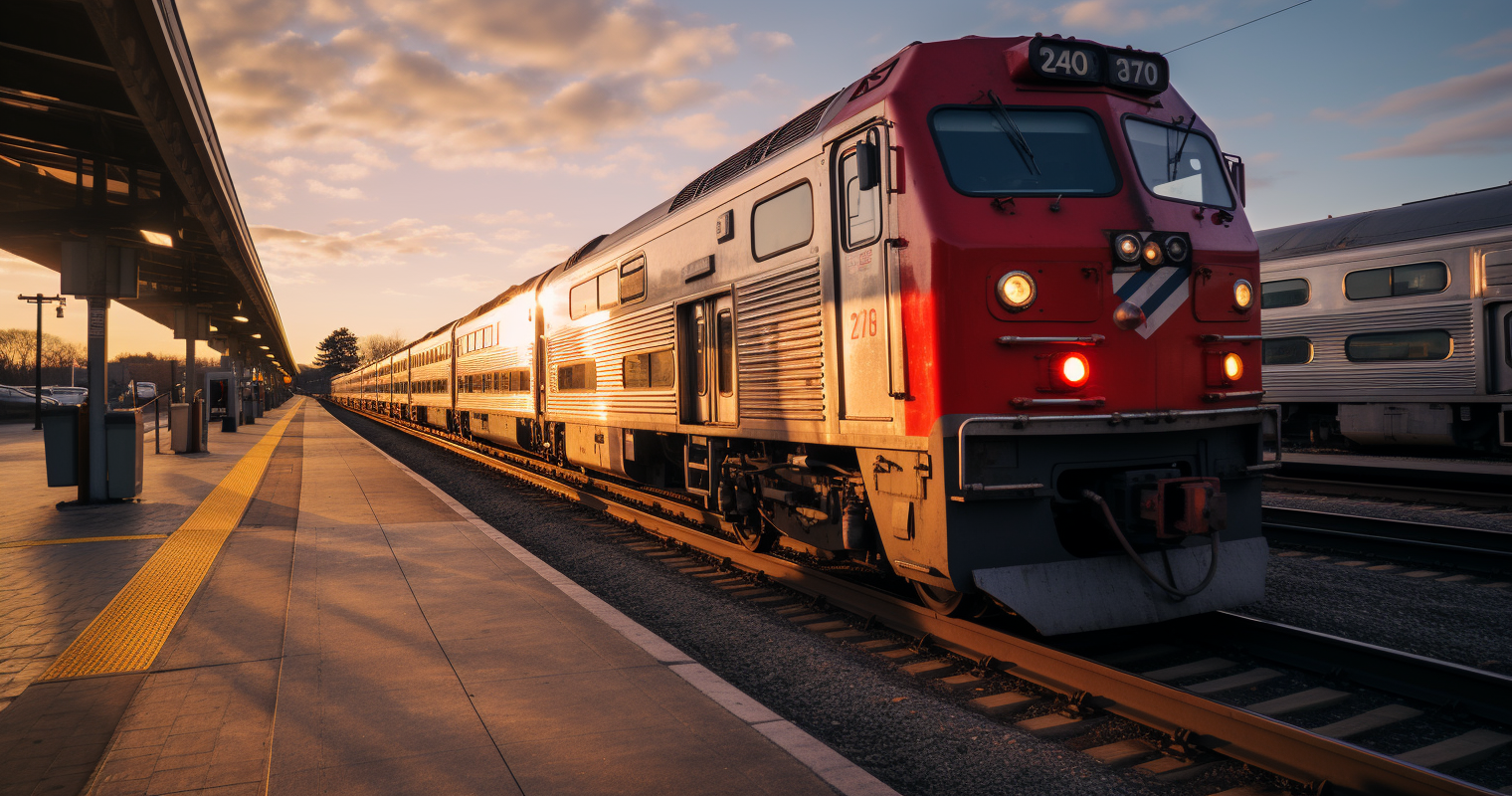
CFR Călători, Romania’s principal rail operator, runs an extensive national network that reaches most corners of the country — yet the system is defined by relatively low average speeds, a large proportion of ageing rolling stock, and unpredictable punctuality. On the positive side, ticket prices rank among the cheapest anywhere in Europe. A substantial modernisation programme backed by EU recovery funding is now in motion, and the newer InterCity and InterRegio services already provide a noticeably improved travel experience compared with the slower, older regional trains.
| Item | Details |
|---|---|
| National rail operator | CFR Călători (cfrcalatori.ro) |
| Network size (as of 2025) | Approx. 10,600 km total; ~4,000 km electrified |
| Sample fare (as of 2025) | Bucharest–Brașov 2nd class InterRegio: approx. €13–14 |
| Student discount (as of 2025) | 90% off 2nd class domestic fares for eligible students up to age 30 |
| Online booking advance limit | Up to 30 days ahead; same-day tickets at station only |
| Bucharest Metro | 5 lines, 60+ stations; operated by Metrorex; runs 05:00–23:30 |
What is the standard of rail travel in Romania?
Romania’s railways are administered by a cluster of successor companies that emerged from the old state monopoly: CFR Călători is responsible for passenger operations, while a separate entity manages the physical rail infrastructure across the country. Rather than following the privatised, franchise-based approach seen in some other European nations, Romania operates a centralised state-owned model — though CFR is not the sole player, since a number of private operators also serve destinations beyond the reach of the national carrier.
As of 2025, the Romanian rail network extends to approximately 10,600 kilometres in total, of which roughly 4,000 kilometres are electrified and only around 20% is double-tracked. Due to deferred maintenance and outdated signalling equipment, average speeds on several major corridors fall below 60 km/h. Journey times are therefore considerably longer than you would expect to cover equivalent distances in countries such as Germany or France, and travellers would do well to account for this when planning their schedule.
Romania holds the distinction of having the fourth-largest rail network in Europe by track length, which means that rail access to most parts of the country is possible. However, quality of service differs greatly depending on where you are going. Fast InterCity and InterRegio trains link major urban centres — including Bucharest, Brașov, Cluj-Napoca, Timișoara, Iași, and Constanța — with reasonable frequency and acceptable comfort, while slower Regio services call at every halt along the way and rely on considerably older equipment.
A large-scale improvement programme co-financed by Romania’s Ministry of Transport and the EU National Recovery and Resilience Plan is already producing tangible results, with funding earmarked for modernising 75 locomotives and 139 passenger coaches. Over $8 billion in EU and national investment has been set aside for the 2021–2027 period, with $3 billion already disbursed by March 2025 — a clear indication of the scale of the commitment involved. New InterCity trains procured through this programme are progressively entering service on key routes.
Delays remain a real issue. They occur frequently, especially on longer-distance and overnight services. Anyone accustomed to the punctuality standards of Switzerland, the Netherlands, or Japan will need to recalibrate their expectations accordingly. That said, high-frequency suburban corridors — most notably the Bucharest–Brașov route — tend to be more dependable than cross-country or rural lines.
Are there different classes of rail travel in Romania, and what are the differences?
All trains in Romania are divided into two travel classes: first and second. The gap between the two is less pronounced than on many western European networks. First class typically features open-plan saloon seating arranged in a 1+2 configuration, while second class may offer either a saloon layout with two seats on each side of the aisle, or side compartments accommodating six passengers each.
On a typical six-hour journey, upgrading from second to first class costs in the region of €10 more. That premium buys you wider, marginally more comfortable seats and generally tidier surroundings — though Romanian first class falls well short of the premium products found on long-distance trains in France, Germany, or Scandinavia. It is a modest step up rather than a transformative one.
Romanian trains are grouped into service categories: InterCity (IC) trains call only at major stations and travel at comparable speeds to InterRegio trains, but their tickets are priced roughly 15% higher without delivering a substantially superior onboard experience. InterRegio (IR) services strike the most practical balance between price and journey time, while Regio trains are the slowest category, stopping frequently and using the oldest rolling stock. For the majority of longer trips, InterRegio represents the most sensible choice.
Power sockets are available at seats on InterCity, InterRegio, and InterRegio Night trains. Wi-Fi is not generally provided on board, but Romania’s strong 4G infrastructure means mobile data connections hold up well for most of the journey. Vendors occasionally pass through the carriages selling snacks and drinks, but dedicated restaurant cars are rare — packing your own provisions for longer trips is strongly advisable.
The newest modernised InterCity trains include air-conditioned carriages, seat power outlets, eco-friendly toilet systems, and semi-automatic doors, with sleeping coaches also available on select long-distance routes. Private operators generally do not offer a first-class option, and seat reservation practices vary between companies. For travellers who want the reassurance of a guaranteed, assigned seat, CFR services are typically the more reliable option.
Sleeper accommodation in both first and second class is available on overnight services covering journeys of ten hours or more. Each sleeper compartment holds up to three berths: a compartment occupied by one or two passengers is charged at the first-class rate, while three occupants brings the price down to second-class pricing.
Where can I find rail timetables and ticket prices for Romania?
The official CFR Călători website at cfrcalatori.ro is the most reliable starting point for timetables and fares. The site is available in English and lets you search routes, browse departure times, and book tickets for domestic journeys. An annually published printed timetable — the Mersul Trenurilor de Călători — covers both CFR and private operator services, though the online planner is far more practical for everyday use.
Where engineering works affect a listed service, the search results screen displays a note under the “Restrictions” column, making the website a dependable source for disruption information as well as regular timetables. CFR Călători also maintains a freephone customer service line — 0800.88.44.44 — which operates daily between 08:00 and 20:00.
For private operators, timetables and reservations are handled through each company’s own platform. Key players include Regio Călători and Transferoviar Călători. For cross-border travel, services can also be looked up on bahn.de or interrail.eu, both of which include international connections through Romania.
Romanian train fares are calculated according to distance, service category, and travel class. As of 2025, a second-class adult ticket on the Bucharest to Brașov route aboard an InterRegio service costs approximately €13, covering 166 km in around two and a half hours. Always confirm current prices through the CFR Călători website or official app before travelling, since fares are subject to periodic revision.
How and where can I buy rail tickets in Romania?
Tickets may be purchased up to 30 days in advance through a variety of channels: the cfrcalatori.ro website, the “CFR Călători bilete online” mobile app, self-service machines at stations, CFR ticket offices, and affiliated travel agencies. The steps below describe each of the main purchasing methods:
- Online via the CFR website or app: This is the most convenient option — you can plan your journey in advance, select your preferred seat, and sidestep station queues entirely. Tickets can be bought as late as five minutes before departure online, though purchasing on the day is generally more practical at the station.
- Station ticket offices: Buying in person at a station (gară) is straightforward, but allow sufficient time since queues can build up. Make sure you are at the right window for domestic CFR travel.
- Ticket machines: Vending machines are installed at major stations including Henri Coandă Airport, Bucharest North, Cluj, Brașov, Timișoara, Iași, and Constanța. These machines accept chip-and-PIN cards only — contactless payment is not supported.
- On the train (private operators): Certain private operators permit passengers to buy their ticket on board without incurring a surcharge — but always verify this beforehand to avoid receiving a penalty fare.
- Travel agencies: CFR Călători’s network of agency offices (Agenția de Voiaj CFR) in larger cities can issue tickets for both domestic and international journeys and offer route advice.
For online domestic purchases, note that booking must be completed at least one day before travel — on the day itself, tickets must be bought at the station. When purchasing through CFR’s online platforms, you can choose your specific seat within the carriage.
Unlike the dynamic pricing systems common in the United Kingdom or parts of western Europe — where booking well in advance can slash the cost dramatically — Romanian train fares stay broadly stable regardless of when you purchase. Online advance booking does attract a modest discount of up to 10%, and round-trip fares are available when both legs are booked at the same time.
What types of rail tickets are available in Romania, and are discounts available?
Romanian rail fares are structured on a per-kilometre basis and vary according to train category and travel class. The two fundamental ticket types are single (one-way) and return, with a discount applied when both legs of a return journey are booked together. Night train travellers pay an additional supplement for a couchette or sleeper berth. Commuter season tickets and travel passes are also available through CFR Călători — consult the official website for current terms and conditions.
Romania is part of the Interrail scheme, meaning pass holders can travel on CFR Călători services as part of a wider European itinerary. This is worth considering for expats who regularly cross borders. For travel confined entirely within Romania, however, standard point-to-point tickets are usually the most economical choice, given the inherently low level of domestic fares.
As of 2025–2026, notable fare reductions are available to the following groups:
- Students: Romanian and foreign students enrolled full-time in accredited Romanian higher education institutions and aged up to 30 are entitled to a 90% reduction on 2nd class fares across all domestic train categories (Regio, InterRegio, InterCity), on routes connecting their home address with their place of study. Always confirm current eligibility and terms at cfrcalatori.ro.
- Children: Young children travel free or at a heavily discounted rate. Visit the CFR Călători website for the current age thresholds and applicable conditions, as these are subject to legislative change.
- Disabled passengers: Passengers with disabilities and their accompanying carers are entitled to reduced fares under Romanian law. The extent of the reduction depends on the disability category — verify entitlements directly with CFR Călători.
- Large families and seniors: Discounted fares may apply for pensioners and families with several children under Romanian social welfare legislation. Full details are available from CFR Călători ticket offices and the official website.
By the standards of western Europe, Romanian rail fares are remarkably low — even a cross-country overnight journey in a private sleeper compartment rarely exceeds around €70. All discount percentages and eligibility criteria cited here reflect information from CFR Călători’s official website for the 2025–2026 academic year. Always check current terms directly with CFR Călători before buying a discounted ticket, as the rules can shift following legislative updates.
How suitable is the rail network in Romania for disabled passengers?
The accessibility of Romania’s rail network is uneven. Larger urban stations — including Bucharest Gara de Nord, Cluj-Napoca, and Timișoara — have made meaningful progress in upgrading their facilities, but many smaller and rural stations remain challenging to navigate for passengers with limited mobility. Unlike the legally enforced, system-wide accessibility standards in countries such as Germany or the Netherlands, Romanian provision differs considerably from one station and train to the next.
Older metro stations, particularly on lines M1 and M2 in Bucharest, are being progressively retrofitted with lifts and other accessibility features, but the work is not yet complete across the network. A parallel process is under way at mainline stations, driven in part by EU funding requirements, though implementation has been uneven. Travellers who depend on step-free access should research their specific stations and trains in advance rather than assuming adequate provision will be in place.
Newer rolling stock — especially the modernised InterCity trains delivered under Romania’s National Recovery and Resilience Plan — more consistently includes accessible toilets and priority seating. Many of the older Regio carriages lack these features. Staff assistance schemes exist at larger stations, but their reliability varies. Passengers who need boarding support are encouraged to contact CFR Călători in advance through the freephone number listed on the official website to arrange help before travelling.
Audio-visual information systems — departure boards and public address announcements — are present at major stations but may be absent or unreliable at smaller stops. For the most current and detailed accessibility guidance, contact CFR Călători directly or consult the Romanian Ministry of Transport at mt.gov.ro.
Are there metros, underground trains, or urban rail systems in Romania?
The Bucharest Metro is the fastest and most efficient means of getting around the capital, carrying hundreds of thousands of passengers every day. As of 2026, the network operates across five lines and more than 60 stations, linking major business districts, residential areas, universities, retail centres, and transport terminals.
The system is run by Metrorex, a state-owned company. Trains run between 05:00 and 23:30, with headways of five to fifteen minutes depending on the time of day. Air conditioning is standard on M5 line trains and the newly refurbished M2 rolling stock. In terms of overall reliability and cleanliness, Bucharest’s metro is broadly comparable to underground systems in other central and eastern European capitals such as Budapest or Warsaw.
Bucharest operates a unified ticketing system that covers both the metro and surface transport (buses, trams, and trolleybuses). A single combined journey ticket costs 7 lei, a ten-journey combined ticket costs 59 lei, and a seven-day combined pass is priced at 66 lei (approximately €13). These figures are current as of 2024–2025 and should be confirmed with Metrorex and the Bucharest Transport Company (STB) before travel.
Contactless payment using MasterCard, Maestro, or Visa bank cards is accepted at metro entry gates, meaning new arrivals can tap through without first obtaining a dedicated transit card. The metro operates as a separate system from CFR Călători mainline services — different fares and cards apply — but a dedicated train service connects Henri Coandă International Airport with Gara de Nord (the main railway station), covering the journey in approximately 25 minutes with departures every 40 to 60 minutes. A planned M6 metro line that would link the airport directly to the metro grid had not yet entered service as of July 2025.
Outside Bucharest, urban rail provision is limited. Trams, trolleybuses, and bus networks serve cities including Cluj-Napoca, Timișoara, Iași, and Constanța, but none of these cities currently has a metro or light rail system approaching the scale of Bucharest’s. Urban transport networks of varying types operate in Bucharest, Arad, Botoșani, Brăila, Cluj-Napoca, Craiova, Galați, Iași, Oradea, Ploiești, Reșița, Sibiu, and Timișoara, though the quality and extent of these services differs considerably from city to city.
What practical tips should expats know about using the rail network in Romania?
Getting a clear picture of how Romanian rail travel functions will spare you considerable inconvenience. The most fundamental point to grasp is that the train category matters more than the seating class — InterRegio services are generally a sound choice, while Regio trains on longer distances are best avoided when speed and comfort are priorities.
- Punctuality: Always build generous buffer time into your connections. Sleeper trains in particular can run significantly late — delays of a couple of hours are not unheard of. Never schedule a connecting flight or onward train too tightly after a Romanian overnight service.
- Same-day tickets: Online booking requires at least one day’s notice. On the day of travel itself, you must purchase your ticket at the station, so plan ahead if you want to use the website or app.
- Ticket machines: Station vending machines accept chip-and-PIN bank cards only — contactless payment is not an option, so bear this in mind before heading to the machine.
- Toilets and supplies: Toilet paper is rarely stocked in train bathrooms, so bring your own. On longer journeys, packing food and water is also sensible since onboard catering cannot be guaranteed.
- Luggage: Overhead and end-of-carriage storage for large bags is limited, and bulky suitcases can clutter the aisles on busy services. A soft holdall or backpack is more manageable than a hard-shell case on crowded trains.
- Bicycles: Folding or dismantled bikes may be carried as hand luggage free of charge on all services, while full-sized bicycles are permitted on CFR trains that have dedicated bike spaces, for a fee of 26 lei (approximately €5 as of 2025).
- Real-time train tracking: The “My Train” application lets you enter a train number and view live information about stops, delays, dwell times, and estimated arrival — a practical tool for monitoring your service on the move.
- Language: Romanian place names frequently include diacritical marks and variant spellings. If a station name search is returning no results, try entering it without accents — the search engine will generally suggest the correct match.
- Social atmosphere: Romanians tend to be convivial on trains, and fellow passengers may well strike up a conversation even if you share no common language. Rail journeys can offer a genuine window into everyday local life.
- Tipping: Tipping train staff is not customary in Romania and carries no expectation.
Frequently asked questions about rail travel in Romania
Is the Interrail pass worth buying for someone living in Romania?
For residents who regularly travel internationally — to Hungary, Bulgaria, or further afield — an Interrail pass can offer solid value, particularly for younger travellers eligible for the youth rate. For purely domestic journeys within Romania, however, standard CFR point-to-point tickets are usually cheaper, given how affordable Romanian fares already are. If you cross borders often, compare the pass price against your typical routes using the Interrail calculator at interrail.eu.
How do I get a refund if my train is cancelled or significantly delayed?
Under EU passenger rights legislation (Regulation EC 1371/2007), rail travellers are entitled to compensation for significant delays. CFR Călători processes refund and compensation requests both through its ticket offices and via the official website. In the event of a cancellation, you are generally entitled to a full refund. Hold onto your ticket and record the length of the delay, as you will need this when submitting a claim. Check the current CFR Călători refund policy at cfrcalatori.ro, as terms may be updated periodically.
Are Romanian trains safe to travel on at night?
Overnight trains are a widely used and generally safe travel option in Romania. As with any night journey, it pays to keep your belongings close and stay aware of your surroundings. Reserving a sleeper compartment rather than an open seat carriage offers greater privacy and an added sense of security. Popular overnight routes — such as Bucharest to Cluj-Napoca or Timișoara — are well used and reasonably reliable, though delays of an hour or more do occur.
Do trains in Romania go on strike, and how is disruption handled?
Industrial action affecting the railways does happen in Romania from time to time, as it does across most of Europe’s unionised rail sectors. When strikes occur, a minimum service level is typically maintained on the most critical corridors. CFR Călători usually announces disruption via its website and social media channels. If you are travelling during a period of reported industrial action, consult the official website and local news sources before setting off.
Can I buy a monthly or annual season ticket for commuting by train in Romania?
Yes — CFR Călători provides monthly travel passes (abonamente) for regular commuters travelling fixed routes, available at station ticket offices. For daily commuters, these can deliver substantial savings compared with purchasing individual tickets each day. Pricing and availability depend on the specific route and train category — contact a CFR Călători ticket office or visit the official website for options relevant to your commute.
Is the student rail discount available to foreign students studying in Romania?
Yes. Both Romanian and foreign students aged up to 30, enrolled full-time at accredited higher education institutions in Romania, qualify for the 90% reduced fare on 2nd class domestic rail services, on the route between their registered home address and their place of study. Nationality is not a barrier to eligibility. A valid student ID endorsed for the current academic year is required. Full details are available at cfrcalatori.ro.
Can I use my phone as a ticket on Romanian trains?
CFR Călători’s official mobile application — “CFR Travel tickets online” — allows you to buy and store tickets directly on your device. Discounted tickets purchased through the app can be shown to the conductor as a digital PDF, or alternatively printed on paper with a QR code. Mobile tickets are accepted on CFR services. Check whether any private operators on your route also accept digital tickets, as this varies by company.
How do I get from Bucharest’s main airport to the city centre by rail?
A dedicated rail service connects Henri Coandă International Airport with Gara de Nord (Bucharest North station) in around 25 minutes, operating every 40 to 60 minutes around the clock. This is both the quickest and most cost-effective rail link between the airport and the city. From Gara de Nord, the metro network provides onward connections to destinations across Bucharest. A separate M6 metro line intended to link the airport directly into the metro grid is planned but had not yet opened as of July 2025.