

Romania delivers end of life care through a combination of public hospitals, NGO-operated hospices, and community-based home care teams. Palliative services receive partial funding from the national health insurance framework, though considerable gaps persist. Following a death on Romanian soil, the event must be formally recorded at the local civil registry office, and the passing of any foreign national must be communicated to their home country’s diplomatic mission within five days.
| Item | Details |
|---|---|
| Death registration deadline | Must be registered at the local civil registry (starea civilă) promptly — typically within 3 days of death |
| Notification of foreign consulate | Within 5 days of registration (as of 2025) |
| State funeral benefit (insured/retired person) | 7,576 lei (as of January 2024); 3,784 lei for death of an uninsured family member |
| Repatriation timeline | On average 10–14 days; can be longer depending on circumstances (as of 2025) |
| Inheritance tax exemption window | Full estate tax exemption if probate completed within 2 years of death (as of 2025) |
| Hospice care funding | Partially reimbursed through national health insurance; major NGO hospices provide services free of charge |
What end of life care options are available in Romania, and how does the system work?
End of life care in Romania is delivered through three principal channels: public hospitals, specialist palliative units (the majority of which are operated by non-governmental organisations), and home-based care teams. The public hospital network provides general medical services for seriously ill patients but has traditionally offered limited dedicated palliative provision. Non-governmental organisations have stepped in to bridge much of this shortfall.
Legislative reforms in Romania have introduced funding mechanisms for the reimbursement of palliative care services through health insurance funds, along with revised opioid policies and enhanced quality standards. Despite these advances, access to specialist end of life care remains patchy — particularly beyond major cities such as Bucharest and Brașov.
By the close of 2015, Romania counted 115 specialist palliative care services, comprising 78 inpatient palliative units, 24 home-based palliative services, five outpatient palliative clinics, four day care centres, and four hospital support teams. The network has continued to expand since then, although reaching patients in rural communities remains an ongoing challenge.
What is palliative care in Romania, and who is eligible for it?
Palliative care in Romania encompasses specialist medical and psychosocial support designed to improve the quality of life of patients living with incurable or life-limiting conditions, and of their families. Services include pain and symptom management, psychological counselling, social assistance, physiotherapy, and spiritual care. The aim is to complement active medical treatment, not to substitute for it.
HOSPICE Casa Speranței extends its services to both children and adults who carry a diagnosis of an incurable illness, offering inpatient admission, home visits, social assistance, psychological support, and physiotherapy sessions.
Children’s palliative care focuses on securing the highest achievable quality of life for every child with a life-limiting or life-threatening condition and their family, including real choice over the place of care, the place of death, and access to emotional and bereavement support. In practical terms, eligibility for palliative services in Romania is generally determined by a confirmed diagnosis of an incurable or advanced illness, with referral from a treating physician. There is no strict age boundary — both adults and children can be accepted into care.
Are there hospices in Romania, and how do you access them?
Romania does have dedicated hospice facilities, concentrated primarily in Brașov, Bucharest, and a number of other cities. The sector has largely been shaped by charitable organisations rather than the state, though this dynamic is shifting as hospices gain public utility recognition and associated state funding.
HOSPICE Casa Speranței is the largest foundation in Romania providing free specialist palliative care, operating two hospitals with integrated services in Brașov and Bucharest, mobile care teams across five cities, a dedicated centre for children in Adunații Copăceni, over 100 beds for inpatient care and related activities, and a workforce of 270 staff members.
Emanuel Hospice, headquartered in Oradea in northwestern Romania, functions as the sole provider of palliative home care services in that region. Access to hospice care is generally through referral by a treating physician or specialist. Direct contact with hospices is also possible — HOSPICE Casa Speranței delivers comprehensive palliative services in day centres, outpatient clinics, inpatient units, patients’ homes, and partner hospitals. Visit hospice.ro for referral and contact information.
All services provided by HOSPICE Casa Speranței are offered completely free of charge and without conditions to patients and their families, regardless of financial means, social standing, or background. This means expats residing in Romania may seek referral to these services regardless of their insurance or residency status, though it is wise to contact the hospice directly to confirm current admission criteria.
Is palliative or hospice care covered by public health insurance in Romania, or does it need to be funded privately?
Romania operates a compulsory public health insurance system administered by the National Health Insurance House (Casa Națională de Asigurări de Sănătate, or CNAS). Employees and self-employed residents contribute to this system, and it partially covers palliative care. Unlike some Western European countries where state funding comprehensively covers end of life services, Romania’s public provision is more constrained in its scope.
Regulatory reforms have incorporated funding mechanisms for the reimbursement of palliative care through the health insurance funds. In practice, certain inpatient palliative stays and home care visits by contracted providers can be reimbursed through CNAS for insured individuals.
Nevertheless, the sector depends heavily on NGO financing and charitable donations. HOSPICE Casa Speranței — the country’s largest palliative care provider — was formally granted public utility status by a government decision, enabling it to receive state funding for delivering public services, whereas previously it had operated exclusively on donations. Expats who are not enrolled in the Romanian public health insurance system should contact providers directly to discuss eligibility, and should consider taking out international health or life insurance that explicitly covers palliative and end of life care.
What legal documents should expats have in place before the end of life in Romania — such as a living will, advance directive, power of attorney, or healthcare proxy — and how do these work?
Preparing the appropriate legal documents well in advance is strongly recommended for any expat living in Romania. While Romanian law does not contain a single codified advance directive statute equivalent to those found in some other European countries, several instruments exist to help ensure your wishes are honoured.
A notarially authenticated power of attorney (procură notarială) is the most widely used tool, enabling you to designate a trusted individual to manage your financial, property, and administrative affairs should you become incapacitated. This document must be executed before a Romanian notary public and carries legal recognition throughout the country. It is advisable to hold both a general power of attorney and a separate specific healthcare mandate if you wish another person to make medical decisions on your behalf.
Romanian medical law recognises a patient’s right to refuse treatment and to participate meaningfully in decisions about their own care, which in effect supports the concept of a healthcare proxy or living will. While formal advance directive legislation is limited, written instructions regarding your medical preferences — particularly if notarially authenticated — can carry considerable weight with healthcare providers. Always leave a copy with your treating physician and with relevant family members.
Romanian law recognises three forms of will: holographic, notarial, and secret. A holographic will is entirely handwritten, dated, and signed by the testator — straightforward to create but less secure against challenge. A notarial will, prepared with the assistance of a public notary, provides greater legal certainty. Expats with assets in Romania are strongly encouraged to prepare a Romanian notarial will to ensure their estate is administered in line with their intentions.
Are documents such as advance directives or powers of attorney made in another country legally recognised in Romania?
Foreign legal instruments such as powers of attorney, advance directives, and wills can be recognised in Romania, but they generally require apostille certification and a certified Romanian translation before Romanian authorities or healthcare providers will accept them.
All public documents issued or obtained abroad that are intended for use in Romania must be authenticated with an Apostille certificate, which must be affixed by a competent authority in the country where the document originated. For countries outside the Hague Apostille Convention, full legalisation through the relevant embassy or consulate may be necessary instead.
As an EU member state, Romania is bound by EU Regulation 650/2012 on succession matters, which means wills and succession documents drawn up in other EU member states generally have cross-border effect. For healthcare-specific instruments — such as advance directives — best practice requires that these be notarised, apostilled, and translated into Romanian, and that a copy be provided to your Romanian treating physician. Seeking advice from a Romanian lawyer to review any foreign legal document before it is needed can prevent serious complications at a critical time.
What are the laws around euthanasia or assisted dying in Romania?
Euthanasia and assisted dying are unlawful in Romania. No legislation permitting physician-assisted suicide or active euthanasia exists, and there is no active legislative process to alter this position as of 2025. Romanian criminal law treats any deliberate act intended to end a person’s life — even when carried out at that person’s own request — as a criminal offence.
Palliative sedation and the withdrawal of life-sustaining treatment in circumstances where continued intervention is deemed futile are distinct matters governed by medical ethics guidelines and by the patient’s recognised right to refuse treatment. These are legally and ethically separate from euthanasia and are permissible in appropriate clinical situations with proper documentation in place. Expats wishing to understand their rights in this area should consult their treating physician and, where necessary, a Romanian medical ethics body or patient rights organisation.
What are the local customs, traditions, and religious practices around death and dying in Romania?
Romania is a predominantly Orthodox Christian country, and the traditions of the Eastern Orthodox Church shape much of the cultural landscape surrounding death and dying. These practices are observed widely — even among families with limited religious observance — and familiarity with them can help expats navigate this period with sensitivity and better communicate with Romanian friends, neighbours, and carers.
When death is imminent, it is customary for family members and close friends to gather at the bedside. After death, the body is typically washed and dressed — usually in new or best clothing. A priveghi (wake or vigil) is traditionally held at the family home for one to three nights before burial, during which relatives, friends, and neighbours gather to pay their respects, offer prayers, and share food. Candles are placed near the body, and Orthodox prayers are recited throughout.
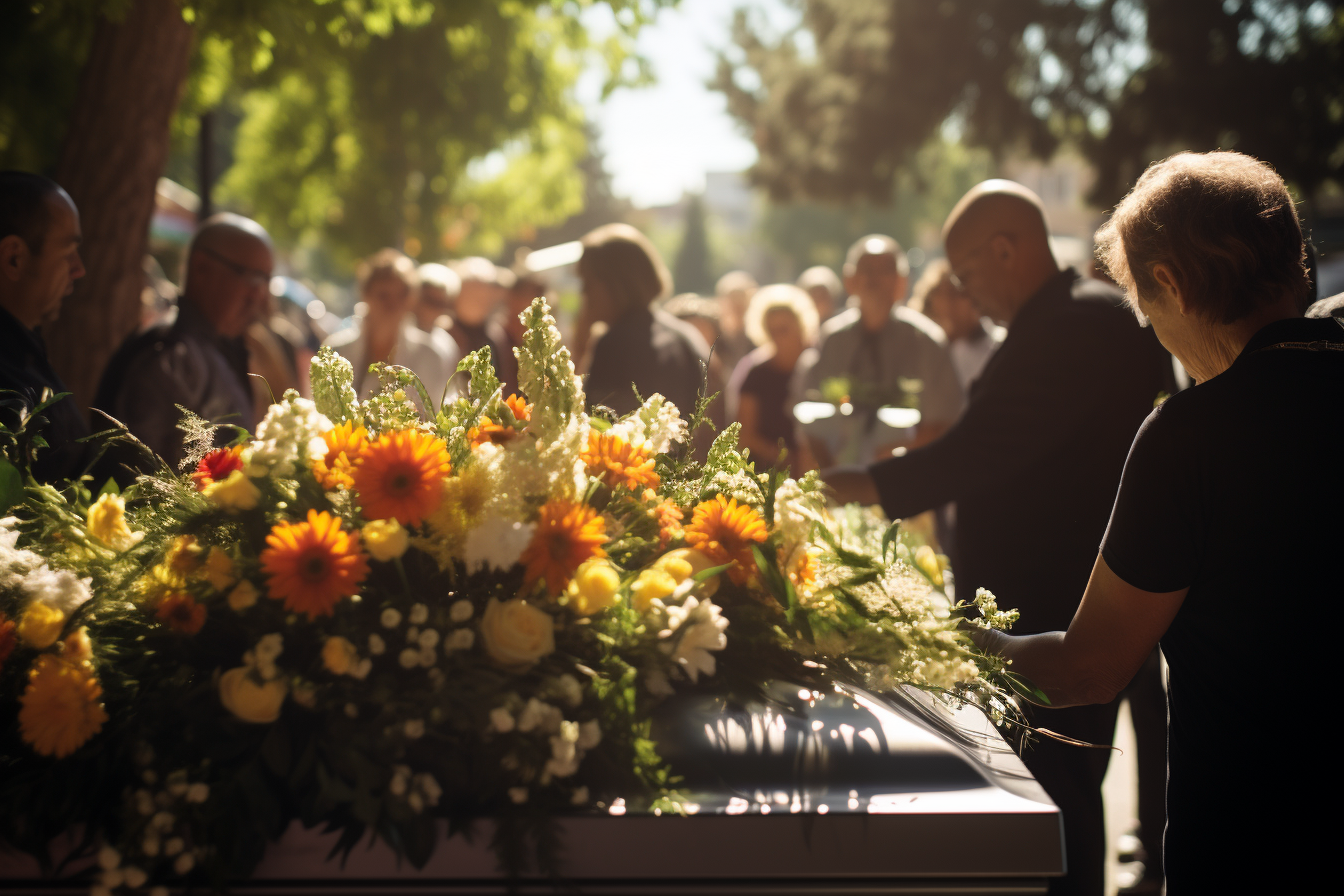
The funeral ceremony (înmormântare) typically takes place in an Orthodox church, followed by interment. In rural communities in particular, it is customary for the coffin to be carried in procession through the streets. A ritual meal called pomana is shared after the burial as an act of charitable remembrance for the soul of the deceased. Memorial observances are traditionally held at 3, 9, and 40 days after death, then again at six months and one year.
Cremation has historically been uncommon within Orthodox tradition, though it is now legally available and increasingly accepted, especially in urban centres. Expats of other faiths will find Catholic, Protestant, Jewish, and Muslim communities present in Romania’s major cities, along with cemeteries and funeral services tailored to various religious traditions.
What must you do when someone dies in Romania? Who do you notify, how quickly, and in what order?
The steps following a death in Romania combine medical and administrative obligations, and timelines matter. The recommended sequence is as follows:
- Summon a doctor without delay. A licensed physician must confirm the death and issue a medical death certificate (certificat medical constatator al decesului). If the death takes place at home, call the family doctor (medic de familie) or emergency services (112). If death occurs in hospital, medical staff will carry out the initial certification.
- Notify the police if the death is sudden or unexplained. In Romania, if a foreign national dies unexpectedly, the authorities require an autopsy to establish the cause of death. Autopsy is mandatory in all cases of unexpected death where the cause is unknown, or where death by violence is suspected.
- Have the body transferred to the morgue or a funeral home. Following any required autopsy, the deceased is conveyed to the local morgue for initial preparation by a local funeral director.
- Secure the medical death certificate. This certificate, issued by the attending doctor on a standardised form bearing a registration number, date, and the doctor’s signature and stamp, records the cause and date of death and is required to proceed with registration.
- Register the death at the local civil registry office (Oficiul Stării Civile). Bring the medical death certificate, the deceased’s identity documents, and your own identification to the town hall or civil registry office. The death must ordinarily be declared within three days.
- Contact the home country’s embassy or consulate. If the deceased held foreign nationality, notify the relevant embassy or consulate in Romania promptly. They can assist with documentation, repatriation arrangements, and contacting next of kin.
- Inform the deceased’s insurer. If the person had insurance coverage, alert the insurance company as soon as possible — insurers may contribute to the cost of repatriation and associated expenses.
- Engage a funeral director. A local funeral director will guide you through the remaining steps, including securing a burial or cremation permit, coordinating the funeral service, and — where necessary — initiating repatriation paperwork.
How is a death officially registered in Romania, and what documents are needed?
Death registration in Romania is a civil matter administered at the local town hall (primărie) or civil registry office (Oficiul Stării Civile) in the area where the death occurred. Civil registration records are held at local civil registration offices in each city or town across the country.
The following documents are typically required to register a death:
- The medical death certificate (certificat medical constatator al decesului) issued by the attending physician
- The deceased’s identity document — national identity card, passport, or residence permit
- The deceased’s birth certificate, and marriage certificate where applicable
- A verbal declaration from a family member, the attending doctor, or another person with direct knowledge of the death
The cause of death must be recorded in capital letters without abbreviations. The certificate and declaration are submitted in the presence of the civil registry officer, who then issues the official death certificate.
Where the deceased held a residence permit or comparable document confirming their status in Romania, the civil registry officer forwards the relevant document to the General Directorate for Population Records. If a foreign national has died on Romanian territory, the civil registry officer who issued the death certificate must send an extract from that document to the General Directorate for Population Records within five days of registration; the General Directorate then transmits it to the diplomatic mission or consular office of the deceased’s home country in Romania.
What happens if a foreign national dies in Romania — what are the specific steps for notifying their home country’s embassy or consulate, and what role does the consulate play?
When a foreign national dies in Romania, Romanian authorities trigger an automatic notification process, but families should also contact the relevant embassy or consulate directly and without delay. The consulate plays a practical and coordinating role throughout.
Should a foreign citizen die on Romanian territory, the civil registry officer who drew up the death certificate must, within five days of registration, send an extract to the General Directorate for Population Records, which then forwards it to the diplomatic mission or consular office of the deceased’s home country in Romania. Where the country of origin has diplomatic ties with Romania but no physical offices within the country, the General Directorate for Population Records transmits the extract through the Romanian Ministry of Foreign Affairs.
The home country’s embassy or consulate can assist in the following ways: informing next of kin; issuing a Consular Report of Death Abroad or equivalent document; providing details of local funeral directors experienced in handling international cases; liaising with Romanian authorities over paperwork; and offering guidance on the repatriation process. The embassy can supply information to family members or overseas funeral directors about Romanian funeral companies capable of preparing the deceased appropriately for return and of obtaining the necessary documentation, including the official death certificate.
In general, for a death certificate to be recognised in other countries, it must be transcribed. For further guidance on transcription of the death certificate, it is advisable to contact the diplomatic mission of the deceased’s country of origin.
How are funerals typically arranged in Romania, and what are the usual options for burial or cremation?
Funerals in Romania are arranged privately through licensed funeral companies (case funerare). There is no state funeral service. Funeral directors take charge of collecting the body, preparing it (through embalming or laying out), coordinating the ceremony logistics, securing burial or cremation permits, managing transport, and handling associated paperwork.
Burial remains the predominant choice in Romania, deeply rooted in Orthodox Christian tradition. Most towns and cities maintain municipal cemeteries (cimitire) where plots can be purchased or rented on a long-term basis. Denominational cemeteries — serving Catholic, Jewish, Protestant, and Islamic communities — are also found in areas with those populations.
Cremation is a legal and accessible option. It may only be carried out on the basis of the death certificate presented to the crematorium administration, which must confirm that the deceased may be cremated. After the death certificate is drawn up, the civil registry officer issues the declarant with a cremation certificate in a single copy. The crematorium retains a copy of the death certificate. Licensed crematoriums are available in Bucharest and some larger cities, though families in other regions may need to arrange transportation of the body to the nearest facility.
To arrange a local burial or cremation, a family member or formally appointed representative must engage a local funeral director. Many major embassies in Bucharest — including the UK’s Foreign, Commonwealth and Development Office — maintain lists of funeral directors in Romania for their nationals; the funeral director will be able to explain the local procedure in detail.
What are the approximate costs of a funeral in Romania, and are there any state or insurance-based funds that can help cover them?
Funeral costs in Romania vary considerably depending on the service chosen, its location, and whether burial or cremation is preferred. A basic funeral in Romania is generally more affordable than in Western Europe, but costs for more elaborate services, embalming for repatriation purposes, or international transportation can rise sharply. Always request a written estimate from your funeral director before making any commitment.
A state funeral benefit is available to those enrolled in the Romanian public pension and social insurance system. As of 1 January 2024, this benefit was set at 7,576 lei upon the death of an insured or retired person. Where a family member of an insured individual or pensioner passes away without themselves being insured or a pensioner at the time of death, the benefit payable is half this amount — specifically 3,784 lei in 2024.
The funeral expenses payment benefit is established annually under the Social Insurance Budget Law and cannot fall below the value of the gross average salary. Check the current figure with the Casa Națională de Pensii Publice (CNPP), as the amount is reviewed each year. Expats who are not covered under the Romanian system are not entitled to this benefit. Travel or international health insurance policies frequently include a repatriation and funeral allowance — review your policy carefully to understand what is covered.
What is the process for repatriating the remains of a foreign national from Romania to another country?
Returning the remains of a deceased foreign national from Romania involves meeting both Romanian administrative requirements and those of the destination country. It is advisable to engage a local funeral director with experience in international cases, who will coordinate the necessary paperwork and logistics on your behalf.
The movement of human remains across borders must be accompanied by a mortuary passport certifying that the deceased is permitted to be repatriated to their country of origin. A local funeral director will ordinarily obtain this document, together with a death certificate, an embalming certificate, and any consular permissions required.
Local funeral directors liaise with international funeral directors overseas to satisfy all requirements both in Romania and in the destination country, including supplying documents such as the civil registry death certificate, a certificate of embalming, and a certificate authorising the transfer of remains.
If the deceased was cremated in Romania, the process is considerably simpler. To leave Romania carrying human ashes, you will need to present the cremation certificate and complete a standard customs declaration upon arrival in the destination country. If personal transportation of the ashes is not possible, a funeral director can make alternative arrangements.
Romanian administrative procedures can make the return of remains a time-consuming process. An average of 10 to 14 days should be anticipated, though it may take considerably longer depending on the circumstances of death. If the deceased held insurance coverage, notify the insurer promptly — insurers may contribute to the cost of repatriation.
What happens to the estate of someone who dies in Romania — how does probate or estate administration work, and are there inheritance taxes?
Estate administration in Romania (referred to as succesiune or dezbaterea succesiunii) is conducted primarily through notarial proceedings rather than through the courts, unless heirs dispute the outcome. This approach differs from adversarial probate processes in certain other countries and tends to be more straightforward in uncontested cases.
Notarial proceedings are central to the Romanian inheritance process. The competent notary’s office is situated in the court district where the deceased was last domiciled. Heirs must assemble the relevant documents — including the death certificate, the deceased’s identity papers, property deeds, and the will if one exists — and present them to the relevant notary. Heirs generally have one year from the date inheritance is opened to submit their claim. Where disputes arise, the courts may intervene; legal assistance can greatly ease navigation of the process in such situations.
Romania does not impose a dedicated inheritance or estate tax. However, an important time-sensitive rule applies: a full exemption from estate tax is available provided the probate and inheritance procedure is completed within two years of the date of death. For this reason, it is advisable to begin legal proceedings as promptly as possible. Failing to meet this deadline may result in a notarial fee calculated as a proportion of the estate’s value. Always verify the current rules with a Romanian notary or lawyer, as fiscal regulations are subject to change — for up-to-date guidance, consult the National Union of Public Notaries in Romania (UNNPR).
EU Regulation 650/2012 (the EU Succession Regulation) applies in Romania as an EU member state. As a general principle, the law of the country where the deceased was habitually resident at the time of death governs the succession — though individuals may elect the law of their nationality to govern their estate by making an explicit choice in their will.
If an expat dies without a will in Romania, what happens to their assets under local intestacy laws?
Romanian intestacy law (succesiunea legală) establishes a defined hierarchy of heirs. When a person dies without a valid will, their estate passes to relatives in the following order of priority: descendants (children, grandchildren), privileged ascendants and collaterals (parents and siblings), ordinary ascendants (grandparents), and finally other collateral relatives up to the fourth degree.
The surviving spouse occupies a special category in Romanian inheritance law, inheriting alongside each of the above classes, with the share determined by which class of relatives also inherits. For instance, where the deceased left children, the surviving spouse typically receives one quarter of the estate; in the absence of descendants, the spouse’s entitlement increases.
If no identifiable heirs exist, the estate escheats — passing to the Romanian state. For foreign nationals, the position is complicated by international private law rules. Under EU Regulation 650/2012, if the deceased was habitually resident in Romania, Romanian intestacy rules will generally govern the distribution of their worldwide estate, subject to mandatory provisions in other countries for assets located there. For assets held in non-EU countries, jurisdiction-specific legal advice will be required.
Any expat residing in Romania — especially those who own property or hold significant assets here — is strongly advised to execute a valid Romanian will. A properly drafted will is the most reliable means of ensuring your estate is passed on according to your wishes. Without one, even well-meaning family members may face a prolonged and costly legal process, particularly where the estate crosses international borders.
Frequently asked questions
Will my foreign health insurance or travel insurance be accepted by Romanian hospices or palliative care providers?
Leading NGO hospices such as HOSPICE Casa Speranței deliver their services entirely free of charge irrespective of insurance status, so foreign coverage is not a prerequisite for accessing their care. For public or private hospital-based palliative services, the position varies. International health insurance policies that include Romanian coverage may be accepted by private hospitals, though you should verify this directly with the provider. Carry your insurance documentation with you at all times, and if possible, prepare a summary of your coverage in Romanian.
Are documents in languages other than Romanian valid in Romania?
No — documents in foreign languages are not directly valid in Romanian legal or administrative proceedings. Any document originating abroad, including powers of attorney, advance directives, or death certificates, must be accompanied by a certified Romanian translation and, where required, an Apostille or full legalisation. Translations must be produced by an authorised translator. Arranging professional translations of key documents before they are urgently required can spare considerable difficulty at a critical moment.
How long does repatriation of remains from Romania typically take?
An average of 10 to 14 days should be anticipated for the return of remains, although the process can take substantially longer depending on the specific circumstances of the death. Delays are more probable when an autopsy is required, documentation is incomplete, or the death occurred in a remote location. Engaging a local funeral director with international experience and contacting the relevant embassy or consulate at the earliest opportunity will help minimise unnecessary delays.
Does the Romanian state provide any financial support to help with funeral costs?
As of 1 January 2024, the funeral expenses payment benefit was set at 7,576 lei upon the death of an insured or retired person. This benefit is exclusively available to individuals enrolled in Romania’s public pension and social insurance system. Expats who have not contributed to this system are not entitled to the payment. Review your travel, life, or international health insurance policy carefully, as many such policies include a death and repatriation benefit. Confirm the current amount with the Casa Națională de Pensii Publice.
What support is available to bereaved family members who are in Romania following a death?
Both HOSPICE Casa Speranței and Emanuel Hospice provide bereavement support to the families of patients in their care, including psychological counselling and social assistance. Palliative care extends to the emotional and social dimensions of loss, encompassing bereavement support for the whole family unit. For expats without access to specialist services, embassies may be able to refer families to local counselling resources or community organisations. Some international employee assistance programmes (EAPs) also offer bereavement counselling accessible from any location.
Can I make a Romanian will if I am not a Romanian citizen?
Yes. Any individual, regardless of nationality, may make a legally valid will in Romania. A notarial will (testament autentic), drawn up in the presence of a Romanian public notary, is the most legally secure option and offers the clearest legal standing. A holographic will — written entirely by hand, dated, and signed by the testator — is also legally valid but is more vulnerable to challenge. Romanian law recognises three forms of will: holographic, notarial, and secret, each carrying its own validity requirements. Consulting a Romanian lawyer is advisable to ensure your will is properly structured for an estate with cross-border elements.
Does Romania notify the home country automatically when a foreign national dies?
Where a foreign national dies on Romanian territory, the civil registry officer who prepared the death certificate must, within five days of registration, send an extract to the General Directorate for Population Records, which then transmits it to the diplomatic mission or consular office of the deceased’s home country in Romania. However, families should not rely solely on this automatic process — directly contacting the relevant embassy promptly remains essential for coordinating all practical matters effectively.
What happens if someone dies in Romania without any family or next of kin present?
Personal belongings found on the deceased at the time of death are handed to the police if no family member is present. Where no family can be identified, Romanian authorities will assume responsibility for the body and, if no one steps forward to arrange burial, the state will conduct a basic interment. The relevant embassy or consulate will be notified and can assist with tracing next of kin. This underscores the importance of registering with your home country’s embassy when living abroad — doing so through a travel registration scheme means that authorities can reach your family in an emergency.