
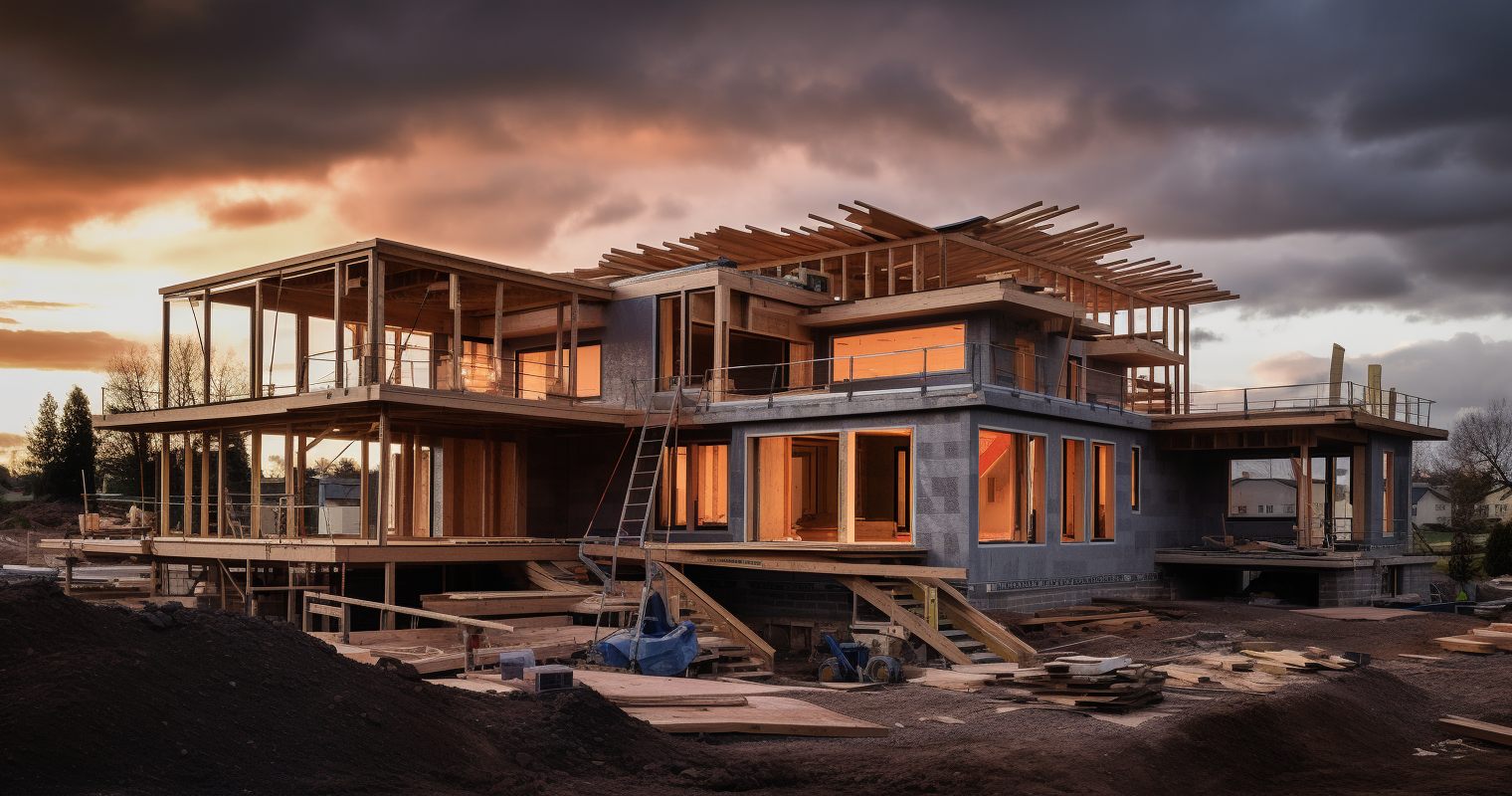
Property construction and renovation in South Korea operates within a tightly controlled regulatory environment. Almost every new build and any substantial structural modification demands a formal building permit under the Building Act, which local municipal authorities administer. The sector is shaped by comprehensive national codes, heritage and cultural protection legislation, and — since August 2025 — considerably stricter rules governing residential property purchases by foreign nationals in the Seoul metropolitan area. Engaging a licensed architect and a qualified Korean property lawyer before any project gets under way is not optional — it is essential.
| Item | Details |
|---|---|
| Primary legislation | Building Act; National Land Planning and Utilization Act |
| Permit-issuing authority | Relevant local municipal authority (si/gun/gu office) |
| Small-scale exemption | Certain minor structures may qualify for a notification (신고) rather than a full permit — verify thresholds with your local authority |
| Heritage authority | Korea Heritage Service (국가유산청); Cultural Heritage Protection Act applies |
| Architect registration body | Korea Institute of Registered Architects (KIRA): kira.or.kr |
| Foreign buyer restrictions (as of 2025) | Prior government approval required for residential purchases in Seoul, most of Gyeonggi Province, and parts of Incheon; two-year residency obligation applies |
Do you need planning permission to build or renovate a property in South Korea?
South Korea’s construction sector is governed by the Building Act and its associated decrees, which set out the requirements for permits, safety standards, and inspections. In practical terms, this means that any project involving a new structure or significant structural modification requires engagement with the relevant local government authority before a single spade enters the ground.
Under the Korean Building Act, anyone undertaking the construction of a new building or carrying out major repairs to an existing one must secure permission from the appropriate municipal authority. This bears a broad resemblance to building permit systems found in countries such as the United States or Canada, where local government approval must precede construction — though South Korea’s framework simultaneously incorporates national land-use zoning rules at the same stage of the process.
A limited exception exists for certain small-scale structures, where a simple notification to the authorities is all that is needed rather than full permission. This streamlined notification route (신고, or singgo) covers minor outbuildings, small sheds, and very restricted structural works that fall beneath defined floor-area thresholds. However, since those thresholds can vary depending on the zone and municipality, you must confirm with your local district office whether your particular project is eligible before assuming that a simplified procedure applies.
The National Land Planning and Utilization Act forms the cornerstone of planning law. It brings the entire national territory under one unified planning framework, abolishing the historic division between urban and non-urban land. It establishes the principal zone categories — urban, agricultural, conservation, and management — and confirms that any development activity must conform to the applicable urban management plans.
The step-by-step process for obtaining a building permit in South Korea is as follows:
- Confirm zoning and land-use classification. Before preparing any designs, check your plot’s zoning status through the Land Use Regulation Information System (eum.go.kr). In South Korea, virtually every plot is subject to several overlapping layers of zoning, which can make determining permitted use rights quite complex.
- Engage a licensed architect. Retain a registered architect to supervise the construction process. For the great majority of projects that exceed the minor-works threshold, having an architect’s stamp (설계도서) on the submitted drawings is a legal requirement.
- Prepare and submit the application. Liaise with the local government office and compile your application for a construction licence. Submit the building plan to that office for review. Applications can typically be lodged through the e-Architecture Information System (eais.go.kr), South Korea’s dedicated online building administration portal.
- Development approval (if required). Two distinct decisions sit at the heart of the procedure for many projects: the development approval, which examines the project’s compatibility with urban plans and the surrounding environment and falls within the discretionary authority of the competent local body; and the building permit, which focuses on technical compliance, health, and safety and is more strictly governed by statute.
- Receive approval. Await formal approval from the local government office. Processing times for a standard residential building permit are generally several weeks to a few months, depending on project complexity and the municipality involved. Verify current timescales and any applicable fees directly with your local authority, as both are subject to regular change.
- File a notice of commencement. A notice of commencement as required under Article 21 of the Building Act must be filed before any physical work begins on site.
- Obtain use approval on completion. When construction is finished, a use approval (사용승인) must be obtained before the building may be legally occupied. This is comparable to a completion certificate issued by building control bodies in other jurisdictions.
Being situated within a green belt zone entails severe limitations on development rights and near-automatic permit refusals for non-approved uses, with even tighter constraints applying to public projects. If your land falls within a development restriction zone (개발제한구역), seek specialist legal advice before taking any steps forward.
Unlike the United Kingdom’s planning system, which grants “permitted development rights” allowing a relatively broad range of extensions and outbuildings with no formal application, South Korea’s exemptions are narrower and more precisely defined. Always check with your gu or si office before assuming any work is exempt from the permit requirement.
What are the rules around listed buildings, conservation areas, and heritage protection in South Korea?
The rules governing listed buildings, conservation areas, and preservation orders in South Korea are rooted in the Cultural Heritage Protection Act. This legislation is administered by the Korea Heritage Service (국가유산청, previously known as the Cultural Heritage Administration), which maintains the national register of protected properties and sites. The Korea Heritage Service website is khs.go.kr.
South Korea’s heritage designation system is broadly analogous to listed building status in the UK or the National Register of Historic Places in the United States, but with its own distinctive categories. Designated properties include National Treasures (국보), Treasures (보물), Historic Sites (사적), and Important Folklore Cultural Heritage (중요민속문화재). Each category carries a different degree of restriction on what modifications can legally be made to a structure or its immediate setting.
“Special-purpose districts” can be layered on top of standard zoning areas to introduce further specific controls, including scenic protection zones, height-restricted sectors, and heritage buffer zones. This means a single property may simultaneously carry a heritage designation and a zoning overlay — and both sets of rules must be respected at the same time.
Where a property or site holds heritage protection, any renovation, alteration, extension, or demolition will typically require prior consent from the Korea Heritage Service in addition to a standard building permit. Carrying out unauthorised work on a protected structure can result in criminal prosecution, substantial financial penalties, and a legally enforceable requirement to restore the property to its previous condition at the owner’s expense.
Foreigners have always been required to obtain prior government permission before purchasing land in certain protected zones. These include military facility protection areas, cultural heritage sites, and ecological preservation zones throughout the country, regardless of any other ownership rules that may apply.
Before purchasing any property in South Korea, consult the Korea Heritage Service’s online cultural heritage map at heritage.go.kr and cross-reference it with the Land Use Regulation Information System to identify any overlapping restrictions. A qualified Korean property lawyer should conduct thorough due diligence on this issue before contracts are exchanged.
What permits and licences are required when building or renovating in South Korea?
Any construction project in South Korea will involve navigating a range of permits and approvals. These encompass building permits, construction consents, environmental clearances, and various other licences, and the exact combination required will depend on the nature and location of the project.
In general terms, the employer — meaning the project owner — bears responsibility for securing all necessary permits and approvals. These will ordinarily include a building permit or building report, a notice of commencement, and a use approval at completion. For larger-scale development projects, supplementary approvals such as a development activity permit under Article 56 of the National Land Planning and Utilization Act, or an environmental impact assessment under Article 22 of the Environmental Impact Assessment Act, may also be required.
The principal permits and approvals typically encountered during a residential build or significant renovation are:
- Building Permit (건축허가): The fundamental permission granted by the local municipal authority. It is required for new construction, major structural works, and significant changes of use.
- Development Activity Permit (개발행위허가): Necessary where the project involves a change in land use, significant earthworks, or development taking place outside designated urban zones.
- Notice of Commencement (착공신고): Submitted to the local authority before any physical work starts on site.
- Environmental Impact Assessment: Mandated for large-scale development projects under Article 22 of the Environmental Impact Assessment Act.
- Energy Compliance: During the permitting stage, builders must achieve a 60-point score by incorporating a specified proportion of required and recommended standards set out in the Building Design Criteria for Energy Saving (BDCES).
- Use Approval (사용승인): Granted once construction has been completed and inspected, this serves as the equivalent of a completion certificate or occupancy permit, and must be obtained before a building can lawfully be used or occupied.
- Fire Safety Sign-off: Fire safety provisions must comply with both the Fire Services Act and the fire safety requirements within the Building Act. Local fire authorities inspect larger buildings before use approval is issued.
- Utility Connection Permits: Separate applications to utility providers covering water, sewerage, electricity, and gas will be required. These are typically coordinated by the contractor but must be initiated by the project owner.
While the project owner bears the legal responsibility for obtaining these approvals, it is common in practice for certain consents — such as the notice of commencement — to be delegated to the contractor via the contract terms. Ensure your building contract states explicitly who is responsible for each approval, and include corresponding milestone dates throughout the programme.
Permit fees are determined by individual local authorities and are revised periodically. Always check the current fee schedule with the relevant si (city), gun (county), or gu (district) office, and confirm current requirements through the e-Architecture Information System before finalising your project budget.
How do you find a reliable, trustworthy builder in South Korea?
The relationships between project owners, construction companies, and subcontractors are regulated by the Framework Act on the Construction Industry (FACI), which establishes general principles for work contracts, alongside the Fair Transactions in Subcontracting Act, which focuses on protecting subcontractors from exploitative clauses and payment delays. This legislative structure means that South Korea’s construction industry operates within a comparatively well-regulated contractual environment.
A notable feature of South Korean construction is its high degree of standardisation. The Architectural Institute of Korea, with ministerial support, has developed a Korean Building Code (KBC) that draws substantially from American international standards (ASTM, ASHRAE, ACI), supplemented by national specifications. Reputable builders are expected to work in compliance with both the Korean Building Code and the Korean Architectural Standard Specification.
All construction companies undertaking significant works in South Korea are required to be registered with the relevant authority under the Framework Act on the Construction Industry. When assessing a potential contractor, ask to see their registration certificate and verify that it remains current. The Korea Federation of Construction Contractors (대한건설협회) is the primary industry body for general contractors. Their website is cak.or.kr. Their contact address is: Korea Federation of Construction Contractors, 71 Banpo-daero, Seocho-gu, Seoul.
Practical steps for vetting a contractor include:
- Check registration status. Confirm the contractor’s business registration number through the Korean construction business information system. An unregistered contractor cannot lawfully carry out notifiable work.
- Request a written contract. Never proceed on the basis of a verbal agreement. Your contract should define the scope of works, programme, payment milestones, warranty terms, and the mechanism for resolving disputes. The Ministry of Land, Infrastructure and Transport publishes standard construction contract templates for reference.
- Ask for references. Request contact details for at least two or three recently completed projects of a comparable scale and type, and visit them in person where possible.
- Verify insurance. Larger projects require specific insurance cover, most commonly a Contractor’s All Risks (CAR) policy supplemented by liability insurance for workplace accidents. Confirm that appropriate cover is in place before any works begin.
- Use staged payments. Structure payments to correspond with confirmed completion of verified project milestones rather than paying large sums in advance. This protects you if progress stalls or quality falls below the agreed standard.
- Use a supervising architect. Having your architect carry out inspections at each critical stage provides an independent quality and progress check throughout the build.
Expats and foreign property owners are sometimes targeted by dishonest contractors who accept upfront payments and then abandon the project, or who provide quotes in Korean with deliberately vague scope descriptions. Always use a bilingual contract or have all documents officially translated, and retain a Korean-speaking lawyer or trusted local agent to act on your behalf throughout.
Construction disputes may be referred to the ordinary courts, but Construction and Architectural Dispute Mediation Committees established under the relevant framework acts also provide an alternative route, as does arbitration administered by the Korean Commercial Arbitration Board (KCAB). The KCAB website is kcab.or.kr.
How do you find a qualified local architect in South Korea?
Architecture in South Korea is a regulated licensed profession. An architect is a qualified expert holding a national architecture licence, authorised to design buildings and supervise their construction. Practising without a valid licence is unlawful, and using an unlicensed designer for notifiable works will invalidate your permit applications.
The body responsible for architect registration is the Korea Institute of Registered Architects (KIRA). KIRA administers the Korea Architects Registration Board (KARB) and the KIRA Education Board, oversees the professional development of construction engineers and the output of qualified architects, and manages the registered architect examination. KIRA discharges these functions under government commission.
KIRA contact details:
- Website: kira.or.kr/eng
- Address: Korea Institute of Registered Architects, Seoul (refer to the official website for the current full address and postal code)
Under the Architects’ Act, KARB systematically manages professional development pathways, registration and renewal of licensed architects, and the continuing education of registered architects, all of which is commissioned to KIRA. You can search KIRA’s register to confirm that any architect you are considering holds a valid, current licence before engaging their services.
A second useful organisation is the Korean Institute of Architects (KIA), a professional membership body dedicated to promoting design excellence. Their website is kia.or.kr. KIA membership is a positive signal of professional engagement, though the legal authority to practise is conferred through KIRA rather than KIA.
The Architectural Institute of Korea (AIK) functions as the principal academic and technical standards body. Their address is: Architecture Center, Architectural Institute of Korea, 87 Hyoryeong-ro, Seocho-gu, Seoul (Zip Code 06687). Website: en.aik.or.kr.
The Canberra Accord was initiated in May 2006 to provide international recognition of architectural accrediting bodies from South Korea, the United States, Great Britain, Australia, Canada, China, Mexico, and other nations. It was formally concluded and signed in April 2008, establishing that architectural education programmes accredited by member countries’ bodies are substantially equivalent. Architects trained in Canberra Accord member countries may therefore be eligible to pursue registration in South Korea, though they will still need to complete the Korean licensing process and satisfy local requirements.
For expats specifically, practical considerations include identifying an architect with prior experience working with foreign clients and the ability to communicate in a shared language, or who has a bilingual team in place. Raise at the outset how they handle client communication and whether they have previously guided overseas clients through the Korean permit and approval process.
What are the common pitfalls when buying land to build on in South Korea?
One of the most important steps when purchasing land in South Korea is confirming that it is zoned for the type of development you intend. Zoning is highly specific, and the permitted uses of a given plot — including the type, height, and scale of any building — are determined well before you make an offer. Never assume that agricultural, green belt, or management-zone land can be converted to residential use.
The national territory is divided at the broadest level into urban zones, management zones, agricultural zones, and natural environment conservation zones. Management zones are themselves further subdivided into sub-categories based on the permitted intensity of activity. Within those broad categories, the core of the system is the “special-purpose area” (Yongdojiyeok), which assigns a primary purpose — residential, commercial, or industrial — to each sector. You must examine every applicable layer of zoning before committing to a purchase.
You should also confirm that the land is free from preservation orders or conservation regulations. Additionally, ensuring that land boundaries are clearly marked and accurate is critical. Boundary disputes are not uncommon in South Korea, particularly with older rural plots where historical land registration records may be incomplete or out of step with the physical boundaries as they exist on the ground.
Key due-diligence checks to carry out before purchasing land include:
- Land register (등기부등본): Obtain a certified copy of the property register (registry certificate) from the Supreme Court’s Internet Registration Office (iros.go.kr) to verify ownership, identify any mortgages, liens, or encumbrances, and confirm the legal description of the plot.
- Land cadastral certificate (토지대장): Confirms official boundaries and the registered land area. Available from the relevant local government office or via the Government24 portal (gov.kr).
- Zoning confirmation: Use the Land Use Regulation Information System (eum.go.kr) to check every zoning and usage restriction applying to the plot.
- Utilities availability: Confirm whether water, sewerage, electricity, and gas connections are available and establish the cost of extending them to the plot if they are not.
- Environmental and flood risk: Check whether the land is classified as flood-prone, vulnerable to erosion, or has any history of contamination. Your local government office and the Ministry of Environment (me.go.kr) hold the relevant registers.
- Access rights: Verify that legal road access to the plot exists. Landlocked plots relying on informal or customary access arrangements can give rise to serious legal difficulties.
Land ownership issues commonly encountered by foreign buyers include zoning disputes, difficulties obtaining the permits required for construction or development, and challenges navigating local bureaucratic processes. Understanding and properly complying with local regulations is fundamental to avoiding these problems.
Consulting a lawyer or real estate professional to assist in navigating the land purchase process in South Korea is strongly recommended. Look for a lawyer registered with the Korean Bar Association (대한변호사협회) who has specialist experience in property transactions. Their website is koreanbar.or.kr.
What are the rules around foreign ownership and financing for construction projects in South Korea?
As of early 2026, foreign nationals may purchase property anywhere in South Korea, but the process has become significantly more involved in the Seoul metropolitan area, which now requires prior government approval and a two-year residency commitment for residential acquisitions.
With effect from 21 August 2025, the South Korean government introduced a new permit-based regime restricting residential property purchases by foreign nationals in key regions, covering all of Seoul, extensive portions of Gyeonggi Province, and specified districts within Incheon. This framework is known as the Foreign Land Transaction Permit system.
All paid transactions involving foreign buyers within these zones require a permit to be obtained before the purchase contract is signed. Without this permit, any purchase contract is legally void under Korean law. The residency requirement obliges buyers to take up occupation of the purchased property within four months of permit approval and to reside there for a minimum of two years.
The zones covered by the new permit system encompass all 25 districts of Seoul, 23 cities and counties within Gyeonggi Province (including Suwon, Seongnam, and Goyang), and 7 districts of Incheon, effectively spanning nearly the entire capital region.
Violations attract penalties of up to 10% of the property’s value, with potential contract nullification for serious non-compliance.
The new legislation also requires foreign nationals seeking to purchase property in the designated zones to submit a financing plan and to disclose the source of their funds along with their visa category. This documentation obligation applies both at the permit application stage and following completion of the purchase.
The most widely used legal approach among foreigners is either purchasing officetels — which are exempt from the new permit requirements — or buying residential property in cities outside the designated zones, such as Busan’s Haeundae district, Daegu, or Jeju Island, where the older and more straightforward reporting system continues to apply.
As of early 2026, a buyer’s nationality does not generally alter what types of property they may legally acquire in South Korea, as the rules apply uniformly to all foreign nationals regardless of passport, though the administrative burden and the banking experience may vary depending on the country of origin.
While there is generally no blanket restriction on purchasing urban or rural land for residential or commercial development, specific land types — such as agricultural land — are subject to more stringent controls. Land along borders and coastal areas also carries restrictions. Land near sensitive locations such as military installations or the North Korean border is often subject to strict regulations, and foreign ownership may be restricted or require special government approval.
Acquiring property in South Korea through a corporate vehicle is possible. Establishing a local company is a method frequently used by foreign investors to hold property, but it carries significant legal and tax implications. Obtain specialist legal and tax advice before choosing this route.
Foreign nationals seeking mortgages or construction loans from Korean banks will generally face more stringent conditions than domestic borrowers, including requirements to demonstrate stable Korea-sourced income or to provide greater security relative to the loan amount. Where foreign financing is involved, buyers must submit — within 30 days of signing the contract — a detailed financing plan specifying the foreign bank, the amount borrowed abroad, and their visa status. Consult the Financial Supervisory Service (fss.or.kr) and the Bank of Korea (bok.or.kr) for current foreign exchange regulations and financing guidance.
The initial one-year designation period allows policymakers to evaluate market impacts before deciding whether to extend or revise the programme beyond August 2026. Given this uncertainty, anyone planning a purchase in the Seoul metropolitan area should obtain the most current legal advice available, as the applicable rules may change.
What official sources should you consult when planning to build or renovate in South Korea?
Before committing to any project, consult the official bodies, registers, and portals listed below. Rules, fees, and procedures are subject to regular revision, so always verify the most current requirements directly with the relevant source.
| Body / Resource | Purpose | Website |
|---|---|---|
| Ministry of Land, Infrastructure and Transport (MOLIT) | National housing, construction, and land policy | molit.go.kr/english |
| e-Architecture Information System (세움터) | Online building permit applications and status tracking | eais.go.kr |
| Land Use Regulation Information System (토지이음) | Zoning, land-use, and planning restrictions by plot | eum.go.kr |
| Internet Registration Office (대법원 인터넷등기소) | Property title deeds and encumbrance searches | iros.go.kr |
| Korea Heritage Service (국가유산청) | Cultural heritage designations and restrictions | khs.go.kr |
| Korea Institute of Registered Architects (KIRA) | Architect registration and verification | kira.or.kr/eng |
| Korean Bar Association | Find a qualified property lawyer | koreanbar.or.kr |
| Korea Federation of Construction Contractors | Contractor registration and industry information | cak.or.kr |
| Government24 Portal (정부24) | Land cadastral certificates and official documents | gov.kr |
| Financial Supervisory Service | Banking and mortgage regulation for foreign buyers | fss.or.kr/eng |
| Ministry of Environment | Environmental protection zones and contamination registers | me.go.kr/eng |
| Invest Korea (KOTRA) | Investment guidance for foreign nationals, including land acquisition guide | investkorea.org |
The Ministry of Land, Infrastructure and Transport (MOLIT) directs construction policy at the national level, supported by bodies including the Korean Construction Standard Center and the Architectural Institute of Korea, the latter being responsible for developing technical standards such as the Korean Architectural Standard Specification. MOLIT is the natural first point of contact for any policy-level question relating to construction or land use in South Korea.
Frequently asked questions
How long does it typically take to get a building permit in South Korea?
Timescales depend on the municipality and the complexity of the project. For uncomplicated residential applications, a decision is generally issued within several weeks to approximately two months. More complex projects, those situated in sensitive zones, or applications that trigger additional environmental or heritage assessments can take considerably longer. Contact your local district or city office directly for indicative current timescales, since these are not uniform across the country and can differ substantially between urban and rural areas.
How much does building or renovating a house in South Korea typically cost?
Construction costs across South Korea vary considerably depending on location, specification, and project type. In major urban centres, residential build costs per square metre are broadly in line with comparable developed East Asian markets, while rural areas generally offer lower costs. Architect fees, permit costs, and contractor margins all add meaningfully to the base construction figure. Obtain multiple written quotes from registered contractors and include a contingency allowance of at least 10–15% for unforeseen expenses. For current indicative market rates — which shift with material and labour costs — consult MOLIT or a local architect.
What happens if I build or renovate without the required permits in South Korea?
The consequences of non-compliance are serious. Penalties include formal warnings, fines that may reach 10% of the transaction value and can be repeated for ongoing breaches, and potential nullification of the contract in severe cases. You may also be ordered to demolish unauthorised work at your own cost. Buildings lacking the necessary approvals cannot receive use approval and therefore cannot be legally occupied, sold, or used as security for a mortgage. The process of retrospective regularisation is complex and is not always achievable.
Are qualifications or building standards from other countries recognised in South Korea?
The Korean Building Code (KBC) draws heavily from American international standards including ASTM, ASHRAE, and ACI, supplemented by domestic specifications. However, a foreign architect’s qualifications are not automatically accepted in South Korea — they must satisfy local licensing requirements through KIRA. The Canberra Accord, signed in 2008, established that architectural education programmes from member countries — including the United States, the United Kingdom, Australia, Canada, and South Korea — are substantially equivalent, creating a pathway for mutual recognition of educational credentials, but completing the full Korean licensing process remains a requirement before practising in the country.
Can I manage my South Korean building project remotely from abroad?
Appointing a local representative — such as a licensed architect, project manager, or legal proxy — to handle many aspects of a project on your behalf from abroad is technically feasible. However, given the intricacies of the permit system, the language barrier, and the potential for contractor disputes, overseeing an entire build from overseas carries considerable risk. At a minimum, you should be present on site at key project milestones and ensure all documentation is independently verified. A bilingual architect who manages construction supervision on your behalf throughout is strongly advisable.
What should I do if I have a dispute with my builder in South Korea?
Construction disputes may be referred to the ordinary courts, but Construction and Architectural Dispute Mediation Committees established under the relevant framework legislation also provide an alternative, as does arbitration administered by the Korean Commercial Arbitration Board (KCAB). The mediation route is typically faster and less expensive than court proceedings. Make certain your building contract contains a clear dispute resolution clause identifying the agreed mechanism, and retain a Korean-speaking lawyer for any formal dispute process.
Is there a language barrier when dealing with Korean planning and building authorities?
All official planning, permit, and registration processes are conducted in Korean. While some municipal offices in Seoul and larger cities offer limited English-language assistance, this cannot be relied upon. Official documents, contracts, and government correspondence will be in Korean throughout. Working with a bilingual architect, lawyer, or certified translator for the entirety of any build or renovation project is essential. The e-Architecture Information System (eais.go.kr) and Land Use Regulation portal (eum.go.kr) are also primarily in Korean.
Do the new 2025 foreign buyer restrictions apply to land purchased for self-build construction?
South Korea’s Foreign Land Transaction Permit is a government-issued approval that foreign nationals, foreign corporations, and foreign governments must obtain before purchasing land or residential property within designated zones. The restrictions cover residential land acquisition within those zones, not just purchases of existing built properties. If you intend to purchase a plot of land and construct a home within the Seoul metropolitan area, you will need to secure a Foreign Land Transaction Permit before signing any purchase contract. Outside the designated zones, the earlier notification-based system currently continues to apply, though given that the rules remain subject to change, obtaining current legal advice before proceeding is essential.