
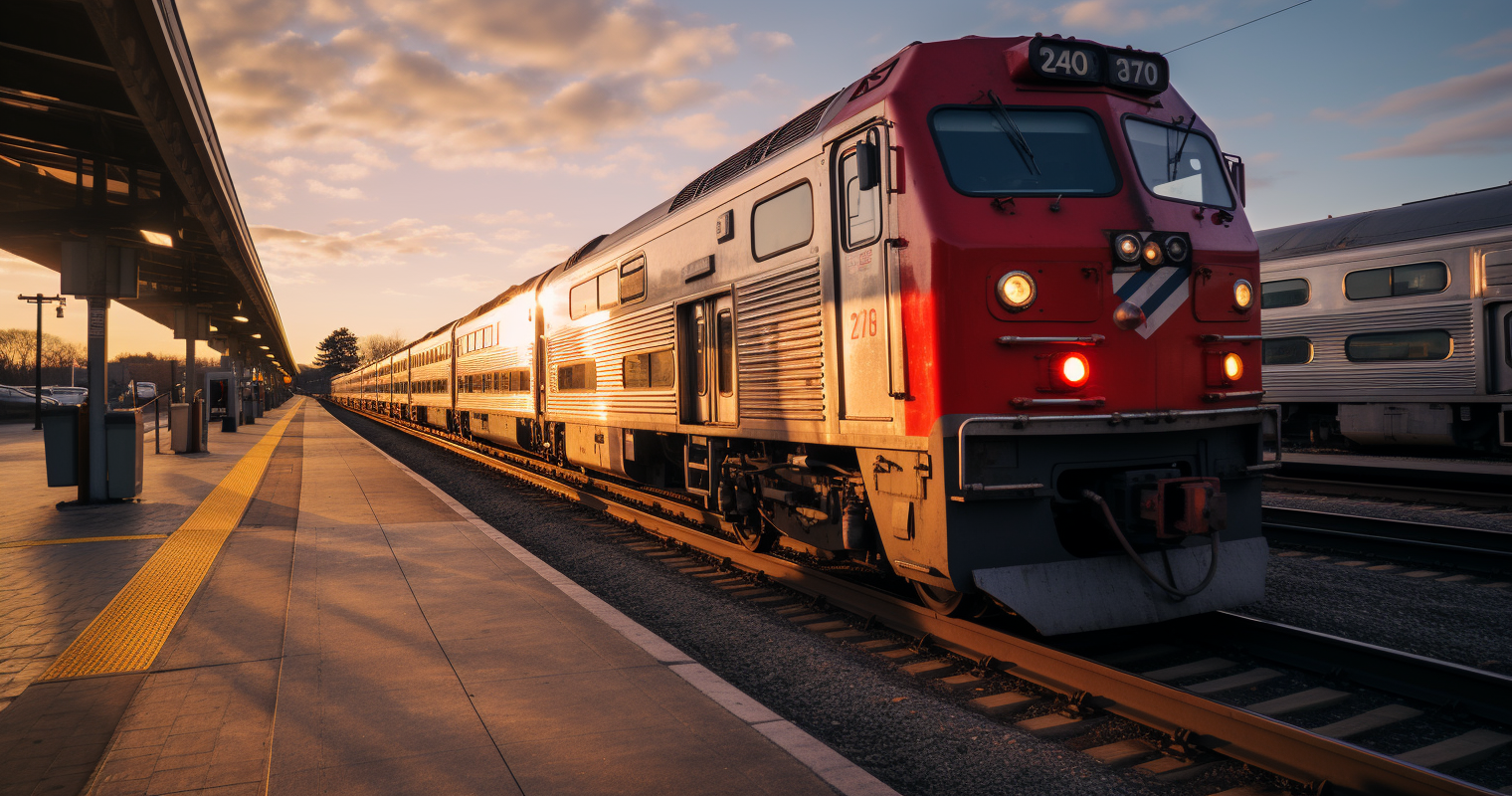
South Korea’s rail system ranks among the finest in Asia, blending a high-speed intercity spine with sprawling urban metro networks and conventional regional lines. KORAIL, the national rail operator, provides connections to virtually every significant city across the Korean mainland. For those living in the country, the network delivers speed, dependability, and value — whether for the daily commute or a weekend trip across the peninsula.
| Item | Details |
|---|---|
| National rail operator | KORAIL (Korea Railroad Corporation) — letskorail.com |
| High-speed service | KTX (operated by KORAIL) and SRT (operated by SR) — top speeds up to 305–320 km/h (as of 2024) |
| Seoul–Busan journey time | Approx. 2 hours 15–30 minutes by KTX (as of 2024) |
| Economy class fare (Seoul–Busan, KTX) | Approx. ₩59,800 (~USD 43–45) one-way (as of 2024 — verify current fares at letskorail.com) |
| Advance booking window | Up to 1 month at station; up to 1 year online via Korail website |
| Rail pass for residents | Happy Rail Pass available for foreign residents living in Korea over 6 months (check letskorail.com for current pricing) |
What is the overall standard of rail travel in South Korea?
South Korea’s rail infrastructure stands among the most sophisticated in the world, encompassing high-speed KTX services, broad metro coverage, and a full range of conventional regional lines, all managed through KORAIL and various urban operators. The overall quality is genuinely world-class — drawing comparisons to Japan’s Shinkansen or Germany’s ICE network — though South Korea’s topography means that high-speed corridors radiate outward from Seoul rather than forming a comprehensive nationwide grid.
The Korea Railroad Corporation, branded as KORAIL, serves as the country’s national rail operator. It runs intercity and regional services, commuter and metro lines, and freight operations across South Korea, functioning as a government-owned corporation under the oversight of the Ministry of Land, Infrastructure and Transportation.
South Korea’s national railway connects all major cities on the mainland through an efficient and modern system. For the vast majority of travellers, the rail network is the most practical way to move around the country. High-frequency services on busy corridors, combined with strong on-time performance, make it suitable for both everyday commuting and longer journeys.
KTX — Korea Train eXpress — was the country’s first high-speed rail service, inaugurated on April 1, 2004. Over the two decades since its launch, the system has developed considerably. Newer variants including the KTX-Eum and KTX-Cheongryong have been introduced, with maximum operating speeds of 260 km/h and 320 km/h respectively, entering service in 2021 and 2024.
Alongside high-speed services, KORAIL operates a broader hierarchy of train types. ITX (Intercity Train eXpress) services cover key intercity corridors, while Mugunghwa-ho and its planned replacement, Nuriro, handle regional routes. This tiered structure provides residents with slower, cheaper alternatives for destinations that lie outside the high-speed network.
A notable change on the horizon concerns South Korea’s two main high-speed operators. A proposed merger between KTX and SRT has been debated for several years, motivated by concerns over operational duplication and persistent seat shortages. SRT operates out of Suseo Station in southern Seoul and has long struggled to meet passenger demand. Officials have indicated that folding SR Corp. into KORAIL could resolve these ongoing pressures. Passengers who regularly use both services should monitor the status of this merger, as ticketing and scheduling arrangements may evolve accordingly.
What classes of rail travel are available in South Korea?
KTX trains are configured with two seating categories: Economy Class (second class) and First Class. The precise offering and labelling differ depending on the rolling stock in use, so it is worth familiarising yourself with the distinctions before making a reservation.
On the original KTX-I trains, First Class provides broader seats with additional legroom compared to Economy. These trains are descended directly from the French TGV design, featuring a denser seating arrangement and fewer power points along the windows. The KTX-Sancheon, an updated variant, improved on this with better seating and individual charging sockets throughout.
The KTX-Cheongryong — the newest addition to the fleet — offers either Superior, Business, or First Class at the premium level, with only two accommodation tiers onboard. Notably, the gap between Economy and the premium class on this train is narrower than on older KTX models, which makes Economy Class an even stronger value proposition. Some passengers who have reviewed the KTX-Cheongryong have found the economy experience comparable to premium seating on earlier trains.
Across the KTX-Cheongryong fleet, passengers can expect a notably smooth ride, generous device-charging provision, and comfortable legroom throughout both classes. KTX trains broadly offer clean seating, onboard restrooms, vending machines, and in some cases a café or snack service, while first-class coaches add roomier seating and additional creature comforts.
For conventional intercity and regional trains — ITX, Mugunghwa, and Nuriro — the class structure is more straightforward, with a single standard seating option. These trains are slower and less expensive than KTX and serve smaller destinations not yet connected to the high-speed network. ITX services (sometimes called Saemaeul) operate on three main corridors at around 165 km/h, while Mugunghwa trains function essentially as local stopping services, calling at every station along the route.
On the SRT, passengers can choose between a spacious first-class cabin and a comfortable standard second-class section. The SRT itself is broadly equivalent to the KTX-Sancheon in terms of the travel experience. Fares on SRT run approximately 10% lower than KTX, and it can be a more practical choice for passengers departing from or arriving in the Gangnam area or the eastern parts of Seoul.
Where can you find rail timetables and ticket prices in South Korea?
The definitive source for KTX schedules and fares is the official KORAIL website, offered in both Korean and English at letskorail.com. This portal provides authoritative information on current timetables, pricing, and seat availability across all KORAIL-operated services. Fares and schedules are subject to periodic revision, so always confirm details here before travelling.
For SRT services, the official booking and timetable platform is located at etk.srail.kr. SR operates high-speed SRT trains from Suseo Station in southeastern Seoul, sharing portions of the Gyeongbu and Honam KTX routes after the Cheonan-asan stop. SRT maintains its own separate ticketing infrastructure, though greater integration with KORAIL is anticipated in the future.
Both the Korail and SRT mobile apps return search results covering departures from all Seoul-area high-speed rail stations — Seoul, Yongsan, and Suseo — regardless of which operator runs the service. A unified mobile application is planned for launch by the end of 2026, allowing passengers to purchase tickets for both KTX and SRT through a single interface. Keep an eye on the official KORAIL site for updates on this development.
Third-party platforms including Trip.com and Rail.Ninja offer timetable searches and booking for international users, which some residents find more intuitive than the official KORAIL interface. That said, the KORAIL website remains the most accurate and current source of fare information. The Ministry of Land, Infrastructure and Transport (molit.go.kr) also publishes transport policy updates with relevance to the national rail network.
How do you buy rail tickets in South Korea, and can you book in advance?
Rail tickets can be purchased through the Korail mobile app, at self-service machines located throughout major stations, or in person at staffed ticket counters. Online booking via the official KORAIL website at letskorail.com — available in English — is typically the most convenient route for residents.
The step-by-step process for booking a KTX ticket online is as follows:
- Visit letskorail.com and select your language (English is available). Create or log in to your account.
- Enter your departure station, destination, travel date, and number of passengers, then click Search.
- Browse available trains, comparing departure times, journey durations, and available classes (Economy or First/Superior Class).
- Select your preferred train and choose your seat using the interactive seat map.
- Select your ticket type — standard, flexible (with easier refunds), or other applicable fare types — and apply any discount codes or passes if eligible.
- Complete payment using a credit or debit card. International cards are accepted online.
- Receive your e-ticket via email or save it in the KORAIL app on your smartphone. The QR code on the e-ticket is scanned at the barrier or by the conductor.
Advance purchase windows differ depending on the buying channel: tickets can be reserved up to one month before departure when bought at the station, whereas online booking through the KORAIL website allows reservations up to one year ahead.
Booking in advance is particularly important on high-demand corridors such as Seoul–Busan and Seoul–Daegu. Travelling in a group makes early reservation even more critical, since securing the right number of adjacent seats becomes harder as departure approaches. During major national holidays — above all Chuseok and Seollal — demand is extraordinary and seats can vanish within minutes of going on sale. Residents should treat these periods as requiring the earliest possible booking.
Tickets may also be bought up to one month ahead at any Korean Rail station ticket office. Purchasing online offers the added benefit of an English-language interface, and tickets can subsequently be collected from any Korean Rail ticket office if a physical copy is preferred.
For SRT journeys, use the dedicated SRT app or the website at etk.srail.kr. Although SRT operates its own separate booking system, physical SRT tickets can also be obtained at Korail station counters.
What types of rail tickets are available, and are there discount schemes?
KORAIL provides a variety of ticket formats to accommodate different travel patterns. Standard single (one-way) tickets are the most commonly purchased. When booking, passengers can choose between a standard or a flexible tariff — the latter costs slightly more but permits changes and cancellations with reduced or no penalty, a useful feature for residents whose schedules may shift unexpectedly.
A one-way Economy Class KTX ticket from Seoul to Busan costs Korean Won 59,800 (as of 2024 — always verify current pricing at letskorail.com, as fares are subject to change). Reductions are available for children and seniors on this route. First and Superior Class fares are higher; consult the official site for up-to-date premium class rates.
For residents who travel regularly by rail, KORAIL and SR offer a range of pass and discount options:
- Happy Rail Pass: Foreigners who have resided in South Korea for more than six months are not eligible for the standard KR Pass, but KORAIL provides the Happy Rail Pass as a comparable alternative, available at a slightly higher price point. Check letskorail.com for current pricing, as this changes periodically.
- Korea Rail Pass (KR Pass): KORAIL’s Korea Rail Pass permits unlimited travel on most KORAIL-operated trains including KTX. Note that subways and tourist trains operated by KORAIL are excluded. This product is primarily intended for visitors rather than long-term residents.
- Consecutive and flexible passes: Passengers can opt for Consecutive Passes or Select Passes (Flexible) based on their travel plans.
- Group discounts: Groups of 2–5 people may be entitled to approximately a 10% reduction through the Group Saver pass option. (as of 2022 — verify current group fare conditions at the official KORAIL website)
- Senior discounts: Passengers aged 65 and over qualify for reduced fares on KORAIL intercity services. The exact discount level may vary by service type — check the official KORAIL website or ask at a station ticket office for current thresholds and eligibility criteria.
- Youth and student discounts: Reduced fares are available for younger passengers on certain services. Eligibility conditions and age thresholds vary; confirm current terms at letskorail.com.
It is worth emphasising that during peak holiday periods — Chuseok, Seollal, and national public holidays — seat availability can collapse very rapidly. Securing tickets well ahead of these dates is strongly recommended.
How accessible is the rail network for disabled passengers?
South Korea’s rail network has made substantial strides in improving accessibility, particularly at newer stations and on modern train sets. Major high-speed hubs including Seoul Station, Busan Station, and Dongdaegu Station are equipped with lifts, tactile paving, accessible restrooms, and ramps as standard features. Accessibility can, however, vary at smaller regional and rural stations where older infrastructure remains in place.
On the trains themselves, dedicated spaces for wheelchair users are provided as a matter of course. On both KTX-I and KTX-Sancheon rolling stock, Car No. 2 is specifically fitted with facilities for passengers with disabilities. The newer KTX-Cheongryong likewise includes designated wheelchair positions within Economy Class carriages.
KORAIL operates a passenger assistance service for travellers requiring additional support at stations. Those with disabilities can arrange help either when booking online or by contacting the KORAIL customer service line directly. Station announcements are delivered both over public address systems and on visual information screens, and wayfinding signage across the network appears in Korean, English, Chinese, and Japanese — a practical convenience for international residents who may still be developing their Korean reading skills.
Within urban metro systems, accessibility is generally strong in Seoul, where lifts, tactile navigation guides, and audio announcements are in place at all major stations on newer lines. Some older station infrastructure on legacy lines may offer more limited provision. Both Seoul Metro and Seoul Metropolitan Rapid Transit (SMRT) publish dedicated accessibility information on their official websites (see the urban rail section below).
Comparing KORAIL’s approach to that of operators such as Germany’s Deutsche Bahn or the UK’s National Rail — both of which run structured passenger assistance booking schemes — the standard at South Korea’s major stations is broadly on a par, though rural station coverage can be more variable. Residents with specific accessibility requirements are encouraged to contact KORAIL before travelling. The KORAIL accessibility information page is available at letskorail.com, and the Ministry of Land, Infrastructure and Transport (molit.go.kr) publishes relevant accessibility policy guidance.
Are there metro or urban rail systems in South Korea’s cities?
A number of South Korean cities run their own urban rail and metro networks, which form the backbone of daily transport for most residents. Standards across these systems are consistently high, with modern rolling stock, frequent departures, and integrated ticketing arrangements.
Seoul: Seoul is home to one of the most extensive metro networks anywhere in the world, with numerous lines spanning the city and reaching into the broader metropolitan region, encompassing Incheon and Gyeonggi Province. The network is jointly operated by Seoul Metro, Seoul Metropolitan Rapid Transit (SMRT), and KORAIL, the latter running several commuter rail lines that are incorporated into the metro fare system. KORAIL metro services maintain a separate fare structure from other KORAIL train services but are integrated with the subway ticketing system, permitting free transfers between KORAIL-operated lines and local metro lines. Visit seoulmetro.co.kr for maps, timetables, and fare details.
Busan: Busan’s four-line metro network is managed by Busan Transportation Corporation, linking the city centre with suburban districts and coastal neighbourhoods. Further information is available at humetro.busan.kr.
Daegu, Daejeon, Gwangju, and Incheon each operate independent metro systems that provide efficient urban connectivity. Each city’s transit authority publishes timetable and fare information through its own website.
All of these urban networks use a distance-based fare structure and accept the T-money card — a rechargeable contactless transit card compatible with buses, metro lines, and KORAIL commuter services across the country. Paying with a T-money card delivers a modest per-journey discount over purchasing individual tickets and greatly simplifies transfers between services. Cards can be bought and topped up at convenience stores, station vending machines, and T-money-branded outlets. The official T-money information site is at t-money.co.kr.
For route planning across Seoul’s combined metro and bus network, the Kakao Map and Naver Map apps are the tools of choice for most residents and are available in English. Both provide real-time transit directions covering metro, bus, and KTX connections in a single interface.
What should expats know about using the rail network day-to-day?
Getting around South Korea’s rail network as a newcomer is, for the most part, a straightforward experience — especially in large cities. Signage at all KTX stations and the majority of metro stations is displayed in Korean, English, Chinese, and Japanese, making navigation accessible for international residents who are still building their Korean language ability.
On KTX and intercity services, train announcements are delivered in both Korean and English. Urban metro lines in Seoul and Busan provide English-language audio announcements as standard. Departure boards at major stations present information in multiple languages for added clarity.
Seat reservations are mandatory on all KTX and SRT services — boarding and choosing your own seat at random is not an option. Each ticket specifies the carriage and seat number, and passengers are expected to sit in their assigned place. Your ticket will also indicate whether the seat faces the direction of travel or is rear-facing. On regional services such as Mugunghwa, unreserved seating is sometimes offered at a reduced price, though on busy routes this may mean standing for part of the journey.
Left-luggage facilities are available at larger stations. Seoul Station, for example, offers a range of dining options, baggage storage services, and a staffed ticket office. Onboard, overhead racks and end-of-carriage luggage areas accommodate bags, though very large suitcases can be cumbersome during busy periods. KTX does not impose strict baggage size regulations, but passengers are expected to be considerate of fellow travellers.
A few aspects of local rail etiquette are worth keeping in mind. Priority seating areas — typically marked in a contrasting colour near carriage doors — are reserved for elderly passengers, pregnant women, and those with disabilities. Occupying these seats unnecessarily is considered impolite. Quiet carriage norms are observed fairly seriously; making phone calls within the main seating area is generally avoided, and conversations are kept subdued. Eating on KTX and intercity trains is entirely acceptable, and vending machines are available onboard, though they dispense drinks only — so bring food along for longer journeys if needed.
For journey management, the Korail Talk app (available on iOS and Android) allows residents to check schedules, purchase tickets, manage bookings, and display a digital QR ticket at station barriers. The app supports English. The SRT app serves the same purpose for SRT travel. A single unified app covering both KTX and SRT bookings is expected to launch by the end of 2026 — watch the official KORAIL channels for further announcements on this development.
Frequently asked questions
Can I buy KTX tickets without a Korean bank account?
Yes. The official KORAIL website (letskorail.com) accepts international credit and debit cards for online purchases, meaning a Korean bank account is not required. After payment, an e-ticket is sent to your email or stored in the Korail app. If you prefer to buy in person, tickets are also available at station ticket counters and self-service machines using cash or card.
Do I need to print my KTX ticket, or can I use my phone?
Printing is not necessary. E-tickets carrying a QR code are fully accepted at station entry barriers and by onboard conductors. Simply present the QR code from your email confirmation or the Korail app on your smartphone. This is the approach used by the vast majority of passengers and is entirely reliable.
How far in advance should I book KTX tickets for public holidays?
For major Korean public holidays — particularly Chuseok and Seollal — available seats can disappear within minutes of going on sale, typically around one month before the holiday dates. Make a note of the exact ticket release time and be ready to book the moment sales open online. Being flexible about your departure time also improves your chances of finding a seat.
What is the difference between KTX and SRT?
Since 2016, SR’s SRT (Super Rapid Train) has offered comparable high-speed services on the main corridors from Suseo Station in Seoul to Busan and Mokpo. SRT fares are around 10% lower than KTX and may be more convenient for passengers heading to Gangnam or other eastern parts of the city. The key practical distinction is the departure point — Seoul Station for KTX versus Suseo Station for SRT — so your choice should depend largely on where in Seoul you are starting from.
Is the T-money card the best way to pay for metro travel?
For urban rail and metro journeys, the T-money card is undoubtedly the most convenient payment method. It works across Seoul Metro, city buses, and KORAIL commuter services nationwide, provides a small discount on each trip compared to single-use tickets, and removes the need to queue at machines before every journey. Cards can be purchased and recharged at convenience store chains such as GS25 and CU, as well as at most metro station machines.
Are trains in South Korea reliable and on time?
KTX and SRT high-speed services maintain an impressive punctuality record and are widely regarded as very dependable. Occasional delays do occur, typically as a result of severe weather or technical incidents, but these are relatively uncommon by international standards. KORAIL provides live train status updates through the Korail app and on station departure boards.
Can long-term residents use the Korea Rail Pass?
Foreign nationals who have resided in South Korea for more than six months are not eligible for the standard KR Pass. KORAIL instead offers the Happy Rail Pass for this group — a closely comparable product available at a slightly higher price. If you are a long-term resident rather than a short-term visitor, the Happy Rail Pass is the appropriate option. Current pricing and eligibility conditions are listed at letskorail.com and should be checked regularly as they may be updated.
What should I do if I miss my KTX train?
Head to the station ticket office without delay. Depending on the fare type you purchased, it may be possible to transfer to the next available service for a rebooking fee, or a new ticket may need to be purchased. Flexible-fare tickets permit changes with minimal or no financial penalty. To avoid this situation, opt for flexible fares whenever your schedule is uncertain. KORAIL’s customer service line can also provide guidance on your options.