
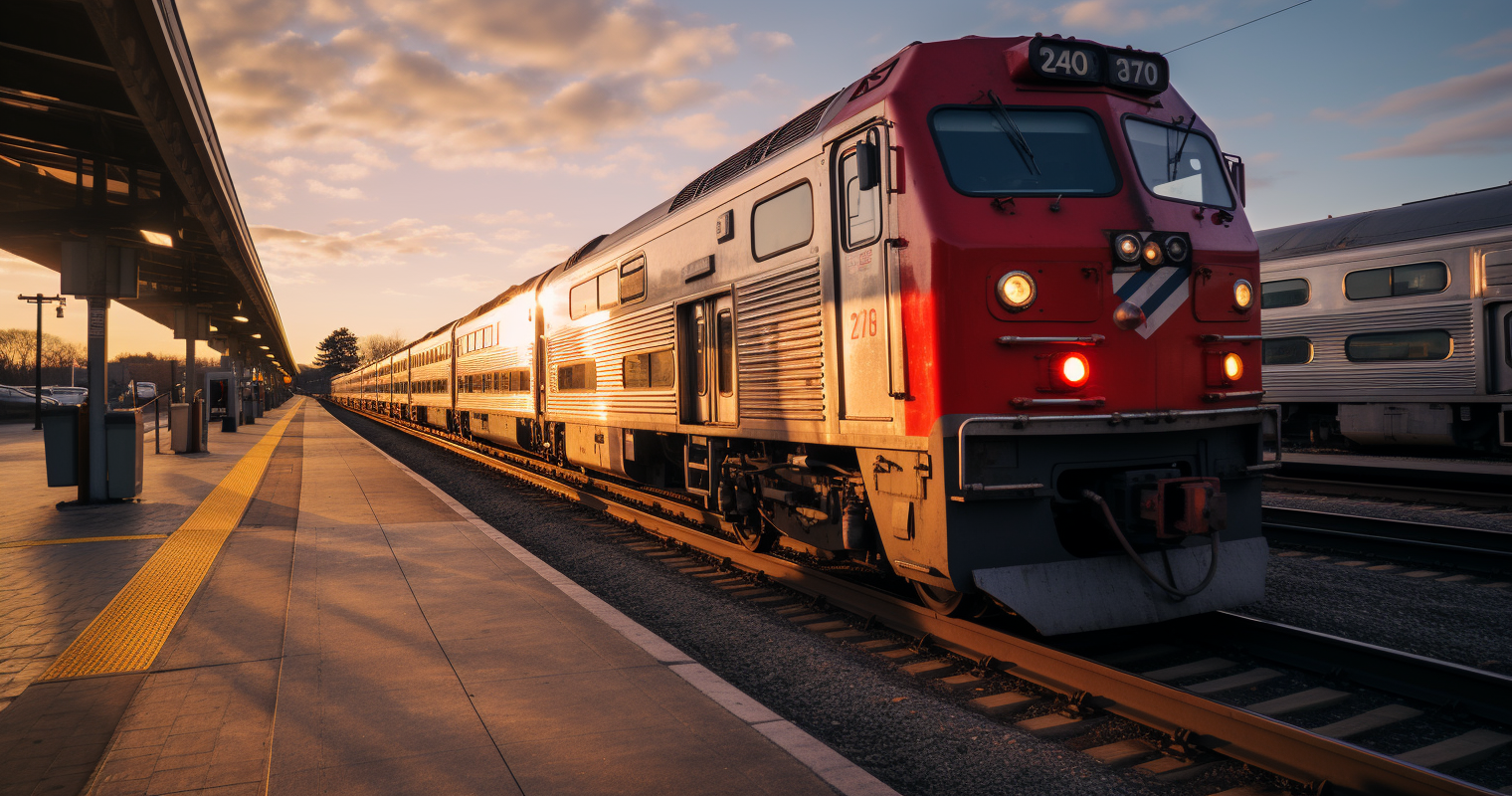
Spain boasts one of the finest rail systems on the continent, blending a world-leading high-speed network with urban commuter lines and interregional services. Renfe, the national carrier, links most of Spain’s principal cities swiftly and at reasonable cost. In built-up areas, the rail network serves commuters excellently; in more remote parts of the country, provision is thinner. On balance, travelling by train is one of the smartest and most popular ways to get around Spain.
| Item | Details |
|---|---|
| National operator | Renfe (renfe.com); competing high-speed operators: Ouigo España, Iryo |
| High-speed network size | Over 3,200 km — second largest in the world (as of 2025) |
| Top AVE speed | Up to 310 km/h |
| Tarjeta Dorada (senior/disability discount card) | €6 for one year; up to 40% off long-distance fares (as of 2025) |
| Free Cercanías passes | Available for regular commuters on qualifying routes (scheme extended through 2025) |
| Official booking site | renfe.com |
What is the overall standard of rail travel in Spain?
By any international measure, Spain’s rail infrastructure stands out — especially for long-distance travel. With more than 3,200 km of high-speed lines, Spain holds the position of second in the world for high-speed network length, trailing only China and outpacing both France and Japan. For anyone living in Spain and needing to move between major cities, trains are fast, dependable, and comfortable.
Renfe is the country’s dominant rail operator. It runs the flagship AVE high-speed service, which links Spain’s largest cities at speeds reaching 310 km/h, alongside regional trains, the Trenhotel overnight sleeper service, and the Cercanías suburban network. Cercanías services make rail a viable daily choice for people commuting in and around cities such as Madrid, Barcelona, Valencia, and Seville.
Renfe’s long-standing monopoly on domestic passenger rail ended with the arrival of Ouigo España in 2021 and Iryo in 2022. The opening of the high-speed market to private competition has brought more options for travellers, and — crucially — more competitive pricing on the busiest routes. Residents travelling between major cities now have a genuine choice of operator, often at meaningfully lower prices than were previously available.
Where Spain’s rail provision falls somewhat behind countries such as Germany or Switzerland is in connecting smaller communities. Rural areas can be infrequently served, and the high-speed network is largely organised like a spoke-and-hub system centred on Madrid, which can make direct cross-country journeys awkward. Even so, the overall intercity and urban rail offer ranks among the strongest in Europe.
Spain’s total rail network stretches to around 12,000 km, of which approximately 7,000 km is electrified. The majority of services are operated by Renfe. Regional publicly owned carriers include Euskotren in the Basque Country, FGC in Catalonia, and Serveis Ferroviaris de Mallorca in the Balearic Islands. On the high-speed network, Ouigo and Iryo both operate alongside Renfe.
What classes of rail travel are available in Spain, and what are the differences between them?
Spanish trains generally divide passengers between two classes — Standard (Turista) and Comfort (Primera or Club) — though exact branding and what’s included differ across services and operators. On long-distance AVE trains, the gap between classes is real and can justify the extra cost on a longer journey.
AVE high-speed trains are the usual choice for intercity travel across Spain. They are noted for punctuality and short journey times, running at up to 310 km/h. Renfe’s AVE trains include reclining seats, buffet facilities, and dedicated family sections, making them a comfortable way to cover large distances. Standard class provides a reserved seat with adequate legroom; Comfort (Primera) class offers wider, more reclined seating, and depending on the fare, meals or snacks may be served at your seat.
Choosing Comfort class on a Premium fare entitles you to a meal or snack box with wine served at your seat, as well as access to Sala Club lounges at main stations, where complimentary hot drinks, snacks, and beer are available. Opting for Comfort class on an Elige ticket, however, does not include any of these extras. The fare type therefore matters as much as the class itself when you are comparing what you will actually receive.
On shorter or regional routes, class differences become less significant, and some services operate with a single class. Renfe Avant trains cover short and medium-distance corridors with few stops, achieving maximum speeds of 250 km/h on shared high-speed infrastructure. These typically feature one or two classes with fewer onboard amenities than full long-distance AVE services.
Budget operators take a different approach. Avlo — Renfe’s own low-cost high-speed brand — has been serving the Madrid–Barcelona–Figueres corridor since June 2021. Like a budget airline, Avlo assigns seats and keeps headline fares low, but charges separately for extras such as luggage changes or food. Ouigo España and Iryo operate along a similar philosophy on their respective corridors, each with distinct class structures and ticket conditions.
Where can you find rail timetables and ticket prices in Spain?
The definitive and most reliable source for schedules and fares is Renfe’s own website. Tickets are sold both at stations and online. For Renfe services, which account for the great majority of the national network, the official portal is renfe.com, offered in English as well as Spanish. Because fares are dynamic and change constantly, always consult the official site for up-to-date pricing and schedules.
If you plan to travel with one of the competing high-speed operators, go directly to their own websites: ouigo.com/es for Ouigo España, and iryo.eu for Iryo. These carriers primarily operate on the Madrid–Barcelona, Madrid–Valencia, and Madrid–Alicante corridors, and their fares — particularly when purchased well in advance — frequently undercut equivalent Renfe tickets.
For cross-border journeys, such as trains running into France or Portugal, raileurope.com is a well-established aggregator covering international routes. The Man in Seat 61 (seat61.com) is a trusted independent guide to train travel in Spain and across Europe, offering detailed route-by-route advice and booking recommendations.
For technical and infrastructure information, including station facilities and network maps, the authoritative source is ADIF (adif.es), the public body that manages Spain’s rail infrastructure. The Spanish transport ministry’s portal, mitma.gob.es, is the place to find transport policy documents and wider network information.
How do you buy rail tickets in Spain, and can you book in advance?
Tickets for Spanish trains can be purchased through several channels, and advance booking is both possible and advisable on most routes — particularly on high-speed services, where early-bird fares can be considerably lower than last-minute prices. The main purchasing methods are set out below:
- Book online via renfe.com: The Renfe website (renfe.com) lets you search routes, compare fare categories, select your seat, and pay by card. The site operates in English and is the most comprehensive source of Renfe inventory. Tickets can be downloaded as a PDF or saved to a mobile wallet.
- Use the Renfe app: Renfe’s official app, available for iOS and Android, supports booking, ticket management, and live journey information. It is a practical tool for anyone who travels regularly by train in Spain. Multi-trip passes are also available through the Renfe and Renfe Cercanías apps.
- Buy at station ticket offices (taquillas): Staffed booking counters are open at most sizeable stations and are especially useful for complex journeys, group travel, or when applying for discount cards such as the Tarjeta Dorada. Discount-linked tickets can be purchased at station windows, via renfe.com, through travel agencies, by phone, and at Renfe self-service machines.
- Use self-service ticket machines: Automated machines are installed at most stations and support several languages, including English. They accept card payments and sometimes cash, making them a convenient option for straightforward same-day purchases.
- Book through a travel agent: Both high-street travel agents and online platforms such as Trainline and Rail Europe sell Renfe tickets. When purchasing via Trainline, the booking connects directly to Renfe’s own inventory, ensuring the ticket is valid for travel. A modest booking fee typically applies.
The advance booking window varies by route. Tickets generally become available around 62 days before departure, though this can vary, and promotional fares sometimes appear only after the initial release. On popular corridors like Madrid–Barcelona, booking as soon as tickets are released on renfe.com gives you the best chance of a low fare. Advance tickets are non-transferable and tied to the named passenger.
What types of rail tickets are available in Spain, and are there discount schemes?
Spain provides a broad range of ticket options designed to suit different travel patterns. On high-speed and long-distance services, Renfe applies a yield-management pricing model similar to that used by airlines: the earlier you book and the less flexibility you require, the lower the fare. The principal fare tiers on AVE services are Promo (the cheapest, non-refundable, fixed), Elige (flexible, with seat selection), and Premium (the most inclusive, covering meals and lounge access).
For people who commute regularly, multi-trip and season ticket products are available. Renfe maintained free travel on Cercanías, Rodalies, and conventional Media Distancia services for qualifying regular passengers throughout the first half of 2025, alongside a 50% discount on Avant tickets for the year. The Council of Ministers confirmed on 28 January 2025 that direct transport subsidies would remain in force until 30 June 2025, benefiting frequent users of Cercanías, Rodalies, and conventional Media Distancia services with free travel cards. For the latest subsidy status, check renfe.com or lamoncloa.gob.es, as these programmes are reviewed on a regular basis.
The Tarjeta Dorada is among the most valuable discount products available to residents. Passengers aged 60 or over can obtain this card for just €6, entitling them to reduced fares across all Renfe train types. The card is personalised and non-transferable, and can be bought at station ticket offices or travel agencies. It is valid for one, two, or three years (as of 2025). On AVE and long-distance services, the discount amounts to 25% from Monday to Friday and 40% at weekends on the standard base fare.
Renfe’s accessibility commitment extends to the Tarjeta Dorada scheme. Passengers with a recognised disability of 33% or more, or pensioners aged 18 or over with a permanent disability, are also eligible for the card on the same terms. The card costs €6 and is personalised and non-transferable (as of 2025). Where a passenger has a disability of 65% or more, a travelling companion’s ticket also qualifies for the Tarjeta Dorada discount.
Holders of a Tarjeta Familia Numerosa (Large Family Certificate) are entitled to rail fare reductions as well. This benefit applies to large family certificates issued by any Spanish autonomous community. Families in the general category — those with three or more children — receive up to 20% off all national Renfe services, covering everything from Cercanías to AVE. Families in the special category, such as those with five or more children, can receive discounts of up to 50% on the same services (as of 2025).
Group travel also attracts savings. Parties of between 4 and 9 people qualify for a “4 o más” (4 or more) group booking, which applies an 8% reduction to the combined fare for AVE, AVE International, and long-distance services (as of 2025). Younger passengers benefit too: children aged 4 to 13 receive a 40% reduction on Renfe tickets, while children under 4 travel free of charge without a dedicated seat.
Always verify the current fares, pass prices, and eligibility requirements through renfe.com directly, since discount schemes and government subsidy programmes are subject to periodic revision.
How accessible is the rail network in Spain for disabled passengers?
Renfe has invested significantly in making its network usable for passengers of all abilities. On modern high-speed trains and at major stations, facilities for those with reduced mobility are broadly good: dedicated wheelchair spaces are provided on board, larger stations have lifts and ramps, and audio-visual passenger information systems support those with sensory impairments.
Wheelchair spaces — designated H seats, where the passenger’s wheelchair is secured — are available at a fixed price of €7 for travel on AVE, Avlo, Alvia, Euromed, Intercity, and France-bound AVE services (as of 2025). This flat rate does not extend to accompanying passengers. The pricing is deliberately low, intended to make long-distance rail travel genuinely accessible for wheelchair users — a principle comparable to concessionary flat-rate arrangements found elsewhere in Europe.
Renfe provides a dedicated assistance service for passengers who require help at stations or when boarding and alighting. This service — known as Atendo — supports travellers with reduced mobility, visual impairments, or hearing impairments, offering personal assistance at staffed stations. Atendo can be arranged in advance through the Renfe website at renfe.com/atendo or via the Renfe customer service phone line. Passengers are advised to request assistance at least 24 hours ahead of their journey.
Standards of accessibility differ noticeably between newer and older parts of the network. High-speed stations constructed in the last two decades are typically fully step-free and well equipped. Older stations on regional lines — particularly in rural areas — may have restricted lift access and narrower platforms. If you have specific accessibility needs, it is worth checking the facilities at both your departure and arrival stations in advance using the ADIF station database at adif.es.
Are there metro or urban rail systems in Spain’s cities?
A number of Spain’s major cities operate metro, light rail, or urban commuter rail systems that work alongside the national network. Standards are generally high, with modern rolling stock, frequent services, and integrated ticketing across most urban systems.
| City | Network type | Official website |
|---|---|---|
| Madrid | Metro (13 lines), Cercanías commuter rail, MetroSur light metro, ML light rail | metromadrid.es |
| Barcelona | Metro (12 lines), Rodalies de Catalunya commuter rail, FGC suburban/mountain rail, Trambaix and Trambesòs tram | tmb.cat |
| Valencia | Metrovalencia (metro/tram/light rail hybrid, 9 lines) | metrovalencia.es |
| Seville | Metro (1 line), Cercanías commuter rail | metro-sevilla.es |
| Bilbao | Metro Bilbao (2 lines), Euskotren suburban rail and tram | metrobilbao.eus |
| Málaga | Metro Málaga (2 lines), Cercanías | metromalaga.es |
| Zaragoza | Tranvía (tram, 1 line) | tranviasdezaragoza.es |
Media Distancia trains connect regional destinations with high-speed train corridors, while Cercanías suburban services operate across the wider metropolitan areas of Spain’s larger cities, including Barcelona and Valencia. Regional publicly owned operators — Euskotren in the Basque Country, FGC in Catalonia, and Serveis Ferroviaris de Mallorca in the Balearic Islands — also contribute to the urban and suburban offer in their respective areas. In Catalonia, Rodalies de Catalunya is managed independently of the Renfe brand, though it runs on shared infrastructure.
Most major urban networks use rechargeable travel cards that deliver significant savings compared with buying individual tickets. Madrid’s Tarjeta Multi and Barcelona’s T-Casual (a ten-journey card) are the core products for regular urban rail users in those cities. Both cards are accepted across metro, bus, and local commuter rail within their respective metropolitan zones. Journey planning apps such as Google Maps, Citymapper, and each city’s own official app incorporate live urban rail data reliably.
What should expats know about using the rail network day-to-day in Spain?
A few practical points will help newcomers get to grips with Spain’s rail system quickly. Major intercity stations — Madrid Atocha, Barcelona Sants, and Valencia Joaquín Sorolla among them — are large, modern, and well signposted, and navigating them is manageable even without strong Spanish.
Seat reservations are compulsory on most high-speed and long-distance trains — your ticket will automatically include a specific carriage and seat number. On Cercanías and regional trains, no reservation is needed; simply board and take any free seat. If you are travelling on an AVE or Alvia service, locate your carriage number before boarding, since these trains are long and walking the full length of the platform wastes time.
Ticket validation varies between service types. On Cercanías and metro lines, you must pass your ticket or card through the barrier before reaching the platform — the same approach used in Paris, Tokyo, and Sydney. On long-distance trains there are no platform barriers, but on-board inspectors check tickets during the journey. Digital tickets on a smartphone are widely accepted; show the QR code to the inspector or hold it to the reader at the barrier.
Language: Signage at major stations is in Spanish and sometimes in the regional language — Catalan, Basque, or Galician — depending on location. Announcements on high-speed services are typically made in Spanish and sometimes in English. Renfe’s website and ticket machines at larger stations offer English-language options. If you need to speak to staff, most people at larger stations have some basic English, though having your journey details written down in Spanish is a sensible precaution.
Luggage travels with you in your carriage and can be placed on overhead racks for smaller bags and backpacks, or in the luggage areas at the ends of carriages for larger suitcases. There are no formal luggage restrictions or fees on most Renfe services. Budget operators such as Avlo and Ouigo may impose specific luggage allowances, however, so it is worth reading the terms when you book.
Cultural norms: Train culture in Spain is fairly relaxed. Eating on board is commonplace and perfectly acceptable, particularly on longer journeys. Phone conversations are generally tolerated, and many passengers use headphones for entertainment. Dedicated quiet carriages, common on northern European networks, are not standard on most Spanish trains. High-speed services tend to depart on time — arriving at your platform five to ten minutes before departure is a sensible habit.
Disruptions and live updates: Renfe recently introduced a real-time online platform displaying a map of all its high-speed, long-distance, and medium-distance trains currently in service, consolidating its geolocation systems in one place. Tracking live train positions and anticipating delays is straightforward via the Renfe app or website.
Frequently Asked Questions
Is rail travel in Spain expensive compared to other European countries?
Spanish train fares are broadly competitive by European standards, particularly for travellers who book ahead. Promotional fares on high-speed AVE routes can be extremely low — a Madrid–Barcelona ticket can sometimes cost under €20 when purchased early. The Spanish government has also subsidised commuter and medium-distance fares substantially in recent years, making day-to-day rail travel among the most affordable in Western Europe. On busy corridors, comparing prices across Renfe, Ouigo, and Iryo is always worthwhile. Check current fares at renfe.com.
Do I need to book in advance for trains in Spain?
For high-speed AVE, Alvia, and Avant services, booking ahead is strongly recommended — both to guarantee a seat and to secure the cheapest fares. Tickets typically go on sale around 62 days before departure. For Cercanías and regional trains, no advance booking is necessary and you can simply turn up at the station and travel. Budget operators such as Ouigo and Avlo can fill up on popular travel dates, so planning ahead is wise for these services too.
Can I get a monthly travel pass for commuting by train in Spain?
The Cercanías system envisages a 10-journey pass per zone as well as a monthly pass at a flat rate of €20, valid across all zones of each nucleus (as of 2025). Free or heavily discounted multi-trip passes for Cercanías and Media Distancia services have been available to regular commuters. Check the current status of these subsidy schemes at renfe.com, as they are reviewed by the government periodically.
Is there a rail pass for unlimited travel across Spain?
Renfe offers Abono (season ticket) and Bono (multi-trip pass) products tied to specific routes or zones, aimed primarily at passengers who regularly travel the same corridor. If you use Renfe services frequently, an Abono or Bono can deliver substantial savings compared with buying separate tickets each time. International visitors may also use the Interrail or Eurail pass on Renfe services, though reservation fees apply on high-speed trains. For residents, route-specific season tickets generally offer better value.
How do I get the Tarjeta Dorada senior discount card?
Passengers aged 60 or over can obtain the Tarjeta Dorada for €6, gaining access to reduced fares on all Renfe train types. The card is personalised and non-transferable, and is available from station ticket offices or travel agencies. You will need to present valid ID confirming your age or eligibility. The card can also be renewed online via renfe.com. Passengers with a recognised disability of 33% or more are also eligible under the same scheme.
Are high-speed trains in Spain reliable and punctual?
Spain’s AVE high-speed trains have a strong reputation for punctuality, and Renfe has historically offered compensation to passengers when trains arrive more than 15 minutes late on certain services — a mark of the operator’s confidence in its product. Cercanías urban commuter services are also generally dependable, though occasional disruptions do occur. Use the Renfe app or the operator’s live train map to check real-time service information before you travel.
Can I take my bicycle on a train in Spain?
Bicycles are permitted on Cercanías commuter trains — usually in a designated space, sometimes with restrictions during peak hours — and on some regional services. Folding bikes carried in a bag are generally accepted across all Renfe train types. Full-size bicycles on most long-distance and high-speed services must be registered as luggage. The rules differ by service type, so check the specific conditions on renfe.com before travelling with a bike.
What happens if my train is cancelled or delayed in Spain?
If Renfe cancels a service, passengers are entitled to a full refund or a free transfer to the next available train. On long-distance services, significant delays trigger partial refunds — typically from 15 minutes or more on high-speed routes. Compensation can be claimed through the Renfe website, at station customer service desks, or by contacting Renfe’s customer service team directly. Ouigo and Iryo each operate their own compensation policies, which are worth reviewing at the time of booking.