
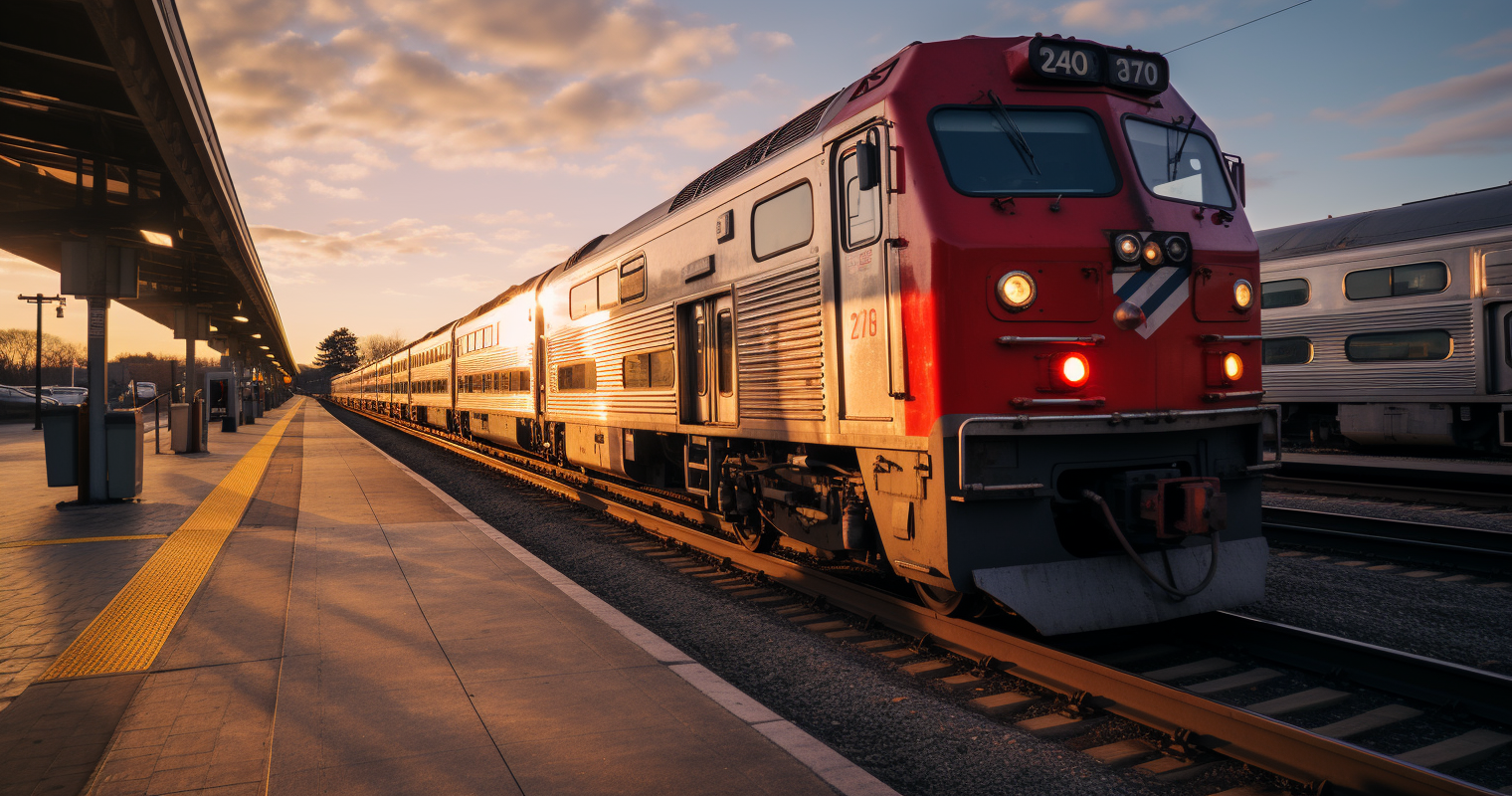
Sweden’s rail infrastructure stretches across more than 10,900 kilometres, operated by a combination of state-owned enterprises and private companies. SJ, the principal national carrier, links major urban centres with contemporary, well-maintained trains, while regional transit authorities handle local lines. Service density is highest in the south and decreases significantly toward the northern reaches of the country. On-time performance is respectable overall, though sustaining and expanding the infrastructure remains a persistent policy challenge.
| Item | Details |
|---|---|
| Network size | Approx. 10,912 km of track (as of 2025) |
| Main national operator | SJ (state-owned); website: sj.se/en |
| Travel classes (SJ) | 1st Class, 2nd Class Calm, 2nd Class |
| Youth discount (SJ) | Up to 30% off day trains for under-26s (as of 2024 — verify with SJ) |
| Stockholm metro (Tunnelbana) | 3 lines, 100 stations; managed by SL |
| Infrastructure overseen by | Trafikverket (Swedish Transport Administration) |
What is the standard of rail travel in Sweden?
Sweden’s rail network spans 10,912 kilometres in total, placing it among the 25 largest in the world. Rolling stock is modern and well-appointed, and for a wide range of journeys the train offers a genuinely competitive alternative to both driving and flying. Passenger numbers climbed substantially in the two decades following the year 2000, and by 2019 Sweden ranked eleventh globally in passenger kilometres per capita and third within the European Union.
The dominant national passenger operator is state-owned SJ, which runs a broad portfolio of commercially operated routes between Sweden’s principal cities, with limited stops in smaller communities along the way. Sweden’s rail model occupies a middle ground between highly centralised systems — such as Japan’s shinkansen — and the heavily fragmented franchise arrangements found in some other countries. Notably, the Swedish system was described in 2019 as “the most deregulated railways in the world,” with publicly owned infrastructure but train operations open to competition among several operators.
Roughly 70% of all rail journeys take place on subsidised local and regional trains, for which regional public transport authorities carry responsibility. This effectively creates two parallel rail ecosystems within Sweden: SJ’s commercial intercity network, and a mosaic of regional services contracted out to local authorities. Regional operators such as Skånetrafiken, Västtrafik, and Storstockholms Lokaltrafik manage and market these subsidised services across the bulk of the country’s rail routes.
On the busiest corridors in southern Sweden, SJ operates its high-speed X 2000 trains at up to 200 km/h, departing on an approximately hourly basis. The Stockholm–Gothenburg journey takes around three hours, making rail genuinely faster than flying once airport check-in time is included in the calculation. Further north, services thin out considerably and the distances between stops grow much larger. The network is strongest where population density is highest — in the south — and becomes sparser as you move into the country’s vast northern interior.
Oversight of the entire rail infrastructure sits with the Swedish Transport Administration, known as Trafikverket. This government body owns and maintains the tracks and associated infrastructure, coordinates passenger and freight operations across the network, and leads significant capital investment programmes. Official network information is available at trafikverket.se.
Are there different classes of rail travel in Sweden, and what are the differences?
SJ’s high-speed trains offer two principal travel classes — Business Class (1st Class) and Economy Class (2nd Class) — along with a third option that is distinctly Swedish. The “2 Class Calm” ticket grants access to designated quiet coaches, which are otherwise identical to standard second-class carriages but come at a modest premium. This arrangement gives travellers three effective tiers to choose from on most long-distance SJ services.
In 1st Class, passengers enjoy noticeably more generous conditions. Seating follows a 2+1 layout with wider row spacing, compared with the 2+2 arrangement in second class. Complimentary coffee, tea, water, fruit, light snacks, and Swedish reading material are provided. First-class ticket holders can also use the lounges in Stockholm and Gothenburg, and on SJ high-speed trains departing before 9am, a breakfast service is included. On overnight trains, first-class sleeping compartments with en-suite shower facilities are available.
In 2nd Class Calm, passengers travel in a quieter environment where phones are kept on silent and conversations are kept to a low murmur. Free coffee and tea are available from the onboard bistro, and an early breakfast is included on departures before 9am. This tier suits those who value a peaceful atmosphere but do not wish to pay the full first-class premium.
Standard 2nd Class offers comfortable seating with adequate legroom, a fold-out table, power sockets, and complimentary WiFi, with carriages generally arranged in a 2×2 configuration. The onboard bistro is available for purchasing sandwiches, drinks, and a range of snacks. For the majority of everyday journeys, second class delivers strong value — particularly when tickets are secured well in advance at a promotional price.
On most InterCity and regional trains, passengers can select between 1st Class and 2nd Class, though shorter regional services run by local transport authorities may not offer class distinctions at all, or may apply different arrangements. It is worth checking the details of your specific service in advance. The full breakdown of class options can be found on SJ’s travel classes page.
Where can I find rail timetables and ticket prices for Sweden?
The most reliable starting point for SJ timetables and fares is sj.se/en, which provides a complete journey planner and live booking engine in English. Schedules and prices are updated in real time, and the English interface covers all major routes. Given that fares fluctuate frequently in response to demand and availability, it is always advisable to confirm current information directly with SJ.
Pricing on commercial services follows a demand-based model closely resembling airline dynamic pricing: the same journey can cost significantly different amounts depending on how far in advance you book and how many seats remain. As a general rule, booking as early as possible leads to the lowest prices.
For regional services, timetables and fares are administered separately by each regional authority. Key operators include:
- Skånetrafiken (southern Sweden): skanetrafiken.se/en
- Västtrafik (Gothenburg and western Sweden): vasttrafik.se/en
- SL (Stockholm region): sl.se/en
When planning journeys that cross multiple operators’ networks, the national journey planner at resrobot.se — operated by Trafikverket — covers all public transport providers nationwide. Third-party aggregators such as raileurope.com can also be helpful, especially for international routes. SJ’s customer service team can be reached through the contact section at sj.se/en/customer-service. As timetables, prices, and service patterns shift regularly, always consult official sources for up-to-date details.
How and where can I buy rail tickets in Sweden?
Train tickets in Sweden can be purchased through several channels, with online and app-based methods being by far the most popular among regular passengers. The main options are:
- SJ website (sj.se/en): The most direct route to booking SJ services. Select your journey, class, and ticket type, complete payment online, and receive an e-ticket for use on a mobile device or as a printed copy. The site is fully available in English.
- SJ app: Available for both iOS and Android, the app supports complete booking and displays mobile tickets directly on screen. These are accepted by train staff and at ticket barriers throughout the network.
- Ticket machines at stations: Automated machines at major stations enable on-the-spot purchases by card. Cash is not typically accepted — either at machines or ticket counters — reflecting Sweden’s strong shift toward a cashless economy.
- Staffed ticket counters: Larger stations maintain staffed windows, though hours vary and queues can build during busy periods. In-person assistance is particularly valuable for complex multi-operator itineraries or accessibility enquiries.
- Regional transit apps: For travel within a specific region, the dedicated app is usually the standard purchasing method — the SL app for Stockholm, the Västtrafik app for Gothenburg and the west, and the Skånetrafiken app for the south.
- Third-party platforms: Services such as Rail Europe and Omio combine options from multiple operators and can simplify booking for international connections.
When purchasing through SJ’s platform, you will encounter a key distinction between fare types: “Non-rebookable” tickets are the cheapest and often sell out well before departure, while “Refundable” tickets carry a considerably higher price but offer unrestricted flexibility. Matching your ticket type to your actual travel plans is important — if your schedule is fixed, the non-rebookable option offers significant savings; if you need flexibility, the additional cost of a refundable ticket is worth paying upfront.
Seat reservations are bundled with most SJ ticket purchases and are required for many long-distance and express services, including SJ Highspeed trains. On regional services run by local transport authorities, reservations are generally neither required nor available — passengers simply board and choose any free seat.
What types of rail tickets are available in Sweden, and are discounts available?
Rather than assigning named fare categories in the style of “Advance” or “Super Saver,” SJ structures its tickets primarily around their terms and conditions, with more flexible tickets commanding a higher price. In practical terms, this means choosing between cheaper non-changeable options and pricier fully flexible fares.
Frequent travellers and daily commuters can access season tickets and multi-journey passes through both SJ and regional operators. As of 2024, SL in Stockholm operates two principal formats: a travelcard valid for a chosen period (ranging from 24 hours to one year), and a single-journey ticket active for 75 minutes from the moment it is validated. Regional operators elsewhere in Sweden follow broadly similar structures, making the system feel recognisable to anyone familiar with Oyster-style cards or integrated city transit passes.
Discounts are available across a number of categories. As of 2024 — always confirm current terms directly with SJ at sj.se/en:
- Youth: Passengers under 26 can save up to 30% on day train tickets and up to 15% on night train tickets through SJ’s youth discount scheme.
- Children: SJ offers a family discount in 2nd Class whereby two children up to the age of 15 may travel with an adult ticket holder. More broadly, up to two children aged 2–15 can accompany any passenger aged 16 or over for just 15% of the adult fare, or 50% on overnight trains, while children under 2 travel free when seated on a lap. (as of 2024 — check with SJ for current terms)
- Senior travellers: Reduced fares are offered to older passengers on both SJ and regional services. Eligibility ages and discount levels differ by operator — contact the relevant provider for the latest rates.
- Stockholm city fares: A single SL journey in Stockholm costs 43 SEK, with 26 SEK for senior citizens and for children, teenagers, and students up to the age of 20 (as of 2025 — verify with sl.se/en).
Those new to Sweden who anticipate extensive rail travel may also wish to consider a rail pass. The Interrail pass (for EU/EEA residents) and the Eurail pass (for non-European residents) both cover Sweden and can offer good value — particularly when compared against individually priced tickets on popular routes. Bear in mind that seat reservations are still required on certain long-distance trains even when holding a pass. Pass prices and conditions change periodically, so always check the official Interrail or Eurail websites for current details before committing to a purchase.
How suitable is the rail network in Sweden for disabled passengers?
Sweden maintains a strong legal and cultural commitment to public accessibility, and the rail network reflects this in meaningful ways. SJ trains are fitted with generous seating, luggage storage, clean restrooms, electrical outlets, and ample space throughout the carriage. Wheelchair spaces, priority seating areas, and accessible toilet facilities are built into the design of modern rolling stock as standard features.
Stockholm’s commuter rail network, the Pendeltåg, places a particular emphasis on reliability and ease of access. Low-floor trains and step-free boarding are available at most stations on the network. SL, Stockholm’s urban transit authority, goes further still with a formal accessibility guarantee: if the guarantee conditions apply to your journey, SL will assist you in reaching your intended destination or an alternative station from which you can continue onward. Passengers who believe the guarantee applies to their situation can contact SL’s customer support by calling +46 20 120 20 22 or by texting +46 70 256 46 81.
In practice, accessibility provision varies considerably across the network. Major modern stations in Stockholm, Gothenburg, and Malmö generally feature lift access, tactile floor indicators, audio announcements, and visual information displays. Smaller rural stations may offer a more limited range of facilities — a gap that is broadly comparable to the situation faced by travellers on rural routes in other countries with otherwise accessible national rail networks. Trafikverket publishes accessibility data for individual stations, which can be reviewed at trafikverket.se/en.
SJ operates a dedicated assistance service for passengers requiring support at stations or during travel. Pre-booking this assistance is strongly recommended — full details are available at sj.se/en/about-the-journey/travel-needs/special-needs. It is always worth checking current provisions directly with the relevant operator, as accessibility services and station upgrade programmes continue to develop across the network.
Are there metros, underground trains, or urban rail systems in Sweden?
Stockholm’s Tunnelbana is the city’s rapid transit metro system, with its inaugural line opening in 1950 — making it the first metro to operate in any of the Nordic countries. Today the system comprises three lines and 100 stations in total, of which 47 are underground and 53 run above ground. It remains the only metro system in Sweden.
The three colour-coded lines — Green, Red, and Blue — branch into seven routes with various terminal stations, all converging on the city centre to form a highly interconnected hub-and-spoke network. The central interchange for all three lines is T-Centralen. Stockholm’s metro has earned the nickname “the world’s longest art gallery,” as the majority of its 100 stations are adorned with sculptures, mosaics, paintings, installations, engravings, and reliefs commissioned from Swedish artists. The system is clean, safe, and operates at high frequency throughout the day and into the night.
Several expansion projects are currently under way. A north-western extension of the Blue Line is expected to open in 2027, while extensions toward the south are projected for 2030. This makes Stockholm’s metro one of the more actively growing urban rail systems anywhere in northern Europe.
Urban transit across Stockholm more broadly is managed by Storstockholms Lokaltrafik (SL), which coordinates an integrated network of buses, metro trains, commuter rail, light rail, local train lines, and commuter ferries under a single ticketing umbrella. This unified approach — where one ticket covers metro, commuter train, tram, and bus — is one of the most appreciated aspects of daily life in the city, comparable to the integrated systems found in cities such as Vienna or Zurich.
Beyond Stockholm, urban rail takes several other forms across the country. Tram networks operate in Gothenburg, Norrköping, Stockholm, and, since 2020, Lund. Gothenburg’s tram system is especially extensive, serving as the primary backbone of the city’s public transport. Regional rail in Gothenburg falls under Västtrafik, while in Skåne — including Malmö — the lead authority is Skånetrafiken. Both operators offer integrated ticketing covering trains, trams, and buses within their respective regions.
Public transport accounted for 47% of all motorised trips in Stockholm in 2024, 30% in Skåne, and 28% in Västra Götaland — figures that underline how central rail-based mobility has become to everyday life across Sweden’s major urban regions.
What practical tips should expats know about using the rail network in Sweden?
Travelling by rail in Sweden comes with certain features and conventions that may catch newcomers off guard. The following points cover the most important things to be aware of before you set out:
- Book early to secure lower fares: SJ uses dynamic pricing, and ticket prices climb as the departure date approaches. The cheapest non-rebookable fares can disappear weeks in advance on busy routes. Lock in your travel plans early and book via sj.se/en.
- Carry no cash — none is needed: Sweden is among the most cashless societies on earth. Ticket machines, station counters, and onboard bistros all operate exclusively by card. Cash is virtually never accepted anywhere on the public transport network.
- Quiet coaches require an upgraded ticket: The “2 Class Calm” option is not simply a designated quiet area — it carries a paid premium. Boarding a Calm carriage without the appropriate ticket may result in being asked to relocate. This differs from the free quiet-carriage arrangements common in many other countries.
- Real-time updates are readily available: SJ and regional operators publish live service information via their respective apps and websites. Significant delays may entitle you to compensation — the applicable conditions depend on your ticket type and the length of the disruption.
- Know the luggage limits: Passengers may bring luggage they can carry and stow independently — a maximum of two suitcases with dimensions up to 80x50x35cm each, plus a laptop bag or handbag. Overhead racks and carriage-end luggage areas are available, but there is no checked baggage or hold luggage service on Swedish trains.
- Tipping is not part of the culture: There is no expectation to tip train staff or bistro workers. A brief “tack” (thank you) is perfectly sufficient and entirely appropriate.
- Night trains are a practical travel choice: SJ’s network reaches from Narvik in the north to Copenhagen in the south, and also serves Berlin with an overnight service. Night trains to northern destinations such as Umeå or Luleå are well-used and can replace a domestic flight comfortably. Book ahead, particularly during summer months.
- Arriving at the platform: Trains typically pull in around 15 minutes before the scheduled departure. There is no need to arrive at the platform significantly earlier than this. Swedish passengers tend to queue in an orderly fashion and board without rushing.
- Regional tickets are not transferable across operators: A ticket issued by a regional authority such as Skånetrafiken is not valid on SJ’s commercial services running the same corridor. Always confirm which operator your ticket applies to before boarding, to avoid being caught without the correct documentation.
Frequently Asked Questions
Is an Interrail or Eurail pass worth it if I live in Sweden?
Rail passes can represent strong value in Sweden, where individual tickets on popular routes can be expensive. A pass allows spontaneous travel without worrying about price surges, though seat reservations on certain long-distance trains are still required regardless of the pass you hold. For residents who regularly make long-distance journeys within Sweden or across the border into Norway or Denmark, a pass may well pay for itself. For everyday commuting or short regional hops, however, a local season ticket or the standard SJ fare structure will generally be the more practical and cost-effective choice. Compare your anticipated travel pattern against current pass prices at interrail.eu or eurail.com before making a decision.
How do I get a refund if my train is delayed or cancelled?
When an SJ train suffers a significant delay, passengers may be entitled to partial compensation under EU passenger rights legislation. The specific threshold and compensation amount depend on the duration of the delay and the fare type held. Claims can be submitted through SJ’s website or app. For delays on regional services, the appropriate regional operator should be contacted directly. Passengers holding a refundable fare can cancel before departure and receive a full refund. Non-refundable tickets are not normally reimbursed unless the disruption was caused by the operator.
Are trains in Sweden safe to use at night?
Swedish trains are considered safe to travel on at any hour. Major stations in Stockholm, Gothenburg, and Malmö are staffed well into the late evening, and train carriages are brightly lit throughout. Stockholm’s public transport system consistently receives high marks in international rankings. While ordinary situational awareness is always sensible in urban environments at night, rail travel itself is regarded as safe right across Sweden.
What happens if a train is cancelled due to strikes or disruption?
Rail disruptions in Sweden — whether caused by infrastructure works or, less frequently, industrial action — are handled by offering affected passengers either a seat on the next available service or a refund. SJ flags live disruption alerts on its website and app, and planned disruptions are usually communicated in advance. When scheduled disruption is known ahead of time, replacement bus services (referred to as “ersättningsbuss”) are typically laid on. Trafikverket also publishes up-to-date network status information at trafikverket.se/en.
Can I take my bicycle on the train in Sweden?
Bicycle carriage rules differ significantly between operators and train types. On SJ long-distance services, folded bicycles compact enough to fit in the overhead rack are generally permitted, while full-size bicycles are typically not accepted. On regional and commuter trains, full-size bicycles are often allowed outside peak hours, but this varies considerably depending on the operator and specific route. Always check the bicycle policy of the relevant operator before arriving at the station with your bike. Skånetrafiken and Västtrafik both publish their rules on their official websites.
Do all trains in Sweden have WiFi?
Free WiFi is available to all passengers on SJ trains. On SJ high-speed and intercity services, the connection is provided in both 1st and 2nd Class as standard. On regional services, WiFi availability depends on the individual operator and the rolling stock in use. For bandwidth-heavy tasks during longer journeys, keeping a mobile data connection as a backup is a sensible precaution, as onboard WiFi can be subject to data limitations.
Is there a unified ticketing system across all of Sweden?
There is no single national ticketing system covering every operator in Sweden. Stockholm’s SL network uses an integrated ticketing framework, and regional operators such as Västtrafik and Skånetrafiken each run their own unified systems within their respective areas. A ticket bought for a regional service does not automatically grant travel on SJ’s commercial trains running the same route, and vice versa. For comprehensive journey planning that spans all operators, the Resrobot national journey planner is the most thorough resource available.
How do I buy tickets for the Stockholm metro as a new resident?
SL tickets are available from SL customer service centres, through the SL app, and at ticket gates and on buses using a contactless card payment. Options include 24-hour, 72-hour, 7-day, and 30-day passes. For those commuting daily, a monthly or annual SL card generally provides the best value over time. It is not possible to pay by cash anywhere on the SL network, including on buses. For most new arrivals, downloading the SL app is the simplest and most convenient approach. Further details are available at sl.se/en.