

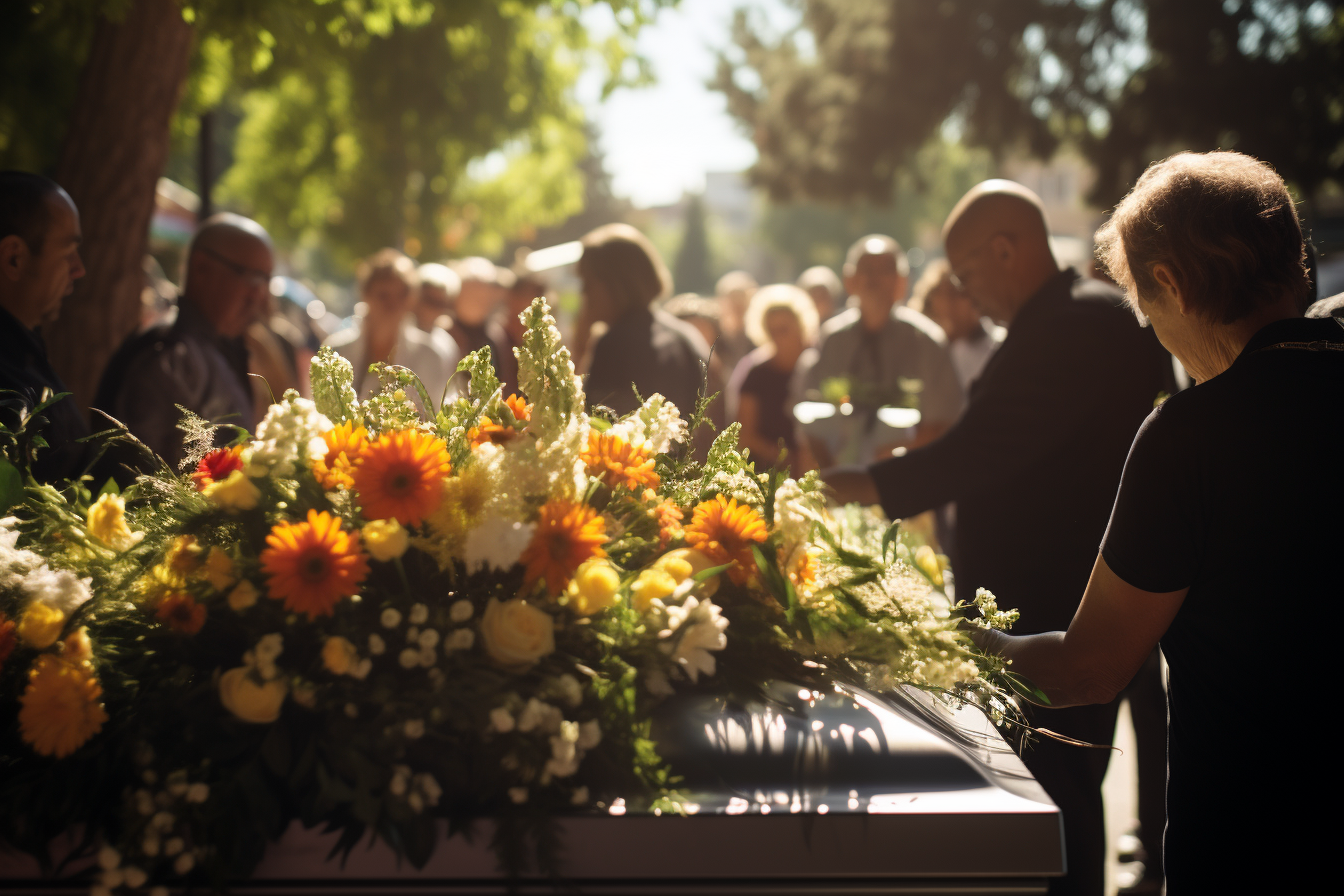
Switzerland’s end of life care system is of generally high quality, though it remains fragmented across the country’s 26 cantons, with palliative services continuing to develop unevenly. Preparing key legal documents in good time — including a patient decree (living will) and an advance care directive — is strongly advisable for all residents. Assisted suicide is permitted under tightly defined conditions, whereas active euthanasia is forbidden. Foreign nationals are subject to the same legal framework as Swiss residents when it comes to death registration and the administration of an estate.
| Item | Details |
|---|---|
| Palliative care beds (as of 2022) | 393 certified specialised beds nationally; 6 cantons have none |
| Patient decree (living will) | Must be hand-signed and dated; free to create; no official public register |
| Assisted suicide | Legal since 1941 under strict conditions; active euthanasia remains prohibited |
| Death registration deadline | Must be reported to civil registry (Zivilstandsamt) promptly — typically within 2–3 days |
| Inheritance tax | Varies by canton; spouses and direct descendants generally exempt in most cantons |
| Dignitas assisted dying fee (as of 2024) | CHF 11,000 base fee, plus CHF 220 one-time membership and CHF 80/year |
What end of life care options are available in Switzerland, and how does the system work?
Switzerland provides a variety of end of life care settings, encompassing hospital-based treatment, nursing home placements, home care, and a limited number of dedicated palliative and hospice units. In contrast to countries with unified national health services — such as the NHS in the United Kingdom — Switzerland operates a highly decentralised healthcare structure in which each of its 26 cantons is responsible for organising and co-funding its own care infrastructure.
The majority of people in Switzerland die in hospitals or nursing homes, yet their particular needs are frequently not well served in these settings. Over 70% of the Swiss population expresses a wish to die at home, yet among those with terminal illness, 79% ultimately die in hospitals or nursing homes. Bridging this divide between expressed preference and actual outcome is one of the most pressing challenges in Swiss end of life care.
Palliative care holds considerable promise for improving this situation. It takes a comprehensive approach to the dying process, emphasising effective pain management, preservation of quality of life, and respect for personal autonomy. Home-based palliative care is accessible in many areas through networks of general practitioners, specialist nursing staff, and community organisations, though the extent of provision varies considerably between regions. For those able to remain at home, the most common model combines Spitex (community nursing services) with mobile palliative care teams.
What is palliative care in Switzerland, and who is eligible for it?
Palliative care in Switzerland is concerned with alleviating suffering and enhancing quality of life for people living with serious, life-limiting conditions, and with providing support to their families throughout this period. It neither seeks to accelerate death nor to prolong life at all costs, but instead aims to preserve dignity and comfort as illness progresses. Any person with a serious and progressive condition may be referred for palliative care, irrespective of age or diagnosis.
In practice, the majority of people receiving palliative care in Switzerland are cancer patients. According to Federal Office of Public Health data, 5,990 hospitalised individuals — equivalent to 12% of those who died in hospital in 2018 — received palliative care, and more than 80% of these patients had a cancer diagnosis. Nevertheless, specialists consistently emphasise that palliative care is appropriate for a far broader population of patients than currently receives it.
Projections indicate that unmet need for palliative care will rise considerably as Switzerland’s population ages. Approximately 50,000 people required palliative care in 2020, a figure forecast to climb to 66,000 by 2050. Access to specialist palliative services currently remains uneven throughout the country.
The “qualité palliative” quality label was introduced in 2010 as an element of the national palliative care strategy, developed jointly by the Federal Office of Public Health and the Conference of Cantonal Health Directors. The national professional body for palliative care is palliative ch (the Swiss Society for Palliative Medicine, Nursing and Support), which establishes quality standards and helps patients and families identify accredited providers.
Are there hospices in Switzerland, and how do you access them?
Switzerland has relatively few dedicated hospice facilities. The country’s care model has historically prioritised hospital-based acute treatment rather than standalone hospice buildings of the type prevalent in some other countries. Most specialist palliative care is instead delivered within accredited wards inside hospitals or long-term care institutions.
According to the Swiss association for palliative care, the number of certified specialist palliative care beds grew from 375 in 2021 to 393 in 2022. In total, 3,736 beds were available across 26 of the 35 accredited long-term care institutions — comprising retirement homes and nursing homes — in Switzerland in 2022.
The Federal Office of Public Health reports that six of Switzerland’s 26 cantons have no specialist palliative care beds at all, and that hospice and long-term care facilities are disproportionately concentrated in urban centres such as Zurich, Geneva, and Basel. Consequently, access to these services depends heavily on a patient’s place of residence.
To be admitted to a hospice or palliative care unit, you will generally require a referral from your treating physician or GP. The palliative ch website offers an interactive map of certified palliative care facilities across Switzerland, which can assist you and your family in identifying the closest available option.
Is palliative or hospice care covered by public health insurance in Switzerland, or does it need to be funded privately?
Switzerland’s compulsory health insurance (Grundversicherung / assurance de base), which is obligatory for all residents, covers the medical components of palliative care when it is provided within a hospital or an approved nursing home. This includes pain management, specialist medical consultations, and pharmaceutical treatment. Cantons also contribute to the funding of hospitals and elderly care facilities, most of which are owned or operated by cantonal or municipal authorities.
However, Switzerland’s system is notably fragmented in its coverage. Long-term nursing home care is largely paid for out of the individual’s own pocket, and home-based care is treated separately from hospital care. This means that residential nursing home fees — including accommodation and personal care charges — are typically not fully met by compulsory insurance and must instead be partly funded by the patient personally, through supplementary insurance, or via social assistance (Ergänzungsleistungen).
Many insurers offer supplementary health insurance over and above mandatory cover, and such policies may include additional benefits and greater freedom in selecting doctors or hospitals; these arrangements are governed by private insurance law. If you hold supplementary insurance, review its terms carefully to understand what palliative or long-term care provisions are included. For individuals who have exhausted their personal resources, cantonal social assistance programmes can help meet nursing home costs. Contact your cantonal social services office for further information.
What legal documents should expats have in place before the end of life in Switzerland — such as a living will, advance directive, power of attorney, or healthcare proxy — and how do these work?
Swiss law offers two essential planning instruments: a patient decree (Patientenverfügung / directives anticipées), commonly referred to as a living will, and an advance care directive (Vorsorgeauftrag / mandat pour cause d’inaptitude). Both are strongly recommended for all residents, including those living in Switzerland as expatriates. The two documents complement one another and may be drawn up at any time while you retain legal capacity.
Through a patient decree, you specify which medical treatments you wish to receive — and which you do not — in the event that you lose the ability to express your wishes at the end of your life. This ensures that your preferences will continue to guide your care even when you can no longer communicate them. The right to exercise this form of self-determination through a written directive is enshrined in Article 370 of the Swiss Civil Code (ZGB).
Doctors are legally bound only by patient decrees that have been personally signed by hand and dated. A Swiss living will must either be written, dated, and signed by hand in legible handwriting, or formally authenticated by a public authority such as a municipal notary. There is no obligation to engage a lawyer, though doing so is advisable. Patient decrees are personal documents and involve no charge to create.
An advance care directive allows you to designate another individual to act on your behalf and manage your affairs should you lose decision-making capacity. The directive encompasses personal care decisions, the management of financial matters, and representation in legal proceedings. An advance care directive is of particular importance for couples in a cohabiting partnership, as it allows you to confer on your partner comprehensive rights of representation that do not arise automatically under current Swiss law.
As no official public register for living wills currently exists in Switzerland, it is sensible to provide copies to your GP and to close family members or your designated representative. You may also add an electronic note to your health insurance card indicating where your living will is kept. It is equally advisable to inform your local civil registration office (Zivilstandsamt) that the document exists and where it is stored.
Are documents such as advance directives or powers of attorney made in another country legally recognised in Switzerland?
Switzerland applies its own formal standards to advance care directives and living wills. A Swiss living will must be handwritten, dated, and signed, or authenticated by a public authority. A document prepared in another country may not automatically satisfy these requirements, even if it was entirely valid under the law of the country where it was made.
In practice, Swiss medical professionals and courts will generally take a foreign document into account if it is clearly genuine and reflects a freely formed, informed decision. However, for it to carry the full legal weight prescribed by the Swiss Civil Code, the document should ideally conform to Swiss formal requirements, or be accompanied by a certified translation and appropriate notarisation. Expats are strongly advised to prepare a new patient decree and advance care directive in compliance with Swiss law as soon as they establish residency in Switzerland.
Similarly, a power of attorney issued in another country may require additional steps — such as an apostille or sworn translation — before Swiss banks, public authorities, and courts will accept it. Consult a Swiss lawyer or notary (notaire / Notar) for tailored guidance, particularly if you hold assets across more than one country. The official Swiss government portal ch.ch provides templates and guidance on producing documents that meet Swiss legal requirements.
What are the laws around euthanasia or assisted dying in Switzerland?
Active euthanasia — the administration of a lethal substance by a third party — is illegal in Switzerland. However, providing the means for a person to end their own life is lawful, a practice known as assisted suicide, provided that the act which directly causes death is carried out by the person wishing to die. Assisted suicide has been legal in Switzerland since 1941, making it the first country in the world to permit any form of assisted dying.
All forms of active euthanasia, such as the administration of a lethal injection by another person, remain prohibited. Swiss law permits only the provision of the means to die by suicide, and the motivation for doing so must not be self-interested — for instance, financial gain. The applicable legal provision is Article 115 of the Swiss Criminal Code.
The principal assisted dying organisations operating in Switzerland are Exit, Dignitas, Exit International, and Lifecircle. Exit restricts its services to Swiss citizens and legal residents, while Dignitas, Exit International, and Lifecircle also accept non-residents. Applicants must be aged 18 or over, possess decision-making capacity, and be physically capable of performing the final act themselves — whether that involves swallowing the prescribed medication or opening an intravenous line.
Dignitas advises that the application process takes a minimum of three months and may take considerably longer. The costs of assisted suicide are not met by social insurance in Switzerland — neither by compulsory health insurance nor by accident insurance. As of 2024, Dignitas charges a base fee of CHF 11,000, Pegasos charges CHF 10,000, and Athanasios charges CHF 9,500, with additional membership fees and travel costs also applicable. Always verify current fees directly with the relevant organisation, as these figures are subject to change.
Every assisted suicide in Switzerland triggers a mandatory police investigation, as the death is classified as non-natural. This legal obligation, embedded in the Swiss Criminal Procedure Code, places considerable financial demands on cantons. Families should be prepared for this process, which can be emotionally taxing.
What are the local customs, traditions, and religious practices around death and dying in Switzerland?
Switzerland is a multilingual and multicultural nation with four official languages — German, French, Italian, and Romansh — and a richly diverse religious landscape. Attitudes and customs surrounding death and mourning therefore differ considerably by region, community, and individual belief. In broad terms, Swiss culture tends to place a premium on privacy, dignity, and a practical approach to death, with relatively restrained public expression of grief.
Christianity — encompassing both Roman Catholic and Reformed Protestant traditions — remains the most widely professed faith in Switzerland, though religious affiliation has declined markedly over recent decades. Traditional Christian funerals, involving a church service followed by burial or cremation, remain widespread. Catholic cantons, broadly located in central and southern Switzerland, may observe specific rites including masses for the deceased. Protestant communities tend towards more understated ceremonies.
Switzerland also has substantial Muslim, Jewish, Hindu, and Buddhist populations, concentrated particularly in larger cities, each with their own funeral traditions. Both Muslim and Jewish practices generally require burial without cremation and as promptly as possible following death — requirements that may interact with Swiss administrative procedures. Funeral directors experienced in serving these communities can be found in Zurich, Geneva, Basel, and Bern. Contact the relevant religious community organisation or the appropriate consulate for guidance on faith-specific requirements.
Research has demonstrated variation in end of life care patterns across Switzerland’s linguistic regions, with cultural factors influencing the delivery and uptake of healthcare in the final months of life. French-speaking cantons (Romandy), for instance, tend to have somewhat more open norms around discussing death compared with German-speaking regions. Being sensitive to these regional differences when interacting with Swiss medical teams and institutions is worthwhile.
What must you do when someone dies in Switzerland? Who do you notify, how quickly, and in what order?
The steps set out below apply when a death occurs in Switzerland, whether in a hospital, care home, or private home. Acting without delay is essential, as Swiss law establishes clear obligations for reporting and registration.
- Obtain a medical death certificate. A doctor must examine the body and issue an official medical death certificate (Todesbescheinigung / constat de décès). When death occurs in a hospital or care home, a physician on site will carry out this examination. If death occurs at home, contact the deceased’s GP or, outside normal hours, the cantonal emergency medical service. The doctor confirms the cause of death and certifies that no suspicious circumstances are apparent.
- Contact the civil registration office (Zivilstandsamt / office de l’état civil). The death must be reported to the civil registry of the municipality in which it occurred, generally within two to three days. In practice, a funeral director will often manage this notification on behalf of the family. The medical death certificate and the deceased’s identity documents will be required.
- Notify the deceased’s family and next of kin. Close relatives should be informed as soon as possible. If the deceased was a foreign national, the embassy or consulate of their home country should also be notified (see the section on foreign nationals below).
- Engage a funeral director (Bestattungsunternehmen / entreprise de pompes funèbres). Swiss cantonal and municipal authorities generally require the body to be transferred to an authorised mortuary within a relatively short time, particularly during warmer months. A licensed funeral director can arrange this transfer, guide the family through administrative requirements, and advise on burial or cremation arrangements.
- Notify the deceased’s employer, bank, and insurer. The employer should be informed to ensure that final salary payments and any death-in-service benefits are handled correctly. Banks should be notified to prevent unauthorised transactions and to begin estate procedures. Health, life, and travel insurers should be contacted to initiate any applicable claims.
- Notify the cantonal residents’ registration office (Einwohneramt / contrôle des habitants). The death must be registered with the municipal residents’ office, which will update the population register and may initiate further administrative actions, such as the cancellation of a residence permit.
- Seek legal advice from a lawyer or notary for estate administration. If the deceased left a will, or if the estate involves significant assets, legal advice should be obtained promptly. In Switzerland, estate proceedings are conducted at cantonal level, with the relevant cantonal authority — often a court or notary — overseeing the distribution of assets.
How is a death officially registered in Switzerland, and what documents are needed?
The official registration of a death in Switzerland is handled by the civil registration office (Zivilstandsamt) in the municipality where the death took place. The civil registration system is governed by the Swiss Civil Status Ordinance. Once a death has been registered, the civil registry issues an official death certificate (Sterbeurkunde / acte de décès), which is required for virtually all subsequent administrative and legal steps.
The documents typically needed for registration include: the medical death certificate (Todesbescheinigung) issued by the treating physician; the deceased’s identity documents (passport, identity card, or residence permit); the deceased’s birth certificate or Swiss civil status document; and, where relevant, the marriage or civil partnership certificate. If any documents are in a language other than a Swiss national language, a certified translation will generally be required.
Swiss funeral directors are well practised in managing this process and will usually submit the necessary paperwork to the civil registry on behalf of the family. It is advisable to request multiple certified copies of the death certificate at the time of registration, as these will be needed for banks, insurers, pension funds, and authorities both in Switzerland and overseas. The official Swiss government portal ch.ch provides contact details for civil registration offices in each canton.
What happens if a foreign national dies in Switzerland — what are the specific steps for notifying their home country’s embassy or consulate, and what role does the consulate play?
When a foreign national dies in Switzerland, the death must be formally notified both to the Swiss civil registration authorities and to the deceased person’s home country. The relevant embassy or consulate in Switzerland has an important practical and legal function in this situation, and early contact is highly recommended.
The consulate can assist with: confirming the identity of the deceased; issuing or authenticating the documentation required by the home country; providing guidance on the steps needed for the Swiss death to be officially recognised in the country of origin; and helping to coordinate the repatriation of remains if the family wishes to transport the body abroad.
Many embassies request notification as promptly as possible following the death — ideally within 24 to 48 hours. The family or the funeral director should contact the relevant consular section directly. Most major embassies are located in Bern, Switzerland’s federal capital, with consulates also present in Geneva and Zurich. Check the official website of the relevant embassy for precise notification requirements, required documents, and emergency consular contact details.
It is equally important to notify the authorities in the home country so that passport records, tax records, and any state pension or benefit entitlements can be updated. Some countries require the death to be re-registered domestically — a process that typically requires a certified copy of the Swiss death certificate, translated and apostilled as required by the home country’s laws.
How are funerals typically arranged in Switzerland, and what are the usual options for burial or cremation?
Funerals in Switzerland are typically organised through a licensed funeral director (Bestattungsunternehmen). The funeral director handles the transportation of the body, applications for burial or cremation permits, coordination with religious or civil officiants, and the logistics of the ceremony itself. Standards for funeral services in Switzerland are generally high, and the sector is regulated at cantonal level.
Both burial and cremation are widely practised. Cremation has become increasingly prevalent across Switzerland, though practices differ between cantons and communities. Burial in a municipal cemetery is the standard choice, with grave plots usually leased from the municipality for a fixed period — commonly 20 to 25 years — after which the plot may be reassigned unless the lease is renewed. Some cantons permit natural or woodland burials, though availability varies.
Civil funeral ceremonies conducted by a non-religious officiant are readily available and have grown in popularity, particularly in urban settings. Religious ceremonies can be arranged through the relevant church or faith community in cooperation with the funeral director. For those of non-Christian faiths, specialist funeral directors in Switzerland’s major cities are able to accommodate Muslim, Jewish, Hindu, Buddhist, and other traditions, including requirements relating to the timing of burial and the preparation of the body.
What are the approximate costs of a funeral in Switzerland, and are there any state or insurance-based funds that can help cover them?
Switzerland ranks among the more expensive countries in which to arrange a funeral. As of 2024, a basic cremation funeral typically costs between CHF 2,000 and CHF 5,000, while a more elaborate burial including a ceremony and headstone can amount to CHF 10,000 or more, depending on the canton and the specific services chosen. Cemetery plot fees, the selection of a coffin, death notices, flowers, and the ceremony itself all contribute to the total. Always request a fully itemised quote from any funeral director before committing to services.
Swiss compulsory health insurance (Grundversicherung) does not cover funeral expenses. However, several potential sources of financial assistance may apply. Switzerland’s state pension scheme (AHV/AVS) does not pay a lump-sum death grant in the manner of some other national systems, though surviving spouses and dependent children may qualify for survivor’s pensions — check with the Swiss compensation office (AHV/AVS) for current entitlements. Life insurance policies held by the deceased may pay out to help cover funeral costs, and some supplementary health insurance (Zusatzversicherung) policies include a modest funeral benefit. Certain occupational pension (Pensionskasse / 2nd pillar) arrangements also provide death benefits to surviving dependants.
Where the deceased had no assets and no family in a position to meet funeral costs, the municipality of last residence is legally required to arrange a simple burial at public expense. Contact the local social services office (Sozialdienst) for information on this provision.
What is the process for repatriating the remains of a foreign national from Switzerland to another country?
Repatriating human remains from Switzerland requires coordination between Swiss authorities, the embassy or consulate of the deceased’s home country, and a specialist funeral director. Depending on the destination country, documentation requirements, and flight availability, the process typically takes between one and three weeks, though an experienced funeral director may be able to complete it more quickly in straightforward cases.
The principal steps generally involve: obtaining a certified Swiss death certificate and a sealed coffin certificate confirming the identity of the deceased and attesting that the coffin meets international transport standards; obtaining a permit from the relevant cantonal authority authorising the transportation of the body out of Switzerland; and securing the documentation required by the destination country’s embassy or consulate in Switzerland, which often includes a transit permit and a permit to import the remains. If the remains are to be cremated in Switzerland prior to repatriation — which substantially simplifies the logistics — additional authorisation may be required.
Switzerland is a signatory to the 1973 Strasbourg Agreement on the transfer of human remains, which streamlines the documentation required when transporting a body between signatory states. Many European countries are party to this agreement. For non-signatory countries, additional bilateral documentation may be necessary — your funeral director and the relevant consulate will be able to advise accordingly.
The cost of repatriation varies considerably depending on the destination and the range of services involved, but will typically add several thousand CHF to standard funeral expenses. Some travel insurance and international health insurance policies include repatriation of mortal remains as a covered benefit — review the policy terms carefully before committing to local funeral arrangements.
What happens to the estate of someone who dies in Switzerland — how does probate or estate administration work, and are there inheritance taxes?
In Switzerland, the administration of an estate (Erbschaft / succession) is governed by the Swiss Civil Code (Zivilgesetzbuch, ZGB). Unlike jurisdictions such as England and Wales, where a centralised probate court supervises estate administration, Switzerland conducts these proceedings at cantonal level. The process tends to be less formally structured than in some other legal systems, though the involvement of a notary or lawyer is strongly recommended, particularly where estates span multiple countries.
Upon the death of an individual, their estate — comprising all assets and liabilities — passes to their heirs. If a valid will exists, it is read and, where necessary, registered with the competent cantonal authority. Heirs have the right to accept or renounce the inheritance. If an estate’s debts exceed its assets, heirs may disclaim their inheritance to avoid assuming the liabilities — this must typically be done within three months of becoming aware of the inheritance.
Inheritance tax in Switzerland is levied at cantonal rather than federal level, meaning the rules differ significantly between cantons. As of 2024, most cantons exempt spouses, registered partners, and direct descendants (children) from inheritance tax entirely. Siblings, more distant relatives, and unrelated beneficiaries typically face higher rates, which can range from a few percent to over 40% depending on the canton and the nature of the relationship to the deceased. The canton of Schwyz, for example, levies no inheritance tax whatsoever, while Geneva and Vaud impose comparatively higher rates on non-close relatives. Consult a Swiss tax lawyer or notary for advice specific to the canton where the deceased was resident.
For expatriates, the rules of international private law determine which country’s law governs the estate. Switzerland is a party to the Hague Convention on the Law Applicable to Succession to the Estates of Deceased Persons (1989), and EU Succession Regulation 650/2012 may also be relevant where the estate has connections to EU member states. Professional legal advice is indispensable where assets are held across multiple jurisdictions.
If an expat dies without a will in Switzerland, what happens to their assets under local intestacy laws?
When a person dies intestate — without a valid will — in Switzerland, their estate is distributed in accordance with the intestacy provisions of the Swiss Civil Code (Articles 457–466 ZGB). These rules follow a strict order of succession based on blood and legal ties to the deceased, regardless of nationality. For expatriates, Swiss intestacy law will generally apply to assets situated in Switzerland; the laws of the deceased’s home country may apply to assets held elsewhere, depending on the applicable rules of international private law.
Under Swiss intestacy law, the estate passes first to the deceased’s descendants — children and grandchildren. Where there are no descendants, the estate passes to the deceased’s parents and their descendants, meaning the deceased’s siblings. In the absence of these relatives, it passes to the grandparents and their descendants. A surviving spouse or registered partner always inherits alongside other heirs; where no other heirs exist, the spouse or registered partner inherits the entire estate. Unmarried partners — regardless of how long the relationship lasted or how long they cohabited — have no automatic inheritance rights under Swiss law and will receive nothing unless they have been named as a beneficiary in a valid will.
It is also important to note that Swiss law provides for “forced heirship” (Pflichtteil / réserve héréditaire): certain close relatives — descendants and, in some circumstances, the surviving spouse — are entitled to a guaranteed minimum share of the estate regardless of the contents of any will. A testator cannot disinherit these relatives entirely. The forced share rules were revised under the updated Swiss inheritance law, which entered into force on 1 January 2023, and now afford testators somewhat greater latitude in allocating their assets as they choose. Any expatriate with assets in Switzerland should obtain legal advice to ensure their will is properly drafted to satisfy both Swiss requirements and the requirements of any other applicable jurisdiction.
Frequently Asked Questions
Is foreign travel insurance or international health insurance accepted for palliative care costs in Switzerland?
Switzerland’s mandatory health insurance (Grundversicherung) covers all residents — including expatriates holding a valid residence permit — and serves as the primary source of funding for hospital-based palliative care. Visitors or short-term residents who have not yet enrolled in Swiss compulsory insurance may be able to rely on a valid international health insurance policy, but what is covered will depend entirely on the terms of that policy. Always notify both the care provider and your insurer at the earliest possible opportunity. Travel insurance seldom covers ongoing palliative care; review your policy carefully and speak to your insurer before making any assumptions about the extent of your cover.
Are documents such as living wills or patient decrees valid in Switzerland if they are written in English?
Swiss law requires that a patient decree be handwritten, signed, and dated, or formally authenticated by a public office. There is no legal stipulation that the document be in a Swiss national language, but in practice a document written solely in English may not be readily understood by treating medical staff in an emergency. It is strongly advisable to have any advance directive translated into the official language of your canton and to verify that the document satisfies Swiss formal requirements. Consult a notary or lawyer to confirm the document’s validity before relying on it.
How long does the process of repatriating remains from Switzerland typically take?
Repatriation typically takes between one and three weeks from the date of death. In uncomplicated cases involving an experienced funeral director and a destination country that is a signatory to the Strasbourg Agreement, this timeframe may sometimes be shortened. Delays are most commonly caused by incomplete documentation, additional requirements imposed by the destination country, or when death has occurred in circumstances requiring a police investigation. The repatriation of cremated ashes is generally faster and involves less administrative complexity than the transport of an embalmed body.
What support is available to bereaved family members living in Switzerland?
Bereaved family members in Switzerland can access support through their GP, cantonal health services, and a range of charitable organisations. Palliative ch and its affiliated regional networks frequently provide bereavement counselling directly or through referral. Hospice and palliative care units commonly offer some form of follow-up support to families after a death. The Swiss Red Cross and various cantonal Caritas organisations also provide both counselling and practical help. For those who have lost a child, organisations such as Verwaiste Eltern Schweiz (bereaved parents) provide peer support networks.
Can a same-sex partner or unmarried partner make medical decisions on behalf of a seriously ill person in Switzerland?
Under Swiss law, same-sex registered partners hold broadly similar rights to married spouses across many domains, including healthcare decision-making. However, unmarried cohabiting partners — regardless of gender — have no automatic entitlement to make medical decisions or manage financial affairs if their partner loses mental capacity. This makes it absolutely essential for cohabiting couples to prepare an advance care directive (Vorsorgeauftrag) and a patient decree that explicitly names the partner as their representative. Without these documents in place, decision-making authority may fall to blood relatives or, ultimately, to the cantonal Adult Protection Authority (KESB).
Does Switzerland recognise wills written in another country?
Switzerland is a party to the Hague Convention on the Conflicts of Laws Relating to the Form of Testamentary Dispositions (1961), which provides for mutual recognition of wills that satisfy the formal requirements of the country in which they were made, the country of the testator’s nationality, or the country of the testator’s habitual residence at the time the will was made or at the time of death. In practical terms, a will validly executed abroad is therefore likely to be recognised as formally valid in Switzerland. However, its substantive provisions must still comply with Swiss forced heirship rules (Pflichtteil) in relation to assets situated in Switzerland. Professional legal advice is strongly recommended.
What happens if no one is available to arrange the funeral of a foreign national who dies in Switzerland?
If no family member or representative is available to make funeral arrangements, the municipality in which the deceased was last registered as a resident is legally obliged to organise a basic burial at public expense. Cantonal or municipal social services (Sozialdienst / service social) coordinate this provision. The relevant consulate of the deceased’s home country should also be informed and may be able to assist in tracing family members or identifying an appropriate representative.
Is there a time limit for dealing with a deceased person’s estate in Switzerland?
There is no single statutory deadline for concluding estate administration in Switzerland, but a number of time-critical steps apply. Heirs who wish to renounce an inheritance must generally do so within three months of becoming aware of it. Claims against the estate from creditors may be subject to limitation periods. The deceased’s residence permit will be cancelled and any social welfare payments discontinued promptly upon notification of the death. Swiss banks will freeze accounts once informed of a death and require certified documentation before releasing assets to heirs. Engaging a Swiss notary or inheritance lawyer without delay is the most reliable way to ensure that all deadlines are met and that assets are properly secured.