

Thailand’s combination of warm climate, affordable living, and highly regarded private hospitals has made it a favourite destination for retirees and long-stay visitors. Many newcomers are pleasantly surprised by the quality of medical care, particularly in Bangkok, Chiang Mai, and Phuket. Yet the idea that healthcare in Thailand is always cheap can be misleading. Routine treatment may be inexpensive, but serious illness, accidents, or long hospital stays can still generate bills that would worry most households.
For retirees settling long term—and for digital nomads planning to base themselves in Thailand for months rather than weeks—health insurance quickly becomes one of the most important pieces of relocation planning. Some visas require proof of cover, and even when they do not, paying privately without insurance can be a gamble.
How Healthcare Works for Foreigners
Thailand operates a universal health system for Thai citizens, but most expats do not have full access unless they are formally employed and enrolled in the social security scheme. Public hospitals provide capable care, yet language barriers, waiting times, and limited choice of specialists mean that many foreigners gravitate toward the private sector.
Private hospitals in Thailand enjoy an excellent international reputation. Facilities such as Bumrungrad and Bangkok Hospital attract medical tourists from across Asia and the Middle East. The standard of care is high, but prices reflect that quality. A specialist consultation may be reasonable, but an MRI scan, surgery, or time in intensive care can quickly reach figures more familiar to Western systems than to Thailand’s low cost of living. Private treatment costs can escalate rapidly without cover in place.
Visa Rules and Insurance Requirements
Insurance is not only about protecting your finances; it is often part of the immigration process. According to the Thai Embassy, retirees applying for the Non-Immigrant O-A or O-X visas must show health insurance that meets minimum inpatient and outpatient levels, typically around THB 40,000 for outpatient and THB 400,000 for inpatient treatment, with overall cover frequently expected to reach USD 100,000.
Thailand’s newer Long-Term Resident visa also sets a minimum of USD 50,000 in health insurance for many applicants. Digital nomads using extended stay or remote-work visas are increasingly asked for similar proof, particularly when they plan to remain in the country for a year or more.
These thresholds are best viewed as a starting point rather than a guarantee of adequate protection. Meeting immigration rules does not always mean a policy would comfortably cover a complex illness or medical evacuation.
The Main Insurance Routes
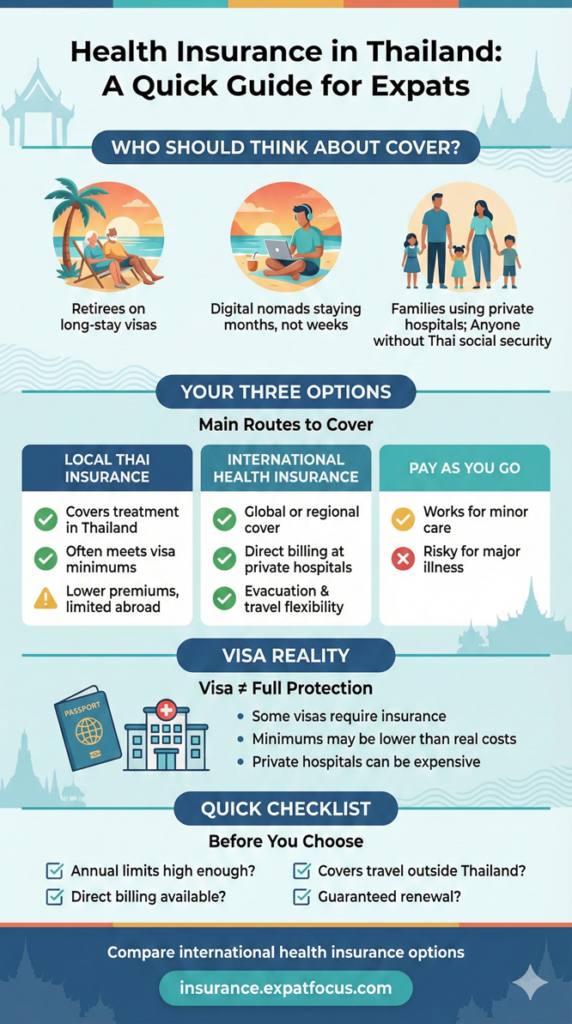
Expats in Thailand generally choose between three approaches. The right option depends on age, budget, and how permanently you intend to stay.
Local Thai health insurance
Thai insurers offer policies designed to meet visa requirements and to cover treatment within Thailand. Premiums are often lower than international plans and many hospitals accept them directly. However, cover is usually limited to Thailand, annual benefit caps can be modest, and policy wording may be less familiar to newcomers.
International health insurance
International plans are designed for people living abroad rather than for short holidays. They typically allow treatment in Thailand and in other countries, include medical evacuation, and offer higher benefit limits. This flexibility appeals to retirees who may travel home periodically and to digital nomads who move between countries.
Paying as you go
A small number of visitors rely on savings instead of insurance. While Thailand’s everyday medical costs can be affordable, this approach becomes risky if major surgery, cancer treatment, or emergency evacuation is required.
Choosing Between Local and International Cover
When comparing policies, the practical differences usually come down to:
- Where you can be treated: local plans focus on Thailand, while international policies may cover multiple countries.
- Benefit limits: international cover often provides higher annual or lifetime limits.
- Direct billing: some plans settle bills directly with private hospitals, others require you to pay first and claim later.
- Evacuation and repatriation: typically included only on international policies.
For retirees planning to make Thailand their permanent home, the decision often hinges on whether they want the freedom to seek treatment abroad or to return to their home country without changing insurance. Digital nomads, who may not stay in Thailand continuously, frequently value the portability of an international plan.
If you are weighing these options, it can help to compare international health insurance options that reflect your age, travel habits, and budget before committing to a local policy.
What Influences the Price
Age is the single biggest factor. Premiums rise steadily from the mid-50s and can increase sharply after 65, which is why many retirees try to secure cover before they reach older age bands. The level of cover also matters: adding outpatient treatment, dental benefits, or worldwide protection pushes costs up, while choosing a deductible can reduce them.
Pre-existing conditions require particular attention. Some insurers exclude them permanently, others apply waiting periods, and a few may cover them for an additional premium. Being transparent at the application stage is essential; non-disclosure can invalidate a claim later.
Practical Guidance for Retirees
Retirees represent the largest group of long-term expats in Thailand, and their priorities differ from those of younger travellers. Continuity of cover becomes crucial. A policy that is affordable at 60 should still be renewable at 75. It is worth checking how premiums have changed historically and whether the insurer can cancel cover because of claims.
Equally important is access to hospitals you would genuinely want to use. Bangkok and regional cities have excellent private facilities, but not every policy includes them all. Spending time on the network list can prevent unpleasant surprises during an emergency.
Considerations for Digital Nomads
Digital nomads often arrive with travel insurance, assuming it will function as health cover. Travel policies are designed for short trips and may not pay for ongoing treatment, routine care, or conditions that develop while abroad. Those planning to stay several months usually need a more comprehensive solution.
International health insurance tends to suit this lifestyle because it remains valid if you leave Thailand for neighbouring countries or return home unexpectedly. Flexibility is often more valuable than the lowest premium.
Final Checks Before You Buy
Before committing to any policy, it helps to review a few essentials:
- Annual and lifetime limits in relation to major illnesses
- Hospital network and direct billing arrangements
- Waiting periods for specific conditions
- Guarantee of renewal as you age
- Cover outside Thailand if you travel frequently
Taking time over these details can prevent expensive gaps later.
Insurance Isn’t Just Paperwork—It’s Peace of Mind
Thailand offers a quality of life that keeps many retirees for decades and attracts digital nomads year after year. The healthcare system is a major part of that appeal, but relying on low everyday prices alone can be risky. Serious medical events happen without warning, and the financial impact can be significant.
Whether you plan to retire by the sea or work remotely from Chiang Mai, finding the right health cover is part of settling in successfully. Compare international health insurance plans today to find the best option for you.