
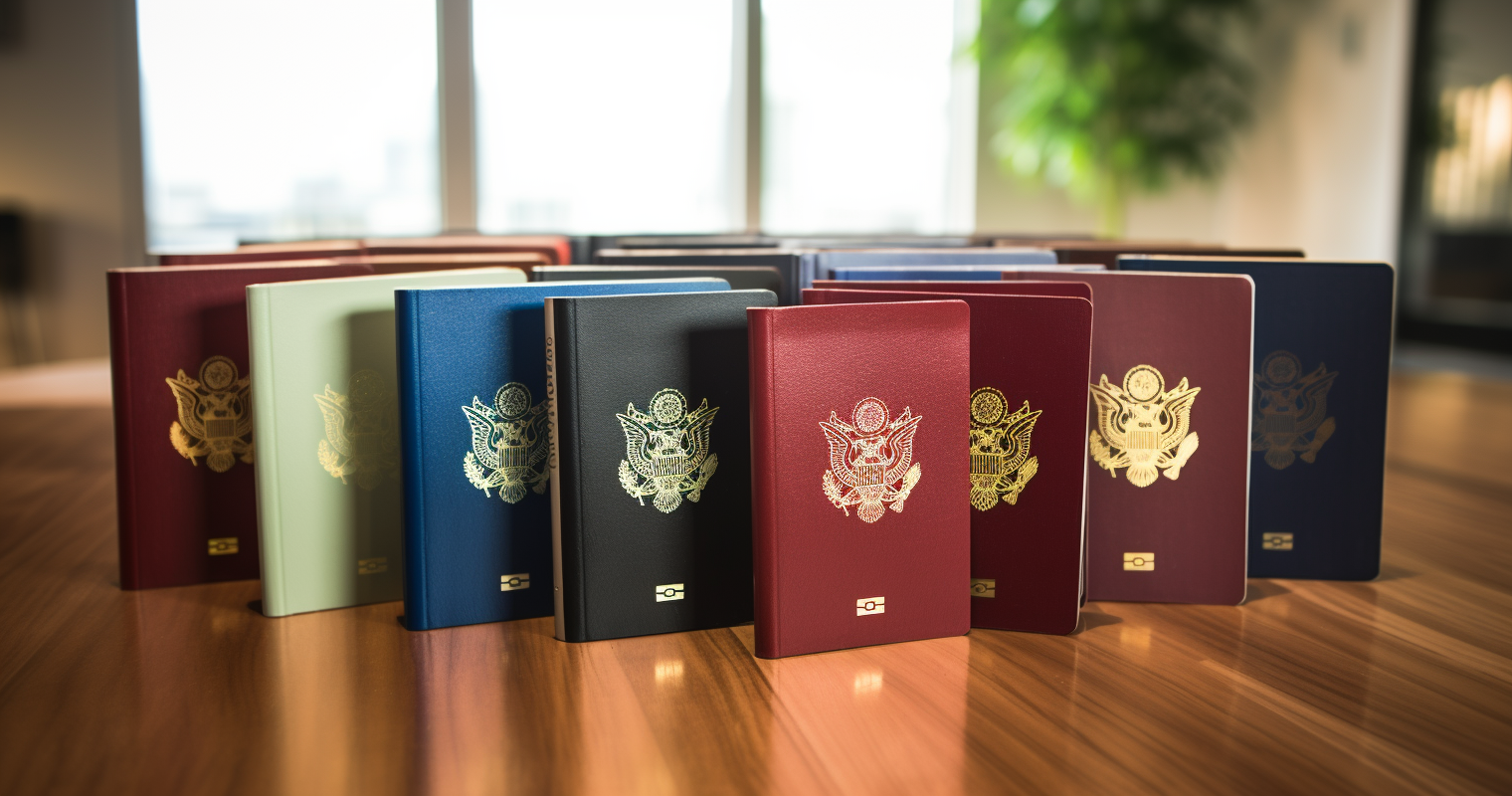
UAE citizenship ranks among the most restrictively awarded nationalities anywhere in the world. There are four principal routes through which it can be obtained: by descent, by marriage (available to foreign women who are married to Emirati men), through long-term naturalisation requiring 30 years of uninterrupted lawful residence, and via a government nomination process for individuals of exceptional merit. Dual nationality is ordinarily not permitted, with the sole exception being those who are granted citizenship under the exceptional merit pathway that was introduced in 2021.
| Item | Details |
|---|---|
| Main pathways | Descent, marriage, naturalisation, exceptional merit (as of 2025) |
| Naturalisation residency requirement | 30 years of continuous lawful residence (as of 2025) |
| Marriage pathway (with children) | 7 years of marriage to an Emirati man (as of 2025) |
| Marriage pathway (without children) | 10 years of marriage to an Emirati man (as of 2025) |
| Dual citizenship | Generally prohibited; permitted for exceptional merit cases since 2021 |
| Official body | Federal Authority for Identity, Citizenship, Customs and Port Security (ICP) — icp.gov.ae |
| Processing time (exceptional merit) | Typically 12–18 months after nomination (as of 2025) |
Who is eligible to apply for citizenship in the UAE?
Eligibility for Emirati nationality is governed by UAE nationality law and rests primarily on the principle of jus sanguinis — citizenship derived through bloodline rather than place of birth. This means that being born on UAE territory does not in itself entitle a person to citizenship, which contrasts with systems such as that of the United States, where birth on national soil typically results in automatic citizenship.
There are four principal ways through which UAE citizenship can be acquired: by descent, by marriage, through naturalisation, and on the basis of exceptional merit. Each route carries its own specific requirements, and all are subject to a high level of official scrutiny and governmental discretion.
Citizenship by Descent
Children born to an Emirati father — or to an Emirati mother whose husband is unknown or stateless — are recognised as Emirati citizens by descent, regardless of where they were born. Prior to 2017, children born of an Emirati mother and a foreign father were able to claim Emirati citizenship upon turning 18. Since October 2017, however, an Emirati mother may pass her nationality on to her children from the age of six. Long-standing Arab families who settled in the UAE before 1925 and continued to reside there until 1972 are also covered under the descent provisions. As a general rule, birth on UAE soil does not by itself confer citizenship, though exceptions exist for foundlings and adopted children.
Citizenship by Marriage
Foreign nationals — specifically women married to Emirati men — may in certain circumstances become eligible for UAE citizenship. The law stipulates that a foreign wife must have been married for a minimum of seven years where the couple has children, or ten years where they do not, and must be able to demonstrate continuous residence in the UAE alongside a clean criminal record.
Foreign men who are married to Emirati women have no entitlement to citizenship through marriage. While children born of such unions may be eligible to apply under particular conditions, the non-Emirati husband remains a foreign national without any accelerated route to citizenship.
Citizenship by Naturalisation
Obtaining Emirati nationality through naturalisation is theoretically possible, but the bar is extremely high. Applicants must have resided lawfully in the UAE for 30 consecutive years and must demonstrate fluency in Arabic. Additional requirements include possessing a legal source of income, maintaining an unbroken period of residence, holding an academic qualification, having a sound reputation, and having no criminal convictions.
To appreciate how demanding this is, the 30-year residency threshold is considerably longer than equivalent requirements in most other countries — the United Kingdom, for example, requires five years of continuous residence, while Australia requires four years of permanent residency before a citizenship application may be lodged.
Citizenship by Exceptional Merit
A pathway to citizenship based on exceptional merit was formally introduced in January 2021. Beyond satisfying the relevant eligibility criteria, a candidate must receive a nomination from the Rulers’ or Crown Princes’ Courts or from the Offices of the Executive Councils, with the final decision resting on Cabinet approval.
This route is open to individuals such as medical specialists, scientists, inventors, and investors who have made outstanding contributions in their respective fields. Doctors, for instance, must specialise in rare disciplines or areas of particular demand within the UAE, must have produced research of scientific value, must have a minimum of ten years of practical experience, and must hold membership in a recognised professional organisation in their field.
It is essential to understand that UAE citizenship is not something that can be pursued by submitting an unsolicited application. There is no standard form to complete and send in. Rather, candidates are put forward by Emirati authorities, assessed for the long-term value they can contribute to the country, and approved on a fully discretionary basis.
What are the steps involved in applying for UAE citizenship?
UAE nationality law originates from Federal Law No. 17 of 1972 on Nationality and Passports and is administered at the emirate level by the General Directorate of Residency and Foreigners Affairs (GDRFA). At the federal level, responsibility for processing citizenship matters sits with the Federal Authority for Identity, Citizenship, Customs, and Port Security (ICP), which handles federal-stage verification. The official ICP website at icp.gov.ae should always be consulted for the most current fees and processing times, as these are subject to regular revision.
- Establish which eligibility pathway applies to you. Individuals must first confirm that they meet the criteria relevant to their category — whether investor, skilled professional, scientist, inventor, creative talent, or intellectual. Each category carries distinct requirements, which may include investment thresholds, academic credentials, or demonstrated contributions to the UAE.
- Secure a nomination (for exceptional merit and most other pathways). The majority of applicants must be put forward by a federal or local government authority. Nominees need to be endorsed by a recognised UAE body — such as a ruler’s court, executive council, or government office — confirming their potential eligibility. For marriage or descent-based applications, this formal nomination step does not apply; instead, a direct application is submitted.
- Assemble the required documentation. Applicants must compile personal particulars and the specific supporting documents required, and submit these to the Ministry of Interior and the Ministry of Presidential Affairs. Those pursuing citizenship through the exceptional merit route must additionally provide academic and professional certificates, along with letters of recommendation or a formal nomination.
- Arrange official translation and attestation of all documents. Every document must be translated into Arabic by an authorised translator and then attested — that is, formally verified by the relevant foreign affairs authority in the applicant’s home country and subsequently by the UAE Ministry of Foreign Affairs.
- Submit the application for formal review. Once all documentation has been submitted, a dedicated committee examines the application. In exceptional merit cases, the committee considers the applicant’s credentials, professional achievements, and nomination in determining whether citizenship is warranted.
- Wait for the committee’s decision and Cabinet approval. For exceptional merit applications, the review process ordinarily takes between 12 and 18 months (as of 2025), though the precise duration depends on the intricacy of the individual case. Where the committee is satisfied, the Cabinet or a ministerial decree issues the final approval. Current processing times should always be verified at icp.gov.ae, as these figures may change.
- Swear the Oath of Allegiance. Following approval, the applicant is required to take the Oath of Allegiance, formally pledging loyalty to the UAE and committing to uphold its laws. This is followed by additional administrative steps, including identity verification and biometric enrolment.
- Collect the UAE passport and national identity documents. Once the oath has been administered, the applicant is issued a UAE passport and national identification, which together serve as the official confirmation of their citizenship.
In terms of costs, the financial outlay varies considerably depending on the pathway. Naturalisation generally involves modest government fees, whereas investment-related routes carry substantial financial commitments — typically in the range of AED 5 million to AED 10 million in property or business investment (as of 2025). The ICP website should always be checked for the current schedule of government service fees, which are updated periodically.
What tests, interviews, or ceremonies are required as part of the citizenship process?
Arabic language proficiency is a mandatory requirement for those pursuing naturalisation. Unlike certain other countries — Germany, for example, mandates a standardised language examination at a specified level — the UAE does not publish a single, uniform Arabic language test applicable to all citizenship routes. Nevertheless, language ability is evaluated throughout the application and interview stages of the process.
Applicants are generally expected to possess a functional command of Arabic; while full fluency is the ideal, a reasonable level of conversational ability may be accepted. A genuine appreciation of Emirati culture and traditions is also important, encompassing familiarity with the country’s history, national symbols, and social customs. In some instances, candidates may be asked to complete assessments or participate in orientation programmes covering UAE culture and the Arabic language.
Background investigations are a standard component of the process, with checks covering the applicant’s criminal history both within the UAE and in their country of origin. A clean record in the UAE — and ordinarily in the home country as well — is required before citizenship will be granted. Interviews are also conducted as part of the assessment prior to a final decision being made.
Upon approval, every successful applicant must swear an Oath of Allegiance to the UAE, publicly affirming their loyalty to the nation and their intention to respect and abide by its laws and values. This bears some resemblance to the citizenship ceremonies conducted in countries such as Australia and Canada, though the UAE version is considerably more formal and conducted away from public view, in keeping with the selective and discretionary character of the process.
What are the benefits of UAE citizenship?
Acquiring UAE citizenship unlocks a comprehensive set of legal rights and privileges — including full property ownership and a UAE passport — that extend well beyond what any residency permit can offer. The advantages are wide-ranging, encompassing international travel, employment opportunities, financial entitlements, and access to public services.
Passport and Global Mobility
The UAE passport affords visa-free access to 175 destinations worldwide, among them all Schengen Area countries, the United Kingdom, and Canada. It is recognised as one of the most powerful travel documents in the world, with the GCS Global Passport Index 2025 placing it within the top 15% globally — a substantial improvement over the travel access associated with most UAE residency visas.
Education and Healthcare
Citizens are entitled to free education at every level, from early childhood through to higher education, and some may also be sponsored by the government for study abroad. Healthcare is provided at no cost, including, in certain cases, treatment overseas. This compares favourably with arrangements in many countries where healthcare costs are shared between government and individual; UAE citizens bear no such costs.
Housing and Financial Support
Citizenship brings access to a range of housing benefits, including grants of free homes or land, as well as interest-free housing loans. Financial assistance is also available for marriage and family expenses. Citizens who have served for 20 years may become eligible for a state pension of up to 80% of their final salary, providing substantial long-term financial security.
Employment and Civic Rights
Citizens enjoy preferential access to well-remunerated government and public sector positions, which offer strong job security, attractive benefits packages, and clear career development pathways. The rights to vote and to stand for election to parliament or governmental bodies are reserved exclusively for Emirati citizens by descent.
Tax Benefits and Property Ownership
UAE citizens are not liable for personal income tax, which allows them to retain the entirety of their earnings and accumulate wealth in a tax-efficient environment. They may also own land anywhere in the UAE — a notable advantage compared with expatriates, who are generally subject to territorial restrictions on property ownership.
Does the UAE allow dual citizenship, or will you have to renounce your existing nationality?
Although dual nationality was previously prohibited throughout the Emirates, a change in the law introduced in 2021 has permitted it under specific and limited circumstances — this is not a blanket policy shift applicable to all new citizens.
The concession applies exclusively to those who acquire UAE citizenship via the exceptional merit route. Individuals who receive Emirati nationality through other means — such as naturalisation or marriage — remain ineligible to hold citizenship of both the UAE and another country simultaneously.
Amendments to the Emirati Nationality Law were approved to enable investors, skilled professionals, those with specialist talents, and their immediate families to obtain Emirati nationality and a UAE passport subject to certain conditions. The UAE’s Prime Minister indicated at the time that the amendment was designed to attract and retain individuals with highly specialised capabilities — including scientists, physicians, engineers, and creative figures such as artists and authors — together with their families.
Where UAE citizenship is granted through the exceptional merit route, the recipient’s spouse and children are also eligible for dual nationality. This entitlement is not, however, conferred automatically. Specific criteria must be satisfied by both the primary applicant and their family members. Critically, the applicant’s home country must itself permit dual nationality. A number of countries — including India, China, and Singapore — do not allow their nationals to hold a second citizenship, which means that acquiring UAE nationality could result in the automatic forfeiture of their original nationality under those countries’ own laws. It is essential to verify the position with your home country’s official immigration or foreign affairs authority before proceeding.
For those who obtain citizenship through marriage or naturalisation, renunciation of their existing nationality is generally required. The ICP website and your home country’s foreign affairs authority should be consulted for the most current guidance.
How long does it typically take to become a citizen of the UAE?
The realistic timeframe for obtaining UAE citizenship depends entirely on which pathway is applicable to a given individual. There is no single universal journey through the process, and certain routes are not accessible through direct application at all.
| Pathway | Minimum qualifying period | Typical processing time |
|---|---|---|
| Naturalisation | 30 years continuous residence | Varies; discretionary |
| Marriage (with children) | 7 years of marriage | Months to years; discretionary |
| Marriage (without children) | 10 years of marriage | Months to years; discretionary |
| Exceptional merit | No fixed residency minimum; nomination-based | 12–18 months after nomination (as of 2025) |
| Descent (Emirati father) | N/A — by birthright | Months for registration and verification |
Given the 30-year residency requirement for naturalisation, the exceptional merit pathway is in practice the more accessible option for the majority of foreigners seeking UAE citizenship. For that route, the review process typically spans 12 to 18 months from the point of nomination (as of 2025), though the actual duration varies according to the complexity of the case. Where the reviewing committee is satisfied, final approval is issued by the Cabinet or through a ministerial decree.
A dedicated committee operating under the president’s office examines applications to confirm that all documentation is complete and the individual concerned meets the necessary qualifications. The length of this examination phase can vary depending on how thoroughly the application has been prepared. In general, the review concludes within a few months before an official citizenship determination is issued. Current processing timelines should always be verified directly at icp.gov.ae, as they are subject to change.
What are the main reasons an application for citizenship might be refused?
Because UAE citizenship is conferred on a discretionary basis — rather than as a right to which qualifying individuals are automatically entitled — there are many grounds on which an application or nomination may be declined or fail to advance. A clear understanding of these grounds can help applicants approach the process in a well-prepared manner.
- Criminal convictions. Applicants must have no criminal convictions on their record. A person found guilty of a misdemeanour or an offence involving dishonesty may only be considered on the condition that they have demonstrably undergone rehabilitation or recovery.
- Failure to meet the residency requirement. Naturalisation is a lengthy process open only to a select group of long-term residents who have spent at least 30 uninterrupted years living in the country. Demonstrating continuous lawful residence, alongside Arabic fluency, financial stability, and a clean criminal record, is essential.
- Insufficient Arabic language ability. Proficiency in Arabic is a prerequisite for naturalisation. Applicants must show that they are able to communicate in Arabic and that they are culturally integrated into UAE society.
- Incomplete or improperly attested documents. All documents must be translated into Arabic by an authorised translator and formally attested — verified first by the foreign affairs authority in the applicant’s home country and then by the UAE Ministry of Foreign Affairs. Failure to satisfy this requirement is a frequent cause of delays or outright rejection.
- Lack of a valid nomination. UAE citizenship cannot be obtained simply by submitting an application form. Without a formally recognised nomination from an authorised Emirati body, a candidacy under the exceptional merit route will not be considered.
- Demonstrable financial instability. Applicants must be able to furnish evidence of financial stability, such as bank statements or documented proof of income.
- Unauthorised service in a foreign military. Serving in the armed forces of another state without the explicit authorisation of the UAE government — particularly after having been directed to cease such service — constitutes grounds for either the denial or revocation of citizenship.
There is no widely published formal appeals process for those whose citizenship applications are refused. Given that decisions are taken at Cabinet and ministerial level, the highly discretionary nature of the system affords limited avenues for challenge. It is strongly advisable to seek guidance from a qualified UAE immigration lawyer if your application does not succeed.
Where can you find reliable, up-to-date information about UAE citizenship?
UAE citizenship law has undergone notable changes in recent years, and requirements, fees, and procedural steps can be revised at any time. Only official government sources should be relied upon for accurate and current information.
- Federal Authority for Identity, Citizenship, Customs and Port Security (ICP): The procedures, documentary requirements, and applicable fees for each citizenship-related service can be found by visiting the official ICP website at icp.gov.ae and navigating to the relevant service. Each service page sets out detailed information on the required steps, documents, fees, submission methods, and expected processing timeframes.
- UAE Government official portal: u.ae — the central government information portal of the UAE — offers an overview of nationality and residency regulations along with links to the relevant agencies.
- Ministry of Interior: Nationality matters are overseen at the federal level by the Ministry of Interior. Official guidance can be accessed at moi.gov.ae.
- General Directorate of Residency and Foreigners Affairs (GDRFA): Nationality law is administered at the emirate level by the GDRFA. Dubai’s GDRFA is accessible at gdrfad.gov.ae.
- Your home country’s embassy or consulate in the UAE: For guidance on how obtaining UAE citizenship may affect your existing nationality, you should contact your home country’s diplomatic mission in the UAE directly.
It is important for all applicants to monitor these resources regularly for any policy updates, as immigration rules can change without extended notice. Engaging the services of a licensed UAE immigration lawyer is also strongly recommended, particularly for those considering the exceptional merit route.
Frequently asked questions
Do children born in the UAE automatically receive UAE citizenship?
The UAE does not grant citizenship on the basis of birth within its territory. Nationality is determined according to the principle of jus sanguinis (the right of blood), meaning eligibility must arise through descent rather than birthplace. Being born in the UAE does not, on its own, confer Emirati citizenship. The only recognised exceptions to this rule are foundlings and adopted children.
Can UAE citizenship be lost or revoked?
Emirati citizens may voluntarily relinquish their nationality. Citizenship can also be stripped involuntarily in serious circumstances — serving in the military of a foreign country without the authorisation of the UAE government, after having been instructed to stand down, is one such ground. Obtaining citizenship by fraudulent means, or engaging in conduct deemed contrary to the national interest, are also broadly recognised under UAE nationality law as grounds for revocation.
Does the UAE Golden Visa automatically lead to citizenship?
The Golden Visa is a residency instrument, not a pathway to citizenship in its own right. That said, it may function as a strategic foundation for those wishing to establish long-term ties to the UAE, potentially positioning them for citizenship via naturalisation after an extended period of residence or through a Cabinet nomination on the grounds of exceptional merit. Holding a Golden Visa does not, however, by itself guarantee or automatically result in the award of citizenship.
What happens to a citizenship application if the applicant moves abroad during the process?
Continuous lawful residence in the UAE is a fundamental requirement for naturalisation, and any meaningful period of absence could break or disrupt the qualifying residency period. In the case of exceptional merit applications — which are handled at the highest levels of government and are nomination-based — a prolonged absence from the UAE while a decision is pending may have an adverse effect on the outcome. If circumstances change during the course of your application, you should seek specific legal advice and contact the ICP directly.
Can the spouse and children of someone granted citizenship by exceptional merit also receive citizenship?
Where UAE citizenship is conferred through the exceptional merit route, the recipient’s spouse and children are also eligible to qualify for dual nationality. This entitlement is not granted automatically, however — specific criteria must be met by each family member, and the home country of those concerned must itself permit its nationals to hold dual citizenship.
Is there a citizenship-by-investment programme in the UAE?
The UAE does not operate a conventional citizenship-by-investment programme. The citizenship process continues to be grounded in nomination and demonstrated merit rather than in financial investment alone. What the UAE does offer are programmes designed to draw in outstanding talent from fields including medicine, science, investment, invention, and the creative arts.
Are there language or civic knowledge tests for citizenship applicants?
Applicants are generally expected to possess a working command of Arabic, and while full fluency is preferable, a reasonable level of conversational ability may be sufficient. Demonstrating genuine familiarity with Emirati customs and traditions is also considered important, including knowledge of the country’s history, national emblems, and cultural practices. Depending on the circumstances, some candidates may be required to complete assessments or take part in orientation sessions covering UAE culture and language.
Can a foreign man married to an Emirati woman obtain citizenship?
Foreign men who are married to Emirati women do not have access to citizenship through marriage. While children born of such a union may be eligible to apply under certain specific conditions, the non-Emirati husband has no expedited route to citizenship and remains a foreign national.
What is the difference between a UAE residency visa and UAE citizenship?
Marriage under qualifying conditions, long-term residency, or property ownership alone are not sufficient to obtain citizenship. Unlike residency, citizenship cannot be acquired simply by living in the UAE or investing in real estate — it is reserved for those who have either deep-rooted connections to the country or who make a demonstrable and significant contribution to its development. Residency visas — including the Golden Visa — entitle the holder to live and work in the UAE but do not carry the full rights associated with citizenship, such as free public healthcare and education, access to state pensions, or the entitlement to hold a UAE passport.
Is “Dubai citizenship” different from UAE citizenship?
Dubai is one of the seven emirates that comprise the UAE and does not issue any form of citizenship separate from the federal level. When people speak of “Dubai citizenship”, they are typically conflating UAE citizenship with long-term residency status. There is a single form of Emirati nationality, which is recognised and applies uniformly across all seven emirates, and which is administered at the federal level by the ICP.