

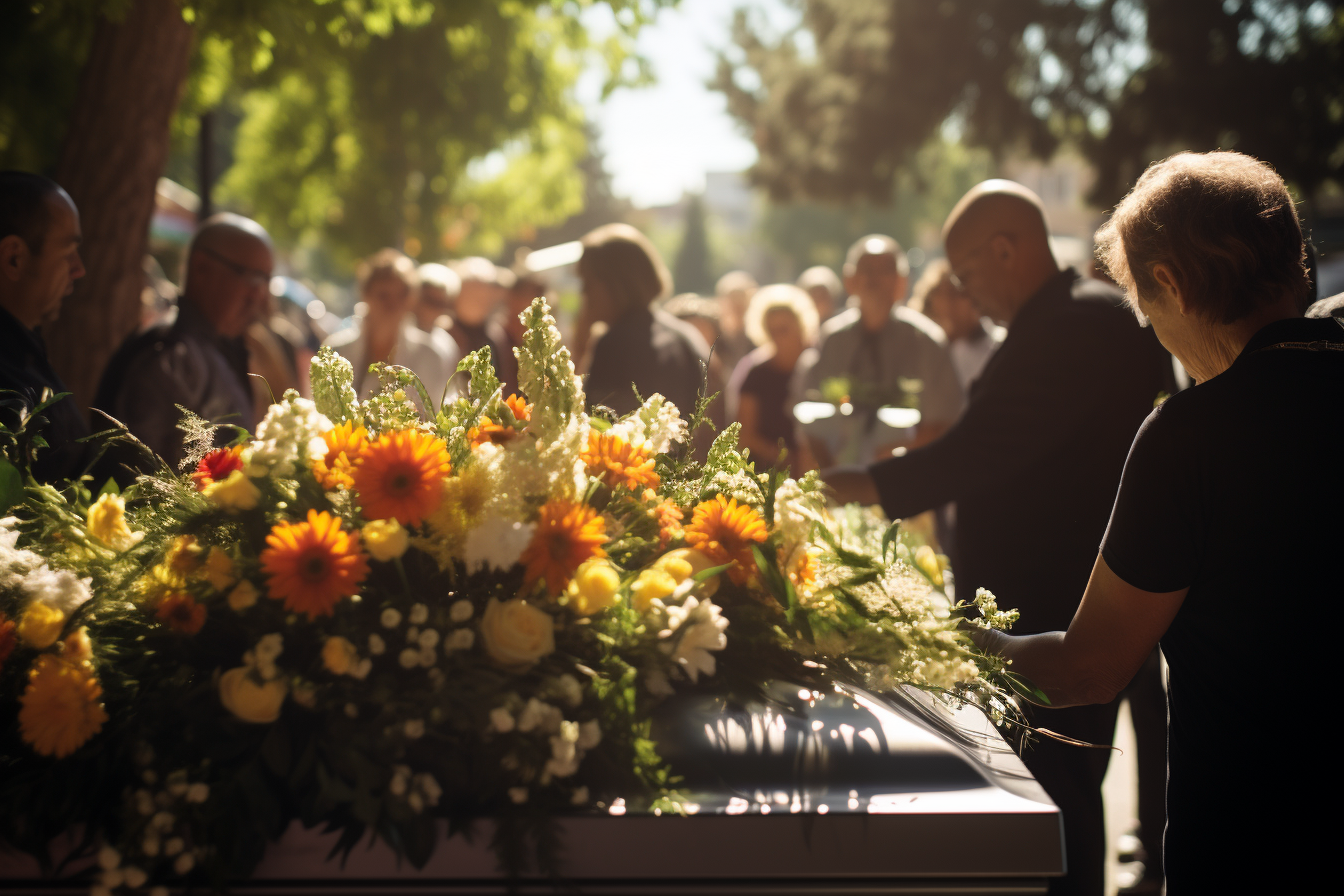
The UAE’s end of life care sector continues to grow, though it remains in an early stage of development. Palliative services are delivered through hospitals and private home care providers, while a dedicated standalone hospice network has yet to emerge. Expatriates bear most care costs through private health insurance. When a death takes place, the family must notify the police, register the death formally, and — in the case of foreign nationals — work closely with their home country’s consulate before burial, cremation, or repatriation can be arranged.
| Item | Details |
|---|---|
| Palliative care availability | Hospital-based and private home care; no standalone hospice network yet established (as of 2025) |
| Health insurance requirement | Mandatory for all expat residents; employers must provide minimum cover (as of 2025) |
| Death registration documents | Burial permit from police, valid passport or Emirates ID; medical/forensic report and police NOC for unnatural deaths |
| Cremation facilities | Available for non-Muslims; two crematoriums in the UAE (Abu Dhabi and Dubai) |
| Inheritance tax | No inheritance tax in the UAE; estates distributed under Sharia law by default unless a registered Will directs otherwise |
| Will registration options | DIFC Wills Service Centre (Dubai) and Abu Dhabi Judicial Department available to non-Muslims (as of 2025) |
What end of life care options are available in the UAE, and how does the system work?
End of life care in the UAE is delivered through a mix of hospital-based services and privately arranged home care. At present, the vast majority of patients in the UAE receive end-of-life care within hospital settings. This reflects both how the healthcare system is structured and the limited availability of community-centred alternatives such as purpose-built hospice units.
Families seeking palliative and end of life support can access several types of provision, including hospitals and clinics operating dedicated palliative care units, home healthcare companies whose staff attend patients in their own residences, and specialised private palliative care facilities offering around-the-clock expert attention.
Patients who would prefer to receive end-of-life care at home are unlikely to have that wish met. This is partly due to the absence of organised community palliative care teams or community-based palliative care units (hospices), and partly due to restrictions on prescribing injectable medications such as opioids outside of hospital. Healthcare professionals in the UAE are actively working to close this gap in provision.
The UAE healthcare system operates across both public and private sectors. At the federal level, the Ministry of Health and Prevention (MoHAP) sets health regulations and grants accreditation to healthcare facilities across the country. At the emirate level, the Abu Dhabi Department of Health, the Dubai Health Authority, and the Sharjah Health Authority each oversee healthcare within their own jurisdictions.
What is palliative care in the UAE, and who is eligible for it?
Palliative care is a branch of medicine dedicated to relieving suffering and supporting people living with serious illness. Its focus is on enhancing quality of life by addressing pain and other physical symptoms, alongside emotional, social, and spiritual concerns. Rather than being confined to the final stages of life, palliative care can be introduced at any point following a serious diagnosis and delivered alongside treatments intended to cure the underlying condition.
Palliative care is open to anyone with a serious or life-threatening illness. The aim is to prevent and alleviate symptoms arising from the illness itself and from its treatment, while also improving the overall wellbeing of both patients and their families. It can begin at the point of diagnosis and continue in parallel with curative treatment through to the end of life.
Services are designed to support people with a wide range of serious conditions. These include cancer, where palliative care helps manage pain, nausea, fatigue, and treatment-related side effects, as well as heart disease, kidney failure, and neurological conditions including Alzheimer’s disease, Parkinson’s disease, and ALS.
A referral to a palliative care specialist may be suggested by your treating physician, or you can request one yourself. Referrals can be arranged through your hospital or private healthcare provider. Within the UAE’s private healthcare environment, it is generally possible to ask for a palliative care consultation directly, without needing a GP to act as a gatekeeper.
Cultural factors have a meaningful influence on end-of-life care in the UAE. While some healthcare traditions place great weight on individual patient decision-making, Middle Eastern cultures tend to regard the extended family as the central social unit and primary decision-maker, with patients frequently leaning on the support of their relatives when facing serious illness. Expats should bear this in mind when discussing their care preferences with medical staff.
Are there hospices in the UAE, and how do you access them?
Even patients who express a clear preference for end-of-life care at home are unlikely to have that preference fulfilled, given the current absence of established community palliative care teams or community-based palliative care units (hospices) in the UAE. This represents the most significant structural shortcoming in the country’s end of life care landscape.
Burjeel Holdings has announced plans to open the first dedicated hospice in the UAE. The intention is to create a compassionate hub in Abu Dhabi that brings together existing community groups and provides a single point of access for patients and families living with life-limiting illness, delivering care that attends to physical, emotional, and psychological needs. The facility is expected to be built either at Burjeel Medical City or on a newly identified site.
In the meantime, some private home nursing providers offer hospice-style care in the patient’s own home. Organisations such as Nightingale Home Nursing take a compassionate approach to end of life care, helping patients live as comfortably as possible and offering a more dignified experience than a hospital setting can typically provide. Within the Burjeel healthcare network, a home care service also exists that allows the palliative care team to support patients requiring palliative and end-of-life care from within the comfort of their own homes.
To access these services, speak with your treating physician or oncologist about obtaining a referral, or contact a licensed home healthcare provider directly. Home care nurses practising in Dubai must be registered with the Dubai Health Authority (DHA), while those in other emirates must be registered with the Department of Health (DoH) or the Ministry of Health and Prevention (MoHAP).
Is palliative or hospice care covered by public health insurance or the national health system in the UAE, or does it need to be funded privately?
MoHAP’s insurance programme covers all UAE citizens and a substantial proportion of expatriates who do not hold private health cover. The scope of MoHAP healthcare insurance encompasses preventive, primary, and advanced medical services, including palliative care. In practice, however, most expats access services through mandatory employer-provided insurance or policies they purchase themselves.
From 1 January 2025, employers are required to obtain health insurance as a condition of applying for the issuance or renewal of residency permits for private sector employees and domestic workers. Mandatory health insurance is already in operation in Abu Dhabi and Dubai, and will be extended to private sector workers in Sharjah, Ajman, Umm Al Quwain, Ras Al Khaimah, and Fujairah.
Palliative care is included within the scope of insurance coverage in the UAE, though the precise extent of that coverage depends on the terms of your individual policy. Whether care is delivered through the government health system or the private sector, payment is generally made either through a health insurance framework or directly by the patient.
The public health system is not accessible to expatriates from outside the Gulf Cooperation Council (GCC — Bahrain, Kuwait, Oman, Qatar, and Saudi Arabia), meaning most foreign nationals must hold private health insurance. Expats are advised to examine their policy documents carefully to determine whether palliative and end of life care, home nursing, and specialist symptom management are included, as basic employer plans may carry significant limitations. Unlike national systems such as the NHS in the UK or Medicare in Australia, which fund palliative care centrally, UAE expats depend entirely on the coverage offered by their private insurer.
What legal documents should expats have in place before the end of life in the UAE — such as a living will, advance directive, power of attorney, or healthcare proxy — and how do these work?
Advance legal preparation is strongly recommended for all expats living in the UAE, and is especially important for those managing a serious illness. The principal documents to consider are a UAE-registered Will, a Power of Attorney (POA), and advance care planning documentation such as a Do Not Resuscitate (DNR) or “Allow Natural Death” instruction agreed in advance with your treating physician.
By default, inheritance laws in the UAE are grounded in forced heirship provisions derived from Islamic Sharia law. These provisions govern the distribution of UAE-based assets held by Muslims regardless of nationality in the event of their death. However, individuals are permitted to draw up a Will specifying how their local — and in some cases international — assets should be distributed, ensuring that Sharia law does not determine the outcome.
Changes to local inheritance laws and procedures now give non-Muslims several options when executing a Will, including registration at the DIFC Wills Service Centre (DIFC WSC) and the Abu Dhabi Judicial Department (ADJD). The DIFC WSC enables non-Muslim expatriates to register a Will in English covering UAE-based assets such as property, bank accounts, and the guardianship of minor children.
A Power of Attorney designates a trusted individual to handle financial, legal, or healthcare matters on your behalf if you lose mental capacity. In the UAE, POAs generally need to be notarised locally to carry legal force. Importantly, if a patient in the UAE explicitly requests cardiopulmonary resuscitation (CPR), this cannot be withheld even where it is considered medically futile. The application of “allow natural death” policies for terminally ill patients varies from facility to facility. Expats who wish to record their preferences regarding resuscitation or life-sustaining treatment should do so in writing, discuss this with their treating team, and ensure the documentation is held within their medical records.
Are documents such as advance directives or powers of attorney made in another country legally recognised in the UAE?
The UAE does not operate a universal framework for recognising advance directives or advance care planning documents drawn up in other countries, in the way that some nations mutually recognise such instruments. Foreign documents — including Wills, POAs, and healthcare directives — may be accepted, but they will typically need to be attested and translated into Arabic in order to have legal standing within the UAE.
Foreign Powers of Attorney can in some circumstances be used in the UAE, but they generally need to be notarised in the country where they were created, authenticated (apostilled or legalised) via the relevant embassy, and subsequently attested by the UAE Ministry of Foreign Affairs. You may also require the assistance of a translator familiar with Emirati legal requirements; official translators in the UAE are listed by the relevant authorities.
In practice, it is strongly advisable for expatriates to put in place UAE-specific legal documents rather than relying on instruments created abroad. Obtaining specialist legal advice from Wills and estate planning lawyers is essential in order to understand each available option and identify the most suitable approach for your individual circumstances. For medical decision-making, your healthcare team will ordinarily follow UAE clinical and legal norms, meaning that locally prepared documentation — even if informal — carries considerable practical weight.
What are the laws around euthanasia or assisted dying in the UAE?
Euthanasia and assisted dying are prohibited in the UAE. The country’s legal framework is founded on Islamic principles, under which deliberately ending a human life — including one’s own — is forbidden. There is no legal provision for assisted dying, voluntary euthanasia, or physician-assisted suicide in any emirate.
Medical professionals in the UAE are not permitted to take steps that actively hasten a patient’s death. Nevertheless, palliative care practices such as thorough pain and symptom management, and the withdrawal of futile treatment with the consent of the patient or their family, are both permissible and ethically endorsed within the UAE healthcare system. While national-level figures on the use of “allow natural death” policies for terminally ill patients are not currently published, data from the Burjeel palliative care service indicate that 90% of patients receiving end-of-life care on the ward agreed to a do not resuscitate status.
Expats arriving from countries where assisted dying has been legalised — such as Canada, the Netherlands, or Belgium — should be aware that no equivalent options exist in the UAE, and that raising the subject of assisted dying with medical staff will not result in clinical action. End of life care in the UAE is centred on ensuring comfort and dignity rather than on hastening death.
What are the local customs, traditions, and religious practices around death and dying in the UAE?
The UAE is a predominantly Muslim country, and Islamic traditions exert a profound influence on attitudes towards death and dying. In this context, Islam is not simply a matter of personal faith but a comprehensive framework for living that shapes perspectives on health, illness, and what lies beyond death. For Muslim patients, death is understood as a transition to an afterlife, and there is strong emphasis on having family present, reciting verses from the Quran, and ensuring that the dying person is never left alone.
Within Islamic tradition, burial should follow death as quickly as possible — ideally within 24 hours. The body is ritually washed (ghusl) by same-gender Muslim community members, wrapped in a white shroud (kafan), and funeral prayers (Salat al-Janazah) are offered before burial. The deceased is laid to rest facing Mecca. Cremation is not permitted under Islamic law.
Spiritual care forms a vital component of palliative care, responding to the spiritual concerns of patients and their families. While palliative care clinicians receive some training in identifying spiritual care needs, chaplains are specifically prepared to offer a non-judgmental presence to patients and families of any religious or spiritual background. The formal role of hospital chaplains has not yet been established in the UAE, however, despite the country’s highly diverse population encompassing expatriates from a vast range of cultural and religious traditions.
For non-Muslim expatriates, religious and cultural practices will naturally differ. The UAE is tolerant of other faiths practised privately, and Christian churches, Hindu temples, and other places of worship are present in the major cities. Patients are free to observe their own faith, and healthcare providers will generally seek to accommodate religious requirements. It is advisable to inform your medical team of your religious or cultural preferences at the earliest opportunity.
What must you do when someone dies in the UAE? Who do you notify, how quickly, and in what order?
Following a death in the UAE, a specific sequence of steps must be completed, as each stage depends on documentation obtained at the previous one. Acting without delay is essential — postponements can complicate repatriation and create difficulties with legal processes. The standard procedure is as follows:
- Notify the police without delay if the death occurs outside a hospital. If someone dies at home or in another non-hospital setting, the local police must be informed immediately. A medical officer from the police department will conduct an inspection and issue a report confirming whether the death was natural. The body will subsequently be transported to the government mortuary by police ambulance. Police notification is not required when death occurs in hospital.
- Obtain the death certificate from the appropriate health authority. In Abu Dhabi, the death certificate is obtained from the Department of Health (+971 2 449 3333). In Sharjah, it is obtained from the Department of Preventative Medicine (+971 6 705 8333). In Dubai, contact the Ministry of Health and Prevention (call 800 11111). A fee of AED 50 applies for issuing the death certificate, which is ordinarily produced in Arabic. An English version may be requested for an additional charge.
- Obtain a burial permit from the district police. For a natural death, the required documents are a burial permit issued by the district police and the deceased’s valid passport or Emirates ID. In cases of unnatural death, a medical report from the forensic doctor, a no-objection certificate from the police station, and a letter from the Public Prosecution are also needed.
- Contact the deceased’s embassy or consulate. When an expatriate dies, the embassy or consulate of their home country in the UAE must be contacted to inform them of the death and initiate the relevant formalities. This should be done as soon as possible, as consular involvement is a prerequisite for repatriation.
- Have the death certificate attested by the Ministry of Foreign Affairs. The death certificate must be stamped and signed by the Ministry of Foreign Affairs. You can submit an application via the Ministry of Foreign Affairs website or seek guidance from your funeral director in the UAE.
- Cancel the deceased’s visa and any labour cards. The visa and labour card held by the deceased must be cancelled through the Ministry of Labour and the Department of Immigration.
- Inform the deceased’s employer, bank, and insurance company. Bank accounts are frozen immediately upon notification of the death, regardless of whether a Will exists. To recover assets held in those accounts, an inheritance case must be lodged with the court and a succession certificate submitted.
- Open an inheritance file at the Personal Status Court if this is required for estate administration. The succession certificate is typically issued within four working days of the file being opened.
How is a death officially registered in the UAE, and what documents are needed?
Every death in the UAE must be formally registered. The process can be intricate and involved, but an experienced funeral director can ordinarily manage it on your behalf. Families are strongly encouraged to engage a reputable local funeral director to guide them through the administrative requirements, particularly given potential language barriers and the need to coordinate with multiple government departments.
The documentation required varies according to the circumstances of the death. For a natural death, the necessary paperwork consists of a burial permit from the district police and the deceased’s valid passport or Emirates ID. In cases of unnatural death, additional documents are required: a medical report from the forensic doctor, a no-objection certificate from the police station, and a letter from the Public Prosecution.
Once the death certificate has been issued, it must be attested — stamped and signed by the Ministry of Foreign Affairs. If the body is to be repatriated abroad, the certificate will also need to be translated and subjected to further attestation, a process your funeral director can oversee. If burial is to take place within the UAE, the death certificate may be obtained after the burial. If repatriation is planned, however, the death certificate must be secured before the body can be released.
What happens if a foreign national dies in the UAE — what are the specific steps for notifying their home country’s embassy or consulate, and what role does the consulate play?
With expatriates comprising approximately 90% of the UAE’s population and over 200 nationalities represented, consular involvement following a death is extremely common. Each embassy and consulate follows its own established procedures, and making contact promptly is vital.
The consulate performs several important functions. It can issue its own death registration certificate recognised by the home country, provide a No Objection Certificate (NOC) authorising burial, cremation, or repatriation, and assist with translation and liaison with UAE authorities. Before a body can be buried, cremated, or repatriated, no-objection letters must be obtained from both the relevant embassy and the UAE police.
Deceased expatriates may be cremated or buried within the UAE, or their remains may be transported to their home country, provided the requisite documentation is in order. To arrange for the body to be flown home, the death certificate must be translated and duly attested, along with an NOC from the deceased’s embassy or consulate.
Legal guidance may be necessary to navigate the Emirati legal system following a death. The embassy or consulate cannot provide legal advice or meet legal costs on your behalf. Similarly, most consular services in the UAE — including those of countries such as the UK — are unable to provide or pay for translation services. Under UAE law, employers are obligated to cover the cost of repatriating their employees in cases that relate to employment.
How are funerals typically arranged in the UAE, and what are the usual options for burial or cremation?
For Muslim deaths, funerals are typically arranged rapidly — within 24 hours — through the mosque community or a specialist Muslim funeral services provider. For non-Muslim expatriates, engaging a licensed funeral director is advisable, as the process involves considerably more paperwork and liaison with government departments.
Deceased expatriates may be cremated or buried in the UAE, or their bodies may be transported to their home countries provided the necessary documents are produced. Burial is available at designated non-Muslim cemeteries across the country, with each emirate allocating sections specifically for non-Muslim interments. There are two crematoriums in the UAE: one in Abu Dhabi and one in Dubai. The relevant embassy will issue a consent letter to the appropriate authorities to authorise cremation.
Children under three years of age who die in the UAE cannot be cremated locally. They must either be buried within the UAE or repatriated. This is an important consideration for families to be aware of in advance. Most embassies and consulates can provide information on registered funeral directors who specialise in expatriate cases and are well acquainted with the documentation requirements.
What are the approximate costs of a funeral in the UAE, and are there any state or insurance-based funds that can help cover them?
Funeral costs in the UAE can vary substantially depending on whether the body is buried locally, cremated, or repatriated. Expenses may encompass embalming, the coffin, documentation and attestation fees, transport to the airport, air cargo charges, and local cemetery or cremation costs. Travel insurance policies should be reviewed for any repatriation provisions that may offset some of these expenses.
There is no government funeral fund in the UAE. Costs are met by the family or, in employment-related cases, by the employer. An insurer may appoint a funeral director in both the UAE and the destination country, and may also cover the cost of transporting the body to that country (repatriation) as well as contributing to medical, legal, interpretation, and translation expenses. This highlights the critical importance of holding comprehensive life and travel insurance that includes repatriation coverage.
If the deceased held a term life insurance policy in the UAE and died within the period of coverage, the nominated beneficiaries or family members are entitled to make a claim on the policy. Some employers also include group life insurance within their employment packages — it is worth examining employment contracts carefully. Where an employee dies in circumstances connected to their work, Emirati law places responsibility on the employer for meeting repatriation costs.
What is the process for repatriating the remains of a foreign national from the UAE to another country?
When an expatriate dies in the UAE, the responsibility for arranging the return of their remains to their home country falls to the family. This process requires a range of legal documentation, coordination with several government bodies, and careful management of the associated costs.
The repatriation process generally involves the following documentation and stages: obtaining the UAE death certificate and having it attested by the Ministry of Foreign Affairs; securing a police NOC authorising repatriation; obtaining an NOC from the home country’s embassy or consulate; having the body embalmed; sealing the coffin to international transport standards; and arranging air cargo with a suitable airline. There are specific requirements governing both embalming procedures and the type of coffin that must be used.
When transporting remains from the UAE to the destination country, a range of documents will be required — including, where the next of kin is not travelling with the body, a letter of agreement from a funeral director in the receiving country to confirm they will accept the remains. Multiple certified copies of each document will typically need to accompany the body. Precise requirements vary by destination country; both your funeral director and the relevant embassy can provide detailed guidance. The process generally takes anywhere from several days to two weeks, depending on the complexity of the case and how quickly documentation can be completed.
While the precise steps involved in repatriation from the UAE vary slightly depending on the destination, the fundamental process remains broadly consistent. An experienced local funeral director with expertise in international repatriation is the most valuable resource for managing this process as smoothly and efficiently as possible.
What happens to the estate of someone who dies in the UAE — how does probate or estate administration work, and are there inheritance taxes?
There is no inheritance tax in the UAE. However, the rules governing the distribution of a deceased person’s estate can differ markedly from those that expatriates may be familiar with in their home countries. By default, local inheritance law is rooted in forced heirship provisions derived from Islamic Sharia law. These provisions apply to the UAE-based assets of Muslims regardless of their nationality.
Bank accounts are frozen as soon as the bank is notified of the account holder’s death, regardless of whether a Will exists. To gain access to the funds held in those accounts, an inheritance case must be opened with the court and a succession certificate obtained. This certificate is ordinarily issued within four working days of the inheritance file being opened at the Personal Status Court.
Any outstanding debts or financial penalties in the name of the deceased will be deducted from their estate before distribution. The remaining assets, including bank balances and other property, are then allocated in accordance with the proportions set out in the succession certificate. Debts are not passed to surviving relatives but are settled from the assets of the deceased.
Where the deceased was a male expatriate, his wife and children are entitled to a one-year extension of their stay in the UAE if they were residing on a visa sponsored by him. This is a critically important practical consideration, as the death of a visa sponsor can otherwise compel dependants to leave the country at short notice.
If an expat dies without a will in the UAE, what happens to their assets under local intestacy laws?
Dying intestate — that is, without a valid Will — in the UAE carries serious risks for expatriate families. The default framework is provided by forced heirship provisions derived from Islamic Sharia law, which govern the distribution of UAE-based assets belonging to Muslims regardless of their nationality. For non-Muslim expatriates, Sharia law may equally be applied to UAE-located assets if no registered Will is in place.
Where no UAE Will has been left, the legal heirs of the deceased must obtain a succession certificate in order to inherit the individual’s assets. The distribution rules under Islamic inheritance law differ substantially from the intestacy provisions found in many other countries. For instance, under Sharia, a widow may be entitled to one-eighth of the estate where there are children, and male heirs typically receive twice the share allocated to female heirs.
Any real estate owned by the deceased will pass to their family members, but there is a real risk that it will not be distributed as the deceased would have intended, and legal disputes may follow, as surviving relatives are required to pursue their claims through Sharia courts. This is a particularly significant concern for expatriates with property holdings in the UAE.
Individuals are permitted to draw up a Will specifying how their local — and in certain cases international — assets are to be distributed, removing Sharia law as the default basis for distribution. Non-Muslims can do this by registering a Will at the DIFC Wills Service Centre (DIFC WSC) or the Abu Dhabi Judicial Department (ADJD). All expatriates holding UAE-based assets — including bank accounts, property, and vehicles — are strongly encouraged to put a registered Will in place without delay.
Frequently Asked Questions
Will my international health insurance cover palliative care in the UAE?
Palliative care falls within the scope of insurance coverage in the UAE, though whether your particular international plan includes it will depend on your policy terms. Review your policy documents carefully for provisions relating to specialist palliative medicine, home nursing, and symptom management. Some insurers require prior authorisation for these services. When palliative care becomes necessary, contact your insurer directly and confirm that your preferred provider falls within their approved network.
Are documents in English legally valid in the UAE?
Arabic is the official language of the UAE, and the majority of legal and government procedures require documents to be submitted in Arabic or accompanied by a certified Arabic translation. Death certificates are ordinarily produced in Arabic, though an English version can be requested for an additional fee. Many private healthcare providers and legal firms operate in both languages. Wills registered at the DIFC Wills Service Centre may be executed in English, which makes this option particularly appealing for non-Muslim expatriates.
How long does the process of repatriating remains from the UAE typically take?
Repatriation typically takes between five days and two weeks, depending on the circumstances of the death, the pace at which documentation is processed, airline cargo availability, and the requirements of the destination country. Cases involving unnatural deaths that require a forensic report can extend this timeline considerably. Appointing a funeral director with experience in international repatriation at the earliest opportunity helps to minimise delays. While the exact steps may vary slightly depending on the destination, the core process remains broadly the same.
What support is available to bereaved family members remaining in the UAE?
Where the deceased was a male expatriate, his wife and children are entitled to a one-year extension of their residency in the UAE, provided they were previously sponsored by him. Beyond this, there is no formal state bereavement support programme for expatriates. Some hospitals and home care providers offer bereavement counselling as part of palliative care packages, and palliative care teams often continue to support families emotionally after a death. Community organisations and faith groups in the major cities also provide informal networks of support.
Can a non-Muslim expat be buried in the UAE?
Yes. Non-Muslim expatriates may be buried in sections of UAE cemeteries specifically designated for non-Muslims. Deceased expatriates also have the option of cremation or repatriation to their home country, provided the relevant documentation is in order. Your funeral director and embassy can advise on the burial or cremation options available for your particular faith or cultural preference, and on the costs and procedures involved, which vary by emirate.
What happens to a joint bank account when one account holder dies in the UAE?
Bank accounts held in the name of the deceased — including joint accounts held with a spouse or business partner — will be frozen as soon as the bank is informed of the death. Seeking legal advice regarding local inheritance procedures without delay is therefore essential, in order to protect assets for the rightful heirs and secure their release as quickly as possible, sparing the surviving family from financial hardship. Having a locally registered Will and a succession certificate in place helps to expedite this process.
Is there a time limit on when a death must be officially registered in the UAE?
Deaths in the UAE should be registered as promptly as possible. The registration process must be completed before any burial, cremation, or repatriation can take place — funeral arrangements cannot proceed until the death has been officially recorded with the appropriate authorities. In practice, hospitals generally initiate the death notification process automatically. Families should move quickly, particularly when repatriation is intended, as air cargo cannot be booked until all documentation is finalised.
Does UAE law require a Will to be made in Arabic?
Not necessarily. Non-Muslim expatriates have the option of registering a Will at the DIFC Wills Service Centre (DIFC WSC) or the Abu Dhabi Judicial Department (ADJD). The DIFC Wills Service Centre permits Wills to be drafted and registered in English, making the process accessible to those who do not speak Arabic. Wills registered at the DIFC are legally enforceable in the UAE for non-Muslim expatriates and can cover assets including property, bank accounts, business shareholdings, and guardianship of minor children. Always seek qualified legal advice in the UAE before executing any Will to ensure it satisfies current requirements.