
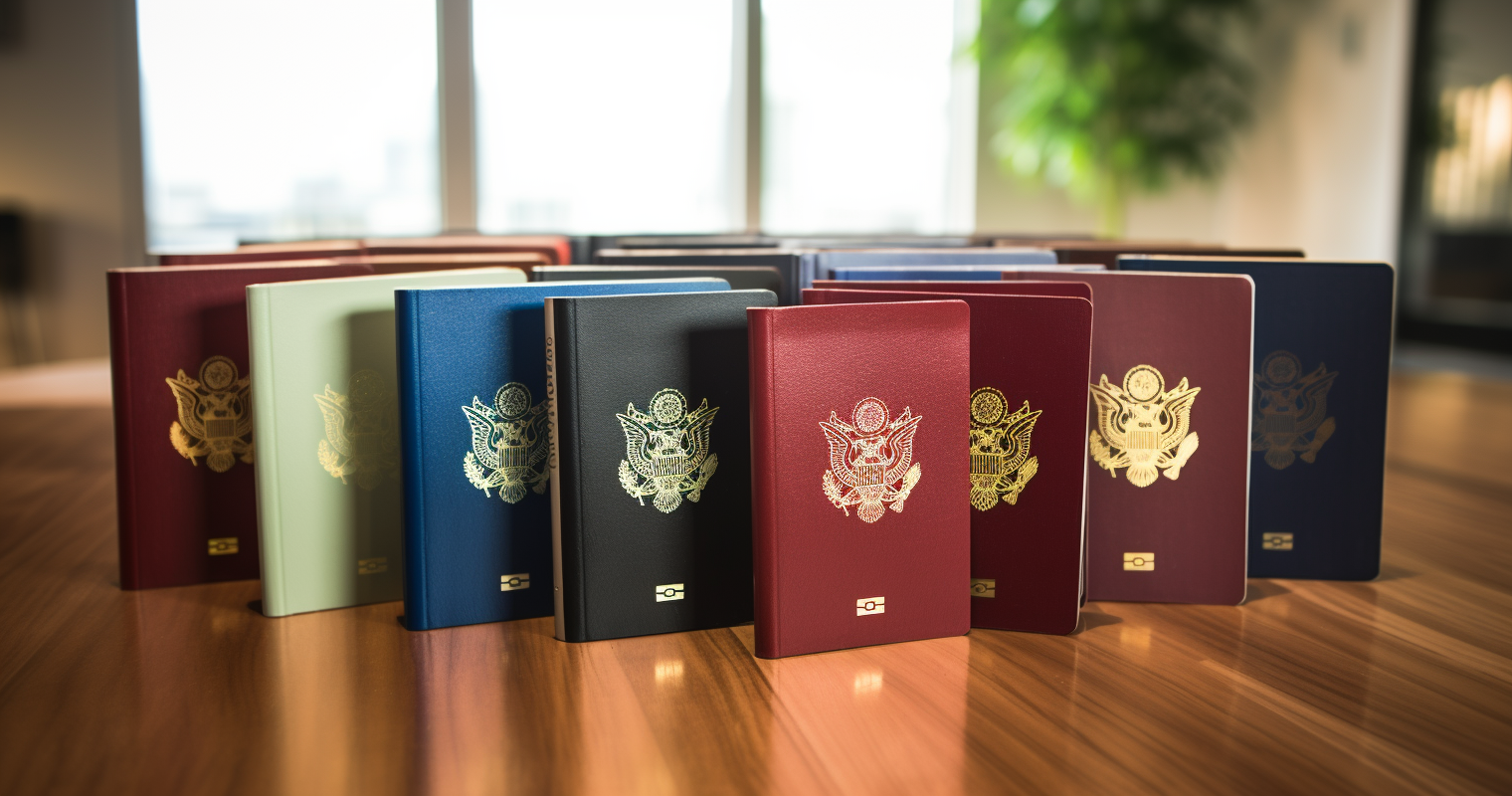
Venezuelan citizenship can be acquired through birth on Venezuelan territory, descent from Venezuelan parents, marriage to a Venezuelan national, or naturalisation following a qualifying period of lawful residence — generally 10 years for most foreign nationals, or 5 years for nationals of Spain, Portugal, Italy, and Latin American or Caribbean nations. Venezuela’s 1999 Constitution expressly permits dual nationality, so applicants are under no obligation to give up their existing citizenship.
| Item | Details |
|---|---|
| Standard naturalisation residency | 10 years of continuous legal residence (as of 2025) |
| Reduced residency period | 5 years for nationals of Spain, Portugal, Italy, and Latin American/Caribbean countries (as of 2025) |
| Marriage-based route | Eligible to apply after 5 years of marriage to a Venezuelan national |
| Governing law | Constitution of the Bolivarian Republic of Venezuela (1999) and Nationality and Citizenship Act 2004 |
| Responsible authority | SAIME (Servicio Administrativo de Identificación, Migración y Extranjería) — www.saime.gob.ve |
| Dual nationality | Permitted under Article 34 of the Constitution |
Who qualifies to apply for citizenship in Venezuela?
Venezuelan nationality law governs how citizenship is acquired, transmitted, and lost. A foundational principle of this law is jus soli: every person born on Venezuelan soil becomes a citizen from birth, regardless of the nationality or immigration status of their parents. Beyond birthright citizenship, several distinct routes exist for acquiring Venezuelan nationality.
Citizenship by birth
Venezuela’s nationality framework rests on the jus soli principle, which means that any individual born within Venezuelan territory automatically becomes a citizen at birth, irrespective of their parents’ nationality or legal status. This is among the most expansive birthright citizenship provisions found anywhere in Latin America.
Citizenship by descent
Nationality by descent is available to children born abroad who have at least one parent who is Venezuelan by birth. Nationality is conferred provided the child establishes residence in Venezuela or formally declares the intention to do so before a Venezuelan diplomatic or consular authority.
Where the Venezuelan parent acquired their own nationality through naturalisation rather than birth, a child born abroad must establish residence in Venezuela before turning 18 and submit a declaration of intent before reaching 25. This mirrors the structure of descent-based citizenship provisions in countries such as Ireland or Italy, where a formal declaration or registration step is obligatory rather than citizenship being conferred automatically.
Naturalisation after residency
Foreign nationals may acquire Venezuelan nationality through naturalisation once they have satisfied specific conditions. The standard route requires at least ten consecutive years of lawful residence immediately before the application is filed. This threshold is considerably higher than the five-year standard applied in many countries such as France or Canada, though it is comparable to the requirements of certain continental European states.
The residency threshold is meaningfully reduced for certain applicants depending on their country of origin or personal circumstances. Nationals born in Spain, Portugal, Italy, or any Latin American or Caribbean country need only five years of continuous lawful residence before they may apply.
Citizenship by marriage
A foreign national who is married to a Venezuelan citizen may apply for naturalisation after five years of marriage and continuous residence within Venezuela, provided they formally declare their wish to adopt Venezuelan nationality. Applicants must also obtain a naturalisation letter, pass a citizenship assessment, and swear an oath of allegiance to the Republic.
Minors and parental naturalisation
Minors over whom a Venezuelan citizen holds parental authority can obtain Venezuelan citizenship, as long as they declare their wish to become Venezuelan before the age of 21 and have lived continuously in Venezuela throughout the five years leading up to that declaration.
Exceptional contributions
Certain circumstances are regarded as favourable factors when evaluating a naturalisation application. These include owning real property in Venezuela or a financially sound business with a Venezuelan domicile, having children under parental authority, having performed a significant service to Venezuela or to humanity, or having provided technical expertise that the executive considers to be of public benefit. Venezuela does not currently operate a formal citizenship-by-investment programme; every pathway to citizenship demands substantial periods of residency and genuine integration into Venezuelan society.
General eligibility requirements
To qualify for Venezuelan citizenship through naturalisation, an applicant must have lived in the country for the required qualifying period, be at least 18 years old, hold a valid Venezuelan residence permit, have a clean criminal record, be able to communicate in Spanish, possess knowledge of Venezuelan history and culture, and supply evidence of financial solvency.
What steps are involved in applying for Venezuelan citizenship?
SAIME — formerly known as ONIDEX — is the Venezuelan government body responsible for citizenship and immigration affairs. Its full name in Spanish is Servicio Administrativo de Identificación, Migración y Extranjería. The agency handles the issuance of passports, identity cards for immigrants, and other official nationality documents for Venezuelan citizens and residents. Its official website is www.saime.gob.ve.
The naturalisation process unfolds through the following stages. Always consult the SAIME official website for current requirements, fees, and processing timelines, as these details are subject to revision.
- Confirm eligibility and assemble documentation. Start by approaching SAIME to verify that you meet the eligibility criteria. During this stage, collect all necessary documents and ensure that any foreign-issued records are apostilled or legalised as required. Documents commonly required include a certified birth certificate or foreign passport, proof of continuous lawful residence, a criminal record clearance certificate, evidence of financial solvency, and — where relevant — a marriage certificate.
- Lodge the naturalisation application. Present your full documentation package to SAIME, pay the relevant processing fees, and supply biometric data including fingerprints and photographs. Applicants must appear in person at every stage of the process — including initial filing, follow-ups, any escalations, and final approvals — and may not be represented by a third party.
- Attend an interview and language or knowledge assessment. A structured interview is held to evaluate the applicant’s proficiency in Spanish. An assessment of knowledge relating to Venezuelan history, geography, and civic principles may also be included at this stage. Further detail is provided in the section on tests and ceremonies below.
- Background check and administrative review. The Venezuelan authorities conduct an individual review of each application, weighing factors such as the applicant’s conduct, the length of their residence, and any other relevant circumstances.
- Receive the naturalisation letter and await publication in the Official Gazette. The naturalisation decree does not take legal effect until it has been published in the Gaceta Oficial (Official Gazette) of the Bolivarian Republic of Venezuela. The naturalisation letter itself is the formal document establishing Venezuelan citizenship.
- Swear the oath of allegiance. As part of completing the citizenship process, applicants must take a formal oath pledging allegiance to the Republic.
- Register as a citizen and apply for identity documents. The concluding steps involve collecting your naturalisation certificate, registering as a Venezuelan citizen, and then applying through SAIME for a Venezuelan national identity card (cédula de identidad) and a Venezuelan passport.
Application fees are set by SAIME and may be expressed in Venezuelan bolívars or other currencies depending on prevailing policy. Given Venezuela’s rapidly shifting economic environment, always confirm current fees directly with SAIME or the nearest Venezuelan consulate before initiating an application.
What tests, interviews, or ceremonies are part of the process?
Demonstrating a working knowledge of Spanish is a prerequisite for naturalisation in Venezuela. This requirement is ordinarily evaluated through a language assessment conducted as part of the overall application process at SAIME. The evaluation may encompass basic reading, writing, and oral components, designed to confirm that applicants have sufficient Spanish ability to participate in Venezuelan society.
Unlike the formalised standardised tests mandated in certain other countries — such as the specific CEFR-graded examination required along the UK’s Life in the UK pathway — Venezuela’s language assessment forms part of the broader interview and application review rather than being administered as a separate, externally certified examination. The focus is on practical communicative ability rather than a formally graded score.
Familiarity with Venezuelan history, geography, and civic values, along with evidence of broader integration into Venezuelan culture and society, are also among the assessment criteria for naturalisation. Applicants should be ready to demonstrate knowledge of Venezuela’s past, its constitutional framework, and its national symbols.
Taking a formal oath of allegiance to the Republic is a compulsory step in completing the citizenship process. This is comparable in intent to the citizenship ceremonies conducted in countries such as Australia and Canada, where a public oath formally marks the legal conferral of citizenship. In Venezuela, however, this step is part of the administrative procedure rather than a separate ceremonial public event.
A background check is carried out on every applicant. Those with criminal records generally face significant obstacles in the citizenship process. The Venezuelan Constitution specifies requirements that must be satisfied, including evidence of good conduct and an absence of serious criminal convictions.
What are the advantages of holding Venezuelan citizenship?
Venezuelan citizens enjoy a broad range of rights, including the right to vote in national elections, the right to stand for public office (subject to certain restrictions for naturalised citizens), access to state education and healthcare systems, freedom of movement throughout the country, and entitlement to diplomatic protection when abroad.
Venezuelans who are not subject to political disqualification or civil interdiction, and who satisfy the age requirements set out in the Constitution, may exercise full citizenship rights and are therefore entitled to political rights and obligations. This encompasses participation in referendums, local elections, and other democratic processes that are closed to non-citizens.
Certain senior positions in the Venezuelan state may only be held by Venezuelans by birth who possess no other nationality. These offices include the President of the Republic, the Executive Vice President, the Chairman and Vice-Chairman of the National Assembly, Justices of the Supreme Tribunal of Justice, and ministers with portfolios covering national security, finance, energy and mining, or education, as well as Governors and Mayors of border states and municipalities.
To serve as a member of the National Assembly, minister, or Governor or Mayor of a non-border state or municipality, naturalised Venezuelans must have been domiciled in Venezuela with at least 15 years of permanent residence, in addition to meeting the capability requirements established by law. This means that naturalised citizens can still access many significant public roles, even though the most senior constitutional positions are reserved exclusively for those who are Venezuelan by birth and hold no other nationality.
As of July 2020, Venezuelan passport holders enjoyed visa-free or visa-on-arrival access to 129 countries and territories, placing the Venezuelan passport 44th in travel freedom according to the Henley Passport Index. Prospective applicants should verify the current ranking on the Henley Passport Index, as this figure may have changed. It is also important to note that Venezuela’s prevailing political and economic conditions may have a bearing on the practical utility of the passport for international travel.
Male Venezuelan citizens should also be aware of military service registration obligations upon turning 18, and that tax liabilities on worldwide income may apply to those resident in Venezuela.
Does Venezuela recognise dual citizenship?
Dual nationality is expressly permitted under Venezuelan law, as enshrined in Article 34 of the Venezuelan Constitution. This is a notably progressive provision: unlike various countries in the region — and indeed many states worldwide — Venezuela allows its citizens to hold another nationality simultaneously, meaning that acquiring Venezuelan citizenship does not compel you to surrender your original nationality, and Venezuelans who take on a foreign nationality do not forfeit their Venezuelan status as a result.
A foreign national applying for Venezuelan nationality is not required to relinquish their existing citizenship. Should an applicant wish to formally renounce their original nationality, that renunciation is only treated as effective if they expressly make such a declaration at the moment they file their Venezuelan naturalisation application.
Venezuelan law generally ensures that Venezuelan nationality is not forfeited solely on the basis of a person acquiring another nationality. This allows citizens to retain their Venezuelan status even after obtaining a foreign passport. Venezuelans who hold dual nationality are expected to use their Venezuelan passport when entering and leaving Venezuelan territory.
A Venezuelan citizen by birth cannot be deprived of their nationality. Naturalised citizens, however, may lose their status as a result of a court ruling on grounds such as treason, fraud, or threats to national security.
It is equally important to understand your own country’s approach to dual nationality. While Venezuela permits it, your country of origin may have rules that could affect your existing citizenship if you acquire Venezuelan nationality. You should consult the relevant immigration or foreign affairs authority in your home country — such as the ministry of interior, home office, or equivalent — before proceeding with a Venezuelan naturalisation application. Failing to understand how Venezuelan citizenship might interact with your original nationality status could have unintended consequences.
How long does the citizenship process in Venezuela typically take?
The path to Venezuelan citizenship involves several distinct phases, and the overall duration will depend considerably on which eligibility route applies to you, the current operational capacity of SAIME, and Venezuela’s broader administrative environment.
The standard naturalisation route requires at least ten consecutive years of lawful residence immediately prior to the application date for most foreign nationals, meaning the minimum realistic timeline from arrival to eligibility is a full decade. The residency threshold is significantly reduced for certain applicants on the basis of their country of origin or marital status: nationals born in Spain, Portugal, Italy, or any Latin American or Caribbean country need only five years of continuous legal residence before they may apply.
The marriage-based pathway — requiring five years of marriage and residence within Venezuela — offers a faster route than the standard ten-year requirement. Even so, applicants must still complete the full administrative process, covering documentation, assessment, and the issuance and publication of the naturalisation letter.
The country’s ongoing challenges, including bureaucratic inefficiencies and wider economic pressures, can make the administrative process more demanding, and processing durations can vary substantially. Venezuela does not publish official average processing times for naturalisation applications, so prospective applicants should seek up-to-date guidance directly from SAIME or through a Venezuelan consulate. Allow for additional time beyond the minimum qualifying period, since the administrative review and publication in the Gaceta Oficial add further time after the residency threshold has been reached.
Once citizenship is confirmed and the naturalisation letter has been published, the immediate practical next steps are obtaining a cédula de identidad (national identity card) and a Venezuelan passport through SAIME. Always verify current processing times directly with the official source, as these are subject to change.
What are the most common grounds for refusing a citizenship application?
Applicants with criminal records typically encounter substantial obstacles when pursuing Venezuelan citizenship. The Venezuelan Constitution sets out conditions that must be met, including demonstrating good character and an absence of serious criminal convictions.
The Venezuelan government evaluates each citizenship application individually, weighing the nature of the criminal record, the gravity of the offence, and the individual’s rehabilitation. In some cases, applicants with minor past offences or who have fully served their sentences may still be eligible, but those with a history of serious criminal conduct are likely to be refused.
Other common reasons for refusal include:
- Insufficient or interrupted residency. Applicants must be lawfully resident in Venezuela and must have satisfied the continuous residency requirement prior to submitting their naturalisation application. Significant, unjustified gaps in residency may result in the qualifying period restarting from scratch.
- Failure to satisfy language or knowledge requirements. An inability to demonstrate basic Spanish language competency or sufficient knowledge of Venezuelan history and civic values can result in an application being turned down.
- Incomplete or fraudulent documentation. Submitting incomplete, inaccurate, or fraudulently obtained documents constitutes grounds for refusal and may carry additional legal consequences. Any naturalisation obtained through means that circumvent the law — such as a fraudulent change of nationality — is deemed void.
- Failure to demonstrate financial solvency. Evidence of financial solvency and proof of meaningful integration into Venezuelan society are obligatory elements of the naturalisation application.
Where a naturalisation certificate is refused, a fresh application cannot be submitted until two full years have passed from the date of the refusal decision. The Federal Executive is under no obligation to disclose the reasons behind any refusal. This is a notable departure from the approach taken in, for example, European Union member states, where administrative decisions are generally required to include stated reasons and carry formal rights of appeal. Applicants who believe their application has been unjustly refused should seek legal counsel in Venezuela.
Where can you find authoritative, current information on Venezuelan citizenship?
Given the speed at which Venezuela’s regulatory and economic circumstances can shift, it is essential to consult official government sources rather than relying on third-party websites or online forums, which may carry outdated or inaccurate guidance.
- SAIME (Servicio Administrativo de Identificación, Migración y Extranjería): SAIME — the Administrative Service for Identification, Migration, and Foreigners — is the official body responsible for issuing passports, identity cards, and other legal nationality documents. Its official website is www.saime.gob.ve, and its naturalisation section can be found at info.saime.gob.ve/extranjeria/naturalizacion/.
- The Constitution of the Bolivarian Republic of Venezuela (1999): Venezuelan nationality law is regulated primarily by Section 1 of Chapter 2 of the Constitution and by the Nationality and Citizenship Act of 2004. The constitutional text is the primary legal authority on citizenship rights and eligibility conditions.
- Venezuelan embassies and consulates abroad: If you are applying from outside Venezuela, the nearest Venezuelan diplomatic mission can advise on documentation requirements and direct you to current procedures. Note that the reach of Venezuela’s diplomatic representation varies by country, and some missions may operate with limited capacity.
- Ministry of Interior, Justice and Peace (Ministerio del Poder Popular para Relaciones Interiores, Justicia y Paz): This ministry oversees SAIME and broader nationality policy. For policy-level enquiries, it is the appropriate ministry to approach.
Always confirm that you are accessing the official .gob.ve domain when visiting Venezuelan government websites. Exercise caution with unofficial services that claim to facilitate citizenship applications, as these are not sanctioned by the government and may expose you to fraud.
Frequently asked questions about citizenship in Venezuela
Do children born in Venezuela to foreign parents automatically receive Venezuelan citizenship?
Yes. Because Venezuelan nationality law is grounded in the jus soli principle, every person born on Venezuelan soil acquires citizenship at birth, regardless of the nationality or status of their parents. This applies equally whether the parents are lawful residents, short-term visitors, or undocumented.
Can Venezuelan citizenship be lost or revoked?
Venezuelan citizens by birth cannot be involuntarily stripped of their nationality under any circumstances. They may choose to renounce it through an express declaration to the Civil Registry or a diplomatic mission, but that renunciation only takes effect once a new nationality has been acquired. Venezuelan citizens who obtained nationality through naturalisation may be deprived of it by a Venezuelan court ruling on grounds such as treason, fraud, or threats to national security.
What happens to my citizenship application if I move abroad during the process?
The residency requirement for naturalisation demands continuous lawful presence in Venezuela immediately preceding the application. A temporary absence not exceeding six months in total is not treated as an interruption of the required residency period. However, absences that extend beyond this threshold may reset or suspend the qualifying period. If travel is necessary, document your returns carefully and consult SAIME before making plans that could jeopardise your eligibility.
Can former Venezuelan citizens recover their nationality?
Former citizens by birth may recover their nationality after legally residing in Venezuela for two years and making a formal declaration of recovery. Former Venezuelan citizens who acquired nationality through naturalisation must once again satisfy the residency requirements set out in Article 33 of the Venezuelan Constitution.
Are naturalised citizens treated the same as citizens by birth?
Venezuelans who hold dual nationality carry the same rights and obligations as those who do not. Naturalised Venezuelans who arrived in the country before the age of seven and resided there continuously until they reached legal adulthood enjoy the same rights as citizens born in Venezuela. That said, the most senior constitutional offices are reserved exclusively for Venezuelans by birth who hold no other nationality.
Is there a citizenship by investment programme in Venezuela?
No. Venezuela does not currently operate a formal citizenship-by-investment programme. Every route to citizenship requires meaningful periods of residency and genuine integration into Venezuelan society. Owning property or running a business in Venezuela may be viewed as a favourable factor in a naturalisation application, but neither substitutes for the mandatory residency period.
Do I need to be fluent in Spanish to obtain Venezuelan citizenship?
Demonstrating a basic command of Spanish is a prerequisite for naturalisation. This is typically evaluated through a language proficiency assessment embedded in the citizenship application process at SAIME, and may encompass basic reading, writing, and spoken components. Academic fluency is not expected, but applicants must show they can communicate effectively in everyday situations.
Must dual citizens use their Venezuelan passport when travelling to Venezuela?
Yes. Under Article 7 of the Nationality and Citizenship Act, Venezuelans who hold dual nationality are required to enter and exit Venezuela using their Venezuelan passport. Dual-national minors may only depart Venezuela if both parents are present or if a legal authorisation signed by the absent parent has been obtained through a family court.
Can citizenship applications be submitted from outside Venezuela?
The naturalisation process requires applicants to have been continuously and lawfully resident in Venezuela for the qualifying period, and the application itself must be submitted directly to SAIME in Venezuela. Applicants are required to attend every stage of the process in person — including filing, follow-ups, and final approvals — without delegating to a representative. Declarations of citizenship by descent may in some circumstances be lodged before a Venezuelan diplomatic mission abroad; consult the relevant consulate regarding your specific situation.
What is the cédula de identidad and when do I need one?
The cédula de identidad is the national identity card issued by SAIME to both Venezuelan citizens and permanent residents. Once you have received your naturalisation letter and completed the citizenship registration process, obtaining a cédula is one of the first practical steps — it is required for the vast majority of legal, financial, and civic transactions in Venezuela, and is a prerequisite for applying for a Venezuelan passport.
Is it safe and practical to pursue Venezuelan citizenship given the current situation in Venezuela?
Venezuela has faced profound political and economic difficulties in recent years. Anyone considering pursuing Venezuelan citizenship should research prevailing conditions thoroughly and consider how these may affect their decision. Administrative processes can be slower and less predictable than the legal framework alone would suggest. Consult up-to-date travel and residency advisories issued by your own government, and obtain qualified advice from a Venezuelan immigration lawyer before embarking on the process.