
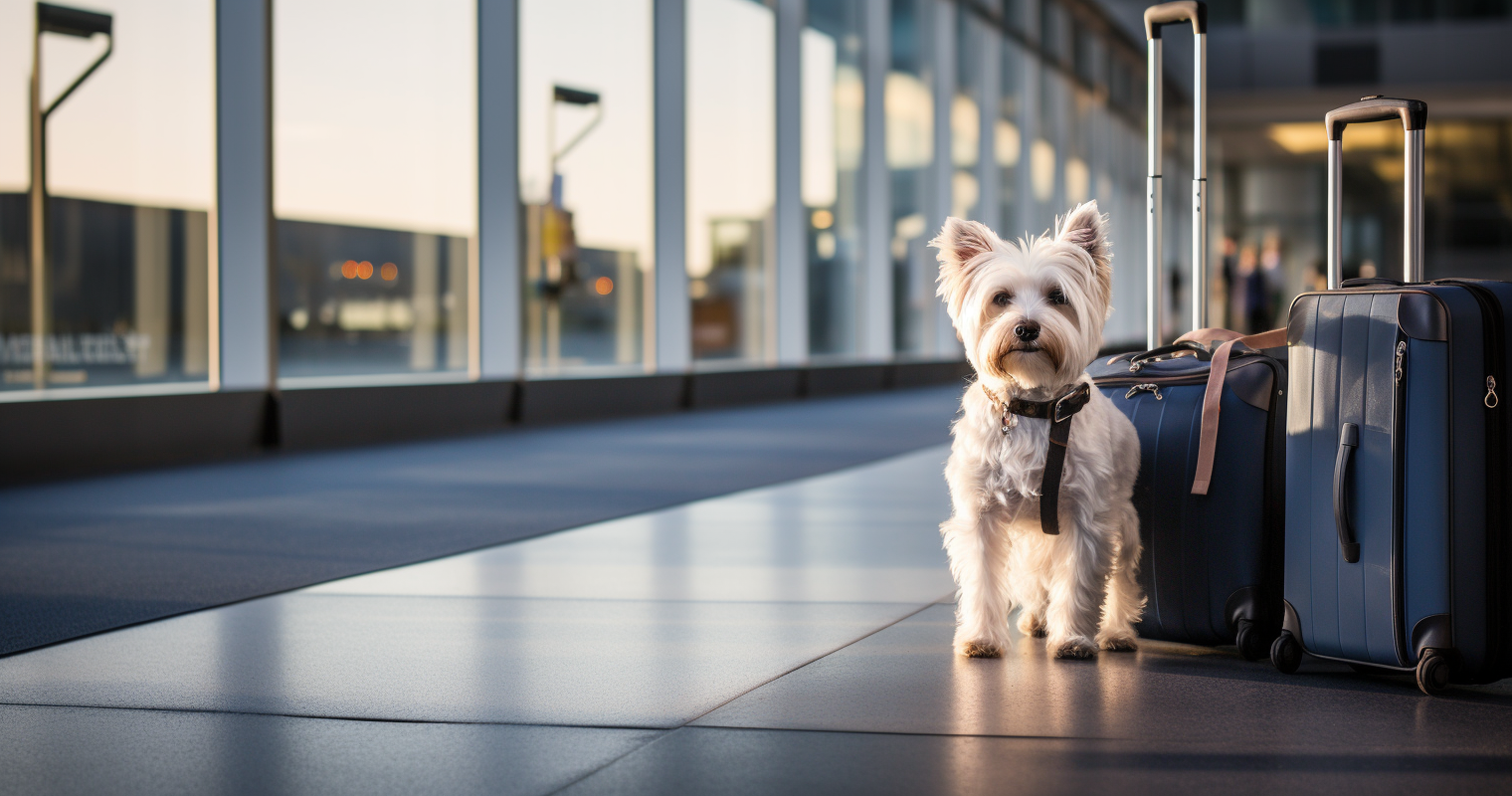
Venezuela welcomes the import of domestic pets, including dogs and cats, though the process involves a moderate level of regulation and demands thorough preparation in your country of origin before you travel. Essential documentation — among them a current rabies vaccination certificate and an internationally recognised health certificate — must be obtained well ahead of your departure date. Venezuela is not a participant in any international pet travel framework, meaning every owner follows the same domestic procedure regardless of their country of origin.
| Item | Details |
|---|---|
| Pets permitted | Dogs and cats (primary); birds and other species with additional permits |
| Rabies vaccination window (as of 2024) | Must be administered between 30 days and 12 months before entry |
| Microchip requirement | Not mandatory but strongly recommended (ISO 11784/11785) |
| Health certificate validity | International health certificate valid for 1 month from date of issue |
| Quarantine | Not required if all documentation is in order; conditional quarantine possible on arrival |
| Port of entry | Simón Bolívar International Airport, Maiquetía (primary designated entry point) |
| Governing authority | INSAI (Instituto Nacional de Salud Agrícola Integral) |
| International pet scheme | Venezuela is not a member of any international pet travel scheme |
Does Venezuela allow pets to be imported, and are there restrictions on which animals are permitted?
Venezuela does allow pets to be brought into the country, though a defined set of regulations and restrictions must be observed throughout the process. For the majority of expats, dogs and cats present the most straightforward path to entry — the national veterinary authority maintains clear, well-established procedures for these two species. Animals beyond the standard pet categories face a considerably more complicated journey.
Birds, invertebrates, tropical fish, reptiles, amphibians, and small mammals such as rodents and rabbits are not subject to the rabies vaccination requirement, yet they may still need to fulfil other conditions and should travel with a health certificate. These species are not automatically barred from entry, but their owners must allow significantly more time to gather the additional paperwork involved.
Anyone wishing to bring a pet other than a dog or cat into Venezuela must first secure an import permit issued by INSAI (the National Institute of Integral Agricultural Health) as well as a separate permit from the Ministry of the Environment. This dual-permit requirement for non-canine and non-feline species reflects Venezuela’s commitment to wildlife conservation and national biosecurity.
Wolf hybrids, Savannah cats, and Bengal cats fall outside the scope of standard import regulations unless they are at least 5th generation removed from the wild pedigree. Certain dog breeds are also barred from import into Venezuela owing to their classification as potentially aggressive. Anyone considering travelling with a restricted breed should contact INSAI directly to establish whether their specific animal is permitted before making any travel or shipping arrangements, as these lists can change over time.
Venezuela’s overall approach to pet import categories broadly mirrors that of many other Latin American nations: dogs and cats benefit from a relatively streamlined entry process, while exotic or potentially invasive species are subject to more rigorous scrutiny. In contrast to biosecurity systems such as Australia’s — which imposes highly restrictive controls across almost all animal categories — Venezuela’s framework is comparatively accessible for standard domestic pets, provided the documentation has been assembled correctly.
What vaccinations and health requirements do pets need before entering Venezuela?
All dogs and cats over 3 months of age must have received a rabies vaccination administered no fewer than 30 days and no more than 12 months before the date of entry into Venezuela. This window is critical: a vaccination given too recently or one that has lapsed beyond the permitted period can create complications at the border. Confirm that the date shown on your vaccination certificate falls within this range on the actual day you arrive.
It is important to be aware that Venezuela is classified as a high-risk country for rabies. This designation has implications beyond entry into Venezuela itself — it may also affect re-entry requirements imposed by other countries following your time there. Some destinations apply heightened documentation or screening requirements to animals coming from high-risk rabies nations, so carefully research the rules for any onward destination you are planning.
Dogs must be vaccinated against distemper, hepatitis, leptospirosis, and parvovirus. Cats must be vaccinated against feline viral rhinotracheitis, panleukopenia, and feline leukemia. These core immunisations form the foundation of your pet’s health records and must be clearly documented on the vaccination certificate.
You will need to present a comprehensive vaccination record showing the date each vaccine was administered, its expiry date, and the type of product used. This certificate must bear the signature and official stamp of a licensed veterinarian authorised by the appropriate government body in your home country.
An original and a copy of a valid International Health Certificate are also required. This document must confirm that the animal underwent a clinical examination and displayed no signs or symptoms of any infectious or contagious condition at the time of assessment. The certificate carries a validity of one month from the date of issue. Given this short lifespan, the health certificate should be among the very last items arranged before departure — ideally within the two to four weeks immediately preceding your travel date.
A rabies titre test is not a requirement for entry into Venezuela. This sets Venezuela apart from more restrictive regimes — such as those operated by Japan or New Zealand — where a rabies antibody titre test combined with an extended waiting period is mandatory. For Venezuela, a valid, correctly dated vaccination certificate is sufficient.
What is the application process for importing a pet into Venezuela, and what paperwork is required?
Every step required to import a pet dog or cat into Venezuela must be completed before you leave your country of origin. This is a fundamental point: unlike some destinations where missing paperwork can be addressed at arrival, Venezuela requires a fully assembled set of documents to be in your possession when you land. Beginning the process at least two to three months before your travel date is strongly advisable.
- Microchip your pet (strongly recommended). While not a formal requirement, your pet should be fitted with a 15-digit microchip compliant with International Standards Organisation standard 11784 or Annex A of ISO standard 11785 before entering Venezuela. The implant should be carried out by a veterinarian, veterinary hospital, or trained nurse. Where possible, have the chip inserted before vaccination so that the chip number appears on all documentation that follows.
- Administer all required vaccinations. The administering veterinarian must record all vaccination details and apply their signature and official stamp to the relevant documentation in accordance with the practices of your home country. Make certain the rabies vaccination date falls within the required 30-day to 12-month window before your Venezuelan arrival date.
- Obtain an international health certificate. You must arrange a health certificate from an authorised veterinarian confirming that the animal was examined and presented no signs or symptoms of any infectious or contagious disease at the time of assessment. This certificate is valid for one month. The issuing vet must hold government accreditation or approval from the relevant authority in your home country.
- Have your health certificate endorsed by the relevant government authority in your home country. Before initiating any export procedure for your pet, confirm that your veterinarian holds the appropriate authorisation from the governing veterinary body in the country of origin. The agency responsible for overseeing the movement of live animals must either license or directly employ your vet. In many countries, this means the national agriculture or food safety authority must countersign and officially stamp the certificate before it will be recognised abroad.
- Obtain an INSAI import permit if required. To bring a pet into Venezuela you must obtain an import permit through the Ministry of Agriculture and Land. For dogs and cats travelling with their owner as accompanied baggage, this is typically handled at the INSAI office at the airport on arrival (see step 6). For non-standard species or unaccompanied cargo shipments, a prior import permit must be secured before travel. Contact INSAI to clarify which procedure applies to your specific circumstances.
- Arrive via the designated port of entry and present your documents to INSAI. All pets must enter Venezuela through Simón Bolívar International Airport. The sanitary permit for animal movement is issued at the INSAI Airport Office located on the third floor of the customs area at Simón Bolívar International Airport, Maiquetía. All original documents, together with copies, must be handed to the INSAI officer on arrival.
- Pay the applicable fee at the INSAI airport office. A fee equivalent to 5 tax units (Unidades Tributarias) is payable to INSAI, as stipulated in Article 81, numeral 32 of the Integral Agricultural Health Law, for the issuance of the movement guide. Since the value of the tax unit is revised periodically by the Venezuelan authorities, you should confirm the current equivalent amount with INSAI or the Venezuelan embassy before travelling, as these figures are subject to change.
All domestic dogs and cats must be free of any signs of disease transmissible to humans when inspected at the port of entry. If your dog or cat does not appear to be in good health on arrival, a government veterinarian will carry out a further examination. Any costs associated with additional inspections or necessary treatments will be borne entirely by the importer.
Does Venezuela require pets to undergo quarantine on arrival?
Pets entering Venezuela do not need to go through quarantine if they satisfy all applicable requirements. This is reassuring for most pet owners: as long as your paperwork is complete and your animal appears healthy on arrival, you should be able to proceed without delay. This approach is shared by many countries across Latin America and Western Europe, where pre-travel documentation checks take the place of mandatory post-arrival quarantine.
There is no fixed quarantine period for pets imported into Venezuela. However, should your pet appear ill or display symptoms of disease upon arrival, Venezuelan authorities may impose quarantine at their discretion. In practice, this means your animal’s physical condition on the day of travel is just as consequential as the documentation you carry — a visibly unwell pet may be held back regardless of how comprehensive your paperwork may be.
Pets that fail to meet import regulations may be quarantined, returned to the country of origin, or euthanised, with all associated costs falling to the importer. These potential outcomes make thorough preparation not just advisable but essential. The financial and emotional consequences of non-compliance can be severe, and Venezuela’s stance on this is notably firmer than some other Latin American countries where minor documentation shortfalls can be resolved at the point of entry.
In contrast to Australia’s stringent quarantine regime — where even fully compliant pets must spend a mandatory minimum of 10 days in a government facility — Venezuela imposes no set quarantine period for healthy animals that arrive with all documents in order. The Venezuelan system places the responsibility squarely on pre-travel preparation rather than on post-arrival containment measures.
Is Venezuela part of any international pet travel scheme?
Venezuela does not participate in the Pet Travel Scheme (PETS) or any other international travel framework for animals. This means that the EU Pet Passport — a standardised travel document recognised within the European Union and accepted by a number of third countries — does not function as a standalone entry document for Venezuela. What is sometimes referred to as a “pet passport” in the Venezuelan context is in fact a collection of documents assembled in accordance with Venezuela’s own import requirements, and this should not be confused with an official EU Pet Passport issued within the European Union to resident animals.
In practical terms, non-participation in any international scheme means that every pet owner — regardless of their country of departure — must follow the same Venezuelan national documentation process. There is no simplified or expedited route for owners arriving from countries that are members of the EU Pet Travel Scheme or similar regional arrangements.
The documentation package for your pet will include the rabies vaccination certificate and an export health certificate issued by a licensed veterinarian in the country of origin. Together, these documents effectively serve as your pet’s travel credentials for entry into Venezuela, even though they carry no formal “pet passport” designation under any international framework.
If you are departing from an EU country and your pet holds an EU Pet Passport, the vaccination and health records contained within it may be used as supporting evidence — however, you will still need to obtain a separately endorsed health certificate specifically for Venezuelan entry. The EU document alone will not be accepted at the Venezuelan border.
Do pet owners need to register or licence their pet after arriving in Venezuela?
There is no national requirement for pet owners to license their animals in Venezuela. Unlike certain countries — Germany, for example, where dogs must be registered with the local municipal authority and an annual dog tax (Hundesteuer) is levied — Venezuela does not impose a formal national licensing or registration obligation on owners following the import of their pet.
Pet ownership in Venezuela does carry a legal obligation to maintain current vaccinations, particularly for rabies. Microchipping and registration are encouraged but are not consistently enforced. Owners should nevertheless ensure their pet’s rabies vaccination remains up to date throughout their stay, as this requirement applies domestically as well as for any re-entry into Venezuela following travel outside the country.
Veterinary services are available in Venezuela, particularly in major cities such as Caracas, Maracaibo, and Valencia. Access in rural regions can be considerably more limited. Expats residing outside urban centres should factor this into their planning and identify a dependable local vet promptly after arrival, especially to maintain ongoing vaccination records.
Individual municipalities in Venezuela may have their own by-laws concerning pet identification or the movement of animals in public spaces, particularly with regard to larger dog breeds. It is advisable to check with your local municipal authority (alcaldía) once you are settled, as requirements vary by region and are not always published through a central government source.
Are there any additional rules or costs expats should be aware of when bringing a pet to Venezuela?
All pets must enter Venezuela through Simón Bolívar International Airport in Maiquetía, near Caracas. This is the primary — and effectively the only — designated port of entry for animals arriving by air. Owners must plan their travel routing accordingly and avoid itineraries that terminate at other Venezuelan airports, as the customs and INSAI live animal services are concentrated exclusively at Maiquetía.
For international flights, the required documentation includes a Certificate of Animal Health Inspection issued by INSAI, import or export permits issued by INSAI, a health certificate from a licensed veterinarian, proof of tapeworm treatment administered by a licensed veterinarian, and a rabies certificate. The tapeworm treatment requirement deserves particular attention — it is sometimes overlooked by owners who are focused on the more prominent vaccination obligations, yet it forms part of the standard documentation for international arrivals.
Whether your pet travels in the cabin or as cargo will depend on your airline’s specific policy and the size of the animal. Small dogs and cats may travel in the cabin with an adult passenger, provided the animal is clean, healthy, well-behaved, and poses no risk to other passengers. Only one pet is permitted per passenger. Larger animals will need to travel in the hold in an IATA-compliant travel crate. Review your specific airline’s requirements well before booking, as policies vary between carriers and space for in-cabin pets is typically limited.
Flights to Venezuela should ideally be direct or should transit through a rabies-controlled country. If your pet’s itinerary includes a layover in an EU Member State, additional requirements will apply. Transiting through countries with their own strict biosecurity regimes — such as the United Kingdom or New Zealand — may trigger supplementary documentation obligations even when those countries are not your final destination. Always research the rules of any transit country, not solely those of Venezuela.
When travelling internationally with a pet, it is important to consider the animal disease and pest situation in the destination country, which may have a direct bearing on your animal’s health. APHIS identifies several countries as affected by New World screwworm, a parasite that infests warm-blooded animals. Owners should speak with their vet about preventative treatments appropriate for travel to tropical South America.
Venezuela does not publish a readily accessible international fee schedule for pet import inspections, and the tax unit (Unidad Tributaria) used to calculate INSAI fees is revised from time to time. Always confirm the current costs directly with INSAI or the Venezuelan consulate in your home country before travelling, rather than relying on figures cited in third-party publications.
Where can expats find official information about importing a pet into Venezuela?
The National Institute of Integral Agricultural Health — INSAI (Instituto Nacional de Salud Agrícola Integral) — is the government body charged with regulating the export, import, and internal movement of animals and plants within the Bolivarian Republic of Venezuela, and it publishes the official requirements for bringing pets into the country. INSAI is the principal authority you should turn to for current, authoritative guidance. Their website is www.insai.gob.ve and their contact email is [email protected].
The Ministry of Agriculture and Lands (MAT) is the parent ministry under which INSAI operates and is responsible for issuing animal and plant health import permits. If you are unable to reach INSAI directly or have broader policy questions, MAT represents an additional official channel. For owners importing a non-standard species, the Ministry of the Environment must also issue a separate permit.
The Venezuelan embassy or consulate in your home country can serve as a useful initial point of contact, particularly for verifying which documents require apostilling or legalisation before you travel. Many embassies publish pet import guidance on their websites — the Venezuelan Embassy in France, for example, maintains a dedicated page on the subject of bringing pets to Venezuela, offering a clear overview of INSAI requirements in accessible language.
For owners travelling from countries with a USDA-accredited veterinary system, the USDA APHIS Pet Travel page for Venezuela provides a practical guide to health certificate requirements from the exporting country’s perspective. Although this resource is maintained by a foreign government body rather than Venezuela itself, it reflects the requirements that Venezuela communicates to its trading partners and is updated on a regular basis.
Whichever source you consult first, always verify the current requirements directly with INSAI or a Venezuelan consular official before your travel date. Entry requirements for pets are set by the destination country and can change at any time — you must check them each time you plan to travel with an animal. Given Venezuela’s evolving regulatory environment, any third-party guide, including this article, should be treated as a starting point for research rather than a definitive reference.
Frequently asked questions
What happens if my pet arrives in Venezuela without the correct paperwork?
Pets that do not satisfy import regulations may be quarantined, sent back to the country of origin, or euthanised, and every associated cost falls to the importer. This is a serious potential outcome, and it underlines why assembling all documentation in your home country before departure is so important. Do not assume that small gaps in paperwork can be resolved on the spot at the airport — Venezuelan authorities enforce these rules at the point of entry.
How long does the full import process typically take from start to finish?
From the point at which you begin your pet’s vaccination programme to the day you are ready to travel, you should allow a minimum of two to three months. The rabies vaccination must be administered at least 30 days before arrival, so the countdown only begins once the injection has been given. On top of this, the international health certificate has a one-month validity and must be carefully timed, and government endorsement in your home country takes additional time. Starting the process early is the single most effective way to avoid last-minute complications.
Do the rules differ for cats versus dogs?
The principal documentation requirements — rabies vaccination, international health certificate, and INSAI inspection on arrival — apply equally to both dogs and cats. The distinction lies in the non-rabies vaccines each species requires: dogs should receive vaccinations against distemper, hepatitis, leptospirosis, and parvovirus, whereas cats should be vaccinated against feline viral rhinotracheitis, panleukopenia, and feline leukemia. Both species must enter through Simón Bolívar International Airport and be examined by INSAI on arrival.
Can I bring a rescue animal I have adopted abroad into Venezuela?
There is no specific bar on importing rescue animals, but the standard documentation requirements apply regardless of how or where the animal was acquired. You will need a documented vaccination history, proof that the rabies vaccine was administered within the required timeframe, a valid international health certificate, and proof of ownership such as adoption paperwork. Since rescue animals sometimes have incomplete or unverified vaccination histories, work with a vet as early as possible to establish a clear, documented record. A bill of sale or adoption certificate confirming ownership is also required.
Is there a limit on how many pets I can bring into Venezuela?
Venezuela does not impose a numerical limit on the quantity of pets that may be imported, regardless of the country of origin. Practically speaking, however, airlines impose their own restrictions on the number of pets per passenger and per flight — most carriers permit only one pet per passenger in the cabin. If you are travelling with several animals, some may need to be transported as cargo. Arrange this with your airline well ahead of your travel date.
Do I need to do anything special if my pet has a layover in another country on the way to Venezuela?
Flights to Venezuela should ideally be direct or routed through a rabies-controlled country. If your pet’s itinerary includes a stopover in an EU Member State, additional requirements will come into effect. Any country that your pet physically passes through — even if only briefly in transit — may impose its own entry or transit conditions for animals. Always research the regulations for every country in your routing, not just Venezuela as the final destination.
Are there any health risks in Venezuela I should prepare my pet for before arrival?
Stray dogs and cats are a widespread issue, particularly in urban environments, so owners should ensure their pets are fully protected against contagious diseases before import. Rabies is endemic in Venezuela, making it both a legal requirement and a practical necessity to keep your pet’s vaccinations current throughout your stay. Consult your vet about additional preventative measures for tropical parasites, tick-borne illnesses, and heartworm, all of which are relevant health concerns given Venezuela’s climate.
Where does INSAI operate at the airport, and what should I expect on arrival?
The INSAI Airport Office (Passenger Section) is situated on the third floor of the customs area at Simón Bolívar International Airport, Maiquetía. Upon arrival, you will present all original documents along with copies to the INSAI officer, who will inspect your pet and review your paperwork. If everything is found to be in order, a movement guide will be issued and you will pay the applicable fee. Should your dog or cat not appear to be in good health on entry, a government veterinarian will conduct a further examination. Bringing originals and at least two copies of every document is strongly recommended.