
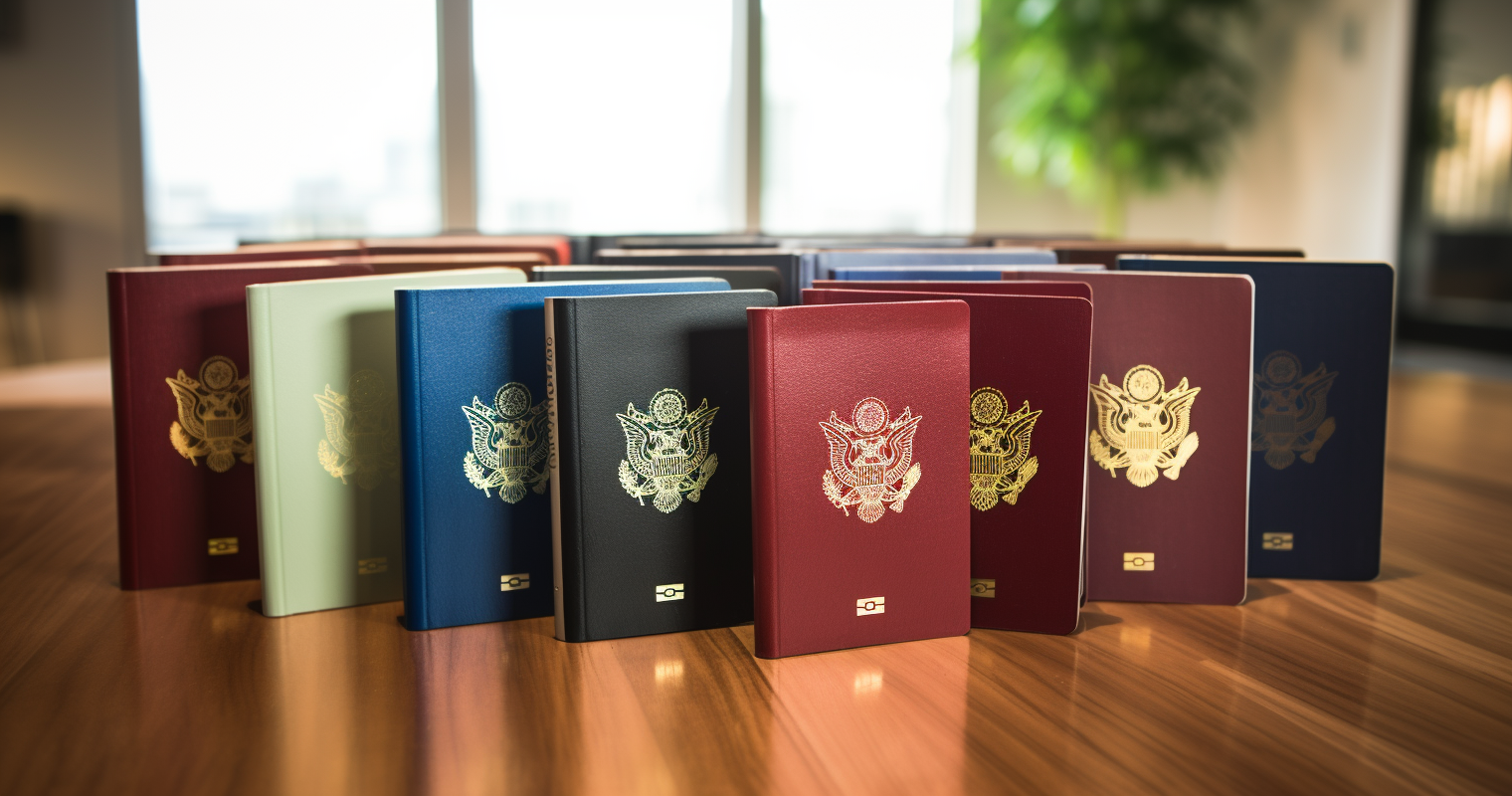
Peru provides multiple pathways to citizenship, encompassing naturalisation following a period of legal residency, citizenship through ancestry (up to the third generation), and citizenship acquired through marriage to a Peruvian national. A significant legislative overhaul in August 2025 will raise the standard residency period required for naturalisation to five years. Peru fully embraces dual and multiple citizenship, so applicants are under no obligation to give up their existing nationality.
| Item | Details |
|---|---|
| Standard residency requirement (new law, as of 2025) | 5 years of continuous legal residency |
| Marriage-based citizenship (new law, as of 2025) | 4 years of marriage to a Peruvian citizen plus legal residency |
| Income threshold (as of 2025) | At least 10 tax units per year (~USD 15,000) |
| Application processing time | Several months to over a year; final decision by the President of Peru |
| Dual citizenship | Permitted — no renunciation of existing nationality required |
| Passport visa-free access (as of 2025) | Over 150 countries, including most of Latin America and the Schengen Area |
| Governing legislation | Law N° 32421 (August 2025), replacing Law N° 26574 (1996) — implementing regulations pending |
Who is eligible to apply for citizenship in Peru?
Peruvian nationality law is grounded in the 1993 Constitution of Peru, the Nationality Law 26574 of 1996, and Supreme Decree 010-2002-IN, which sets out the rules for implementing Law 26574. On 14 August 2025, however, Congress abolished and replaced Law N° 26574 with Law N° 32421 — the New Law of Peruvian Citizenship. As of early 2026, the implementing regulations for this legislation had not yet been finalised, leaving the system in a period of transition. Always consult the official Superintendencia Nacional de Migraciones website to confirm the most up-to-date requirements.
Citizenship by Birth (Jus Soli)
Peruvian nationality is generally acquired either through jus soli — being born on Peruvian soil — or through jus sanguinis — being born abroad to at least one Peruvian parent. Abandoned infants or minors discovered on Peruvian territory are also presumed to be Peruvian nationals. This birthright citizenship model is widely shared across Latin America and the broader Americas region.
Citizenship by Descent
A child born outside Peru to a Peruvian mother or father may be entitled to citizenship by descent. This entitlement extends to descendants up to the third generation, meaning both children and grandchildren of a Peruvian-born citizen may qualify. Great-grandchildren, however, would fall outside this provision and would need to pursue naturalisation through other means.
Since March 2018, children born overseas to Peruvian parents who were not registered before turning 18 have been able to acquire Peruvian nationality by applying at their nearest consular office abroad, under an amendment to Article 52 of the Peruvian Constitution. A key condition is that the Peruvian parent must hold nationality by birth (originario); individuals who were themselves naturalised cannot transmit jus sanguinis rights to their children.
Citizenship by Naturalisation
Under the 2025 legislative reforms, naturalisation now requires five years of continuous legal residency for adults over 18, a significant increase from the previous two-year threshold. Additional conditions include good conduct, financial self-sufficiency, and proficiency in Spanish or demonstrated cultural integration. This reform brings Peru in line with the standards of many European nations — France and Germany, for instance, both set a five-year residency threshold for naturalisation, while the United Kingdom generally requires six years in most cases.
Applicants must have resided lawfully in Peru for at least five years while holding a valid residence permit (Carné de Extranjería), and must not have been absent from Peru for more than 183 days in any single year, unless special authorisation was obtained. The five-year period begins from the date residency status is first acquired and must remain unbroken — any lapse in the permit restarts the clock, and renewals must be completed before the existing permit expires.
Under the new legislation, naturalisation is available to foreign residents who engage in an art, occupation, or entrepreneurial pursuit that generates annual earnings of no less than ten tax units (approximately USD 15,000 as of 2025), properly declared to Peru’s national tax authority (SUNAT), and who can demonstrate at least five years of continuous, uninterrupted legal residence immediately preceding their application.
Citizenship by Marriage (Opción)
The marriage route — sometimes referred to as the opción pathway — requires the applicant to be married to a Peruvian citizen for a continuous period of four years and to hold immigrant residency status before applying. As of the time of writing, Peru does not legally recognise same-sex marriages, including those validly contracted abroad, which means residency or citizenship cannot currently be obtained on the basis of a same-sex partnership.
Citizenship for Distinguished Individuals and Qualified Athletes
Citizenship may also be extended to qualified athletes who have legally resided in Peru for at least two years and who have been formally recognised by the Peruvian Institute of Sports (IPD). Additionally, foreign nationals residing in Peru who have rendered exceptional services to the Peruvian nation may be granted citizenship by legislative resolution. These routes are intentionally narrow and apply only in genuinely meritorious circumstances.
Citizenship by International Treaty (Doble Nacionalidad)
Like many Ibero-American nations, Peru’s 1993 Constitution expressly provides that nationals of Latin American countries and Spain do not forfeit their original nationality upon acquiring Peruvian citizenship, and most of those countries have corresponding reciprocal provisions. Peru maintains a dual nationality agreement with Spain, under which citizens residing in Peru and Peruvian residents in Spain benefit from the same legal standing as nationals in each country, though this arrangement does not amount to automatic naturalisation.
What are the steps involved in applying for citizenship in Peru?
Application forms and procedural guidance are generally available from the Dirección General de Migraciones (DIGEMIN) within Peru, or from Peruvian consulates for those applying from abroad. The steps below reflect the requirements under the current legal framework. Since the implementing regulations for Law N° 32421 were still outstanding as of early 2026, always verify the latest procedure directly with the Superintendencia Nacional de Migraciones before you begin.
- Establish and maintain legal residency. Your first task is to secure a valid residence permit in Peru. You must hold official residency status, maintain a bank account, earn lawful income, and retain records to support your citizenship application. Your residency must remain continuous throughout the qualifying period — any break in status will affect your eligibility.
- Assemble the required documentation. You will need identity documents (a valid passport, national identity card, or visa paperwork confirming lawful entry into Peru), evidence of Spanish or indigenous language proficiency, completion of any mandatory history, geography, or civic knowledge assessments, and any additional materials requested by the immigration authorities, such as character references or evidence of community participation.
- Provide proof of income. Documentary evidence of legal annual earnings (approximately S/ 52,000, or around USD 14,600 as of 2025) is required, along with declarations confirming your residential address, state of health, and clean criminal background. This income must be formally declared to SUNAT, Peru’s tax administration body.
- Sit the required evaluations. The new law mandates that applicants pass assessments in Spanish or an indigenous language, together with examinations covering Peruvian history, geography, and civic education. Further detail on these requirements is provided in the section on tests and ceremonies below.
- Lodge your application with Migraciones. Applications are typically submitted in person at DIGEMIN offices within Peru, or at the nearest Peruvian consulate for those residing abroad, and generally require a pre-booked appointment. The applicable fees must be paid at the time of lodgement — consult the official Migraciones website for current fee schedules, as these are subject to revision.
- Undergo background checks. Applicants must provide evidence of a clean legal record, validated through Interpol, and demonstrate that all income derives from lawful, tax-compliant activities. Checks are conducted across criminal, police, and judicial records, and all submitted documents must be appropriately authenticated and apostilled.
- Await the Presidential decision. The overall process typically takes around 12 months, with the final determination resting with the President of Peru. This is a distinguishing feature of the Peruvian citizenship system — unlike countries such as Australia or Canada, where citizenship decisions are handled administratively by a migration authority, Peru’s constitution requires the head of state to formally approve each naturalisation.
- Collect your título de nacionalidad and register. Once your application is approved, you will be issued a título de nacionalidad. You may then apply for a Peruvian national identity card (DNI) through RENIEC (the National Registry of Identification and Civil Status) and, subsequently, a Peruvian passport.
Processing times for citizenship applications in Peru differ considerably and may range from several months to well over a year, depending on the thoroughness of your application and the volume of cases being handled by Migraciones. For current fees and estimated timeframes, consult the official Migraciones website, as these figures are regularly updated.
What tests, interviews, or ceremonies are required as part of the citizenship process in Peru?
Law N° 32421 introduces a requirement for applicants to pass evaluations in either Spanish or an indigenous language, alongside examinations on Peruvian history, geography, and civic education. These requirements mark a substantial tightening of standards compared to the former legal framework, which afforded considerably more flexibility on language and knowledge testing.
Applicants must demonstrate the ability to converse in Spanish and pass a formal examination covering Peruvian history, geography, and culture, conducted entirely in Spanish. For those who are speakers of one of Peru’s constitutionally recognised indigenous languages — such as Quechua or Aymara — the law provides the alternative option of demonstrating proficiency in that language instead, reflecting Peru’s multilingual constitutional identity.
This approach is broadly consistent with language and civic knowledge requirements found in other countries: Germany, for instance, requires a B1-level German language certificate and a naturalisation test encompassing law, society, and history, while Australia incorporates an English language component and a dedicated citizenship test. Peru’s updated framework draws it closer to these internationally recognised standards.
Applicants must also supply evidence of a clean legal record, verified through Interpol, and show that all of their income originates from lawful, tax-compliant sources. Background screening is carried out at the criminal, police, and judicial levels, and any significant criminal history is ordinarily disqualifying.
Peru does not hold a standalone formal citizenship ceremony of the kind operated in countries such as the United Kingdom or Australia, where new citizens publicly recite an oath at a dedicated event. However, the process does culminate in a formal grant of nationality by Presidential decree, and applicants are required to sign declarations confirming their address, health, and character. Once nationality is conferred, new citizens are expected to register with RENIEC in order to obtain their Peruvian DNI.
What are the benefits of citizenship in Peru?
Peruvian citizenship confers full civic rights — including the right to vote, to stand for public office, and to live and work in Peru without restriction. These rights are not extended to residents or visa holders, who are generally barred from participating in national elections and from standing as candidates.
Peruvian nationality represents the formal legal and political bond connecting an individual with the Peruvian State, and brings with it a comprehensive set of rights and responsibilities: the right to vote, to hold a Peruvian passport, to access certain public offices, and to receive consular protection when abroad. That last benefit — consular assistance in foreign countries — is especially valuable for those who travel or live internationally.
As of 2025, the Peruvian passport provides visa-free or visa-on-arrival entry to more than 150 countries, including the majority of Latin America and the Schengen Area. Holders of a Peruvian DNI can also travel across most of South America without a passport — Venezuela being the exception. In addition, through the MERCOSUR Agreement, it is possible to apply for residency in all South American countries (again, excluding Venezuela), with a two-year temporary permit that can subsequently be converted to permanent residency.
Citizens gain broader access to Peru’s public healthcare system (SIS — Seguro Integral de Salud) and the social insurance framework (EsSalud), and citizenship can enhance eligibility for social welfare programmes and public sector employment. Unlike the NHS in the United Kingdom, which is broadly accessible to all lawful residents, Peru’s public health coverage is more closely connected to formal employment and contribution histories, making citizenship and stable employment status particularly relevant to accessing comprehensive healthcare.
It is worth noting that dual nationality does not grant a naturalised foreigner all of the rights held by Peruvians by birth. Foreign nationals who naturalise are constitutionally prohibited from exercising certain public functions in Peru, and some senior government positions and military roles are reserved exclusively for Peruvians by birth. Anyone considering a career in Peruvian public service should take legal advice before proceeding.
Does Peru allow dual citizenship, or will you have to renounce your existing nationality?
Peru permits its citizens to hold multiple nationalities simultaneously. A foreign national who obtains Peruvian citizenship is not required to surrender their original nationality. Peru recognises both dual and multiple nationality, and Peruvian citizenship can only be relinquished through a voluntary and express act of renunciation before the relevant Peruvian authorities. This is a notable practical advantage for expatriates who wish to keep their existing ties — and travel documents — from their home country.
Like many other Ibero-American nations, Peru’s 1993 Constitution expressly provides that nationals of Latin American countries and Spain retain their original nationality upon acquiring Peruvian citizenship, and reciprocal provisions exist under the laws of most of those countries and Spain. In practice, multiple nationality is recognised and accepted by Peru’s consular and diplomatic representatives around the world.
Peruvians by birth who take on the nationality of another country do not forfeit their Peruvian citizenship unless they actively and expressly renounce it before a competent authority. Equally, loss of Peruvian nationality occurs only through such an express renunciation; the mere act of acquiring another citizenship does not result in the loss of Peruvian nationality.
While Peru takes a permissive stance on dual nationality, your home country may operate under different rules. Some states — particularly in parts of the Middle East and Asia — place restrictions on or prohibit their nationals from holding a second citizenship. You should consult your home country’s official immigration or foreign affairs authority before submitting your application. US citizens, for example, including those holding dual nationality, are required to enter and depart the United States using a US passport.
How long does it typically take to become a citizen of Peru?
The overall timeline to Peruvian citizenship varies depending on your chosen route and the legal framework in place at the time your application is filed. Given that Peru’s citizenship law is currently in transition following the enactment of Law N° 32421 in August 2025, the specific timeline you face will depend largely on when the new law’s implementing regulations are brought into force.
Under the current Migraciones procedure, a minimum of two consecutive years of legal residence in Peru is required for eligibility for naturalisation, although the new Ley 32421 (published in August 2025) is expected to increase this to five years once its implementing regulations take effect. The new law had not yet come into force at the time of writing and will not do so until the executive branch publishes the corresponding regulations. All applications lodged before the new law takes effect will be assessed under the provisions of the previous legislation.
Under the current transitional framework still in operation, foreigners holding a work visa may apply for nationality after two years of continuous legal residence; spouses of a Peruvian citizen or parents of a Peruvian child also qualify after two years; rentistas (individuals living on stable income from sources abroad) may apply after the same period; and nationals of Ibero-American countries, Spain, Italy, and the Philippines are equally eligible after two years.
Once your residency requirement is satisfied and your application is complete, the process generally takes around 12 months, with the final determination made by the President of Peru. Actual processing times can vary considerably and may range from several months to well over a year, depending on how thorough your file is and the workload at Migraciones at any given time.
In practical terms, the fastest realistic path to citizenship under the current transitional rules is approximately three years from the point of first obtaining legal residency through to receiving your título de nacionalidad. Under the fully implemented new law, this timeframe would extend to six years or more. For the most current timeline estimates, always check the Superintendencia Nacional de Migraciones website, as these figures are subject to change as implementing regulations are issued.
What are the main reasons an application for citizenship in Peru might be refused?
The most frequent grounds for rejection of citizenship applications in Peru is an inability to demonstrate continuous and unbroken legal residency — this typically arises when applicants have gaps in their immigration history, periods of overstay, or ambiguous status during the qualifying period. This is especially significant given the strict consecutive residency requirement: any lapse in your residence permit can cause the entire qualifying period to restart from zero.
Two other commonly cited reasons for refusal are issues with criminal or police records — Peru places increasing emphasis on thorough security screening — and problems relating to document authenticity, such as inconsistencies or documents that have not been properly authenticated. Applicants must supply verifiable evidence of a clean legal record through Interpol, and must demonstrate that all income derives from lawful, tax-compliant activities.
Failure to meet the income threshold is also a disqualifying factor under the new law. Applicants must demonstrate that they engage in an art, occupation, or entrepreneurial activity generating annual earnings of at least ten tax units (approximately USD 15,000 as of 2025), properly declared to SUNAT. Income that has not been formally registered with SUNAT — even if legitimate in origin — may not be accepted as satisfying this condition.
Under the new framework, failing the required language or civic knowledge evaluations — or being unable to provide adequate evidence of integration into Peruvian society — can also result in a refusal. Similarly, submitting an incomplete application or failing to attend required appointments at Migraciones may lead to a rejection or to the application being set aside without a decision.
If your application is refused, you have the right to challenge the outcome through administrative channels within Peru. The precise appeal process is governed by Peruvian administrative law, and a qualified Peruvian immigration lawyer can guide you on the appropriate course of action and the applicable timeframes. The Superintendencia Nacional de Migraciones is the primary authority to approach regarding the status of your application and any rights of appeal you may have.
Where can you find reliable, up-to-date information about citizenship in Peru?
Given the far-reaching changes introduced by Law N° 32421 in August 2025 and the ongoing process of finalising implementing regulations, it is particularly important to consult authoritative sources before making any decisions about your application. The regulatory landscape can evolve rapidly, and material published on third-party websites — including immigration blogs and legal commentary — may become outdated very quickly.
The principal official sources to consult are:
- Superintendencia Nacional de Migraciones (Migraciones): The lead authority responsible for processing naturalisation applications in Peru. Visit www.migraciones.gob.pe for official procedures, required documents, current fee schedules, and appointment booking.
- RENIEC (Registro Nacional de Identificación y Estado Civil): The National Registry of Identification and Civil Status, responsible for issuing DNIs to Peruvian nationals and for handling citizenship by descent registrations. Visit www.reniec.gob.pe.
- Ministry of Foreign Affairs (Ministerio de Relaciones Exteriores): Oversees consular services abroad, including applications for citizenship by descent and passport issuance. Visit www.cancilleria.gob.pe.
- El Peruano (Official State Gazette): The publication in which all new legislation and implementing regulations — including Law N° 32421 — are officially promulgated. Visit busquedas.elperuano.pe to read the full text of current laws.
Naturalisation procedures are handled by the Superintendencia Nacional de Migraciones when initiated from within Peru, or by Peruvian consulates when filed from abroad. If you are based outside Peru, your nearest Peruvian consulate is a key point of contact and can advise on the specific documentary requirements applicable to your circumstances.
Official government websites remain the only dependable source for current requirements, fees, and processing times. Always cross-check any information you encounter — including that found on professional legal or immigration sites — against what the official sources state, and take careful note of when the material was published.
Frequently Asked Questions
Do children born in Peru automatically acquire Peruvian citizenship?
Children born on Peruvian soil acquire Peruvian citizenship under the principle of jus soli, irrespective of their parents’ nationality. Any child born in Peru is therefore a Peruvian national from birth, though formal registration — typically with RENIEC — is required to obtain official documentation confirming that status.
Can citizenship be lost or revoked in Peru?
The Peruvian Constitution provides that nationality cannot be stripped from a person except through a voluntary act of renunciation before a competent authority. Naturalised citizenship granted under the Nationality Law is also lost in cases involving crimes against the State and national defence, or through a formal declaration of renunciation made before the Dirección General de Migraciones or an overseas consular office. Outside of these specific circumstances, involuntary deprivation of citizenship is not a feature of Peruvian law.
Can I apply for citizenship if I move abroad during the residency period?
Applicants are permitted to be absent from Peru for no more than 183 days per year, unless special authorisation has been obtained. Prolonged absences during the qualifying period may disrupt the continuity of your residency and reset your eligibility. If you relocate abroad entirely before your application is submitted, you would generally need to re-establish lawful residency in Peru before you could reapply.
Do the new 2025 rules apply to applications already in progress?
The new legislation expressly stipulates that all applications lodged before Law N° 32421 comes into effect will be assessed under the provisions of the previous law. If you submitted your application — or already meet the eligibility conditions — before the implementing regulations of the new law are published, you may still be entitled to benefit from the more favourable rules under the older framework. If you find yourself in this position, seeking legal advice promptly is strongly recommended.
Is there a citizenship by investment programme in Peru?
As of early 2026, Peru operates no “golden visa” or property-investment residency scheme of the kind offered by several other Latin American countries. While Peru briefly experimented with selling nationality to foreign investors in 1992, the programme was discontinued the following year amid significant public opposition. The income threshold introduced under the new law is a financial eligibility condition for naturalisation, not an investor pathway to citizenship.
What happens to citizenship acquired by marriage if the couple divorces?
A foreign national who obtains Peruvian citizenship through the opción (marriage) route does not lose that citizenship in the event of divorce or the death of their Peruvian spouse. Once citizenship has been formally granted through this pathway, its continuation is not contingent on the marriage remaining intact.
Can grandchildren of Peruvians apply for citizenship by descent?
Citizenship by descent is open to both children and grandchildren of Peruvian-born citizens, provided a direct line of descent can be established. If you are the grandchild of a Peruvian-born citizen, your parent — as the direct child of that Peruvian grandparent — must first obtain their own Peruvian citizenship before you can pursue yours through this route. Great-grandchildren fall outside the descent pathway and would need to qualify for naturalisation through other means.
Do family members automatically acquire citizenship when a relative naturalises?
As of early 2026, spouses and children of a foreign national obtaining Peruvian citizenship are generally required to establish their own independent legal basis for a citizenship application. It is not possible for family members to rely on or attach themselves to the main applicant’s application — each individual must independently satisfy the applicable eligibility conditions, although being married to a Peruvian national or having been born in Peru may open specific pathways.
What is the Peruvian passport’s visa-free travel access?
The Peruvian passport is regarded as moderately strong. As of 2025, it provides visa-free or visa-on-arrival access to more than 150 countries, encompassing most of Latin America and the Schengen Area. It is not, however, counted among the world’s most powerful passports. For those who travel frequently or internationally, holding a second passport from a country with broader visa-free access can serve as a useful complement.
Where is the citizenship application submitted, and can it be done online?
Applications are typically submitted in person at DIGEMIN offices in Peru or at the nearest Peruvian consulate for those living abroad, usually requiring a pre-arranged appointment. As of early 2026, citizenship applications in Peru were not fully processed online — personal attendance at Migraciones or a consulate is generally mandatory. For the latest guidance on appointment booking and document submission, consult the Migraciones website.