
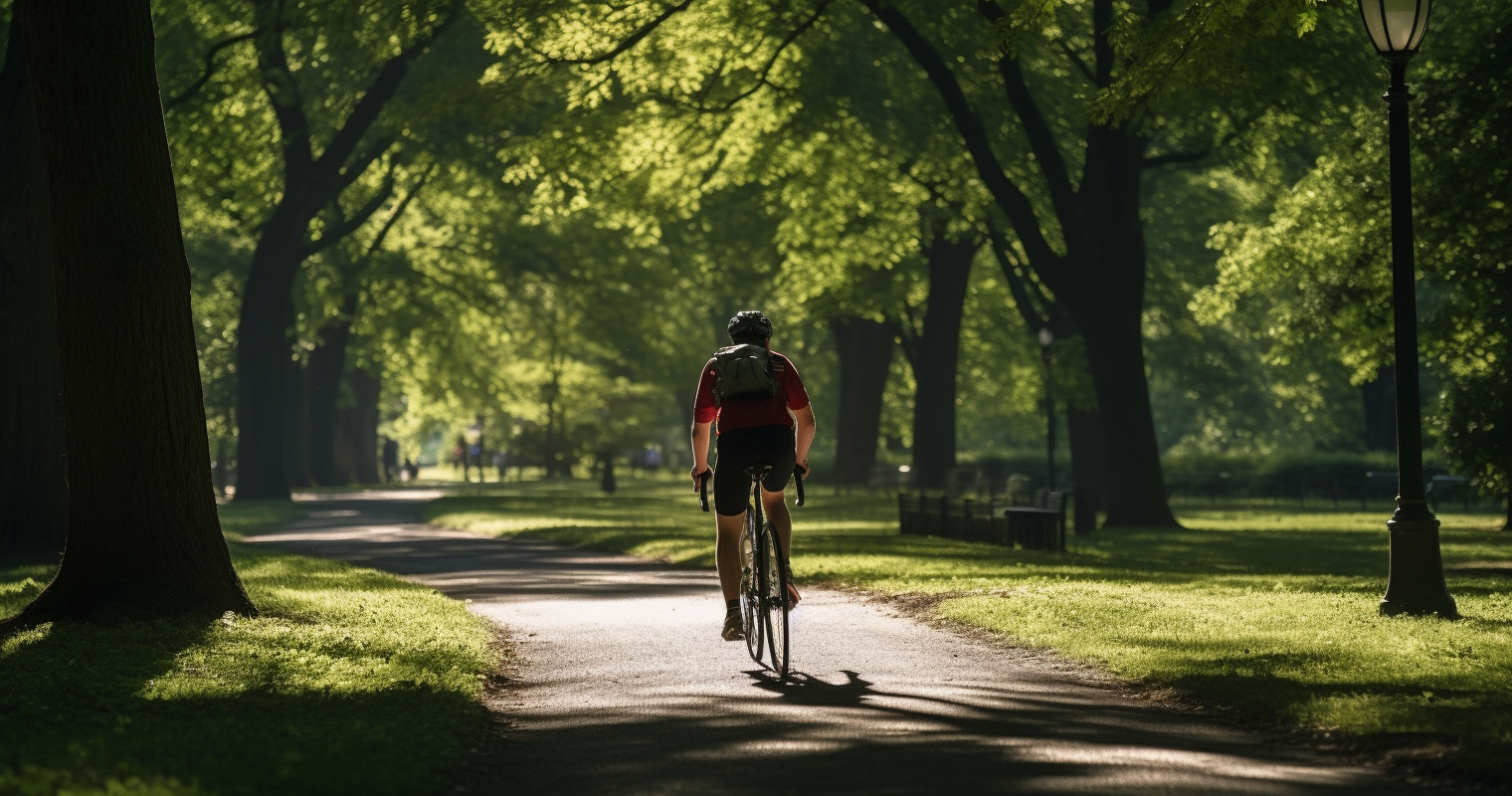
Andorra punches well above its weight as a cycling destination, with a sporting culture that revolves around both road riding and mountain biking. Although the steep gradients and high altitude make it unrealistic as a daily commuting mode for most residents, the principality delivers outstanding recreational and sporting infrastructure — among its highlights are 21 signposted mountain passes, more than 600 km of MTB trails, a broad network of bike-hire operators, and steadily improving on-road provision for cyclists.
| Item | Details |
|---|---|
| Mountain passes for road cycling | 21 signposted passes (as of 2024) |
| MTB trail network | 600+ km of mountain bike routes (as of 2024) |
| Professional cyclists resident | 120+ professional riders living in Andorra (as of 2025) |
| Helmet requirement | Strongly recommended at all times; mandatory on MTB trails and bike parks |
| Lighting requirement | Front and rear lights required at all times, including daylight |
| Bike registration | Not mandatory for standard bicycles |
| Bike hire availability | Widely available — road, MTB, e-bike, gravel, downhill |
| Official cycling tourism info | visitandorra.com |
How popular is cycling in Andorra — and do people use it to get around?
Cycling is woven into the fabric of Andorran sporting life. The principality has attracted a remarkable roster of elite professional riders who live and train here, including Tom Pidcock, Sepp Kuss, and brothers Adam and Simon Yates. This gives cycling in Andorra a distinctly performance-oriented character — quite different from the utilitarian cycling cultures of, say, the Netherlands or Denmark, where bicycles are primarily used for everyday travel.
Andorra has become home to more than 120 professional cyclists and is on course to surpass long-established hubs such as Mallorca, Girona, and Monaco as the preferred base for elite riders. For residents and expats, this means cyclists are a common sight on the roads — but the activity is tied firmly to sport and recreation rather than grocery runs or the daily commute.
The country’s geography explains much of this. Andorra has 65 peaks rising above 2,000 metres, and well over a third of its territory sits above the tree line. Even the valley floors are defined by significant gradients, which makes the kind of relaxed utility cycling seen in flat Belgian or Dutch towns largely impractical. That said, the growing uptake of e-bikes is beginning to shift this picture, opening up shorter inter-parish journeys to a wider range of residents.
For those exploring the principality, cycling offers an unmatched way to access its valleys, high passes, and quieter corners beyond Andorra la Vella. Expats arriving here should think of cycling primarily as a leisure and sporting pursuit — while keeping an eye on how e-bike commuting possibilities continue to expand as infrastructure develops.
What does cycling infrastructure look like in Andorra?
Andorran authorities have been actively investing in cycling, upgrading roads with dedicated lanes and placing informational signage at all mountain passes for the benefit of both cyclists and drivers. The institutional initiative “Andorra Territory Cyclist” designates numerous roads specifically for cycling use, with well-maintained asphalt surfaces and detailed panels outlining route characteristics at key points.
Whether you are a visiting cyclist or a full-time resident, the overall infrastructure is impressive: hire shops are plentiful, cafés and hotels regularly cater to riders, and there are dedicated lanes on the road network alongside purpose-built off-road tracks and bike parks. The experience is more akin to cycling in a specialised region like Catalonia or the Italian Dolomites than navigating a metropolitan cycling grid like Amsterdam or Copenhagen.
With 21 mountain passes and over 600 km of mountain bike routes in play, Andorra earns its status as genuine cycling territory. All seven parishes contain outstanding routes spanning a range of abilities, with La Massana and Encamp particularly well equipped for both road and off-road riders.
The official cycling tourism map, refreshed for 2024 by Visit Andorra, plots cycle routes, hire points, cafés, and emergency contacts across the whole country. Residents planning regular outings should also check the Ministeri de Territori i Urbanisme (Ministry of Territory and Urban Planning) for any ongoing road improvement projects or newly developed cycle infrastructure, since investment in this sector is continuing.
Quality tarmac and a range of services are spread across the various towns, making multi-parish rides straightforward to plan. Off-road provision is particularly strong: the Naturland Bike Centre is designed to accommodate all ability levels, while the La Rabassa area alone offers more than 60 km of circuits plus technical features and jump areas.
Is cycling safe in Andorra?
As a destination, Andorra is well set up for cyclists and genuinely welcoming to those on two wheels. Driver awareness tends to be solid, which is largely a reflection of how frequently professional and recreational riders share the same roads with motor traffic. Nevertheless, mountain conditions introduce specific hazards that demand constant attention.
Many of the balcony and valley roads are narrow, and groups need to exercise particular caution on mountain lanes where overtaking opportunities are limited. Roads linking the parishes can carry heavy tourist traffic — especially at the height of summer or during the winter ski season. Riding at dawn, dusk, or in deteriorating weather calls for additional vigilance, as visibility can drop rapidly and mountain conditions can change without warning.
Helmet use is not enforced by a universal legal requirement on all public roads in Andorra in the way it is in countries such as Australia or New Zealand. However, helmets are effectively compulsory within bike parks and on designated MTB trails, and wearing one at all times is universally regarded as standard practice among serious cyclists here. Riders are also advised to avoid using headsets while on the road.
Andorra’s road safety authority, the Cos de Policia d’Andorra, publishes road safety data periodically. For the most up-to-date cyclist-specific figures and any current safety guidance, check the Policia d’Andorra website or the government portal at govern.ad, bearing in mind that cycling-specific statistics are not always published on a regular schedule.
What are the road rules for cyclists in Andorra?
Andorra operates its own highway code — the Codi de la Circulació — under the authority of the Ministeri d’Afers Socials, Justícia i Interior. The general principles broadly mirror those of neighbouring Spain and France, but there are notable specifics that expats should familiarise themselves with before taking to Andorran roads.
One rule that frequently surprises newcomers is the requirement for cyclists to carry both a front and a rear light at all times — including in full daylight. This is meaningfully stricter than in many nearby countries: in Spain, for example, lights are only compulsory at night or in poor visibility. Andorra’s approach is closer to Denmark’s, where daytime lighting is similarly mandated. A pair of lightweight rechargeable lights should be considered standard kit for any cyclist in the principality.
The key rules for cyclists on Andorran roads include:
- Ride on the right-hand side of the road and comply with all traffic signals.
- Front and rear lights are mandatory at all times, including during daylight hours.
- Helmets are strongly recommended and effectively required on designated MTB trails and within bike parks.
- Cycling on pavements is not permitted unless signage explicitly indicates shared use.
- Cyclists must give way to pedestrians on shared paths.
- Use of a mobile phone while cycling is prohibited.
- The alcohol limit for cyclists mirrors that applying to motor vehicle drivers — do not ride under the influence.
- Turns must be signalled clearly with hand signals; at least one hand must remain on the handlebars at all times.
Individual parishes (comuns) may also have supplementary local ordinances — covering, for instance, cycling in pedestrianised town centres or on particular shared paths. For the full and current legal picture, consult the official Andorran legal publication portal at bopa.ad (Butlletí Oficial del Principat d’Andorra), which carries all live legislation.
Do I need to register my bike or carry insurance to cycle in Andorra?
Standard non-motorised bicycles do not require registration in Andorra. There is no licensing or number-plate obligation for conventional bikes, which is consistent with practice across most of continental Europe. E-bikes whose motor output falls within the standard pedelec threshold (generally up to 250W with pedal assistance) are typically classified alongside regular bicycles for registration purposes — but if you are bringing a high-powered e-bike into the country, it is worth confirming its classification with the Ministeri de Presidència, Economia i Empresa before arrival.
Third-party liability insurance is not a legal requirement for cyclists in Andorra. Even so, given the mountainous terrain, the mix of tourist traffic and professional riders on shared roads, and the consequences of an accident at altitude, taking out personal liability and accident cover is strongly advisable. Many home contents or travel insurance policies can be extended to include cycling — read the small print carefully for any exclusions relating to mountain biking or competitive events.
For the most authoritative and up-to-date guidance on e-bike classification and any evolving insurance obligations, contact the Govern d’Andorra or the Departament de Mobilitat directly. This is an area where requirements may shift as e-bike usage continues to grow.
Are there bike-sharing or rental schemes available in Andorra?
Andorra does not currently have a large-scale municipal docked bike-share programme of the kind found in Paris (Vélib’) or Barcelona (Bicing). The country’s compact size, hilly topography, and dominance of private car use have so far made a mass public docking system difficult to justify. Where the principality excels, however, is in its private rental market, which is exceptionally well developed — particularly for sport and tourism.
Renting a bike in Andorra requires no subscription or residency. Private operators offer hourly and daily hire across a full range of categories, including electric and city bikes. Many providers allow online pre-booking, and some will even deliver a bike to your accommodation.
Among the most established rental providers (as of 2025):
- Pic Negre — offers state-of-the-art bike hire, certified workshop service, and daily servicing, stocking the best brands in accessories. Based in the Pal Arinsal area.
- Viladomat — with more than 70 years of experience in the sports industry, Viladomat has established itself as one of the best options for bike rental in Andorra, covering road, MTB, and e-bike categories.
- Commencal Rental — as a long-standing partner of Pal Arinsal–Grandvalira Resorts, Commencal offers a selection of mountain bikes to rent and test in the bike park, including DH, Freeride, Enduro, e-bikes, and children’s bikes.
- Couloir Andorra — offers top-of-the-range hire equipment and a multi-brand workshop service, with quick repairs available at weekends and a home collection and delivery service.
Most hire shops carry a broad selection of bikes suited to different riding disciplines: downhill, road, e-bike, and cyclo-cross options are all widely available. Prices vary by bike type, season, and hire duration — check operators’ official websites for current daily and weekly rates, as these are updated seasonally. Visit Andorra’s official tourism portal (visitandorra.com) maintains an up-to-date directory of hire providers across all parishes.
Where can I buy or get a bike serviced in Andorra?
Andorra’s standing as a low-tax principality — where no VAT equivalent applies to most goods — makes purchasing a bicycle here considerably more affordable than in neighbouring France or Spain. The principality’s indirect tax, the IGI (Impost General Indirecte), sits at just 4.5%, compared with France’s 20% TVA or Spain’s 21% IVA on sporting goods. This price advantage often comes as a welcome surprise to expats newly arrived in Andorra.
Pic Negre has been trading since 1979 and stocks equipment across all cycling disciplines — downhill, enduro, e-bike, gravel, and road — backed by professional advice and advanced product ranges. Viladomat combines retail and rental with a dedicated workshop offering repairs and component adjustments across its full range of bikes.
Intersport Outdoor operates a specialised workshop equipped with advanced diagnostic and servicing technology, keeping bikes in optimal condition for Andorran riding conditions. These well-established retailers provide after-sales support and warranty coverage that is on a par with what you would expect from a reputable bike shop in Germany, France, or Spain.
For second-hand bikes, local community groups and online classified listings are the most practical channels — the large professional cycling population resident in Andorra sustains a healthy market for quality pre-owned kit. Consumer protections in Andorra follow domestic legislation rather than EU frameworks, so for significant purchases it is worth clarifying warranty terms with the retailer in advance.
Can I bring my bike when relocating to Andorra, and are there import considerations?
Because Andorra is not a member of the European Union, goods arriving from EU countries are technically subject to import controls. In practice, the principality has established customs arrangements with both Spain and France, and a clear framework exists for personal effects imported as part of a household relocation.
As a general rule, personal belongings — bicycles included — brought into Andorra during a residential move are ordinarily exempt from IGI and customs duties, provided the items have been owned and in regular use for a reasonable period before the move (typically a minimum of six months) and are not being imported for commercial purposes. Bikes that are new or very recently purchased may be assessed differently and could be subject to the standard IGI rate of 4.5% on their declared value (as of 2025).
For high-value bikes, e-bikes, or cargo bikes — where the boundary between a personal effect and a taxable import may be unclear — it is strongly recommended to contact the Departament de Duanes i Fronteres d’Andorra (Andorra Customs) before shipping anything. Thresholds and requirements can change, and customs officials can provide written guidance tailored to your specific situation. Retaining documentation of prior ownership — purchase receipts, insurance records, or service history — will strengthen any exemption claim you need to make.
What are the top cycling routes and destinations in Andorra?
Andorra’s mountain passes have featured repeatedly in both the Tour de France and the Vuelta a España, and they also form the backdrop for prestigious local events such as La Purito, La 3 Nacions, and La Volta als Ports. For expat road cyclists, riding the same climbs that have decided Grand Tour outcomes is one of the great privileges of life in the principality.
Highlights for road cyclists include:
- Port d’Envalira — reaching 2,407 m, this is the highest paved mountain pass in the Pyrenees and one of the most iconic climbs in all of European road cycling.
- Coll de la Gallina — a demanding ascent with professional racing pedigree that rewards riders with sweeping views across the valleys below.
- Ordino-Arcalís — a celebrated Andorran climb that pairs well with quieter alternatives such as the Ransol ascent in the Canillo Valley for a varied day out.
- Port de Cabús — a mountain pass at 2,302 m on the border between Andorra and Spain, between the parish of La Massana and the municipality of Alins; only the Andorran side is paved.
For mountain bikers, two major bike parks define the scene:
- Vallnord Bike Park (Pal Arinsal) — one of the most spectacular mountain biking destinations in southern Europe, making use of the Pal Arinsal ski resort’s infrastructure. From April to September, riders can access more than 40 km of summer tracks with total altitude differences exceeding 1,000 metres across 17 routes of varying difficulty.
- Grandvalira Mountain Park — offers e-bike trails graded for the whole family, with the resort’s lift network repurposed for MTB access across the mountain during the summer months.
La Jorma Volta als Ports d’Andorra is a beloved local cyclo-tourism event now in its fifth decade, and a landmark fixture for anyone keen to discover Andorra from the saddle. It typically takes place on the first weekend of July, offering four routes rated from 1 to 4 stars in difficulty, ranging from 27 km to 109 km and crossing four high mountain passes.
The official Visit Andorra cycling portal and the Federació Andorrana de Ciclisme (fac.ad) are the best starting points for downloadable route maps, technical data sheets, and a full calendar of organised cycling events throughout the year.
Frequently asked questions about cycling in Andorra
Is Andorra a good place to live if I want to cycle regularly?
Absolutely — especially if road cycling, mountain biking, or e-biking for sport and leisure appeals to you. The road network is kept in excellent condition, the mountain passes are world-renowned, and the large resident professional cycling community has fostered a superb ecosystem of cyclist-friendly amenities: specialist shops, quality hire operators, and cafés that understand what riders need. It is less well suited to utility cycling — commuting to work or running errands by bike — given the challenging terrain, though e-bikes are making shorter journeys increasingly feasible for more people.
Do I legally have to wear a helmet while cycling in Andorra?
There is no blanket legal requirement to wear a helmet on all public roads in Andorra of the kind that exists in Australia or New Zealand. That said, helmets are effectively compulsory within bike parks and on designated MTB trails. Given the mountain roads, the altitudes involved, and the speeds possible on descents, wearing a helmet at all times is strongly advised and universally regarded as the norm among the local cycling community. Check the latest regulations at govern.ad in case the rules are updated.
Are lights required on bikes in Andorra?
Yes — and the requirement is stricter than in many comparable countries. Both a front and a rear light must be fitted and in use at all times when cycling in Andorra, including in broad daylight. This rule is taken seriously and is worth observing from day one. For road cyclists concerned about weight, compact rechargeable USB lights are a practical and widely used solution.
Can I use cycling as my main form of transport for daily commuting?
For the majority of residents, cycling is not the default daily transport mode, primarily because of Andorra’s mountainous terrain and the tendency to cover inter-parish distances by car. However, e-bikes have opened up the possibility of practical valley commuting, and some residents do cycle regularly between Andorra la Vella, Escaldes-Engordany, and Santa Coloma for shorter trips. Those relocating from countries with established flat-terrain cycling cultures should adjust their expectations accordingly — this is a high-altitude mountain country, not an urban cycling environment.
Is there a public bike-share scheme in Andorra?
No large-scale municipal docked bike-share programme exists in Andorra along the lines of schemes in Paris or Barcelona. However, private hire services are well established across all parishes, with road bikes, mountain bikes, e-bikes, gravel bikes, and downhill machines available by the hour or day. Operators such as Pic Negre, Viladomat, and Commencal Rental all accept online reservations in advance.
Will my bike be safe from theft in Andorra?
Andorra’s overall crime rate is low, but bicycle theft does happen — most notably during the busier tourist seasons in summer and winter. Always use a solid lock when leaving your bike in a public area, and store it indoors or in a secure facility wherever possible. Many hotels and rental accommodations serving cyclists offer dedicated secure storage. High-value bikes should be covered by a personal property policy or a specialist cycling insurance plan.
Can I bring my own bike from another country when I relocate to Andorra?
Yes. Personal effects, bicycles among them, brought into Andorra as part of a household move are generally exempt from import duty and IGI, provided the bike was purchased and in use for at least six months before the move and is not being imported for resale. Bikes that are new or recently acquired may be liable for IGI at the standard 4.5% rate on their declared value (as of 2025). Contact the Departament de Duanes i Fronteres at duana.ad before shipping to get a definitive answer for your particular situation.
Where can I find official cycling route maps for Andorra?
The Visit Andorra cycling portal at visitandorra.com publishes current route maps covering road cycling, MTB, e-bike, and gravel riding across all seven parishes, including a 2024 cyclo-tourism map available as a free PDF download. The Federació Andorrana de Ciclisme (Andorran Cycling Federation) at fac.ad is the national governing body for the sport and a valuable resource for event calendars and club membership information.