

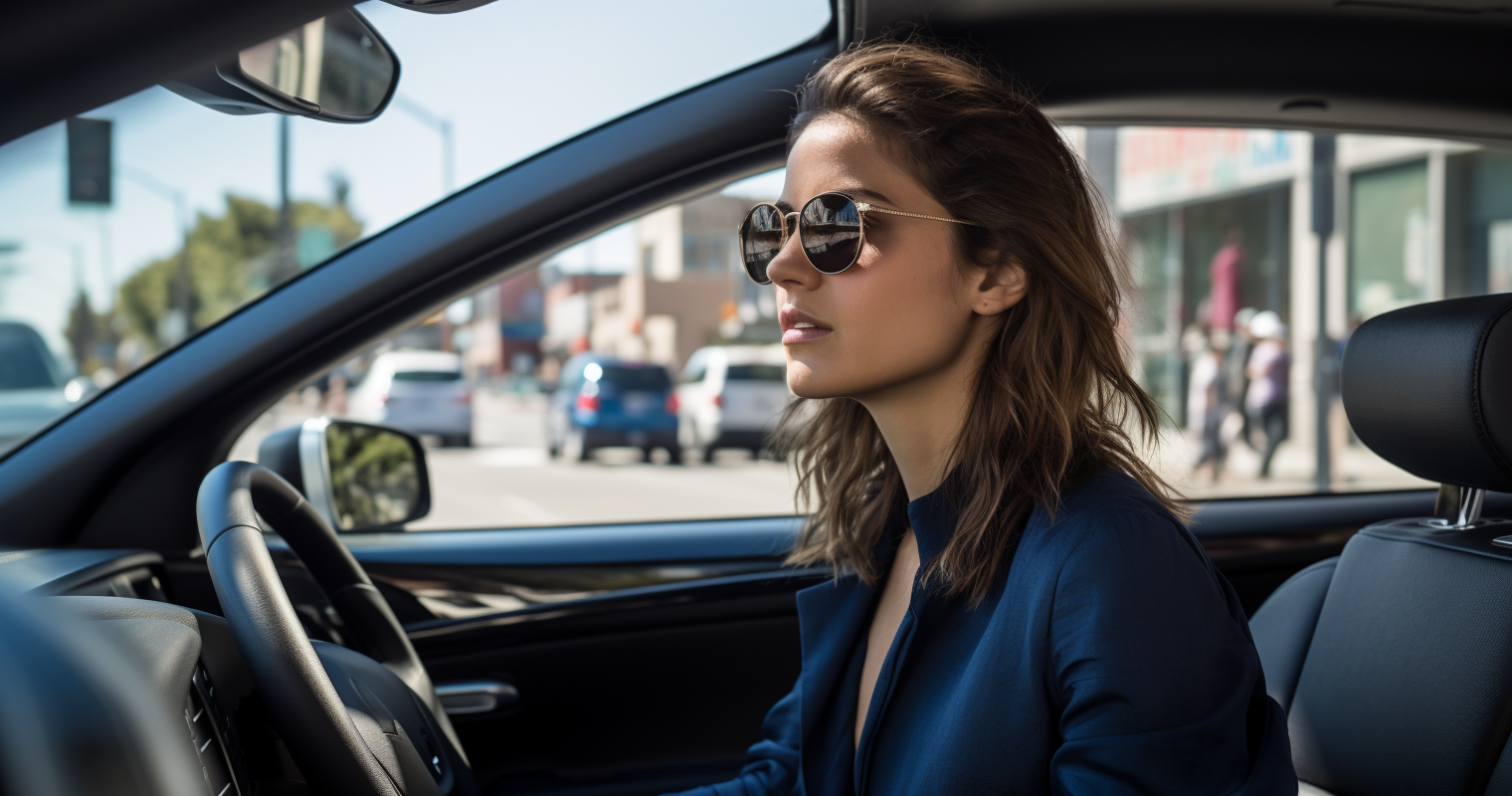
Getting around Romania by car means contending with a growing motorway network, demanding rural roads, and congested urban centres — all while driving on the right-hand side. With the highest road fatality rate in the EU, Romania demands a cautious, well-informed approach behind the wheel. From obligatory in-car equipment and an absolute alcohol ban to the electronic Rovinieta toll system and licence exchange procedures, there is a great deal for expat drivers to understand before setting off.
| Item | Details |
|---|---|
| Drive on | Right-hand side |
| Speed limits (as of 2025) | 50 km/h urban · 90 km/h rural · 100 km/h expressways · 130 km/h motorways |
| Drink-drive limit (as of 2025) | 0.00% BAC — zero tolerance |
| Road toll (Rovinieta) | Electronic vignette; fines from €50 for non-compliance (as of 2025) |
| Road fatality rate (2024) | 78 deaths per million inhabitants — highest in the EU |
| Emergency number | 112 (police, ambulance, fire) |
Is Romania safe to drive in?
Romania’s road safety record is the most troubling in the European Union. According to 2024 figures, the country recorded 78 road deaths per million inhabitants — placing it at the very top of the EU fatality league alongside Bulgaria. To put this in perspective, Sweden registers around 20 deaths per million and Denmark approximately 24; the contrast with Romania is stark and should inform how seriously you approach driving there.
When fatalities are measured against the number of registered vehicles, Romania’s rate of 1.96 deaths per 10,000 vehicles is again the worst in the EU. On a more encouraging note, the country has made progress: fatalities fell by 21% over a recent five-year period, and provisional figures for the first half of 2025 suggest Romania is among the nations showing a continuing downward trend.
Road quality across Romania differs considerably depending on location. Major infrastructure investment is ongoing, and the motorway network is steadily expanding; where motorways exist, conditions are generally very good. Secondary and rural roads, however, can be a very different experience — poorly lit stretches, uneven surfaces, potholes, and unexpected obstacles such as horse-drawn carts or livestock crossing the road without warning are all genuine hazards.
Sticking to motorways and major national roads will make for a far safer journey, but even these are not without risks. Signposting and lighting can be inconsistent, and driving standards vary widely. Bucharest’s traffic in particular tends to be dense and fast-paced. Tailgating, improper overtaking, and speeding are all relatively common behaviours — driving with heightened alertness and a generous safety margin is essential throughout the country.
For the most current national road safety data and campaigns, consult the Romanian Police (Poliția Română) and the Romanian Ministry of Transport.
What side of the road do you drive on in Romania?
Traffic in Romania travels on the right-hand side of the road, consistent with the rest of continental Europe. Drivers relocating from countries where the left side is the norm — such as the United Kingdom, Ireland, Australia, Japan, or India — will need to make a deliberate mental adjustment, especially at junctions, roundabouts, and when exiting car parks or driveways.
The trickiest moments for drivers making this switch typically come after a pause or distraction, when the instinct to default to the familiar left side can momentarily take over. Quiet rural roads and early morning starts present the greatest risk of such lapses. Anyone newly arrived in Romania is advised to begin with low-traffic environments before progressing to busier roads or longer motorway trips.
If you bring a right-hand-drive vehicle to Romania, bear in mind that your forward visibility for overtaking is reduced. You should also adjust your headlight beam — either using deflector stickers or through the car’s settings — to avoid directing light into the eyes of oncoming drivers when travelling at night on right-hand-side roads.
What are the main driving rules in Romania?
Romanian traffic legislation sits within the broader framework of EU road law, covering safety, environmental standards, and traffic management. That said, a number of specific rules differ from those in other countries and require particular attention. Fines in Romania are pegged to the national minimum wage and therefore change over time — always confirm current penalties with the Romanian Police or the Ministry of Transport.
Speed limits (as of 2025)
Within built-up areas the limit is 50 km/h; on roads outside towns it rises to 90 km/h; expressways allow up to 100 km/h; and motorways permit a maximum of 130 km/h. Drivers who have held their licence for less than one year face reduced limits — 20 km/h lower on roads outside built-up areas, on dual carriageways, and on motorways.
| Road type | Cars & motorcycles | Novice drivers (<1 year) |
|---|---|---|
| Built-up areas (urban) | 50 km/h | 30 km/h |
| Roads outside built-up areas | 90 km/h | 70 km/h |
| Expressways (drum expres) | 100 km/h | 80 km/h |
| Motorways (autostradă) | 130 km/h | 110 km/h |
Both fixed and mobile speed cameras are in operation across Romania. Police officers may issue on-the-spot fines for traffic offences, and in cases of serious violations they have the authority to immediately confiscate a driving licence and impose a period of disqualification. Paying a fine within two working days entitles the driver to a 50% reduction — always obtain a receipt as proof of payment.
Drink-driving
Romania enforces a total ban on alcohol for drivers: the permitted blood alcohol limit is 0.00% BAC. Police can pull over any driver and conduct a breath test on suspicion of impairment. This is considerably stricter than the 0.05% threshold that applies in countries such as France and Germany. Driving with a blood alcohol concentration exceeding 0.8 g/l carries the possibility of a custodial sentence.
Mobile phones
Using a handheld mobile phone while driving is prohibited. Hands-free kits are the only permissible means of taking calls at the wheel, and this rule applies to all drivers and all vehicle types.
Seatbelts and children
Where seatbelts are installed, they must be worn by all occupants — both front and rear. Children under 12 are prohibited from travelling in the front passenger seat. Children up to the age of three must be secured in an appropriate child restraint sized for them. Children under 12 who are shorter than 150 cm must travel in either a child seat or a booster seat.
Daytime running lights
Dipped headlights must be used at all times — including during daylight hours. This is a legal requirement across most EU countries and is strictly observed in Romania; it is not merely a recommendation.
Right of way
On roads designated as priority routes — marked by the yellow diamond sign — drivers on that road have right of way. Where no priority markings exist, the priority-to-the-right rule applies: vehicles approaching from the right take precedence at junctions. Overtaking on bridges is generally prohibited. Trams also hold right of way in most urban traffic situations.
Penalty points system
Romania operates a penalty points scheme under which accumulating 15 points triggers an automatic 30-day licence suspension. Serious infractions such as illegal overtaking or disregarding traffic signals attract points; reaching 15 points within a year requires a mandatory licence reassessment. Points are cleared after three years without a further violation.
What equipment are you legally required to carry in your car in Romania?
The list of compulsory in-car equipment in Romania is more extensive than in many other countries. Notably, two warning triangles and a fire extinguisher are both required — this differs from, for example, France, where only a breathalyser is compulsory, and from countries where a single triangle suffices. The full list of mandatory items is as follows:
- Two warning triangles — to be deployed at the front and rear of the vehicle in the event of a breakdown or accident
- Fire extinguisher — a small powder or CO₂ type extinguisher is required
- First aid kit — a properly stocked medical kit must be present in the vehicle
- High-visibility vest — must be worn whenever you exit the vehicle on a road
- Valid driving licence — must be on your person at all times when driving
- Vehicle registration document — proof that the vehicle is properly registered
- Valid insurance documents — including the Green Card (international insurance certificate) for vehicles registered abroad
Winter tyres are legally required when road conditions demand them. Given Romania’s climate — particularly in mountainous areas, Transylvania, and the northern regions — this is a practical necessity for many months of the year, not just a legal technicality. Check with local authorities for region-specific requirements, as enforcement can differ.
One requirement that frequently catches visitors off guard: if your vehicle is visibly damaged when you enter Romania, this damage must be declared and formally recorded at the border. A vehicle with fresh or undocumented damage will only be permitted to leave the country accompanied by an official police damage certificate. This rule applies to all drivers, residents and visitors alike.
For the definitive and current list of mandatory equipment, consult the Romanian Police website or the Ministry of Transport before travelling.
What are the most important road signs in Romania?
Romania’s road signage system is based on the Vienna Convention on Road Signs and Signals, the same international framework used across most of Europe. Drivers already familiar with European-style signs — triangular warnings, circular prohibitions, rectangular information boards — will find Romanian signs largely intuitive. All distance and speed measurements use the metric system, so figures appear in kilometres and metres.
Some signs and location markers include Romanian-language text that may be unfamiliar to newcomers. The following terms are worth learning before you drive:
- Intrare în localitate — entering a built-up area (speed limit drops to 50 km/h)
- Ieșire din localitate — leaving a built-up area (speed limit rises)
- Autostradă — motorway
- Drum național — national road
- Ieșire — exit
- Cedează trecerea — give way
- Oprire interzisă — no stopping
- Parcare interzisă — no parking
Traffic lights in Romania follow the standard red-amber-green sequence, but with one distinction worth noting: rather than an amber phase between red and green — as used in the UK, Ireland, and the Netherlands — Romanian traffic lights often display a numerical countdown timer to indicate when a red light is about to change. The overall logic remains the same, but this visual difference can momentarily confuse drivers unfamiliar with the system.
Speed cameras, both fixed and mobile, are widespread across the country. Their locations are sometimes flagged by advance warning signs on major roads, though this is not universal. Familiarity with local signage before driving will help you navigate more confidently and safely.
What must you do if you have a road accident in Romania?
Romanian law sets out clear obligations for drivers involved in road accidents. If the incident results in any injury, death, or property damage involving one or more vehicles, calling the police to attend the scene is a legal requirement. The national emergency number is 112, which connects to police, ambulance, and fire services simultaneously. The Traffic Police (Poliția Rutieră) are the relevant authority for road incidents.
The correct sequence of actions following an accident in Romania is as follows:
- Stop immediately — leaving the scene of an accident is a criminal offence.
- Secure the area — activate your hazard lights, put on your high-visibility vest, and position warning triangles ahead of and behind the vehicle.
- Dial 112 — notify the emergency services. If there are any injuries, specifically request an ambulance.
- Leave vehicles in place — unless there is an immediate safety reason to move them, keep vehicles where they are until police arrive to document the scene.
- Swap details — obtain the other driver’s full name, address, licence plate number, and insurance information. Record the names and contact details of any witnesses.
- Photograph the scene — capture vehicle positions, visible damage, road markings, and any relevant environmental factors such as skid marks or road surface conditions.
- Secure a police report — request a copy of the official damage record (proces-verbal) from attending officers, as this document is required for any insurance claim.
- Contact your insurer — inform your insurance company promptly and submit all documentation collected at the scene along with the police report.
Any vehicle bearing visible damage may only cross out of Romania if accompanied by a police damage confirmation document. If your vehicle already has damage when you enter the country, declare and record it at the border crossing. This obligation applies to both residents and visitors and is actively checked at border points.
For drivers from abroad, the Green Card (international motor insurance certificate) is an essential document — keep it accessible in the vehicle at all times. The Romanian Traffic Police are reachable via the emergency line 112; for non-urgent enquiries, visit the Poliția Română website for current contact information.
Where can you find up-to-date road traffic information for Romania?
Knowing where to find reliable road and traffic information is especially important in Romania, where infrastructure is evolving rapidly and construction work is frequent. The following sources are among the most useful:
- CNAIR (Compania Națională de Administrare a Infrastructurii Rutiere) — Romania’s national road infrastructure company provides official updates on road works, closures, and conditions across the motorway and national road network. This is the primary go-to source for planned disruptions.
- Poliția Română — the Romanian Police publish traffic alerts and road condition advisories, particularly during periods of severe weather.
- Google Maps and Waze — both navigation apps function well in Romania and offer real-time data on congestion, incidents, and speed camera locations. Waze has a particularly active user base in Romania, which means hazard reports tend to appear quickly.
- Radio traffic bulletins — stations such as Radio România Actualități and commercial broadcasters including Pro FM carry regular traffic updates, especially during morning and evening rush hours and ahead of public holidays.
- infotrafic.ro — a Romanian traffic aggregator compiling alerts about road conditions, accidents, and works across the national network. Verify that information from this source is current before relying on it for journey planning.
With significant road construction activity under way throughout the country, temporary speed restrictions and route changes are a routine feature of driving in Romania. Checking conditions ahead of longer trips — and especially before winter mountain journeys — is well worth the effort.
How does parking work in Romania?
Paid parking zones are the norm in city centres and surrounding districts across Romania. In major urban centres such as Bucharest, Cluj-Napoca, Timișoara, and Brașov, parking areas are divided into colour-coded zones with varying hourly tariffs. Payment can be made at roadside meters, by SMS using a designated code sent to a specified number, or through city apps such as Parcări Smart in Bucharest. Rates and zone boundaries differ between municipalities and are updated periodically, so always consult local signage and your city council’s official website for current information.
Resident parking permits are administered through the local town hall (primărie). Expats with established residency will typically need to provide proof of address, vehicle registration documentation, and identity papers. The application process and waiting times vary from city to city — in Bucharest, demand for permits in central zones can be considerable. Contact your local primărie or the city’s transport authority directly for the current procedure and applicable fees.
Parking infringements are enforced consistently. Fines apply for stopping in restricted areas — such as in front of fire hydrants or in spaces reserved for disabled users — and illegally parked vehicles may be clamped or towed, a particularly common occurrence in Bucharest and other larger cities.
EU-issued disabled parking permits are recognised in Romania, allowing holders to use designated disabled bays on the same terms as Romanian permit holders. For non-EU badges, recognition is not guaranteed — contact your local town hall or the National Authority for the Rights of Persons with Disabilities, Children, and Adoptions (ANPDCA) for advice on obtaining a Romanian disabled parking permit, and verify procedures with your municipality before relying on a foreign badge.
Can you drive in Romania on a foreign or international licence?
The rules governing foreign licence use in Romania depend on where your licence was issued and whether you are visiting or residing in the country. Both EU regulations and Romanian national law shape the requirements.
EU/EEA licence holders: A licence issued by another EU or EEA member state remains valid in Romania for as long as it is valid in the country that issued it. No exchange is necessary during a visit. However, once you establish permanent residency in Romania, you are required to exchange your EU/EEA licence for a Romanian one within the prescribed timeframe. Confirm the current deadline with the DRPCIV (Direcția Regim Permise de Conducere și Înmatriculare a Vehiculelor) — the national authority responsible for driving licences and vehicle registration.
Non-EU licence holders: An International Driving Permit (IDP) is not compulsory simply to transit or visit Romania. However, an IDP is strongly recommended as a companion to your original licence, as it provides a standardised translation that Romanian police officers can readily interpret. An IDP has no standalone validity — it must always be carried together with the original national licence.
Once non-EU nationals become Romanian residents, they are generally required to convert their foreign licence into a Romanian one. This process is handled by the DRPCIV and typically involves submitting the original licence, a certified translation, residency proof, a medical certificate, and administrative fees. Depending on the country of issue, some licences may qualify for direct exchange under a bilateral agreement, while others may require passing a theory or practical test. Visit the DRPCIV website for the current list of recognised countries and the most up-to-date exchange procedure, as these requirements are subject to change.
The minimum age for driving in Romania is 18. Note, however, that to rent a car from a commercial operator you must be at least 21 years old.
Frequently Asked Questions About Driving in Romania
Do I need a Rovinieta (road vignette) as a foreign driver in Romania?
Yes. The Rovinieta is an electronic road vignette that is compulsory for virtually all vehicles using Romania’s public road network — including those registered abroad. It covers motorways, expressways, and national roads, and is administered by CNAIR. Driving without a valid vignette risks a fine of at least €50 (as of 2025). Motorcycles are exempt from this requirement. The vignette can be purchased online at e-rovinieta.ro, at border crossings, or at filling stations throughout the country.
What insurance do I need to drive in Romania?
At minimum, third-party liability insurance is legally required. Drivers of foreign-registered vehicles should carry their Green Card (international motor insurance certificate) to demonstrate that their policy extends to Romania — your insurer can provide this document free of charge. Given Romania’s road safety statistics, taking out comprehensive cover is strongly advisable.
Are there specific winter driving requirements in Romania?
Winter tyres are legally required when conditions on the road demand them. In Romania’s mountain regions, northern counties, and Transylvania, significant snowfall is common between November and March. While there is no fixed calendar date mandating the switch — unlike some countries — driving on snow or ice without appropriate tyres is both hazardous and potentially an offence. Snow chains are a sensible precaution for mountain routes and are widely available at filling stations and car accessory retailers.
What are the penalties for drink-driving in Romania?
Romania applies a total ban on alcohol for all drivers: the permitted BAC is 0.0%. Penalties range from licence suspension and substantial fines up to potential imprisonment for those whose blood alcohol concentration exceeds 0.8 g/l. Roadside breath-testing is carried out regularly, and the same zero-tolerance approach is applied to drug impairment.
Are toll roads in Romania different from other European countries?
Romania does not use traditional barrier-based toll booths as found in France or Italy. Instead, it operates a time-based electronic vignette system — the Rovinieta — that is linked to your licence plate. The tax is payable at border crossings, post offices, and various other outlets, with your vehicle’s details held on a centralised government database. Compliance is monitored by a network of cameras positioned along roads, which automatically read and verify passing licence plates.
Can I drive in Romania with children in the car?
Children under the age of 12 are not permitted in the front passenger seat. Children aged up to three years must be secured in an appropriately sized child restraint at all times. Children under 12 who are shorter than 150 cm must use either a child seat or a booster seat. These requirements are consistent with EU child safety standards and are enforced by traffic police, with fines for non-compliance.
What should I do if I am stopped by the police while driving in Romania?
Pull over calmly and safely when signalled to do so. You will be expected to produce your driving licence, vehicle registration, and proof of insurance — along with your Green Card if your vehicle is registered abroad. Officers may issue fines on the spot; for serious violations, they can also confiscate the licence and impose a driving ban immediately. Fines settled within two working days qualify for a 50% discount — always ask for a receipt to confirm payment.
Is it safe to drive through the Carpathian mountain passes?
Routes such as the Transfăgărășan (DN7C) and the Transalpina (DN67C) are among the most visually dramatic roads in Europe, but they demand considerable respect. Both are narrow and steep in places, with weather that can shift rapidly — snow and fog are possible even in late spring or early autumn. High-altitude sections are typically closed during winter, often from November through to June depending on conditions. Before attempting any mountain route, check the latest road status with CNAIR or the Romanian Police, and make sure your vehicle is properly equipped for the conditions.