
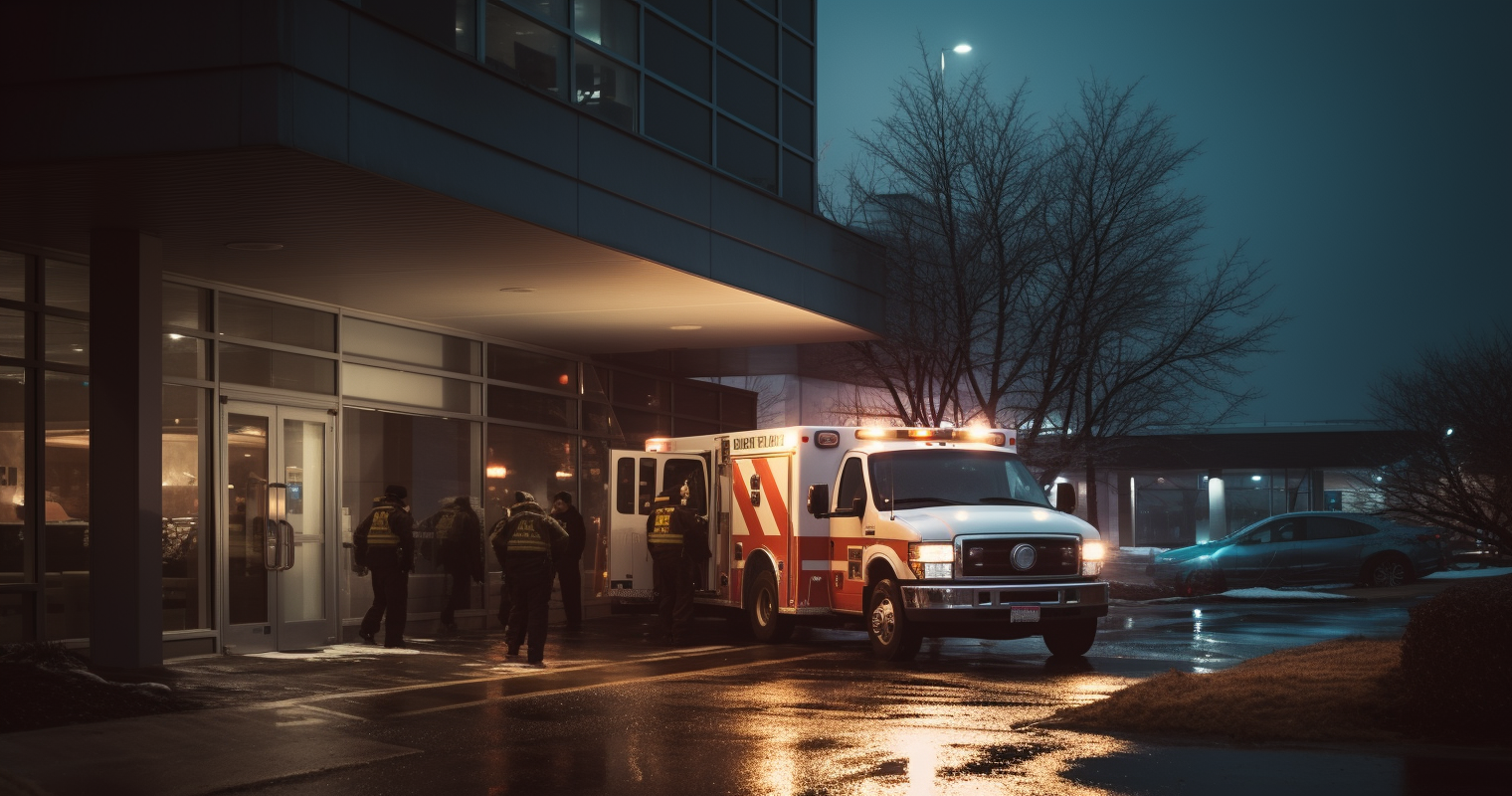
Brunei maintains a well-structured emergency services framework with dedicated contact numbers for each service: dial 991 for an ambulance, 993 for police, 995 for fire and rescue, and 998 for search and rescue. Public hospitals provide emergency medical care to all on a heavily subsidised basis, though the costs charged vary depending on whether the patient is a citizen, a resident, or a short-term visitor. All expats are strongly advised to hold comprehensive travel or international health insurance.
| Item | Details |
|---|---|
| Ambulance (as of 2026) | Dial 991 (Emergency Medical Ambulance Service — EMAS) |
| Police (as of 2026) | Dial 993 |
| Fire & Rescue (as of 2026) | Dial 995 |
| Search & Rescue (as of 2026) | Dial 998 |
| Mental Health Helpline (as of 2026) | Dial 145 (Talian Harapan) — 24/7 |
| Health Advice Line (as of 2026) | Dial 148 (Talian Nasihat Kesihatan) |
| Public hospital consultation fee (as of 2026) | Approximately B$1 for citizens; fees for non-residents vary — verify with Ministry of Health |
| Main public hospital | RIPAS Hospital, Bandar Seri Begawan |
Does Brunei use a single emergency number, or are there separate numbers for each service?
Brunei does not operate a single catch-all emergency number in the way that the UK uses 999 or the European Union uses 112. Each emergency service has its own dedicated line: 991 for ambulance, 993 for police, 995 for fire and rescue, and 998 for search and rescue. Being familiar with all four before an emergency arises is essential.
The ambulance number (991) should be used for medical emergencies, serious injuries, suspected stroke or heart attack, or any situation where life is at immediate risk. The police line (993) covers active crime, suspicious activity, road accidents, domestic violence, and any circumstance requiring law enforcement intervention. Fire and rescue (995) deals with fires, gas leaks, people trapped in structures, and incidents involving hazardous materials. Search and rescue (998) handles missing persons, maritime emergencies, and accidents occurring in forests, mountains, or difficult terrain.
It is advisable to save all four numbers in your mobile phone before you arrive. Users of Xiaomi, Redmi, Poco, MI, or Google handsets should add a plus sign after the number when dialling (for example, 991+, 993+, 995+, 998+) to ensure calls connect properly. Always confirm current numbers through the Ministry of Health Brunei or the relevant authority, as details may change over time.
How do you summon emergency medical help in Brunei, and what can you expect?
Emergency ambulance services are provided by EMAS — the Emergency Medical Ambulance Service — which is contactable by dialling 991. The Ministry of Health Brunei lists this as the principal emergency medical number on its official contact page. Call handlers are likely to communicate primarily in Malay, though some English capability may be available. State your location as clearly and precisely as possible, and describe the nature of the emergency in straightforward terms.
RIPAS Hospital and Suri Seri Begawan Hospital are the main facilities equipped to manage major emergencies including trauma, cardiac events, strokes, and serious accidents. Emergency departments are equipped with modern medical technology, and clinical teams are trained to handle critical and complex presentations. Patients in more remote parts of the country should be aware that response times may be longer due to distance.
If you are in a rural or isolated location and it is safe to do so, it is acceptable to transport a patient directly to the nearest hospital emergency department while waiting for ambulance guidance — but call 991 first so that the receiving hospital can be notified. For medical concerns that are not immediately life-threatening, the Health Advice Line on 148 can provide guidance — check current availability with the Ministry of Health.
What steps should you take during a mental health crisis in Brunei?
Brunei has a dedicated mental health helpline provided by the Ministry of Health. The service, known as Talian Harapan, operates on 145 and is staffed around the clock — every day of the year — by trained mental health counsellors. A complementary Health Advice Line is available on 148 (Talian Nasihat Kesihatan). Talian Harapan on 145 is the recommended first point of contact for anyone experiencing psychological distress.
Suri Seri Begawan Hospital, Brunei’s second-largest public hospital, offers psychiatry services as part of its secondary care provision. If you or someone nearby is in immediate physical danger due to a mental health crisis, dial 991 for an ambulance or 993 for police and proceed to the nearest hospital emergency department. Where there is an imminent risk of harm to oneself or others, mental health crises are treated as medical emergencies.
As an Islamic nation, Brunei has its own cultural framework around mental health and wellbeing, but using official support channels is entirely appropriate and encouraged. Expats experiencing emotional or psychological difficulties are urged to contact the 145 helpline first; counsellors there can advise on the most suitable next steps, including whether attending hospital is necessary. Confirm current service hours for the 148 line directly with the Ministry of Health.
Which facilities provide emergency medical treatment in Brunei?
Brunei has four government hospitals, one serving each of its administrative districts. The principal institution is Raja Isteri Pengiran Anak Saleha Hospital — commonly known as RIPAS — located in the capital, Bandar Seri Begawan. RIPAS is the primary referral point for major emergencies and specialist care across the country.
Each district is served by its own public hospital with emergency capabilities:
- RIPAS Hospital — Bandar Seri Begawan (the country’s largest hospital, providing full emergency and specialist services)
- Suri Seri Begawan Hospital — Kuala Belait (covering the entire Belait District, with secondary care including accident and emergency, internal medicine, general surgery, obstetrics and gynaecology, paediatrics, and psychiatry)
- Pengiran Muda Mahkota Hospital — Tutong (a 139-bed facility equipped with advanced medical technology, serving the Tutong District population)
- Pengiran Isteri Hajah Mariam Hospital — Temburong (serving the Temburong District, with visiting specialists from RIPAS Hospital; patients requiring tertiary or specialised care are transferred to RIPAS by boat or road)
Two private medical facilities also operate in Brunei: Gleneagles JPMC and Jerudong Park Medical Centre (JPMC). JPMC is widely regarded for its modern infrastructure, with particular strengths in cardiology, neurology, and oncology, and draws patients from neighbouring countries. Private hospitals provide quicker access and more amenity, but at substantially higher cost than the public sector.
Across the country there are also 16 health centres and 10 health clinics. These are not equipped to handle emergencies, but can assist with urgent minor health concerns. For any serious medical situation, attend a hospital emergency department directly or call 991. A full list of public hospital locations and services is available on the Ministry of Health website.
Does emergency medical treatment in Brunei come with a charge?
Brunei’s public healthcare system falls under the administration of the Ministry of Health and is funded through the General Treasury. As a result, public hospitals are heavily government-subsidised. Citizens and permanent residents receive free or near-free care across a broad range of general and specialist services.
For citizens, consultation fees at public hospitals are approximately B$1, and children under 12 receive care free of charge. Foreign nationals — including expats on work passes and short-term visitors — are subject to higher charges, though the system remains subsidised relative to many countries. Detailed fee schedules for non-citizens are not consistently published online and are liable to change; the most reliable approach is to confirm current rates directly with the Ministry of Health Brunei before or upon arrival.
While public healthcare in Brunei is accessible and affordable for workers with valid permits, it is not free for all foreign nationals. Emergency stabilisation will generally be provided to all patients irrespective of their ability to pay upfront, but subsequent hospitalisation and treatment will generate charges for non-residents. This is broadly consistent with the approach seen in many Gulf states, where public healthcare is available to expatriates but not at zero cost.
Should expats take out travel or health insurance to access emergency care in Brunei?
Any expat, digital nomad, or long-stay visitor living in Brunei is strongly encouraged to arrange comprehensive international health insurance that covers both in-country medical treatment and care abroad — including the possibility of emergency medical evacuation or airlift to another country. This recommendation is reflected in several official travel advisories.
Healthcare standards in Brunei are generally good, though the availability of certain basic hospital supplies can be inconsistent. For complex or serious medical conditions, evacuation to Singapore may be required. It is therefore important to hold comprehensive medical insurance before travelling to or residing in Brunei, and the policy should explicitly include medical evacuation cover.
Arriving at a public hospital emergency department without insurance will not result in refusal of initial stabilising care, but treatment costs will be levied — and these can mount substantially for complex interventions or extended stays. Private hospitals such as JPMC will typically ask for proof of insurance or a financial guarantee before admitting non-emergency patients. Keep your insurance policy number and the insurer’s emergency contact details readily accessible in a location that does not depend solely on your phone, in the event it is lost or damaged.
Do bilateral health agreements give certain foreign nationals access to reduced-cost treatment?
In contrast to arrangements like the European Health Insurance Card (EHIC) scheme — which provides reciprocal emergency healthcare access across EU member states — or the limited bilateral agreements between some Commonwealth countries, Brunei does not appear to maintain broad reciprocal healthcare treaties that automatically grant foreign nationals free or substantially reduced emergency treatment at public hospitals.
The Ministry of Health’s Office of International Affairs coordinates Brunei’s international health engagement, including participation in bodies such as the WHO, ASEAN, APEC, OIC, and the Commonwealth, and involvement in bilateral health cooperation. These arrangements focus largely on professional exchange and public health collaboration rather than establishing patient-level entitlements for foreign nationals seeking emergency care.
This position may evolve, and it is worth checking with your country’s embassy or consulate in Brunei — or your home government’s foreign ministry — before assuming any entitlement based on nationality. The prudent approach for all foreign nationals is to treat insurance as essential, regardless of where they are from. Verify the current position with the Ministry of Health Brunei and your own government’s relevant authority.
How does Brunei’s emergency healthcare system measure up against systems expats may be familiar with?
Brunei’s healthcare system is administered by the Ministry of Health and financed through the General Treasury, placing it structurally closer to a fully state-funded model than to systems built on social insurance contributions or private health insurance. On the surface, this resembles the UK’s National Health Service or New Zealand’s public health system, where central funding means treatment is available regardless of immediate ability to pay.
There is, however, a meaningful practical distinction. The NHS, for example, extends free emergency care to anyone physically present in the UK — including tourists — whereas Brunei’s public system delivers free or near-free care primarily to citizens and permanent residents. Foreign nationals receive subsidised treatment, not free treatment. This makes it closer in practice to Australia’s Medicare system, which is free for eligible citizens and residents but requires visitors to rely on travel insurance or pay fees directly — except that Australia maintains specific bilateral Medicare agreements with a number of countries, whereas Brunei has no equivalent arrangements in place.
The country’s medical infrastructure is of high quality, with facilities and services broadly comparable to those found in more developed nations. That said, highly specialised procedures or rare conditions may necessitate medical evacuation to Singapore. This is a practical reality expats must factor into their planning — healthcare in Brunei is competent and accessible, but comprehensive evacuation insurance is a genuine necessity rather than an optional precaution.
Beyond medical emergencies, how do police and fire services operate in Brunei?
For any matter involving security or law enforcement, contact the Royal Brunei Police Force by dialling 993. The force is active and responsive, maintaining a visible presence throughout the country, which contributes to Brunei’s reputation as one of Southeast Asia’s safest nations. Whether the situation involves theft, missing property, suspicious behaviour, or a road traffic incident, the police are the appropriate point of contact for prompt assistance. Expats should also be aware that Brunei enforces its laws firmly, and understanding local regulations — and knowing how to seek legal advice — is worthwhile from the outset.
Brunei operates under a dual legal system encompassing both civil law and Syariah (Islamic) law. Certain activities that are permitted in other countries — including the sale and consumption of alcohol, as well as some forms of public behaviour — are heavily restricted or outright illegal in Brunei. If you are detained or face criminal proceedings, remain calm and cooperative, and contact your embassy or consulate as promptly as possible.
Fire and rescue services are reached on 995, covering fires, gas leaks, individuals trapped in structures, and hazardous material incidents. District-level fire and rescue numbers also exist for Kuala Belait, Tutong, Seria, and Bangar — these are worth saving if you live outside the capital. Confirm current local numbers for your district with the relevant authority. The national Search and Rescue line on 998 covers maritime, aerial, and wilderness operations — particularly relevant given Brunei’s extensive rainforest interior and coastal waters.
What country-specific emergency risks should expats be aware of in Brunei?
Although Brunei sits in a region of Asia frequently associated with natural disasters, the country itself faces a comparatively low level of risk. Flooding occurs during the northeast monsoon and seasonal rainy periods, but Brunei lies outside the primary typhoon belt and has not been subject to catastrophic flood events.
Flooding and landslides represent the most common natural hazards and occur on an annual basis during the northeast monsoon, typically from October through January. December and January bring the heaviest rainfall and can produce flash floods in low-lying areas and sustained flooding across floodplains, especially in the major river catchments of the Tutong and Belait Districts. Smoke haze from uncontrolled burning in neighbouring Indonesia can also periodically push air quality to unhealthy levels.
Brunei is spared many of the natural disasters common elsewhere in Asia. There is no meaningful typhoon risk, and significant seismic activity is not a feature of the country. The predominant environmental hazards remain seasonal flooding, heavy rain, and occasional landslides.
From a health perspective, dengue fever is an ongoing concern in Brunei. Transmitted through the bites of infected mosquitoes, dengue can produce flu-like illness and, in severe cases, escalate to life-threatening dengue haemorrhagic fever. Recommended vaccinations prior to arrival include hepatitis A and B, typhoid, and standard routine immunisations. Consult a travel health professional for personalised and current vaccination guidance before relocating to or visiting Brunei.
Brunei has no recent history of terrorism, and the threat level is regarded as very low. The government maintains robust internal security, and no known extremist groups are active within the country. Civil disorder is similarly rare. For most expatriates, Brunei presents a safe and settled living environment.
Official emergency and disaster alerts in Brunei are disseminated through local television and radio, as well as government websites. The Prime Minister’s Office and Brunei’s National Disaster Management Centre publish advisories when needed. There is no nationwide emergency text alert system, so residents and visitors should make a habit of monitoring reputable local news sources for updates during adverse weather periods.
How should expats prepare for emergencies before they occur in Brunei?
Preparing thoroughly before an emergency happens is far more effective than attempting to navigate unfamiliar systems under pressure. The following measures are recommended for all expats living in or visiting Brunei:
- Register with your home country’s embassy or consulate. Registering your contact details enables your embassy to reach you quickly in the event of a crisis such as a natural disaster or a family emergency abroad. Most foreign ministries offer online registration — consult your government’s website for details. Bear in mind that not every country maintains a physical embassy in Brunei; some, such as Ireland, may direct you to their mission in Singapore for consular assistance.
- Save all emergency numbers in your phone. Store 991 (ambulance), 993 (police), 995 (fire and rescue), and 998 (search and rescue) before you need them. Also save the mental health line 145 and the health advice line 148.
- Arrange comprehensive international health insurance that explicitly covers medical treatment both within Brunei and overseas, including emergency evacuation and medical airlift if required. For complex cases, evacuation to Singapore is a realistic possibility.
- Understand your local flood risk. If you live in a low-lying area or near a major river catchment, locate your nearest evacuation point and make a practice of monitoring local media during the monsoon periods (September to January and May to July).
- Identify your nearest hospital. Know the name, address, and contact number of the public hospital serving your district. If you are based in Temburong, note that patients requiring specialist care are transferred to RIPAS Hospital by boat or road.
- Check your medications. If you take prescription medicines, consult Brunei’s immigration authorities in advance to confirm whether those medicines are permitted. Some drugs are restricted or prohibited in Brunei, and carrying them without authorisation may have serious legal consequences.
- Download the BruHealth app. The Ministry of Health operates BruHealth, a national personal health record application integrated with the country’s electronic patient record system. As of September 2024, all arriving travellers are required to use BruHealth to submit a Health Declaration Form upon entry into Brunei.
- Keep physical copies of important documents. Store duplicates of your passport, visa, insurance policy, and emergency contact details in a location separate from your phone — such as a hotel safe or with a trusted person at home — in case your device is lost or damaged.
Where can expats find official, current emergency information for Brunei?
The sources listed below are the most authoritative starting points for up-to-date emergency information in Brunei. Always consult these directly rather than depending exclusively on third-party resources, as contact numbers, fee schedules, and procedures are all subject to change:
- Ministry of Health Brunei — for hospital locations, emergency service contacts, and health-related guidance: moh.gov.bn
- National Disaster Management Centre (NDMC) — the lead government body for disaster response in Brunei, established in August 2006 under the Disaster Management Order and responsible for prevention, mitigation, preparedness, response, and recovery across all types of emergency.
- Your home country’s embassy or consulate — for citizen registration, consular support, and nationality-specific travel advisories. If your country has no resident mission in Brunei, your foreign ministry’s website will identify the accredited embassy responsible for the country.
- Brunei Tourism (bruneitourism.com) — for general visitor guidance including practical safety information.
- Talian Darussalam 123 — the national contact centre for non-emergency government services in Brunei Darussalam, useful for routine queries about government services including health.
- Your home country’s foreign ministry travel advisory pages — for current safety assessments, entry requirements, and emergency contact details. The Canadian Government’s travel advice for Brunei, for example, is available at travel.gc.ca.
Frequently asked questions
What number do I call for an ambulance in Brunei?
The ambulance service — EMAS, the Emergency Medical Ambulance Service — is reached by dialling 991, as published on the official Ministry of Health Brunei contact page. Programme this number into your phone before you need it. If you are using a Xiaomi, Redmi, Poco, or Google handset, try dialling 991+ if the standard call does not connect.
Is there a single emergency number like 999 or 112 in Brunei?
No. Rather than a universal number like 999 (UK), 112 (EU), or 911 (US and Canada), Brunei assigns a distinct number to each emergency service: 991 for ambulance, 993 for police, 995 for fire and rescue, and 998 for search and rescue. Make sure all four are stored in your phone.
Will I be turned away from a Brunei hospital if I have no insurance?
Initial emergency stabilisation at a public hospital is unlikely to be refused, but foreign nationals without permanent resident status will be expected to pay for their treatment. Extended hospitalisation and complex medical care can generate significant costs. Comprehensive international health insurance — with medical evacuation cover included — is strongly recommended for all expats and visitors.
Is there a mental health crisis line in Brunei?
Yes. The dedicated mental health helpline is 145 (Talian Harapan), staffed by trained mental health counsellors and available at any time of day or night throughout the year. If the situation involves an immediate risk of physical harm, call 991 for an ambulance or go directly to the nearest hospital emergency department.
What are the main natural disaster risks for expats in Brunei?
Flooding and landslides are the most regularly occurring natural hazards, arising annually during the northeast monsoon from roughly October to January. Brunei is not situated in a typhoon zone and does not experience significant earthquake activity. Dengue fever, carried by mosquitoes, is also a year-round health risk that expats should take precautions against.
Does Brunei have a reciprocal healthcare agreement with any countries?
No publicly available bilateral health agreement has been identified that would entitle nationals of any particular country to free or significantly reduced-cost emergency care in Brunei. Unlike the EU’s EHIC scheme or Australia’s bilateral Medicare arrangements, no equivalent system appears to operate in Brunei. Expats of all nationalities should hold comprehensive health insurance and should not assume any automatic entitlement based on their passport.
How do I find out if my medicine is legal to bring into Brunei?
If you are prescribed any medication, contact Brunei’s immigration authorities in advance to confirm whether it is permitted — certain drugs are restricted or prohibited under Bruneian law. Seek guidance from the Ministry of Health Brunei or the Department of Immigration and National Registration well before you travel.
What should I do if there is a major flood in my area of Brunei?
Emergency and disaster notifications in Brunei are broadcast through local media, radio, and government websites. The Prime Minister’s Office and the National Disaster Management Centre (NDMC) publish official advisories, and there is no nationwide text alert system, so monitoring reputable local news channels during adverse weather is important. Follow all instructions from local authorities, stay clear of flooded roads, and contact the NDMC for evacuation guidance. Dial 991 if you are facing a life-threatening situation requiring immediate rescue.