
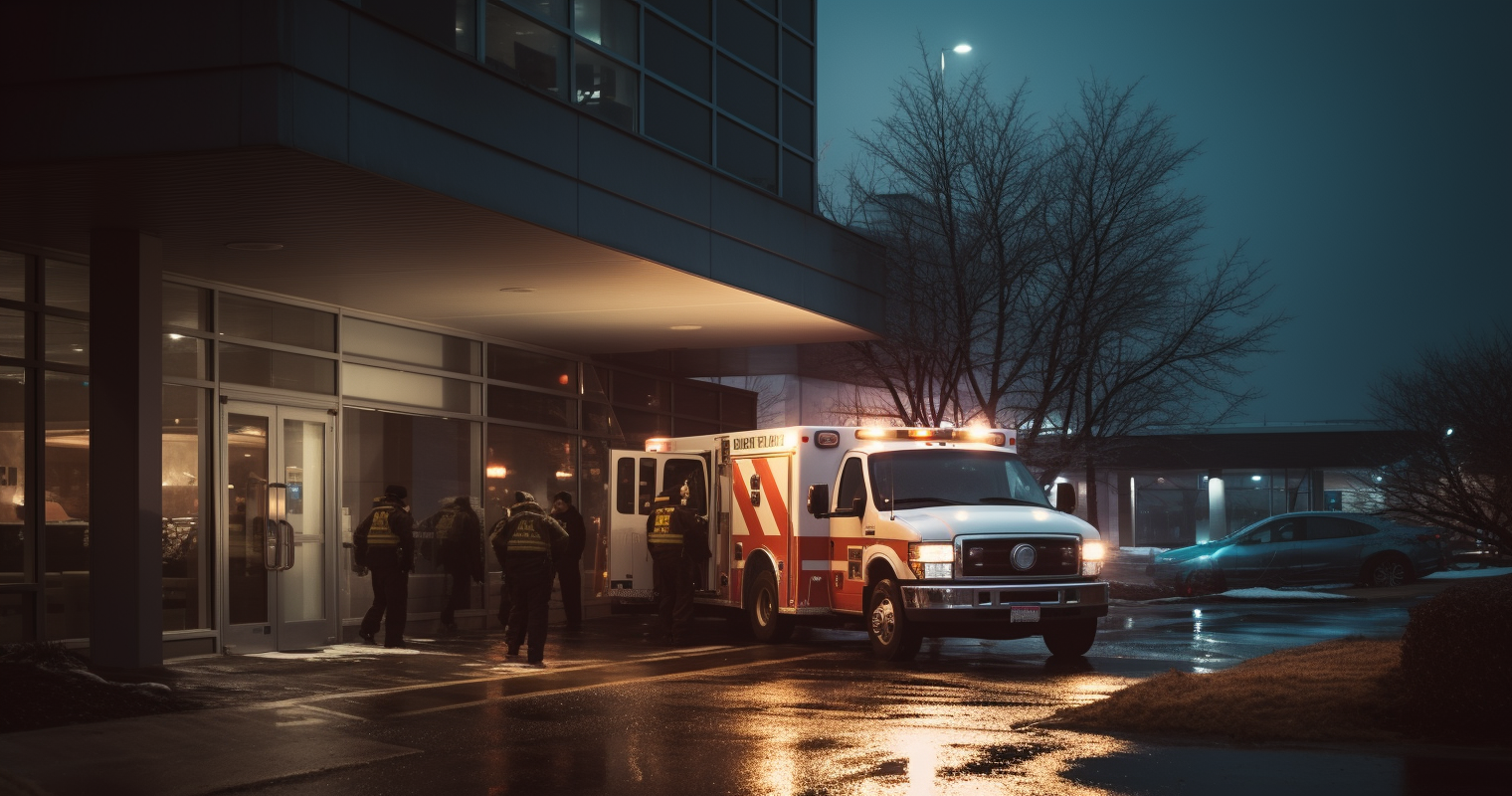
Croatia uses 112 as its single universal emergency number, giving callers immediate access to all emergency services — ambulance, police, and fire brigade — at no cost from any telephone. Individual national numbers also exist for each service. While public hospitals provide emergency medical care without requiring upfront payment, what you ultimately owe depends considerably on your insurance status and where you are from.
| Item | Details |
|---|---|
| Universal emergency number | 112 (free from any phone, as of 2024) |
| Dedicated service numbers | Police: 192 | Fire: 193 | Ambulance: 194 | Sea rescue: 195 (as of 2024) |
| Ambulance call-out cost | Ambulance transport in emergencies is free of charge (as of 2024) |
| EHIC/GHIC coverage | EU/EEA/Swiss/UK nationals entitled to necessary care at same cost as Croatian residents (co-payment applies) |
| Co-payment minimum | From approximately €1.32 per primary care visit; can reach up to €530 for some treatments (as of 2024 — verify with HZZO) |
| Key health authority | Croatian Health Insurance Fund (HZZO) — hzzo.hr |
| Civil protection authority | Ravnateljstvo civilne zaštite — civilna-zastita.gov.hr |
What is the single emergency number in Croatia, and does it cover all services?
112 is the universal emergency number that can be dialled free of charge from any landline or mobile phone to reach all emergency services — including ambulance, fire and rescue, and police. It functions as Croatia’s equivalent of 999 in the United Kingdom, the EU-wide 112, or 911 in North America. The number works from every phone, even those lacking a SIM card or available credit.
Beyond connecting you with the core emergency services, the 112 system is also able to activate wider civil protection mechanisms when a situation demands a coordinated response — including state administration bodies and local and regional self-government units. This makes 112 the most sensible choice when you are uncertain which specific service you require, or when multiple agencies may need to be involved.
Croatia also maintains separate dedicated emergency lines alongside 112. These are: 192 for police, 193 for the fire brigade, 194 for ambulance, 195 for maritime search and rescue, and 1987 for roadside assistance. These lines can be useful when you know exactly which service you need. Always verify current numbers with official sources, as these may be updated over time.
Anyone calling from a foreign number should include the Croatian country code +385 before the relevant number. That said, 112 can be dialled directly and without a country code from any network while inside Croatia.
How do you call for emergency medical assistance in Croatia?
To request an ambulance in Croatia, call either 112 (the universal emergency number) or 194 (the dedicated ambulance line), as of 2024. Both routes connect you with emergency medical dispatch and are accessible from mobile phones and landlines alike.
Once connected, the dispatcher will need to know your location, the nature of the problem, and the condition of the person requiring assistance. Having a nearby address or a recognisable landmark ready is particularly helpful in rural areas, along the coast, or on islands where properties can be difficult to pinpoint. Emergency operators are primarily trained in Croatian, but services in major urban centres and tourist-heavy areas frequently include staff who can communicate in other languages. Remain on the line and follow the dispatcher’s instructions until help arrives.
Emergency ambulance transport is provided free of charge. You will not be asked to pay before being taken to hospital, regardless of your insurance status. What you owe for the treatment you receive once at the hospital is a separate matter altogether and is governed by your level of coverage — covered in detail in the sections below.
What should you do in a mental health crisis in Croatia?
Croatia does not currently operate a widely known, dedicated national mental health crisis line comparable to the Samaritans in Ireland and the UK or the 988 Suicide and Crisis Lifeline in the United States. When someone is in immediate danger, calling 112 is the right course of action — emergency medical dispatchers can direct appropriate help, including crisis-trained personnel where these are available.
Hospital emergency departments (hitna pomoć) throughout Croatia do accept patients presenting with acute mental health emergencies. Larger hospitals in Zagreb, Split, Rijeka, and Osijek all have psychiatric departments capable of providing assessment and urgent care. In less severe situations, a dom zdravlja (community health centre) can be the first port of call for mental health referrals and guidance.
Certain support lines do exist for particular groups. The number 116111 connects callers to the Brave Phone, an SOS line for children in need. For adults experiencing domestic abuse or serious distress, 116 006 operates as a support line for crime victims and can direct callers towards further assistance. If you are unclear which service to contact in a non-life-threatening mental health situation, reaching out to your nearest dom zdravlja or a private psychiatric clinic is advisable. Confirm the current availability of any support lines directly with Croatian health authorities or the Ministry of Health (miz.hr).
Where can you go for emergency medical treatment in Croatia?
Hospitals and specialised medical facilities exist in all larger towns, while smaller clinics are distributed across the country. In an emergency, either go directly to the emergency department (hitna pomoć) of your nearest public hospital (bolnica), or call 112 to request ambulance transport. Public hospitals form the backbone of emergency care and operate within Croatia’s national health insurance framework administered by HZZO.
In larger towns, visitors are typically directed towards a health centre (dom zdravlja). Every municipality has one, providing basic healthcare services and acting as the first point of contact for conditions that are not life-threatening. Health centres can also arrange onward referrals to hospital when the situation requires it.
During the summer months, the Croatian tourist sector relies on dedicated seasonal clinics known as “turistička ambulanta” to serve visitors. It is important to understand that these facilities operate exclusively during the tourist season and currently hold no contract with HZZO, which means you will be charged the full cost regardless of whether you hold an EHIC. These clinics offer convenience but do not provide EHIC-covered care — a distinction that catches many visitors off guard.
Private hospitals and clinics are also present across Croatia, with a particularly strong concentration in Zagreb and along the Adriatic coast. Treatment at a private facility will be charged in full to the patient — no public insurance scheme will offset those costs. While private providers may offer reduced waiting times, better facilities, and more multilingual staff, the financial exposure without private insurance can be considerable. Use the HZZO website to locate your nearest HZZO-contracted public facility.
Is emergency medical treatment free in Croatia, or is there a charge?
Healthcare in Croatia is not free. Beyond insurance contributions, patients are expected to pay a portion of the cost of any medical treatment they receive — known as a co-payment. This contrasts with fully tax-funded systems where care is free at the point of use; in Croatia, even patients with insurance routinely contribute to their treatment costs.
The initial emergency response — life-saving intervention — is generally provided without withholding treatment for non-payment. However, ongoing care, specialist referrals, and any follow-up treatment will generate charges that vary according to a patient’s coverage status.
Treatment costs in Croatia can reach up to €530. (As of the date of the UK government’s published guidance — always consult GOV.UK Croatia health advice and the HZZO website for the most current figures.) The minimum co-payment for a primary care consultation is approximately €1.32 as of 2024 — verify the latest co-payment schedule directly with HZZO. Charges rise for hospital admissions, procedures, and specialist treatment.
EU citizens who are temporarily staying in or visiting Croatia and who hold statutory health insurance coverage in their home EU member state are entitled to necessary healthcare services via the European Health Insurance Card, subject to co-payments. Visitors from countries without a relevant convention or bilateral agreement with Croatia will be charged according to a standard price list applied to foreign nationals.
Do expats need insurance to access emergency care in Croatia?
Anyone residing in Croatia for more than three months is required to hold health insurance. For long-term residents, this means enrolling with the Croatian Health Insurance Fund (HZZO) or maintaining a qualifying foreign policy. Participation in HZZO is compulsory for residents — covering employed individuals, pensioners, students, and other categories of resident — as prescribed by Croatian law.
If you are in the process of relocating and have not yet completed HZZO registration, or if you are a short-term visitor, you must carry international private health insurance providing coverage until HZZO membership is secured. Without insurance, you will face the full cost of all treatment, which can escalate quickly beyond basic care.
For those covered by EU/EEA, Swiss, or UK health insurance schemes, an EHIC or GHIC card grants access to medically necessary care during a temporary stay. However, the EHIC does not eliminate charges entirely — you will pay the same co-payments applicable to Croatian residents. If your EHIC is not accepted or is unavailable, the full cost of treatment falls to you personally.
Many expats in Croatia choose to take out additional private health insurance, primarily to access a wider range of specialist services and to cover expenses such as medical evacuation and repatriation — which are not included under HZZO. Both supplementary and private health insurance products are available in Croatia and are worth considering alongside mandatory HZZO enrolment. Seek independent financial advice and compare products carefully before choosing a policy.
Are there bilateral health agreements entitling some foreign nationals to reduced-cost treatment?
Insured persons from EU member states, the European Economic Area countries (Iceland, Liechtenstein, and Norway), Switzerland, or the United Kingdom are entitled to necessary healthcare in Croatia on the basis of the European Health Insurance Card (EHIC) or a Provisional Replacement Certificate for the EHIC. This reflects Croatia’s participation in the EU-wide reciprocal healthcare framework — a system broadly similar in principle to healthcare reciprocity arrangements found in other regional groupings.
Under the EHIC or its replacement certificate, insured individuals from these countries who fall suddenly ill, sustain injuries, or are involved in an accident during a temporary stay in Croatia have the right to receive healthcare that cannot be deferred until their planned return home, with costs covered by the competent health insurance institution. Care is delivered through GP practices and healthcare facilities in Croatia that have signed agreements with the Croatian Health Insurance Fund (CHIF/HZZO).
Necessary healthcare under this arrangement also extends to the management of chronic or pre-existing conditions, provided that the purpose of travel to Croatia was not to seek treatment for those conditions. It similarly covers pregnancy and childbirth-related care where the visit was not planned for the purpose of giving birth. Services covered under this framework include dialysis, oxygen therapy, asthma treatments, and chemotherapy.
Croatia may additionally hold bilateral social security agreements with countries outside the EU/EEA/Switzerland/UK framework. Such agreements can alter how healthcare costs are handled for nationals of those countries. If you are from a country not covered by the EU arrangements, contact your home country’s social security authority and consult the HZZO website to establish whether a bilateral convention applies. In the absence of any such agreement, you will be liable for the full cost of treatment.
How does Croatia’s emergency healthcare system compare to systems expats may know?
Croatia’s social health insurance model is built on the principles of solidarity and equal access: contributions are made in proportion to capacity, while healthcare services are accessed according to need. In this regard, it closely resembles the continental European social insurance approach seen in countries such as Germany, France, or the Netherlands — and differs markedly from the United Kingdom’s NHS, where GP consultations and hospital treatment carry no charges at the point of use for residents.
Unlike the NHS model, Croatia applies co-payments at virtually every tier of healthcare, including emergency and outpatient services. Administration of the system is centralised — the state operates hospitals, while county governments oversee their respective medical centres. The Ministry of Health sets national health policy, administers the health sector, supervises public health initiatives, and coordinates with HZZO and county authorities on the delivery of hospital services.
When compared to primarily private insurance-based systems such as that in the United States, Croatia’s model offers a meaningful degree of public protection: no one should be refused emergency treatment at a public hospital in a life-threatening situation. That said, the bills generated by care received can be significant for those without adequate coverage. Supplementary health insurance (dopunsko zdravstveno osiguranje) is optional but widely used by residents and expats, as it covers co-payments arising under the mandatory scheme. Private health insurance (dodatno zdravstveno osiguranje) goes further, providing faster access to services, broader coverage, and the option of treatment in private facilities.
What emergency services exist beyond medical — how do police and fire work in Croatia?
Croatia’s police force (Policija) and fire service (Vatrogasci) can both be reached via 112 or through their respective dedicated lines — 192 for police and 193 for fire — as of 2024. All emergency services operate around the clock. Both are professional and well-established organisations, though response times in remote rural areas or on islands will naturally be longer than in urban centres.
The Croatian police operate nationally under the authority of the Ministry of Interior. For road traffic accidents, theft, assault, or any other criminal matter, dial 192 or 112. In practice, 112 is the easiest and most versatile option in any emergency. Police in popular tourist destinations and major cities are increasingly experienced in dealing with foreign nationals, and officers in coastal regions during the summer months frequently have some working knowledge of other European languages.
For road breakdowns not involving fire or injury requiring emergency services, the roadside assistance number is 1987, and the Croatian Automobile Club (HAK) can be reached at 01 6611 999. Maritime emergencies should be directed to 195 for the sea search and rescue service. Mountain rescue can be reached via 112 or on +385 91 721 0000. Always confirm these numbers with official Croatian sources before travelling, as they may be subject to change.
One important practical distinction worth noting is that Croatian law may require you to report certain incidents — road traffic accidents in particular — to the police before leaving the scene, especially where insurance claims are anticipated. Failing to do so can create complications during any subsequent insurance process. If you are uncertain about your obligations, contact police via 112 or 192 and await their instructions.
Are there country-specific emergency risks in Croatia?
Croatia’s National Risk Assessment has identified earthquakes, floods, and wildfires as the three foremost priority risks, and these hazards shape national investment decisions in emergency preparedness. These are not abstract concerns — Croatia has experienced significant seismic and fire-related events in recent years, and expats should factor them into their personal preparedness planning.
On 22 March 2020, an earthquake struck Zagreb, causing considerable damage to the city centre and many of its historic structures. Seismic activity is a genuine and recurring concern across much of the country, particularly along the Dalmatian coast and in the Kupa Valley. Croatia faces a broad spectrum of natural hazards — including floods, wildfires, earthquakes, extreme temperatures, powerful winds, and drought — and the coastal zone is especially susceptible to seismic risk.
In the context of Croatia’s Mediterranean climate, shifting land use patterns, and year-round tourism, wildfire risk is growing in intensity — particularly across coastal areas, inland hinterlands, and islands during spring and summer. Fire weather conditions can deteriorate rapidly, and smoke can spread across large areas. Those living in or visiting coastal and island locations should take time to learn local evacuation routes and stay alert to official fire warnings.
Under Croatia’s Civil Protection System Act, the Ministry — in coordination with competent bodies across government, local and regional self-government, and professional services — is obliged to keep the public informed of developing hazards and emergency events. The Civil Protection Headquarters similarly issues public communications during major accidents or disasters. Broadcasters are legally required to make their networks available to public authorities for transmitting alerts, official notices, and emergency instructions during a declared threat. During any developing hazard event, follow Croatian public television and radio (HRT) and monitor the official Civil Protection website at civilna-zastita.gov.hr.
Practical preparedness should also account for earthquakes, floods, wildfires, blizzards, and tornadoes — all of which are possible on Croatian territory. Civil unrest is not a meaningful concern in Croatia, which functions as a stable EU member state with an established democratic system. Tropical infectious diseases are not a significant public health risk, though tick-borne encephalitis has been reported in forested regions — consult a travel health specialist before spending extended time outdoors in areas where this is endemic.
What should expats do to prepare for emergencies before they arise?
Taking preparatory steps well before an emergency occurs is one of the most practical things you can do. Drafting a family emergency plan makes decision-making considerably easier when a crisis unfolds — and keeping it current is equally important. A good plan includes key contact numbers, alternative communication methods, agreed meeting points in the event that household members are separated, and step-by-step instructions for shutting off gas, electricity, and water supplies.
A disaster preparedness kit should contain cash, written copies of important telephone numbers for all household members, relatives, and close friends, and key personal documents. For any emergency requiring immediate assistance, dial 112. It is also worth keeping waterproof copies of your passport, residence permit, EHIC card, insurance policy details, and any prescription medication information somewhere easily accessible in a hurry.
Registering with your home country’s embassy or consulate in Croatia is strongly advisable. Most governments run voluntary registration programmes — for example, the UK’s LOCATE service, the US Smart Traveler Enrollment Program (STEP), or Australia’s Smartraveller registration — enabling consular staff to reach you in the event of a national emergency, natural disaster, or security incident. Visit your government’s foreign affairs website to find the scheme relevant to you. Croatia’s official government portal for foreign nationals can be found at vlada.gov.hr.
Ensuring your health insurance is properly in place before an emergency occurs is equally essential. If you have not yet completed HZZO registration or are a short-term visitor, international private health insurance must be in place until HZZO coverage is secured. Verify also that your policy includes medical evacuation and repatriation — this matters particularly for those living in remote or island locations where specialist care may not be immediately on hand.
Where can expats get official and up-to-date emergency information for Croatia?
The most authoritative sources of emergency and safety information for Croatia are listed below. Always consult these sources directly rather than relying solely on secondary summaries, since procedures, contact numbers, and costs can change.
- Croatian Government emergency portal: vlada.gov.hr — official emergency service information from the Government of Croatia.
- Croatian Civil Protection Directorate: civilna-zastita.gov.hr — authoritative guidance on natural hazards, disaster preparedness, and emergency response procedures.
- Croatian Health Insurance Fund (HZZO): hzzo.hr — the definitive source on health coverage, co-payment schedules, EHIC entitlements, and how to access care in Croatia.
- Croatia National Tourism Board: croatia.hr — practical visitor guidance on emergency services and contact numbers.
- Your home country’s foreign affairs department: Consult your government’s travel advice pages (e.g. GOV.UK, US State Department, DFAT Australia, GAC Canada) for country-specific guidance and registration schemes.
- European Commission EHIC guidance: ec.europa.eu — for EU/EEA nationals, a comprehensive explanation of EHIC rights in Croatia and throughout Europe.
Frequently asked questions
What number do I call in a medical emergency in Croatia?
Dial 112 for any emergency — this universal number gives you instant access to ambulance, police, and fire services, free of charge from any telephone. You can also dial 194 specifically for ambulance dispatch. Both lines operate 24/7. When calling from a foreign mobile in the standard number format, use +385 followed by the number; however, 112 can be dialled directly inside Croatia without any country code.
Will I be turned away from a Croatian hospital if I have no insurance?
No. Croatian public hospitals will not refuse treatment to someone in a genuine medical emergency, regardless of whether they hold insurance. However, a bill for the treatment received will follow, and you will be expected to pay it. Without insurance, the financial exposure can be considerable — costs can reach €530 or more depending on the treatment required (as of 2024; verify current figures with HZZO). Holding valid travel or health insurance is strongly recommended before visiting or relocating to Croatia.
Does my EHIC card cover me fully in Croatia?
A European Health Insurance Card (EHIC) entitles you to medically necessary treatment during a temporary stay in Croatia — care that cannot reasonably be postponed until you return home, such as following a sudden illness or accident. However, the EHIC does not mean treatment is free: you will pay the same co-payments as Croatian residents. It also does not extend to private facilities or cover the cost of repatriation.
Is the ambulance service free in Croatia?
Emergency ambulance transport is free of charge. You will not be required to make any payment before or during the journey to hospital. Charges apply once you begin receiving treatment at the healthcare facility, and the amount owed will depend on your insurance coverage.
What are the biggest natural disaster risks for people living in Croatia?
Croatia’s National Risk Assessment has highlighted earthquakes, floods, and wildfires as the three principal priority hazards. Seismic activity poses a particular risk in the Zagreb area and along the Dalmatian coast. Wildfires are an intensifying threat in coastal and island regions throughout the summer months. Flooding affects river valleys and low-lying terrain. Expats should put together an emergency kit, familiarise themselves with local evacuation routes, and keep track of civil protection alerts at civilna-zastita.gov.hr.
Do I need to register with my embassy when moving to Croatia?
Embassy or consulate registration is not a legal requirement, but it is strongly recommended. Most governments maintain voluntary registration schemes that allow consular staff to reach you during a national emergency, major natural disaster, or security incident. Visit your government’s foreign affairs website to find and sign up for the relevant programme.
Are there tourist medical clinics in Croatia, and do they accept the EHIC?
Seasonal clinics known as “turistička ambulanta” operate during the tourist season to serve visiting holidaymakers. However, these clinics currently hold no contract with HZZO, which means you will be charged the full cost of treatment even if you carry a valid EHIC. To receive EHIC-covered care, visit an HZZO-contracted public health centre (dom zdravlja) or public hospital instead.
What should I do if I experience a mental health crisis in Croatia?
If you or someone with you is in immediate danger, call 112 without delay. Hospital emergency departments throughout Croatia are able to receive patients experiencing acute mental health crises. For support in situations that are serious but not immediately life-threatening, your nearest dom zdravlja (community health centre) can provide referrals to appropriate services. Croatia does not currently have a prominent, standalone national mental health crisis line comparable to those available in some other countries, which means 112 remains the safest first call in any urgent mental health situation.