
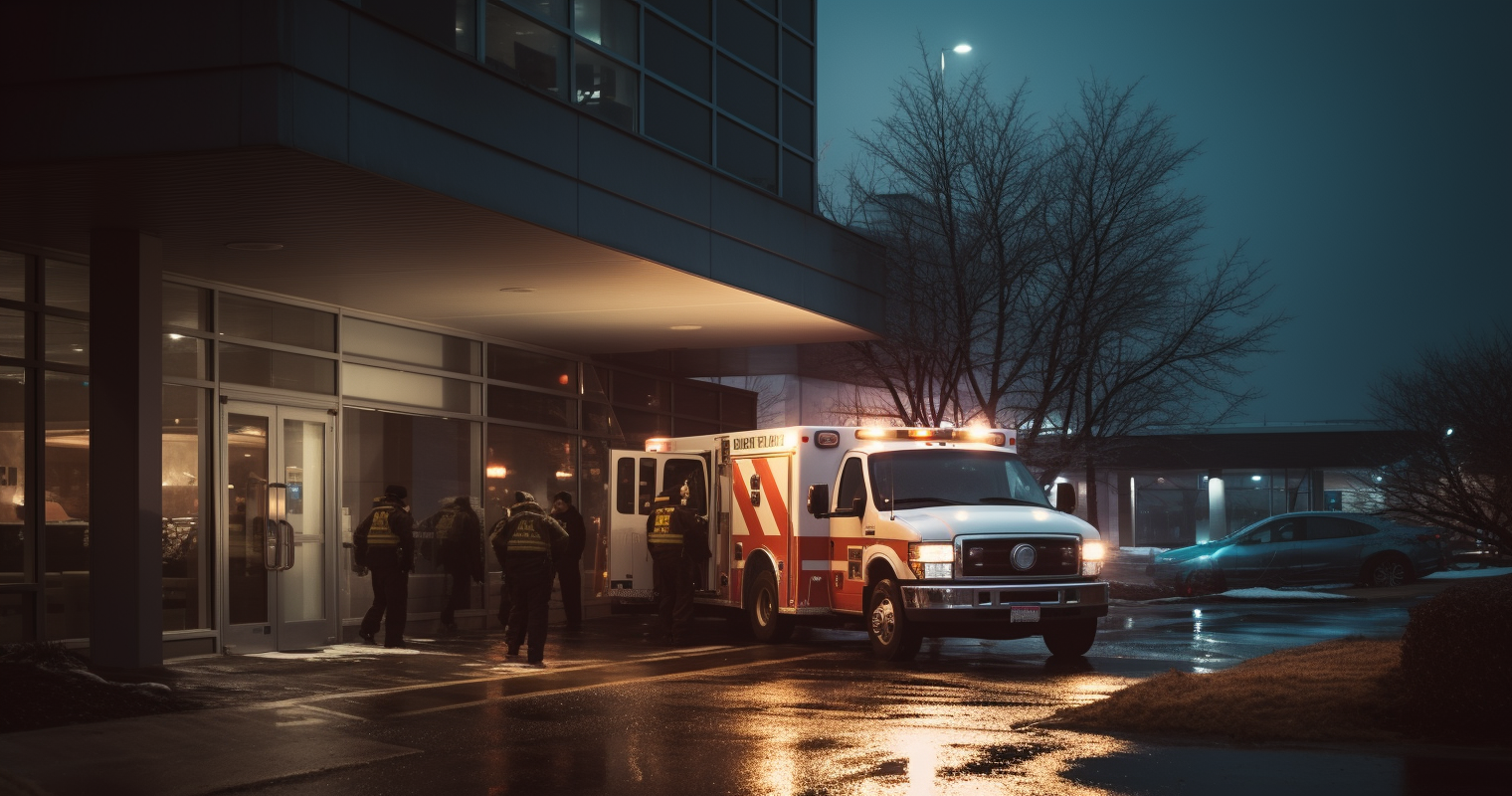
Taiwan uses two separate emergency numbers: 110 for police and 119 for fire and ambulance. Hospitals across the island — both public and private — are equipped to handle emergency medical cases. Foreign residents enrolled in the National Health Insurance (NHI) programme pay reduced co-payments for care; travellers and short-stay visitors without NHI coverage are responsible for the full cost. Anyone not covered by NHI is strongly advised to hold a valid travel insurance policy.
| Item | Details |
|---|---|
| Police emergency number | 110 (as of 2025) |
| Fire & ambulance emergency number | 119 (as of 2025) |
| 24-hour foreigner assistance hotline | 0800-024-111 (toll-free, as of 2025) |
| Mental health / suicide prevention hotline | 1925 (National Suicide Prevention Hotline); 1995 (Taiwan Lifeline International) |
| NHI eligibility for foreign residents | Required after 4–6 months of residence or from first day of employment; tourists not covered |
| Tourists without NHI | Must pay full cost of treatment out of pocket — travel insurance strongly recommended |
What is the emergency number system in Taiwan — and are there separate numbers for police, fire, and ambulance?
Rather than a single catchall emergency number like 112 in the European Union or 999 in the United Kingdom, Taiwan divides emergency calls between two distinct numbers. To reach the police in an emergency, dial 110. For medical emergencies requiring an ambulance, or to report a fire, dial 119 — both services share this number, with the dispatcher routing your call accordingly. Committing both numbers to memory before you ever need them is among the most practical steps any expat in Taiwan can take.
The 110/119 division will be immediately familiar to anyone who has lived in Japan, where exactly the same split applies. Fire and ambulance services are reached on 119 in both countries, making Taiwan’s system recognisable to those with experience of the Japanese model.
If you find yourself without a SIM card, dialling 112 and pressing 0 will connect you to police, though this route — used most often by people stranded in mountain areas — involves a transfer delay compared to dialling 110 directly. Most public payphones allow free calls to both 110 and 119.
Additional useful contacts include the Anti-Fraud hotline (165), the Foreign Affairs Service Station in Taipei at (02) 2556-6007 or (02) 2331-3561 ext. 3064/3065, and the domestic violence and sexual assault helpline at 113. Always confirm these numbers against official sources, as they are subject to revision.
How do you call for emergency medical assistance in Taiwan, and what should you expect?
In a genuine medical emergency, call 119 to request an ambulance. Dispatchers in the major cities are increasingly able to provide some English-language assistance, but language can present a real challenge — especially outside Taipei and other large urban centres. Where possible, ask a Mandarin speaker to place or assist with the call, or make use of the government’s resources for foreign nationals.
The government operates a round-the-clock, toll-free foreigner assistance line at 0800-024-111. This service can help you describe your situation or put you in contact with the relevant emergency responders. Always confirm this number is still active via an official source before you need it.
Once an ambulance arrives, paramedics will assess you and transport you to the most appropriate nearby facility. For genuine emergencies, a public hospital is generally the best destination, as these tend to have the resources to handle urgent and complex cases. Carrying your NHI Health IC card at all times is advisable; presenting it on arrival significantly accelerates the hospital registration process.
What should you do in a mental health crisis in Taiwan?
Taiwan provides around-the-clock mental health crisis support through dedicated hotlines. The National Suicide Prevention Centre can be reached at 1925, while Taiwan Lifeline International operates a parallel service at 1995. The number 1925 was chosen deliberately — it sounds in Mandarin like a phrase meaning “still loves me,” making it easier to remember. Both lines run 24 hours a day, 365 days a year.
The Ministry of Health and Welfare launched the 1925 Anxin (Comfort) hotline in 2006 to deliver immediate psychological support, crisis counselling, and suicide prevention services. The 113 Protection Hotline provides a 24/7, year-round service for individuals affected by domestic violence.
In a serious mental health emergency where someone’s life is at immediate risk, attending any hospital emergency department directly is a valid option — just as it would be for a physical injury or illness. Hospital EDs can carry out psychiatric assessments and arrange onward specialist care if required. If someone is in immediate danger to themselves or others, call 119 for an ambulance or 110 to request police assistance.
For those who do not speak Mandarin, the language barrier can complicate access to mental health support. Private clinics in urban areas are more likely to have multilingual staff, and it is worth identifying a local mental health professional before a crisis arises rather than relying solely on emergency department services, which may not always have specialist follow-up available in your preferred language.
Where can you go for emergency medical treatment in Taiwan?
Taiwan’s hospital network is comprehensive and geographically well distributed — wherever you are on the island, a medical facility is rarely far away. The system spans large public medical centres, regional hospitals, district hospitals, and private clinics, offering different levels of care to suit varying degrees of urgency and complexity.
Among the most renowned institutions are Taipei Veterans General Hospital, recognised for its advanced technology and specialist services, and National Taiwan University Hospital, the country’s leading academic medical centre providing a full range of healthcare. Other major facilities include Tri-Service General Hospital, Chang Gung Memorial Hospital — which operates multiple campuses around the island — and MacKay Memorial Hospital in Taipei.
While public hospitals offer world-class care, some inpatient services that are routine in other countries may not always be available there, and waiting times can be longer than at private facilities. Many expats use the public system as their primary resource but turn to Taiwan’s private sector for shorter wait times, a broader menu of treatments, and easier access to multilingual doctors. In the main cities, dedicated private clinics catering specifically to international residents are also available.
Healthcare infrastructure tends to be stronger in urban areas — as is true across most of the world — and those living in more remote rural locations may need to rely on private care or travel to a city for certain services. The National Health Insurance Administration website includes a hospital locator that allows you to find the nearest NHI-contracted facility.
Is emergency medical treatment free in Taiwan — or is there a charge?
Your out-of-pocket costs for emergency care in Taiwan depend primarily on whether you are enrolled in the National Health Insurance programme. For NHI members, ambulance transport in a genuine emergency is fully covered. Subsequent hospital admission is also covered, though small co-payments may apply for certain supplementary services.
Taiwan does not offer entirely free emergency care even to insured residents — it operates a co-payment structure. Charges are set as a percentage of total costs on a sliding scale, and NHI members can generally expect to contribute around 10–20% themselves, with the government funding the remainder. For the most current co-payment rates, consult the National Health Insurance Administration directly, as figures are subject to revision.
Short-stay visitors and tourists are not automatically enrolled in NHI and therefore carry no guarantee of subsidised care. Private health insurance can fill this gap for temporary stays in Taiwan. If you arrive at a hospital without NHI coverage, treatment in a genuine emergency will not be refused, but you will be charged the full, unsubsidised rate for all services received.
Calling an ambulance for a situation that is not a genuine emergency may attract a fee — verify current charges with the National Fire Agency, as exact amounts can change. This is consistent with approaches taken in a number of other countries where non-urgent use of emergency ambulance services is discouraged through a call-out charge.
Do expats need travel or health insurance to access emergency care in Taiwan?
Expats relocating to Taiwan for work are automatically enrolled in NHI from their first day of employment; self-employed individuals must complete their own registration. For any foreign resident who has lived in Taiwan for more than four months and holds an Alien Resident Certificate (ARC), NHI enrolment is compulsory.
The rules are different for those not in paid employment. Tourists and short-term visitors only become eligible to join NHI after six months of continuous permanent residency in Taiwan. Until that point, all medical expenses must be covered either privately or through an overseas insurance policy.
Anyone staying for fewer than six months without working should arrange suitable private insurance before departing for Taiwan. Those planning to retire there, or who intend to seek employment after arrival, should similarly hold private cover until NHI enrolment takes effect.
Taiwanese hospitals will not refuse emergency treatment to someone without insurance or the means to pay immediately — a duty of care obligation applies. However, the full cost of unsubsidised treatment will be billed, and unpaid debts may lead to collection proceedings. Medical emergencies can be extremely expensive, and the cost of emergency evacuation or repatriation can be greater still. Comprehensive insurance cover is therefore not optional for anyone without NHI — it is essential.
Are there bilateral health agreements between Taiwan and other countries?
Taiwan’s distinctive international status has direct practical consequences for expats in this area. In contrast to the European Economic Area — where a European Health Insurance Card entitles holders to reduced-cost emergency care across member states — Taiwan has no broadly recognised bilateral reciprocal healthcare treaties with other nations that would automatically grant foreign citizens access to subsidised treatment.
Because Taiwan is not a United Nations member and maintains formal diplomatic ties with only a small number of states, the kinds of reciprocal health arrangements common among EU member states or under certain Commonwealth agreements simply do not exist in the Taiwanese context. There is no documented framework under which a foreign national’s passport alone would entitle them to NHI-level pricing.
Taiwan’s NHI was introduced in 1995, evolving from a fragmented, employment-based model into a comprehensive national programme — but eligibility for non-residents and short-term visitors continues to be determined by how long a person has lived in Taiwan and their employment status, not their nationality. If you have reason to believe a specific arrangement may exist between Taiwan and your home country, check with your government’s foreign ministry or Taiwan’s representative office in your country before travelling — but for the vast majority of expats, private insurance is the only reliable solution.
How does Taiwan’s emergency healthcare system compare to systems expats may know?
Taiwan operates a single-payer model in which one public body — the government — controls the funding of healthcare for the entire population. The NHI programme was introduced in 1995 to create this universal coverage framework. Most care is actually delivered by privately run hospitals and clinics, even though funding flows through the government — meaning residents benefit from access to a high standard of treatment across the island.
This arrangement sets Taiwan apart from both a fully public model such as the UK’s NHS, in which the government owns a large proportion of the hospital estate, and the predominantly private, insurance-led system of the United States. In Taiwan, the government functions as the sole insurer, but the facilities providing care are largely operated by private organisations. The outcome is wide access combined with comparatively short travel distances to hospital — although co-payments mean care is not entirely free, even for NHI members.
Expats enrolled in NHI enjoy access to substantially subsidised medical services, spanning everything from traditional Chinese medicine to emergency surgery. By the standards of many Western countries, healthcare costs in Taiwan are considerably lower — even when patients are covering expenses out of pocket. In terms of emergency care quality specifically, major Taiwanese hospitals are widely regarded as internationally competitive.
When you register for NHI, you receive a Health IC card — a smart card that stores your photograph, medical history, prescription records, and eligibility data. This card must be presented whenever you seek care. The integrated card-based system is more sophisticated than what many countries have implemented and significantly reduces administrative delays when you arrive at a hospital.
What emergency services exist beyond medical — how do police and fire services work in Taiwan?
To request police attendance or report an incident, dial 110. Taiwan’s police are generally regarded by the expat community as professional and accessible. Larger city police stations typically have dedicated foreign affairs units staffed by officers with language skills. The Foreign Affairs Service Station in Taipei can be contacted at (02) 2556-6007 or (02) 2331-3561 ext. 3064/3065.
Fire services are contacted by dialling 119 — the same number as for ambulances — with the dispatcher routing the call to the correct service. Taiwan’s fire departments are also responsible for search-and-rescue operations, including in mountain terrain and in the aftermath of natural disasters. In urban areas, response times are generally swift.
Taiwan’s disaster management framework assigns lead responsibility to different agencies depending on the type of incident. During typhoons, for example, the National Fire Agency assumes primary responsibility for disaster response, while all government departments contribute resources when a major event unfolds.
One notable difference from systems in some other countries: Taiwan has no single consolidated emergency number equivalent to 911 or 999. Always dial 110 for police matters and 119 for fire or medical emergencies. If you are uncertain which number applies to your situation, calling 110 will reach the police, who can redirect you to the right service. For non-urgent city government queries in major urban centres, the 1999 hotline provides general assistance — press 0 for English-language support where it is offered.
Are there country-specific emergency risks in Taiwan — natural disasters, disease, or alerts?
Taiwan sits within the seismically active circum-Pacific belt and lies directly in the path of seasonal typhoons, making natural disaster preparedness a genuine necessity rather than a precaution for extreme scenarios. These risks are well illustrated by the magnitude 7.4 earthquake that struck on 3 April 2024, causing considerable destruction in Hualien County. Because earthquakes can occur with no advance warning whatsoever, preparation must be done in advance.
Seismic activity is a constant feature of life in Taiwan due to its position on the Pacific Ring of Fire. While many earthquakes pass without causing significant damage — partly because construction standards and building codes in Taiwan are exceptionally stringent — older structures, particularly in rural areas, may not meet the most recent seismic specifications.
Typhoons represent a seasonal hazard, typically occurring between May and October, with the most active period running from July through September. The Central Weather Administration (CWA) tracks storms in real time and issues official typhoon warnings at cwa.gov.tw. When a warning is declared, city and county governments announce closures of schools and businesses — follow updates from your local authority.
Taiwan is also home to a number of venomous snake species, including the bamboo viper, Russell’s viper, banded krait, coral snake, Chinese cobra, Taiwan habu, and the “hundred pacer.” When hiking, make noise on the trail, wear long trousers, and keep to well-maintained paths. Antivenom for local snake species is held at major hospitals; anyone bitten should call 119 or go immediately to the nearest emergency department.
Dengue fever recurs as a public health issue in Taiwan, and no widely accessible preventive vaccine is currently available. The Taiwan CDC monitors dengue and other infectious disease outbreaks; current alerts are published at cdc.gov.tw. Apply mosquito repellent regularly and eliminate standing water near your home, especially during the warmer months.
Taiwan’s disaster response structure operates across three tiers: central government, county or city, and township level. When a disaster strikes, response centres at each level can be activated in proportion to the scale of the incident, with local centres handling initial response and the central level setting policy and directing resources. National-level coordination is overseen by the National Fire Agency.
What should expats do to prepare for emergencies before they arise in Taiwan?
- Register with your home country’s representative office. Even countries that do not maintain formal diplomatic relations with Taiwan typically operate a representative office or de facto embassy in Taipei. Registering your presence allows your government to reach you in the event of a major disaster, evacuation, or crisis. Locate your government’s travel registration service — for example, the US STEP programme via the American Institute in Taiwan (AIT), or the equivalent for other nationalities — and sign up before an emergency occurs.
- Store key emergency numbers in your phone. As a minimum, save: 110 (police), 119 (fire/ambulance), 0800-024-111 (24-hour foreigner assistance line), 1925 (mental health and suicide prevention), and the emergency contact number for your country’s representative office in Taiwan.
- Enrol in NHI as soon as you become eligible. Workers relocating to Taiwan are enrolled automatically from day one of employment. If you arrive under a non-employment visa or are self-employed, keep track of the four-to-six month residency threshold and register as soon as you qualify.
- Arrange travel or international health insurance before you arrive. Tourists and short-stay visitors who do not yet qualify for NHI should secure an appropriate policy before departure. Make sure the policy includes medical evacuation and repatriation cover in addition to routine treatment.
- Familiarise yourself with earthquake and typhoon safety procedures. English-language guidance on earthquake response — drop, cover, and hold on — and typhoon preparation (including stockpiling water and food, remaining indoors, and following official announcements) is published by Taiwan’s authorities. Understanding evacuation procedures in advance can make a critical difference when a disaster strikes.
- Locate your nearest hospital in advance. Find the closest NHI-contracted hospital to both your home and workplace before you need it. Check whether the facility has an international patient department or multilingual staff, which is especially important if Mandarin is not your language.
- Install emergency alert apps. The government sends emergency notifications via mobile networks, but supplementing this with the Central Weather Administration app and official social media channels will keep you better informed during typhoon season and other events in real time.
Where can expats get official and up-to-date emergency information for Taiwan?
Emergency contact numbers, procedures, and health guidelines can and do change — always rely on official sources rather than secondhand information. The principal authoritative resources for Taiwan are listed below:
- National Police Agency, Ministry of the Interior: npa.gov.tw — official reference for police emergency numbers and procedures.
- National Fire Agency: nfa.gov.tw — covers fire service, ambulance, and national disaster response coordination.
- National Health Insurance Administration: nhi.gov.tw — information on NHI enrolment, co-payment rates, and a hospital locator tool.
- Taiwan Centers for Disease Control: cdc.gov.tw — infectious disease alerts and public health emergency updates.
- Central Weather Administration: cwa.gov.tw — real-time typhoon tracking and earthquake alerts.
- Ministry of Health and Welfare: mohw.gov.tw — mental health resources and public health guidance.
- American Institute in Taiwan (AIT): ait.org.tw — a useful emergency number summary relevant to all foreign nationals in Taiwan, not only US citizens.
- Your home country’s representative office in Taiwan — for citizen registration, emergency consular support, and country-specific travel advisories.
Frequently asked questions
What is the single most important emergency number to know in Taiwan?
Taiwan does not have one universal emergency number, so two are essential: 110 for police and 119 for fire and ambulance. If you are uncertain which to call, dialling 110 will connect you to police who can transfer you to the appropriate service. Both numbers can be dialled free of charge, including from most public telephones.
Will a hospital in Taiwan treat me in an emergency even if I have no insurance and no money?
Yes — Taiwanese hospitals are bound by a duty of care obligation and will not refuse emergency treatment on the basis of your insurance status or immediate ability to pay. However, if you are not covered by NHI, you will be billed the full, unsubsidised cost of all care provided. These charges can be considerable. Holding travel or health insurance before you arrive is the only reliable protection against this financial risk.
I’ve just arrived in Taiwan — am I covered by NHI yet?
Those who have moved to Taiwan for employment are automatically enrolled in NHI from their first day of work. Tourists and short-term visitors are not enrolled automatically and do not become eligible until they have resided in Taiwan continuously for six months. If your NHI coverage has not yet begun, make sure you have private travel or health insurance in place in the interim.
Does Taiwan have a mental health crisis line I can call?
Yes. The National Suicide Prevention Centre provides a 24-hour hotline at 1925, and Taiwan Lifeline International runs a separate 24-hour service at 1995. You can also attend any hospital emergency department directly if a mental health situation becomes life-threatening. Multilingual support on these lines is not guaranteed, so if language is a concern, reaching out to your home country’s representative office may help you identify local mental health services in your language.
Are there any reciprocal healthcare agreements between Taiwan and other countries?
No widely documented bilateral reciprocal healthcare agreements exist that would grant foreign nationals access to NHI-equivalent pricing purely on the basis of their nationality. Unlike reciprocal arrangements common within the EU or under certain Commonwealth frameworks, no equivalent system currently operates in Taiwan. Eligibility for NHI pricing is determined by residency duration and employment status, not by passport. If you have specific questions about arrangements between your country and Taiwan, contact your government’s foreign ministry to verify.
What natural disasters should I be prepared for in Taiwan?
Taiwan sits within a major earthquake zone and lies in the seasonal typhoon belt, making both hazards a real and recurring part of life on the island. Earthquakes can occur at any time of year without warning; typhoons are most frequent between July and September. Dengue fever and encounters with venomous snakes are additional risks, particularly for those spending time in rural or mountainous areas. Prepare an emergency supply kit, know your local evacuation routes, and keep a close eye on alerts from the Central Weather Administration.
How do I get emergency help if I don’t speak Mandarin?
The government’s 24-hour toll-free foreigner assistance line at 0800-024-111 exists specifically to help non-Mandarin speakers navigate emergency situations and connect with the right services. In major cities, police foreign affairs units and hospital international patient departments offer multilingual assistance. Private hospitals and clinics in urban centres are generally more likely to have staff who can communicate in English or other languages. Save the foreigner assistance number before you need it and verify it is still current through an official source.
What should I do during a typhoon warning in Taiwan?
Once the Central Weather Administration issues a sea or land typhoon warning, begin monitoring official channels continuously. City and county governments announce school and business closures — follow your local authority’s guidance. If a warning is active, remain indoors, secure any outdoor furniture or objects that could become projectiles, and ensure you have adequate supplies of food and water. Avoid all unnecessary travel until the storm has passed, and track developments in real time via the Central Weather Administration website. Do not attempt to drive or travel during the height of the typhoon.