
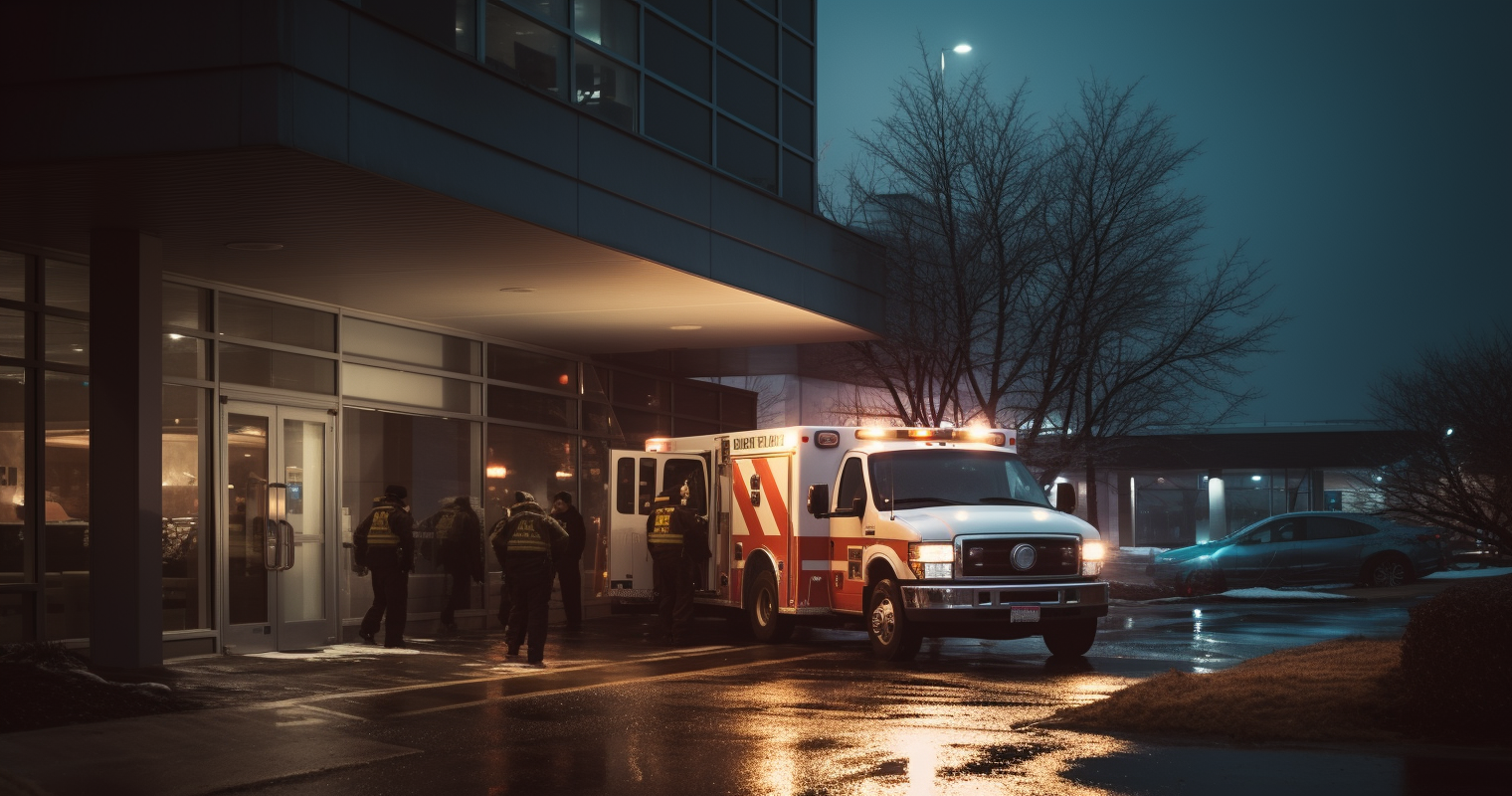
Switzerland maintains distinct emergency numbers for every service: 112 (pan-European, all services), 144 (ambulance), 117 (police), and 118 (fire). No one is ever denied emergency treatment, yet Switzerland operates no free state-funded healthcare — bills are issued after care is delivered. Residents enrolled in compulsory health insurance enjoy broad protection; tourists and newly arrived expats without travel insurance may face very substantial personal costs.
| Item | Details |
|---|---|
| Pan-European emergency number | 112 (police, fire, ambulance — as of 2025) |
| Ambulance | 144 |
| Police | 117 |
| Fire service | 118 |
| Poison control | 145 |
| Mental health crisis line | 143 (La Main Tendue / Die Dargebotene Hand) |
| Air rescue (Rega) | 1414 |
| Mandatory health insurance deductible (residents, as of 2025) | CHF 300–2,500 per year (adult) |
| Emergency treatment without insurance | Treatment provided; full cost billed to patient |
| EHIC holders (EU/EFTA) | Entitled to necessary care at resident cost-sharing rates |
What are the emergency numbers in Switzerland — is there one number or separate numbers for each service?
Switzerland assigns a separate number to each emergency service — 144 for ambulance, 117 for police, and 118 for fire — but the pan-European number 112 is also fully operational and widely regarded as the single most important number to know. Dialling 112 connects you to the police emergency control centre, which will route your call to whichever service is needed. A dedicated poison control line is available on 145.
The 112 number can be dialled using a foreign SIM card or from a prepaid mobile with no remaining credit. This makes it especially valuable for visitors and expats who have just arrived and do not yet have a Swiss number. Many emergency control centres are able to handle calls in several languages, including English, German, and French.
For mountain rescues and aerial emergencies, the Swiss air rescue organisation Rega can be reached on 1414, or by dialling the Swiss air ambulance on +41 58 654 3980. Glacier-specific emergencies have their own line: 1415. These numbers are of particular importance to anyone living near or visiting the Alpine regions.
All primary emergency numbers — 112, 117, 118, and 144 — are free to call from any telephone, whether a landline, mobile, or public payphone. Misuse of the emergency response system is a punishable offence under Swiss law. As of 2025, all numbers and services listed here are verified on the official Swiss government portal ch.ch — consult that source for the most current details.
How do you call for emergency medical assistance in Switzerland, and what should you expect?
To summon an ambulance in Switzerland, dial 144. This connects you directly to a medical dispatch centre. When your call is answered, provide your name, your precise location, a description of the emergency, and a number where the operator can call you back if needed.
Dialling 144 from any phone on Swiss soil will put you through to emergency medical services. Dispatchers work in Switzerland’s official languages — German, French, and Italian — and many are also able to assist callers in English. Both 144 and the general line 112 support all three official languages.
For situations that are urgent without being life-threatening — such as a high fever during the night or a dental injury — dialling 111 or 144 can help you locate the nearest out-of-hours doctor, dentist, or pharmacy. Every Swiss canton has an emergency pharmacy available outside normal opening hours.
Swiss Air-Rescue, commonly known as Rega, is a non-profit private air rescue organisation providing round-the-clock emergency medical coverage across Switzerland and Liechtenstein. Its operations are coordinated from Rega Centre at Zurich Airport, enabling fast responses to medical crises. Rega functions on a patron membership model — many residents and expats choose to become patrons, which can significantly offset or eliminate personal costs when Rega aircraft are deployed for a rescue.
What should you do in a mental health crisis in Switzerland?
For mental health support during a crisis, call 143. This number puts you in touch with a trained counsellor who can provide confidential help at any hour. The service is known as Die Dargebotene Hand in German, La Main Tendue in French, and Il Telefono Amico in Italian — each translating to “the outstretched hand.” As of the time of writing, calls to 143 are charged at CHF 0.20 per call — confirm the current rate directly with the service provider.
Anyone experiencing psychological distress or suicidal thoughts can reach support by calling 143. Children and young people have access to the free dedicated line 147, and online counselling is also offered through the same service. Both are run by Pro Juventute, a Swiss organisation focused on child and youth welfare.
Where someone is in immediate physical danger — whether themselves or another person — the appropriate response is to call 144 for an ambulance or 112 for the general emergency line, rather than a counselling number. It is also possible to go directly to the accident and emergency department of the nearest hospital — called Notfalldienst in German or Urgences in French — for mental health emergencies requiring clinical intervention. Swiss hospital emergency departments are equipped to triage psychiatric crises and refer patients to specialist psychiatric services.
Where can you go for emergency medical treatment in Switzerland?
Switzerland’s standard of medical care is among the finest in the world. In an emergency, your options are to attend the nearest hospital, visit an emergency practice, or call 144 for an ambulance. The country has both public and private hospitals, and most large facilities treat both categories of patient.
Swiss hospitals serve both public and private patients and vary in name depending on the region. Larger hospitals are generally general hospitals offering a broad range of specialties — including gynaecology, cardiology, psychiatry, and neurology — while smaller facilities may focus on a specific discipline such as oncology.
For urgent but non-life-threatening conditions, walk-in emergency practice clinics (Notfallpraxis in German) provide care outside standard GP hours in most cities and many larger towns. Directories of healthcare providers — including hospitals and clinics — are searchable at spitalfinder.ch and doctor.ch.
When you are unsure whether your situation warrants a full emergency department visit, calling 144 or 111 first is a sensible approach. Dispatchers can advise on the most appropriate care setting and, where necessary, dispatch an ambulance directly to your location.
Is emergency medical treatment free in Switzerland — and does cost differ for residents versus visitors?
Switzerland has no free state-funded health services. Private health insurance is compulsory for all residents, representing a fundamental departure from tax-funded models such as the UK’s NHS or the public systems common across Scandinavia. Emergency treatment is always provided, but it is never free at the point of use — the cost is billed to the patient or their insurer.
Residents enrolled in mandatory Swiss health insurance (KVG/LAMal) have most emergency costs covered, subject to their annual deductible. Adult deductibles — known as the franchise — range between CHF 300 and CHF 2,500 per year. Once the deductible is met, patients continue to pay a 10% co-payment on most medical expenses, capped at a maximum of CHF 700 annually. These figures are current as of 2025 — verify the latest thresholds at bag.admin.ch.
Visitors to Switzerland will always receive emergency treatment regardless of their insurance situation, but will be invoiced for the full cost. A hospital stay and associated care can generate a very substantial bill, making Switzerland one of the more expensive countries in which to be uninsured during a medical emergency.
Beyond the annual deductible, all patients over 26 may be billed a fixed daily rate for hospital treatment. The health insurance system covers 50% of the cost of emergency rescue operations, up to CHF 5,000 per calendar year. The Federal Office of Public Health (FOPH) publishes current figures, which are subject to annual review.
Do expats need travel or health insurance to access emergency care in Switzerland?
All persons taking up residence in Switzerland are legally required to obtain health insurance within three months of arrival. Failing to enrol within this window triggers a penalty under KVG/LAMal: where the delay is deemed unjustifiable, the additional premium charged ranges from 30% to 50% of the regular monthly premium, depending on how long enrolment was postponed. Registering promptly is therefore both a legal requirement and a practical financial priority.
Once insured, you can access hospital emergency care by presenting proof of your Swiss health insurance policy. In a serious emergency, you will receive immediate care even without documentation to hand — hospitals will not turn patients away in genuine emergencies, though they will subsequently pursue payment.
Uninsured patients may be asked to provide a deposit of up to CHF 10,000, which illustrates why insurance coverage is so important. Short-term visitors who are not yet residents should carry comprehensive travel insurance as a financial safeguard. Medical bills in Switzerland can be exceptionally high even for minor interventions, and an unexpected hospital admission without coverage could produce a bill running to tens of thousands of Swiss Francs.
Rega helicopter rescues — common in ski resorts and Alpine terrain — are not fully met by standard mandatory health insurance alone. Many expats and visitors choose to take out a Rega patron membership, which involves a modest annual contribution and can cover rescue costs substantially. Full details are available on the Rega website.
Are there bilateral health agreements that entitle some foreign nationals to reduced-cost emergency treatment?
Nationals of EU and EFTA member states may present their European Health Insurance Card (EHIC) to receive medically necessary care in Switzerland on the same terms as a Swiss resident. Treatment is accessible, but patients remain liable for the applicable cost-sharing rules — including the franchise and deductible — and must meet these charges out of pocket. The EHIC does not make care free; it simply prevents visitors from being charged at a higher rate than local insured patients.
With an EHIC, the entitlement covers medically necessary treatment during a temporary stay — that is, care that cannot reasonably be delayed until the patient returns home. This encompasses treatment for sudden illness, accidents, pregnancy, childbirth, and management of pre-existing chronic conditions.
The EHIC is not a replacement for travel insurance, since it does not extend to private healthcare, mountain rescue operations, or medical repatriation. EU visitors should obtain an EHIC; nationals from outside the EU/EFTA — including those from the UK — should consider applying for the Global Health Insurance Card (GHIC), which provides access to essential state healthcare at a reduced cost or sometimes at no charge. UK citizens should verify the current terms of the GHIC arrangement with Switzerland, as post-Brexit agreements may evolve — check nhs.uk for the latest guidance.
Citizens of countries outside the EU, EFTA, and the UK generally have no equivalent bilateral health agreement with Switzerland and should ensure comprehensive travel insurance is in place before arrival. The Swiss Federal Department of Foreign Affairs (FDFA) or your home country’s embassy in Switzerland can advise on any specific arrangements that may apply to your nationality.
How does Switzerland’s emergency healthcare system compare to systems expats may be familiar with?
Switzerland has no free state healthcare provision. The system is neither tax-funded nor employer-financed — instead, private health insurance is mandatory for every individual residing in the country. This stands in sharp contrast to fully public, tax-funded systems such as the UK’s NHS or Sweden’s Landsting model, where emergency care is generally provided without charge at the point of use.
In some respects, Switzerland’s approach resembles insurance-based systems found in other parts of the world. However, unlike systems where uninsured individuals may be denied non-emergency care outright, Switzerland guarantees treatment in any genuine emergency regardless of insurance status — the difference is that costs are invoiced after the fact. The compulsory nature of basic insurance also means that, for legal residents, coverage is universal rather than tied to employment status.
Compulsory health insurance under the Health Insurance Law (KVG) ensures all residents have access to high-quality, comprehensive healthcare, with the same range of benefits available to every insured person. Well over 80% of Swiss residents also carry supplementary private coverage for extras such as private hospital rooms, dental care, or a broader choice of physician — a pattern comparable to countries where individuals voluntarily top up a basic public plan with additional private insurance.
The quality of emergency medical care in Switzerland is consistently ranked among the very best globally. Response times are generally fast, equipment and facilities are modern, and specialist trauma care is widely accessible — a particular advantage given the country’s Alpine landscape and the injury risks that come with it.
How do police and fire services work in Switzerland?
Switzerland’s Federal Office of Police (Fedpol) provides coordination between the individual cantonal police forces. Each of the country’s 26 cantons maintains its own separate police service, with no direct reporting line to federal authorities. This decentralised structure may be unfamiliar to those used to a single national police force. In practice, dialling 117 or 112 automatically connects you to the cantonal police dispatch for your location.
The police emergency line 117 can be reached from any phone. For non-urgent matters, cantonal police stations may be contacted directly — details are published on each canton’s official website. Swiss police interactions tend to be formal and professional in character. It is advisable to carry identification at all times, as Swiss law allows officers to request ID. Foreign nationals are recommended to keep their residence permit or passport on their person.
Most Swiss fire services operate as Militia Fire Brigades (Miliz Feuerwehr). The national fire emergency number is 118. Rather than consisting entirely of full-time professional firefighters as many large-city services do elsewhere, militia brigades are predominantly made up of trained volunteers who can be rapidly mobilised — a well-established Swiss model that proves effective across both urban centres and rural communities.
If you witness a fire, the Swiss government’s guidance — published at ch.ch — recommends raising the alarm immediately by calling 118, alerting anyone in danger, and evacuating the building via emergency exits. If escape routes are blocked by smoke or flames, you should remain in the room, close the door, and wait by the window for the fire service to locate you.
What emergency risks and official warning systems exist in Switzerland?
The Swiss federal environmental agency identifies the primary natural hazard risks as avalanches, floods, debris flows, landslides, rockfall, and earthquakes. Given the country’s mountainous terrain and numerous water bodies, Switzerland is significantly exposed to natural hazards. These risks are real and ongoing — the 2024 floods and mudslides that struck parts of the country claimed seven lives, and authorities have noted that extreme weather events are becoming more frequent as a result of climate change.
The most recent national risk analysis (DES 2025), drawing on contributions from 265 specialists across government, industry, and research, identifies pandemics and power supply failures as the leading current risks facing Switzerland. Natural hazards — including heat waves, floods, earthquakes, droughts, and rockfalls — are assessed alongside technological threats such as power outages and nuclear plant incidents, and societal risks including pandemics, cyberattacks, and terrorist activity.
AlertSwiss is an official app that delivers push notifications to smartphones, providing detailed guidance during natural disasters such as flooding and landslides. Users can tailor the app to receive alerts for specific cantons only. Downloading AlertSwiss is strongly advised for all expats and long-term residents. Switzerland also operates a network of 7,000 sirens — 5,000 stationary and 2,000 mobile units — for issuing immediate danger alerts to the public.
When immediate danger to the population is declared, sirens are activated. The general alarm consists of a sustained rising and falling tone lasting one minute, repeated once within the following five minutes. A distinct water alarm — used only to warn people living downstream from dams — comprises twelve short low tones of twenty seconds each, separated by ten-second intervals. Becoming familiar with these signals shortly after arriving in Switzerland is strongly recommended.
Real-time natural hazard alerts are issued by the Federal Office for the Environment (FOEN) at natural-hazards.ch, covering severe weather, thunderstorms, heavy rain, heavy snowfall, high winds, heat waves, floods, avalanches, earthquakes, forest fires, and drought.
What should expats do to prepare for emergencies before they arise?
- Enrol in mandatory health insurance promptly. Anyone residing in Switzerland must obtain health insurance coverage within three months of moving there. Contact a KVG/LAMal-approved insurer immediately after arrival and keep your insurance card accessible at all times.
- Download AlertSwiss. AlertSwiss uses smartphone push notifications to send detailed instructions regarding natural disasters. It is free, official, and available from the Swiss Federal Office for Civil Protection. Set your canton preferences so you only receive relevant alerts.
- Register with your home country’s embassy or consulate. Most countries operate a voluntary registration scheme — such as the FCDO’s LOCATE system (UK), STEP (US), or equivalent services — that allows your government to contact you in a national emergency, natural disaster, or civil unrest. Check your home country’s foreign ministry website for registration options.
- Save all key emergency numbers in your phone. Store 112, 144, 117, 118, 145, 143, and 1414 (Rega) in your contacts before you need them. It is also recommended to download the free smartphone app Echo112, which works in Switzerland and many other countries across Europe.
- Consider a Rega patron membership. Rega is a private, non-profit air rescue service operating around the clock across Switzerland and Liechtenstein. Patron membership helps cover the costs of helicopter rescue — particularly relevant in Alpine areas and ski resorts. Visit rega.ch for current membership fees.
- Obtain an EHIC or GHIC if applicable. Citizens of EU and EFTA countries can use their EHIC to access medically necessary care in Switzerland under the same terms as a Swiss resident. Visitors from outside the EU/EFTA, including from the UK, should obtain the GHIC. Always carry the card when travelling within Switzerland, especially in remote areas.
- Understand your canton’s civil protection procedures. Obtain information on current developments and obey the instructions of local authorities. Keep informed through radio and television broadcasts and follow directions issued by authorities and emergency organisations. Cantonal authorities publish local emergency procedures on their official websites.
- Keep important documents accessible. Store digital copies of your passport, residence permit, health insurance card, and any critical medical information — including blood type, known allergies, and current medications — in a secure cloud service or send them to yourself by email, so they remain retrievable even if your bag or wallet is lost during an emergency.
Where can expats find official and up-to-date emergency information for Switzerland?
Switzerland maintains a well-developed network of official digital resources covering emergency information. The key sources are listed below — always give priority to these over third-party blogs or forums, as procedures and numbers can be updated at any time.
- ch.ch — Emergencies and danger: The main official Swiss government portal. Covers how to respond to emergencies such as traffic accidents and fires, and lists all key emergency numbers and alarm signals.
- AlertSwiss (alert.swiss): The Federal Office for Civil Protection’s official warning and alert platform. The AlertSwiss app provides alerts and safety information free of charge.
- natural-hazards.ch: Official warnings and real-time alerts on severe weather, flooding, avalanches, earthquakes, forest fires, and drought across Switzerland.
- Federal Office of Public Health (FOPH / bag.admin.ch): The authoritative source for health insurance rules, coverage thresholds, and public health guidance in Switzerland.
- Federal Department of Foreign Affairs (FDFA / eda.admin.ch): The FDFA operates a helpline for consular services and its website lists contact details for all foreign embassies and consulates in Switzerland.
- Rega (rega.ch): Official site for Swiss air rescue, including information on patron membership and operational details.
- Your home country’s embassy in Switzerland: Each country’s embassy or consulate in Bern or other Swiss cities publishes country-specific travel and emergency advice. Check your government’s foreign travel advisory pages for warnings or guidance relevant to your nationality.
Frequently asked questions: Emergencies in Switzerland
What single number should I memorise for any emergency in Switzerland?
The most important emergency number both in Switzerland and across Europe is 112. Calling this number connects you to the police emergency control centre, which will direct your call to the appropriate service — ambulance, fire, or otherwise. It can be dialled from any phone, including those without credit or carrying a foreign SIM card.
Will I be refused emergency treatment if I have no insurance?
Emergency treatment will always be provided regardless of your insurance status, but you will subsequently be invoiced for the full cost of care. Uninsured patients may be asked to pay a deposit of up to CHF 10,000. No genuine emergency is ever turned away, but the financial exposure of being uninsured in Switzerland can be very serious.
Is an ambulance call-out free in Switzerland?
Unlike some countries where ambulance services are provided at no direct cost, ambulance transport in Switzerland is a chargeable service. For insured persons, the health insurance system covers 50% of emergency rescue costs, up to CHF 5,000 per calendar year. Uninsured visitors are billed the full amount. Travel insurance or Rega patron membership can help meet these costs — review your policy carefully before travelling.
Does my EU health insurance card (EHIC) cover me fully in Switzerland?
EU and EFTA nationals holding an EHIC are entitled to medically necessary care in Switzerland on the same basis as a Swiss resident. Treatment is accessible, but patients still face the standard cost-sharing requirements — franchise and deductible — which must be paid personally. The EHIC does not extend to private healthcare, mountain rescue, or medical repatriation.
How quickly do I need to get Swiss health insurance after moving there?
All persons taking up residence in Switzerland must enrol in health insurance within three months of arrival. Unjustified delays attract a penalty: an additional premium of between 30% and 50% of the regular monthly premium, depending on the duration of the delay. Register with a KVG/LAMal-approved insurer as soon as possible after moving.
Is there a dedicated mental health crisis number in Switzerland?
Calling 143 connects you to confidential, anonymous mental health counselling around the clock. Children and young people have their own dedicated free line at 147, operated by Pro Juventute. Where there is immediate risk to life, call 144 for an ambulance or 112 for the general emergency line rather than a counselling service.
What is the AlertSwiss app and should I download it?
AlertSwiss is the Swiss Federal Office for Civil Protection’s official warning platform, delivering push notifications to smartphones with detailed guidance during events such as flooding, landslides, and other natural disasters. Users can configure the app to receive alerts only for specific cantons. It is free and strongly recommended for all residents and long-term expats. Download it from alert.swiss.
What should I do if I need emergency help in a remote Alpine area?
Call Rega on 1414 or the Swiss air ambulance on +41 58 654 3980. For glacier emergencies specifically, use 1415. If mobile reception is unavailable, a 112 call may still connect through any accessible network. Apps such as Echo112 use GPS data to identify your location and display the relevant emergency numbers; when speaking to an operator, you can direct them to Echo112.com to pinpoint your exact position.