
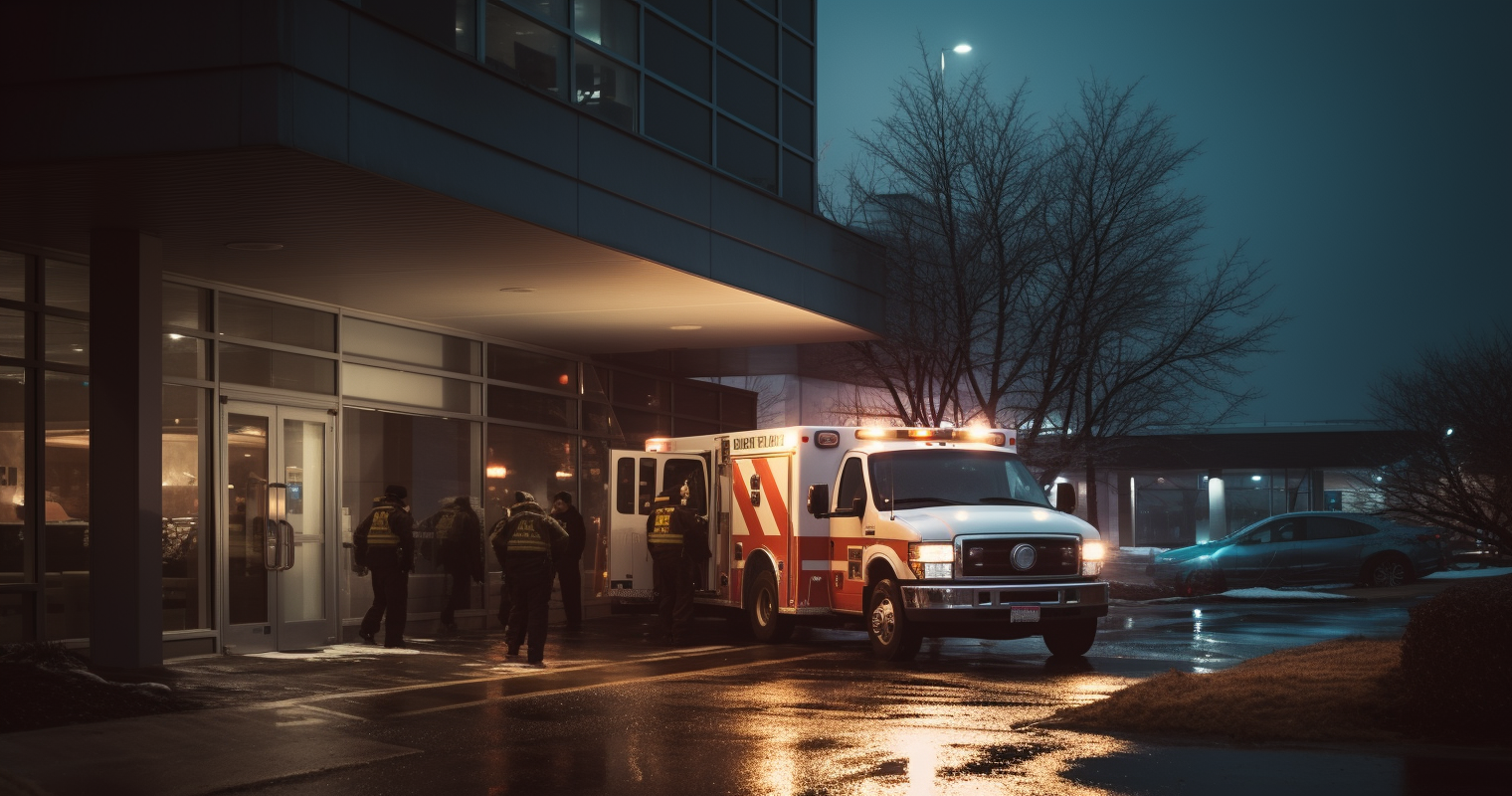
Sweden operates a single emergency number — 112 — covering police, fire, ambulance, and rescue services, with SOS Alarm staffing the line around the clock. For non-urgent medical guidance, dial 1177. Every person in Sweden has the right to emergency care, irrespective of nationality or immigration status, though what you ultimately pay depends considerably on your background and the documents you have on hand.
| Item | Details |
|---|---|
| Main emergency number | 112 (police, fire, ambulance, rescue) — free to call, 24/7 |
| Medical advice (non-emergency) | 1177 (call from Swedish number); +46 771 1177 00 (from foreign number) — 24/7 |
| Non-emergency police | 114 14 (from abroad: +46 77 114 14 00) |
| Crisis/accident information line | 113 13 |
| Emergency care entitlement | Universal — available to all, regardless of nationality or documentation (as of 2025) |
| High-cost protection cap (residents) | SEK 1,450 per 12-month period for outpatient care (as of 2025 — verify at 1177.se) |
What is Sweden’s single emergency number, and does it cover all services?
112 is Sweden’s nationwide emergency number, and it is the number to call whenever you or someone nearby requires urgent assistance. While some countries direct you to separate lines for police, fire, or ambulance, Sweden funnels all emergency calls through one centralised number. Via 112, you can reach the ambulance service, the fire brigade, the police, or mountain and sea rescue teams.
SOS Alarm functions as the coordinating hub for Sweden’s emergency response, encompassing police, the fire service, ambulance, and mountain and sea rescue. Dialling 112 connects you to an SOS Alarm operator rather than any individual service. The operator assesses your call and dispatches whatever response your situation requires, which means you never have to determine in advance which agency to contact.
The 112 number is open to everyone — tourists, immigrants, and long-term residents alike — and operates on all types of phone, including locked devices, phones with no credit, and handsets without a SIM card. The call is free from any landline or mobile.
For situations that are pressing but do not constitute life-threatening emergencies, Sweden maintains three further numbers worth knowing: 114 14 for routine police enquiries, 1177 for the medical advisory service, and 113 13 for information about large-scale accidents or public crises.
Misusing the 112 emergency number is a criminal offence in Sweden. False or prank calls can attract fines or even imprisonment depending on how serious the misuse is, since such calls divert resources away from genuine emergencies.
How do you summon emergency medical help, and what can you expect?
When you dial 112 in Sweden, an operator at one of SOS Alarm’s centres will answer. All SOS operators are fluent in both Swedish and English — an important reassurance for expats who have not yet become comfortable in Swedish. In most circumstances, SOS Alarm can automatically detect your location when you call from a Swedish mobile network, although the operator will still ask clarifying questions to confirm exactly where the incident is occurring.
The operator will put a series of questions to you to make sure the right help is sent to the right place as swiftly as possible. Emergency measures are set in motion while these questions are still being asked, so the process of gathering information does not slow down the response. Be prepared to give your name, your precise location, a description of what has happened, and how many people are involved.
If you are uncertain whether your circumstances warrant dialling 112, the 1177 medical advice line is available at any hour. You can call 1177 — or +46 771-117700 from a non-Swedish number — to speak with a nurse who will help you decide whether to call 112, attend an emergency department, or manage the situation in another way.
The “112 Sweden” app, developed by SOS Alarm, lets you call 112 and automatically transmits your location to the operator. The app also pushes alerts about local emergencies such as severe weather or nearby accidents. Installing this app before you ever need it is a sensible precaution, particularly when travelling through unfamiliar or remote areas.
What steps should you take during a mental health crisis in Sweden?
If you are feeling severely distressed or are experiencing suicidal thoughts, contact 112 or reach a psychiatric emergency unit immediately by calling 1177. Sweden’s mental health emergency infrastructure is tightly integrated with its general emergency system, meaning you do not need a separate specialist number to obtain urgent psychiatric care.
For acute psychiatric assistance, you can turn to the emergency unit for adult psychiatry, which is staffed by doctors and other qualified healthcare professionals around the clock. If the situation is critical — for instance, if you are actively contemplating taking your own life — call 112 without delay or proceed directly to a psychiatric emergency room, which operates 24 hours a day.
If you are having suicidal thoughts and need someone to talk to, Mind’s suicide helpline is reachable on 90 101 at any time of the day or night, and you can also chat through mind.se. All contact with Mind is anonymous. This service can be a vital first step for those seeking emotional support before deciding whether to pursue clinical care.
If you are unsure where to turn, call 1177 — Sweden’s healthcare guidance line — and the staff there will help direct you to the most appropriate support or service. You can communicate in English or Swedish, and several regions also offer telephone guidance in additional languages.
For pastoral or emotional support connected to fear of death, grief, anxiety, or thoughts of suicide, you can also contact Jourhavande präst (the on-call priest) by dialling 112 every night between 21:00 and 06:00, or through an online chat each day between 20:00 and 24:00, available in both English and Swedish.
As of 2025, the Swedish government adopted a new overarching national strategy combining mental health and wellbeing with suicide prevention in a single policy framework. This reflects Sweden’s deepening commitment to accessible mental health support. Always consult mind.se and 1177.se for the latest helpline details, as these may be updated over time.
Where can you receive emergency medical treatment in Sweden?
Sweden has a thorough emergency care network, and hospital emergency departments are open every hour of every day. Patients are seen regardless of whether they hold a physician’s referral. Sweden’s hospital infrastructure is predominantly state-run and financed through regional taxation, meaning that high-quality emergency treatment is available across the country, including in smaller urban centres and towns.
Emergency departments run continuously and apply a triage system, treating the most serious cases first. Appointments cannot be made in advance — you simply attend and are assessed upon arrival. This approach is comparable to the accident and emergency model used in many other countries.
Beyond hospital emergency departments, you may also visit a walk-in care centre. Known in Swedish as närakut or akutmottagning, these facilities handle urgent but less critical presentations and help ease demand on major hospital emergency units. What is available varies by region, so it is worthwhile learning about local options before an emergency occurs.
To locate your nearest emergency facility, contact a health centre (vårdcentral) if you need care but are not acutely unwell and wish to book an appointment. Visit 1177.se or call 1177 for help finding a centre near you. The 1177 Vårdguiden website and app are the most dependable tools for identifying local services, including emergency departments, and are available in English at 1177.se.
Private healthcare, while not commonly relied upon in Sweden, is slowly gaining ground. Roughly one in ten Swedes now holds private health insurance. Private hospitals and clinics exist in the larger cities and can offer reduced waiting times for non-urgent treatment, but for genuine emergencies, the public hospital system remains the primary and most accessible route.
Is emergency medical care free — and do costs vary between residents and visitors?
Swedish law guarantees everyone the right to necessary emergency care. However, the right to care and the absence of any charge are not the same thing — what you actually pay depends heavily on your residency status, your nationality, and the documentation you present.
For residents entered in the Swedish population register, Sweden runs a heavily subsidised model with a cost-protection ceiling. Healthcare consultations typically cost between SEK 100 and 460, varying by region and care type. The high-cost protection scheme applies once your cumulative healthcare fees reach SEK 1,450: beyond that point, you pay nothing further for outpatient visits within the same 12-month period. (As of 2025 — verify the current threshold at 1177.se or with your regional health authority, as these figures are set regionally and may change.)
People from other countries who fall ill during a temporary stay in Sweden are always entitled to emergency care or necessary care that cannot wait until they return home. This is a firm legal guarantee. That said, how much you will be charged depends partly on which country you are from, and in some cases you may be required to cover the full cost yourself.
Tourists can receive medical treatment at any public institution. If you do not hold travel health insurance, however, you will be responsible for settling the bill yourself. For non-EU/EEA visitors without applicable coverage, medical costs in Sweden can be substantial, and no automatic fee waiver beyond the emergency care entitlement is guaranteed. Always confirm current fee arrangements with the treating facility or via 1177.se.
As a general indication at the time of research — fees are region-specific and subject to revision — emergency department visits for registered residents typically involve a charge in the range of SEK 300–460, while a hospital stay may carry a daily fee for the first ten days, capped at the annual high-cost protection threshold. Unregistered visitors and non-EU nationals without applicable insurance may face considerably higher bills. Always confirm current figures with your treating facility or at 1177.se.
Do expats need travel or health insurance to access emergency care?
Emergency care will never be withheld in Sweden regardless of a person’s insurance status, but having the right insurance can make an enormous difference financially. All expats residing in Sweden as permanent residents are eligible for healthcare, but tourists and short-term visitors should carry their own private international medical insurance.
For those entering on a Schengen visa, insurance is a legal obligation rather than an option. Visa applicants must hold travel and health insurance covering any expenses connected with emergency medical treatment, urgent hospitalisation, or transport back to their country of origin for medical reasons or in the event of death. The policy must cover a minimum of EUR 30,000 in costs and remain valid throughout the stay in all Schengen member countries. (As of 2025 — verify current requirements at the Swedish Migration Agency website.)
Long-term expats who secure a Swedish personal identity number (personnummer) and register with the Swedish population register gain access to the subsidised public system. Once you obtain a residence permit valid for 12 months or more, you can register in the population register and receive a personnummer, which entitles you to the same patient fees as Swedish citizens for public healthcare.
If you do not yet have a personnummer and lack health insurance covering non-urgent care, it may still be possible to book an appointment at a healthcare centre — but the fees charged will be the much higher, unsubsidised rate. This makes arranging insurance a priority for any expat during the waiting period before formal registration, which can stretch over several months.
It is worth noting that the EHIC (European Health Insurance Card) is not a substitute for travel insurance. It covers only emergency or necessary medical treatment and does not extend to situations such as medical repatriation. A comprehensive international health insurance policy remains advisable even for EU nationals who carry an EHIC.
Are there bilateral health agreements that lower costs for certain foreign nationals?
Sweden is party to several arrangements that entitle specific groups of foreign nationals to reduced-cost or subsidised healthcare, operating in tiers according to the agreement involved.
The most significant framework is the EU/EEA arrangement. Visitors from EU or EEA member states are entitled to treatment on the same terms as Swedish nationals, provided they present a European Health Insurance Card (EHIC). The EHIC is issued free of charge, but must be obtained before departing your home country. Switzerland is also covered under a separate bilateral agreement.
Nordic country nationals benefit from a distinct regional arrangement. If you are ordinarily resident in another Nordic country and visiting Sweden temporarily without registering there, you are entitled to essential healthcare and emergency dental care. Essential healthcare encompasses treatment that cannot reasonably be delayed until you return home. You are treated on the same terms as Swedish residents, and you must bring valid proof of identity and your home address.
Sweden also holds special agreements with certain other countries regarding healthcare costs. Under these agreements, people from the relevant nations pay the same amounts for specific types of healthcare as insured Swedish residents — for example, when requiring a plaster cast after a bone fracture. The countries covered by these bilateral arrangements are administered by the Swedish Social Insurance Agency (Försäkringskassan). You can call Försäkringskassan on 0771-524 524 to find out whether your country is included.
Most people arriving from countries outside the EU, EEA, or Switzerland will generally be required to pay the full cost of any healthcare they need in Sweden, whether it is emergency, necessary, or planned care. This makes comprehensive travel insurance especially important for visitors from beyond these blocs.
How does Sweden’s emergency healthcare system compare to those expats may already know?
Sweden operates a universal public healthcare system widely regarded as one of the finest in the world, with taxes and government contributions accounting for around 97% of operating costs. In broad terms this is comparable to the NHS in the United Kingdom or to the systems in other Nordic countries such as Denmark and Norway — publicly financed, with care delivered largely at no cost to residents at the point of need, subject to modest co-payments.
Unlike systems where proof of insurance or an upfront payment is routinely demanded before treatment is provided — as is often the case in parts of the United States or in some predominantly private healthcare markets — Sweden guarantees you emergency care regardless of your origins or financial situation. No one is turned away from an emergency department for lack of coverage.
However, unlike the NHS (where most care is completely free at the point of use for UK residents), Sweden applies a co-payment model for registered residents. Healthcare visits typically cost between SEK 100 and 460 depending on the region and nature of treatment. These amounts are modest by international standards, and the high-cost protection ceiling ensures that total annual exposure remains limited.
Private healthcare plays a much smaller role in Sweden than in countries such as Germany or the Netherlands, where parallel public-private systems are more deeply woven into everyday healthcare practice. In Sweden, private clinics supplement the public system rather than competing with it, and emergency treatment is overwhelmingly delivered within public hospitals.
What emergency services exist beyond medical — how do police and fire services operate?
For any emergency — including crimes in progress or fires — dial 112. As with medical emergencies, police and fire calls all pass through the same 112 number; there is no need to select a separate line. SOS Alarm coordinates the dispatch of whichever service or combination of services the situation demands.
For non-urgent police matters — reporting a crime that has already taken place, enquiring about lost property, or asking general questions — 114 14 is the national non-emergency police number. Callers from abroad or using a foreign-registered mobile in Sweden should use +46 77 114 14 00. Understanding this distinction between emergency and non-emergency police lines is useful, as Swedish police actively discourage unnecessary use of 112.
Sweden’s police service (Polisen) is organised as a single national body. English is widely spoken among officers, especially in cities, though proficiency may be lower in more rural locations. Expats dealing with Swedish police will generally find a calm, methodical style — clear communication and a cooperative approach tend to produce the best outcomes.
For fire and rescue, Sweden’s municipal rescue services (räddningstjänst) respond to fires, road accidents, flooding, and a wide range of other rescue situations. When major incidents occur — such as industrial fires or multi-vehicle accidents requiring several emergency resources simultaneously — SOS Alarm coordinates a unified response, markedly improving efficiency and safety outcomes.
A useful number during significant but non-acute incidents is 113 13. This line is intended for people who need information about, or wish to provide information relating to, large-scale accidents or crises such as storms, disease outbreaks, serious traffic accidents, or other community-wide events. It is a valuable channel for public guidance during major situations that do not require you personally to call an emergency service.
Are there Sweden-specific emergency risks, and what warning systems are in place?
Sweden is a politically stable country with a low likelihood of civil unrest or political violence. Nevertheless, expats should be aware of a number of environmental and situational hazards that are genuinely pertinent to everyday life, particularly for those living outside the major urban centres.
Severe winter weather is a significant and recurring hazard. Temperatures in northern Sweden — especially in Norrland and Lapland — can plunge well below −20°C. Blizzards, ice storms, and road closures are routine during the winter months. Even in the south, icy conditions cause road accidents every year. Expats coming from warmer climates should invest in suitable clothing, winter tyres (which are legally required in Sweden under defined wintry conditions), and a clear understanding of when road conditions make driving inadvisable.
Forest fires have become a growing concern during hot, dry summers. The summer of 2018 saw some of the worst forest fires in Sweden’s modern history, and climate change is anticipated to increase fire risk in coming years. In affected areas, local authorities may issue evacuation instructions.
Tick-borne encephalitis (TBE) is an endemic health risk in parts of Sweden, particularly around the Stockholm archipelago and the shorelines of Lake Mälaren and Lake Vättern during spring and summer. A vaccine is available and recommended for anyone spending time in wooded or grassy environments. Lyme disease, also spread by ticks, is similarly present in these areas. Consult a doctor or travel health clinic about vaccination before or shortly after arriving in Sweden.
Sweden’s civil alert system includes VMA (Viktigt meddelande till allmänheten — Important Public Announcement), which transmits emergency alerts via outdoor sirens, radio, and television. The 112 Sweden app also delivers localised alerts for emergencies such as extreme weather or accidents. The government’s crisis information website, krisinformation.se, provides authoritative English-language guidance during major incidents.
National emergency preparedness in Sweden is the responsibility of MSB (Myndigheten för samhällsskydd och beredskap — the Swedish Civil Contingencies Agency), which coordinates readiness across all levels of society. Their regularly updated guidance is available at msb.se.
What should expats do to get ready for emergencies before they happen?
- Save key numbers in your phone. Before you need them, store 112 (emergency), 1177 (medical advice), 114 14 (non-emergency police), and 113 13 (crisis information). Also save the international versions: +46 771 1177 00 for medical advice when calling from a foreign-registered mobile, and +46 77 114 14 00 for non-urgent police matters.
- Register with your home country’s embassy or consulate. Many national governments offer registration programmes — such as the UK’s FCDO scheme, the US STEP programme, or their equivalents — that allow embassies to reach you during a major crisis. Check your home government’s travel advice pages for Sweden and register. Even if no formal scheme exists, note your embassy’s emergency contact details.
- Register with the Swedish population register. If you are settling in Sweden long-term, registering with Skatteverket (the Swedish Tax Agency) and obtaining a personnummer is fundamental to accessing the subsidised healthcare system and a wide range of public services. Make this a priority after arrival.
- Register with a local health centre (vårdcentral). Knowing which health centre serves you and how to contact them before a crisis arises saves valuable time when you actually need care. Find and register with a local centre through 1177.se.
- Secure appropriate insurance. Tourists and other visitors to Sweden should carry private international medical insurance. Long-term expats in the period before receiving a personnummer should also consider private cover. Make sure your policy includes medical repatriation, since the EHIC does not extend to this.
- Download the 112 Sweden app. Developed by SOS Alarm, the app lets you call 112 and automatically shares your location with the operator — invaluable if you are in unfamiliar territory or are unable to describe your position verbally.
- Prepare for winter conditions. If you are arriving in autumn or winter, invest in warm, practical clothing, footwear with grip, and make sure your home is ready for cold weather. Familiarise yourself with local guidance on road conditions and heating systems.
- Consult a doctor about tick vaccination. Seek advice on TBE vaccination, particularly if you intend to spend time outdoors in woodland or grassy areas during the warmer months.
Where can expats find official, current emergency information about Sweden?
Sweden has a well-established network of authoritative sources providing emergency and safety information in English. The most reliable are listed below:
- Krisinformation.se — the Swedish government’s official crisis information portal, maintained by the Swedish Civil Contingencies Agency (MSB). Delivers real-time English-language updates during major incidents, alongside preparedness guidance and key contact numbers.
- 1177 Vårdguiden (1177.se) — the national health information and guidance platform. Use it to locate nearby healthcare facilities, read about medical conditions, and access the round-the-clock nurse advice line. Available in English.
- SOS Alarm (sosalarm.se) — the organisation behind the 112 emergency service. Their website explains how the 112 system functions and links to the 112 app.
- MSB — Swedish Civil Contingencies Agency (msb.se) — responsible for national emergency preparedness. Provides guidance on crisis preparation and explains how Sweden’s alert systems work.
- Swedish Police (polisen.se) — includes English-language information on reporting crimes, contacting the police, and understanding Swedish law.
- Your home country’s foreign ministry travel advice — for example, the UK Foreign, Commonwealth & Development Office (gov.uk/foreign-travel-advice/sweden), the US Department of State (travel.state.gov), or an equivalent service. These sites provide current safety assessments and emergency contact details for nationals overseas.
- Försäkringskassan (Swedish Social Insurance Agency) — for enquiries about healthcare entitlements and bilateral agreements, call 0771-524 524 or visit forsakringskassan.se.
Frequently asked questions
Can I call 112 in Sweden if I don’t speak Swedish?
When you dial 112, your call is answered by an operator at an SOS Alarm Centre. All SOS operators are proficient in both Swedish and English. If you require assistance in another language, the operator can generally arrange interpreter support. Speak clearly and calmly, and respond to the questions you are asked.
Will I be refused emergency care in Sweden if I have no insurance and cannot pay?
Sweden guarantees every person the right to emergency care, including those who come from other countries and fall ill during their stay. Treatment will not be denied. However, a bill will follow, and the amount charged will depend on your nationality, residency status, and any applicable bilateral health agreements. Travel insurance is strongly recommended to cover these potential costs.
What is 1177 and when should I use it instead of 112?
The 1177 number provides healthcare advice around the clock, every day of the year, throughout Sweden. A nurse will listen to your concerns, assess how urgently you need care, and advise you on where to go next. Calling 1177 before heading to an emergency department may spare you a great deal of time and anxiety. Reserve 112 for situations that are life-threatening or require an immediate emergency response.
Does my European Health Insurance Card (EHIC) cover me fully in Sweden?
If you are a registered resident of an EU/EEA country, your EHIC entitles you to necessary healthcare in Sweden at the same subsidised rates that apply to registered Swedish residents. Necessary healthcare covers medical treatment that cannot reasonably wait until you return home, including care for chronic conditions as well as emergencies. However, the EHIC does not cover medical repatriation, so a separate travel insurance policy is still advisable.
What is the 113 13 number and when should I call it?
113 13 is a national public information line in Sweden. You can call it to obtain information about large-scale accidents and crises, or if you have relevant information to share, such as details about a disease outbreak. It is not an emergency service — if you or someone else faces immediate danger, call 112 instead.
Is there a dedicated number for reporting a mental health crisis in Sweden?
There is no standalone mental health emergency number equivalent to, for example, the 988 Suicide & Crisis Lifeline in the United States. Sweden channels mental health emergencies through its standard emergency infrastructure. If you or someone you know needs immediate psychiatric help, call 112. For non-acute emotional support, Mind’s suicide helpline on 90 101 is available 24 hours a day. Call 1177 for advice on accessing local psychiatric services.
Are emergency calls from mobile phones free in Sweden?
Calls to 112 are free from any landline or mobile phone. The number functions even on locked phones, phones with no credit, and devices without a SIM card. Calls to 1177 and 114 14 are not freephone numbers, and standard local call rates may apply depending on your tariff.
What should I do if there is a national emergency or major disaster while I am in Sweden?
Sweden’s official crisis information portal, krisinformation.se, is the primary public source of information during major incidents. Sweden’s VMA alert system broadcasts warnings across radio, television, and outdoor sirens. The 112 Sweden app, provided by SOS Alarm, also pushes localised alerts for emergencies including extreme weather and accidents. If you are in a serious or life-threatening situation, call 112. For information without an immediate threat to safety, call 113 13.