
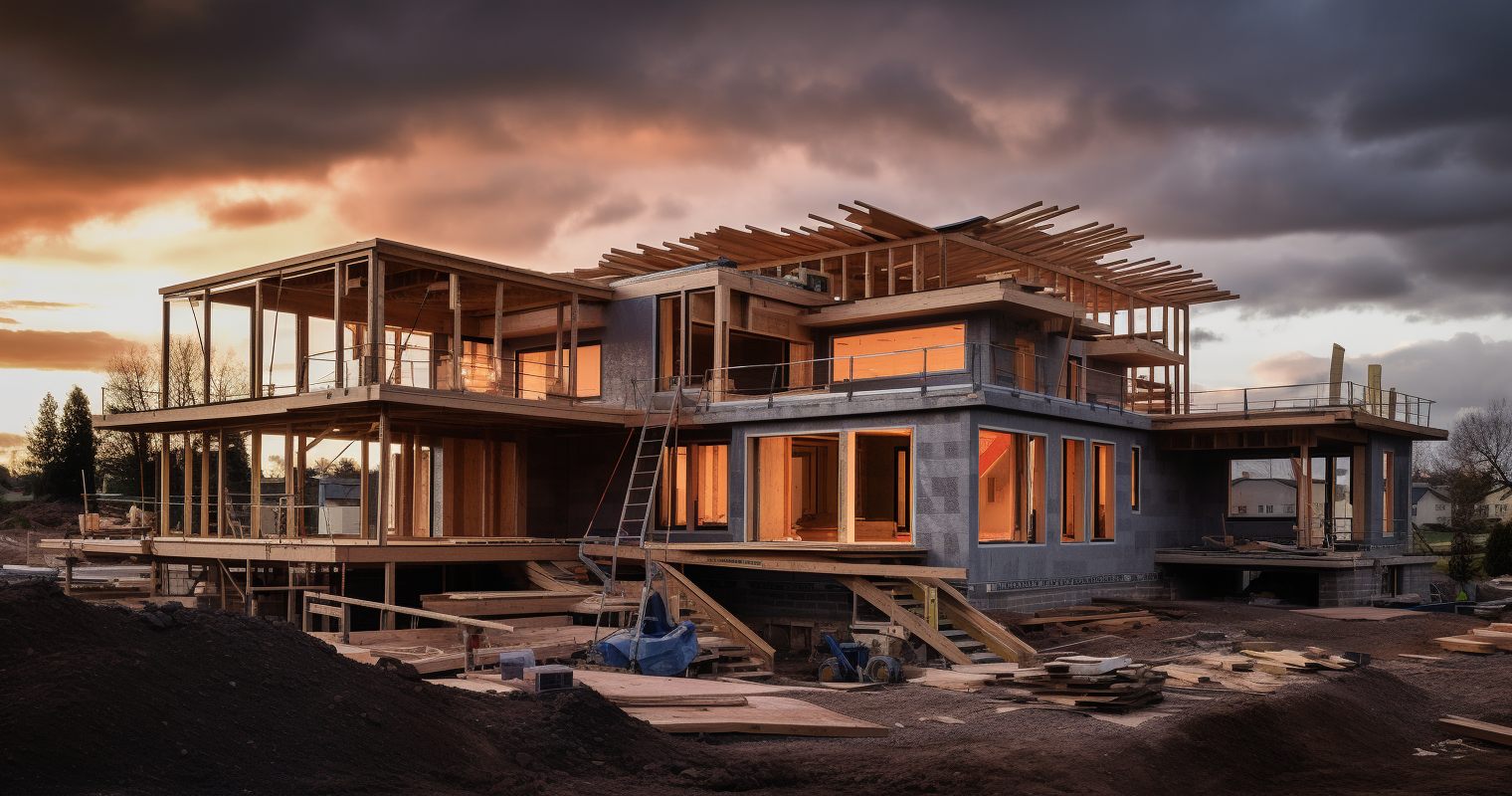
Anyone looking to build or renovate a property in Argentina will almost certainly need formal planning permission — known as a permiso de edificación — and the process is administered at the municipal level. All project plans must be prepared and certified by a licensed architect or engineer. The construction sector is regulated at both national and local levels, and while overseas nationals can generally buy urban property and commission building work without restriction, the rules governing rural land acquisition remain subject to ongoing legislative developments. Before commencing any project, always confirm current requirements directly with the relevant municipal authority.
| Item | Details |
|---|---|
| Planning permission required? | Yes — permiso de edificación required for almost all construction and major renovation (as of 2025) |
| Who grants permission? | The municipal Private Works Office (Dirección de Obras Privadas) in the relevant municipality |
| Permit validity | Typically 12 months from issue, extendable on request (as of 2025) |
| Architect required? | Yes — all plans must be prepared and signed by a licensed architect or engineer registered with a provincial council |
| Heritage authority | Comisión Nacional de Museos, Monumentos y Lugares Históricos (National Commission of Museums, Monuments and Historic Sites) |
| Foreign land ownership (rural) | Subject to ongoing legal changes under Ley de Tierras (Law No. 26,737) — consult a local lawyer before purchasing (as of 2025) |
Do you need planning permission to build or renovate in Argentina?
In Argentina, obtaining planning permission before undertaking building or renovation work is a legal requirement. Unlike some countries — such as Canada or Australia — where minor works like small outbuildings or internal redecoration are commonly exempt from formal approval, Argentine municipalities generally require some level of official authorisation before most types of work may lawfully proceed.
A building permit is required for activities including the construction of new buildings, extensions, remodelling or structural alterations to existing constructions, changes to window openings in the façade, and the application of new surfacing materials to the main external façade. For minor internal works, requirements may differ from one municipality to another, so confirming the position locally is always advisable.
Depending on the scope of a project, an aviso de obra (notice of construction) may be sufficient rather than a full building permit. This simplified notification procedure generally applies to smaller-scale works. In Buenos Aires, the process has been made more straightforward by categorising requirements according to project scale, and the relevant forms have been digitalised.
Important zoning and density rules must also be understood. When building on an existing lot, specific limits apply — notably the F.O.T (Factor de Ocupación Total) and F.O.S (Factor Ocupación del Suelo), which govern the total buildable floor area and ground coverage permitted on any given plot.
The step-by-step application process is as follows:
- Research zoning laws. Before engaging any professional or acquiring land, investigate the zoning regulations and construction rules applicable to the area. Contact the local municipality directly to establish what is and is not permitted on the site.
- Engage a licensed architect or engineer. Appoint a certified architect or engineer to prepare the required plans. In Argentina, all submitted documentation must bear the signature of a registered professional — there is no alternative to this requirement.
- Secure pre-application documents. Prior to commencing construction, you will require a cadastre certification (Certificación de Nomenclatura Parcelaria), a certificate of use (Certificado de Uso Conforme), and the building permit itself (Permiso de Edificación or Aviso de Obras, depending on the nature of the works).
- Submit plans and documents. Lodge a formal application at the Private Works Office (Dirección de Obras Privadas) of the municipality in which the works are to take place, submitting all required plans and supporting documentation.
- Pay fees. Settle the applicable fees and retain proof of payment. Fee schedules are determined by each municipality and are typically calculated according to the surface area and category of works involved. Always confirm current figures with the relevant local authority, as these are subject to change.
- Await approval. Allow sufficient time for the municipal authorities to review and approve the application. Work should only commence once the official permit has been issued.
- Note permit validity. Permits are ordinarily valid for 12 months, but extensions can be requested. If construction is likely to extend beyond the permit period, apply for renewal before the original permit expires.
A construction permit application in Argentina is a formal legal process through which authorisation to carry out building works is obtained. Securing the proper permit ensures compliance with local standards and regulations, reducing the risk of legal complications or financial penalties. The entire process is conducted in Spanish, so engaging a bilingual architect or local legal adviser is strongly recommended for those who are not fluent in the language.
What are the rules around listed buildings, conservation areas, and heritage protection in Argentina?
Argentina operates a formal national heritage protection framework administered at both national and provincial levels. The principal national body is the Comisión Nacional de Museos, Monumentos y Lugares Históricos (National Commission of Museums, Monuments and Historic Sites), which holds responsibility for designating and overseeing the protection of buildings, monuments, and sites of national significance.
If a property is listed or situated within a conservation area or preservation zone, additional regulations apply. Listed buildings require approval from the National Directorate of Heritage before any alterations or renovation works may be carried out, and conservation or preservation designations may impose restrictions on modifications to a property’s external appearance.
Argentina has 12 World Heritage Sites and a further eight on the UNESCO tentative list. Beyond these international designations, the country maintains a national register of monuments and historic sites under Law No. 12,665. Properties listed under this legislation are classified as Monumentos Históricos Nacionales (National Historic Monuments) and are subject to strict controls on any alterations. At the highest level of heritage protection, properties may be listed as National Historic Monuments, with surrounding buffer zones designated as National Historic Sites.
Provincial and municipal governments also maintain their own heritage registers, which may overlap with or extend beyond national protections. For example, the City of Buenos Aires administers its own heritage catalogue (Catálogo de Inmuebles Protegidos) through the city government. It is essential to check both national and local registers before acquiring or planning any works on an older or architecturally notable property.
Breaching heritage protection rules can carry serious consequences, including substantial fines, mandatory restoration of original features at the owner’s cost, criminal liability in the most serious cases, and revocation of any planning permissions already granted. Unauthorised construction in heritage contexts can give rise to both financial penalties and legal proceedings.
Before completing the purchase of any older property, instruct your notary (escribano) or legal adviser to conduct a formal heritage status search with the National Commission of Museums, Monuments and Historic Sites and with the applicable provincial and municipal planning offices. Do not rely on the seller’s statements alone. The National Commission can be reached through the Argentine government’s culture portal at www.argentina.gob.ar/cultura.
What permits and licences are required when building or renovating?
A planning permit alone does not authorise the commencement of construction work in Argentina. Several further approvals are typically needed depending on the nature and scale of the project. Depending on what is being built or renovated, you may need to obtain a building permit for new construction or major renovation, an occupancy permit before the property can be inhabited, an environmental permit where the project affects the surrounding environment, and a fire safety permit where works have implications for fire safety compliance.
The following table provides an overview of the principal permits required and the authorities responsible for issuing them:
| Permit / Approval | When Required | Issuing Authority |
|---|---|---|
| Building Permit (Permiso de Edificación) | Before any new construction, extension, or major renovation | Municipal Private Works Office |
| Works Notice (Aviso de Obra) | Smaller-scale alterations or minor works | Municipal authority |
| Certificate of Use (Certificado de Uso Conforme) | Pre-application — confirms the land use is permitted | Municipal zoning office |
| Cadastre Certification (Certificación de Nomenclatura Parcelaria) | Pre-application — confirms property boundaries and registration | Provincial cadastral authority |
| Environmental Impact Assessment | Projects with potential environmental impact | Provincial or national environmental authority |
| Fire Safety Approval | Any construction affecting fire safety | Municipal civil defence or fire authority |
| Occupancy Permit (Certificado de Habitabilidad / Final de Obra) | Before occupying a newly built or significantly altered property | Municipal authority |
| Utility Connection Permits | When connecting to electricity, gas, water, or sewerage networks | Relevant utility providers |
Building codes in Argentina are issued by the National Institute of Industrial Technology (INTI) under the Ministry of Production, and technical building regulations are published online in Spanish on the INTI website. Visit www.inti.gob.ar for technical standards. It is important to note, however, that enforcement of these codes operates at the municipal level and requirements can differ considerably between jurisdictions.
Additional permits may be required before building works are permitted to begin. For large or complex projects, it is common for different approvals to be needed at different stages — some before groundbreaking, others before occupation. Your architect should guide you through the correct sequencing, but the full list of requirements should be confirmed with the relevant municipal office at the earliest stage of planning. Fees and processing timescales vary significantly between municipalities and project types; always verify current figures directly with the local authority, as these are subject to revision.
How do you find a reliable, trustworthy builder in Argentina?
The Argentine construction industry is regulated at both the national level and through provincial professional bodies. Builders — referred to variously as constructores, contratistas, or empresas constructoras — are required to register with the relevant provincial authority in order to operate lawfully. The principal national trade association representing builders and construction firms is the Argentine Chamber of Construction (Cámara Argentina de la Construcción — CAMARCO).
CAMARCO is the professional body that represents builders and contractors across Argentina. The organisation can be contacted at [email protected] or +54 11 4371-0040. CAMARCO’s website at www.camarco.org.ar features a directory of member companies, making it a useful starting point when searching for a registered contractor.
When assessing any builder or contractor, the following practical steps are advisable:
- Verify registration. Ask any prospective contractor to provide documentary evidence of their registration with the relevant provincial authority and their CAMARCO membership. Verbal assurances are not sufficient.
- Check references. Request a minimum of three references from recent, comparable projects. Where possible, visit completed works in person and speak directly with former clients rather than relying solely on testimonials.
- Require a written contract. While informal arrangements are not uncommon in Argentina, it is essential to set out in writing the scope, objectives, execution plan, materials, timescales, payment milestones, and dispute resolution procedures for any project. A well-drafted written contract is your most important protection if problems arise.
- Use staged payments. Avoid paying the full contract amount upfront. Structure payments in phases tied to clearly defined completion milestones — such as completion of foundations, roofing, internal fit-out, and final handover. Retaining a portion of the sum until all defects have been addressed is standard practice on larger projects.
- Verify insurance. Confirm that the contractor holds valid civil liability insurance (seguro de responsabilidad civil) and that all site workers are covered by workplace accident insurance (ART — Aseguradora de Riesgos del Trabajo). Without this verification, the property owner may be exposed to liability for accidents occurring on site.
- Be alert to common pitfalls. Foreign property owners can attract the attention of unregistered operators who offer unusually low prices. Exercise caution with any contractor who asks for a large upfront cash payment, declines to provide a written contract, or is unable to demonstrate formal registration. Always appoint your architect to supervise works independently of the builder.
Careful management and negotiation of contracts is among the most important elements of the pre-development phase. As the property owner, ensuring that the risks associated with the project are allocated appropriately is essential. Addressing potential challenges at the outset — before work begins — significantly reduces the likelihood of disputes arising during construction.
How do you find a qualified local architect in Argentina?
In Argentina, architects are required by law to hold a licence and register with a provincial professional council in order to practise. There is no single national register; each province maintains its own Consejo Profesional de Arquitectura y Urbanismo (Professional Council of Architecture and Urbanism). In the City of Buenos Aires, this body is the CPAU (Consejo Profesional de Arquitectura y Urbanismo).
To locate an architect for your project, the Professional Council of Architecture and Urbanism is the appropriate starting point. The CPAU can be contacted at [email protected] or +54 11 5239-9400. Their website at www.cpau.org.ar includes a searchable directory of registered architects practising in Buenos Aires. For projects in other provinces, consult the equivalent provincial council — for example, the Colegio de Arquitectos de la Provincia de Buenos Aires (www.capba.org.ar) covers the Province of Buenos Aires.
All architectural plans submitted in support of a planning application must carry the signature and stamp of an architect registered with the provincial council in whose jurisdiction the property is situated. Qualifications obtained overseas are not automatically recognised in Argentina — architects trained abroad must have their credentials formally validated (revalidados) through an Argentine university and the relevant provincial council before they are entitled to practise.
For expats commissioning construction projects, there is no legal requirement for the appointed architect to speak any language other than Spanish — all official documentation and permit applications are conducted in Spanish. It is therefore strongly advisable to engage an architect who either speaks your language or with whom communication can be facilitated through a trusted interpreter. When searching for a suitable architect, ask specifically about their experience working with foreign clients and their familiarity with the permit processes in the relevant municipality, since these vary considerably across the country.
Consider holding an initial consultation with two or three architects before making a final appointment, and always agree fees in writing before any work is commissioned. Architectural fees in Argentina are guided by scales established by provincial councils, though the actual amount is negotiated directly between the client and the architect.
What are the common pitfalls when buying land to build on in Argentina?
Acquiring land for construction in Argentina can be an attractive prospect, but it carries several substantial risks that demand careful due diligence — particularly for buyers unfamiliar with local legal and administrative conventions.
Verify planning permission before you buy. Confirming that planning permission can be obtained should be a prerequisite to purchasing any plot, and the stated boundaries of the land should be verified against the land registry. The fact that a parcel of land is being offered for sale does not in itself mean that construction is permitted on it. Always obtain a formal confirmation of permitted land use (Certificado de Uso Conforme) before exchanging contracts.
Understand zoning classifications. A building permit confirms that the intended use of a parcel of land, building, or structure is consistent with the uses and zoning categories permitted under applicable legislation. Zoning rules in Argentina are established at the municipal level and can restrict land to agricultural, residential, commercial, or mixed use. Always confirm the precise zoning classification directly with the relevant municipal office — not solely through the selling agent.
Check title history carefully. Argentine property transfers are formalised through notarised title deeds (escrituras) recorded with the provincial land registry (Registro de la Propiedad Inmueble). Unlike Torrens title systems used in Australia and parts of Canada, Argentine title is not state-guaranteed, meaning that historic defects in ownership — such as undisclosed mortgages, liens, or disputed inheritances — can impair your rights. Always instruct a qualified escribano (notary) to conduct a full title search covering at least the previous 20 years.
Cadastral verification. One of the documents required for a building permit is a cadastre certification. The cadastral record (catastro) documents the physical boundaries of a plot and does not always correspond precisely with the title deed. Discrepancies between the two are not unusual and can be both time-consuming and costly to resolve. Commission an independent surveyor (agrimensor) to verify that the physical boundaries match both the cadastral record and the title deed before proceeding with any purchase.
Environmental and flood risk checks. Be alert to any environmental or conservation restrictions that may affect the land you are considering. In low-lying areas — particularly in the Pampas region and riverside zones near the Paraná and Uruguay rivers — flooding is a genuine and recurring risk. Consult the relevant provincial environmental authority and review available flood risk mapping before committing to any purchase.
Utility availability. Do not take for granted that mains electricity, gas, water, or sewerage connections are available simply because a plot lies within a built-up area. In rural and peri-urban locations in particular, connection costs can be significant and lead times lengthy. Confirm the availability and likely cost of all utility connections with the relevant service providers before exchange.
Restrictions in border or security zones. Under Decree-Law No. 15,385/44 and its amendments, the acquisition of property situated in “frontier zones” or “security zones” by foreign individuals or legal entities requires prior consent from the National Commission for Safety Areas. This applies to land near Argentina’s international borders and certain coastal areas. Always check whether a property falls within a designated security zone before taking the process further.
What are the rules around foreign ownership and financing for construction projects?
Foreign nationals investing in Argentina are afforded the same status and rights that the Constitution and domestic law extend to Argentine investors when it comes to owning and occupying real estate, including shareholdings in property-owning companies. For urban residential and commercial property, there are therefore generally no restrictions on foreign ownership and no obligation to use a local company structure or joint venture partner.
The rules governing rural land, however, are considerably more involved and remain subject to ongoing legislative change. Argentina’s law restricting foreign acquisition of rural land — known as Ley de Tierras (Law No. 26,737) — has created a complex environment for overseas investors. The Land Law, enacted in 2011, curtailed the purchase of rural land by foreigners with the aim of preserving national sovereignty. The injunction reinstating the law remains active and, until the Supreme Court delivers its ruling, the Rural Land Law continues to apply. There is no set timeline for that decision — it could be resolved in months or take considerably longer. Given this uncertainty, any person considering the purchase of rural land must obtain specialist legal advice before proceeding.
Financing considerations. Property transactions in Argentina are conventionally conducted in US dollars and settled in cash, meaning that mortgage finance plays a far less prominent role than in markets such as France, Germany, or Spain, and the readily accessible home loan culture of many countries has not taken hold in Argentina. Mortgage products do exist, but they are far less widely available than in comparable markets, and foreign buyers in particular will face significant obstacles in securing local construction finance. The majority of overseas buyers fund construction from their own resources, typically denominated in US dollars. If financing is necessary, consult directly with Argentine banks and the Banco Central de la República Argentina (BCRA) at www.bcra.gob.ar for up-to-date information on mortgage and construction lending regulations.
There are no visa or residency prerequisites for a foreign national to purchase property or commission construction work in Argentina. However, an Argentine tax identification number (CUIL or CUIT) is required to complete a property transaction, and all formal contracts must be executed before a registered escribano. For investment structuring purposes, consult a local accountant or lawyer regarding whether holding property through an Argentine corporate entity (SRL or SA) offers tax or administrative advantages in your particular circumstances.
For official guidance on foreign investment, consult the Agencia Argentina de Inversiones y Comercio Internacional at www.inversionycomercio.ar.
What official sources should you consult when planning to build or renovate?
Rules, fees, and procedures in Argentina are subject to frequent revision — particularly given the country’s dynamic regulatory environment. It is essential to verify all information with authoritative official sources before committing to any course of action. The following are the key bodies and resources to consult:
- Your local municipality (Municipio) — Private Works Office (Dirección de Obras Privadas): The primary point of contact for all planning and building permit enquiries. Permits are issued at municipal level, and the specific requirements, fees, and timescales for your project will be determined here. Locate your municipality via www.argentina.gob.ar.
- Provincial Land Registry (Registro de la Propiedad Inmueble): For title searches and confirmation of property ownership. Each province maintains its own register — search for the relevant provincial government website.
- Provincial Cadastral Authority (Dirección Provincial de Catastro): For cadastral certification of plot boundaries. Contact the relevant provincial government for details.
- National Institute of Industrial Technology (INTI): Building codes are issued by INTI under the Ministry of Production, and building regulations are published online in Spanish on the INTI website. Visit www.inti.gob.ar.
- National Commission of Museums, Monuments and Historic Sites (Comisión Nacional de Museos, Monumentos y Lugares Históricos): For heritage designation status. Contact via www.argentina.gob.ar/cultura.
- Professional Council of Architecture and Urbanism — CPAU (Buenos Aires): For finding a licensed architect in Buenos Aires. Website: www.cpau.org.ar. Email: [email protected]. Tel: +54 11 5239-9400.
- Argentine Chamber of Construction — CAMARCO: For finding registered builders and contractors. Website: www.camarco.org.ar. Email: [email protected]. Tel: +54 11 4371-0040.
- Argentine Agency for Investments and International Trade (Agencia Argentina de Inversiones y Comercio Internacional): For foreign investment guidance. Website: www.inversionycomercio.ar.
- Central Bank of Argentina (BCRA): For information on financing and currency regulations. Website: www.bcra.gob.ar.
- Ministry of Infrastructure and Public Works: For national-level housing and urban development policy. Access via www.argentina.gob.ar.
Frequently asked questions
How much does it typically cost to build a house in Argentina?
Construction costs in Argentina are highly variable and have been substantially affected by the country’s currency fluctuations. As of 2025, costs are generally quoted in US dollars given the dollarised nature of the property market. Costs differ widely depending on location, specification, and materials — indicative figures for mid-range residential construction typically fall between USD 600 and USD 1,500 per square metre, though these estimates should be verified with local builders and quantity surveyors given the volatility of the market. Obtain at least three detailed written quotes before appointing any contractor.
How long does the planning permission process take in Argentina?
Timescales vary considerably between municipalities and are influenced by the complexity and scale of the project in question. In Buenos Aires City, straightforward residential permits may be processed within a matter of weeks to a few months, while more complex applications or those involving heritage-sensitive properties can take significantly longer. Incomplete documentation is a common cause of delay. Allow generous time buffers in your project schedule and engage your architect early to ensure that all paperwork is in order before submission.
Do I need to speak Spanish to manage a building project in Argentina?
All official correspondence, permits, contracts, and legal documents in Argentina are produced in Spanish. While some architects, lawyers, and contractors in cities such as Buenos Aires may have working knowledge of other languages, this cannot be assumed in all cases. Engaging a bilingual architect or a professional interpreter for key meetings and when reviewing important documents is strongly advisable. Dependence on informal translations carries a real risk of misunderstandings that may prove expensive to unravel.
Are building standards or qualifications from other countries recognised in Argentina?
Foreign professional qualifications — whether held by architects, engineers, or skilled tradespeople — are not automatically recognised in Argentina. Architects and engineers who qualified abroad must have their credentials formally validated (revalidados) through an Argentine university and then register with the relevant provincial professional council before they may sign plans or take responsibility for supervising construction. Overseas building codes and standards, including those from the United States, United Kingdom, or European Union, are not applicable in Argentina; the relevant standards are those published by INTI and adopted by the applicable municipality.
What happens if planning rules are breached or construction takes place without a permit?
Works may only begin once a permit has been formally issued. Carrying out construction without authorisation can result in financial penalties, mandatory demolition or reinstatement of original conditions at the owner’s expense, and difficulties in obtaining an occupancy permit or achieving a future sale of the property. In areas subject to heritage protection, the consequences are typically more severe. If you find that earlier works on a property were carried out without permits, seek legal advice on regularising the situation (regularización de obra) before completing any purchase.
Can I access a local mortgage or construction loan in Argentina as a foreign national?
In practice, access to local mortgage or construction finance for foreign nationals is extremely limited. Argentine banks have historically provided few mortgage products, and those that exist are generally available only to residents with established credit histories in the country. The vast majority of foreign buyers and builders finance their projects from personal capital, usually held in US dollars. If local financing is a prerequisite for your project, engage directly with Argentine banks and consult a local financial adviser with current knowledge of the regulatory environment.
How do I resolve a dispute with a builder or contractor in Argentina?
If a dispute arises with a contractor, the first step is to seek resolution through whatever mechanism is set out in the contract — which underlines the importance of having a comprehensive written agreement in place from the outset. Where informal resolution is unsuccessful, disputes can be referred to mediation (mediación prejudicial), which is a compulsory preliminary step before civil litigation can be initiated in Argentina. For contractors who are members of CAMARCO, the chamber may offer its own conciliation services. Should mediation fail to produce a resolution, the matter can be pursued through the Argentine civil courts. Always take legal advice from a local lawyer before initiating formal proceedings.
Are there restrictions on buying agricultural or rural land as a foreign national in Argentina?
The Land Law (Ley de Tierras, Law No. 26,737), enacted in 2011, placed restrictions on the acquisition of rural land by foreign nationals in order to safeguard national sovereignty. The law remains in force pending a Supreme Court determination, and there is no fixed timetable for that ruling — resolution could come within months or take considerably longer. In addition, foreign individuals seeking to acquire property in “frontier zones” or “security zones” must first obtain authorisation from the National Commission for Safety Areas. Given the complexity of the legal position and the ongoing uncertainty, specialist Argentine legal advice is indispensable before pursuing any rural or border-area land acquisition.