
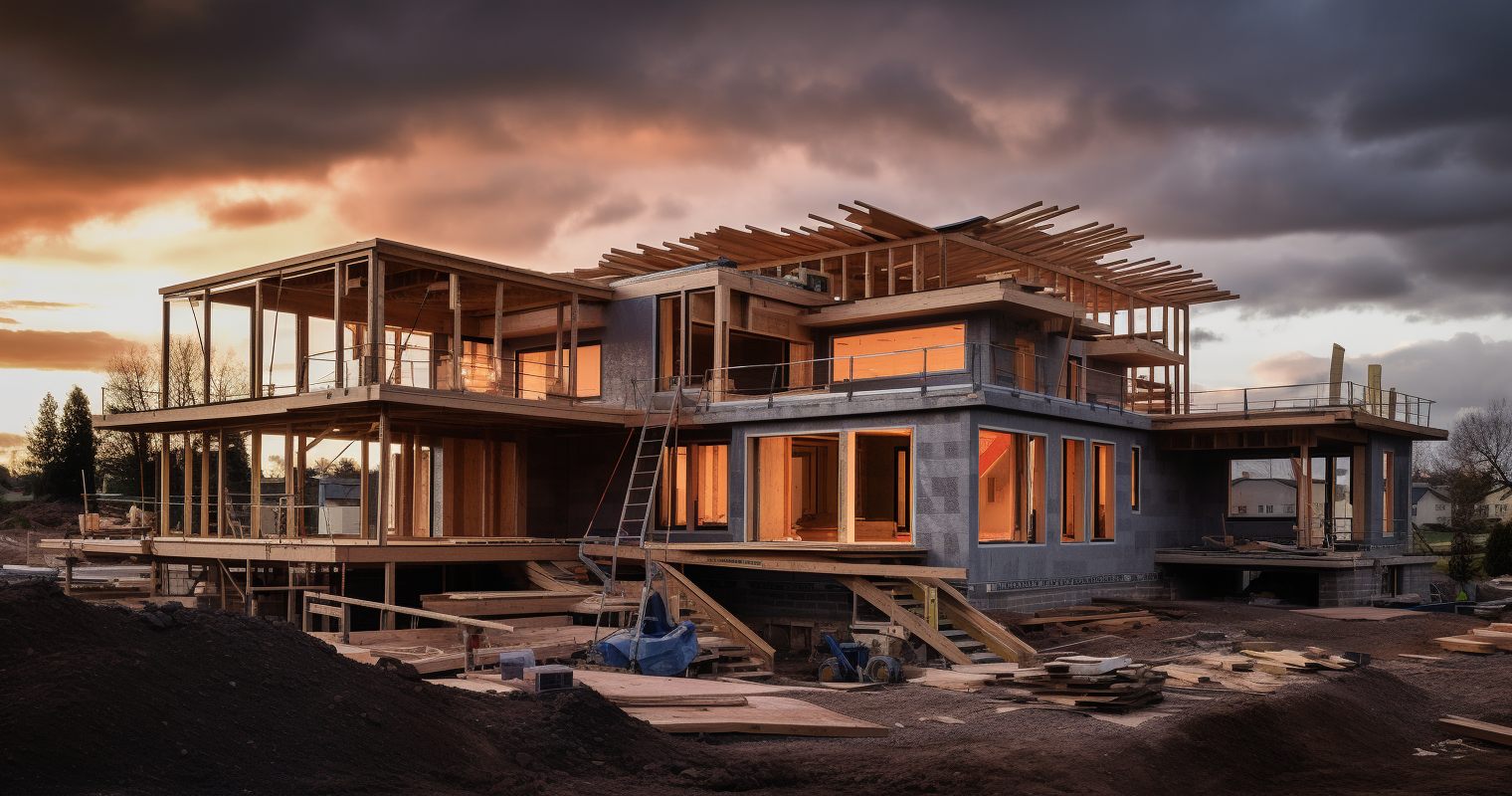
For foreign nationals, building or renovating property in the Czech Republic is a regulated yet achievable undertaking. Planning permission is typically required for new construction, extensions, and major renovations, with the process now governed by the new Building Act (Act No. 283/2021 Coll.), which entered into full force in 2024. The construction sector operates under strict oversight, heritage conservation is comprehensive in scope, and there are no nationality-based barriers to foreign ownership of land or buildings.
| Item | Details |
|---|---|
| Governing legislation | Building Act No. 283/2021 Coll., fully in force as of 1 July 2024 |
| Permit process | Single unified building permit procedure (as of 2024); replaces the old dual zoning + building permit system |
| Target processing times (as of 2024) | 30 days for simple/residential builds; 60 days for other projects (extendable) |
| Small structures exempt | Outbuildings up to 25 m² footprint and 5 m height on a family home plot do not require a permit |
| Foreign ownership | No nationality-based restrictions; foreign nationals have the same rights as Czech citizens |
| Heritage protection authority | National Heritage Institute (Národní památkový ústav / NPÚ) — npu.cz |
| Land registry | Cadastre of Real Estate (Katastr nemovitostí) — cuzk.cz |
| Mortgage LTV for foreigners (as of 2025) | Typically up to 80% LTV; minimum 20% deposit required |
Do you need planning permission to build or renovate a property in the Czech Republic?
From 1 January 2024, a reformed Building Act took effect, introducing a single, consolidated permit procedure with the goal of making the construction approval process faster and more digital. Under the old framework, developers were required to complete two distinct rounds of proceedings — first a zoning permit, then a separate building permit. The new system eliminates this two-stage requirement, meaning only a single joint proceeding is necessary before work can commence.
Planning permission is obligatory for most construction projects, with a defined set of exceptions. Works falling into categories such as minor outbuildings and limited landscape alterations are exempt from the permit requirement. In particular, structures with a built-up area of no more than 25 m², a height of no more than 5 metres, a maximum of one storey above ground level, and a basement no deeper than 3 metres, situated on the plot of a family home, may proceed without a permit. These exemptions are generally intended for garden structures and similar ancillary buildings.
Before determining which procedure applies to your particular project, it is advisable to request “planning information” from your local building authority, which will clarify whether a full building permit or a simpler planning consent is required. This preliminary enquiry should ideally be completed before any architectural work is commissioned.
In contrast to systems such as those in Canada or Australia — where planning approval and building consent are typically handled by separate bodies through entirely independent processes — the Czech reform was designed around a principle of consolidation: one authority, one process, one outcome, with unified appeals and fixed statutory deadlines overseen by local building offices.
The new legislation aims to address the historically poor processing times, which had regularly averaged more than 250 days. The stated targets under the reformed system are approximately 100 days overall, with straightforward residential projects expected to receive a decision within 30 days (extendable by a further 30), and other applications within 60 days (extendable by 60). In practice, however, backlogs remain a concern, particularly in Prague and other densely populated urban areas.
The step-by-step application process under the new Building Act is as follows:
- Request planning information: Contact your local municipal building authority (stavební úřad) to confirm what type of approval your project requires and whether the local zoning plan permits your intended use.
- Prepare project documentation: Collect all project documentation, including architectural plans, engineering calculations and network layouts, and documents confirming ownership rights to the building plot or property.
- Consult neighbours and obtain consents: The project must not adversely affect neighbouring plots; it must be coordinated with neighbouring landowners, and an environmental impact statement must be obtained before submitting your application.
- Obtain a Single Environmental Statement (JES): All projects permitted under the Building Act now require the issuance of a Single Environmental Statement (JES), which replaces up to 26 administrative acts contained in 9 different environmental laws.
- Submit your application: The application must be submitted on a prescribed form and there is a fee for submitting it. Applications can be submitted electronically via the Builder’s Portal (Portál stavebníka) at portal.gov.cz, or in paper form during the current transitional period.
- Authority review and decision: Building permission is issued by the competent building authority following either full or summary proceedings, commenced by the application. During the proceedings, binding assessments from relevant authorities, objections from participants, and public remarks are considered, and the authority checks compliance with zoning plans and relevant regulations.
- Receive building permit: Building permits are now valid for up to 10 years if construction has started on time.
- Apply for an occupancy permit: Once construction is complete, an occupancy permit (kolaudační povolení) or occupancy consent (kolaudační souhlas) is required before the building can be used.
It should be noted that from October 2024, the Czech government chose a partial workaround regarding the digitalisation of construction procedures, permitting the continued operation of existing information systems during a transitional phase, citing difficulties associated with the digital transition. This transitional period for digitising the building process runs until 31 December 2027. Given how rapidly requirements are evolving, always verify the current submission procedures with your local building authority. Administrative fees for permit applications vary by project type; confirm the applicable fee schedule directly with the relevant municipal office.
What are the rules around listed buildings, conservation areas, and heritage protection in the Czech Republic?
The Czech Republic operates a well-established and detailed system of heritage protection that draws broad comparisons with listed building and conservation area frameworks found elsewhere in Europe, although the specific terminology and administrative structure are distinctly Czech. The foundational legal text is the Act on State Monument Preservation (Zákon o státní památkové péči), No. 20/1987 Coll., as amended, together with the implementing decree No. 66/1988 Coll.
The most historically or culturally significant monuments are designated as national cultural monuments through government decree. At present, more than 300 registry entries are included in the Central List of Cultural Heritage. Beyond these, tens of thousands of additional properties are protected as standard cultural monuments — covering buildings, areas, or movable items of notable historical, architectural, or cultural significance.
Heritage protection in the Czech Republic extends well beyond individual structures. Entire towns and villages, historic urban cores, and distinctive districts defined by their architectural character or developmental history may all qualify for protection. Today, the country has close to six hundred protected urban units, comprising 297 towns — including 39 urban heritage reservations and 258 urban heritage zones — and 277 villages.
Areas containing groups of immovable cultural monuments in their original historical context, or sites of archaeological importance, may be formally designated as conservation areas — most commonly historic town or village centres — through government decree. Each such protected area is also surrounded by a protective belt, within which heritage authorities regulate construction activity and other physical changes so that important long-distance views and panoramas of the protected area are preserved.
Owning or renovating a cultural monument carries substantial obligations. The owner is legally required to maintain the monument in good condition, ensure its preservation, and bear the associated costs. Even minor works on a designated cultural monument, or within a heritage reservation or zone, require prior approval from the relevant heritage authority — in addition to the usual planning and building consents.
State administration of national cultural monuments is carried out by Regional Authorities. The Ministry of Culture sets the policy framework for monument preservation, determines which properties receive cultural monument status, and administers financial support programmes for monument owners. Expert advisory services are mandatorily provided to both municipalities and regions and are made available free of charge to monument owners. These services are centralised to maintain consistent standards and are delivered through the National Heritage Institute (NHI), which was established by the Ministry of Culture and operates across all 14 regions of the Czech Republic.
Before acquiring any older property or committing to renovation works, consult the Central List of Cultural Monuments through the National Heritage Institute’s online database at npu.cz. Also contact the local municipality and the relevant Regional Authority to determine whether the property or its surroundings fall within a heritage reservation, zone, or protective belt. Violations of monument protection law can lead to substantial fines and mandatory remediation at the owner’s expense. While the Czech Republic does not have a direct equivalent to a tree preservation order system, certain trees within protected areas may fall under nature and landscape protection legislation — check with the local environmental authority for guidance.
What permits and licences are required when building or renovating in the Czech Republic?
Construction in the Czech Republic is subject to an intricate web of zoning and building regulations drawn from numerous laws and statutory instruments covering the design, visual appearance, and technical execution of works. The new Construction Act, enacted in 2021, came fully into force on 1 July 2024. In addition to the core building permit, a number of other approvals and documents must be secured before and during the construction process.
Energy Performance Certificate (průkaz energetické náročnosti budovy): Compliance with energy requirements is demonstrated through a building’s energy performance certificate, which has a validity of 10 years. This must be obtained for any new build prior to submitting a building permit application, and is also required when undertaking substantial modifications to an existing building.
Single Environmental Statement (JES): Every project falling within the scope of the Building Act requires a Single Environmental Statement, which is issued outside the building permit procedure itself and consolidates the requirements of up to 26 separate administrative acts drawn from 9 different areas of environmental legislation. Where a project is subject to an Environmental Impact Assessment (EIA) and the developer requests its inclusion, the JES will incorporate a binding EIA opinion.
Environmental and utility permits: Depending on the specific nature of the development, additional permits or licences may be required on a project-by-project basis. These may include environmental licences, approvals from heritage protection authorities, or permits relating to mining activity. Where a construction project is likely to have environmental effects above defined thresholds, a full Environmental Impact Assessment is required. Utility connection permits — covering water, sewerage, gas, and electricity supply — must be obtained from the relevant network operators before any connections can be established.
Occupancy permit: An occupancy permit authorising the use of the completed building remains a requirement under the new Building Act. Without it, a building may not lawfully be inhabited or put into operation. The applicant must demonstrate that the completed structure meets all conditions set out in the original building permit before an occupancy permit can be granted.
Heritage and monument approvals: Where a property is a designated cultural monument or sits within a heritage zone or reservation, a separate approval must be secured from the relevant heritage authority before any building or renovation work commences. This approval is issued by the relevant municipal authority exercising delegated state administration functions, in consultation with the National Heritage Institute.
Fire safety sign-off: For certain categories of building, the fire rescue service must be involved during the design phase and may be required to issue a binding opinion. This requirement typically applies to larger or more technically complex projects and is generally coordinated as part of the building permit process.
The digital Builder’s Portal (Portál stavebníka) is intended to serve as the central hub for managing all these applications. The portal enables the submission of applications, correspondence with authorities, and registration of technical documentation. However, the rollout of full digitalisation is being carried out in phases, with a transitional period extending to the end of 2027, during which authorities retain the option to continue using paper-based processes to some degree. Given that the system is still being refined, always confirm current submission requirements directly with your local building authority before proceeding.
How do you find a reliable, trustworthy builder in the Czech Republic?
Securing planning permission in the Czech Republic has historically been a more drawn-out and involved process than in many other EU member states. Selecting the right building contractor to carry out your project is therefore a decision of considerable importance. The Czech construction sector is regulated through a combination of trade licensing requirements, company registration obligations, and professional standards, though it lacks a single mandatory accreditation body equivalent to a registered builder scheme in Australia or NHBC membership in the United Kingdom.
Construction firms and individual builders operating in the Czech Republic must hold a valid trade licence (živnostenský list) for construction activities, issued by the Trade Licensing Office (živnostenský úřad). Construction falls under the category of regulated trades, which means the company must demonstrate that its management possesses the required professional qualifications and practical experience. Trade licence status can be verified through the publicly accessible Trade Register at rzp.cz.
The principal professional body for the construction sector is the Czech Chamber of Civil Engineers (Česká komora autorizovaných inženýrů a techniků činných ve výstavbě — ČKAIT). Engineers and technicians who design or supervise construction works must hold authorisation and be registered with ČKAIT. When engaging a contractor for a substantial project, request the name and registration number of the authorised individual responsible for technical oversight of the works.
- ČKAIT contact details: Website: ckait.cz | Address: Sokolská 1498/15, 120 00 Prague 2, Czech Republic | Phone: +420 227 090 400 | Email: [email protected]
The Czech Association of Building Entrepreneurs (Svaz podnikatelů ve stavebnictví v ČR — SPS) is the principal trade body representing construction companies and can be a helpful starting point when searching for reputable contractors.
- SPS contact details: Website: sps.cz | Address: Václavské náměstí 837/11, 110 00 Prague 1, Czech Republic | Phone: +420 224 227 484 | Email: [email protected]
When assessing potential contractors, the following practical steps are recommended:
- Verify registration: Confirm the company’s trade licence and any required professional authorisations via the public registers at rzp.cz and ckait.cz.
- Request references: Ask for verifiable references from recently completed projects, and where circumstances allow, visit finished builds to assess workmanship and quality first-hand.
- Obtain a detailed written contract: A robust construction contract should set out the full scope of works, materials to be used, project timelines, a payment schedule, penalties for delays, and warranty terms. Never proceed on the basis of a verbal agreement or informal understanding.
- Use staged payments: Arrange payments in instalments tied to verified completion of defined project milestones — avoid paying large sums in advance. Where significant amounts are involved, consider using a notary or lawyer to hold funds in escrow.
- Verify insurance: Request evidence of professional liability insurance and confirm that the policy covers the full scope of your project.
- Beware of common pitfalls for expats: Foreign property owners can sometimes be targeted by contractors who take advantage of unfamiliarity with local regulations, deliberately underprice a job to win the contract and then introduce additional charges mid-project, or substitute inferior materials. Always obtain a minimum of three written quotations, and treat any quote that appears unusually low with caution. Language difficulties can compound these risks — consider engaging a bilingual Czech architect or lawyer to assist with contract review.
How do you find a qualified local architect in the Czech Republic?
Architectural practice in the Czech Republic is a licensed profession, and only registered practitioners may legally carry out architectural work. The regulatory body responsible for licensing and supervising the profession is the Czech Chamber of Architects (Česká komora architektů — ČKA). Architectural designs submitted as part of a planning or building permit application must be signed off by an architect who holds current ČKA registration.
- ČKA contact details: Website: cka.cz | Address: Josefská 34/6, 118 00 Prague 1, Czech Republic | Phone: +420 257 532 914 | Email: [email protected]
The ČKA operates a publicly searchable register of all authorised architects on its website, which allows you to confirm whether a specific practitioner holds a current licence. The register can be searched by name, geographic location, or area of specialisation, making it the most reliable method for verifying that a practitioner is properly qualified and authorised to represent you before the relevant building authorities.
For expats, there are a number of practical points to consider when selecting an architect. Although there is no legal requirement for an architect to work in any particular language, identifying a practitioner who is accustomed to working with foreign clients — and ideally one with prior experience of international property owners or developers — will significantly ease communication and reduce the likelihood of misunderstandings during the design and permit stages. Many architects based in Prague and other major cities regularly work with international clients and are comfortable navigating the Czech planning system in other languages.
Architectural qualifications obtained in other EU member states are in principle recognised under EU mutual recognition directives, and EU-qualified architects may apply for ČKA registration. Qualifications from countries outside the EU are evaluated by the Chamber on an individual basis. In practice, for a foreign national commissioning a construction project in the Czech Republic, engaging a locally registered Czech architect is almost invariably the more straightforward course of action. Should a foreign architect be involved for design input, the usual arrangement is for them to collaborate with a Czech-registered architect who assumes legal responsibility for submissions to the authorities.
Beyond the design of your project, a well-chosen architect will coordinate the permit process, liaise with heritage authorities when necessary, and ensure compliance with Czech technical standards throughout — a particularly valuable contribution for expats who are not familiar with the local regulatory environment.
What are the common pitfalls when buying land to build on in the Czech Republic?
Acquiring land for construction in the Czech Republic demands careful due diligence. Unlike purchasing a completed property, land transactions carry distinct risks related to planning status, zoning classification, title integrity, and infrastructure availability — any of which can leave a buyer with a plot that cannot be built upon, or one that requires substantially greater investment than originally anticipated.
Verify planning permission in principle before purchase: A plot marketed as “buildable” does not automatically guarantee that planning permission will be granted for your specific project. Always consult the local zoning plan (územní plán) and request planning information from the local building authority before exchanging contracts. Any planned construction must conform to the municipality’s zoning plan, and each municipality has the power to adopt zoning or regulation plans that govern land development across its territory.
Check the land registry and cadastre thoroughly: The Czech real estate register — the cadastre — contains details of all types of real property, including ownership information, potential restrictions, encumbrances, and other rights attached to the land. Examine the cadastre carefully for easements, pre-emption rights, or third-party rights that could limit what you are able to do with the plot. The cadastre is publicly accessible online at cuzk.cz.
Understand land ownership and building separation: Since 2014, Czech property law has affirmed the principle that a building forms part of the land on which it stands, theoretically preventing a building and the underlying land from being sold separately. Where historic split ownership exists, the law provides a mutual right of pre-emption designed to reunite ownership. Ensure that no such division of ownership applies before proceeding with any purchase.
Confirm title transfer happens via the cadastre: In the Czech Republic, signing a purchase contract does not in itself transfer ownership. Title passes only when the ownership right is formally registered in the Land Registry (Cadastre of Real Estate), through a two-step process involving execution of the transfer agreement and then the constitutive registration of ownership in the cadastre. This differs from certain other legal systems in which contract execution immediately conveys title.
Zoning and land-use classifications: Czech zoning plans assign land to specific categories — residential, agricultural, industrial, forest, and others. Agricultural and forest land is subject to particular restrictions. Regulations effective from 2024 considerably tighten the conditions under which non-residents, particularly those from outside the EU/EEA, may purchase agricultural or forest land, with detailed checks based on the buyer’s status, the condition of the land, and the principle of reciprocity.
Environmental and flood-risk checks: Before completing a purchase, commission or obtain an environmental survey to identify any contamination — particularly relevant if the land has a history of industrial or agricultural use. Flood risk maps are available through the Czech Environment Information Agency (cenia.cz) and the Czech Hydrometeorological Institute (chmi.cz).
Utility availability: Do not assume that mains water, electricity, sewerage, and gas services are available at the plot boundary. Obtain written confirmation from the relevant network operators and request indicative connection costs before finalising any purchase. For plots in remote locations, connection costs can be considerable.
Use qualified professionals: Always retain a Czech notary (notář) and a qualified Czech real estate lawyer (advokát) for any land transaction. Legal documents must satisfy Czech formal requirements and may necessitate certified translations or sworn interpreters. Relying solely on assurances from an estate agent is not sufficient.
What are the rules around foreign ownership and financing for construction projects in the Czech Republic?
Foreign nationals are legally entitled to purchase almost any category of private property in the Czech Republic — residential apartments, houses, commercial premises, and even agricultural land. No nationality-based restrictions exist under current Czech law. Since accession to the EU in 2004, the Czech property market has been fully open to international buyers, with EU and non-EU citizens alike enjoying the same purchasing rights as Czech nationals.
Czech residency, a visa, or any form of permit is not required in order to purchase property in the Czech Republic. It is equally important to note that buying property there does not confer any right of residency. If you plan to remain in the Czech Republic for an extended period while overseeing a construction project, you will need to address your immigration status separately through the appropriate authorities.
The one area where foreign buyers face notable restrictions relates to agricultural and forest land. Regulations in force since 2024 significantly tighten the conditions governing purchases by non-residents — particularly those from outside the EU/EEA — with detailed scrutiny applied to buyer status, land condition, and the reciprocity principle. If you are considering purchasing agricultural or forest land with a view to development, early specialist legal advice is strongly recommended.
There is no legal requirement for foreign nationals to channel their construction project through a Czech company or joint-venture structure — individuals may build in their own name. Some expats nonetheless elect to use a Czech legal entity for tax or administrative purposes; the implications of this choice for your circumstances should be discussed with a qualified Czech tax adviser.
Mortgages and construction financing: Foreign nationals are able to obtain mortgage finance in the Czech Republic, though understanding the relevant rules is essential. Loan-to-value ratios are typically capped at 80%, requiring at least a 20% deposit from the borrower’s own resources, although higher LTVs may be available to first-time or younger buyers in certain circumstances. Banks additionally require robust proof of income and may insist on additional equity depending on the applicant’s profile.
For applicants from abroad, lenders commonly request several years of tax returns or employment contracts translated into Czech. Income denominated in a foreign currency generally requires additional verification and documentation. As of May 2025, the average interest rate on Czech mortgage loans stood at 4.61%, a reduction of 0.29 percentage points compared with a year earlier, according to the Czech National Bank (CNB).
Several Czech banks extend mortgage products to non-residents. Česká spořitelna offers mortgages to foreign nationals on fixed and variable rate terms, with more favourable conditions typically available to EU citizens. Komerční banka provides mortgage finance to both residents and non-residents, though it requires proof of stable income and a minimum deposit of 30%. UniCredit Bank also offers mortgages to foreign nationals, but limits financing to 70% of the property value. Construction-specific loans may carry different conditions from standard residential mortgages; discuss your project’s particular requirements with individual banks. The Czech National Bank (cnb.cz) provides regulatory guidance on lending conditions.
Regarding the registration of ownership, it is essential to bear in mind that registration in the Cadastral Register is a mandatory precondition for the transfer of title in any asset transaction. Once the transfer agreement has been signed, at least one party must submit to the cadastral office an application for registration together with the relevant transfer documentation.
What official sources should you consult when planning to build or renovate in the Czech Republic?
The Czech regulatory framework for construction involves multiple ministries, authorities, and public registers. The table below provides a reference guide to the key official bodies and resources that anyone planning to build or renovate in the Czech Republic should consult. Always verify requirements directly with official sources, as rules, fees, and procedures are subject to change.
| Authority / Body | Role | Website |
|---|---|---|
| Ministry for Regional Development (Ministerstvo pro místní rozvoj) | Provides state administration in the fields of spatial planning, planning permit proceedings and building rules; takes part in drafting legal standards including the Building Act. | mmr.gov.cz |
| Builder’s Portal (Portál stavebníka) | Central digital portal for submitting building permit applications and managing permit procedures | portal.gov.cz |
| Czech Office for Surveying, Mapping and Cadastre (ČÚZK) — Cadastre of Real Estate | Land registry and cadastral authority; check land titles, ownership, encumbrances, and restrictions | cuzk.cz |
| National Heritage Institute (Národní památkový ústav — NPÚ) | Oversees heritage conservation, administers the Central List of Cultural Monuments, and provides expert assistance to monument owners. | npu.cz |
| Ministry of Culture (Ministerstvo kultury) | Develops monument preservation concepts, decides on declarations of cultural monuments, and ensures financial assistance for monument owners. | mkcr.cz |
| Czech Chamber of Architects (Česká komora architektů — ČKA) | Licensing and oversight of architects; searchable register of authorised architects | cka.cz |
| Czech Chamber of Civil Engineers (ČKAIT) | Registration of authorised engineers and technicians in construction; verify contractor authorisations | ckait.cz |
| Trade Licensing Register (Registr živnostenského podnikání) | Verify that builders and contractors hold valid trade licences | rzp.cz |
| Czech Association of Building Entrepreneurs (SPS) | Main trade association for construction companies; useful directory of reputable contractors | sps.cz |
| Czech National Bank (Česká národní banka — ČNB) | Financial regulator; guidance on mortgage regulations, LTV limits, and lending conditions for foreigners | cnb.cz |
| Czech Environment Information Agency (CENIA) | Environmental data including flood risk maps, contaminated land records, and environmental assessments | cenia.cz |
| Your local municipal building authority (Stavební úřad) | First point of contact for planning information, zoning queries, building permit applications, and occupancy permits; find your local authority via the municipality’s official website | Varies by municipality |
When using these resources, bear in mind that the majority of official Czech websites and databases are primarily available in Czech. For navigating the planning process effectively, having key documents professionally translated and working alongside a bilingual lawyer or architect is strongly advisable.
Frequently asked questions about building and renovating in the Czech Republic
How much does it typically cost to build a house in the Czech Republic?
Building costs vary considerably depending on the region, the specification of the project, and the contractor selected. As a general indication (based on 2024–2025 figures), construction costs for a standard family home in the Czech Republic typically fall somewhere in the range of CZK 25,000 to CZK 50,000 per square metre. Higher-specification projects, or those located in Prague or other major cities, will generally cost significantly more. These figures do not include land acquisition, architectural fees, permit costs, or utility connections. Always secure a minimum of three detailed written quotations from licensed contractors before committing to a project, and set aside a contingency reserve of at least 15–20% to cover unforeseen expenditure. Verify prevailing market rates with local architects and builders before finalising any budget.
How long does the entire building process take from land purchase to moving in?
The Czech Republic has long grappled with construction approvals that could stretch over years, resulting in projects with outdated elements by the time consent was granted. The difficulty of obtaining planning permission has frequently been identified as a significant contributing factor to the country’s housing crisis. Under the 2024 reforms, the stated target for issuing a building permit is 30–60 days, but when all stages are taken into account — design development, documentation preparation, environmental statements, neighbour consultations, the construction phase itself (typically 12–18 months for a family home), and the occupancy permit — a realistic overall timeline is 3–5 years from land purchase to occupation, and potentially longer for complex projects or those in heritage-protected areas.
What happens if I breach planning rules or build without a permit in the Czech Republic?
Carrying out construction without the necessary permits constitutes a serious breach of Czech law. Unauthorised structures may be subject to enforcement action requiring demolition, and significant administrative penalties can be imposed. Certain illegally built structures — primarily small garden outbuildings — may in some cases obtain retrospective approval, but only where they are consistent with the municipal spatial plan and do not conflict with the public interest. For heritage-protected properties, unauthorised works can attract additional sanctions and a compulsory requirement to restore the structure to its original state at the owner’s expense. Never commence any works without first confirming your permit obligations.
Are UK, US, or other foreign building standards recognised in the Czech Republic?
No — Czech technical standards (ČSN standards) apply to all construction carried out in the Czech Republic, regardless of the nationality of the property owner or designer. The Building Act sets out requirements for both the preparation and implementation of construction works, and foreign standards cannot be directly substituted. Your architect and contractor must comply with Czech technical standards throughout the project. If you are accustomed to standards from another country, be prepared for meaningful differences in areas including thermal insulation requirements, structural calculations, fire safety provisions, and accessibility standards.
Can I manage the construction project myself as a foreign national, or do I need a local project manager?
There is no legal obligation to appoint a Czech-national project manager. However, for an expat who is unfamiliar with the Czech language, regulatory framework, and local contractor market, attempting to oversee a construction project without local professional support carries substantial risk. At a minimum, engaging a registered Czech architect to manage the permit process and a bilingual construction supervisor or project manager to liaise with contractors on site is strongly advisable. The cost of professional oversight is modest relative to the potential consequences of mismanagement, cost overruns, or regulatory non-compliance.
What should I do if I have a dispute with a contractor in the Czech Republic?
If a dispute with a contractor arises, the first step is to review your written contract carefully — which is precisely why having a comprehensive written contract in place from the outset is so important. For relatively straightforward disputes, Czech consumer protection law and the general provisions of the Civil Code (Act No. 89/2012 Coll.) may offer appropriate remedies for defective workmanship or breach of contract. More serious disputes can be referred to Czech civil courts or, if your contract provides for it, to arbitration. The Czech Bar Association (Česká advokátní komora) at cak.cz can assist you in identifying a suitably qualified Czech lawyer. Maintaining thorough records of all correspondence, payments made, and progress on site is essential in the event of an escalating dispute.
Do I need to speak Czech to go through the building permit process?
All formal applications, prescribed forms, and correspondence with Czech building authorities must be submitted in Czech. Legal documents must comply with Czech formal requirements and may require certified translations or the involvement of sworn interpreters. Although some building authority staff in larger cities may have a degree of English language capability, this cannot be relied upon as a matter of course. Engaging a registered Czech architect or a bilingual lawyer to handle your permit submissions is strongly recommended. Where official translations are required, ensure you use a court-certified sworn translator (soudní tlumočník).
Is there financial assistance available for renovating a heritage or protected property in the Czech Republic?
Yes. The Czech Ministry of Culture administers financial assistance programmes for heritage properties, offering grants towards the restoration of the most architecturally significant monuments — including castles, chateaux, monasteries, historic gardens, and churches — as well as contributions towards urgent repair works on immovable cultural monuments. Further funding is available specifically for monuments situated within the most historically significant parts of towns and villages that have been declared conservation areas or zones. Private owners of designated cultural monuments may also be eligible for certain grants. Contact the Ministry of Culture at mkcr.cz and the National Heritage Institute at npu.cz for information on currently available programmes and eligibility criteria, as funding streams and conditions are subject to periodic change.